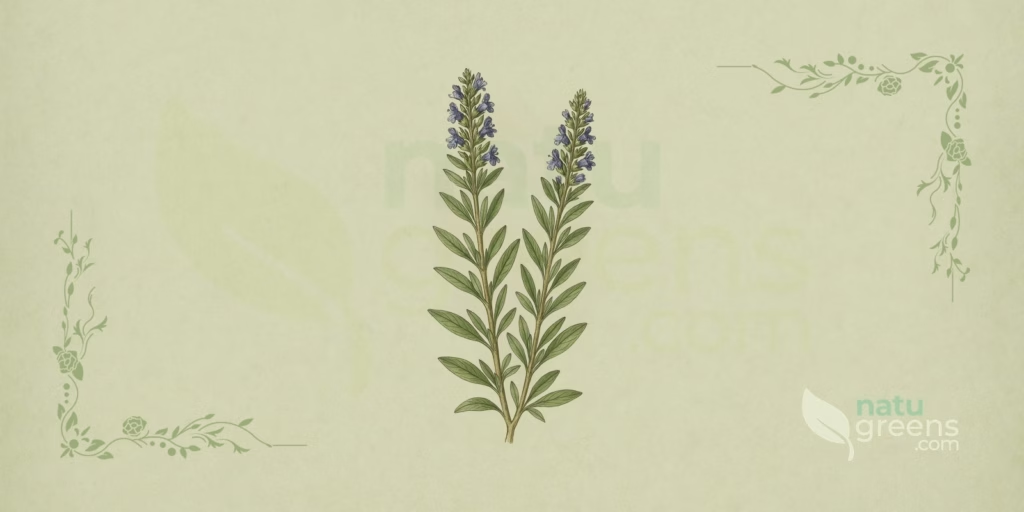
Vitex agnus-castus L. / Chaste Tree, also popularly known as chasteberry or monk’s pepper, is a shrubby plant native to the Mediterranean region and Central Asia. Described by Carl Linnaeus in 1753, this species has spread globally because of its recognized medicinal properties. Historically, chaste tree has been used for millennia in traditional medicine for various conditions, especially those related to women’s health. Its berries, which are the most widely used part, are harvested and processed for the preparation of extracts, tinctures, and teas.
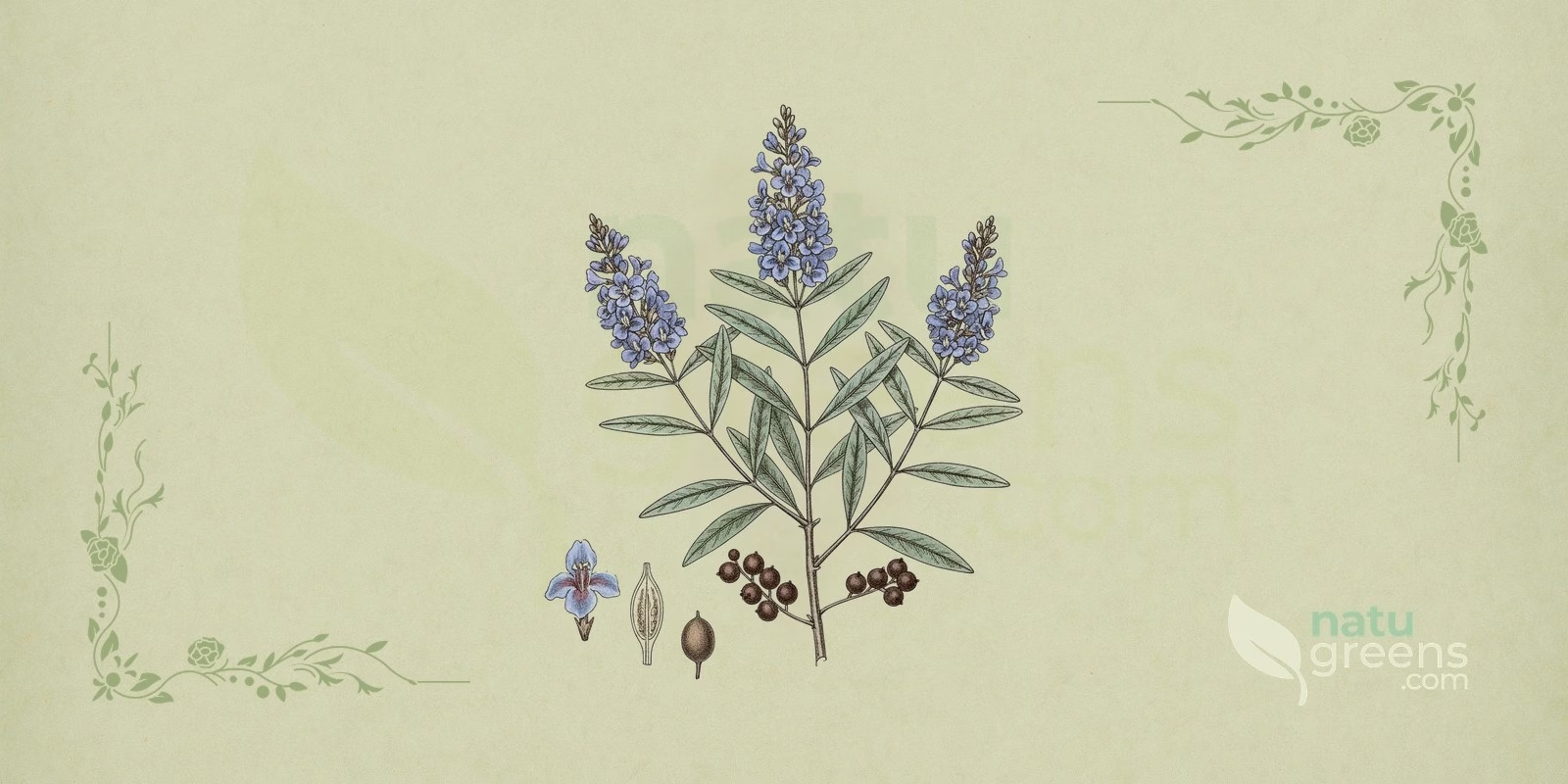
In European herbal tradition, chaste tree is traditionally valued above all for relieving premenstrual symptoms, a use that the European Medicines Agency (EMA) recognizes as well established, while its use for menopause symptoms and fertility concerns is still investigated through preliminary studies, without a guaranteed effect. The plant is valued for its rich phytochemical composition, which includes flavonoids, iridoids, and essential oils, to which anti-inflammatory, analgesic, and hormonal effects are attributed that modern scientific research continues to investigate, which has established its position as one of the most studied and widely used medicinal plants in the world.
Popular and International Names of Chaste Tree
- English: Abraham’s balm, chaste tree, chasteberry, hemp tree, lilac chastetree, monk’s pepper.
- Spanish: agnocasto, pimiento de los monjes, sauzgatillo.
- Portuguese: agno-puro, agnocasto, alecrim-de-angola, anho-casto, árvore-da-castidade, liamba, pimenta-dos-monges, pimenteiro, pimenteiro-silvestre, vitex.
- French: gattilier, poivre des moines.
- Italian: agnocasto, pepe dei monaci.
- German: Keuschlamm, Mönchspfeffer.
Botanical Synonyms of Vitex agnus-castus
The botanical name Vitex agnus-castus L. was described by Carl Linnaeus in 1753 and is the name accepted by most botanical authorities, although the plant has several synonyms that can be found in scientific and herbal literature, reflecting taxonomic reclassifications or regional variations in the species’ nomenclature over time. Understanding these synonyms is essential for research and correct identification of the plant across different scientific and traditional contexts.
- Agnus-castus robusta
- Agnus-castus vulgaris
- Agnus-castus vulgaris var. alba
- Vitex integra
- Vitex latifolia
- Vitex verticillata
Botanical Family: Lamiaceae
Chaste tree belongs to the Lamiaceae family, previously classified as Verbenaceae in older taxonomic systems, today one of the largest and most diverse families of flowering plants, comprising around 7,000 species distributed throughout the world. Lamiaceae plants are characterized by square stems, opposite leaves, and bilabiate flowers, often aromatic, and include many plants of great economic, culinary, and medicinal importance, such as mint, basil, oregano, and lavender.
Chaste tree shares morphological traits typical of the family, including flowers with a bilabiate corolla and drupaceous fruits, and the Lamiaceae family is known for producing bioactive compounds, especially terpenoids, flavonoids, and essential oils, which give many of its species medicinal properties. The chemical diversity of this family has been the subject of intense pharmacological research, contributing to the development of phytopharmaceuticals and dietary supplements, and the presence of these bioactive compounds is relevant to the effects studied in chaste tree.
Parts of Chaste Tree Used
- Berries (dried fruits)
- Essential Oil
- Leaves
Ethnobotanical and Traditional Uses
- Anxiety and nervousness.
- Female infertility, especially in cases of luteal phase defect and hyperprolactinemia.
- Headaches and migraines.
- Insomnia and sleep disturbances.
- Menstrual irregularities, amenorrhea, dysmenorrhea, and menorrhagia.
- Ovarian cysts, endometriosis, and uterine fibroids (historical use; now discouraged in these conditions, see Contraindications).
- Reduction of sexual desire (historical use).
- Relief of intestinal cramps and flatulence.
- Relief of menopause symptoms, such as hot flashes and night sweats.
- Relief of pain and rheumatism.
- Relief of Premenstrual Syndrome (PMS) symptoms, such as breast pain, irritability, and mood changes.
- Relief of swelling.
- Snake bites and scorpion stings.
- Stomach pain.
- Traditional use to support menstrual cycle regulation.
- Treatment of acne and hormone-related skin conditions.
- Treatment of the common cold and eye pain (Traditional Chinese Medicine).
Therapeutic Properties of Chaste Tree
- Analgesic (traditional use for relieving pain).
- Anti-inflammatory (effect studied for reducing inflammation).
- Antimicrobial (activity studied against microorganisms, including Candida).
- Antioxidant (activity studied against free radicals).
- Gastroprotective (protective effect studied on the stomach).
- Hormonal Modulator (effect studied on hormone levels, especially prolactin, FSH, and LH, with a well-established use for PMS according to the EMA).
- Insect Repellent (repels mosquitoes).
Detailed Phytochemical Profile of Chaste Tree
- Alkaloids.
- Casticin (flavonoid with dopaminergic activity).
- Diterpenoids (rotundifuran, vitexilactone, vitexlactam A).
- Essential Oils (1,8-cineole, sabinene, limonene, pinene).
- Flavonoids (vitexin, luteolin, apigenin).
- Glycerides.
- Iridoid Glycosides (agnuside, aucubin).
- Lignans.
- Phenolic Acids.
- Steroids.
- Terpenoids.
Preparation and Administration Forms of Chaste Tree
- Capsules.
- Dried Extracts.
- Essential Oil.
- Fluid Extracts.
- Tablets.
- Tea (infusion).
- Tinctures.
Synergy with Other Medicinal Plants
Female Hormonal Health
Chaste tree can be combined with other plants to complement its effects on female hormonal health, although none of these combinations has established clinical efficacy as a combination. The pairing with Maca (Lepidium meyenii) is traditionally used with the aim of supporting endocrine function and libido, while Ashwagandha (Withania somnifera) is used, in herbal tradition, as a complement to chaste tree in reducing stress and balancing hormones. These combinations seek broader support for the female reproductive system, but should be evaluated by a healthcare professional, especially by anyone who is pregnant, breastfeeding, or using oral contraceptives or hormone therapy.
Relief of Anxiety and Stress
For the relief of anxiety and stress, chaste tree is sometimes combined, in herbal tradition, with plants such as Valerian (Valeriana officinalis) and Passionflower (Passiflora incarnata), which have direct calming and sedative effects, while any effect of chaste tree on mood would stem from its hormonal action, which is still under study. This combination is traditionally associated with possible support for sleep disturbances and states of nervousness, without proven clinical efficacy for the combination itself, and should be used under professional guidance, considering chaste tree’s interactions with dopaminergic and hormonal medications described in the Contraindications section.
Digestive Support
Although chaste tree is not primarily a digestive plant, its anti-inflammatory properties can complement other herbs: the combination with Peppermint (Mentha × piperita) and Lemon Balm (Melissa officinalis) is traditionally used for digestive disturbances, in which chaste tree would contribute to reducing inflammation while peppermint and lemon balm act as antispasmodics and carminatives, easing dyspepsia, flatulence, and intestinal cramps.
Recipes and Usage Protocols of Chaste Tree
Traditional Chaste Tree Infusion
Chaste tree is traditionally prepared as an infusion with a small amount of dried berries placed in hot water, covered for a few minutes, strained, and consumed warm, preferably in the morning, and it can be sweetened with honey if desired. This preparation is associated, in herbal tradition, with support for the menstrual cycle and relief of PMS symptoms, a use considered well established by the EMA, but it should not be used during pregnancy or breastfeeding, nor together with oral contraceptives or hormone therapy, and both the amount and the duration of use should be determined by a healthcare professional.
Traditional Tincture for PMS
Chaste tree tincture is a concentrated form, traditionally considered practical for continuous use. Dosage should always follow the manufacturer’s instructions on the label or the guidance of a healthcare professional, without exceeding the recommended amount, and it is important to maintain regularity of use throughout the menstrual cycle, under that same supervision, in order to observe any relief of Premenstrual Syndrome symptoms. Consulting a healthcare professional before starting use is essential, especially given the hormonal and dopaminergic interactions described in the Contraindications section.
The preparations above follow traditional records and do not replace professional guidance. Before any internal use, consult the contraindications and interactions described in this article.
The preparations above follow traditional records and do not replace professional guidance. Before any internal use, check the contraindications and interactions described in this article.
Associated Therapies
Aromatherapy
Chaste tree essential oil, although less common than the berry extract, can be used in aromatherapy for its relaxing properties: inhaling steam with a few drops of essential oil, or diffusing it in the room, may help relieve stress and tension, while diluted topical application in a vegetable oil can be used in massage to promote general well-being and muscle relaxation. It is important to use quality essential oils and dilute them correctly.
Western Herbal Medicine
In Western herbal medicine, chaste tree is often the main component in formulations aimed at women’s health, and it can be combined with other herbs such as Dong Quai (Angelica sinensis) for gynecological support or with Cimicifuga racemosa for menopause symptoms. These combinations aim to address hormonal imbalances and associated symptoms more comprehensively, but the choice of combinations and doses should always be made by a professional, given the lack of robust clinical evidence for many of these pairings.
Traditional Chinese Medicine (TCM)
In TCM, chaste tree is not a traditional herb, but its effects can be interpreted within its principles: it is considered warm in nature and pungent/bitter in flavor, acting on the Liver and Spleen meridians, and is used to regulate Liver Qi, disperse stagnation, and harmonize the blood, in conditions such as menstrual irregularities, PMS, and emotional disturbances related to Liver imbalance. Its action is seen, within this system, as support for the circulation of energy, with no direct correspondence to Western pharmacology.
Contraindications and Side Effects of Chaste Tree
Contraindications
- Hormone-Sensitive Conditions: individuals with conditions such as endometriosis, uterine fibroids, or breast, uterine, or ovarian cancer should avoid chaste tree, since the plant can affect estrogen levels, which could worsen these conditions.
- In Vitro Fertilization Treatments: chaste tree may interfere with the effectiveness of in vitro fertilization treatments, and it is recommended not to use the plant during this type of procedure to avoid possible complications.
- Parkinson’s Disease and Use of Dopaminergic Medications: chaste tree contains substances, such as casticin, that affect dopamine in the brain, and it may interact with dopaminergic medications, including those used in Parkinson’s disease, altering their efficacy and potentiating side effects.
- Pregnancy and Breastfeeding: the use of chaste tree is contraindicated during pregnancy and breastfeeding because of its hormonal influence. There are not enough studies to confirm its safety in these periods, and it could interfere with fetal development or milk production.
- Psychotic Disorders and Use of Antipsychotics: because of its action on dopamine, chaste tree may interfere with therapies involving antipsychotics or metoclopramide and with treatments for schizophrenia or other psychotic disorders, so it is crucial to avoid its use in these cases, especially for anyone already undergoing drug treatment.
- Use of Oral Contraceptives or Hormone Therapy: chaste tree may reduce the effectiveness of oral contraceptives and hormone replacement therapies, and concomitant use should be avoided or evaluated by a healthcare professional.
Drug Interactions
- Anticoagulants: although less common, the presence of coumarins could theoretically potentiate the effect of anticoagulant medications, increasing the risk of bleeding.
- Dopaminergic Medications: may interact with medications that affect dopamine, such as those used in Parkinson’s disease, psychotic disorders, or with metoclopramide.
- Hormone Replacement Therapy: may decrease the effects of estrogen medications.
- Oral Contraceptives: chaste tree may decrease the effectiveness of oral contraceptives, increasing the risk of pregnancy, so the use of an additional contraceptive method is advisable.
Side Effects
- Allergic Reactions: skin reactions, such as rashes and itching, may occur in sensitive individuals.
- Fatigue and Dizziness: fatigue and dizziness may occur in rare cases.
- Gastrointestinal Disturbances: nausea, stomach discomfort, and diarrhea are mild and infrequent side effects.
- Headaches: some people may experience headaches.
Historical Notes and Interesting Facts
Origin of the Name
The name agnus-castus derives from Latin and means “chaste lamb,” reflecting the ancient belief that the plant helped suppress sexual desire, and it was traditionally used by monks to help maintain celibacy, which earned it the popular names “monk’s pepper” and “chaste tree.” This historical association, although not the main focus of its modern use, is an interesting ethnobotanical curiosity that highlights the long history of human interaction with this plant.
Historical Use
In Ancient Greece, Hippocrates already mentioned chaste tree for treating women’s ailments, and Pliny the Elder also described its use. During the Middle Ages, the plant was cultivated in monasteries and used for medicinal and symbolic purposes, and its reputation as a plant associated with hormonal regulation and comfort of the female reproductive system endured over the centuries, being rediscovered and studied by modern science, which demonstrates its cultural and historical importance.
Frequently Asked Questions about Chaste Tree Tea
Can Chaste Tree Tea Help with Fertility?
The relationship between chaste tree tea and female fertility is still being studied, especially in cases of hormonal imbalances that affect ovulation, such as luteal phase defect and hyperprolactinemia. Preliminary research is investigating whether regulating prolactin levels could favor conception, but there is no guarantee of effect, and use during in vitro fertilization treatments is discouraged. It is essential to consult a healthcare professional before considering any supplementation for this purpose, as each case is unique and requires specialized follow-up.
What Are the Main Benefits of Chaste Tree for Women’s Health?
The benefits traditionally attributed to chaste tree for women’s health include, above all, relief of Premenstrual Syndrome (PMS) symptoms, a use recognized as well established by the European Medicines Agency, as well as traditional use to support menstrual cycle regulation. For menopause symptoms, preliminary studies are investigating a possible hormone-modulating effect, without guarantee of results, and evaluation by a healthcare professional is always recommended before use.
Are There Side Effects to Using Chaste Tree?
Although generally well tolerated, chaste tree can cause some side effects, such as nausea, headaches, gastrointestinal disturbances, and allergic reactions, and it is important to watch for any adverse reaction and discontinue use if necessary. Women who are pregnant, breastfeeding, or have hormone-sensitive conditions should avoid its use, and medical consultation is always recommended before starting treatment.
How Does Chaste Tree Work in the Body?
Chaste tree acts mainly on the pituitary gland, modulating the production of hormones such as prolactin; its active compounds, such as casticin, are believed to interact with D2 dopamine receptors, inhibiting prolactin release. Studies suggest that this action may help rebalance the ratio between estrogen and progesterone, a mechanism still under study that does not replace individual medical evaluation. In addition, the plant has anti-inflammatory and antioxidant properties already studied in the laboratory.
Notice: this content is for informational purposes and does not replace professional medical advice. Consult a physician or herbal practitioner before using medicinal plants, especially during pregnancy, breastfeeding, or alongside medication.
References and Scientific Studies
- PMC2023 Boujbiha, M. A., et al. (2023). Wild Vitex agnus-castus L.: Phytochemical Characterization, Acute Toxicity, and Bioactive Properties. Molecules, 28(13), 5096.
- PMC2010 Webster, D. E., et al. (2010). Opioidergic mechanisms underlying the actions of Vitex agnus-castus L. Biochemical Pharmacology, 80(11), 1705-1715.
- PMC2025 Sirotkin AV. Effects, Mechanisms of Action and Application of Vitex agnus-castus for Improvement of Health and Female Reproduction. Phytotherapy Research. 2025.
- PMC2023 Puglia LT, Lowry J, Tamagno G. Vitex agnus castus effects on hyperprolactinaemia. Frontiers in Endocrinology. 2023.