Oenothera biennis L. / Evening Primrose, popularly known as evening primrose or common evening primrose, is a biennial herbaceous plant of the Onagraceae family, described by Carl Linnaeus in 1753. Native to North America, this species was introduced to Europe in the 17th century and has since spread to many parts of the world thanks to its medicinal and ornamental properties. Its yellow flowers, which open at dusk and close in the morning, are a striking feature, and its seeds are the source of the valuable evening primrose oil.
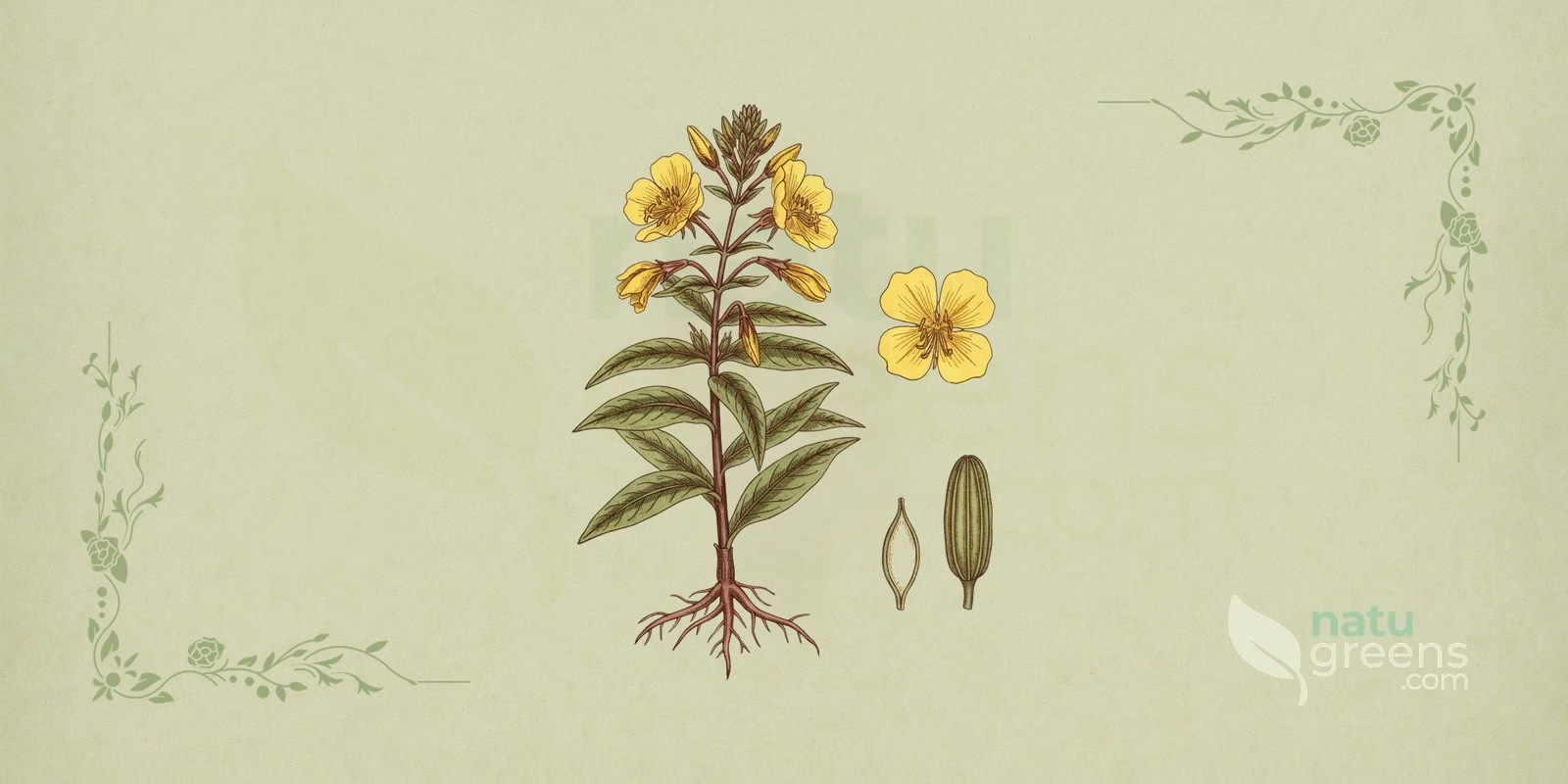
In herbal tradition, evening primrose is valued for its many therapeutic applications, especially regarding women’s health. The oil extracted from its seeds is rich in gamma-linolenic acid (GLA), an essential fatty acid with notable anti-inflammatory properties. Scientific research has extensively explored the benefits of evening primrose oil for easing the symptoms of premenstrual syndrome (PMS), menopause, and skin conditions such as eczema.
Popular and International Names of Evening Primrose
- English: evening primrose, common evening primrose, evening star, sundrop, German rampion, hog weed, King’s cure-all, fever-plant.
- Spanish: onagra, prímula, hierba del asno.
- Portuguese: canárias, erva-dos-burros, onagra, prímula, prímula-da-noite.
- French: onagre, onagre bisannuelle, primevère du soir.
- Italian: enotera, primula di sera.
- German: Nachtkerze, Gemeine Nachtkerze.
Botanical Synonyms of Oenothera biennis
Onagra biennis (L.) Scop. is a botanical synonym frequently found in older literature. Other synonyms include Oenothera muricata L. and Oenothera suaveolens Desf.
Botanical Family: Onagraceae
The Onagraceae family comprises about 650 species of herbaceous plants, shrubs, and trees, distributed across nearly the entire world. This family is known for its showy flowers, usually with four petals and four sepals. Other notable plants in this family include those of the genus Fuchsia, known as fuchsias.
Parts of Evening Primrose Used
- Leaves
- Roots
- Seed oil
- Seeds
Ethnobotanical and Traditional Uses
- Asthma
- Bruises and wounds (topical use)
- Cough
- Eczema and other skin conditions
- Gastrointestinal disorders
- Headache relief
- Hemorrhoids (topical use)
- Irritable bowel syndrome
- Obesity
- Rheumatic pain
Therapeutic Properties of Evening Primrose
- Analgesic (traditional use for pain relief)
- Antispasmodic (traditional use for easing muscle spasms)
- Astringent (contracts tissue)
- Anti-inflammatory (studied effect in reducing inflammation)
- Demulcent (studied protective effect that soothes irritated tissue)
- Emmenagogue (studied effect on menstruation)
- Hypotensive (studied effect in lowering blood pressure)
- Sedative (studied effect on calm and sleep)
Detailed Phytochemical Profile of Evening Primrose
- Amino acids (cysteine, methionine, tryptophan)
- Cellulose
- Flavonoids
- Gamma-linolenic acid (GLA)
- Linoleic acid
- Mucilage
- Oleic acid
- Palmitic acid
- Proteins
- Stearic acid
- Tannins
Preparation and Administration Forms of Evening Primrose
- Decoction of roots and leaves
- Infusion of the leaves
- Oil capsules
- Oil (topical and internal use)
- Poultice
Synergy with Other Medicinal Plants
Women’s Health
Evening primrose is often combined with Vitex agnus-castus to enhance relief of PMS and menopause symptoms, since Vitex helps regulate hormone levels while the GLA in evening primrose acts on the inflammation associated with these conditions.
Skin Health
For treating eczema and other skin conditions, evening primrose oil can be paired with borage oil (Borago officinalis), another rich source of GLA, and with calendula (Calendula officinalis), known for its healing and anti-inflammatory properties.
Recipes and Usage Protocols of Evening Primrose
Capsules for PMS and Menopause
The most common form of taking evening primrose oil is in capsules. The recommended dose varies but generally falls between 500 and 1000 mg, two to three times a day. It is important to follow a health professional’s guidance to determine the appropriate dose.
Topical Use for Eczema
Evening primrose oil can be applied directly to the skin to ease the dryness, itching, and inflammation associated with eczema. It is recommended to apply a small amount to the affected area twice a day.
The preparations above follow traditional records and do not replace professional guidance. Before any internal use, consult the contraindications and interactions described in this article.
The preparations above follow traditional records and do not replace professional guidance. Before any internal use, check the contraindications and interactions described in this article.
Associated Therapies
Herbal Medicine
In herbal medicine, evening primrose oil is one of the most popular supplements for women’s health and for treating skin problems, and it is frequently recommended by naturopaths and other natural health practitioners.
Contraindications and Side Effects of Evening Primrose
Contraindications
- Pregnancy: The use of evening primrose oil is not recommended during pregnancy, as it may induce labor.
- Epilepsy: People with epilepsy or other seizure disorders should avoid evening primrose oil, as it may increase the risk of seizures.
- Bleeding Disorders: Evening primrose may increase the risk of bleeding and should not be used by people with bleeding disorders or those taking anticoagulant medications.
- Use with Sedatives: Because of the sedative activity observed in studies, concomitant use with sedative medications or other central nervous system depressants should be done with caution and under the guidance of a health professional.
Side Effects
- Gastrointestinal Disorders: In some people, evening primrose oil may cause nausea, stomach pain, or diarrhea.
- Headaches: Headaches are an occasional side effect.
Historical Notes and Interesting Facts
Nocturnal Pollination
Evening primrose flowers open quickly at nightfall and are pollinated by night-flying moths, a spectacle that ranks among the plant’s most fascinating features.
Traditional Food
The roots of evening primrose were an important food source for several Native American tribes, who cooked them like potatoes.
Frequently Asked Questions about Evening Primrose
Does Evening Primrose Oil Cause Weight Gain?
There is no evidence that evening primrose oil causes weight gain. On the contrary, some studies suggest it may help with weight loss.
How Long Does Evening Primrose Oil Take to Work?
The effects of evening primrose oil can take anywhere from a few weeks to a few months to appear, depending on the condition being treated and the dose used.
What Are the Contraindications of Evening Primrose Oil?
Evening primrose oil is not recommended during pregnancy, as it may induce labor, nor for people with epilepsy or other seizure disorders, since it may increase the risk of seizures. It should also be avoided by anyone with bleeding disorders or taking anticoagulant medications, and it requires caution when combined with sedatives.
How Is Evening Primrose Oil Used for the Skin?
For eczema and other skin conditions, evening primrose oil can be applied directly to the affected area, in a small amount, twice a day, helping to ease dryness, itching, and inflammation. It can also be taken orally, in capsules, under professional guidance.
What Is the Difference Between Evening Primrose and Onagra?
Evening primrose and onagra are popular names used in different countries for the same plant, Oenothera biennis, alongside other names such as evening star and King’s cure-all. The choice of name varies by region, but all refer to the same species and the same oil extracted from its seeds.
Which Parts of Evening Primrose Are Used?
The most commonly used parts of evening primrose are the seeds, from which the oil rich in gamma-linolenic acid (GLA) is extracted, along with the leaves and roots, which are used in infusions and decoctions in traditional medicine.
Notice: this content is for informational purposes and does not replace professional medical advice. Consult a physician or herbal practitioner before using medicinal plants, especially during pregnancy, breastfeeding, or alongside medication.
References and Scientific Studies
Peer-Reviewed Scientific Studies (1)
- PMC2025 Bota VB, et al. A Comparative Analysis of the Polyphenolic Content and Identification of New Compounds from Oenothera biennis L. Species from the Wild Flora. Molecules. 2025.