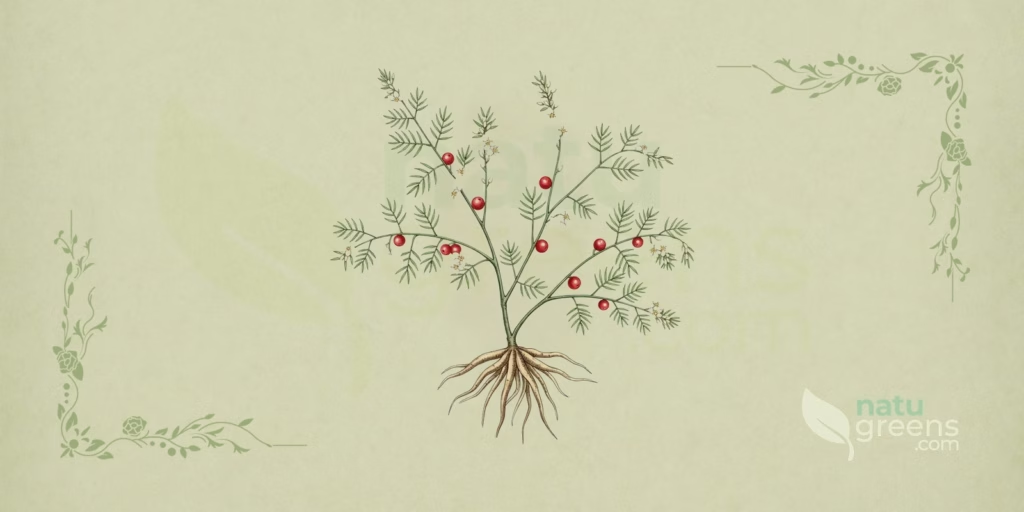
Withania somnifera (L.) Dunal / Ashwagandha, popularly known as ashwagandha, Indian ginseng, or winter cherry, is a perennial shrub of the Solanaceae family. This plant is native to the Middle East, North Africa, other African regions, southern Europe, and the Indian subcontinent. Withania somnifera has been used for centuries in traditional medicine, especially in Ayurveda, thanks to its well-known therapeutic properties. Its roots and leaves are the most valued parts for preparing extracts, powders, and other herbal products.

In Ayurvedic tradition, ashwagandha holds a prominent place as a rasayana, a rejuvenating tonic that promotes vitality and longevity. Its applications range from treating stress- and anxiety-related disorders to relieving inflammatory conditions and improving sleep. The plant is known for its rich phytochemical composition, especially in withanolides, alkaloids, and sitoindosides, which give it adaptogenic, anti-inflammatory, and neuroprotective properties. Modern scientific research has validated many of the traditional uses of ashwagandha, cementing its position as one of the most studied and widely used medicinal plants in the world.
Popular and International Names of Ashwagandha
- English: ashwagandha, indian ginseng, winter cherry.
- Spanish: ashwagandha, cereza de invierno, ginseng indio.
- Portuguese: ashwagandha, cereja de inverno, ginseng indiano.
- French: ashwagandha, cerise d’hiver, ginseng indien.
- Italian: ashwagandha, ciliegia d’inverno, ginseng indiano.
- German: ashwagandha, indischer ginseng, schlafbeere.
Botanical Synonyms of Withania Somnifera
The accepted botanical name for the plant is Withania somnifera (L.) Dunal. This name was formally described by Carl Linnaeus and later reclassified by Michel Félix Dunal. Although Withania somnifera is the most common and widely accepted designation, other botanical synonyms can be found in the literature. These include Physalis somnifera L., which was the original name given by Linnaeus.
Botanical Family: Solanaceae
Withania somnifera belongs to the botanical family Solanaceae, also known as the nightshade family. This is a large and diverse family of flowering plants, comprising around 2,700 species distributed across approximately 98 genera. The Solanaceae family includes many plants of great economic, dietary, and medicinal importance, such as the potato, tomato, pepper, tobacco, and belladonna.
Ashwagandha shares morphological traits typical of the family, including small flowers and fruits that resemble cherries. The Solanaceae family is known for producing a wide range of bioactive compounds, especially alkaloids and steroids, which give many of its species medicinal properties. The chemical diversity of this family has been the subject of intense pharmacological research, contributing to the development of herbal drugs and dietary supplements worldwide.
Parts Used of Ashwagandha
- Leaves
- Root (Mainly)
Ethnobotanical and Traditional Uses
- Anxiety and Nervousness
- Arthritis and Inflammation
- Ayurvedic Medicine (as a rasayana, a rejuvenating tonic)
- Chronic Stress
- Cognitive Function and Memory Improvement
- Fatigue and Weakness
- Fever and Colds
- Gastrointestinal Problems
- Immunity (improves cell-mediated immunity)
- Male Reproductive Health (increased fertility)
- Skin Conditions
- Sleep Disorders and Insomnia
- Tuberculosis (root powder taken orally)
Therapeutic Properties of Ashwagandha
- Adaptogenic (helps the body manage stress)
- Antidiabetic (effect studied on blood sugar)
- Anti-inflammatory (effect studied for reducing inflammation)
- Antiproliferative (antiproliferative activity observed in laboratory studies, without clinical confirmation in humans)
- Anxiolytic (effect studied for reducing anxiety)
- Athletic Performance Enhancement (effect studied on endurance and recovery)
- Cardioprotective (protective effect studied on the heart)
- Immunomodulatory (effect studied on the immune system)
- Neuroprotective (protective effect studied on the nervous system)
- Pain Relief (effect studied for reducing the sensation of pain)
- Sedative/Hypnotic (helps improve sleep)
- Thyroid Function Support (helps in cases of hypothyroidism)
Detailed Phytochemical Profile of Ashwagandha
- Alkaloids
- Flavonoids
- Glycosides
- Phenolics
- Saponins
- Sitoindosides
- Withanolides
Preparation and Administration Forms of Ashwagandha
- Capsules/Tablets
- Infusions/Teas (mainly from the leaves)
- Liquid Extracts/Tinctures
- Oil/Cream (for topical use)
- Root Powder
Synergy with Other Medicinal Plants
Ashwagandha and Bacopa Monnieri for Cognitive Function
The combination of ashwagandha with Bacopa monnieri is often used to enhance effects on improving cognitive function and memory. While ashwagandha acts as an adaptogen, reducing the stress that can impair cognition, Bacopa monnieri is known for its bacosides, which support neuroplasticity and neurotransmitter transmission. This synergy can result in a more comprehensive improvement in mental clarity and learning capacity.
Ashwagandha and Valerian for Sleep and Anxiety
For sleep disorders and anxiety, ashwagandha can be combined with Valeriana officinalis (valerian). Ashwagandha helps calm the nervous system and reduce overall stress, while valerian is a well-known natural sedative that acts on GABA receptors. Together, these plants can provide a more potent effect in inducing sleep and reducing anxiety, without the side effects of many synthetic medications.
Ashwagandha and Turmeric for Anti-Inflammatory Action
The synergy between ashwagandha and Curcuma longa (turmeric) is notable for its potent anti-inflammatory effects. Ashwagandha’s withanolides and turmeric’s curcumin act through different molecular pathways to modulate the body’s inflammatory response. This combination is promising for managing chronic inflammatory conditions, such as arthritis, offering natural support for reducing pain and swelling.
Recipes and Usage Protocols of Ashwagandha
Ashwagandha Capsules for Daily Supplementation
Ingredients: Standardized ashwagandha extract capsules (generally 250-500 mg of extract with 5% withanolides).
Directions: Follow the manufacturer’s dosing instructions. Generally, one capsule is taken 1-2 times a day with water or milk, preferably with meals to avoid gastric discomfort. Continuous supplementation for at least one month is recommended to observe the adaptogenic and anxiolytic benefits.
Revitalizing Ashwagandha Leaf Infusion
Ingredients: 1 teaspoon of dried ashwagandha leaves, 200 ml of boiling water.
Preparation: Place the ashwagandha leaves in a cup and add the boiling water. Cover and let steep for 10-15 minutes. Strain and drink warm. This infusion can be consumed 1-2 times a day for a revitalizing effect and to help manage daily stress. It is a milder alternative to root powder.
Golden Milk with Ashwagandha for Sleep
Ingredients: 1 cup of milk (dairy or plant-based), 1 teaspoon of ashwagandha powder, 1/2 teaspoon of turmeric, a pinch of black pepper, honey to taste.
Preparation: Heat the milk in a saucepan. Add the ashwagandha powder, turmeric, and black pepper. Stir well and let simmer over low heat for 5-7 minutes. Strain (optional) and sweeten with honey. Drink warm, about 30-60 minutes before bedtime, to promote restorative sleep and reduce stress.
The preparations above follow traditional records and do not replace professional guidance. Before any internal use, consult the contraindications and interactions described in this article.
The preparations above follow traditional records and do not replace professional guidance. Before any internal use, check the contraindications and interactions described in this article.
Associated Therapies
Aromatherapy
Although ashwagandha essential oil is not as widely used in aromatherapy as other plants, its benefits can be complemented by essential oils with relaxing and anxiolytic properties. Oils such as lavender, chamomile, or sandalwood can be diffused into the environment or applied topically (diluted in a carrier oil) to create a calm, soothing atmosphere, enhancing ashwagandha’s effects in managing stress and promoting sleep.
Ayurveda
In Ayurvedic medicine, ashwagandha is one of the most revered herbs, classified as a rasayana and an adaptogen. It is used to balance the Vata and Kapha doshas, strengthen the nervous system, improve physical and mental resilience, and promote longevity. It is often prescribed as a powder (churna) with milk or ghee, or as part of complex formulations to treat a wide range of conditions, from general debility to neurological and reproductive disorders.
Western Herbal Medicine
In modern Western herbal medicine, ashwagandha is valued primarily for its adaptogenic and anxiolytic properties. It is frequently used to support adrenal function, lower cortisol levels, and improve resilience to stress. Standardized root extracts are the most common form of administration, used in the treatment of chronic fatigue, anxiety, insomnia, and for improving physical and cognitive performance. Its popularity has grown as a supplement for general health and well-being.
Contraindications and Side Effects of Ashwagandha
Contraindications
- Antidiabetic Medications: Since ashwagandha can lower blood sugar levels, concurrent use with insulin or oral hypoglycemic agents should be supervised by a physician, due to the risk of additive hypoglycemia.
- Autoimmune Diseases: Individuals with autoimmune diseases such as lupus, rheumatoid arthritis, or multiple sclerosis should avoid ashwagandha, as it can stimulate the immune system and worsen the condition.
- Pregnancy and Breastfeeding: Ashwagandha is contraindicated during pregnancy due to its potential abortifacient effect at high doses and the lack of conclusive studies on its safety during breastfeeding.
- Sedative Medications: Ashwagandha can potentiate the effects of sedative, anxiolytic, and hypnotic medications, leading to excessive drowsiness.
- Surgery: It is recommended to discontinue ashwagandha use at least two weeks before any scheduled surgery due to its potential sedative effect and interaction with anesthetics.
- Thyroid Problems: Although it may support thyroid function in some cases, people with hyperthyroidism should use it with caution and under medical supervision, as it can raise thyroid hormone levels.
Side Effects
- Allergic Reactions: Although rare, allergic reactions such as skin rashes, itching, or swelling can occur in sensitive individuals.
- Drowsiness: Due to its sedative properties, ashwagandha can cause drowsiness, especially at higher doses. Caution is advised when operating machinery or driving after use.
- Gastrointestinal Disturbances: In some people, especially at high doses or on an empty stomach, ashwagandha can cause gastrointestinal discomfort, such as nausea, vomiting, and diarrhea.
Curiosities and Historical Facts of Ashwagandha
Ashwagandha in Popular Culture
In recent years, ashwagandha has gained growing popularity in the West as an adaptogenic supplement for stress and general well-being. It is frequently mentioned in health articles, blogs, and social media, and is promoted by celebrities and influencers. Its rise reflects a growing interest in natural approaches to health and stress management in modern society.
History and Etymology
Ashwagandha has an ancient history of use in Ayurvedic medicine, dating back more than 3,000 years. Its name, ashwagandha, is derived from Sanskrit and means “smell of horse,” referring to the characteristic odor of its root and the belief that it confers the strength and vitality of a horse. The species epithet, somnifera, comes from Latin and means “sleep-inducing,” highlighting one of its best-known properties.
Frequently Asked Questions about Ashwagandha
Does Ashwagandha Interact with Medications?
Yes, ashwagandha can interact with certain medications. It is crucial to be cautious if you are taking sedatives, immunosuppressants, thyroid medications, or anticoagulants. It is strongly recommended that you consult your physician or pharmacist before starting ashwagandha supplementation, especially if you are on medication.
Can Ashwagandha Be Taken Daily?
Yes, ashwagandha can be taken daily, and many of its benefits, such as stress reduction and improved sleep, are observed with continuous use. It is important to follow the recommended dosages and, if possible, consult a health professional to determine the ideal dose and duration of treatment, especially in cases of pre-existing health conditions.
How Long Does Ashwagandha Take to Work?
The effects of ashwagandha can vary from person to person and depend on the condition being treated. Some individuals may feel the benefits within a few weeks, while others may need one to two months of regular use to notice significant improvements. Consistency of use is key to achieving the best results.
What Is the Recommended Dose of Ashwagandha?
The most common formulations use standardized extract in capsules, between 250 and 500 mg with about 5% withanolides, taken once or twice a day, preferably with meals to avoid gastric discomfort. For root powder or leaf infusion versions, the dose tends to be smaller, and continuous use for at least one month usually precedes the perception of adaptogenic benefits. In any format, it is advisable to follow the manufacturer’s instructions or the guidance of a health professional.
Is Ashwagandha Safe During Pregnancy and Breastfeeding?
No, ashwagandha is contraindicated during pregnancy due to its potential abortifacient effect at high doses, and its use during breastfeeding is also not recommended due to the lack of conclusive studies on safety during this period. Pregnant and breastfeeding women should avoid the plant and seek medical guidance before considering any ashwagandha-based supplement.
Is There a Difference Between Ashwagandha Root and Leaves?
Yes, the root is the most widely used part and is typically consumed as a powder or standardized extract, generally with a more concentrated effect. The leaves, in turn, are prepared mainly as an infusion and offer a milder alternative, suited to those seeking a gentler, revitalizing effect for everyday use.
Notice: this content is for informational purposes and does not replace professional medical advice. Consult a physician or herbal practitioner before using medicinal plants, especially during pregnancy, breastfeeding, or alongside medication.
References and Scientific Studies
Peer-Reviewed Scientific Studies (4)
- PMC2023 Mikulska, P., et al. (2023). Ashwagandha (Withania somnifera), Current Research on the Health-Promoting Activities: A Narrative Review. Pharmaceutics, 15(4), 1057.
- PEER2022 Tewari, D., et al. (2022). Withania somnifera (L.) Dunal: Phytochemistry, structure-activity relationship, and therapeutic potential. Phytomedicine, 97, 153911.
- PMC2020 Saleem, S., et al. (2020). Withania somnifera L.: Insights into the phytochemical profile, therapeutic potential, clinical trials, and future prospective. Iranian Journal of Basic Medical Sciences, 23(12), 1545-1556.
- PEER2021 Namdeo, A. G., et al. (2021). Ashwagandha: Advances in plant biotechnological approaches for propagation and production of bioactive compounds. Journal of Ethnopharmacology, 268, 113597.