Asparagus racemosus Willd. / Shatavari
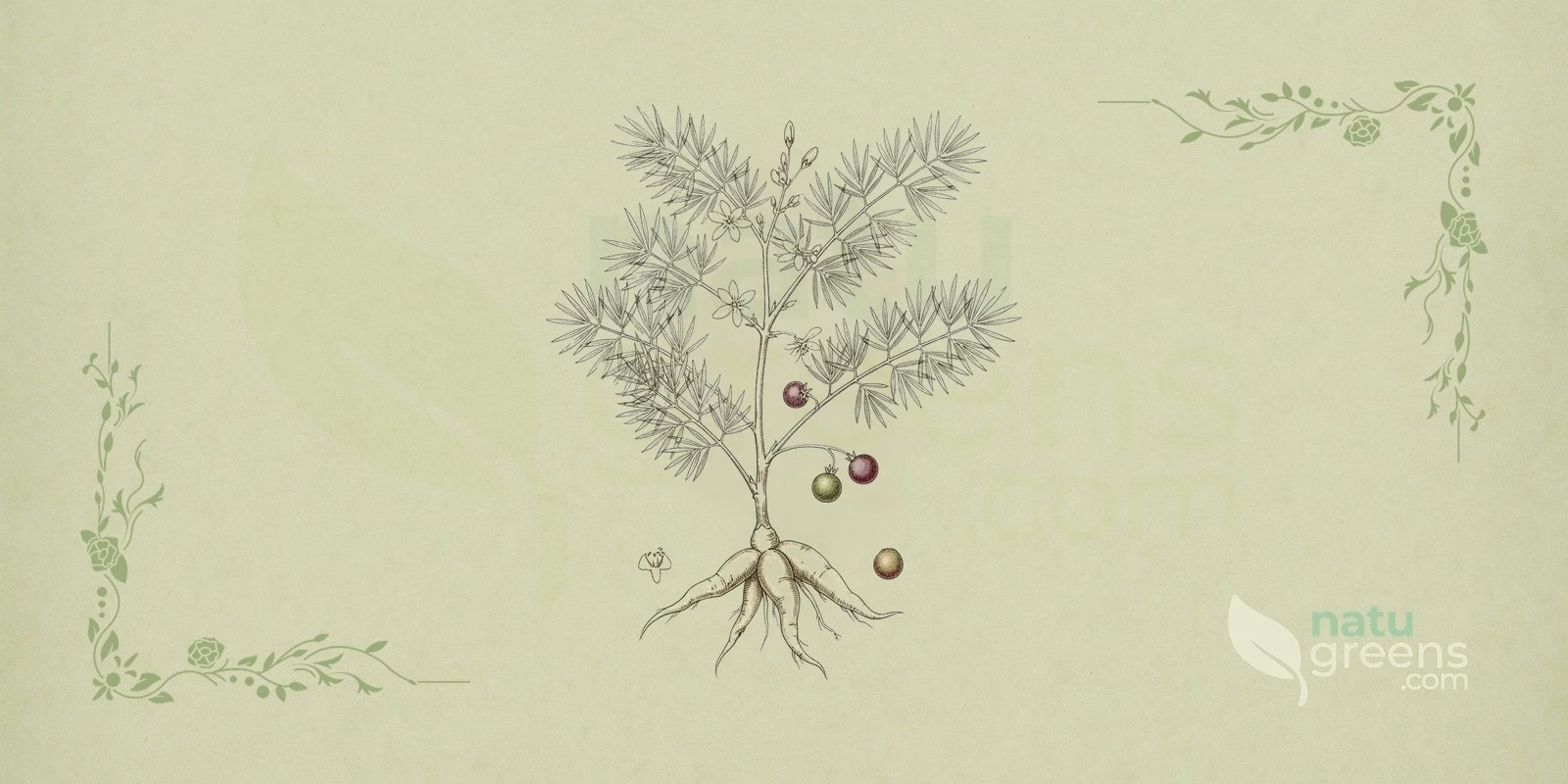
Asparagus racemosus, popularly known as shatavari, is a medicinal plant widely used in Ayurvedic medicine and valued especially for its roots, which are employed in a range of traditional preparations. Shatavari is recognized as a rejuvenating tonic particularly beneficial for women’s health, with applications ranging from lactation support to easing menopause symptoms, in addition to adaptogenic properties that help the body cope with stress thanks to its rich phytochemical composition. It is a woody climbing plant, native to tropical and subtropical regions of Africa, southern Asia, and northern Australia, that grows preferentially in stony, rocky soils at higher elevations; growing demand for the plant, combined with destructive harvesting and habitat loss, has led to its classification as an endangered species in some regions. It is essential to distinguish Asparagus racemosus from Asparagus officinalis, the common edible asparagus, and although the variety Asparagus racemosus var. jayamanii is mentioned in the literature, current studies point to no significant differences in its properties relative to the main species, which is why this article addresses Asparagus racemosus broadly, covering its various medicinal and botanical aspects.
Popular and International Names of Shatavari
- English: Asparagus Root, Indian Asparagus, Shatavari, Wild Asparagus.
- Spanish: Espárrago indio, Shatavari.
- Portuguese: Espargo indiano, Espargo selvagem, Shatavari.
- French: Asperge indienne, Shatavari.
- Italian: Asparago indiano, Shatavari.
- German: Indischer Spargel, Shatavari.
Botanical Synonyms of Asparagus racemosus
- Asparagopsis abyssinica Kunth
- Asparagopsis acerosa Kunth
- Asparagopsis brownei Kunth
- Asparagopsis decaisnei Kunth
- Asparagopsis floribunda Kunth
- Asparagopsis hohenackeri Kunth
- Asparagopsis javanica Kunth
- Asparagopsis retrofracta Schweinf. ex Baker
- Asparagopsis sarmentosa Dalzell & A.Gibson
- Asparagopsis subquadrangularis Kunth
- Asparagus acerosus Roxb.
- Asparagus dubius Decne.
- Asparagus fasciculatus R.Br.
- Asparagus jacquemontii Baker
- Asparagus penduliflorus Zipp. ex Span.
- Asparagus petitianus A.Rich.
- Asparagus racemosus var. javanicus (Kunth) Baker
- Asparagus racemosus var. longicladodius Chiov.
- Asparagus racemosus var. subacerosus Baker
- Asparagus racemosus var. tetragonus (Bresler) Baker
- Asparagus racemosus var. zeylanicus Baker
- Asparagus stachyoides Spreng. ex Baker
- Asparagus tetragonus Bresler
- Asparagus zeylanicus (Baker) Hook.f.
- Geitonoplesium scandens Hassk.
- Protasparagus acerosus (Kunth) Kamble
- Protasparagus jacquemontii (Baker) Kamble
- Protasparagus racemosus (Willd.) Oberm.
- Protasparagus racemosus var. javanicus (Kunth) Kamble
- Protasparagus racemosus var. subacerosus (Baker) Kamble
- Protasparagus zeylanicus (Baker) Kamble
Botanical Family: Asparagaceae
Shatavari belongs to the Asparagaceae family, having previously been classified within the Liliaceae family, a reclassification that reflects a deeper understanding of the phylogenetic relationships among plants; this family includes several well-known species, such as common asparagus.
Parts of Shatavari Used
The roots of shatavari are the most widely used part for medicinal purposes. These roots are both fibrous and tuberous, and are the source of the plant’s bioactive compounds. They are used to prepare teas, tinctures, extracts, and powders. Sustainable root harvesting is crucial for the conservation of the species, which is threatened in its natural habitat.
Ethnobotanical and Traditional Uses
- Digestive support as a gastric tonic.
- Hormonal balance in women.
- Increased female fertility.
- Increased lactation.
- Relief of coughs.
- Relief of diarrhea.
- Relief of pain.
- Relief of stomach cramps.
- Relief of stomach ulcers.
- Relief of constipation.
- Support for female reproductive health.
- Traditional relief of mild anxiety.
- Traditional use for mild low mood.
- Treatment of fluid retention.
- Use as an adaptogen.
- Use as a uterine tonic.
Therapeutic Properties of Shatavari
- Adaptogenic (helps the body adapt to stress)
- Anti-anxiety (studied effect on reducing anxiety)
- Anti-inflammatory (studied effect on reducing inflammation)
- Antacid (studied activity against excess stomach acid)
- Antibacterial (studied activity against bacteria)
- Antidepressant (studied effect on mild low-mood symptoms)
- Antioxidant (studied activity against free radicals)
- Antispasmodic (traditional use for easing muscle spasms)
- Antitussive (traditional use for easing coughs)
- Aphrodisiac (studied effect on sexual desire)
- Diuretic (studied effect on urine production)
- Galactagogue (studied effect on breast milk production)
- Gastroprotective (studied protective effect on the stomach lining)
- Hypoglycemic (studied effect on reducing blood sugar levels)
- Immunostimulant/Immunomodulator (studied effect on or modulates the immune system)
- Rejuvenating (studied effect on vitality and longevity)
Detailed Phytochemical Profile of Shatavari
- Alkaloids (asparagamine A)
- Flavonoids (isoflavone 8-methoxy-5,6,4′-trihydroxyisoflavone 7-O-β-D-glucopyranoside)
- Glycosides
- Mucilage
- Phenolic compounds
- Polysaccharides
- Steroidal saponins (asparanin A, filiasparoside C, immunoside, shatavarins, shatavarosides A, B, C, D, E)
- Steroids
- Tannins
- Terpenoids
Preparation and Administration Forms of Shatavari
Teas and Infusions
Shatavari infusion is prepared from the plant’s dried roots. To make the tea, add a teaspoon of shatavari powder or pieces of dried root to a cup of hot water. Let steep for about 5 to 10 minutes before straining and drinking. This method is ideal for taking advantage of the plant’s calming and digestive properties. It can be consumed warm or cold, depending on personal preference. The infusion is a gentle way to bring shatavari into the daily routine.
Powder
Shatavari powder is one of the most common ways to consume the plant. It can be mixed with water, milk, or honey. The recommended dosage generally varies, but 500 mg daily has been used safely for up to eight weeks. It is important to follow the manufacturer’s instructions or consult a healthcare professional to determine the appropriate dose. The powder is versatile and can be added to smoothies or yogurt. Its easy incorporation into the diet makes it practical for ongoing use.
Tinctures and Extracts
Shatavari tinctures and extracts are concentrated preparations that offer a potent way to consume the plant. They are obtained by macerating the roots in alcohol or other solvents. Dosage should be carefully followed according to the manufacturer’s or a specialist’s guidance. These forms are ideal for those seeking a faster action from the active compounds. They can be added to water or juices. The higher concentration allows a smaller amount of product to achieve the same effect.
Synergy with Other Medicinal Plants
Ashwagandha
The combination of shatavari with Withania somnifera (ashwagandha) is popular in Ayurvedic medicine, since both plants are considered adaptogenic and act synergistically to reduce stress and promote overall well-being; while shatavari focuses mainly on female reproductive health, ashwagandha is traditionally associated with rejuvenating properties and energy support, so that together they traditionally contribute to balancing the nervous and hormonal systems and to the body’s vitality. The blend can be consumed as a powder or in combined extracts.
Brahmi
Shatavari can be combined, in traditional use, with Bacopa monnieri (brahmi), a brain tonic known for its nootropic properties, with the goal of supporting cognitive function and reducing mental stress, offering comprehensive support for mind and body, which is particularly valued by students and people with high intellectual demands; the synergy between the two plants is traditionally associated with mental clarity and calm, and can be used in tea or supplement form.
Gokshura
For additional support to reproductive and urinary health, shatavari can be combined with Tribulus terrestris (gokshura), a plant traditionally used for urinary tract health and hormonal balance, offering together a holistic support that may interest couples seeking traditional fertility support. It is important to consult a healthcare professional before starting any supplementation regimen, since dosage should be adjusted individually.
Recipes and Usage Protocols of Shatavari
Shatavari Milk
Mix a teaspoon of shatavari powder into a cup of warm milk. Add a little honey or brown sugar to taste. Consume before bed to promote relaxation and hormonal balance. This recipe is traditionally used in Ayurveda. Shatavari milk is a nourishing, comforting drink. It can be adapted with spices such as cardamom or saffron. It is a pleasant way to consume the plant daily.
Revitalizing Infusion
Prepare an infusion with a teaspoon of dried shatavari roots and a cup of hot water. Let stand for 10 minutes. Strain and drink twice a day. This infusion is traditionally used to support digestion and the immune system. It can be sweetened with honey or stevia. The revitalizing infusion is a gentle option for overall well-being. It is a mild alternative for daily consumption. Its preparation is simple and quick.
Shatavari Face Mask
Mix a tablespoon of shatavari powder with rose water or milk until a paste forms. Apply to a clean face and leave on for 15-20 minutes. Rinse with warm water. This mask can help nourish and revitalize the skin. Shatavari is traditionally associated with rejuvenating properties. The shatavari face mask is a natural treatment. It can be used once or twice a week. It is an external way to take advantage of the plant’s benefits.
The preparations above follow traditional records and do not replace professional guidance. Before any internal use, review the contraindications and interactions described in this article.
The preparations above follow traditional records and do not replace professional guidance. Before any internal use, check the contraindications and interactions described in this article.
Associated Therapies
Ayurveda
In Ayurveda, shatavari is one of the pillars of herbal medicine, classified as Rasayana, a term meaning rejuvenator, and widely used as a women’s tonic, traditionally employed to balance the Pitta and Vata doshas and promote harmony in the body, in addition to holding a central role in the Ayurvedic approach to reproductive, digestive, and immune health. Its use spans millennia, is grounded in holistic principles, and integrates various treatments within this tradition, with shatavari regarded as an example of ancestral Indian wisdom.
Western Herbal Medicine
In Western herbal medicine, shatavari is valued for its adaptogenic and anti-inflammatory properties, often recommended as support for the female reproductive system, for easing menopause symptoms, and for promoting lactation, with an approach that prioritizes scientific evidence on its active compounds and use in standardized extracts and supplements. In this way, Western herbal medicine incorporates shatavari into modern protocols, serving as a bridge between age-old tradition and current scientific research, with its use valued by many practitioners.
Contraindications and Side Effects of Shatavari
Common Side Effects
Shatavari is generally considered safe when used at recommended doses, although some people may experience mild side effects, such as gastrointestinal discomfort, bloating, or diarrhea, particularly at the start of use, in addition to rare allergic reactions in individuals sensitive to plants of the Asparagales family. It is important to monitor any adverse reaction, although most effects are transient and resolve as the body adapts; even so, consulting a healthcare professional is always advisable.
Drug Interactions
Shatavari may interact with certain medications: due to its potential diuretic effect, it may reduce lithium elimination, raising its levels in the body and the risk of toxicity, so people undergoing lithium treatment should use the plant with caution and under medical guidance. It may also lower potassium levels, especially when combined with diuretics, favoring hypokalemia, and people with diabetes should monitor blood sugar, as shatavari may have a mild hypoglycemic effect. Because of its possible sedative and mood-related action, concomitant use with antidepressant or sedative medications should be managed with medical supervision, to avoid compounding effects on the central nervous system; for this reason, it is essential to inform your doctor about all supplements used.
Pregnancy and Breastfeeding
There is not enough reliable information on the safety of shatavari during pregnancy and breastfeeding, and although it is traditionally used to support lactation, the lack of robust clinical studies warrants caution, so pregnant or breastfeeding women are advised to avoid its use or to consult a healthcare professional before starting any supplementation, always prioritizing the baby’s safety. Medical guidance is essential in these cases.
Historical Notes and Interesting Facts
The name “shatavari” comes from Sanskrit and means “she who possesses a hundred husbands” or “curer of a hundred diseases,” a designation that reflects its long history of use in Ayurvedic medicine as a rejuvenating tonic, especially aimed at women’s health, with the plant revered in India for thousands of years and long recognized as a leading adaptogen. A symbol of vitality and longevity, shatavari carries a history interwoven with Indian culture and a rich, meaningful legacy.
Frequently Asked Questions about Shatavari
Can Shatavari Tea Be Consumed Daily?
Yes, shatavari tea can be consumed daily in moderate doses, although it is always advisable to consult a healthcare professional before starting a regimen of continuous use, since each person’s biological individuality influences the response to the tea. Daily consumption may contribute to overall bodily balance, but it is important to observe how the body reacts and to keep moderation as a guiding principle for any herbal supplement.
Does Shatavari Tea Help with Sleep?
Shatavari has mild anxiolytic and sedative properties that may indirectly contribute to better sleep quality, although there is no direct evidence classifying it as a primary treatment for insomnia; its relaxing, stress-reducing effect may, however, favor factors that often affect sleep. For persistent sleep problems, it is advisable to seek medical guidance, since the tea’s action is more supportive of a relaxing routine than properly curative.
Can Children Drink Shatavari Tea?
There is not enough information on the safety of shatavari tea for children, since most studies and traditional uses focus on adults, so its use in childhood is recommended to be avoided unless under the supervision and guidance of a qualified healthcare professional. As children’s health requires special precautions, medical guidance is essential for this age group.
Can Shatavari Tea Cause Allergies?
Yes, shatavari tea may cause allergic reactions in people sensitive to plants of the Asparagales family, which includes onion, leek, garlic, and chives, with symptoms that can range from mild to severe; if skin rashes, itching, swelling, or difficulty breathing occur, use should be stopped immediately. It is important to be aware of pre-existing allergies and to remain watchful when introducing new supplements, seeking medical help whenever an allergic reaction occurs.
Does Shatavari Tea Interact with Medications?
Yes, shatavari tea may interact with certain medications, which is particularly relevant for people taking lithium, diuretics, or diabetes medications, since it may enhance the diuretic effect, affect potassium levels, and influence blood sugar. For this reason, it is essential to inform your doctor or pharmacist about shatavari use, avoiding self-medication and always prioritizing communication with healthcare professionals.
Notice: this content is for informational purposes and does not replace professional medical advice. Consult a physician or herbal practitioner before using medicinal plants, especially during pregnancy, breastfeeding, or alongside medication.
References and Scientific Studies
View All 16 Cited References
Peer-Reviewed Scientific Studies (6)
- PMC2013 Alok, S., et al. (2013). Plant profile, phytochemistry and pharmacology of Asparagus racemosus (Shatavari): A review. Asian Pacific Journal of Tropical Disease, 3(3), 242-250.
- PMC2009 Sharma, U., et al. (2009). Steroidal saponins from Asparagus racemosus. Chemical & Pharmaceutical Bulletin, 57(8), 890-893.
- PMC2008 Hayes, P. Y., et al. (2008). Steroidal saponins from the roots of Asparagus racemosus. Phytochemistry, 69(3), 796-804.
- PMC2001 Saxena, V. K., & Chourasia, S. (2001). A new isoflavone from the roots of Asparagus racemosus. Fitoterapia, 72(3), 307-309.
- PMC2007 Bopana, N., & Saxena, S. (2007). Asparagus racemosus–ethnopharmacological evaluation and conservation needs. Journal of Ethnopharmacology, 110(1), 1-15.
- PMC2016 Singh, R. (2016). Asparagus racemosus: a review on its phytochemical and therapeutic potential. Natural Product Research, 30(17), 1896-1908.
Supplementary Readings (10)
- Plants of the World Online. (n.d.). Asparagus racemosus Willd..
- 2019 Saraswati Ayurveda. (2019). Shatavari: Queen of Herbs.
- 2022 Herbal Apothecary UK. (2022). Asparagus racemosus / Shatavari.
- 2019 Planet Ayurveda. (2019). Shatavari (Asparagus racemosus) – Uses, Benefits and Dosage.
- 2015 Easy Ayurveda. (2015). Shatavari Asparagus racemosus Uses, Research, Side Effects.
- 2024 Risha Ayurveda. (2024). Asparagus Racemosus-Shatavari : Benefits, Uses, Home Remedies.
- 2025 Oriental Heritage Herbalists. (2025). Asparagus Racemosus Willd: with Modern Health Benefits.
- 2024 ResearchGate. (2024). Taxonomy, Phytochemistry and Pharmacological significance of Asparagus Racemosus plant: A Comprehensive Review.
- IJPS Journal. (n.d.). Phytochemistry, Pharmacological Potential, And Traditional Uses of Asparagus Racemosus: A Comprehensive Review.
- PBKOM. (n.d.). PHYTOCHEMISTRY, MEDICINAL AND NUTRITIONAL IMPORTANCE OF ASPARAGUS RACEMOSUS.