Ammi visnaga (L.) Lam. / Khella
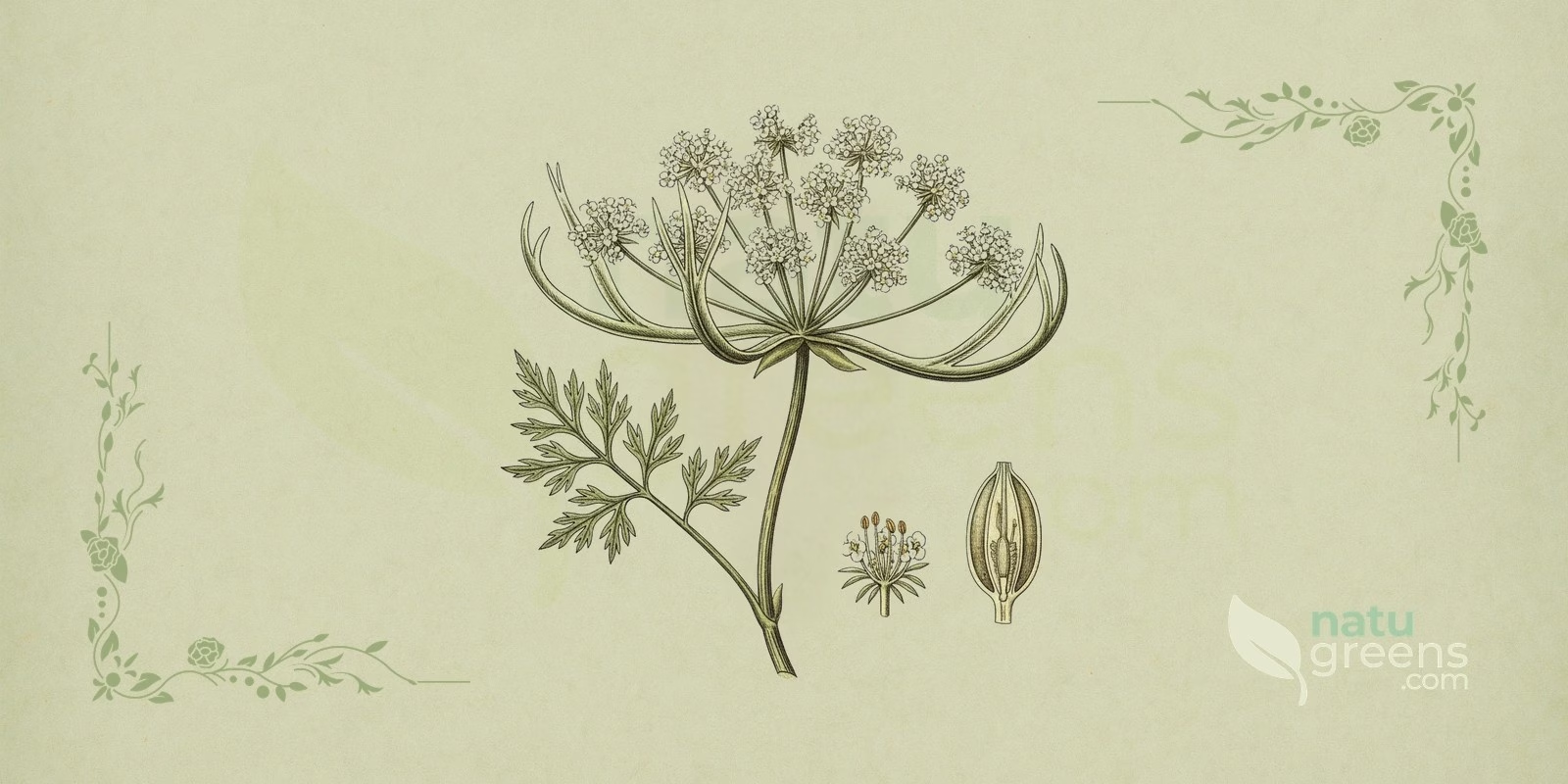
Ammi visnaga (L.) Lam., commonly known as khella, a name of Arabic origin adopted in several languages, and also called visnaga, is an annual or biennial herb native to the Mediterranean region. Its aromatic fruits have been part of folk medicine for many centuries, and scientific interest in the plant focuses on two compounds from the furanochromone group, khellin and visnagin. These compounds prompted a long line of pharmacological studies and even served as models for synthetic drugs that are still in use today. At the same time, khella has accumulated reports of liver changes, photosensitivity, and severe poisoning in self-medication, which makes it a plant with a narrow safety margin whose traditional use should only be considered under professional guidance.
Popular and International Names of Khella
- English: Khella, Toothpick Weed.
- French: Herbe aux cure-dents, Khella.
- German: Zahnstocherkraut.
- Italian: Visnaga.
- Portuguese: Ami-visnaga, Khella, Palito-de-dente, Visnaga.
- Spanish: Biznaga, Visnaga.
Many of these names refer to the custom of using the stiff rays of the umbel as toothpicks, a practice recorded in Egypt and North Africa. The name khella, on the other hand, came from Arabic and spread through European pharmaceutical literature following the studies on khellin.
Botanical Synonyms of Ammi visnaga
The name Ammi visnaga (L.) Lam. is the most widespread in the pharmacological literature and appears in most studies on khellin and visnagin. Some recent taxonomic databases, however, adopt Visnaga daucoides Gaertn. as the accepted name. Over more than two centuries of reclassifications, the species has received the synonyms listed below, which help locate the plant in older works, herbarium collections, and botanical databases.
- Ammi daucoides Gaertn.
- Ammi dilatatum St.-Lag.
- Apium visnaga (L.) Crantz
- Carum visnaga (L.) Koso-Pol.
- Daucus visnaga L. (basionym)
- Selinum visnaga (L.) E.H.L.Krause
- Sium visnaga (L.) Stokes
- Visnaga daucoides Gaertn.
Botanical Family: Apiaceae
Khella belongs to the Apiaceae family, a cosmopolitan group of about 3,700 species that includes aromatic plants of great economic importance, such as carrot, celery, and parsley. Many species in the family contain essential oils and coumarins, compounds that account for both their characteristic aroma and the interest of phytochemical research. For this reason, the Apiaceae hold a prominent place in the diet and folk medicine of many different cultures.
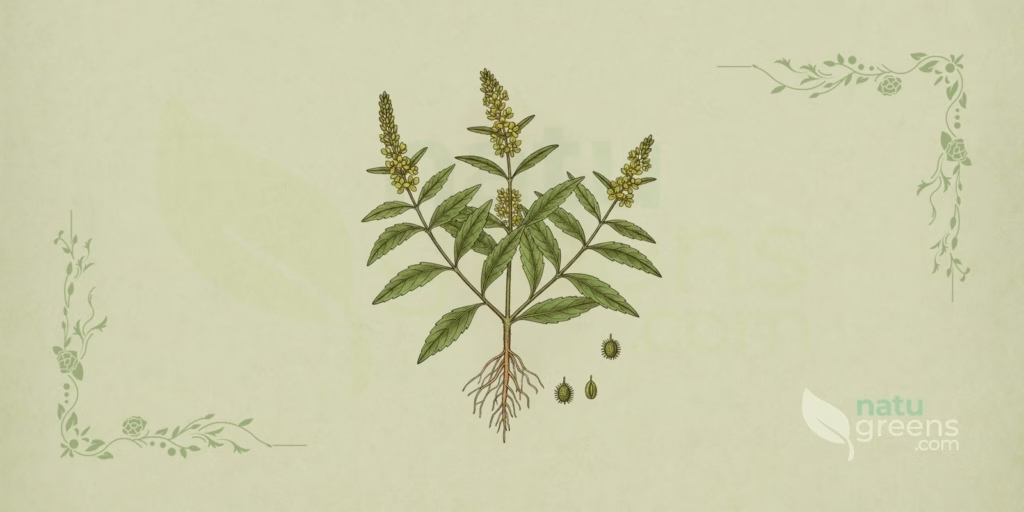
Ammi visnaga shares the most typical feature of the family, namely small flowers grouped in compound umbels. In khella, these umbels bear tiny white flowers, and their rays become stiff and curve inward after flowering, while the leaves are divided into fine, almost thread-like segments. The species is a close relative of Ammi majus, from the same genus, which also concentrates photosensitizing furanocoumarins.
Parts of Khella Used
- Aerial parts
- Fruits
The dried fruits, often sold as seeds, concentrate most of the khellin and visnagin and are the most studied part of the plant. The aerial parts appear in folk preparations and in essential oil analyses, whereas the hardened umbel rays have a purely utilitarian use, as toothpicks, and are not included in medicinal preparations.
Ethnobotanical and Traditional Uses
The following records describe how khella has been used in the folk medicine of the Mediterranean basin. They do not constitute treatment recommendations, especially since several of these conditions require medical diagnosis and follow-up.
- Abdominal cramps
- Asthma and spastic bronchitis (traditional record)
- Diabetes (folk use investigated only in animal studies)
- Diuresis
- Headaches
- Menstrual cramps
- Menstrual cycle regulation (traditional record)
- Mild angina, in a historical record linked to the use of khellin (a condition that today requires cardiological follow-up)
- Psoriasis (traditional record)
- Renal colic (traditional record; requires medical evaluation)
- Urinary stones, as traditional support during the passage of small stones
- Vertigo (traditional record)
- Vitiligo (traditional record, associated with severe poisoning in self-medication)
Therapeutic Properties of Khella
The properties below come from traditional records and from laboratory or animal studies. Most of them have not yet been confirmed in good-quality clinical trials in humans.
- Antibacterial (activity of the essential oil observed in laboratory tests)
- Antifungal (inhibition of fungal growth observed in the laboratory)
- Anti-inflammatory (effect observed in experimental studies)
- Antilithiatic (reduced deposition of calcium oxalate crystals in rats and in kidney cells)
- Antioxidant (activity measured in laboratory assays)
- Antispasmodic (smooth muscle relaxation described in pharmacological studies)
- Bronchodilator (historical action attributed to khellin, no longer in routine clinical use)
- Coronary Vasodilator (historical effect of khellin, with no recommended clinical use today)
- Diuretic (traditional record of increased urine volume)
- Emmenagogue (traditional record of stimulating menstrual flow, a reason for contraindication in pregnancy)
- Larvicidal (extracts active against mosquito larvae in the laboratory)
- Nephroprotective (protection of kidney cells observed in experimental studies)
Investigated Mechanisms of Action
The main constituents of khella, khellin and visnagin, belong to the furanochromone group and behave as smooth muscle relaxants in pharmacological studies. This action helps explain the traditional use of the plant for spasms of the bronchi, the urinary tract, and the blood vessels. Part of the effect is attributed to the modulation of calcium channels in smooth muscle cells, a mechanism that reduces contraction and explains the historical interest in khellin as a bronchodilator and vasodilator.
In the urinary field, research on hyperoxaluric rats and on cultured kidney cells observed that the aqueous fruit extract, as well as isolated khellin and visnagin, reduced the deposition of calcium oxalate crystals and the cell damage caused by oxalate. This result has not yet been reproduced in controlled clinical trials. Flavonoids account for much of the antioxidant activity measured in the laboratory, while the essential oil showed antibacterial and larvicidal action in experimental tests. A 2024 review devoted to visnagin also gathered studies on sperm parameters, steroidogenesis, and gonadotropin and testosterone levels, a line of research that for now is limited to laboratory and animal models.
Detailed Phytochemical Profile of Khella
The chemical composition of khella combines furanochromones, such as khellin and visnagin, with pyranocoumarins, such as visnadin and samidin. The plant also contains photosensitizing furanocoumarins, such as bergapten and xanthotoxin, along with flavonoids, fatty acids, and essential oil components. The list below brings together the compounds described in the literature, whose concentration varies according to the plant organ, the stage of development, and the growing conditions.
- Ammiol
- Apigenin
- Arachidic Acid
- Bergapten
- Beta-sitosterol
- Biochanin A
- Chrysoeriol
- Cimifugin
- Coumestrol
- Daidzein
- Daidzin
- Dihydrosamidin
- Formononetin
- Genistin
- Isoformononetin
- Isorhamnetin
- Isorhamnetin-3-O-glucoside
- Isorhamnetin-3-O-rutinoside
- Isorhamnetin-7-O-glucoside
- Kaempferol
- Kaempferol-3-glucoside
- Kaempferol-3-rutinoside
- Khellin
- Khellinin
- Khellinol
- Khellinone
- Petroselinic Acid
- Quercetin
- Quercetin 3-sulfate
- Quercetin-3-glucoside
- Quercetin-3-O-rutinoside
- Quercetin-7,3,3′-O-triglucoside
- Rhamnazin
- Rhamnazin-3-glucoside
- Rhamnetin
- Rhamnetin-3-O-glucoside
- Rhamnocitrin
- Rhamnocitrin 3-sulfate
- Samidin
- Sissotrin
- Stearic Acid
- Tetracosanoic Acid
- Thymol
- Visamminol
- Visnadin
- Visnagin
- Visnaginone
- Xanthotoxin
Preparation and Administration Forms of Khella
- Capsules
- Compresses
- Decoction
- Dry Extract
- Essential Oil
- Fluid Extract
- Infusion
- Poultice
- Tincture
In tradition, the dried fruits are the basis for infusion and decoction, while extracts standardized for khellin appear in capsules and fluid preparations, and the essential oil is restricted to external and aromatic use. The khellin content varies considerably from batch to batch and the gap between the usual dose and the toxic dose is small, so any form of internal use must be defined by a qualified health professional, with products of known origin and for short periods. Poultices and compresses expose the skin to furanocoumarins, and the treated area should be kept out of the sun, because there are reports of severe burns after topical application followed by sun exposure.
Synergy with Other Medicinal Plants
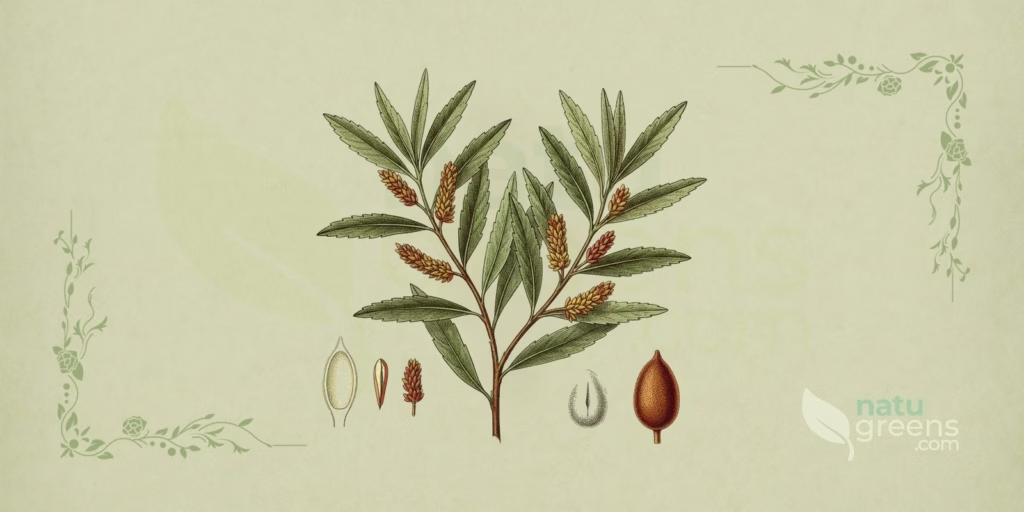
Folk medicine often combines khella with other plants, always for traditional purposes and without clinical studies confirming any advantage of these combinations. For respiratory complaints, there is a record of use alongside coltsfoot (Tussilago farfara), traditionally used as an expectorant and cough soother. This combination calls for extra caution, because coltsfoot contains pyrrolizidine alkaloids that are toxic to the liver, adding that risk to the hepatotoxic potential of khella itself.
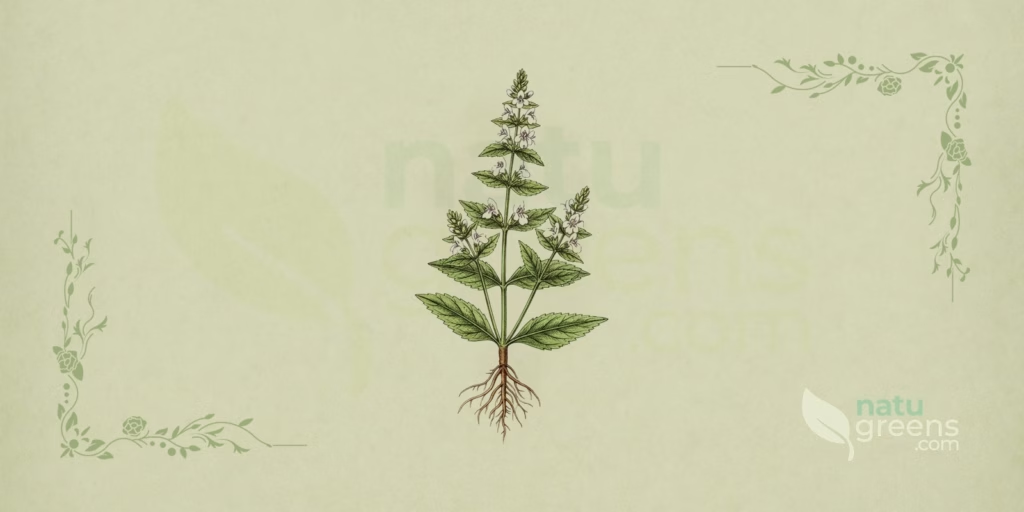
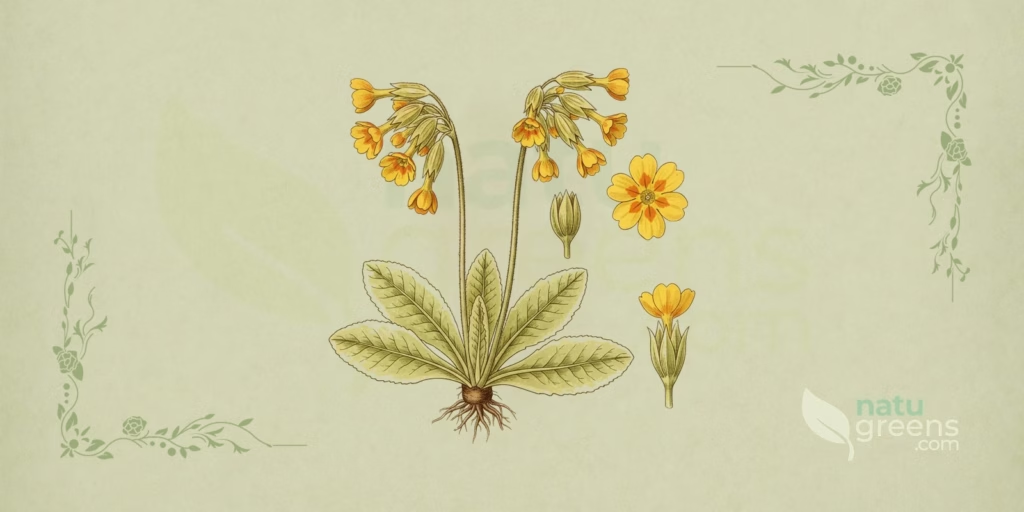
For urinary tract colic, tradition combines khella with rupturewort (Herniaria glabra), a plant used in folk medicine as a diuretic and antispasmodic, in a pairing traditionally used to accompany the passage of small stones. For anxiety and insomnia, there is mention of joint use with valerian (Valeriana officinalis), traditionally used as a mild sedative, a combination that can compound drowsiness and dizziness, effects that khella also causes. Any combination should be assessed by a health professional, who takes into account the medications in use, liver function, and the real need to combine the plants.
Recipes and Usage Protocols of Khella
The preparations below document the traditional way khella has been used and do not replace medical evaluation. Because of the risk of liver changes and photosensitivity, numerical doses have been removed and must be set individually by a qualified health professional.
Traditional Khella Fruit Infusion
Traditional record of use for urinary tract colic, a preparation that Mediterranean folk medicine employs as a smooth muscle relaxant of the urinary tract during the passage of small stones.
Ingredients: dried khella fruits and boiling water, in the amount indicated by a health professional.
Preparation: Add the fruits to freshly boiled water, cover, and let steep for about 10 minutes before straining and drinking warm. The frequency and duration of use must be defined by a professional, because prolonged consumption or large amounts are associated with nausea, dizziness, and liver changes. Anyone experiencing renal colic needs a medical diagnosis before turning to any tea. Consult a health professional before use, avoid strong sun on the days of use, and stop the infusion if you notice malaise, yellowish skin, or dark urine.
Traditional Tincture for the Airways
Traditional record of use for asthma and spastic bronchitis, a concentrated form adopted by folk medicine to take advantage of the bronchodilator action attributed to khellin.
Ingredients: dried khella fruits and 70% alcohol, in the proportion indicated by a qualified professional.
Preparation: Macerate the fruits in the alcohol for 14 days, shaking the bottle daily, then filter the tincture and store it in dark glass, away from light and heat. Because it is a concentrated form, the tincture should only be used at a dose set by a health professional, diluted in water, and for a limited time. Asthma and bronchitis are diseases that require medical follow-up, and the tincture must never replace bronchodilators or other prescribed medicines, especially during episodes of shortness of breath. Consult a health professional before use.
The preparations above follow traditional records and do not replace professional guidance. Before any internal use, check the contraindications and interactions described in this article.
Associated Therapies
Aromatherapy
Ammi visnaga essential oil appears in aromatherapy practices, in which components such as linalool are associated with a feeling of relaxation and with relief from stress and anxiety. The most prudent approach is room diffusion or brief inhalation, always with the oil diluted. Application to the skin should be avoided without guidance, since the oil may contain furanocoumarins and cause intense reactions when the area is exposed to the sun. Like any complementary practice, aromatherapy does not replace medical care and should be conducted by a trained professional.
Phytotherapy
In phytotherapy, which is the use of plants and their derivatives for medicinal purposes, Ammi visnaga is a classic example of a species whose folk use paved the way for pharmacological research. Fruit extracts and infusions have been studied in urinary colic, respiratory spasms, and cardiovascular disorders, and modern research has confirmed relevant biological activities of khellin and visnagin. The same studies, however, documented hepatotoxicity and photosensitivity, which is why the plant is not suitable for preventive use or self-medication. Its current use presupposes supervision by a qualified professional, quality-controlled products, and periodic reassessment of liver function when use is prolonged.
Contraindications and Side Effects of Khella
Khella contains photosensitizing furanocoumarins and khellin, a substance with a history of traditional use for renal colic, asthma, and angina, but with reports of hepatotoxicity and other adverse effects with prolonged use or high doses. Use the plant only under the guidance of a qualified professional, as it is a traditionally used plant with a narrow safety margin.
Avoid intense sun exposure after internal use, because of the risk of photosensitivity (an exaggerated skin reaction to the sun) caused by furanocoumarins. With topical use the risk is even greater, with reports of second-degree burns and hyperpigmentation after application to the skin followed by sun exposure.
Avoid prolonged use or high doses, because of the risk of liver changes, nausea, dizziness, and constipation. The literature also describes elevated liver enzymes and transaminases, reversible cholestasis, pseudoallergic reactions, vomiting, and abdominal pain. An autopsy case published in 2026 reported death from poisoning after self-medication with the plant for vitiligo, which shows how serious unsupervised use can be.
Khella is contraindicated for people taking heart medication, blood pressure medication, or anticoagulants, because of possible interactions. People taking hypoglycemic drugs also need medical evaluation, since animal studies observed an effect of the plant on blood glucose, and so do those taking sedatives, because drowsiness and dizziness can add up. Do not use during pregnancy and breastfeeding, periods without safety data that are made riskier by the traditional record of the plant as an emmenagogue, and avoid use in children and in people with liver disease.
Chest pain (angina) and renal colic are serious medical conditions that require professional diagnosis and treatment, never just self-medication with the plant. If you notice yellowing of the skin or eyes, dark urine, persistent nausea, or skin spots after sun exposure, stop use and seek medical care.
Historical Notes and Interesting Facts
Toothpicks Made from the Umbel Rays
The history of Ammi visnaga goes back thousands of years, and scientific reviews record its use in Egypt since antiquity, especially for urinary tract colic, a tradition that Egyptian folk medicine maintains to this day. One of the most curious names of the plant, toothpick weed, does not come from the fruits, as is sometimes stated, but from the umbel rays. After flowering, these rays become stiff and woody, and for a long time they were used as toothpicks in Egypt and North Africa, a custom that gave rise to names such as Zahnstocherkraut in German and herbe aux cure-dents in French.
From Khellin to Modern Medicines
The isolation of the furanochromones khellin and visnagin from khella fruits was a milestone in pharmacology, because it made it possible to study separately the compounds responsible for many of the effects attributed to the plant. Khellin was used in the 20th century as a bronchodilator and coronary vasodilator and, although it lost ground because of its adverse effects, it served as the starting point for the development of sodium cromoglycate, used in respiratory allergies and asthma, and of amiodarone, an antiarrhythmic widely used in cardiology. Visnagin is still being investigated in experimental studies on cardiac protection and other activities, which keeps khella as an example of how observation in traditional medicine can inspire science.
Frequently Asked Questions about Khella
Can Khella Be Used for Kidney Stones?
Ammi visnaga has a long traditional record for urinary stones, and studies in rats and kidney cells observed that the fruit extract, khellin, and visnagin reduced the deposition of calcium oxalate crystals. These results, however, have not yet been confirmed in controlled clinical trials in people. Kidney stones and renal colic require medical diagnosis and treatment, and the plant, if considered at all, can only play a complementary role guided by a health professional.
What Are the Main Side Effects of Khella?
The most frequently cited effects are nausea, vomiting, abdominal pain, dizziness, and constipation, while prolonged use or high doses are associated with elevated liver enzymes, cholestasis, and liver damage. There are also reports of pseudoallergic reactions and phototoxicity, with skin burns after sun exposure. For this reason, the plant should only be used under the guidance of a qualified professional.
Does Khella Make the Skin More Sensitive to the Sun?
Yes, because khella contains photosensitizing furanocoumarins, which can cause an exaggerated skin reaction to the sun. After internal use, the recommendation is to avoid intense sun exposure, and with topical use the risk is greater, with reports of second-degree burns and dark spots on the skin.
Who Should Not Use Khella?
The plant should not be used during pregnancy and breastfeeding, in children, in people with liver disease, or by those taking heart medication, blood pressure medication, or anticoagulants, because of possible interactions. People taking hypoglycemic drugs or sedatives also need medical evaluation before any use, because khella may add to the effects of these medicines.
What Are Khellin and Visnagin?
They are the two main furanochromones of khella, concentrated mainly in the fruits and responsible for much of the relaxing action on smooth muscle described in pharmacological studies. Khellin was used as a medicine in the 20th century and served as a model for synthetic drugs such as sodium cromoglycate and amiodarone, while visnagin remains under experimental research.
Can Khella Replace Asthma or Angina Medications?
No, because chest pain (angina) and asthma attacks are serious medical conditions that require professional diagnosis and treatment, never just self-medication with the plant. The historical use of khellin as a bronchodilator and vasodilator does not justify swapping prescribed medications for teas or tinctures, and any complementary use should be discussed with the attending physician.
Notice: this content is for informational purposes and does not replace professional medical advice. Consult a physician or herbal practitioner before using medicinal plants, especially during pregnancy, breastfeeding, or alongside medication.
References and Scientific Studies
View All 10 Cited References
- PMC2026 Benyousef R, et al. Autopsy case: Vitiligo death from self-medication by Ammi visnaga poisoning. Med Leg J. 2026.
- PMC2014 Bhagavathula AS, et al. Ammi Visnaga in treatment of urolithiasis and hypertriglyceridemia. Pharmacognosy Res. 2014.
- PMC2002 Jouad H, et al. Hypoglycemic effect of aqueous extract of Ammi visnaga in normal and streptozotocin-induced diabetic rats. J Herb Pharmacother. 2002.
- PMC2020 Khalil N, et al. Ammi Visnaga L., a Potential Medicinal Plant: A Review. Molecules. 2020.
- PMC2024 Khammassi M, et al. Antibacterial, antibiofilm, and chemical profiles of Ammi visnaga L. and Foeniculum vulgare mill. Essential oils, and ADMET, molecular docking investigation of essential oils major components. Fitoterapia. 2024.
- PMC2012 Kilicaslan I, Coskun S. Spontaneous stone passage: is it Ammi visnaga effect?. Urol Res. 2012.
- PMC2019 Koriem KMM, et al. Acute and subacute toxicity of Ammi visnaga on rats. Interdiscip Toxicol. 2019.
- PMC2016 Pavela R, et al. Larvicidal activity of extracts from Ammi visnaga Linn. (Apiaceae) seeds against Culex quinquefasciatus Say. (Diptera: Culicidae). Exp Parasitol. 2016.
- PMC2011 Vanachayangkul P, et al. Prevention of renal crystal deposition by an extract of Ammi visnaga L. and its constituents khellin and visnagin in hyperoxaluric rats. Urol Res. 2011.
- PMC2024 Yadav P, et al. Therapeutic potential and pharmacological mechanism of visnagin. J Integr Med. 2024.