Cola nitida / Kola Nut
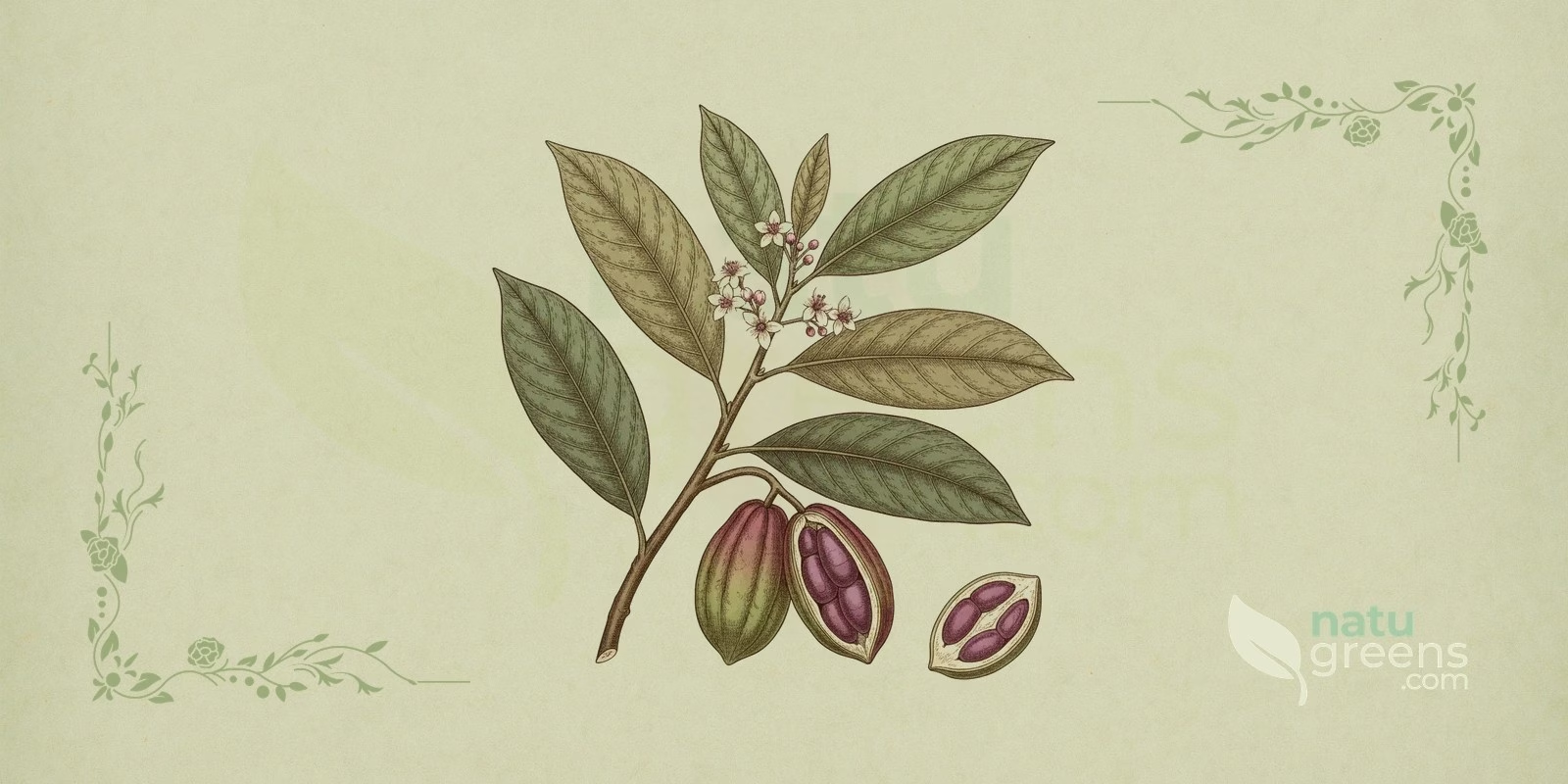
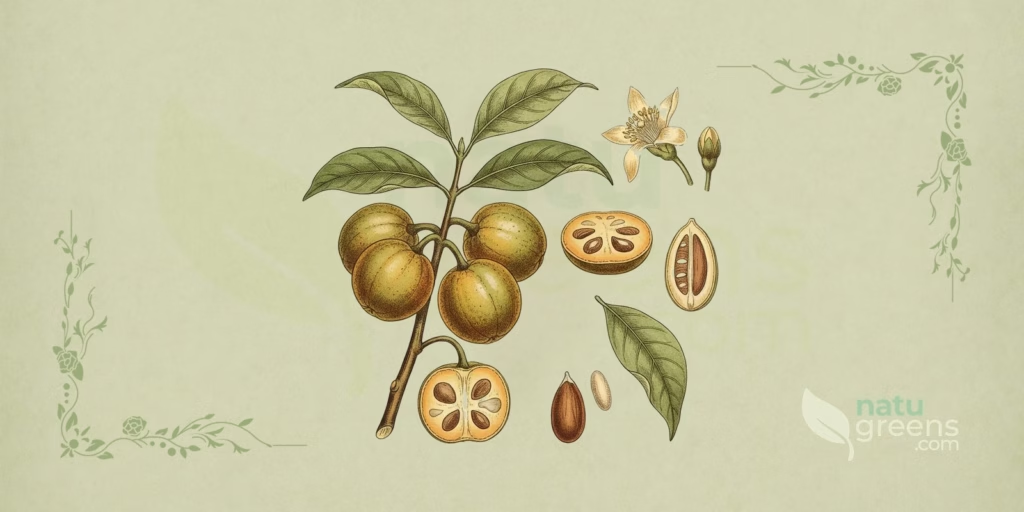
Cola nitida, commonly known as kola nut, is an evergreen tree native to the humid tropical forests of West Africa and a member of the Malvaceae family. For centuries it has been prized for its seeds, which are consumed above all for the stimulating effect associated with their caffeine content. Beyond its everyday role as an invigorating tonic, the kola nut holds a central place in social and spiritual settings, which reveals how deeply it is woven into daily life and into the traditional medicine of many African communities.
Popular and International Names of Kola Nut
The kola nut goes by different names depending on the region and language, and several of them come from West African languages, such as obi and goro, which reached other continents along with the seed itself.
- English: bissy nuts, cola, cola nut, cola seeds, ghanja kola, guru nut, gurru nuts, kola, kola nut.
- French: cola vrai, colatier, goro, noix de cola.
- German: Kolabaum, Kolanuss.
- Italian: noce di cola.
- Portuguese: abajá, café-do-sudão, cola, mukezu, noz de cola, noz-de-cola, obi.
- Spanish: colatero, nuez de cola.
Botanical Synonyms of Cola nitida
The currently accepted name is Cola nitida (Vent.) Schott & Endl. Over time, however, the species has accumulated several botanical synonyms, which reflect its taxonomic history and the different periods and regions in which it was described. The best known are listed below, all of them applied at some point to the same species, which shows how complex botanical nomenclature has become over the centuries.
- Bichea nitida (Vent.) Farw.
- Braxipis nitida (Vent.) Raf.
- Cola acuminata var. latifolia K.Schum.
- Cola alba A.Chev.
- Cola vera K.Schum.
- Sterculia nitida Vent.
The basionym Sterculia nitida, published by Ventenat, explains the abbreviation (Vent.) that still accompanies the current scientific name of the kola nut.
Botanical Family: Malvaceae
Cola nitida belongs to the Malvaceae family, a vast and diverse group of flowering plants that comprises about 4,225 species distributed across roughly 245 genera. For a long time the kola nut was classified in the Sterculiaceae family, which more recent classification systems have merged into Malvaceae. As a result, it now shares a family with plants of great economic and medicinal importance, such as cacao, okra and cotton, as well as countless ornamental and forest species.
Parts of Kola Nut Used
The seeds, commonly called kola nuts, are by far the most widely consumed part. Ethnobotanical records, however, also mention the use of other parts of the tree in teas and other traditional preparations.
- Bark
- Branches
- Flowers
- Leaves
- Seeds (kola nuts)
Ethnobotanical and Traditional Uses
In West Africa, kola nuts are chewed alone or in company, shared at social gatherings and used in ceremonies, which shows how far their use extends beyond the field of health. The uses below reflect records from folk tradition and are no substitute for evaluation by a health professional.
- Cough suppression (traditional use)
- Digestive aid
- Flavoring for soft drinks
- Hunger reduction
- Medicinal, spiritual and social rituals
- Popular supplement for boosting energy
- Relief of respiratory symptoms such as cough and nasal congestion (traditional use)
- Stimulant, chewed alone or in groups
Therapeutic Properties of Kola Nut
The properties below bring together effects attributed to the kola nut by tradition and findings from experimental studies, largely explained by its content of caffeine and other methylxanthines. None of them should be read as a treatment recommendation.
- Antimicrobial (activity of bark extracts observed in the laboratory)
- Antioxidant (activity observed in in vitro studies with polyphenols from the seed and bark)
- Aphrodisiac (reports from folk tradition, without scientific proof)
- Appetite reduction (traditional use, attributed to methylxanthines)
- Circulatory action (traditional use, not confirmed in clinical studies)
- Concentration and attention (effect associated with caffeine, which varies with individual sensitivity)
- Digestive (traditional use; the seed also stimulates gastric acid secretion)
- Diuretic (activity observed in studies in rats, without clinical confirmation)
- Invigorating tonic (traditional accounts of a sense of well-being and energy)
- Mental clarity (feeling of alertness associated with caffeine)
- Nervous and muscular system stimulant (effect attributed to caffeine and theobromine)
- Physical endurance (feeling of vigor reported by tradition, linked to the stimulant effect)
Detailed Phytochemical Profile of Kola Nut
The phytochemical profile of Cola nitida is complex and includes bioactive compounds linked to the effects that tradition attributes to the plant. Caffeine is the most abundant component and the main driver of the seed’s stimulating action. It is accompanied by theobromine, an alkaloid with a milder diuretic and stimulant effect, and by theophylline, another methylxanthine described in the nuts of the genus Cola.
- Alkaloids (besides methylxanthines)
- Caffeine
- Catechins
- Flavonoids
- Tannins
- Theobromine
- Theophylline
Tannins give the seed its astringent, bitter taste, while flavonoids and other polyphenols, such as catechins, account for the antioxidant activity observed in the laboratory. Researchers have already measured the levels of these compounds separately in the white-seeded and red-seeded varieties. How these substances act together is still poorly understood, and most of the available data come from in vitro and animal studies, without equivalent confirmation in clinical studies.
Preparation and Administration Forms of Kola Nut
Kola nut can be consumed in several forms, from chewing the seed itself, the oldest and most widespread practice, to industrial preparations. In all of them, the amount of caffeine ingested depends on the serving size and on the concentration of the product.
- Capsules
- Direct chewing of the nuts
- Powder (for culinary use or in drinks)
- Syrup (base for drinks)
- Tea (infusion)
Because caffeine content varies with the variety and the preparation method, the dose actually ingested is hard to estimate. This underlines the importance of adding up all sources of caffeine over the day and seeking professional guidance before regular use.
Synergy with Other Medicinal Plants
No medicinal synergies of kola nut are well described in the literature. Traditional agriculture in West and Central Africa, however, often grows Cola nitida intercropped with food crops and other trees, such as cacao (Theobroma cacao), its relative in the same botanical family. This practice suggests a favorable coexistence in the farming environment, where the plants may influence one another’s growth and health. There is still a lack of in-depth studies on phytochemical and pharmacological interactions that would allow anyone to speak of medicinal synergy.
Conversely, combining kola nut with other caffeine-rich plants, such as coffee, black tea, green tea, yerba mate and guarana, is not a desirable synergy, because the stimulant effects add up. This combination raises the risk of tachycardia, nervousness and insomnia, which is why it should only be done with professional guidance.
Recipes and Usage Protocols of Kola Nut
The preparations below describe traditional ways of consuming kola nut and are no substitute for individualized guidance, since the amount of caffeine in each serving can vary considerably from one seed to another.
Traditional Stimulant Drink
Kola nut syrup is traditionally diluted in hot or cold water, still or sparkling, to make a stimulant drink consumed in many parts of West Africa, where it is also common to mix it with palm wine in traditional preparations.
This drink is traditionally used as a source of energy and focus, but combining caffeine with alcoholic beverages such as palm wine can mask the perception of alcohol’s effects and is not recommended.
Kola Nut Tea
For tea, tradition calls for adding a small portion of powdered kola nut to a cup of hot water and letting it steep for a few minutes, adjusting the time to the preferred strength of flavor.
This infusion is traditionally taken after meals and as a mild stimulant, but the appropriate amount depends on each person’s sensitivity to caffeine and on the other sources consumed throughout the day, so consult a health professional before making it a regular habit.
Direct Consumption of the Nuts
The most traditional way of using kola nut is to chew the nuts directly, a habit widespread in West Africa and in parts of the north of the continent, where the seed is traditionally used as a stimulant, as a digestive aid and to soothe coughs.
The seed’s flavor, bitter and astringent at the first bites, gradually turns into a mild sweetness as chewing continues.
Powder for Cooking
Ground into a coarse powder, kola nuts serve as a flavoring in various dishes, such as stews, and tradition advises adding it in small amounts, tasting and adjusting gradually to suit the palate.
Because the powder retains the seed’s caffeine, it also lends a stimulating touch to meals, and this contribution should count toward the daily caffeine total, especially for those who already drink coffee, tea or soft drinks.
The preparations above follow traditional records and do not replace professional guidance. Before any internal use, check the contraindications and interactions described in this article.
Associated Therapies
Homeopathy
In homeopathy, Cola nitida appears as a remedy of plant origin whose actions are described in two distinct phases. The first is marked by a stimulant effect, comparable to that of other homeopathic remedies with a similar profile. The central concept this approach associates with the plant’s family is that of the mother’s nurturing love, interpreted from a holistic perspective that links the remedy to emotional and physical well-being. These indications, however, are not supported by controlled clinical studies.
Traditional West African Medicine
In West African communities, kola nut is part of a traditional medicine that does not separate care of the body from social and spiritual life. Thus the same seed chewed to ward off fatigue and cough is also shared in rituals and community gatherings. In this context, the plant’s value goes beyond its physical properties to encompass cultural and symbolic dimensions, which helps explain why the custom has endured across generations.
Contraindications and Side Effects of Kola Nut
Because it contains a significant amount of caffeine, kola nut is not recommended during pregnancy and breastfeeding beyond very occasional use, may worsen uncontrolled hypertension, anxiety and insomnia, and should not be combined with other stimulants (including coffee, tea, guarana, energy drinks and certain medications) without professional guidance because of the risk of additive effects (tachycardia, nervousness, insomnia); caution is advised in people sensitive to caffeine and in pediatric use.
Excessive consumption can trigger a range of adverse effects, such as insomnia, nervousness, irritability, stomach pain, nausea, vomiting and increased heart rate. There are also rare reports of seizures in children after accidental exposure. An experimental study showed that the seed stimulates gastric acid secretion, so people with peptic ulcer or gastritis should also avoid it. The study’s own authors already gave this advice to their ulcer patients.
People with heart problems, anxiety disorders or sleep disorders should avoid consumption. In pregnant rats, administration of kola nut was associated with histological changes in the pups’ cerebellum, an animal finding that reinforces caution during pregnancy.
Possible drug interactions must also be considered with anticoagulants, blood pressure medications and other stimulants, since concurrent use may intensify effects or cause serious adverse reactions. For this reason, anyone on long-term medication should consult a health professional before starting to consume kola nut in any form.
Historical Notes and Interesting Facts
Cola nitida is a botanical relative of cacao (Theobroma cacao), since both belong to the Malvaceae family. The two plants share the presence of methylxanthines such as caffeine and theobromine, as well as great importance in the culture and economy of their regions of origin.
In West Africa, kola nut is a prominent cultural symbol and an essential market commodity, valued for both its properties and its social meaning. In Nigeria, for example, Cola nitida is the species preferred by the Hausa and Fulani of the north, while Cola acuminata is more popular among the Igbo and Igede in the east and center of the country.
One trait that helps tell the two species apart lies in the seed itself, as Cola nitida has only two cotyledons, while Cola acuminata has several. The former is further divided into white-seeded and red-seeded varieties.
The seed also gave its name to cola soft drinks, whose earliest formulas, in the late nineteenth century, used kola nut extract as a source of flavor and caffeine. A popular belief also holds that kola nut can “sweeten stale water” and relieve fatigue, a tradition that reinforces its role as a versatile and respected natural resource throughout history.
Frequently Asked Questions about Kola Nut
What Is Kola Nut?
Kola nut is the seed of the Cola nitida tree, a species native to the tropical forests of West Africa and a member of the Malvaceae family. It is known for the stimulant effect linked to its caffeine content and for its traditional use in many African cultures, both in daily life and in ceremonies.
What Effects Are Attributed to Kola Nut?
Tradition attributes to kola nut increased energy, better concentration, reduced hunger, digestive support and a stimulant effect on the nervous and muscular systems. Much of this is linked to caffeine and theobromine. Other findings, such as antioxidant and diuretic activity, come from laboratory and animal studies, without equivalent clinical confirmation.
Does Kola Nut Contain Caffeine?
Yes, kola nut is naturally rich in caffeine and also contains theobromine, tannins and flavonoids, compounds associated with its stimulant effect and its bitter, astringent taste. For this reason, the seed should be counted as one more source of caffeine in the diet, alongside coffee, tea, soft drinks and energy drinks.
What Are the Side Effects and Contraindications of Kola Nut?
Because of its high caffeine content, excessive consumption can cause insomnia, nervousness, irritability, tachycardia and gastrointestinal disturbances. Kola nut is not recommended during pregnancy and breastfeeding beyond very occasional use and may worsen uncontrolled hypertension, anxiety and insomnia. It also calls for caution in people sensitive to caffeine, in children and in those with ulcers or heart problems, cases in which consulting a health professional is essential.
How Is Kola Nut Traditionally Used?
Traditionally, the nuts are chewed for their stimulant effect, either alone or shared in a group, and they also go into teas, drinks and culinary preparations. In West African communities, the seed is still used in social, medicinal and spiritual rituals, where its value encompasses cultural and symbolic dimensions that go far beyond its physical properties.
Can Kola Nut Be Combined with Other Stimulants?
Not without professional guidance, because combining it with coffee, tea, guarana, energy drinks and certain medications adds up the effect of caffeine and raises the risk of tachycardia, nervousness and insomnia. Anyone who already consumes other sources of caffeine should count kola nut toward their daily total and talk to a health professional before adding it to their routine.
Notice: this content is for informational purposes and does not replace professional medical advice. Consult a physician or herbal practitioner before using medicinal plants, especially during pregnancy, breastfeeding, or alongside medication.
References and Scientific Studies
- PMC2017 Adeosun OI, et al. Methanolic extract of Cola nitida elicits dose-dependent diuretic, natriuretic and kaliuretic activities without causing electrolyte impairment, hepatotoxicity and nephrotoxicity in rats. Int J Physiol Pathophysiol Pharmacol. 2017.
- PMC2007 Atawodi SE, et al. Content of polyphenolic compounds in the Nigerian stimulants Cola nitida ssp. alba, Cola nitida ssp. rubra A. Chev, and Cola acuminata Schott & Endl and their antioxidant capacity. J Agric Food Chem. 2007.
- PMC2021 Atiba FA, et al. Kola nut from Cola nitida vent. Schott administered to pregnant rats induces histological alterations in pups’ cerebellum. PLoS One. 2021.
- PMC2015 Dah-Nouvlessounon D, et al. Phytochemical Analysis and Biological Activities of Cola nitida Bark. Biochem Res Int. 2015.
- PMC2013 Dewole EA, et al. Proximate and phytochemical of Cola nitida and Cola acuminata. Pak J Biol Sci. 2013.
- PMC1986 Ibu JO, et al. The effect of cola acuminata and cola nitida on gastric acid secretion. Scand J Gastroenterol Suppl. 1986.
- PMC2014 Salahdeen HM, et al. Effects of chronic administration of ethanolic extract of kolanut (Cola nitida) and caffeine on vascular function. Afr J Med Med Sci. 2014.