The quince, scientifically known as Cydonia oblonga Mill., is a small fruit tree of the Rosaceae family, prized for millennia for its fragrant, astringent fruits. Native to the milder regions of Asia Minor and southeastern Europe, the species has found a place in both cooking and folk medicine, particularly in the form of teas, infusions and sweets made from the cooked fruit. Laboratory studies are investigating its anti-inflammatory, antimicrobial and antioxidant actions, which is why the plant attracts growing interest in phytochemical and pharmacological research, although none of these effects has yet been confirmed in clinical trials.
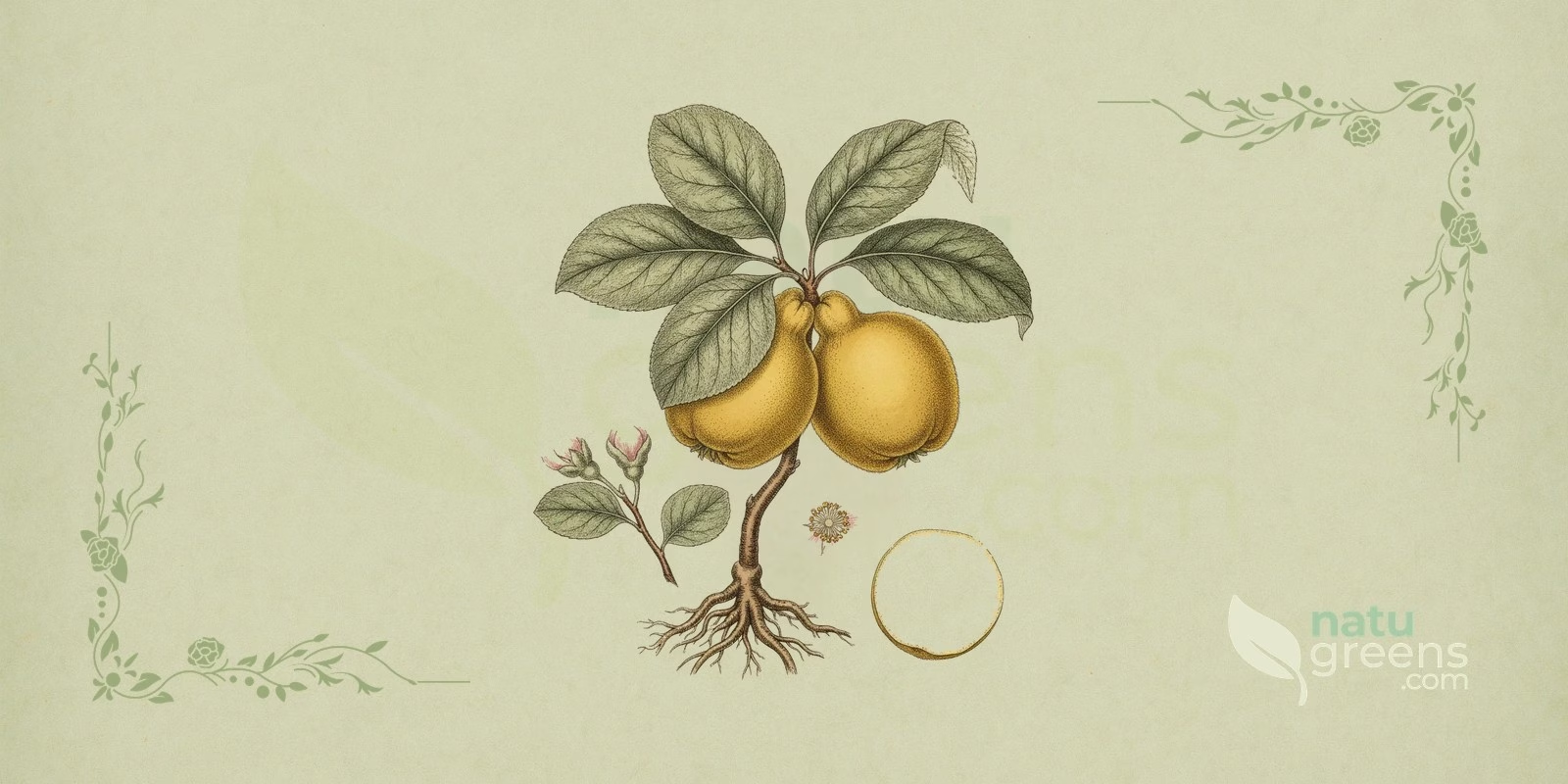
Popular and International Names of Quince
In Portuguese, marmeleiro names the tree and marmelo the fruit, although the two words often circulate as equivalents in everyday speech, whereas English uses quince for both. Names such as Japanese quince and Chinese quince, which sometimes appear associated with the species, belong to other plants of the genera Chaenomeles and Pseudocydonia, and are therefore left out of this list.
- English: common quince, quince.
- French: cognassier, coing.
- German: Echte Quitte, Quitte.
- Italian: cotogno, melo cotogno.
- Portuguese: marmeleiro, marmeleiro-da-europa, marmelo.
- Spanish: cidonia, membrillo.
Botanical Synonyms of Cydonia oblonga
The scientific name Cydonia oblonga Mill. is the most widely accepted for this species, but botanical history has recorded a few synonyms that reflect different classifications and observations over time. Among the best known are Cydonia vulgaris and Pyrus cydonia L., names that help trace the taxonomic evolution of the plant and its relationship with other species of the Rosaceae family.
Botanical Family: Rosaceae
The quince belongs to the Rosaceae family, a vast and diverse group that brings together many fruit species of great economic importance, such as apples, peaches, pears and strawberries. The family is characterized by generally showy flowers and fruits of varied shapes, with a wide distribution around the world, and within it Cydonia oblonga is the only member of the genus Cydonia, which highlights its botanical uniqueness.
Parts of Quince Used
- Fruits (cooked or baked, in teas, sweets, jellies and quince paste)
- Leaves (dried, in infusions)
- Seeds (only whole and soaked in water to obtain the mucilage, then discarded)
Ethnobotanical and Traditional Uses
Throughout history, the quince has been used across many cultures both in the kitchen and in folk medicine. In Portugal, the fruit is traditionally cooked, above all into marmelada (quince paste), or baked, and it is rarely eaten raw because of its strong astringency, whereas in Brazil consumption is mostly of industrial products and likewise centers on quince paste. Folk medicine also records the use of the seeds as an antidiarrheal, always in the form of the mucilage released when the whole seeds are left to soak in water, a use that remains a matter of traditional record and has no clinical evidence behind it. Infusions of the leaves and fruits round out this household repertoire and are linked by tradition to mild digestive complaints, such as passing bouts of diarrhea and intestinal gas.
Therapeutic Properties of Quince
The properties below bring together records from folk tradition and findings from laboratory or animal studies, and none of them replaces medical diagnosis or treatment.
- Anti-allergic (activity observed in laboratory studies, without clinical confirmation)
- Antidepressant (effect investigated only in animal models, without clinical confirmation)
- Anti-inflammatory (effect observed in laboratory and animal studies)
- Antimicrobial (action against microorganisms observed in laboratory studies)
- Antioxidant (polyphenol activity measured in the laboratory in the pulp, peel and seeds)
- Astringent (tightens tissues, the basis of its traditional use in mild diarrhea)
- Carminative (traditional record of relief from intestinal gas)
- Diuretic (traditional record, with no clinical studies to confirm it)
- Hepatoprotective (effect observed in animal studies)
- Hypoglycemic (blood glucose reduction observed in animal studies, without clinical confirmation)
- Tonic (traditional record of use as a general tonic)
Detailed Phytochemical Profile of Quince
The quince is a rich source of bioactive compounds, and its phytochemical profile includes caffeoylquinic acids, flavonoids, glycosides, pectin, polyphenols and tannins, unevenly distributed among the peel, pulp, leaves and seeds. Polyphenols and flavonoids, abundant in the peel and in other parts of the plant, account for much of the antioxidant activity measured in the laboratory, while pectin, present in high concentration in the fruit, is a polysaccharide with important applications in the food and pharmaceutical industries. The seeds, for their part, contain tannins and glycosides linked to their astringent and antimicrobial properties, and among these glycosides is amygdalin, a cyanogenic compound capable of releasing cyanide when the seed is crushed or chewed.
- Amygdalin (cyanogenic glycoside found in the seeds)
- Caffeoylquinic acids (phenolic compounds of the polyphenol group)
- Flavonoids (concentrated mainly in the peel)
- Mucilage (gel released by the surface of whole seeds on contact with water)
- Pectin (polysaccharide abundant in the fruit pulp)
- Polyphenols (mainly responsible for the antioxidant activity)
- Tannins (associated with the astringency of the raw fruit and also present in the seeds)
Preparation and Administration Forms of Quince
- Cooked or baked fruit
- Extracts
- Jellies and quince paste
- Mucilage from whole seeds (soaked in water, never crushed)
- Teas (infusions of leaves and fruits)
- Tinctures
In home use, quince serves mainly as food, cooked, baked or turned into jelly and quince paste, since the raw fruit is very astringent and should be eaten cooked. Leaf and fruit infusions follow the usual method for homemade teas, while extracts and tinctures are concentrated forms whose amount and duration of use need to be set by a health professional. The traditional mucilage is obtained by leaving the whole seeds to soak in water, without crushing, chewing or swallowing them, and the seeds are discarded once they have released the gel.
Synergy with Other Medicinal Plants
In folk tradition, quince appears combined with other medicinal plants in homemade preparations, although these mixtures have not been evaluated in clinical studies, and any combination should first be discussed with a health professional, especially by people who take medication on a regular basis.
Combination with Chamomile and Peppermint
For digestive discomfort, there is a traditional record of pairing quince with chamomile (Matricaria chamomilla) or with peppermint (Mentha × piperita), two herbs long established in homemade teas served after meals.
Combination with Echinacea and Ginger
In folk preparations linked to immunity, quince appears alongside echinacea (Echinacea purpurea) or ginger (Zingiber officinale), a combination that belongs to the traditional repertoire and whose effects have not been confirmed by research in humans.
Recipes and Usage Protocols of Quince
Traditional Quince Leaf Infusion
Ingredients: 1 tablespoon of dried quince leaves and 250 ml of boiling water.
Preparation: Add the dried leaves to the boiling water, cover and let steep for 10 minutes before straining and drinking warm. This infusion is traditionally used during episodes of mild diarrhea because of the astringent properties of the leaves, and for how often and for how long to use it, consult a health professional. Persistent diarrhea, diarrhea with fever or with blood, as well as any such case in children and older adults, requires medical evaluation before turning to teas.
Homemade Quince Paste for Winter
Ingredients: 1 kg of ripe quinces, 800 g of sugar and the juice of 1 lemon.
Preparation: Wash the quinces well, remove the peel and the seeds, which must be discarded, and cut the pulp into pieces. Cook the pieces in water until tender, drain them and pass the pulp through a food mill or blend it into a purée. Return the purée to the heat with the sugar and lemon juice, stirring constantly, until it reaches the quince paste stage, when the mixture pulls away from the bottom of the pan, and then pour it into sterilized jars. Quince paste is a traditional, nourishing sweet, ideal with bread and cheese.
The preparations above follow traditional records and do not replace professional guidance. Before any internal use, check the contraindications and interactions described in this article.
Associated Therapies
Phytotherapy
In phytotherapy, quince extracts appear in formulations aimed at gastrointestinal discomfort and inflammatory processes, and they are also studied for their antioxidant activity. The richness of the fruit in pectin also explains the interest in preparations related to digestive health, but the herbal use of quince should be guided by a qualified professional, who determines the appropriate form of use and amount for each case.
Functional Nutrition
In the diet, quince that is cooked, baked or made into jelly is valued for its pectin, a soluble fiber that gives sweets their body and that tradition associates with the formation of firmer stools. Since quince paste contains a large amount of sugar, anyone who needs to control their blood glucose should take this into account before eating it often.
Contraindications and Side Effects of Quince
Quince is a traditionally consumed food and, in its culinary forms, is usually well tolerated, but medicinal use of the plant calls for some care. The seeds contain amygdalin (a cyanogenic glycoside): the traditional mucilage is extracted by leaving the whole seeds to soak in water, never crushed, chewed or swallowed, and the seeds must be discarded afterwards. When the seed is broken, amygdalin can release hydrogen cyanide, a toxic substance, which is why no preparation should include ground seeds.
The raw fruit is very astringent and should be eaten cooked. Because of the same astringent effect, excessive consumption of quince can cause or worsen constipation and is not advisable for people with hemorrhoids. Individuals with hypersensitivity or allergy to any component of the plant should avoid it, and although allergic reactions are rare, they remain possible.
Pregnant and breastfeeding women deserve special attention: since there are no safety data for medicinal use (beyond food use) during pregnancy and breastfeeding, the recommendation is to limit consumption to the cooked fruit and quince paste as food. In children, leaf or fruit teas should only be given under a pediatrician’s guidance, and the seeds should never be left within their reach. People taking diabetes medication (hypoglycemic agents) or antidepressants should talk to their doctor before using quince extracts or tinctures, since animal studies are investigating effects on blood glucose and mood and possible interactions have not been evaluated in humans.
It is also important not to confuse quince with plants of the genera Chaenomeles and Pseudocydonia, sometimes called Japanese quince or Chinese quince, which are different species and do not necessarily share the same use and safety data. If in doubt, or for any medicinal use, consult a health professional.
Historical Notes and Interesting Facts
The quince carries a history rich in curiosities, starting with Ancient Greece, where the fruit was associated with the goddess Aphrodite and regarded as a symbol of love, fertility and happiness. Greek brides commonly ate quinces before their wedding to perfume their breath, and it is believed that the golden apples mentioned in myths, such as those of the Garden of the Hesperides, may have been quinces. The word marmalade itself goes back to the Portuguese marmelada, formed directly from marmelo, the Portuguese name for quince, which shows the historical importance of the fruit in cooking, while in the Balkans there is a tradition of planting a quince tree when a baby is born, as a symbol of life, love and fertility. The tree has been cultivated for millennia, and some accounts place its cultivation as far back as ancient Mesopotamia.
The Asian quinces of the genera Chaenomeles and Pseudocydonia also belong to the Rosaceae family but are distinct plants from the true quince, and it is to them that names such as Japanese quince and Chinese quince properly apply, even though these names are sometimes mistakenly given to Cydonia oblonga.
Frequently Asked Questions about Quince
Is Quince Tea Safe for Children?
Tea made with quince leaves or fruits should only be given to children in small amounts and always under the guidance of a pediatrician or a qualified herbalist. The seeds must never be crushed, chewed or swallowed, as they contain amygdalin, a cyanogenic glycoside. Before giving any quince preparation to a child, consult a health professional.
How Is Quince Tea Traditionally Used for Digestion?
Folk tradition uses quince tea for its astringent properties, above all during episodes of mild diarrhea, and also as a carminative to relieve intestinal gas. Laboratory studies are also investigating a possible anti-inflammatory action in the gastrointestinal tract, and the pectin in the fruit is associated with the formation of firmer stools. These uses do not replace medical evaluation, especially when diarrhea persists.
Can Quince Be Used During Pregnancy?
There are no safety data for the medicinal use of quince, beyond food use, during pregnancy and breastfeeding. The cooked fruit and quince paste are traditionally eaten as food, but pregnant and breastfeeding women should avoid teas and concentrated extracts without medical guidance, precisely because conclusive studies are lacking, and when in doubt the best course is to talk to an obstetrician.
Can Quince Seeds Be Eaten?
No, because the seeds contain amygdalin, a cyanogenic glycoside that can release hydrogen cyanide when the seed is broken. Traditional use is limited to the mucilage, obtained by leaving the whole seeds to soak in water without crushing or chewing them, and the seeds must be discarded afterwards.
Why Is Quince Not Usually Eaten Raw?
Raw quince has firm flesh and is very astringent, so it should be eaten cooked. Cooked, baked or turned into jelly and quince paste, the fruit becomes soft and fragrant, and this is how the Portuguese and Brazilians traditionally eat it.
Are Quince and Japanese Quince the Same Plant?
No, because names such as Japanese quince and Chinese quince refer to plants of the genera Chaenomeles and Pseudocydonia, which belong to the same Rosaceae family but are species different from Cydonia oblonga. For this reason, use and safety information for one plant should not be automatically transferred to the other.
Notice: this content is for informational purposes and does not replace professional medical advice. Consult a physician or herbal practitioner before using medicinal plants, especially during pregnancy, breastfeeding, or alongside medication.
References and Scientific Studies
- PMC2022 Al-Zughbi I, Krayem M. Quince fruit Cydonia oblonga Mill nutritional composition, antioxidative properties, health benefits and consumers preferences towards some industrial quince products: A review. Food Chem. 2022.
- PMC2022 Amerizadeh A, et al. Cardiovascular Effects of Cydonia oblonga Miller (Quince). Evid Based Complement Alternat Med. 2022.
- PMC2016 Ashraf MU, et al. Cydonia oblonga M., A Medicinal Plant Rich in Phytonutrients for Pharmaceuticals. Front Pharmacol. 2016.
- PMC2024 Kostecka-Gugała A. Quinces (Cydonia oblonga, Chaenomeles sp., and Pseudocydonia sinensis) as Medicinal Fruits of the Rosaceae Family: Current State of Knowledge on Properties and Use. Antioxidants (Basel). 2024.
- PMC2004 Silva BM, et al. Quince (Cydonia oblonga Miller) fruit (pulp, peel, and seed) and Jam: antioxidant activity. J Agric Food Chem. 2004.