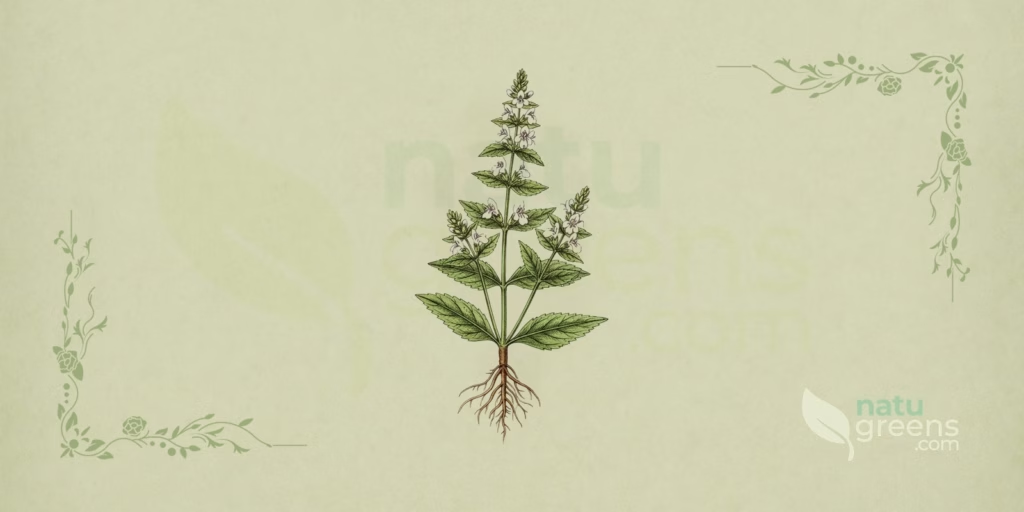
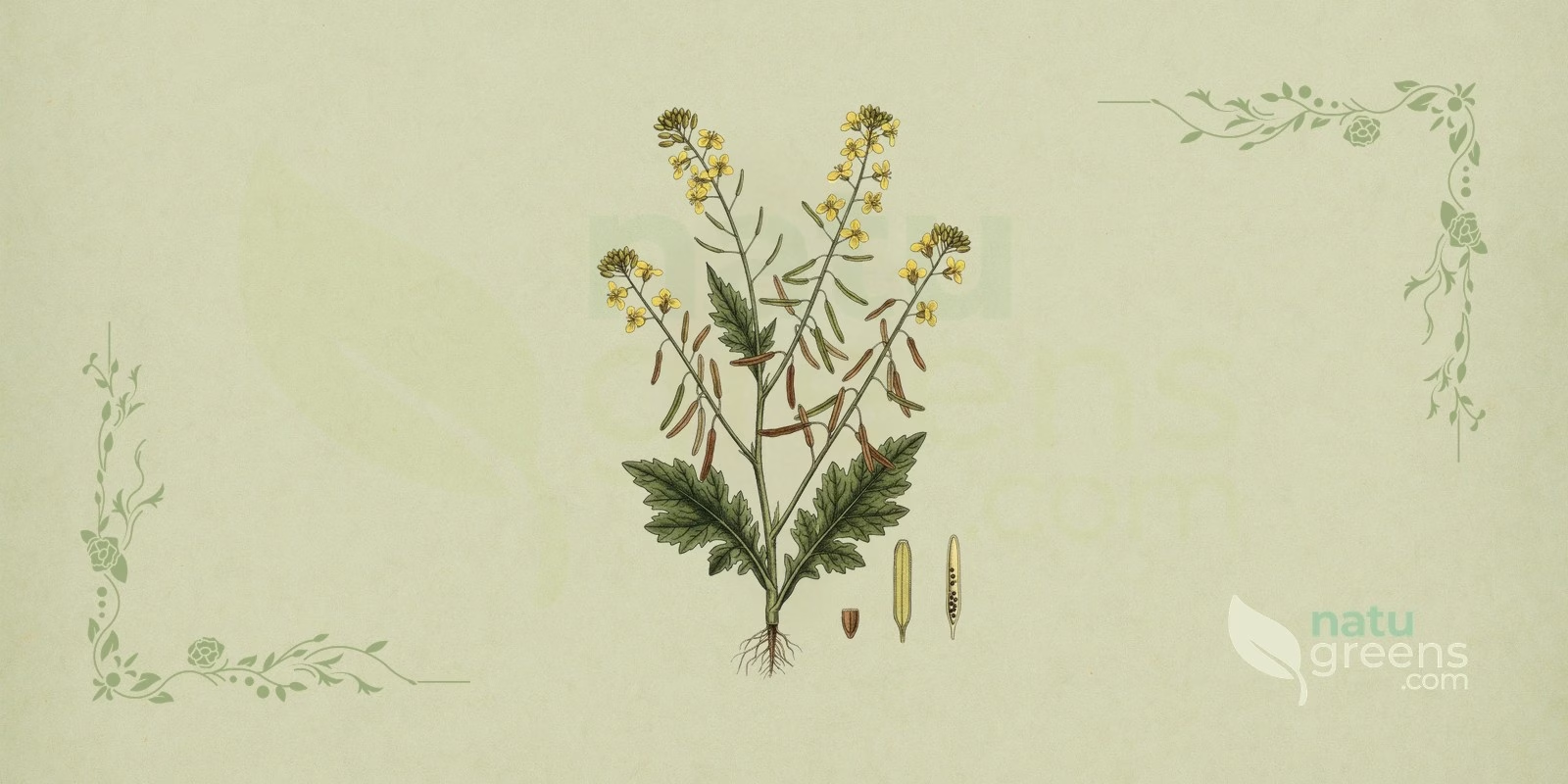
Brassica nigra (L.) W.D.J.Koch / Black Mustard, commonly known as black mustard or true mustard, is an annual herbaceous plant of the Brassicaceae family, described by Linnaeus as Sinapis nigra and later transferred to the genus Brassica by Koch. Native to parts of Europe, Africa and Asia, the species has spread to many regions of the world thanks to its culinary use and the medicinal properties attributed to it. It has been cultivated for centuries both for its seeds, the raw material for condiments, and for its leaves and stems, which are eaten as a vegetable. Its yellow, four-petaled flowers follow the typical pattern of the family and give rise to narrow pods called siliques, which hold black or dark brown seeds.
In the European herbal tradition and in many other cultures, black mustard has long been valued as a home remedy, with uses ranging from aiding digestion to easing muscle and joint pain. Its phytochemical makeup includes glucosinolates, phenolic compounds and flavonoids, to which the anti-inflammatory, antioxidant and antimicrobial activities described in experimental studies are attributed. Modern research is also investigating, in laboratory-grown cells and in animal models, possible antiproliferative effects and effects on blood glucose, preliminary findings that have not yet been confirmed in human clinical trials.
Popular and International Names of Black Mustard
- English: black mustard, brown mustard, true mustard.
- French: moutarde noire.
- German: Schwarzer Senf.
- Italian: senape nera.
- Portuguese (Brazil and Portugal): mostarda-negra, mostarda-preta, mostarda-verdadeira.
- Spanish: mostaza negra.
Botanical Synonyms of Brassica nigra
- Mutarda nigra Bernh. (accepted name in World Flora Online)
- Sinapis nigra L. (basionym)
Sinapis nigra L. is the basionym of the species, that is, the name under which Linnaeus originally described it. At the time, the genera Brassica and Sinapis did not yet have the boundaries that botany would later draw. The name still appears frequently in older literature, in some taxonomic databases and in homeopathy, which to this day refers to the remedy as Sinapis nigra. This coexistence of names shows how complex classification within the Brassicaceae family has always been.
In the current World Flora Online classification, Brassica nigra (L.) W.D.J.Koch is listed as a synonym of the accepted name Mutarda nigra Bernh., adopted in recent taxonomic revisions of the group. Even so, this article keeps Brassica nigra as the main binomial, because it is the name universally recognized in the scientific literature, in trade and by the public, which makes it easier both to find studies and to identify the plant correctly.
Botanical Family: Brassicaceae
The Brassicaceae family, formerly known as Cruciferae, ranks among the most economically important plant families, with about 338 genera and more than 3,700 species distributed worldwide. The feature behind its old name is its four petals arranged in the shape of a cross. It includes many plants of great importance as food, such as broccoli, cabbage, cauliflower, radish and the mustards themselves.
Black mustard shares the morphological and chemical traits typical of the group, especially the presence of glucosinolates, which are responsible for its pungent flavor and for much of the biological activity studied in the plant. The bioactive compounds of the Brassicaceae, with anti-inflammatory, antioxidant and antiproliferative activities observed mainly in the laboratory, are the subject of intense pharmacological and nutritional research and serve as a basis for the development of functional foods and plant-based medicines.
Parts of Black Mustard Used
- Flowers
- Leaves
- Seeds
The seeds are the focus of culinary and medicinal interest, since they yield the meal used in poultices, the oil and the condiments, while the leaves and flowers appear in homemade infusions and the young leaves also reach the table as a pungent leafy green.
Ethnobotanical and Traditional Uses
- Abscesses and other skin problems, applied locally.
- Digestive aid.
- Digestive stimulant.
- Induction of vomiting (emetic), a historical use now discouraged.
- Malaria, with a seed paste (ethnobotanical record, without clinical evidence).
- Plasters and poultices for muscle stiffness and joint discomfort.
- Reduction of fluid retention (edema).
- Relief of joint and muscle pain (rheumatism).
- Relief of rheumatic and neuralgic pain (topical application).
- Respiratory problems, with poultices applied to the chest.
Many of these records stem from the rubefacient action of the ground seeds, which warm and redden the skin where they are applied, and this explains the old reputation of mustard plasters for pain and chest congestion. Use as an emetic, to induce vomiting, belongs to the history of medicine and is not recommended today, given the intense irritation that high doses cause in the digestive tract.
Therapeutic Properties of Black Mustard
- Antibacterial (activity against bacteria observed in laboratory tests)
- Anti-inflammatory (reduction of inflammatory markers in experimental studies)
- Antimicrobial (action on various microorganisms in in vitro assays)
- Antioxidant (neutralization of free radicals in laboratory assays)
- Antiproliferative (activity observed in laboratory studies, without clinical evidence)
- Hypoglycemic (lowering of blood glucose observed in preliminary animal studies)
- Neuroprotective (protection of nerve tissue investigated in preliminary studies)
- Nootropic (effects on memory and learning investigated in preliminary studies)
- Rubefacient (produces local warmth and redness on the skin, the basis of its traditional use in poultices)
The most frequently cited antiproliferative effect comes from a 2020 study in which seed extract inhibited the proliferation, migration and invasion of human lung cancer cell lines grown in the laboratory. The result serves as a starting point for further research, but it does not support using the plant to prevent or treat tumors. Likewise, the data on blood glucose and on the nervous system come from experimental models and have not yet been confirmed in clinical trials.
Detailed Phytochemical Profile of Black Mustard
- Alkaloids
- Brassinosteroids
- Flavonoids
- Glucosinolates
- Glycosides
- Isothiocyanates, most notably allyl isothiocyanate
- Monounsaturated fatty acids
- Phenolic compounds
- Sinigrin, the main glucosinolate in the seeds
- Tannins
The component that most defines the plant is sinigrin, a glucosinolate that remains stable while the seed is whole and dry. When the seeds are crushed and come into contact with water, the enzyme myrosinase, stored in separate cells, hydrolyzes sinigrin and releases allyl isothiocyanate. This volatile compound is responsible for the characteristic heat of mustard, for its rubefacient action on the skin and, with longer exposure, for the vesicant effect that can raise blisters. Monounsaturated fatty acids predominate in the seed oil, while phenolic compounds, flavonoids and tannins contribute to the antioxidant activity measured in the laboratory.
Preparation and Administration Forms of Black Mustard
Mustard Plaster
Ground black mustard seeds mixed with warm water form a paste that tradition applies as a plaster, always wrapped in cloth and never in direct contact with the skin. This preparation is traditionally used for muscle, joint and lower back pain and, in the household medicine of earlier times, also for respiratory conditions such as pneumonia and pleurisy, which today require medical care and should not be managed at home. Application should be brief, because the allyl isothiocyanate released by the paste can cause irritation, blisters and chemical burns when contact is prolonged.
Infusion
Black mustard leaves and flowers can be used in homemade infusions, prepared with a small amount of the dried plant in boiling water, left to steep for 5 to 7 minutes and strained before drinking. Tradition turns to this drink to aid digestion and as a general tonic. There is, however, no safely established internal medicinal dose, and large amounts irritate the stomach and intestines, so frequency and quantity should be decided with a healthcare professional.
Mustard Oil
The fixed oil pressed from the seeds is used topically in massages that tradition directs at relieving rheumatic and neuralgic pain, and anti-inflammatory properties linked to its monounsaturated fatty acid content are attributed to it. In some cultures it is customary to warm this oil and massage newborns with it to give them warmth and comfort. This practice should not be copied, because the skin of babies and young children is thin and reacts easily to the irritant compounds in mustard. It is also important to distinguish pressed oil from so-called mustard essential oil, which is obtained by distillation and consists almost entirely of allyl isothiocyanate, a substance so irritating that it is unsuitable for massage or for home aromatherapy.
Culinary Use
In the kitchen, whole seeds are toasted in hot oil or ground to make mustard pastes, and young leaves go into salads and sautéed dishes, forms in which the plant has been eaten for centuries and which prove safe in the usual seasoning amounts.
Synergy with Other Medicinal Plants
Relief of Muscle and Joint Pain
Tradition pairs black mustard with turmeric (Curcuma longa) and ginger (Zingiber officinale) in preparations traditionally used for muscle pain, arthritis and rheumatism. The rationale behind the combination is to bring together the isothiocyanates of mustard, the curcuminoids of turmeric and the gingerols of ginger, compounds with anti-inflammatory activity described in experimental studies. The blend itself, however, has never been evaluated in clinical trials. It appears mainly in external applications, and any internal use must respect the precautions described under contraindications.
Digestive Support
For digestion, black mustard is traditionally combined with carminative herbs such as fennel (Foeniculum vulgare) and peppermint (Mentha × piperita), in preparations used to relieve gas, cramps and a feeling of heaviness in the stomach. The glucosinolates of mustard are thought to act together with the essential oils of the other two plants to stimulate the secretion of digestive enzymes and ease discomfort, an explanation that rests more on traditional use than on studies of the combination.
Recipes and Usage Protocols of Black Mustard
Traditional Plaster for Muscle Pain
An external preparation traditionally used for muscle pain and localized stiffness, which should always be applied over cloth, for a short time and never on damaged skin, on young children or on elderly people with fragile skin.
Ingredients: 2 tablespoons of ground black mustard seeds, enough warm water to form a paste and two clean cotton cloths.
Preparation: Mix the ground seeds with the warm water until you have a smooth paste. Spread the paste over one of the cloths and cover it with the second, so that the mixture sits between two layers of fabric and does not touch the skin. Rest the plaster on the painful area for a few minutes, checking the skin often, and remove it at once if an intense burning sensation appears. Then rinse the area with cold water. Do not use on irritated, broken or sensitive skin.
Digestive Leaf Infusion
A homemade drink traditionally used to aid digestion and relieve the feeling of bloating after meals, with no established medicinal dose for internal use.
Ingredients: a small amount of dried black mustard leaves and a cup of boiling water.
Preparation: Place the dried leaves in a cup and add the boiling water. Cover, let steep for 5 to 7 minutes and strain. Tradition recommends the drink after meals, but the amount and frequency depend on individual guidance, so consult a healthcare professional before use, especially during pregnancy or if you have stomach or thyroid problems.
Massage Oil for Rheumatic Discomfort
An oil for external use, traditionally applied for rheumatic and joint pain and made with pressed mustard oil rather than mustard essential oil, which is far too irritating for the skin.
Ingredients: a small amount of pressed black mustard oil and 30 ml of sweet almond or jojoba oil.
Preparation: Mix the oils in a dark glass bottle, keeping the mustard oil in a much smaller proportion than the carrier oil. Before first use, test the blend on a small patch of skin and watch for redness or burning. If the skin tolerates it, apply a small amount to the painful area and massage gently until absorbed, no more than 1 to 2 times a day. Avoid sun exposure after application and do not use on children, on broken skin or near the eyes.
The preparations above follow traditional records and do not replace professional guidance. Before any internal use, check the contraindications and interactions described in this article.
Associated Therapies
Clinical Phytotherapy
In clinical phytotherapy, black mustard appears in formulations such as extracts and capsules, used for the anti-inflammatory and antioxidant activities described in studies, and some of these extracts are standardized to glucosinolates and isothiocyanates, its main bioactive compounds. A practitioner may recommend it as an adjunct in inflammatory conditions and for digestive support, but the possible role of the plant in relation to tumors remains confined to laboratory research and does not justify its use for that purpose. The dose and form of administration are determined case by case, taking into account the health status of the person and possible drug interactions.
Homeopathy
In homeopathy, the plant is known as Sinapis nigra, a remedy prepared from the seeds according to the principles of dilution and potentization. The homeopathic materia medica describes it for conditions such as allergic rhinitis with postnasal drip, dry throat and frontal headache, as well as digestive complaints with a burning sensation and gas. The choice of potency and frequency depends on the totality of symptoms, according to the homeopathic approach, and these indications are based on the tradition of this practice, not on controlled clinical trials.
Contraindications and Side Effects of Black Mustard
Species Identification
The following guidance refers to Brassica nigra (L.) W.D.J.Koch, a species that World Flora Online records under the accepted name Mutarda nigra Bernh. Other mustards, such as Indian mustard (Brassica juncea), differ in composition and intensity, and the safety information for one species should not be applied automatically to the other.
Topical Use and Risk of Chemical Burns
When the sinigrin in the seeds comes into contact with water, it releases allyl isothiocyanate, a vesicant substance capable of damaging the skin. For this reason, a mustard poultice should be placed only over cloth, never directly on the skin, for a short time, and never on damaged skin, on young children or on elderly people with fragile skin, because of the real risk of chemical burns and blisters. The same caution applies to mustard essential oil, which concentrates this isothiocyanate and should be neither applied to the skin nor inhaled.
General Contraindications
Black mustard is contraindicated in people with a known allergy to plants of the Brassicaceae family. During pregnancy, medicinal doses should be avoided, because there are reports that the plant stimulates menstruation and could, in theory, cause miscarriage. Medicinal use should also be avoided while breastfeeding, since information on the effects on the nursing infant is lacking. Young children should not be given medicinal preparations of the plant, either internally or as skin applications. People with clotting disorders or who take anticoagulants need to be cautious, as some components may enhance the effect of these medications.
Common Side Effects
In culinary amounts, as a seasoning and leafy vegetable, black mustard is safe for most people. Internal medicinal doses, on the other hand, irritate the gastrointestinal tract. Eating large amounts of the seeds can injure the throat and, in severe cases, lead to heart failure, diarrhea, drowsiness, breathing difficulty, coma and death. At very high intakes, glucosinolates can interfere with thyroid function in people with iodine deficiency, and anyone with thyroid disease should talk to their doctor before any use beyond the culinary. Since there is no safely established internal medicinal dose, any such use requires professional supervision.
Drug Interactions
Black mustard may interact with diabetes medications, because there are indications that it may lower blood glucose. Added to the effect of glucose-lowering drugs, this can cause an excessive drop in blood sugar, which calls for glucose monitoring and possible adjustment of the medication by the doctor. Medicinal use of the plant should be stopped at least 2 weeks before any surgery, because of possible interference with blood glucose control during and after the procedure. Anyone taking anticoagulants should tell their doctor before starting any medicinal black mustard preparation.
Historical Notes and Interesting Facts
Mustard in Antiquity
The use of black mustard dates back to Antiquity, when the Romans ground the seeds both to make a pungent condiment and for medicinal purposes. Pliny the Elder mentions mustard in his Naturalis Historia as a remedy for various ailments. The pungency of the plant was valued not only for enhancing the flavor of food but also for its stimulating and rubefacient action, which justified applying it to the skin to ease pain and inflammation. The constant presence of mustard in ancient texts shows the cultural and medicinal weight it has carried throughout history.
Mustard in World Cuisine
Beyond its medicinal role, black mustard is an important ingredient in many of the cuisines of the world. Its seeds were long the basis of prepared mustards such as Dijon, although today Indian mustard (Brassica juncea) is more widely used because it is easier to harvest. In Indian cooking, black mustard seeds are often fried briefly in hot oil to release their aroma and flavor, an essential step in many dishes. The young leaves are also eaten as a vegetable, adding a peppery touch to salads and stews.
Frequently Asked Questions about Black Mustard
Is Black Mustard Safe for Daily Consumption?
In culinary amounts, as part of the diet, black mustard is considered safe for most people. Internal medicinal doses and prolonged skin applications call for caution and professional supervision, because they irritate the digestive tract and can burn the skin. Pregnant and breastfeeding women, young children and people with diabetes, clotting disorders or thyroid problems need to pay particular attention to the contraindications and interactions.
What Are the Main Benefits of Black Mustard?
Tradition uses black mustard to aid digestion, to ease muscle and joint pain through poultices and as a general tonic. Laboratory studies describe anti-inflammatory, antioxidant, antimicrobial and antiproliferative activities linked to the glucosinolates, phenolic compounds and flavonoids of the plant. Possible neuroprotective effects and effects on blood glucose are also being investigated, but all of these findings are preliminary and do not replace medical care.
How Is Black Mustard Traditionally Used for Muscle Pain?
The traditional preparation is the plaster, made from ground seeds and warm water mixed into a paste, which should sit between layers of cloth and never touch the skin directly. Application is brief, with the skin checked frequently, and is stopped at the first sign of intense burning. Another option is a gentle massage with pressed mustard oil well diluted in a carrier oil, always patch-tested first on a small area and never done on irritated or broken skin.
Can Black Mustard Help with Digestion?
Black mustard has a long traditional record as a digestive stimulant, and infusions of the leaves or flowers are used to relieve gas and cramps. Glucosinolates are thought to stimulate the secretion of digestive enzymes, but this has not yet been confirmed in clinical studies. Because high doses irritate the stomach, the amount should be decided with a healthcare professional.
Are There Side Effects from Using Black Mustard?
Yes, especially outside culinary amounts, since prolonged application on the skin causes irritation, blisters and chemical burns. Eating large amounts of the seeds can injure the throat and, in extreme cases, cause heart failure, diarrhea, drowsiness, coma and death. Excess glucosinolates can also affect the thyroid in people with iodine deficiency. For this reason, professional guidance is needed before any medicinal use of the plant.
Why Can a Black Mustard Poultice Cause Burns?
On contact with water, the sinigrin in the seeds releases allyl isothiocyanate, a vesicant substance that irritates the skin and can raise blisters. That is why the poultice should be applied only over cloth, never directly on the skin, for a short time, and never on damaged skin, on young children or on elderly people with fragile skin. If intense burning or strong redness appears, remove the plaster at once and rinse the area with cold water.
Notice: this content is for informational purposes and does not replace professional medical advice. Consult a physician or herbal practitioner before using medicinal plants, especially during pregnancy, breastfeeding, or alongside medication.
References and Scientific Studies
- PMC2025 Thirumavalavan M. An Overview of Black Mustard (Brassica nigra L.): Important Facts, Constituents, Health Benefits, Profuse Therapeutic Applications, and Adverse Effects: A Mini Review. J Food Sci. 2025.
- PMC2020 Ahmed AG, et al. Mustard Seed (Brassica nigra) Extract Exhibits Antiproliferative Effect against Human Lung Cancer Cells through Differential Regulation of Apoptosis, Cell Cycle, Migration, and Invasion. Molecules. 2020.
- PMC2019 Agrawal S, et al. Brassica Nigra: Ethopharmacological Review of a Routinely Used Condiment. Curr Drug Discov Technol. 2019.