Pistacia lentiscus L. / Mastic Tree is an evergreen shrub or small dioecious tree of the Anacardiaceae family, native to the Mediterranean Basin. The species is widely distributed from Morocco and the Iberian Peninsula to Turkey and Iran. For millennia, the mastic tree has been prized above all for its aromatic resin, mastic, which is still harvested by traditional methods on the Greek island of Chios. The product became known as “tears of Chios”, a name that evokes the drops that ooze from the trunk. This resin has been used as a flavoring, as chewing gum and in traditional medicine, which attributes to it several medicinal properties that science is still studying.
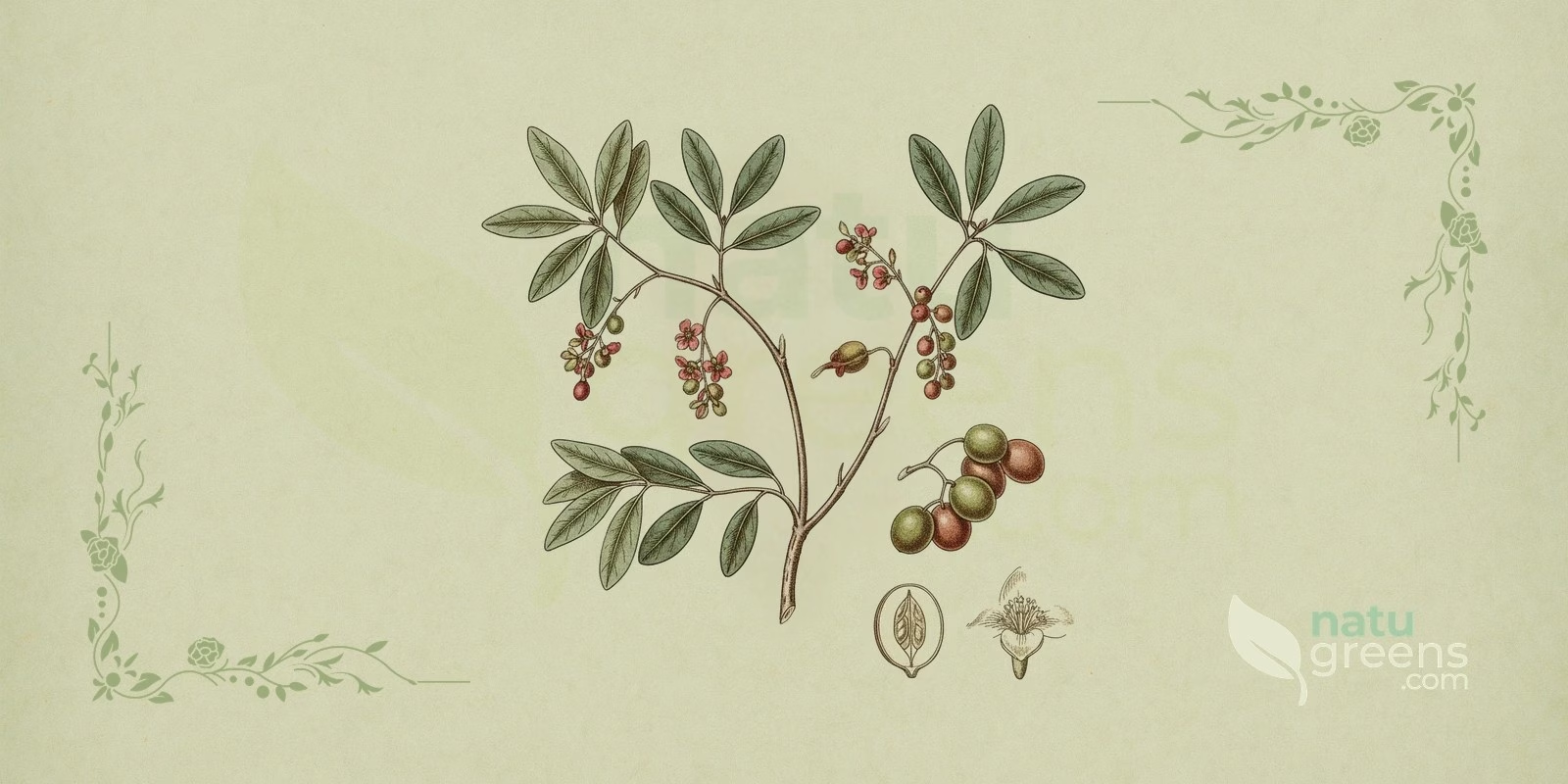
Pistacia lentiscus is rich in bioactive compounds such as flavonoids, phenolic acids and triterpenes. These compounds underlie the antibacterial, anti-inflammatory and antioxidant activities observed in laboratory studies, as well as the antidiabetic action investigated more recently in experimental models. The European Medicines Agency (EMA) recognizes mastic as a traditional herbal medicinal product for mild dyspeptic disorders and mild skin inflammation. This classification rests on its long history of use, not on conclusive clinical trials. The fruits, although rarely eaten, are edible and have a sour taste reminiscent of raisins. Modern research continues to explore the potential of this Mediterranean plant, although so far there is no robust clinical evidence for most of its folk uses.
Popular and International Names of the Mastic Tree
In different countries, the mastic tree goes by names that refer both to the plant itself and to the resin it produces. The list below brings together the names most widely used in the main European languages.
- English: Chios mastic, lentisk, mastic, mastic resin plant, mastic tree.
- French: arbre au mastic, lentisque, pistachier lentisque.
- German: Mastixstrauch, Wilde Pistazie.
- Italian: albero del mastice, lentisco.
- Portuguese: lentisco, mástique (name given to the resin).
- Spanish: árbol de la almáciga, entina, lentisco, mata charneca.
Botanical Synonyms of Pistacia lentiscus
Botanical synonyms of Pistacia lentiscus L. include Lentiscus massiliensis Fourr., Pistacia brevifolia Gand., Pistacia lentiscus var. angustifolia DC. and Pistacia lentiscus var. chia (Duham.) DC. Even so, the name Pistacia lentiscus L. is the most widely accepted and recognized in the botanical and scientific literature. The variety chia deserves special attention as the exclusive source of Chios mastic gum, a resin of great medicinal and commercial value that has made the plant famous since antiquity.
Botanical Family: Anacardiaceae
Pistacia lentiscus belongs to the Anacardiaceae family, which comprises about 80 genera and more than 700 species of trees and shrubs. The group is known for its aromatic resins and drupe fruits, and it includes the mango tree (Mangifera indica), the cashew tree (Anacardium occidentale) and the pistachio tree (Pistacia vera), which produces pistachios. Many species in the family are economically important, whether for their edible fruits or as sources of resins, oils and timber. The phenolic compounds and terpenes common among its members help explain both the medicinal and the industrial interest. This kinship has a practical consequence for safety, since people allergic to pistachio, cashew or mango may also react to the mastic tree, as detailed in the contraindications section.
Parts of the Mastic Tree Used
The resin is the best-known and most studied part of the mastic tree, but Mediterranean tradition also makes use of the leaves, fruits, bark and branches, each with its own chemical makeup.
- Aerial parts
- Bark
- Fruits
- Leaves
- Resin (mastic)
Ethnobotanical and Traditional Uses
Ethnobotanical records from the Mediterranean region describe the traditional use of the mastic tree in the situations listed below. They reflect folk experience accumulated over centuries and are not equivalent to proof of efficacy.
- Asthma
- Dermatitis
- Diabetes (folk use still under scientific investigation)
- Digestive disorders
- Dyspepsia
- Fever
- Firming of the gums
- Flatulence
- Fresh breath
- Liver diseases
- Pain
- Relief of intestinal cramps
- Skin inflammation
- Stomach ulcers
- Wound healing
Folk medicine also attributes anti-inflammatory, antibacterial, antifungal and antioxidant action to the plant. Current research has been investigating these traits mainly in the laboratory and in animal models, with few human studies so far.
Therapeutic Properties of the Mastic Tree
The properties below summarize what experimental studies and scientific reviews describe for mastic tree extracts, essential oil and resin. In most cases, the results come from laboratory or animal studies, which do not yet allow conclusions about the effect in people.
- Anti-atherogenic (effect on the formation of arterial plaque investigated in experimental models, without clinical proof)
- Antibacterial (activity observed in the laboratory, including against Helicobacter pylori)
- Antidiabetic (inhibition of enzymes involved in carbohydrate digestion observed in laboratory studies)
- Anti-inflammatory (activity observed in experimental studies and traditional use in mild skin inflammation)
- Antimicrobial (action against bacteria and fungi observed in laboratory assays)
- Antimutagenic (protection of genetic material observed in laboratory assays)
- Antioxidant (free radical scavenging measured in laboratory assays)
- Hepatoprotective (liver protection observed in animal models)
- Hypoglycemic (reduction of blood glucose observed in animals and in a pilot study with healthy volunteers)
- Hypolipidemic (reduction of blood lipids reported in preliminary studies)
Detailed Phytochemical Profile of the Mastic Tree
The chemical composition of the mastic tree varies with the part of the plant. The resin concentrates triterpenes such as masticadienonic and isomasticadienonic acids, while the essential oil is dominated by monoterpenes such as alpha-pinene and limonene. Leaves and fruits contain phenolic acids, galloyl derivatives of quinic acid and flavonoids, and the fruit oil provides fatty acids such as oleic, linoleic and palmitic acid.
- 1,5-Digalloylquinic acid
- 3,4,5-Tri-O-galloylquinic acid
- 3,5-Di-O-galloylquinic acid
- 3-Galloylquinic acid
- 5-Galloylquinic acid
- Alpha-pinene
- Apigenin
- Butyrospermol
- Caffeic acid
- Camphene
- Carotenoids
- Catechin
- Chlorophyll
- Ferulic acid
- Flavonoids
- Gallic acid
- Isomasticadienonic acid
- Kaempferol
- Limonene
- Linoleic acid
- Linolenic acid
- Luteolin
- Masticadienonic acid
- Moronic acid
- Myricetin-3-O-glycoside
- Myricetin-3-O-rhamnoside
- Oleanolic aldehyde
- Oleanonic acid
- Oleic acid
- Palmitic acid
- Para-coumaric acid
- Quercetin
- Quinic acid
- Steroids
- Tannic acid
- Tirucallol
- Tocopherol
- Trans-cinnamic acid
- Triterpenes
- Vanillic acid
Preparation and Administration Forms of the Mastic Tree
The mastic tree is prepared in several ways, depending on the part of the plant and the traditional purpose, and the forms most often cited in the literature appear in the list below.
- Capsules
- Chewing gum (mastic resin)
- Decoction
- Dry extract
- Essential oil
- Fixed oil
- Fluid extract
- Infusion
- Tablets
- Tincture
- Topical use (creams, ointments)
In general, the resin comes in capsules, tablets and chewing gum, the leaves in infusions, decoctions and tinctures, while the essential oil is reserved for aromatic and topical use, always diluted. Internal use of the resin is recommended for adults only, and concentrated products should be used according to the manufacturer’s directions and the guidance of a health professional.
Synergy with Other Medicinal Plants
Digestive Health
Traditional herbal practice often pairs Pistacia lentiscus with plants such as peppermint (Mentha × piperita) and ginger (Zingiber officinale). The idea is to combine their carminative and anti-inflammatory effects to ease digestive complaints such as dyspepsia and flatulence. Following this reasoning, the triterpenes of the mastic tree, the menthol in peppermint and the gingerols in ginger would act in a complementary way to soothe the digestive tract and reduce spasms. However, there are no clinical studies that directly assess this combination.
Antioxidant Support
As antioxidant support, the mastic tree can be combined with polyphenol-rich plants such as green tea (Camellia sinensis) or pomegranate (Punica granatum). In laboratory assays, the flavonoids and phenolics of Pistacia lentiscus, the catechins in green tea and the ellagitannins in pomegranate neutralize free radicals. The expectation of a combined effect in protecting cells against oxidative stress is a traditional notion and a research hypothesis, not a result demonstrated in people.
Recipes and Usage Protocols of the Mastic Tree
Mastic Capsules for Digestion
Ingredients: powdered mastic, available in natural products stores, and empty gelatin or plant-based capsules.
Preparation: Fill the empty capsules with the powdered mastic and store them in a tightly closed jar, away from moisture. This preparation is traditionally used for mild dyspepsia and digestive discomfort, but it does not replace medical follow-up of ulcers. The daily amount should be set individually, so consult a health professional before use. Internal use of the resin is recommended for adults only, and if dyspepsia persists beyond 2 weeks of use, seek medical evaluation instead of prolonging self-medication.
Mastic Tree Leaf Infusion
Ingredients: dried leaves of Pistacia lentiscus and boiling water, in amounts to be advised by a health professional.
Preparation: Place the leaves in a cup, pour the boiling water over them, cover and let steep for about 10 minutes before straining. In Mediterranean tradition, this infusion is taken after meals and traditionally used to aid digestion and relieve flatulence, a use associated with the phenolic compounds in the leaves. Since there are not enough safety data to establish a dose, consult a health professional before use and avoid prolonged use, as well as use during pregnancy, breastfeeding and in children.
Mastic Oil for Topical Use
Ingredients: 5 drops of mastic essential oil and 30 ml of a carrier vegetable oil, such as sweet almond or jojoba oil.
Preparation: Mix the mastic essential oil into the carrier oil in a dark glass bottle and apply with a gentle massage to areas with mild skin inflammation, minor wounds or sore muscles. This traditional use rests on the anti-inflammatory and antimicrobial activities observed in the laboratory. Before applying to larger areas, do a patch test on a small area of skin and wait 24 hours. Avoid deep or infected wounds, do not apply to young children without professional guidance and do not use on anyone allergic to pistachio, cashew or mango.
The preparations above follow traditional records and do not replace professional guidance. Before any internal use, check the contraindications and interactions described in this article.
Associated Therapies
Aromatherapy
The essential oil of Pistacia lentiscus is extracted mainly from the leaves and branches and is rich in monoterpenes such as alpha-pinene and limonene. In aromatherapy it is valued for its fresh, resinous notes, and tradition credits it with purifying, stimulating and astringent qualities. It can be diffused into a room with the aim of promoting mental clarity and a feeling of easier breathing, or diluted in carrier oils for massages traditionally used for muscle aches and mild inflammation. The scent of the mastic tree is believed to be invigorating and supportive of the respiratory system, which explains its presence in meditation spaces and in blends for scenting the air. These effects, however, depend largely on individual perception and have no clinical proof, and the essential oil should not be swallowed or applied undiluted to the skin.
Herbal Medicine
In herbal medicine, Pistacia lentiscus appears in standardized extracts, tinctures and oils traditionally used for a range of complaints. The highlight is mastic resin, used for gastrointestinal problems such as dyspepsia and, according to tradition, peptic ulcers, because of the activity against Helicobacter pylori and the anti-inflammatory activity observed in studies. Leaf and fruit extracts are being researched for their antioxidant and antidiabetic properties and already feature in formulations aimed at metabolic support, although the clinical efficacy of these formulations has not been established. Modern herbal medicine seeks to bring traditional knowledge closer to scientific validation, and any prolonged use, or use combined with medications, should be supervised by a health professional.
Contraindications and Side Effects of the Mastic Tree
General Contraindications
Adverse effects of the mastic tree are usually described as rare, but safety depends on the part of the plant, the form of preparation and who is using it. There is a risk of cross-allergy in people allergic to other Anacardiaceae (pistachio, cashew, mango), and these people should avoid the resin, the leaves and the essential oil. Internal use of the resin (mastic) is recommended for adults only, and children should not be given tea, concentrated extracts or essential oil without guidance from a pediatrician. The mastic tree is not recommended during pregnancy and breastfeeding due to a lack of safety data in these groups.
Dyspepsia that persists beyond 2 weeks of use requires medical evaluation, not prolonged self-medication. Long-lasting digestive symptoms may have causes that need a diagnosis, such as an ulcer, Helicobacter pylori infection or more serious diseases of the stomach and esophagus.
Common Side Effects
When they occur, side effects are usually mild and include gastrointestinal discomfort such as nausea or diarrhea, especially with large amounts of mastic. Topical application may irritate the skin of sensitive people. In the event of any allergic reaction, such as itching, swelling or shortness of breath, or of effects that persist, stop use and see a doctor.
Drug Interactions
Experimental studies suggest that the mastic tree affects blood glucose and lipids. For this reason, Pistacia lentiscus may, in theory, add to the action of diabetes medications, such as insulin and oral hypoglycemic agents, and of cholesterol-lowering drugs, with a risk of these levels dropping too far. People taking anticoagulants should also be cautious, as some components of the mastic tree may influence blood clotting. Anyone on continuous medication should consult a health professional before starting to use the mastic tree.
Caution on Common Names
In Brazilian Portuguese, the name “aroeira” refers to a different species, Schinus terebinthifolia, which has its own composition, uses and precautions, so the name should not be treated as a synonym for the mastic tree. The information in this article applies only to Pistacia lentiscus, and confusing the two plants when buying or preparing them can lead to using a species other than the one intended.
Historical Notes and Interesting Facts
A Possible Biblical Reference
Some scholars identify the mastic tree with the Hebrew word “bakha” (בכא), which appears in the Bible in passages such as the one about the Valley of Baca in Psalm 84. Since the term seems to derive from the Hebrew verb for “to weep” or “to lament”, the hypothesis is that it refers to the resin “tears” that ooze from the trunk. This interpretation suggests an ancient link between the plant and the cultural traditions of the Mediterranean and the Middle East.
Origin of Chios Mastic
Mastic, also called “tears of Chios”, comes from Pistacia lentiscus var. chia, grown exclusively on the Greek island of Chios. Production is so closely tied to the place that the European Union granted the resin Protected Designation of Origin (PDO) status. Harvesting is a craft process dating back thousands of years, in which growers make incisions in the bark so that the resin oozes out and hardens in the sun before being collected. This tradition shows the cultural and economic importance of the mastic tree in the region.
Chewing Gum Since Antiquity
Mastic has been used as chewing gum for at least 2,400 years, with records dating back to Ancient Greece, and the Romans also used it to firm the gums and freshen the breath. In the Middle Ages, the resin was highly prized in the sultans’ harems, both for fresh breath and cosmetic uses and for its supposed healing qualities. The name itself preserves this history, as “mastic” comes from the Greek “mastichao”, meaning “to chew”. The word is related to the Latin “masticare”, the source of the English verb “masticate” and of the Portuguese “mastigar”.
Frequently Asked Questions about the Mastic Tree
Is Mastic Tree Tea Safe for Children?
There are not enough safety data to recommend mastic tree leaf tea for children, so it should only be given under the guidance of a pediatrician. Internal use of the resin (mastic) is recommended for adults only, and concentrated products or essential oil should not be given to young children. Even resin chewed as gum can trigger allergic reactions in sensitive people, especially in those already allergic to pistachio, cashew or mango.
Is the Mastic Tree Used for Digestive Problems?
Yes, the mastic tree is traditionally used to aid digestion and relieve complaints such as dyspepsia and flatulence. The EMA recognizes mastic as a traditional herbal medicinal product for mild dyspeptic disorders, based on its history of use. The resin’s activity against Helicobacter pylori and its anti-inflammatory activity are being studied, but clinical trials are still small and do not justify self-treatment in cases of ulcer. Dyspepsia that persists beyond 2 weeks of use requires medical evaluation, not prolonged self-medication.
Does the Mastic Tree Have Antidiabetic Properties?
Laboratory and animal studies are investigating this possibility, with results that have drawn interest. In them, extracts from different parts of the plant inhibited enzymes involved in sugar and fat metabolism, such as alpha-glucosidase, alpha-amylase and pancreatic lipase. Triterpene components of the resin have also shown, in computational and cell models, activity on the enzyme 11β-HSD1 and the PPARγ receptor. Human data are still preliminary, and the mastic tree should not be seen as a treatment for type 2 diabetes or as a substitute for prescribed medication. Anyone taking diabetes medication should talk to their doctor before consuming the mastic tree, because of the risk of additive effects that lower blood glucose too much.
Which Parts of the Mastic Tree Are Used?
The most used parts of Pistacia lentiscus are the resin (mastic), the leaves and the fruits, with the resin being the most studied because of the gastroprotective and antimicrobial actions observed in research. Leaves and fruits are rich in phenolic compounds and flavonoids and are used in infusions and extracts studied for their antioxidant, anti-inflammatory and antidiabetic activities. Bark and aerial parts also contain bioactive compounds and appear in records of traditional medicine.
Are the Mastic Tree and Aroeira the Same Plant?
No. In Brazilian Portuguese, “aroeira” is the name of a different species, Schinus terebinthifolia, which belongs to the same botanical family but has a different composition, uses and precautions. Information about the mastic tree applies only to Pistacia lentiscus and should not be transferred to aroeira, or vice versa.
Who Should Avoid the Mastic Tree?
There is a risk of cross-allergy in people allergic to other Anacardiaceae (pistachio, cashew, mango), and they should avoid the plant in any form. The mastic tree is not recommended during pregnancy and breastfeeding due to a lack of data, and internal use of the resin is indicated for adults only. People taking anticoagulants, diabetes medications or cholesterol-lowering drugs should talk to a health professional before use.
Notice: this content is for informational purposes and does not replace professional medical advice. Consult a physician or herbal practitioner before using medicinal plants, especially during pregnancy, breastfeeding, or alongside medication.
References and Scientific Studies
- PMC2023 El Omari N, et al. Expediting Multiple Biological Properties of Limonene and α-Pinene: Main Bioactive Compounds of Pistacia lentiscus L., Essential Oils. Front Biosci (Landmark Ed). 2023.
- PMC2024 Floris S, et al. Pistacia lentiscus: Phytochemistry and Antidiabetic Properties. Nutrients. 2024.
- PMC2020 Pachi VK, et al. Traditional uses, phytochemistry and pharmacology of Chios mastic gum (Pistacia lentiscus var. Chia, Anacardiaceae): A review. J Ethnopharmacol. 2020.
- PMC2022 Soulaidopoulos S, et al. Overview of Chios Mastic Gum (Pistacia lentiscus) Effects on Human Health. Nutrients. 2022.
- PMC2015 Vuorinen A, et al. Pistacia lentiscus Oleoresin: Virtual Screening and Identification of Masticadienonic and Isomasticadienonic Acids as Inhibitors of 11β-Hydroxysteroid Dehydrogenase 1. Planta Med. 2015.