Diospyros kaki Thunb. / Persimmon, known in English as persimmon or Japanese persimmon, and in Portuguese as caqui in Brazil and dióspiro in Portugal, is the most widely cultivated species of the genus Diospyros, which belongs to the Ebenaceae family. Native to East Asia, especially China, where it has been grown for more than two thousand years, the persimmon has spread to many parts of the world, including Korea, Japan, Brazil, Turkey and Italy, carried both by the flavor of its fruit and by the place it holds in traditional medicine systems. The persimmon tree produces a brightly colored, juicy fruit, valued for its nutritional content and for the uses that Asian folk medicine has attributed to it for centuries.
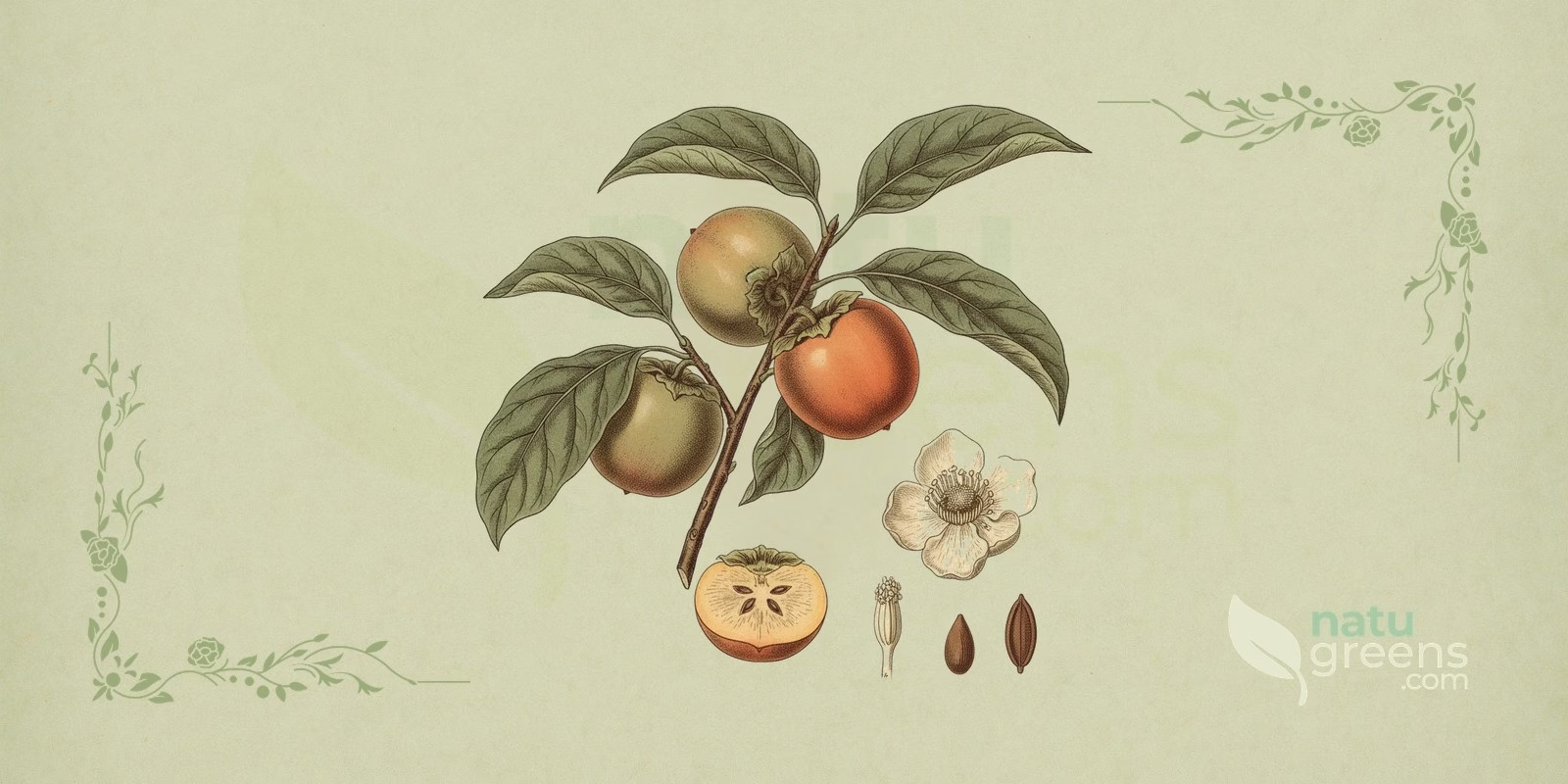
In traditional Asian medicine, persimmon leaves and fruit have long been used for a wide range of conditions, and modern scientific research has been looking into these uses while describing a phytochemical profile rich in bioactive compounds. Laboratory and animal studies point to antioxidant, anti-inflammatory and hypoglycemic activity, findings that still need to be confirmed in people but that help explain why persimmon attracts interest both as a medicinal plant and as a functional food.
Popular and International Names of Persimmon
Names for persimmon vary considerably from one country to another, and several of them derive from the Japanese word kaki, which also gave the species its scientific epithet.
- English: Japanese persimmon, oriental persimmon, persimmon.
- French: figue caque, kaki, plaqueminier.
- German: Kaki, Kakibaum, Kakipflaume.
- Italian: cachi, diospiro, loto del Giappone.
- Portuguese: caqui, caquizeiro (the tree), dióspiro.
- Spanish: caqui, palosanto, persimón.
Botanical Synonyms of Diospyros kaki
Throughout the 19th century, botanists described the species under other scientific names that are now treated as synonyms of Diospyros kaki: Diospyros chinensis Blume, Diospyros costata Carrière, Diospyros roxburghii Carrière and Diospyros schi-tse Bunge.
Botanical Family: Ebenaceae
The Ebenaceae family brings together trees and shrubs, often with dark, dense wood such as ebony, and its most representative group is the genus Diospyros, with more than 700 species distributed mainly across tropical and subtropical regions. Plants in this family are known for their edible fruits and for the presence of tannins, which account for the astringency of many species, and persimmon, with its sweet and sometimes astringent fruit, is the best-known example of the group’s economic and cultural importance.
Parts of Persimmon Used
Tradition makes use of almost the entire plant, although the fruit and leaves account for most of the folk use and scientific research.
- Bark
- Fruit
- Leaves
- Roots
- Seeds
Ethnobotanical and Traditional Uses
Ethnobotanical records, mainly from China, Korea and Japan, mention the use of persimmon leaves, fruit and other parts for the conditions listed below. These are folk uses, not indications with proven efficacy, and none of them replaces medical diagnosis or follow-up, especially in serious conditions such as stroke, angina and hemorrhage.
- Angina
- Asthma
- Atherosclerosis
- Chronic bronchitis
- Chronic ulcers
- Constipation
- Dermatitis
- Diabetes
- Hypertension
- Infectious diseases
- Internal bleeding
- Ischemic stroke
Therapeutic Properties of Persimmon
The properties below have been described in laboratory and animal studies, as well as in literature reviews on the fruit and leaves, and most of them have not yet been confirmed in clinical trials in people.
- Antibacterial (activity against bacteria observed in the laboratory)
- Anti-inflammatory (reduction of inflammatory markers in cells and animals)
- Antimelanogenic (inhibition of melanin production in cell cultures)
- Antimutagenic (reduction of mutations in laboratory tests)
- Antioxidant (free radical neutralization measured in the laboratory)
- Antiproliferative (activity observed in laboratory studies, without clinical proof)
- Antithrombotic (inhibition of thrombus formation in experimental studies)
- Hemostatic (traditional use for bleeding, without clinical proof)
- Hypoglycemic (lower blood glucose in animal studies, not confirmed in humans)
- Hypolipidemic (lower blood lipids in animal studies)
- Neuroprotective (protection of nerve cells in experimental models)
Detailed Phytochemical Profile of Persimmon
The compounds below have been identified in different parts of the plant, mainly in the fruit and leaves, and the concentration of each one varies with the cultivar, the degree of ripeness and the way the material is processed.
- Anthocyanidins (cyanidin, delphinidin, malvidin, pelargonidin, peonidin, petunidin)
- Carotenoids (alpha-carotene, beta-carotene, beta-cryptoxanthin)
- Catechins (catechin, epicatechin, epigallocatechin, gallocatechin)
- Chlorogenic acid
- Coumaric acid
- Ferulic acid
- Flavonoids (apigenin, chrysanthemin, flavanones, flavonols, kaempferol glycosides, luteolin, quercetin glycosides)
- Gallic acid
- Proanthocyanidins
- Protocatechuic acid
- Tannins (condensed, hydrolyzable)
- Terpenoids
- Vanillic acid
- Vitamin C
Preparation and Administration Forms of Persimmon
The fruit is eaten fresh or dried, while the leaves, bark, roots and seeds appear in traditional preparations and in commercial products whose quality and concentration vary widely from one manufacturer to another.
- Capsules
- Decoction (bark and roots)
- Dried fruit
- Extracts
- Fresh fruit
- Powder
- Tea (leaf infusion)
- Tincture
Synergy with Other Medicinal Plants
The combinations below appear in traditional records and herbal medicine texts, but none of them has been evaluated as a combination in clinical trials, and anyone on long-term medication should talk to a healthcare professional before combining plants.
Heart and Circulation
In folk herbal medicine, persimmon is often paired with plants rich in flavonoids and antioxidants, such as green tea (Camellia sinensis) and hawthorn (Crataegus monogyna), in preparations traditionally used for cardiovascular health. The tannins and proanthocyanidins in persimmon, together with the catechins in green tea, are being investigated in experimental studies for a possible influence on cholesterol and endothelial function, but these findings do not justify presenting the combination as a way of avoiding cardiovascular disease or atherosclerosis, and hawthorn can add to the effect of heart and blood pressure medications.
Traditional Combinations Linked to Blood Sugar
In folk herbal records, persimmon appears alongside cinnamon (Cinnamomum verum) and gymnema (Gymnema sylvestre), two plants that are also studied for their action on glucose metabolism. Persimmon flavonoids, cinnamon polyphenols and the gymnemic acids in gymnema have been investigated in animal studies and small trials, with no firm conclusion about their effect in people with type 2 diabetes, and combining several plants with possible hypoglycemic action can potentiate diabetes medications, which is why this combination calls for professional supervision.
Antioxidant Support
Combining persimmon with fruits such as pomegranate (Punica granatum) and açaí (Euterpe oleracea) is a traditional way to diversify the antioxidants in the diet. The carotenoids, anthocyanidins and vitamin C in persimmon add to the polyphenols and anthocyanins in these fruits, and the antioxidant capacity of these compounds has been measured in the laboratory, although the practical benefit of this combination for healthy aging or general health has not yet been evaluated in human studies.
Recipes and Usage Protocols of Persimmon
Persimmon Leaf Tea
In China, Korea and Japan, persimmon leaf tea is traditionally drunk as an everyday beverage and, in folk medicine, associated with high blood pressure. Experimental studies are investigating a blood-pressure-lowering effect of the leaves, but this effect has not been established in people, and the tea does not replace medication or medical follow-up for anyone with high blood pressure.
Ingredients: 1 tablespoon of dried persimmon leaves and 250 ml of boiling water.
Preparation: Pour the boiling water over the leaves, cover and let steep for 10 to 15 minutes, then strain and drink warm. Eastern tradition drinks the tea in moderate amounts throughout the day, but anyone with low blood pressure or who takes antihypertensives, anticoagulants or antiplatelet drugs should consult a healthcare professional before drinking it regularly.
Bark Decoction for Digestive Complaints
In traditional medicine, a decoction of dried persimmon bark is used for digestive complaints such as diarrhea and dyspepsia, a use that tradition attributes to the astringency and anti-inflammatory action of its tannins. Safety data on this preparation are insufficient, so the amount and frequency of use should be set with a healthcare professional.
Ingredients: A small portion of dried persimmon bark and 500 ml of water.
Preparation: Place the bark and water in a saucepan, bring to a boil and then simmer over low heat for about 20 minutes. Strain and let it cool to lukewarm before taking the amount recommended by the professional. Because it is rich in tannins, this decoction should be avoided by people who have constipation, a history of bezoars or who take iron supplements.
Fresh Ripe Fruit Extract
Fresh persimmon extract is traditionally used as a dietary source of carotenoids and vitamin C, and the preparation uses the pulp of fully ripe fruit, which contains fewer soluble tannins than unripe fruit.
Ingredients: Fully ripe fresh persimmons.
Preparation: Wash the fruit, cut it into pieces and remove the seeds, then blend until smooth and strain the juice through a fine cloth. The traditional serving is 30 to 50 ml of fresh extract per day, as part of a varied diet.
Persimmon Seed Powder
Persimmon seed powder appears in home recipes linked to blood sugar, and preliminary studies are investigating this possible action, which has not yet been confirmed in humans. Because there are no safety data on regular consumption of the seeds, the amount should be decided with a healthcare professional, especially by people who take glucose-lowering medication.
Ingredients: Dried persimmon seeds.
Preparation: Remove the seeds from ripe fruit, wash them and dry them completely in the sun or in a dehydrator, then grind them into a fine powder and store it in an airtight container. If a healthcare professional approves its use, the powder can be mixed into water or juice, in the amount and at the frequency they recommend.
The preparations above follow traditional records and do not replace professional guidance. Before any internal use, check the contraindications and interactions described in this article.
Associated Therapies
Herbal Medicine
In herbal medicine, persimmon is valued for the many parts that tradition puts to use: the leaves appear in infusions traditionally associated with hypertension and atherosclerosis, uses that research is still investigating, while the fruit is eaten for its antioxidant and fiber content. Standardized leaf extracts are being studied as ingredients in formulations aimed at glucose metabolism and cardiovascular health, but the efficacy of these formulations in people still depends on more robust clinical trials, and their use should be guided by a qualified professional.
Functional Nutrition
Persimmon is considered a functional food because of its nutritional and phytochemical composition, and it features in eating plans focused on cardiovascular health and antioxidant intake. For people with diabetes, functional nutrition includes the fruit with attention to portion size, since it contains natural sugars, and uses it in dietary strategies that aim not only to meet basic needs but also to offer complementary support in the care of chronic diseases, without replacing medical follow-up.
Traditional Chinese Medicine (TCM)
In TCM, persimmon leaves, known as Shi Ye, have a long history of use, and traditional records mention them for conditions such as ischemic stroke, angina, internal bleeding and hypertension, conditions that today require medical care. TCM describes the leaves as astringent and cooling, associated with balancing Qi and blood and with the cardiovascular system, in a holistic reading of their effects on the body that is not the same as scientific proof.
Contraindications and Side Effects of Persimmon
General Contraindications
Eating too much persimmon can lead to the formation of a phytobezoar (diospyrobezoar), a hardened mass that forms in the stomach or intestine and can cause obstruction, a risk that rises especially with astringent or unripe fruit and when the fruit is eaten after a prolonged fast. The risk is greater in people who have had gastric surgery or who have gastroparesis or diabetes, and people with ulcers or other digestive problems should also be careful and eat the fruit in moderation. People with a known allergy to persimmon or to other fruits of the Ebenaceae family should avoid it.
Persimmon tannins reduce the absorption of iron from other foods eaten at the same meal, which deserves attention from people with iron-deficiency anemia or who take iron supplements. Pregnant and breastfeeding women and children should consult a healthcare professional before using persimmon extracts, leaf teas, seed powder or supplements, because conclusive studies on the safety of these preparations in these groups are lacking.
Common Side Effects
The side effects of persimmon are usually mild and are linked mainly to the fruit’s tannin content. Eating too much can cause constipation, especially with unripe fruit or astringent varieties, and some people report stomach discomfort, nausea or indigestion, as well as a dry or rough feeling in the mouth caused by the astringency. These effects are generally temporary and can be reduced by choosing fully ripe fruit and eating it in moderate amounts.
Drug Interactions
Because animal studies point to a possible hypoglycemic effect, persimmon, especially in the form of extracts, leaf teas or seed powder, may add to the effect of diabetes medications and promote hypoglycemia, so people with diabetes should monitor their blood glucose closely and talk to their doctor before regular use. Persimmon leaf tea has a blood-pressure-lowering effect that is still under study, which should not be taken as an established fact or as a substitute for high blood pressure treatment, but it does justify caution in people taking antihypertensives.
The antithrombotic activity described for the leaves in experimental studies also calls for medical advice for anyone taking anticoagulants or antiplatelet drugs, and the tannins can reduce the absorption of some medications and nutrients, such as iron, which is why it is advisable to leave a gap between eating the fruit and taking medication. Consulting a healthcare professional is essential to avoid adverse interactions.
Historical Notes and Interesting Facts
Fruit of the Gods
The genus name Diospyros, adopted by Linnaeus in the 18th century, comes from the Greek dios, divine or relating to Zeus, and pyros, wheat or grain, and is usually translated as food of the gods. The name applies to the whole genus, but it suits persimmon well, as its flavor and nutritional qualities have earned it a place of prestige in many cultures, and the fruit’s presence in Asian legends and traditions adds to this almost sacred aura.
An 18th-Century Botanical Description
The first botanical description of persimmon was published in 1780 by the Swedish botanist Carl Peter Thunberg, a student of Linnaeus, who a few years earlier had studied the flora of Japan during his stay at the Dutch trading post of Dejima. By then, the species had already been cultivated in China for more than two millennia, and only much later did it spread to countries far from East Asia, such as Brazil, Turkey and Italy.
Varieties and Astringency
There are hundreds of persimmon varieties, classified mainly by astringency: astringent ones, such as ‘Hachiya’, contain high levels of soluble tannins, which make the fruit puckery until it is fully ripe and lose this effect only at full ripeness, when the tannins become insoluble. Non-astringent varieties, such as ‘Fuyu’, can be eaten while still firm because they lose their astringency naturally while still on the tree, and this diversity allows a wide range of culinary uses and eating preferences.
Longevity of the Tree
The persimmon tree is known for its longevity and can live for more than a hundred years while still bearing fruit, a trait that makes it valuable in orchards and gardens. Beyond its harvest, the tree has ornamental beauty, especially in autumn, when its leaves take on vivid shades of red and orange, and its hardiness and adaptability to different climates help explain the popularity it has achieved worldwide.
Frequently Asked Questions about Persimmon
Can People with Diabetes Eat Persimmon?
Persimmon is rich in fiber, and animal studies are investigating compounds from the fruit and leaves for a possible effect on blood glucose, but this effect has not been confirmed in people and should not be seen as a way to control diabetes. Since the fruit also contains natural sugars, people with diabetes should eat it in moderation, monitor their blood glucose and keep in mind that this group has a higher risk of phytobezoar when intake is excessive. A healthcare professional can advise on the right portion within the eating plan.
How Do You Choose a Ripe Persimmon?
In astringent varieties such as ‘Hachiya’, the persimmon should be very soft to the touch, almost jelly-like, a sign that the astringency has gone. In non-astringent ones such as ‘Fuyu’, the fruit should be firm, with smooth, glossy skin and a deep orange color, and in both cases an even color and the absence of dark spots indicate good quality.
What Is the Difference Between Persimmon and Sharon Fruit?
Sharon fruit is the trade name given to fruit of the ‘Triumph’ cultivar grown in Israel, which belongs to the same species, Diospyros kaki. Although ‘Triumph’ is naturally astringent, the fruit undergoes a post-harvest treatment that removes the astringency, so it reaches the market mild in flavor and ready to eat while still firm, and it is usually seedless.
Can You Eat Persimmon Skin?
Persimmon skin is edible and rich in fiber and antioxidants, although some people prefer to peel the fruit because of its texture or a slight residual astringency, more common in astringent varieties that have not fully ripened. Before eating the skin, wash the fruit well under running water.
Does Persimmon Help with Weight Loss?
Persimmon has a moderate calorie content and is rich in fiber and water, which contributes to a feeling of fullness and to regular bowel function when the fruit is fully ripe. It can therefore be part of a balanced diet aimed at weight management, but it does not cause weight loss on its own and should be eaten in moderation as part of a healthy eating plan.
Can Eating Too Much Persimmon Cause Intestinal Blockage?
Yes, eating too much persimmon can lead to the formation of a phytobezoar (diospyrobezoar), a hardened mass that forms in the stomach or intestine from the fruit’s tannins and fiber and that, in some cases, causes obstruction. The risk increases with astringent or unripe fruit, when the fruit is eaten after a prolonged fast and in people who have had gastric surgery or who have gastroparesis or diabetes. Persistent abdominal pain, vomiting or a feeling of fullness after eating persimmon call for medical evaluation.
Notice: this content is for informational purposes and does not replace professional medical advice. Consult a physician or herbal practitioner before using medicinal plants, especially during pregnancy, breastfeeding, or alongside medication.
References and Scientific Studies
- PMC2015 Butt MS, et al. Persimmon (Diospyros kaki) fruit: hidden phytochemicals and health claims. EXCLI J. 2015.
- PMC2021 Direito R, et al. From Diospyros kaki L. (Persimmon) Phytochemical Profile and Health Impact to New Product Perspectives and Waste Valorization. Nutrients. 2021.
- PMC2023 Hong C, et al. A Review: Pharmacological Effect of Natural Compounds in Diospyros kaki Leaves from the Perspective of Oxidative Stress. Molecules. 2023.
- PMC2021 Kwon J, et al. Chemical Constituents of the Leaves of Diospyros kaki (Persimmon). Plants (Basel). 2021.
- PMC2015 Xie C, et al. Persimmon (Diospyros kaki L.) leaves: a review on traditional uses, phytochemistry and pharmacological properties. J Ethnopharmacol. 2015.