Quick summary
Pimenta dioica (L.) Merr. / Allspice, also known as Jamaica pepper, is an evergreen tree of the Myrtaceae family, native to Central America and the Caribbean, that became known to Europeans through the voyages of Christopher Columbus. Its dried fruits combine aromas reminiscent of cinnamon, nutmeg and clove, which…
Main caution: The dried allspice fruit is a safe spice in culinary amounts, but the plant is contraindicated for anyone with a known allergy to it or to any of its components. Allergic reactions may appear as skin irritation or hives…
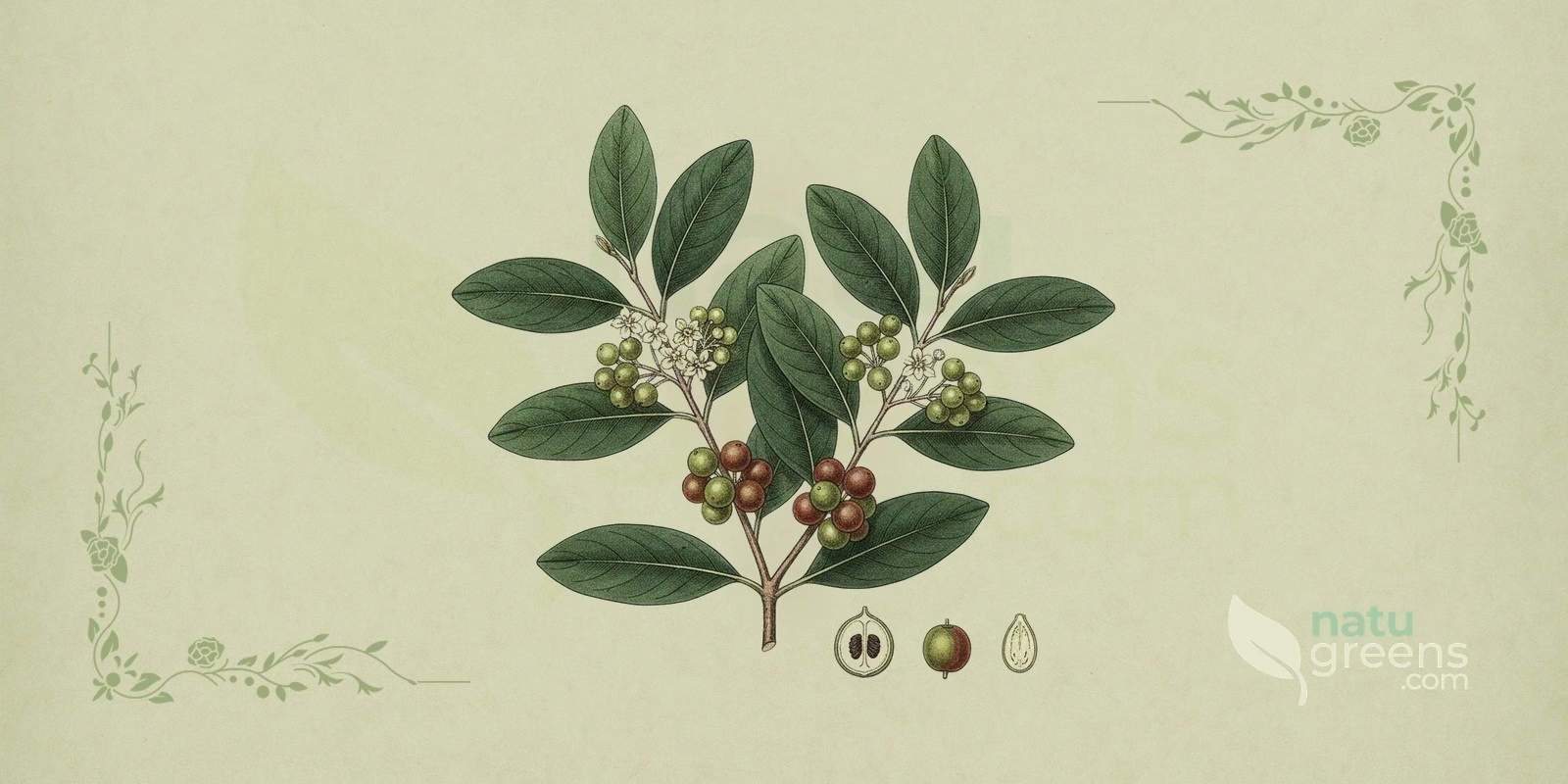
Pimenta dioica (L.) Merr. / Allspice, also known as Jamaica pepper, is an evergreen tree of the Myrtaceae family, native to Central America and the Caribbean, that became known to Europeans through the voyages of Christopher Columbus. Its dried fruits combine aromas reminiscent of cinnamon, nutmeg and clove, which explains the prominent place this spice holds in the cuisines of many countries. Beyond its wide culinary use, the plant has a place in traditional medicine, and some of these uses are beginning to be investigated in laboratory studies, still without clinical evidence for most of them.
Popular and International Names of Allspice
- English: allspice, Jamaica pepper, myrtle pepper.
- French: piment de la Jamaïque, quatre-épices.
- German: Jamaikapfeffer, Nelkenpfeffer.
- Italian: pepe della Giamaica, pimento.
- Portuguese: murta-pimenta, pimenta-da-jamaica, pimenta-de-coroa.
- Spanish: pimienta de Jamaica, pimienta gorda.
Despite being called Jamaica pepper, allspice belongs to the Myrtaceae family, the same family as clove and guava, and not to the Piperaceae. For this reason it should not be confused with black pepper (Piper nigrum), grains of paradise (Aframomum melegueta) or water pepper (Persicaria hydropiper), all of which belong to other botanical families. The same applies to the chili peppers and bell peppers of the genus Capsicum, which also have their own safety profiles. It is also worth distinguishing it from Pimenta racemosa, the bay rum tree, a different species of the same genus whose oil is used mainly in perfumery.
Botanical Synonyms of Pimenta dioica
Recorded botanical synonyms for Pimenta dioica include Eugenia pimenta DC. and Pimenta officinalis Lindl., names used historically for the same species that reflect how botanical taxonomy has evolved over time. Knowing these older names helps locate the plant in classic works, herbarium collections and older scientific papers, so that records of the same species are not mistaken for different plants.
Botanical Family: Myrtaceae
Pimenta dioica belongs to the Myrtaceae family, a large group of flowering plants that includes many aromatic and medicinal species and stands out for the essential oils found in its leaves and fruits, which give several of its members their characteristic scent. The family comprises trees and shrubs found mainly in tropical and subtropical regions, with well-known members such as eucalyptus, guava and clove, a botanical relative whose aroma is also due in large part to eugenol.
Parts of Allspice Used
- Bark
- Essential oil (extracted from fruits and leaves)
- Fruits (dried berries)
- Leaves
- Seeds
Ethnobotanical and Traditional Uses
- Bruises
- Diabetes (reported in Costa Rican folk medicine)
- Digestive stimulant
- Dysmenorrhea (menstrual cramps)
- Fever
- Hypertension (traditional use)
- Relief of cold symptoms
- Relief of dyspepsia (indigestion)
- Relief of intestinal cramps
- Relief of joint pain
- Relief of muscle pain
- Relief of toothache
- Rheumatism
These uses belong to the traditional and ethnobotanical record of the species and do not replace medical diagnosis or treatment. Its use for diabetes, for example, is reported in Costa Rican folk medicine without confirmation from clinical studies. People living with this condition or with high blood pressure should remain under professional care and should not stop taking their prescribed medication.
Therapeutic Properties of Allspice
- Analgesic (traditional use and preclinical studies, not clinically proven)
- Antibacterial (activity observed in vitro, especially for the essential oil)
- Antifungal (activity observed in laboratory studies)
- Anti-inflammatory (effect observed in preclinical studies)
- Antioxidant (free radical scavenging in laboratory assays)
- Antiproliferative (activity observed in laboratory studies, not clinically proven)
- Antiviral (activity observed in laboratory studies)
- Carminative (traditionally used to relieve intestinal gas)
- Hypotensive (effect observed in preclinical studies, not clinically proven)
- Purgative (traditionally used to stimulate bowel movements)
- Tonic (traditionally used as a general invigorant)
Most of the activities listed above come from laboratory and animal experiments compiled in scientific reviews, and therefore they do not justify using the plant as a substitute for medication or as a treatment for any disease.
Detailed Phytochemical Profile of Allspice
- Ericifolin
- Eugenol
- Gallic acid
- Lignins
- Polyphenols
- Quercetin
- Terpenoids
Eugenol is the main component of allspice essential oil, usually making up 60 to 80% of it, and its share can be even higher in oil extracted from the leaves. This phenolic compound accounts for much of the pharmacological activity studied in the plant, including its anti-inflammatory and antibacterial actions and the analgesic effect investigated in preclinical models. Other substances, such as quercetin, gallic acid and ericifolin, contribute to the antioxidant activity and to the antiproliferative action observed in laboratory-grown cells, findings that have not yet been confirmed in humans.
Preparation and Administration Forms of Allspice
- Essential oil (always diluted, for topical or aromatic use)
- Poultice
- Powder (dried, ground fruits)
- Tea (infusion)
The dried fruit, whole or ground, is the most common and safest form of consumption when used in seasoning amounts, while the essential oil must be diluted in a vegetable oil before any application to the skin and must never be ingested undiluted, not even in small amounts.
Synergy with Other Medicinal Plants
Aromatherapy
In aromatherapy, allspice essential oil is often blended with the oils of ginger (Zingiber officinale) and lavender (Lavandula angustifolia), a combination traditionally used in massages aimed at muscle relaxation and a sense of rest after tiring days. The blend relies on empirical use and on the balance between the aromas, and it should be used in diffusers or massages, always with the oils diluted in a carrier vegetable oil.
Medicinal Cooking
In the kitchen, allspice pairs well with cinnamon (Cinnamomum verum), nutmeg (Myristica fragrans) and clove (Syzygium aromaticum), spices that together bring out the flavor of both sweet and savory dishes. In several culinary traditions this combination is valued both for its taste and for its traditional reputation as a digestive aid, although no combined effect among these spices has been demonstrated in studies.
Recipes and Usage Protocols of Allspice
Traditional Berry Tea for Colds and Cramps
Ingredients: 1 teaspoon of lightly crushed dried allspice berries (or dried leaves) and 200 ml of boiling water.
Preparation: Pour the boiling water over the berries or leaves, cover and let steep for 10 minutes before straining. The tea is traditionally used for colds, intestinal cramps and menstrual cramps, and it can be sweetened with honey to round out the flavor and soothe the throat, keeping in mind that honey should not be given to children under 1 year of age. For frequent or prolonged use, consult a health professional.
Poultice for Muscle Aches
Ingredients: Ground allspice berries, hot water and, optionally, other herbs with similar traditional uses.
Preparation: Mix the ground berries with hot water until a paste forms, to which other herbs traditionally used for the same purpose may be added. Before the first application, test a small amount on the inner forearm and, if there is no redness or itching, apply the warm paste to the area with muscle or rheumatic pain, cover it with a clean cloth and leave it on for 20 to 30 minutes. This preparation is traditionally used for local relief and should not be applied to broken or irritated skin.
Aromatic Massage Oil for Muscles and Joints
Ingredients: Allspice essential oil at a low dilution, in the amount recommended by an aromatherapist or health professional, and 30 ml of a carrier vegetable oil, such as sweet almond or jojoba.
Preparation: Mix the essential oil into the carrier oil and do a patch test on a small area of skin 24 hours before the first use. If there is no reaction, gently massage the areas with joint or muscle discomfort, a practice that belongs to the traditional aromatherapy record and does not replace a medical evaluation. Avoid direct sun exposure right after application, do not use on young children and stop using it at the first sign of redness, itching or burning.
The preparations above follow traditional records and do not replace professional guidance. Before any internal use, check the contraindications and interactions described in this article.
Associated Therapies
Aromatherapy
Allspice is valued in aromatherapy for its warm, stimulating aroma, and its essential oil is used to create atmospheres that feel both cozy and invigorating. In aromatherapy practice, inhalation through diffusers is associated with a feeling of well-being and relief from tension and mental fatigue, subjective perceptions that have so far been little studied under controlled conditions. The oil also appears in massages intended to relax the muscles, always diluted and after a patch test.
Clinical Phytotherapy
In clinical phytotherapy, Pimenta dioica attracts interest for the anti-inflammatory, antioxidant and analgesic activities described in preclinical studies. Extracts of the plant are being investigated as possible aids in dyspepsia, joint pain and inflammation, but the available evidence comes mainly from laboratory and animal experiments, which does not yet allow doses or protocols to be recommended for clinical use. For this reason, any medicinal use should be understood as a complement to conventional treatment, never as a substitute for it, and needs to be discussed with a health professional.
Contraindications and Side Effects of Allspice
General Contraindications
The dried allspice fruit is a safe spice in culinary amounts, but the plant is contraindicated for anyone with a known allergy to it or to any of its components. Allergic reactions may appear as skin irritation or hives and, in more severe cases, as anaphylaxis, and there is a case report of a severe allergic reaction to the spice eaten in food. People with a gastric ulcer or a sensitive digestion should consume it with caution, because eugenol can irritate the stomach lining at high doses, and everyone should avoid excessive consumption.
Essential Oil and Topical Use
The essential oil is rich in eugenol (60 to 80%) and must therefore never be ingested undiluted. For topical use, it should only be applied diluted and after a prior patch test, since contact dermatitis has been documented, and it must never be used on young children. Contact with the eyes and mucous membranes should also be avoided, and any sign of redness, itching or burning means use should be stopped immediately.
Pregnancy and Breastfeeding
During pregnancy and breastfeeding, eating allspice as an ordinary food is considered acceptable, but medicinal doses should be avoided, since conclusive studies on the safety of extracts, concentrated teas and essential oil during these stages are lacking. Pregnant and breastfeeding women should talk to a health professional before using the plant for medicinal purposes.
Drug Interactions and Surgery
Eugenol has an antiplatelet action under investigation, which calls for caution with anticoagulants, such as warfarin, and with antiplatelet drugs, such as acetylsalicylic acid (aspirin). In practice, the combination could increase the risk of bruising and bleeding. For the same reason, concentrated use (essential oil, extracts and strong teas) should be stopped at least 2 weeks before any scheduled surgery. Because the plant has a traditional record of use in diabetes and hypertension, people taking glucose-lowering or antihypertensive drugs should also consult their doctor before turning to concentrated preparations. There is not yet enough data on possible additive effects between the plant and these medications.
Historical Notes and Interesting Facts
Pimenta dioica became known to Europeans during Christopher Columbus's voyages to the Caribbean. Its fruits are said to have been mistaken at first for black peppercorns, a confusion that lies behind the name of the genus Pimenta. The English name allspice, meaning roughly "all spices", was given by the British, who detected in the flavor of the fruits a combination of cinnamon, nutmeg and clove. Jamaica is traditionally renowned for the quality of its allspice, which is attributed to the island's climate and soil conditions. In the past, the tree's wood was so sought after for making walking sticks that harvesting came to threaten populations of the species, an episode that shows the plant's cultural and economic importance. Today, oil from the fruits and leaves also supplies the perfume industry, alongside the culinary use that made the spice known around the world.
Frequently Asked Questions about Allspice
Does Allspice Taste Hot?
No, allspice does not burn like the peppers of the genus Capsicum, and its flavor is complex and aromatic, with notes reminiscent of cinnamon, clove and nutmeg. The spice is used to add depth and aromatic warmth to sweet and savory dishes without the burning sensation typical of hot peppers, which explains its versatility in international cooking.
Is Allspice Related to Black Pepper?
No, because allspice is a member of the Myrtaceae, related to clove and guava, while black pepper (Piper nigrum) belongs to the Piperaceae. It should also not be confused with grains of paradise (Aframomum melegueta), with the chili peppers and bell peppers of the genus Capsicum or with water pepper (Persicaria hydropiper), plants from other botanical families. Another possible mix-up is with Pimenta racemosa, the bay rum tree, a different species of the same genus used mainly in perfumery.
Which Parts of Allspice Are Used?
The most widely used parts of allspice are the fruits, harvested while still green and dried in the sun to produce the spice, and the leaves, which appear in cooking and in traditional medicine in teas and extracts. The essential oil, extracted from both fruits and leaves, is used in aromatherapy and perfumery thanks to its eugenol-rich composition, always diluted when applied to the skin.
Can Allspice Be Used During Pregnancy?
As a food, in culinary amounts, allspice is considered acceptable during pregnancy and breastfeeding. Medicinal doses, however, such as extracts, concentrated teas and essential oil, should be avoided during these stages, because there are no studies proving their safety for pregnant women, breastfeeding mothers and babies. Before any use for medicinal purposes, the advice is to consult a health professional.
Can Allspice Essential Oil Be Ingested?
No, the essential oil is rich in eugenol (60 to 80%) and must never be ingested undiluted. On the skin, it should only be used diluted in a vegetable oil and after a patch test, since contact dermatitis has been documented, and it must never be applied to young children. People taking anticoagulants or antiplatelet drugs should be cautious with concentrated use and stop it before surgery.
How Should Allspice Be Stored?
To preserve its flavor and aroma, allspice should be kept in airtight containers, preferably glass, in a cool, dry place away from light. Whole berries keep their qualities for much longer, while the ground version, with its greater exposed surface, loses aroma and flavor more quickly, which is why it is best to grind the berries just before use.
Notice: this content is for informational purposes and does not replace professional medical advice. Consult a physician or herbal practitioner before using medicinal plants, especially during pregnancy, breastfeeding, or alongside medication.
How to cite this article
NATUGREENS. Allspice (Pimenta dioica): Properties and Benefits. Natugreens, 3 Nov. 2026. Disponível em: https://natugreens.com/allspice-pimenta-dioica/. Accessed: Nov. 5, 2026.
Natugreens. (2026). Allspice (Pimenta dioica): Properties and Benefits. Natugreens. https://natugreens.com/allspice-pimenta-dioica/
References and Scientific Studies
- PMC2022 ALrashidi AA, et al. Chemical Composition, Antibacterial and Anti-Quorum Sensing Activities of Pimenta dioica L. Essential Oil and Its Major Compound (Eugenol) against Foodborne Pathogenic Bacteria. Plants (Basel). 2022.
- PMC2025 Wu H, et al. Chemical profiles of allspice (Pimenta dioica (L.) Merr.) water and ethanol extracts and their antivirus and radical scavenging activities. Food Res Int. 2025.
- PMC2012 Zhang L, Lokeshwar BL. Medicinal properties of the Jamaican pepper plant Pimenta dioica and Allspice. Curr Drug Targets. 2012.
- Pregnancy
- Breastfeeding
- Children
- Drug interactions
- High blood pressure
- Diabetes
- Surgery
- Allergy
- Bleeding / coagulation disorders
- Gastritis / ulcer
Not an exhaustive list. Read the full contraindications section before considering use.
Read full section