Quick summary
Figwort (Scrophularia nodosa L.), commonly known as common figwort, knotted figwort or woodland figwort, is a perennial herbaceous plant of the temperate regions of the Northern Hemisphere, absent only from western North America, which grows in damp soils, woodland edges and waste ground. European traditional medicine…
Main caution: Warning: the traditional herbal literature attributes to figwort glycosides with cardioactive, digitalis-like activity. For this reason, the plant is traditionally contraindicated in people with ventricular tachycardia…
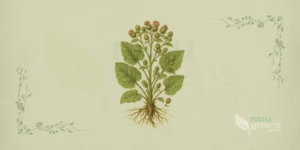
Figwort (Scrophularia nodosa L.), commonly known as common figwort, knotted figwort or woodland figwort, is a perennial herbaceous plant of the temperate regions of the Northern Hemisphere, absent only from western North America, which grows in damp soils, woodland edges and waste ground. European traditional medicine has used it for centuries as a so-called depurative and anti-inflammatory plant, especially the aerial parts, and the genus name comes from scrofula, an old name for a form of tuberculosis of the neck glands, by association with the knobs on the rhizome. These uses are a traditional record, and the herbal literature attributes to the plant glycosides with activity on the heart, which calls for special care before any preparation for internal use.
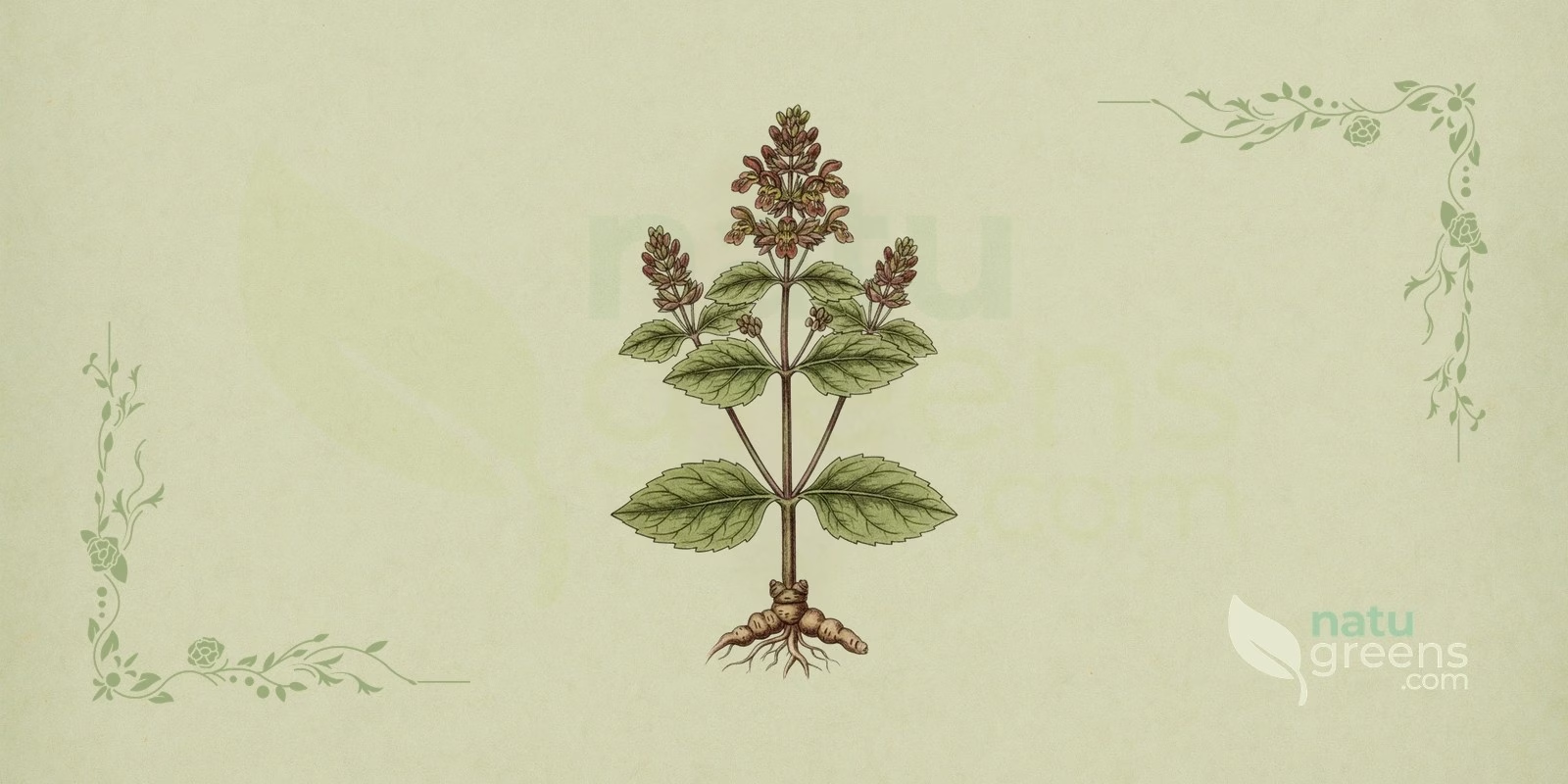
Figwort has a chemical composition rich in iridoids, such as aucubin and harpagoside, as well as flavonoids and phenolic acids, and some of these compounds are being studied in the laboratory and in animals, for example in wound-healing assays and tests of action on intestinal muscle. These studies are preclinical and the plant remains under study, with no proven efficacy in humans for skin problems, swelling or any other condition, so this article treats its uses as a historical and traditional record.
Popular and International Names of Figwort
- English: carpenter's square, common figwort, figwort, great pilewort, kernel wort, knotted figwort, murrain grass, woodland figwort.
- French: herbe du siège, scrophulaire noueuse.
- German: Knotige Braunwurz.
- Italian: scrofularia, scrofularia nodosa.
- Portuguese: erva-de-são-guilherme, erva-de-são-pedro, erva-de-são-vicente, erva-do-diabo, escrofulária, escrofulária-nodosa.
- Spanish: escrofularia, hierba de lamparones, hierba de San Pedro, hierba para las almorranas.
Botanical Synonyms of Figwort
Scrophularia nodosa L. has accumulated many synonyms over the history of taxonomy, reflecting its wide distribution and the variation in form, flower color and leaf serration among populations from different regions. Several of these names correspond to varieties and subspecies described in Europe and Asia, now included in the species, and knowing them helps recognize the plant in old floras and studies. The species should not be confused with Scrophularia ningpoensis, the xuan shen of traditional Chinese medicine, which belongs to the same genus but is a different plant.
- Scrophularia capitata Raf.
- Scrophularia cechica Opiz
- Scrophularia foetida Garsault
- Scrophularia foetida Wydler
- Scrophularia halleri Gueldenst. ex Ledeb.
- Scrophularia hemschinica K.Koch
- Scrophularia italica Mill.
- Scrophularia major Bubani
- Scrophularia nodosa subsp. chamaeneriifolia Schustler
- Scrophularia nodosa subsp. foliosa Sennen
- Scrophularia nodosa var. bobartii Pryor
- Scrophularia nodosa var. montana Stiefelh.
- Scrophularia nodosa var. nitida Regel
- Scrophularia nodosa var. purpurascens Salter ex J.J.Blandy
- Scrophularia nodosa var. serrulata Regel
- Scrophularia nodosa var. viridiflora Wimm. & Grab.
- Scrophularia sckellii Spreng.
- Scrophularia serrulata Small
- Scrophularia ternata Schur
- Scrophularia wirtgenii W.D.J.Koch ex Opiz
Botanical Family: Scrophulariaceae
Figwort belongs to the Scrophulariaceae family, which takes its name from the genus Scrophularia itself and includes herbs, shrubs and some trees with a worldwide distribution, usually with two-lipped flowers and capsule fruits. The family was once much larger, but phylogenetic studies led to many genera being moved to other families, such as the Plantaginaceae, which received, for example, the foxgloves of the genus Digitalis, while the genus Scrophularia remained firmly in the Scrophulariaceae.
Many plants in this group have a history of medicinal use, and compounds such as iridoids and flavonoids are common among its members, which explains the pharmacological interest in the family. This chemical kinship also has a risky side, since some closely related plants produce glycosides that act on the heart, so preparations for internal use require professional guidance.
Parts of Figwort Used
- Flowering aerial parts
- Fresh leaves (traditional topical use)
Ethnobotanical and Traditional Uses of Figwort
- Historically recorded for scrofula, linked to the Doctrine of Signatures (a condition that today requires medical diagnosis and treatment).
- Traditional external use for eczema and psoriasis with itching and irritation.
- Traditional external use for hemorrhoids.
- Traditional external use for inflammation, blisters, boils, bruises and small wounds.
- Traditionally recorded as a depurative, an old concept of cleansing the body.
- Traditionally recorded for rheumatism and gout.
- Traditionally recorded for swollen glands and swelling in general.
Therapeutic Properties of Figwort
- Alterative (traditional concept of purification, without scientific proof)
- Analgesic (traditional record)
- Anti-inflammatory (under study, with preclinical findings)
- Antirheumatic (traditional record)
- Cardioactive (glycosides with digitalis-like action described in the traditional literature, a reason for contraindication)
- Circulatory stimulant (traditional record)
- Laxative (traditional record)
- Liver stimulant (traditional record)
- Lymphatic (traditional record, no clinical trial)
- Mild diuretic (traditional record)
- Spasmolytic (observed in isolated animal intestine, under study)
- Vulnerary (iridoids with wound-healing activity in a laboratory study)
Detailed Phytochemical Profile of Figwort
The most studied constituents of figwort are the iridoids, among them aucubin, catalpol, harpagide and harpagoside, the latter being the same compound found in devil's claw, as well as acylated iridoids and phenylethanoid glycosides isolated from the aerial parts. In a laboratory study, acylated iridoids from the plant showed activity in wound-healing models, and work with in vitro cultures has investigated how the plant produces these compounds, but these results are preclinical and do not prove efficacy in people. The underground parts contain phenolic acids such as caffeic, ferulic and vanillic acids, and older analyses also recorded flavonoids and free amino acids. The traditional herbal literature further attributes to the plant glycosides with cardioactive, digitalis-like activity, which are not well characterized chemically and justify the cardiac contraindications described below.
- Amino acids (alanine, isoleucine, lysine, phenylalanine, threonine, tyrosine, valine)
- Cardioactive glycosides (described in the traditional literature)
- Flavonoids
- Iridoids (aucubin, catalpol, harpagide, harpagoside)
- Phenolic acids (caffeic, ferulic, vanillic)
- Phenylethanoid glycosides
Preparation and Administration Forms of Figwort
- Capsules (only with professional guidance)
- Dried herb
- Infusion (external use in washes, or internal use only with professional guidance)
- Poultice and compress (external use)
- Tincture (only with professional guidance)
Because of the cardioactive glycosides attributed to the plant, this article gives no recipes for internal use, and any preparation to be swallowed must be prescribed and supervised by a health professional.
Synergy with Other Medicinal Plants
Traditional Depurative Formulas with Burdock, Cleavers and Red Clover
In traditional Anglo-Saxon herbalism, figwort appears in so-called depurative formulas alongside burdock (Arctium lappa), cleavers (Galium aparine) and red clover (Trifolium pratense), traditionally used for skin complaints and swollen glands. These pairings are a traditional record, with no clinical trial, and because they involve internal use they require professional prescription, while red clover also has its own restrictions in hormone-sensitive conditions. Enlarged lymph nodes always require medical investigation.
Digestive Pairings with Barberry, Dandelion and Rhubarb
Some old herbal formulations combine figwort tincture with barberry (Berberis vulgaris), dandelion (Taraxacum officinale) or rhubarb (Rheum officinale), in preparations traditionally used for sluggish digestion and constipation. Rhubarb is a stimulant laxative and barberry has its own contraindications, including during pregnancy, and the combination has not been studied, so it should not be prepared at home or used by anyone with heart disease.
Traditional Teas with Echinacea for Colds
Tradition records the use of figwort in teas for colds, sometimes mixed with echinacea (Echinacea purpurea), a plant traditionally used as immune support. This use is a historical record, with no study of the blend, and the same cardiac restrictions as figwort apply to any tea that contains it.
Traditional Comparison with Devil's Claw
Some herbalists cite figwort as a possible alternative to devil's claw (Harpagophytum procumbens) for rheumatic pain, because both contain harpagoside. However, they are entirely different plants, from different families and with different compositions, and an equivalent effect has never been demonstrated, besides which figwort carries cardiac risks that devil's claw does not share.
Recipes and Usage Protocols of Figwort
Fresh Leaf Poultice
A traditional external preparation, applied to minor skin inflammation, blisters and bruises.
Ingredients: fresh figwort leaves and a little hot water.
Preparation: Wash and crush the leaves into a paste, warm it slightly in a water bath or with a little hot water and wait until it reaches a comfortable temperature. Apply to the area, cover with a clean cloth and leave for 30 minutes to 1 hour. Use only on intact skin or superficial lesions, test first on a small area and stop if irritation occurs.
Infusion Compress for External Use
A traditional external preparation, used in washes and compresses on irritated, itchy skin.
Ingredients: 1 tablespoon of dried figwort aerial parts and 250 ml of boiling water.
Preparation: Pour the boiling water over the herb, cover and let steep for 10 to 15 minutes. Strain, let it cool completely and use in compresses or washes on the skin, without swallowing. Eczema, psoriasis and hemorrhoids that persist or worsen need medical evaluation.
The preparations above follow traditional records and do not replace professional guidance. Before any internal use, check the contraindications and interactions described in this article.
Therapies Associated with Figwort
Homeopathy
Homeopathy uses preparations of Scrophularia nodosa in high dilutions, traditionally indicated for hemorrhoids accompanied by general tiredness and for swollen glands. The efficacy of homeopathy is not supported by consistent scientific evidence, and rectal bleeding, enlarged glands or persistent tiredness require medical investigation before any complementary approach.
Traditional European Herbal Medicine
In traditional European and Anglo-Saxon herbal medicine, figwort was classed as an alterative, an old term for plants supposed to purify the blood, and used mainly for chronic skin and gland complaints. Modern herbalism keeps this record but acknowledges the lack of clinical trials and the presence of cardioactive glycosides, which is why the plant is reserved for professional prescriptions and not for home remedies taken internally.
Contraindications and Side Effects of Figwort
The Heart and Cardiac Medicines
Warning: the traditional herbal literature attributes to figwort glycosides with cardioactive, digitalis-like activity. For this reason, the plant is traditionally contraindicated in people with ventricular tachycardia and other heart diseases, and caution is mandatory for anyone taking digoxin or other antiarrhythmics, because of the risk of an additive effect. Anyone with any heart disease or taking heart medicines should not use the plant internally without medical guidance.
General Contraindications
Figwort should be avoided during pregnancy and breastfeeding due to the lack of safety data, and there is no data to support its use in children. People with known hypersensitivity to plants of the Scrophulariaceae family should also avoid it. The iridoids, such as harpagoside and aucubin, and the wound-healing studies are preclinical, carried out in the laboratory and in animals, and the plant is under study, with no proven efficacy in humans.
Scrofula and Skin Diseases
Scrofula, which gave the plant its name, is tuberculous lymphadenitis, a swelling of the lymph nodes caused by tuberculosis, and this use is included here only as a historical curiosity. This condition requires modern medical diagnosis and treatment with antibiotics, never self-medication with the plant. Likewise, there is no demonstrated efficacy for eczema, psoriasis or hemorrhoids beyond the record of traditional external use.
Side Effects
At high doses the plant can be toxic, and even in smaller amounts nausea and other gastrointestinal discomfort may occur in sensitive people. Topical application rarely causes irritation, but a patch test on a small area is recommended, and any adverse reaction should lead to stopping use and seeking professional advice.
Not to Be Confused with Other Plants
Figwort is not Scrophularia ningpoensis (xuan shen), a different species used in traditional Chinese medicine, nor Harpagophytum procumbens (devil's claw), an entirely different plant that merely shares the compound harpagoside. Safety or usage information on these plants does not apply to figwort.
Historical Notes and Interesting Facts about Figwort
Origin of the Name
The genus name, Scrophularia, comes from scrofula, the old name for tuberculous lymphadenitis, which caused swelling of the neck glands. According to the Doctrine of Signatures, which held that a plant's appearance indicated its use, the knobs on figwort's rhizome resembled these swellings, and this gave rise to the traditional use, now purely historical, since the disease is treated with antibiotics.
A Honey Plant
Figwort is a good honey plant, whose small, discreet, reddish-brown flowers produce abundant nectar that attracts bees, wasps and other pollinators. Wasps, in fact, are among its most frequent visitors, and the plant contributes to the biodiversity of woodland edges and damp ground.
Folk Beliefs
Accounts of medieval beliefs link figwort to magical protection, such as using the plant to ward off evil spirits and as an amulet against the plague. These traditions are part of European folklore and show how this inconspicuous plant gained a reputation far beyond its use as a remedy.
Frequently Asked Questions about Figwort
Is Figwort Safe for Internal Use?
Internal use is not recommended without professional guidance. The traditional literature attributes cardioactive glycosides to the plant, it can be toxic at high doses and it should not be used by people with heart disease or taking digoxin and antiarrhythmics.
Is Figwort Good for the Skin?
The plant has a record of traditional external use for rashes, itching and irritation, including conditions such as eczema and psoriasis, but there is no proven efficacy for these diseases. Wound-healing studies with its iridoids are preclinical, and persistent skin problems should be evaluated by a dermatologist.
Can Figwort Be Used during Pregnancy or Breastfeeding?
No. The plant should be avoided during pregnancy and breastfeeding due to the lack of safety data, and a doctor can suggest suitable alternatives for each case.
Does Figwort Act on the Lymphatic System?
Tradition describes it as a lymphatic plant and used it for swollen glands, including scrofula, but this is a historical record with no clinical trial. Enlarged lymph nodes can have serious causes, such as infections and tumors, and always require medical evaluation.
Are There Important Drug Interactions with Figwort?
Yes. Because of the cardioactive glycosides attributed to the plant, there is a risk of an additive effect with digoxin and other antiarrhythmics, and caution is mandatory in this group. Always tell your doctor or pharmacist about any plant you intend to use.
Is Figwort the Same Plant as Devil's Claw?
No. Devil's claw (Harpagophytum procumbens) merely shares the compound harpagoside and is an entirely different plant, as is xuan shen (Scrophularia ningpoensis), another species of the same genus. No information about them should be applied to figwort.
Notice: this content is for informational purposes and does not replace professional medical advice. Consult a physician or herbal practitioner before using medicinal plants, especially during pregnancy, breastfeeding, or alongside medication.
How to cite this article
NATUGREENS. Figwort (Scrophularia nodosa): Properties and Benefits. Natugreens, 10 Nov. 2026. Disponível em: https://natugreens.com/scrophularia-nodosa-figwort/. Accessed: Nov. 10, 2026.
Natugreens. (2026). Figwort (Scrophularia nodosa): Properties and Benefits. Natugreens. https://natugreens.com/scrophularia-nodosa-figwort/
References and Scientific Studies
- PMC2012 Ahmad M, et al. Spasmolytic effects of Scrophularia nodosa extract on isolated rabbit intestine. Pak J Pharm Sci. 2012.
- PMC1999 Miyase T, et al. Acylated iridoid and phenylethanoid glycosides from the aerial parts of Scrophularia nodosa. J Nat Prod. 1999.
- PMC2007 Sesterhenn K, et al. Occurrence of iridoid glycosides in in vitro cultures and intact plants of Scrophularia nodosa L.. Plant Cell Rep. 2007.
- PMC2002 Stevenson PC, et al. Wound healing activity of acylated iridoid glycosides from Scrophularia nodosa. Phytother Res. 2002.
- PMC1973 Swiatek L. Phenolic acids of underground parts of Scrophularia nodosa L.. Pol J Pharmacol Pharm. 1973.
Take your time and tell us everything you think, details included. Every response is read by someone on our editorial team and goes into the article's revision. An honest critique helps us more than a polite compliment.
Take your time and tell us everything you think, details included. Every response is read by someone on our editorial team and goes into the article's revision. An honest critique helps us more than a polite compliment.
You May Also Like