



Quick summary
Justicia adhatoda L., known mainly by the Ayurvedic name vasaka and also called adulsa, adhatoda, vasa, or Malabar nut, is a perennial shrub in the Acanthaceae family native to South and Southeast Asia, occurring naturally in Sri Lanka, Nepal, Bangladesh, India, Pakistan, Indonesia, Malaysia, and China, from where it…
Main caution: Because it contains significant amounts of vasicine, vasaka is contraindicated throughout pregnancy: animal studies show uterotonic and abortive action linked to this alkaloid, which makes the risk unacceptable for…
Justicia adhatoda L., known mainly by the Ayurvedic name vasaka and also called adulsa, adhatoda, vasa, or Malabar nut, is a perennial shrub in the Acanthaceae family native to South and Southeast Asia, occurring naturally in Sri Lanka, Nepal, Bangladesh, India, Pakistan, Indonesia, Malaysia, and China, from where it was carried to other tropical regions, such as Panama, because of its traditional medicinal use. Originally described by Carl Linnaeus, the plant holds a central place in the Ayurvedic, Siddha, and Unani systems as a reference herb for respiratory care.
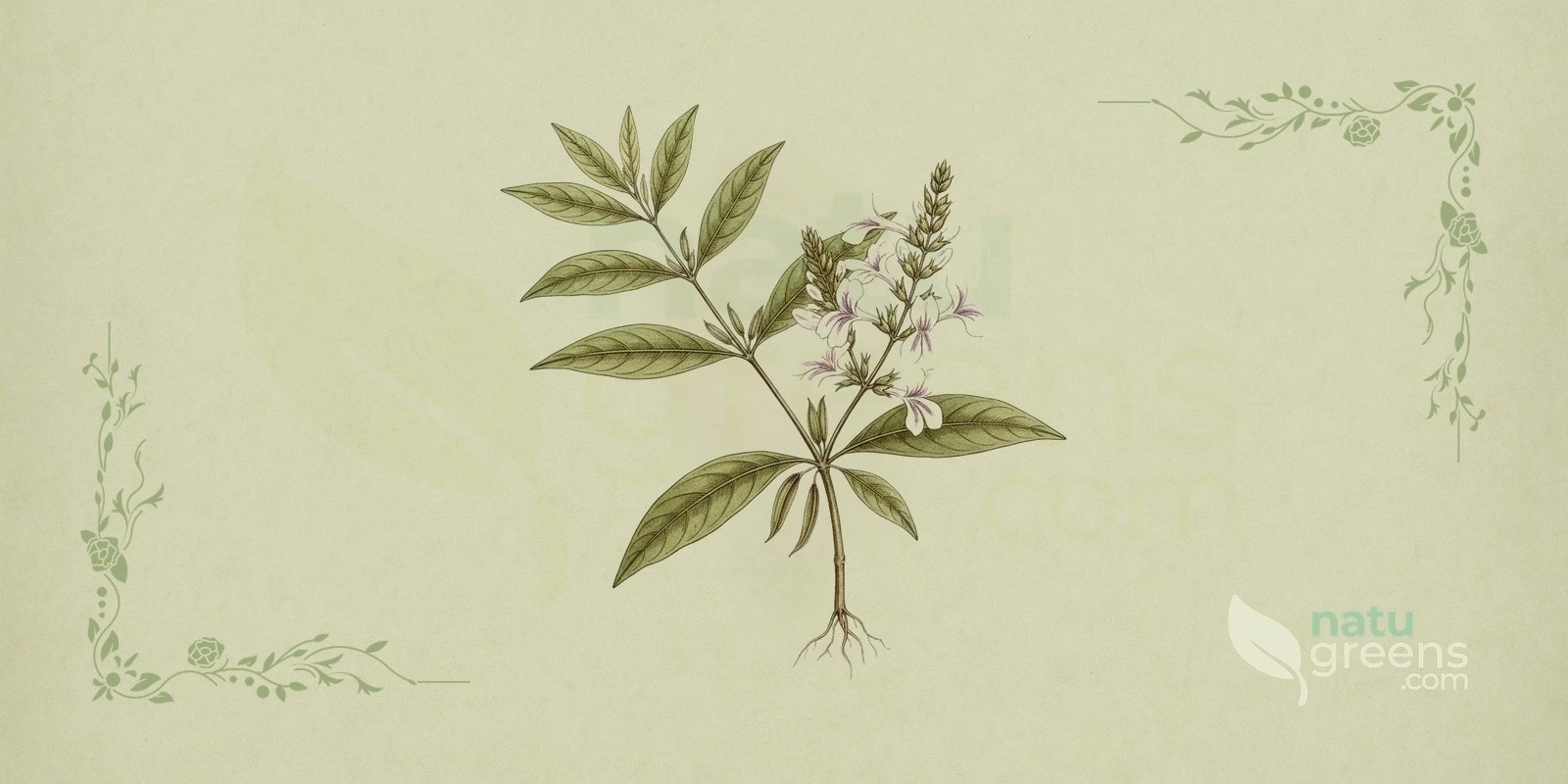
Over centuries of traditional use, the leaves, roots, flowers, and bark of vasaka have been used in folk preparations for a wide range of respiratory complaints, and modern pharmacological research has identified alkaloids such as vasicine and vasicinone as responsible for much of this reported action. Even so, most of the available studies were conducted in animal models, cell cultures, or combined formulations, so the benefits described here should be read as traditional use and preclinical findings, not as proven treatment for any disease in humans.
Popular and International Names of Vasaka
- English: Malabar Nut, Adulsa, Adhatoda, Vasa, Vasaka, White Vasa, Yellow Vasa.
- French: Noix de Malabar, Adhatoda.
- German: Malabar-Nussbaum, Adhatoda, Vasaka.
- Italian: Adhatoda, Noce di Malabar.
- Portuguese: Vasaka, Adulsa, Adhatoda, Vasa, Noz-de-Malabar.
- Spanish: Adhatoda de Ceilán, Nuez de Malabar, Adulsa, Vasaka.
Botanical Synonyms of Vasaka
The accepted botanical name for this species is Justicia adhatoda L., but scientific literature and commercial products still frequently rely on older synonyms. The most widely used synonym of all is Adhatoda vasica Nees, the name that gave rise to the term vasaka itself and that still appears in many pharmacological studies and supplement labels. Other synonyms recorded for the same plant include Adhatoda zeylanica Medik., Adeloda serrata Raf., Adhatoda pubescens Moench, Dianthera latifolia Salisb., Ecbolium adhatoda (L.) Kuntze, and Gendarussa adhatoda (L.) Steud. Anyone researching published studies on this plant should watch for this variation in names, since results obtained under the name Adhatoda vasica refer to the very same species discussed here.
Botanical Family: Acanthaceae
The Acanthaceae family brings together about 250 genera and more than 2,500 species, concentrated mainly in tropical and subtropical regions of the planet. Its plants stand out for their morphological diversity and for the recurring presence of secondary compounds with relevant pharmacological activity, which makes the family a frequent target of study in ethnobotany and phytochemistry. Generally speaking, Acanthaceae species have opposite leaves, bisexual flowers arranged in spikes or racemes, and capsule-type fruits, traits that are also clearly visible in vasaka.
Parts Used of Vasaka
- Bark
- Flowers
- Leaves
- Roots
- Wood
Ethnobotanical and Traditional Uses of Vasaka
In traditional Asian medicine, vasaka is valued above all for its expectorant and antispasmodic properties, and it is used traditionally for colds, persistent coughs, wheezing associated with asthma, bronchitis, and, historically, also for cases of tuberculosis. Beyond its respiratory use, ethnobotanical records attribute to the plant traditional uses against dysentery, worm infestations, and malaria, as well as for relieving chest congestion, whooping cough, and bleeding hemorrhoids. In some communities, vasaka also appears in old accounts as a blood purifier and as a folk remedy for joint discomfort, always within the logic of traditional use, without this constituting scientific proof of these effects in humans.
Medicinal Properties of Vasaka
The properties listed below reflect findings from preclinical studies, carried out in animals or in the laboratory, together with centuries of traditional use; none of them has been confirmed to date in controlled clinical trials conducted in humans.
- Expectorant action (widely reported traditional use, supported by preclinical studies)
- Antispasmodic action (observed in preclinical models, without confirmation in human trials)
- Bronchodilator activity (attributed to vasicine and vasicinone in laboratory studies)
- Antiviral activity, especially against influenza B virus (result of an in vitro study, without clinical validation in humans)
- Anthelmintic action (traditional use and limited preclinical studies)
- Antioxidant and anti-inflammatory properties (attributed to the plant's alkaloids and flavonoids in laboratory studies)
- Antiallergic and mucolytic effects (traditional use, with still limited preclinical evidence)
- Antibacterial and antifungal activity (demonstrated in laboratory assays against specific strains)
- Possible antiarthritic action (traditional use little explored in modern studies)
Detailed Phytochemical Profile of Vasaka
The chemical profile of vasaka is dominated by quinazoline-type alkaloids, especially vasicine and vasicinone, molecules studied in greater depth because of their relationship to the plant's expectorant and bronchodilator effect. Other relevant alkaloids, present in smaller concentrations, include vasicinolone, vasicol, and adhatonine. Besides the alkaloids, vasaka also contains tannins, saponins, phenolic compounds, and flavonoids, groups of substances that help explain the antioxidant and anti-inflammatory activities attributed to the plant in laboratory studies.
- Vasicine (main alkaloid, linked to the expectorant and bronchodilator actions)
- Vasicinone (oxidized derivative of vasicine, also studied for its respiratory action)
- Vasicinolone (secondary alkaloid, present in smaller concentration)
- Vasicol (additional alkaloid component identified in the plant)
- Adhatonine (minor alkaloid of the same chemical group)
- Tannins, saponins, phenolic compounds, and flavonoids (associated with the antioxidant properties reported in the laboratory)
Forms of Preparation and Administration of Vasaka
Depending on local tradition and the condition one intends to address, vasaka tends to be prepared in quite varied ways. Among the most common are a decoction of the bark and wood, powder from the dried leaves, and juice extracted from the fresh leaves, usually mixed with honey. The plant also appears in more elaborate preparations, such as syrups, liquid extracts, and essential oils, with aqueous or ethanolic extraction being the preferred form when the goal is to concentrate the alkaloids vasicine and vasicinone. On the Indian market, vasaka is also an ingredient in syrups and manufactured Ayurvedic formulations aimed at the respiratory tract.
Synergy with Other Medicinal Plants
Pairing for Long-Term Respiratory Health
In protocols aimed at prolonged lung support, practitioners of traditional herbal medicine often pair vasaka with mullein (Verbascum thapsus), licorice (Glycyrrhiza glabra), and holy basil or tulsi (Ocimum tenuiflorum), seeking broader support for the respiratory tract over time. The pairing of vasaka with tulsi, specifically, was linked to additional antioxidant effects in an animal study, a preliminary finding that does not support conclusions for human use and does not replace professional guidance.
Pairing with Echinacea and Siberian Ginseng
Popular sources also mention vasaka alongside echinacea (Echinacea purpurea) and Siberian ginseng (Eleutherococcus senticosus) in multi-herb formulas for colds and common respiratory infections. However, no clinical studies have evaluated this specific combination, and results published for formulas containing echinacea or Siberian ginseng cannot be attributed to vasaka.
Recipes and Usage Protocols for Vasaka
Fresh Leaf Juice with Honey
One of the most widespread forms of folk use is the juice extracted from fresh leaves, mixed with honey, consumed as traditional support for cough and sinusitis. The proportion and frequency vary widely between regions and families, which underscores the empirical nature of this practice.
Leaf Decoction
The leaf decoction, prepared by boiling in water, is recommended in folk tradition as an accompaniment for wheezing episodes associated with asthma, for persistent cough, and for mild feverish states, always as a complement and never on its own. These uses follow traditional records and do not replace qualified professional guidance, especially in more severe or prolonged respiratory conditions.
The preparations above follow traditional records and do not replace professional guidance. Before any internal use, check the contraindications and interactions described in this article.
Therapies Associated with Vasaka
Clinical Herbal Medicine
In contemporary clinical herbal medicine, vasaka appears mainly in standardized extracts and multi-herb formulations for respiratory symptoms, in which the concentration of vasicine and vasicinone is controlled in the laboratory. This approach aims to reproduce the effects seen in preclinical studies more consistently, although clinical validation in humans remains limited for most of the formulations available.
Ayurveda, Siddha, and Unani
Outside Western clinical herbal medicine, vasaka holds a central position in the traditional Indian systems of Ayurveda, Siddha, and Unani, where it is classified as a reference plant for respiratory and feverish imbalances. In these systems, use typically involves specific preparations of leaves and roots, combined according to the principles particular to each tradition, and documented for centuries in classic texts of these healing schools.
Contraindications and Side Effects of Vasaka
Because it contains significant amounts of vasicine, vasaka is contraindicated throughout pregnancy: animal studies show uterotonic and abortive action linked to this alkaloid, which makes the risk unacceptable for pregnant women, even in seemingly mild home preparations. There is also not enough safety data on the use of the plant during breastfeeding or in young children, so it should be avoided in these groups without direct professional guidance. A possible hypoglycemic effect has also been reported, which calls for extra caution in anyone taking diabetes medication or prone to low blood sugar. People sensitive to plants in the Acanthaceae family may develop allergic reactions on contact with or ingestion of vasaka, and any sign of an unusual skin or respiratory reaction should lead to stopping use immediately. Another point deserves attention: bromhexine, a synthetic mucolytic drug in use today, was historically developed from the vasicine found in vasaka, but this is only a fact about the drug's origin. There is no therapeutic equivalence between the plant and the drug, and vasaka cannot be used in place of bromhexine. Likewise, vasaka does not replace medical treatment for asthma or tuberculosis: its traditional role is that of a folk adjunct, never that of primary therapy for these diseases.
Drug Interactions
Reference sources mention a possible interaction between vasaka and anticoagulants or sedatives, with a risk of adding to their effects in an unwanted way. Because of the possible hypoglycemic effect reported in preclinical studies, caution is also advisable when combining the plant with medications used to manage diabetes. Anyone taking ongoing medication should seek guidance from a health professional before starting to use vasaka.
Curiosities and Historical Facts
The plant's popular name in Tamil, "adathoda," means something like "untouched by goats," a direct reference to the extremely bitter taste of the leaves, which keeps even the hungriest animals away from the species. The formal botanical description of the species was published in the eighteenth century by Carl Linnaeus, the Swedish naturalist who created the modern system of binomial nomenclature. Another curious point is that research on vasaka's alkaloids, especially vasicine, served as a historical starting point for the development of synthetic mucolytics widely used today, such as bromhexine and ambroxol, even though these drugs have their own pharmacological path, distinct from the plant that inspired them.
Frequently Asked Questions about Vasaka
Is Vasaka Safe during Pregnancy?
No. Studies in animals link vasicine, the plant's main alkaloid, to uterotonic and abortive action, which makes the use of vasaka contraindicated throughout pregnancy, regardless of the preparation method chosen.
Does Vasaka Work Like Bromhexine?
No. Bromhexine is a synthetic drug developed from research on vasicine, an alkaloid present in vasaka, but this is only a historical fact about the drug's origin. There is no therapeutic equivalence between the plant and the drug, and vasaka should not be used as a substitute for bromhexine.
Does Vasaka Replace Treatment for Asthma or Tuberculosis?
No. The traditional use of vasaka for respiratory symptoms works only as a folk adjunct, and both asthma and tuberculosis require diagnosis and ongoing medical follow-up, without which the risk to the patient's health increases considerably.
Can People with Diabetes Use Vasaka without Concern?
Not without medical guidance, because preclinical studies point to a possible hypoglycemic effect of the plant, capable of adding to that of antidiabetic medications and causing unwanted drops in blood sugar, which is why professional follow-up is recommended in these cases.
Can Young Children Use Vasaka?
It is not recommended, since consistent safety data on the use of vasaka in young children is lacking, so the most prudent approach is to avoid any preparation of the plant in this age group without direct professional guidance.
Notice: this content is for informational purposes and does not replace professional medical advice. Consult a physician or herbal practitioner before using medicinal plants, especially during pregnancy, breastfeeding, or alongside medication.
How to cite this article
NATUGREENS. Vasaka (Justicia adhatoda): Traditional Uses and Safety. Natugreens, 21 Nov. 2026. Disponível em: https://natugreens.com/justicia-adhatoda-vasaka/. Accessed: Nov. 21, 2026.
Natugreens. (2026). Vasaka (Justicia adhatoda): Traditional Uses and Safety. Natugreens. https://natugreens.com/justicia-adhatoda-vasaka/
References and Scientific Studies
Peer-Reviewed Scientific Studies (2)
- PEER2025 ScienceDirect. (2025). Justicia adhatoda, an overview. ScienceDirect Topics. ↗
- PMC2025 PubMed Central. (2025). Supplements of an aqueous combination of Justicia adhatoda. PMC, National Library of Medicine. ↗
Supplementary Readings (5)
- 2025 Wikipedia. (2025). Justicia adhatoda. Wikipedia, the Free Encyclopedia. ↗
- 2025 GBIF. (2025). Justicia adhatoda L. Global Biodiversity Information Facility. ↗
- 2025 MDPI. (2025). An overview of Justicia adhatoda, a medicinal plant. Biologics. ↗
- 2025 Miduty. (2025). Vasaka (Justicia Adhatoda): benefits, dosage and side effects. Miduty. ↗
- 2025 WeClinic. (2025). Justicia adhatoda, uses, dosage, side effects. WeClinic. ↗
You May Also Like
Take your time and tell us everything you think, details included. Every response is read by someone on our editorial team and goes into the article's revision. An honest critique helps us more than a polite compliment.
Take your time and tell us everything you think, details included. Every response is read by someone on our editorial team and goes into the article's revision. An honest critique helps us more than a polite compliment.