



Quick summary
Abies alba Mill., known in English as silver fir or European silver fir, is a conifer of the Pinaceae family native to the mountains of Europe. Its range runs from the Pyrenees to the Carpathians and the Balkan Peninsula, where it grows in mixed forests with beech and spruce between 500 and 1,500 metres above sea…
Main caution: Silver fir essential oil must never be swallowed undiluted under any circumstances, because conifer oils can irritate the digestive tract and, if inhaled into the lungs, cause chemical pneumonitis; amounts of just a few…
Abies alba Mill., known in English as silver fir or European silver fir, is a conifer of the Pinaceae family native to the mountains of Europe. Its range runs from the Pyrenees to the Carpathians and the Balkan Peninsula, where it grows in mixed forests with beech and spruce between 500 and 1,500 metres above sea level. For centuries its shoots, its resin and the essential oil distilled from its needles have gone into homemade syrups, steam inhalations and ointments across central Europe, nearly always in connection with the airways. Modern research, however, is still thin: most of the data come from laboratory assays and a handful of small clinical trials, and those trials used standardised extracts of the wood and bark rather than the traditional preparations.
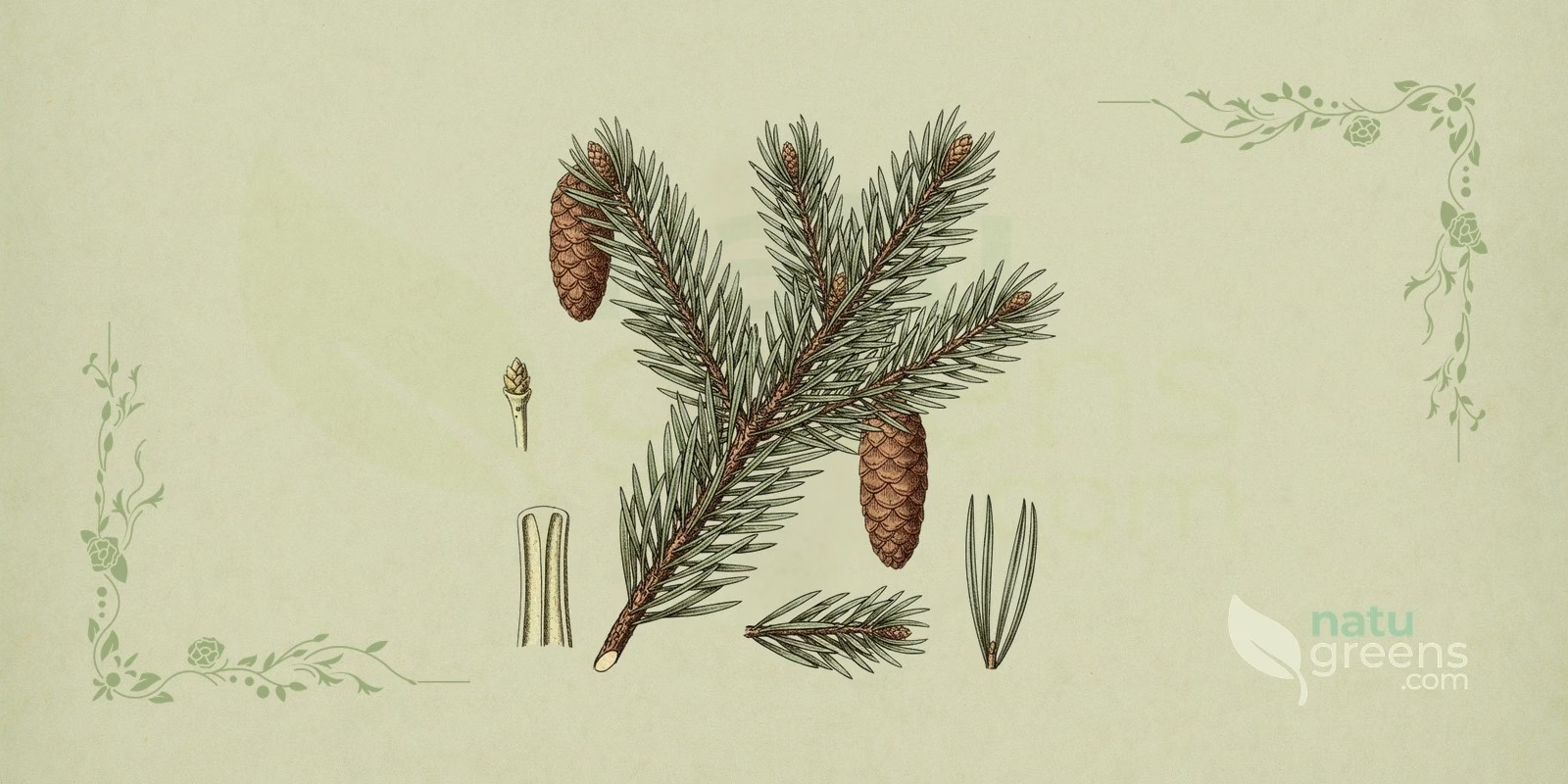
Common and International Names of Silver Fir
- Croatian: obična jela
- Danish: ædelgran
- Dutch: gewone zilverspar
- French: sapin pectiné, sapin blanc
- German: Weißtanne
- Italian: abete bianco
- Japanese: ヨーロッパモミ (yōroppa momi)
- Norwegian: edelgran
- Polish: jodła pospolita
- Portuguese: abeto-branco, abeto-prateado
- Romanian: brad
- Spanish: abeto blanco
- Swedish: silvergran
Not to Be Confused with Norway Spruce or Yew
In the essential oil trade, the word "fir" is used loosely and may refer to Norway spruce (Picea abies), Siberian fir (Abies sibirica) or the North American balsam fir (Abies balsamea), all of which differ in chemical makeup. Checking the scientific name on the label before buying is therefore a sensible habit. In the field, silver fir can be recognised by its flat needles, which have a rounded or slightly notched tip, are glossy dark green above and carry two whitish bands underneath, and by its cones, which stand upright on the branches and break apart while still on the tree. Anyone gathering shoots for syrup needs to be especially careful not to mistake it for yew (Taxus baccata), another European conifer with flat needles that is highly toxic in every part except the red flesh around the seed. Yew lacks the two white bands under the needle and does not produce cones.
Botanical Synonyms of Silver Fir
The name accepted by World Flora Online is Abies alba Mill., published by Philip Miller in 1768. Over the eighteenth and nineteenth centuries the species gathered a long list of synonyms, among them Abies excelsa Link, Abies pectinata Lam. & DC., Abies vulgaris Poir., Picea pectinata (Lam.) Loudon, Pinus pectinata Lam. and Pinus picea L. The name Abies pectinata is still common on gemmotherapy product labels and in older pharmacy texts, which accounts for some of the confusion in popular sources. Certain populations in southern Italy were once described as a separate subspecies (Abies alba subsp. apennina), but they are now included within the species.
Botanical Family: Pinaceae
The Pinaceae family comprises around eleven genera and more than two hundred species of conifers, almost all from the Northern Hemisphere, including true cedars (Cedrus), firs (Abies), larches (Larix), pines (Pinus) and spruces (Picea). They are resinous trees with needle-shaped leaves and seeds borne in cones, and they matter enormously to the timber industry. Their resin ducts, rich in monoterpenes such as pinenes and limonene, explain why so many species in the family ended up in balsams, turpentines and inhalations. Silver fir can exceed 50 metres in height. Its bark is smooth and silvery grey when young, darkening and cracking with age, and its crown is narrow and pyramidal.
Parts of Silver Fir Used
In European tradition the parts most often used are the young spring shoots, pale green and soft, which go into syrups and infusions, and the resin, also called oleoresin or Strasbourg turpentine, collected from small blisters beneath the bark. Steam distillation of the needles and fine twigs yields fir needle essential oil, while the cones give a second oil, historically known as oleum templini. In recent decades the wood of the branches and the bark of the trunk have also been used to make dry extracts rich in polyphenols and lignans, which are sold in Europe as food supplements.
Ethnobotanical and Traditional Uses of Silver Fir
Historical records for silver fir are scarcer than those for spruce and Scots pine, and the three trees were often used interchangeably. Ethnobotanical surveys in Catalonia, Italy and Romania document the following folk uses, which reflect tradition rather than clinical proof:
- Baths and decoctions of branches for colds and rheumatic pain (Transylvania)
- Compresses and plasters of resin on wounds, boils and warts (European herbals of the sixteenth and seventeenth centuries and Italian folk medicine)
- Cough syrup made from young shoots (Romania and other parts of central Europe)
- Resin poultice placed on a decayed tooth (a single record from Transylvania)
- Syrup of unripe cones for coughs and chest congestion (Catalonia)
Medicinal Properties of Silver Fir
The properties below come from laboratory experiments, from traditional use and from two small clinical trials of industrial extracts. None of them can be regarded as proven for the home use of silver fir in people.
- Antibacterial (in a laboratory assay, the needle and twig oil showed weak activity against Staphylococcus aureus and none against the other bacteria tested)
- Anti-inflammatory, topical (an ointment containing 2% bark extract lowered interleukin IL-1β in patients with mild psoriasis, but symptom improvement did not differ significantly from placebo)
- Antioxidant (seen in chemical tests with the essential oil and with the wood and bark extracts, with no equivalent demonstration in the body)
- Expectorant and balsamic (attributed through traditional use of the shoots, the resin and inhalations, with no clinical studies specific to this species)
- Lower blood sugar after meals (a dry extract of branch wood reduced the rise in glucose after white bread in 31 healthy volunteers, an early finding not yet repeated in people with diabetes)
Detailed Phytochemical Profile of Silver Fir
The composition of silver fir varies a good deal depending on the part of the tree and where it grows. The needle oil is dominated by monoterpenes, with limonene leading in samples from Austria, France, Germany and Greece and beta-pinene in samples from the Balkans, which points to the existence of chemotypes. The bark and wood, by contrast, concentrate polyphenols and lignans, especially in the branch knots.
- Abietic acid (a resin acid typical of conifer oleoresin, linked to contact allergy)
- Alpha-pinene (a monoterpene present in significant amounts in the needle oil)
- Beta-pinene (the main component in some Balkan samples)
- Bornyl acetate (a balsamic-smelling ester and one of the main components of commercial needle and twig oil)
- Camphene (a monoterpene frequently found in the needle and twig oil)
- Catechin and epicatechin (flavanols from the bark and from standardised extracts)
- Delta-3-carene (a monoterpene detected in some analyses of the commercial oil)
- Ferulic acid (a phenolic compound found in the bark)
- Lignans (isolariciresinol, lariciresinol, matairesinol, pinoresinol, secoisolariciresinol and taxiresinol, concentrated in knotwood and bark)
- Limonene (the monoterpene that dominates the needle oil in many western and central European populations)
- Prodelphinidins (the condensed tannins that predominate in the bark)
- Taxifolin (a bark flavonoid, also called dihydroquercetin)
- Tricyclene (a monoterpene present in notable amounts in some oil samples)
Preparation and Administration of Silver Fir
The most traditional preparation is shoot syrup, made in spring from the new, still tender shoots. They are layered with sugar or honey in a jar that is left to stand for a few days until a thick, fragrant liquid forms. The shoots can also be used in a light infusion. The resin turns up in homemade ointments and plasters, while the needle essential oil is sold undiluted for room diffusion and goes into the formulas of balms, massage gels, bath salts and pharmacy inhalants, often alongside eucalyptus, pine and menthol. The dry extracts of the wood and bark are marketed in capsules as food supplements, with doses set by the manufacturer and no traditional use behind them. The essential oil is not a product meant to be swallowed at home.
Synergy with Other Medicinal Plants
Combinations for the Airways
In the syrups and inhalations of European tradition, silver fir is commonly paired with ribwort plantain (Plantago lanceolata) and thyme (Thymus vulgaris), both used traditionally for coughs, and with Scots pine (Pinus sylvestris), whose oil is similar. These blends follow the logic of folk practice and have not been tested as combinations in clinical studies.
Combinations in Balms and Baths
In chest rubs and bath salts, fir oil appears alongside eucalyptus (Eucalyptus globulus) and Norway spruce (Picea abies). Such blends add up the respiratory risks of the individual oils, which is why they are not suitable for babies and young children.
Recipes and Usage Protocols for Silver Fir
Homemade Shoot Syrup
In the folk recipe from central Europe, young shoots are picked from trees that have been identified with certainty and that grow well away from roads. They are rinsed briefly and layered with sugar, or honey, in a clean jar, which is kept closed in a bright spot for two to three weeks before straining. By tradition, the syrup is taken by the spoonful on days when a cough sets in. Because it is very high in sugar, people with diabetes should avoid it, and honey must never be given to children under one year of age.
Inhalation and Topical Use of the Essential Oil
For adults, tradition suggests one or two drops of the oil in a bowl of hot water, with the steam inhaled for a few minutes and the eyes kept closed. On the skin, the oil must always be diluted in a vegetable carrier oil at a low ratio, no more than one or two drops per teaspoon, and tested first on a small patch of the forearm. These uses follow traditional records and do not replace professional advice, particularly in cases of fever, shortness of breath or a cough that lasts longer than two weeks.
The preparations above follow traditional records and do not replace professional guidance. Before any internal use, check the contraindications and interactions described in this article.
Therapies Associated with Silver Fir
Clinical Herbal Medicine
Silver fir does not have its own monograph from the European Medicines Agency. In European herbal practice, conifer needle oils serve as supporting ingredients in inhalations and balms for colds, subject to the same precautions as eucalyptus oil. The standardised wood and bark extracts, developed in Slovenia, have been studied in small trials on blood sugar and skin, and they are sold as supplements, not as registered medicines.
Homeopathy and Gemmotherapy
Silver fir has no established homeopathic use. The homeopathic remedies called Abies nigra and Abies canadensis come from other North American conifers and should not be confused with it. In gemmotherapy, a French and Belgian practice derived from homeopathy, the glycerine macerate of Abies pectinata buds, an old synonym of the species, is one of the best-known preparations, but no clinical studies support its indications.
Contraindications and Side Effects of Silver Fir
Silver fir essential oil must never be swallowed undiluted under any circumstances, because conifer oils can irritate the digestive tract and, if inhaled into the lungs, cause chemical pneumonitis; amounts of just a few millilitres have caused serious poisoning in children. For topical use the oil must always be diluted, since undiluted oil can irritate and sensitise the skin, and people allergic to conifer resin or colophony should avoid it. Extra caution is essential with young children and infants: volatile monoterpenes applied near the face, such as the 1,8-cineole found in blends with eucalyptus, can trigger laryngeal spasm and breathing difficulty, and the European Medicines Agency contraindicates eucalyptus oil preparations for children under 30 months for this reason. Never apply fir oil or conifer balms to a baby's face, nose or chest, and never run a diffuser near the cot. People with asthma or whooping cough should also avoid inhalations with these oils. In pregnancy, concentrated use of the oil should be avoided because safety data are lacking, and the same applies during breastfeeding. Before picking shoots, it is essential to be certain of the identification so that the fir is not mistaken for yew, which is poisonous.
Drug Interactions
No interactions have been documented for traditional use in small amounts. Because the wood extract lowered post-meal blood sugar in healthy volunteers, anyone taking oral antidiabetic drugs or insulin should talk to their doctor before using silver fir supplements, given the theoretical risk of additive effects. People using inhaled medicines for asthma or bronchitis should not combine them with conifer oil inhalations without professional guidance.
Curiosities and Historical Facts
The epithet alba, Latin for white, refers to the pale bark and the whitish bands beneath the needles, while the old name pectinata and the French sapin pectiné recall the needles arranged in two rows like the teeth of a comb. The tree's resin gave rise to Strasbourg turpentine, collected by piercing small blisters in the bark and catching the drops in tins. The work was so slow that production in the Vosges mountains, near Mutzig and Barr, had all but vanished by the end of the nineteenth century, and from the sixteenth century onwards the resin was also blended into oil paints. In the eighteenth century, conifer needle teas and beers, such as the French "sapinette", were used by sailors and settlers against scurvy. In 2019, in Biogradska Gora National Park in Montenegro, a silver fir almost 60 metres tall was measured and described as one of the largest single-trunk trees ever recorded in Europe.
Frequently Asked Questions About Silver Fir
Can Silver Fir Essential Oil Be Taken by Mouth?
No. The essential oil must not be swallowed undiluted, and home oral use is not recommended in any form, because it can irritate the stomach and, if inhaled into the lungs, cause lung injury. The capsule supplements sold in Europe are dry extracts of the wood or bark, a completely different product from the oil.
Can I Use Fir Balm on Babies and Young Children?
It is not recommended. Oils rich in monoterpenes, especially when blended with eucalyptus, can provoke laryngeal spasm in young children if applied near the face, and the European agency contraindicates eucalyptus oil for children under 30 months. For a baby with a cough or blocked nose, the safe course is to see a paediatrician.
What Is the Difference Between Silver Fir and a Christmas Tree Pine?
Many trees sold as Christmas trees in Europe are firs or spruces rather than true pines. Silver fir has flat, soft needles attached singly to the branch and upright cones that break apart on the tree, whereas pines of the genus Pinus have needles in bundles of two to five and hanging cones that fall whole.
Does Silver Fir Extract Help Control Diabetes?
That cannot be said yet. The only clinical trial available assessed 31 healthy volunteers over a single meal and observed a smaller rise in glucose with the wood extract. There are no studies in people with diabetes, and the supplement must never replace prescribed treatment.
Can Silver Fir Be Used During Pregnancy?
Concentrated use of the essential oil should be avoided during pregnancy because there are not enough safety data. Before using any silver fir product while pregnant or breastfeeding, including supplements and inhalations, talk to your obstetrician.
Notice: this content is for informational purposes and does not replace professional medical advice. Consult a physician or herbal practitioner before using medicinal plants, especially during pregnancy, breastfeeding, or alongside medication.
How to cite this article
NATUGREENS. Silver Fir (Abies alba): Uses, Essential Oil and Safety. Natugreens, 26 Nov. 2026. Disponível em: https://natugreens.com/abies-alba-silver-fir/. Accessed: Nov. 26, 2026.
Natugreens. (2026). Silver Fir (Abies alba): Uses, Essential Oil and Safety. Natugreens. https://natugreens.com/abies-alba-silver-fir/
References and Scientific Studies
View All 13 Cited References
Peer-Reviewed Scientific Studies (10)
- DOI2023 Ancuceanu, R., Hovaneț, M. V., Miron, A., Anghel, A. I., & Dinu, M. (2023). Phytochemistry, Biological, and Pharmacological Properties of Abies alba Mill. Plants, 12(15), 2860. ↗
- DOI2009 Yang, S.-A., Jeon, S.-K., Lee, E.-J., Im, N.-K., Jhee, K.-H., Lee, S.-P., & Lee, I.-S. (2009). Radical Scavenging Activity of the Essential Oil of Silver Fir (Abies alba). Journal of Clinical Biochemistry and Nutrition, 44(3), 253-259. ↗
- DOI2022 Papp, N., Purger, D., Czigle, S., Czégényi, D., Stranczinger, S., Tóth, M., Dénes, T., Kocsis, M., Takácsi-Nagy, A., & Filep, R. (2022). The Importance of Pine Species in the Ethnomedicine of Transylvania (Romania). Plants, 11(18), 2331. ↗
- DOI2016 Debeljak, J., Ferk, P., Čokolič, M., Zavratnik, A., Tavčar Benković, E., Kreft, S., & Štrukelj, B. (2016). Randomised, double blind, cross-over, placebo and active controlled human pharmacodynamic study on the influence of silver fir wood extract (Belinal) on post-prandial glycemic response. Pharmazie, 71(10), 566-569. ↗
- DOI2018 Starbek Zorko, M., Štrukelj, B., Švajger, U., Kreft, S., & Lunder, T. (2018). Efficacy of a polyphenolic extract from silver fir (Abies alba) bark on psoriasis: a randomised, double-blind, placebo-controlled trial. Pharmazie, 73(1), 56-60. ↗
- DOI2021 Kreft, S. (2021). Phytochemical, pharmacological and clinical studies of an extract prepared from silver fir branches (Abies alba). Biologia Serbica, 43(1), 57-62. ↗
- DOI2014 Tavčar Benković, E., Grohar, T., Žigon, D., Švajger, U., Janeš, D., Kreft, S., & Štrukelj, B. (2014). Chemical composition of the silver fir (Abies alba) bark extract Abigenol and its antioxidant activity. Industrial Crops and Products, 52, 23-28. ↗
- DOI2015 Wajs-Bonikowska, A., Sienkiewicz, M., Stobiecka, A., Maciąg, A., Szoka, Ł., & Karna, E. (2015). Chemical Composition and Biological Activity of Abies alba and A. koreana Seed and Cone Essential Oils and Characterization of Their Seed Hydrolates. Chemistry & Biodiversity, 12(3), 407-418. ↗
- DOI2007 Duquesnoy, E., Castola, V., & Casanova, J. (2007). Composition and chemical variability of the twig oil of Abies alba Miller from Corsica. Flavour and Fragrance Journal, 22(4), 293-299. ↗
- DOI2009 Adams, M., Berset, C., Kessler, M., & Hamburger, M. (2009). Medicinal herbs for the treatment of rheumatic disorders: a survey of European herbals from the 16th and 17th century. Journal of Ethnopharmacology, 121(3), 343-359. ↗
Supplementary Readings (3)
- 2025 European Medicines Agency, Committee on Herbal Medicinal Products (2025). European Union herbal monograph on Eucalyptus globulus Labill., Eucalyptus polybractea R.T. Baker, Eucalyptus smithii R.T. Baker, aetheroleum, Revision 1 (EMA/HMPC/320292/2023). ↗
- 2025 World Flora Online (2025). Abies alba Mill. WFO Plant List. ↗
- 2021 Christian, T. (2021). Abies alba. Trees and Shrubs Online. ↗
You May Also Like
Take your time and tell us everything you think, details included. Every response is read by someone on our editorial team and goes into the article's revision. An honest critique helps us more than a polite compliment.
Take your time and tell us everything you think, details included. Every response is read by someone on our editorial team and goes into the article's revision. An honest critique helps us more than a polite compliment.