Aloe arborescens Mill. / Krantz Aloe, popularly known as Krantz aloe or candelabra aloe, is a perennial succulent plant of the Asphodelaceae family, described by Philip Miller in 1768. Native to South Africa, this species is widely cultivated in many regions of the world for its remarkable medicinal, ornamental, and cosmetic properties. Aloe arborescens is distinguished by its shrubby structure, which can reach up to 5 meters in height, with branched stems and rosettes of fleshy, lance-shaped leaves.
Historically, Aloe arborescens has been used in traditional African medicine for a variety of conditions, from digestive problems to skin inflammation. Modern scientific studies have corroborated many of these uses, revealing a rich phytochemical composition that includes anthraquinones, polysaccharides, vitamins, and minerals. This plant is often compared to Aloe vera, described in popular sources as more concentrated in active compounds than Aloe vera, a comparison the available studies do not confirm in fixed figures, which makes it an object of growing interest in phytotherapy and the pharmaceutical industry.
Popular and International Names of Krantz Aloe
- English: Krantz aloe, candelabra aloe, torch aloe, tree aloe, mountain bush aloe, kidachi aloe.
- Spanish: aloe arbóreo, aloe candelabro, candelabro, cuerno de carnero, planta pulpo, sábila candelabro africano.
- Portuguese: babosa, babosa-de-jardim, babosa-de-flor-vermelha, babosa-candelabro, babosa-de-natal (BR); aloé-candelabro, aloé-do-natal, aloé-dos-cem-anos, vela (PT).
- French: aloès arborescent, aloès candélabre, corne de bélier, aloès de Krantz, aloès du Père Zago.
- Italian: aloe a candelabro, aloe arborescente, torch aloe, aloe del Padre Zago.
- German: Kandelaber-Aloe, Baum-Aloe, Fackel-Aloe, Krantz-Aloe.
- Japanese: kidachi aroe.
Botanical Synonyms of Krantz Aloe
The accepted scientific name for this species is Aloe arborescens Mill. However, throughout the history of botany, several other designations have been proposed and are considered synonyms. These include Aloe natalensis J.M.Wood & M.S.Evans, Aloe arborescens var. milleri A.Berger, and Aloe perfoliata var. arborescens (Mill.) Aiton. The validation of the name Aloe arborescens Mill. is widely recognized by global taxonomic databases, such as World Flora Online and Plants of the World Online (POWO), consolidating its botanical identity.
Botanical Family: Asphodelaceae

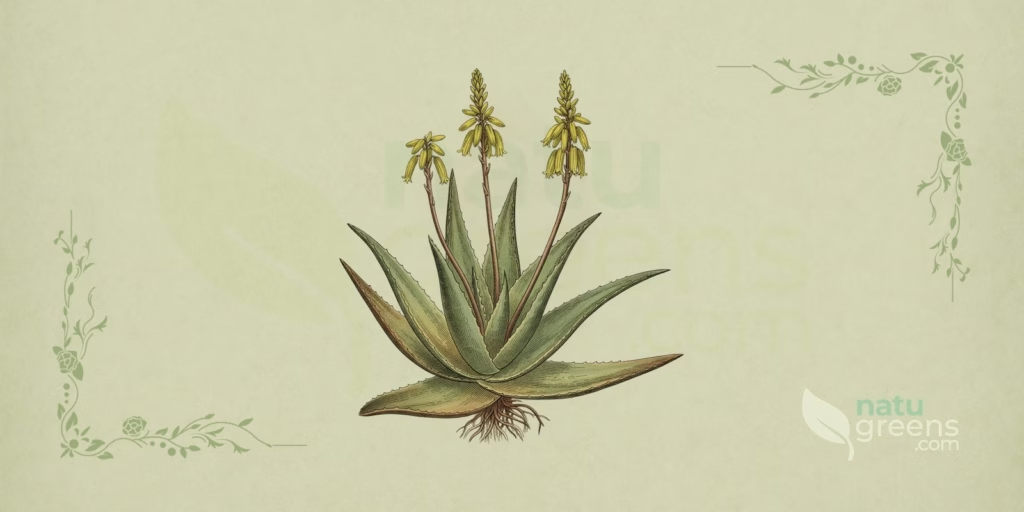
Botanical illustration of Aloe arborescens Mill. (Krantz aloe, candelabra aloe), a perennial succulent plant of the Asphodelaceae family described by Philip Miller in 1768, native to South Africa, showing the complete plant with branched stems, rosettes of fleshy lance-shaped leaves, and inflorescences of coral-red flowers, in 19th-century botanical encyclopedia style on a herbarium paper background.
Aloe arborescens belongs to the Asphodelaceae family, subfamily Asphodeloideae, which includes genera such as Aloe, Asphodelus, and Kniphofia. This family is characterized by herbaceous or shrubby plants, often succulent, with leaves arranged in rosettes and showy inflorescences. The Asphodelaceae are known for the presence of bioactive compounds, especially anthraquinones and polysaccharides, which give medicinal properties to many of their species. The family has a global distribution, with great diversity in Southern Africa.
Parts of Krantz Aloe Used
- Flowers
- Leaves (gel; the yellow latex must be discarded)
- Sap (latex; internal use is discouraged today, see precautions)
Ethnobotanical and Traditional Uses of Krantz Aloe
- Antitumor and anticancer applications (under study; preclinical data)
- Combating constipation (laxative effect of the latex; internal use is discouraged today)
- Digestive disorders and gastritis
- Immunomodulation
- Relief of burns and skin wounds
- Treatment of ulcers
- Various inflammations
Therapeutic Properties of Krantz Aloe
- Analgesic (relieves pain)
- Antibacterial (fights bacteria); traditional use, without established clinical efficacy
- Anticancer (under study; preclinical data, no established clinical use)
- Antidiabetic (helps control blood sugar); traditional use, without established clinical efficacy
- Antifungal (fights fungi)
- Anti-inflammatory (reduces inflammation)
- Antioxidant (fights free radicals)
- Antiulcer (protects against ulcers)
- Cardioprotective (protects the heart); traditional use, without established clinical efficacy
- Digestive (aids digestion)
- Healing (promotes wound healing)
- Hypocholesterolemic (lowers cholesterol); traditional use, without established clinical efficacy
- Hypoglycemic (lowers blood sugar); traditional use, without established clinical efficacy
- Immunomodulatory (modulates the immune system); traditional use, without established clinical efficacy
- Neuroprotective (protects the nervous system); traditional use, without established clinical efficacy
Detailed Phytochemical Profile of Krantz Aloe
- Amino acids (including essential ones)
- Aloenin A (phenolic glycoside)
- Anthraquinones (aloin A, aloe-emodin)
- Chromones
- Fatty acids
- Flavonoids
- Glycosides
- Minerals (calcium, iron, magnesium, potassium, selenium, zinc)
- Polysaccharides
- Saponins
- Vitamins (A, B1, B2, B3, B6, C, E, folic acid)
Preparation and Administration Forms of Krantz Aloe
- Capsules
- Compresses
- Creams and topical gels
- Dry extracts
- Fluid extracts
- Infusion (gel, without the latex)
- Juices (with leaf gel)
- Tinctures
Synergy with Other Medicinal Plants
Digestive Support
To optimize digestive health, Aloe arborescens can be paired with plants such as chamomile (Matricaria chamomilla) and peppermint (Mentha piperita). This synergy is useful for relieving symptoms of gastritis, indigestion, and gastrointestinal inflammation. The anti-inflammatory and healing action of Aloe arborescens complements the calming properties of chamomile and the carminative properties of peppermint, providing comprehensive relief for the digestive system.
Immune Enhancement
Aloe arborescens can be combined with echinacea (Echinacea purpurea) and astragalus (Astragalus membranaceus) for a synergistic immunomodulatory effect. This combination is beneficial for strengthening the body’s defenses, especially in periods of greater susceptibility to infections. The polysaccharides present in Aloe arborescens work together with the active compounds of echinacea and astragalus, stimulating the activity of immune cells and promoting a more effective response against pathogens.
Reinforced Antioxidant Action
Combining Aloe arborescens with antioxidant-rich plants, such as green tea (Camellia sinensis) and açaí (Euterpe oleracea), can enhance protection against oxidative stress. This synergy is valuable for preventing chronic diseases and maintaining cellular health. The flavonoids and polysaccharides of Aloe arborescens, together with the catechins of green tea and the anthocyanins of açaí, offer the body a powerful antioxidant shield.
Recipes and Usage Protocols of Krantz Aloe
Krantz Aloe Juice for Immunity
Ingredients: 1 leaf of Aloe arborescens (about 100 g), 1 apple, 1 glass of water (200 ml), juice of half a lemon.
Preparation: Wash the Aloe arborescens leaf well and remove the spiny edges and the yellow base (latex). Cut the leaf into pieces and remove the transparent gel from the inside. Discard the green rind. In a blender, add the aloe gel, the chopped apple, the water, and the lemon juice. Blend until smooth. Consume immediately. This juice combines the aloe gel with the apple and the lemon, contributing polysaccharides, water, and vitamins from the fruit used in the preparation. Check that no yellow residue has made it into the glass. Because this is a preparation for internal use, it is not suitable during pregnancy or breastfeeding, for young children, or for anyone with intestinal obstruction, appendicitis, Crohn’s disease, ulcerative colitis, or irritable bowel syndrome.
Krantz Aloe Tincture for Digestion
Ingredients: 50 g of fresh Aloe arborescens gel (latex removed), 250 ml of 70% grain alcohol.
Preparation: Wash the leaves, trim the spiny edges, peel them and separate only the clear inner gel, discarding the green rind and the yellow sap that runs from the cut. Chop the gel alone and use 50 g of it: chopped leaf with the rind carries the aloin bundles straight into the tincture. Place the chopped gel in a dark glass jar and cover with the grain alcohol. Seal tightly and let macerate for 14 days in a cool, dark place, shaking daily. Strain and store the tincture in a dark bottle. Take 20 to 30 drops diluted in water, 2 to 3 times a day, before meals, only as a digestive bitter, for occasional use. This preparation should not be used as a laxative and is contraindicated in intestinal obstruction, appendicitis, Crohn’s disease, ulcerative colitis, and irritable bowel syndrome, as well as in pregnant women, nursing mothers, and children; alcoholic preparations are not indicated for gastritis. Consult a healthcare professional before use.
Topical Compress for Burns
Ingredients: 1 piece of fresh Aloe arborescens leaf.
Preparation: Wash the leaf and cut it lengthwise to expose the gel. Apply the inner part of the leaf directly to the clean burn or wound. Secure with gauze or a light bandage. Change the compress every 4 to 6 hours. The gel of Aloe arborescens has anti-inflammatory, analgesic, and healing properties. It supports skin recovery and relieves pain in first-degree burns and small wounds; second-degree burns require medical evaluation.
Associated Therapies
Clinical Phytotherapy
In clinical phytotherapy, Aloe arborescens is valued for its richness in bioactive compounds and is used in the treatment of various conditions. Standardized extracts are employed to modulate the immune system, support digestive health, and are being investigated in oncological contexts; in that scenario, any use requires medical supervision and does not replace treatment. Dosage and form of administration are personalized by healthcare professionals, taking into account the patient’s condition and possible drug interactions. Research is still under way and has not yet consolidated standardized clinical indications.
Functional Nutrition
In functional nutrition, Aloe arborescens is recognized as a superfood due to its comprehensive nutritional profile. The leaf gel is incorporated into diets to promote intestinal health and provide antioxidants. It is frequently used in juices, smoothies, and supplements to improve nutrient absorption and strengthen immunity. Its inclusion in dietary plans focuses on the polysaccharides and on digestive comfort. The gel is about 99% water, and the vitamins and minerals it contains appear in trace amounts, too small to meet nutritional requirements.
Homeopathy
The traditional homeopathic medicine of the genus is Aloe socotrina, prepared from the concentrated juice of northeast African species, and the classic digestive indications come from it. Aloe arborescens has no consolidated proving of its own in the materia medica. The choice of potency and frequency of administration is determined by a qualified homeopath, based on the totality of the individual’s symptoms.
Contraindications and Side Effects of Krantz Aloe
Common Side Effects
Excessive or prolonged consumption of Aloe arborescens, especially of the yellow latex present in the leaf rind, can cause side effects. The most common include abdominal cramps, diarrhea, and electrolyte imbalance, due to its strong laxative effect. In rare cases, gastrointestinal irritation may occur. It is crucial to remove the latex before internal consumption to minimize these risks. Individual sensitivity varies, and monitoring is advised. The hydroxyanthracene derivatives of the rind, among them aloin and aloe-emodin, go beyond the laxative effect: the European assessment considered them genotoxic and set no daily intake free of concern, and whole-leaf Aloe extract was classified by IARC as possibly carcinogenic to humans. Hence the instruction to separate the gel rigorously and not to prolong internal use.
Drug Interactions
Aloe arborescens can interact with certain medications. Due to its laxative effect, it can reduce the absorption of orally administered drugs and potentiate the effect of diuretics, leading to potassium loss. Patients being treated with digitalis, corticosteroids, or diabetes medications should use the plant with caution and under medical supervision, due to the risk of hypokalemia or changes in glucose levels. Consulting a healthcare professional is indispensable.
Specific Contraindications
Aloe arborescens is contraindicated for pregnant or breastfeeding women, young children, individuals with severe kidney or heart disease, and those with intestinal obstruction, appendicitis, Crohn’s disease, ulcerative colitis, or irritable bowel syndrome. The presence of anthraquinones can stimulate uterine contractions and aggravate inflammatory bowel conditions. Topical use is generally safe, but should be avoided on deep open wounds without professional guidance.
Interesting Facts about Krantz Aloe
Cultural Symbol
In some cultures, Aloe arborescens is more than a medicinal plant; it is a symbol of protection and good luck. In certain African traditions, it is planted near houses to ward off evil and attract prosperity. Its presence in gardens and backyards is not only for ornamental or medicinal reasons, but also carries deep cultural and spiritual meaning, rooted in ancestral beliefs that recognize its power and importance.
Longevity and Resistance
Aloe arborescens is known for its remarkable longevity and resistance, being able to thrive in adverse conditions such as poor soils and periods of drought. Its ability to store water in its succulent leaves allows it to survive in arid environments, making it a robust plant that is easy to grow in many regions. This resilience contributes to its popularity as an ornamental and medicinal plant in gardens and landscapes.
The Power of Regeneration
The regenerative capacity of Aloe arborescens is remarkable, not only in its ability to recover from physical damage but also in its healing and restorative properties for the skin. This intrinsic biological characteristic is reflected in its effectiveness in promoting the healing of wounds and burns, making it a valuable resource in traditional and modern medicine. The plant demonstrates a vitality that translates into therapeutic benefits for the human body.
Frequently Asked Questions about Krantz Aloe
Is Aloe arborescens Safe for Internal Consumption?
It depends on which part of the leaf is used and on who is taking it. The clear inner gel is the fraction used in juices and digestive preparations, and it is the source of the polysaccharides. The yellow latex that seeps from the rind, on the other hand, must be discarded entirely: its hydroxyanthracene derivatives, aloin among them, have a strong laxative effect, and the European assessment considered them genotoxic without setting any daily intake free of concern. Internal use is contraindicated in pregnancy, during breastfeeding, in young children, and in cases of intestinal obstruction, appendicitis, Crohn’s disease, ulcerative colitis, or irritable bowel syndrome. Outside those situations, keep intake occasional and talk to a healthcare professional first.
What Is the Difference Between Aloe arborescens and Aloe vera?
Although both are aloes with medicinal properties, Aloe arborescens and Aloe vera (Aloe barbadensis Mill.) have significant differences. Aloe arborescens has a more shrub-like structure, with branched stems and narrower leaves, and is described in popular sources as more concentrated in active compounds, although the comparative studies cited do not confirm a fixed factor. Aloe vera is more commonly cultivated and used, with wider leaves and more compact growth. Both are valuable, but Aloe arborescens is often preferred in some therapeutic formulations.
How Can I Grow Aloe arborescens at Home?
Aloe arborescens is a hardy and relatively easy plant to grow. It prefers well-drained soils with good sun exposure, but tolerates some partial shade. It can be propagated by stem cuttings or by the offshoots that appear at the base of the plant. It is important to protect it from severe frosts in colder climates. Watering should be moderate, allowing the soil to dry between waterings to prevent root rot. With proper care, it can grow and flower abundantly.
What Are the Main Benefits of Aloe arborescens for the Skin?
On the skin, Aloe arborescens is valued for its anti-inflammatory, healing, and moisturizing properties. The gel is traditionally applied to mild sunburn, small wounds, irritations, and insect bites, and the available research describes symptomatic relief in those situations. It helps soothe the skin and reduce redness. It can be used as fresh gel, in compresses, or worked into creams and lotions for daily care. Extensive or deep burns, wounds that fail to close, and any sign of infection call for medical assessment rather than home treatment.
Notice: this content is for informational purposes and does not replace professional medical advice. Consult a physician or herbal practitioner before using medicinal plants, especially during pregnancy, breastfeeding, or alongside medication.
References and Scientific Studies
Peer-Reviewed Scientific Studies (1)
- PEER2015 Singab, A. N. B., El-Beshbishy, H. A., & Yonekura, T. (2015). A Systemic Review on Aloe arborescens Pharmacological Profile: Biological Activities and Pilot Clinical Trials. Phytotherapy Research, 29(12), 1877-1889.
Supplementary Readings (6)
- 2015 Lucini, L., Pellizzoni, M., Pellegrino, R., Molinari, G. P., & Rascio, N. (2015). Phytochemical constituents and in vitro radical scavenging activity of different Aloe species. Food Chemistry, 170, 312-318.
- 2020 Andrea, B., et al. (2020). Comparative analysis of some bioactive compounds in leaves of Aloe ferox, Aloe arborescens and Aloe barbadensis. BMC Chemistry, 14(1), 1-10.
- 2002 Furukawa, F., et al. (2002). Chemopreventive effects of Aloe arborescens on N-nitrosobis(2-oxopropyl)amine-induced pancreatic carcinogenesis in hamsters. Cancer Letters, 178(2), 125-130.
- 2022 Pawłowicz, K., et al. (2022). Aloe arborescens: In Vitro Screening of Genotoxicity, Cytotoxicity, and Antioxidant Activity of Leaf Extracts. Molecules, 27(7), 2156.
- 2023 Maliehe, T. S., et al. (2023). Chemical Profile, Antioxidant and Antibacterial Activities, and Cytotoxicity of Aloe arborescens Mill. Whole Leaf Extract. Plants, 12(4), 869.
- 2019 Kurizaki, A., & Watanabe, T. (2019). Chemical Constituents From the Flowers of Aloe arborescens. Natural Product Communications, 14(4), 1934578X19844135.