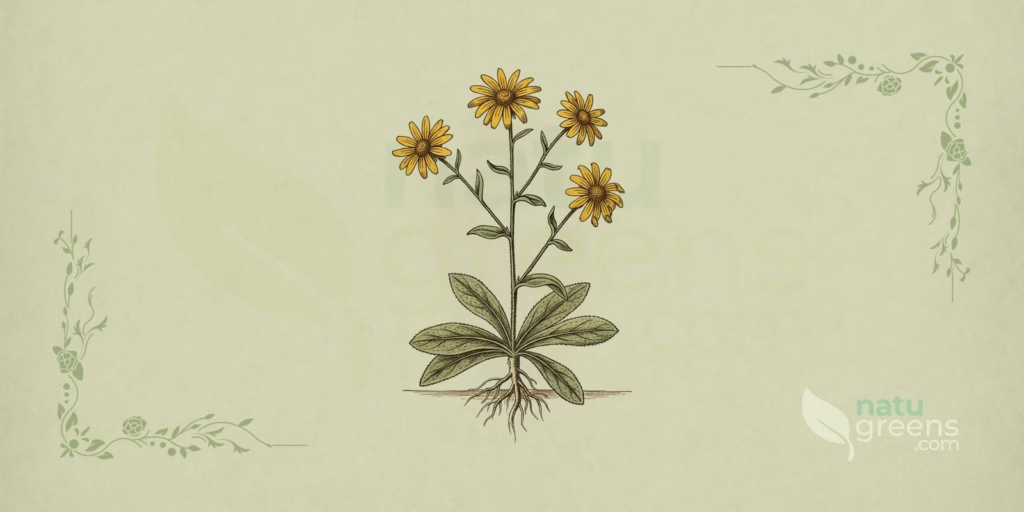
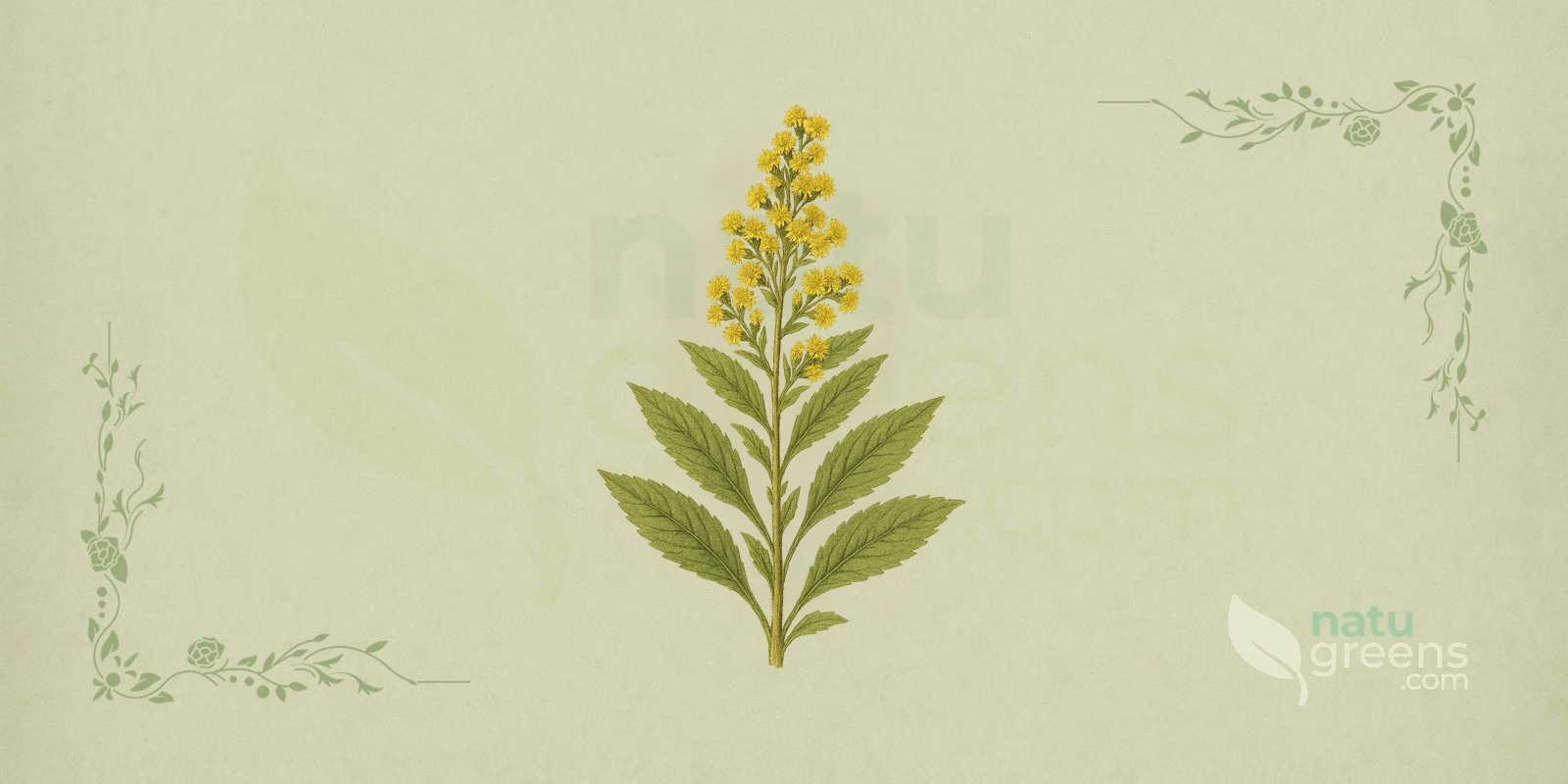
Solidago virgaurea L. / Goldenrod, commonly known as European goldenrod or woundwort, is a perennial herbaceous plant in the Asteraceae family, described by Carl Linnaeus in 1753. Native to Europe, North Africa, and vast regions of Asia (including China, Russia, India, Turkey, and Kazakhstan), this species has spread across several continents thanks to its well-recognized properties. Goldenrod has been used for centuries in traditional European medicine, mentioned in medical texts as far back as the fifteenth century for wound care. Its yellow flower clusters, which bloom in late summer, are harvested at peak flowering for the preparation of infusions, tinctures, and other herbal products.
In herbal tradition, goldenrod holds a prominent place as a diuretic and anti-inflammatory plant, with applications ranging from the treatment of urinary tract disorders to the relief of inflammation and pain. The plant is recognized for its rich phytochemical composition, especially flavonoids and saponins, which give it its diuretic, antiseptic, and antioxidant properties, and modern scientific research has investigated many of goldenrod’s traditional uses, cementing its position as one of the most studied and widely used medicinal plants in the world.
Popular and International Names of Goldenrod
- English: european goldenrod, woundwort.
- Spanish: altabaca, consuelda sarracénica, hierba de los indios, hierba de los judíos, palo de oro, plumeros amarillos, ramo de san José, solidago, té de Gredos, vara de oro, vara de oro española, vara de oro menor, vara de San José, yerba de los judíos.
- Portuguese: herba forte, vara-de-ouro, varrão de ouro, verga-de-ouro, virgáurea.
- French: baguette d’Aaron, herbe des Juifs, solidage verge d’or.
- Italian: mazza d’oro, verga d’oro comune.
- German: echte goldrute, fuchsschwanz, gemeine goldrute, gewöhnliche goldrute, goldwundkraut, heftkraut, heidnisch wundkraut, petrusstab, ungsengkraut.
Botanical Synonyms of Solidago virgaurea
Solidago virgaurea L. has a number of botanical synonyms that have been used throughout the history of plant taxonomy. Although Solidago virgaurea L. is the name accepted by most botanical authorities, including The Plant List and World Flora Online, other names can be found in older literature or in specific regional contexts, and precise identification of these synonyms is essential to avoid taxonomic confusion and to ensure the correct application of phytochemical and pharmacological studies.
Some synonyms include: Solidago alpestris Waldst. & Kit., Solidago armena Grossh., Solidago asiatica Kitam. ex Hara, Solidago caucasica Kem.-Nath., Solidago dahurica Kitag., Solidago gigantea Nakai, Solidago insularis Kitam., Solidago jailarum Juz., Solidago lapponica With., Solidago macrorrhiza Lange, Solidago minuta L., Solidago stenophylla G.E.Schultz, Solidago talyschensis Tzvelev, Solidago taurica Juz., Solidago turfosa Woronow ex Grossh.
Botanical Family: Asteraceae
The Asteraceae family, formerly known as Compositae, is one of the largest families of flowering plants, comprising around 1,900 genera and more than 32,000 species distributed throughout the world. This family is characterized by its head-like inflorescence, in which numerous small flowers are grouped together to mimic a single flower, and it includes plants of great economic, food, and medicinal importance, such as lettuce, sunflower, artichoke, and marigold.
Goldenrod shares morphological features typical of the family, including composite flowers made up of tubular disc florets and ray florets along the margins. The Asteraceae family is known for producing bioactive compounds, especially sesquiterpene lactones, flavonoids, and essential oils, which give many of its species medicinal properties, and the chemical diversity of this family has been the subject of intense pharmacological research, contributing to the development of phytopharmaceuticals and dietary supplements.
Parts of Goldenrod Used
- Flowers (flower heads)
- Leaves (aerial parts)
- Root (in some specific preparations)
Ethnobotanical and Traditional Uses
- Bladder problems (cystitis and bladder stones)
- Diabetes and allergies (in some traditions)
- Hemostatic (topical use for wounds, burns, open ulcers, and cuts)
- Kidney problems (kidney stones)
- Liver insufficiency
- Relief of inflammation and pain (anti-inflammatory)
- Rheumatic and arthritic conditions
- Treatment of urinary tract conditions (diuretic, antiseptic)
- Wound healing (traditional topical use)
Therapeutic Properties of Goldenrod
- Analgesic (traditional use for pain relief)
- Antihypertensive (effect studied in reducing blood pressure)
- Anti-inflammatory (effect studied in reducing inflammation)
- Antimicrobial (activity studied against microorganisms)
- Antioxidant (activity studied against free radicals)
- Antiseptic (studied in the prevention of infections)
- Antispasmodic (traditional use to relieve spasms)
- Astringent (contracts tissue)
- Diuretic (effect studied on urine production)
- Immunomodulatory (effect studied on the immune system)
- Saluretic (effect studied on salt excretion)
- Sedative (traditional use to calm the nervous system)
- Wound-healing (effect studied on healing)
Detailed Phytochemical Profile of Goldenrod
- Essential oil
- Flavonoids (quercetin, kaempferol, rutin, avicularin)
- Inulin
- Mucilage
- Polyphenolic acids
- Resin
- Saponins (especially triterpenoid)
- Silica
- Tannins
- Terpenes (diterpenes and triterpenes)
Preparation and Administration Forms of Goldenrod
- Fluid or glyceric extracts
- Infused oils
- Salves (ointments)
- Syrups
- Teas/infusions
- Tinctures
Synergy with Other Medicinal Plants
Urinary Health
Goldenrod is often combined with other diuretic and antiseptic herbs to enhance its effects in treating urinary tract conditions. Pairing it with uva-ursi (Arctostaphylos uva-ursi) is common for urinary infections, while horsetail (Equisetum arvense) and birch leaf (Betula pendula) complement its diuretic action in kidney and bladder problems. Corn silk (Zea mays) and marshmallow (Althaea officinalis) can be added to soothe irritation and inflammation of the urinary tract, providing a calming and protective effect.
Respiratory Support and Allergies
To relieve symptoms of sinusitis and seasonal allergies, goldenrod can be combined with elderberry (Sambucus nigra) and yarrow (Achillea millefolium), in a synergy aimed at reducing inflammation of the airways, supporting expectoration, and easing nasal congestion. Goldenrod’s anti-inflammatory compounds work alongside the decongestant and immunomodulatory properties of the other plants, offering traditional support for the respiratory system.
Recipes and Usage Protocols of Goldenrod
Diuretic and Anti-Inflammatory Infusion
Ingredients: 1 to 2 teaspoons (3 to 5 g) of dried goldenrod flowers and leaves, 150 to 200 ml of boiling water.
Preparation: Place the dried herb in a cup, add the boiling water, cover, and let it steep for 5 to 10 minutes before straining and drinking; it can be consumed two to three times a day. This infusion is traditionally used to promote diuresis, ease inflammation of the urinary tract, and reduce swelling.
Tincture for Urinary Support
Ingredients: 1 part fresh goldenrod flowers and leaves, 4 parts alcohol at 40 percent or higher.
Preparation: Finely chop the plant parts and place them in a glass jar, covering them completely with the alcohol so that the plant material stays submerged. Seal tightly and let it macerate for 4 to 6 weeks in a cool, dark place, shaking daily, then strain and store the tincture in a dark glass bottle. Because there is not enough data on the safety of internal use of goldenrod in various situations, the amount and frequency of use should always be determined by a healthcare professional; consult a healthcare professional before beginning internal use of the tincture.
Infused Oil for Muscle Pain
Ingredients: Dried goldenrod flowers and leaves, vegetable oil (sweet almond, jojoba, or olive oil).
Preparation: Fill a glass jar loosely with the dried flowers and leaves, without packing them down, and cover completely with the vegetable oil. Close the jar and let it infuse for 2 to 4 weeks in a sunny spot, or in a gentle water bath for a few hours, then strain and store the infused oil in a dark bottle. Use for massaging areas with muscle pain, strains, or inflammation, applying gently to the skin.
The preparations above follow traditional records and do not replace professional guidance. Before any internal use, check the contraindications and interactions described in this article.
Associated Therapies
Flower Essences
The goldenrod flower essence is associated with the ability to regroup and reintegrate oneself, strengthening inner resolve to regain balance after illness or trauma and to rediscover wholeness. According to this tradition, it encourages a person to stay true to themselves and to keep their own “backbone” in the face of pressure from peers, family, and society, and it is recommended for those who need to strengthen their individuality and express their true identity without being excessively swayed by groups or outside trends.
Homeopathy
In homeopathy, Solidago virgaurea is used in dilutions to relieve abundant nasal discharge and in formulations for urinary problems, indicated for cases of scanty, dark urine, kidney pain, and a sensation of residual urine after urinating. The homeopathic remedy is prepared from the fresh flowering plant, following the process of dilution and dynamization, and is frequently prescribed, according to this tradition, for acute and chronic conditions related to the urinary and respiratory systems.
Contraindications and Side Effects of Goldenrod
General Contraindications
Goldenrod is contraindicated in individuals with a known allergy to plants in the Asteraceae family, including chrysanthemums, daisies, and ragweed, since allergic reactions can appear as contact dermatitis or hives. Pregnant and breastfeeding women should avoid its use due to insufficient safety information for these periods, and the plant should not be used in cases of fluid retention (edema) associated with severe heart or kidney disease. Young children should use it only under medical supervision due to the lack of specific safety data, and, because of its sedative action, goldenrod should be used with caution by anyone taking sedative medications, given the risk of potentiating the depressant effect on the central nervous system.
Common Side Effects
Side effects of goldenrod are rare and generally mild: in some people, consumption can cause nausea, vomiting, or allergic skin reactions, and topical application of preparations can occasionally result in contact dermatitis, especially in sensitive individuals. Heartburn is a commonly reported side effect, and the plant can cause sodium buildup, which can raise blood pressure and worsen the condition in people with hypertension, requiring caution in these cases.
Drug Interactions
Goldenrod can interact with diuretics, potentiating their effects and leading to electrolyte imbalances. People taking diabetes medication should carefully monitor their glucose levels, since goldenrod may have mild hypoglycemic effects. It is recommended to consult a healthcare professional before use if taking other medications, especially those that affect kidney function, blood pressure, or the central nervous system, such as sedatives.
Historical Notes and Interesting Facts
Etymology and Symbolism
The scientific name “Solidago” comes from the Latin “solidare,” meaning “to make whole” or “to heal,” reflecting its historical use in wound healing and health promotion. In Germany, one of its common names is “Unsegenkraut” (curse herb), reflecting the belief in its magical abilities at a time when illness was often attributed to witchcraft. Goldenrod is a symbol of encouragement, growth, and good fortune, and it is believed that where it grows near a house, its occupants will have good luck.
Ancient Uses and Folklore
In the fifteenth and sixteenth centuries, Solidago virgaurea was widely used in Europe for wound care, demonstrating its early recognition as a medicinal plant. The Chippewa Native Americans called it “sun medicine” and used its cooked leaves as an antiseptic and astringent for wound healing and relief, and folklore also suggests that wherever goldenrod grows there is buried gold, or that it points to a hidden spring or treasure. Historically, in European phytotherapy, the plant was also associated with resolving relationship problems and difficulties with intimacy.
Recognition and Potential
In the early twentieth century, goldenrod was one of the leading candidates for the national flower of the United States, reflecting its significance and beauty, and the plant continues to be the subject of scientific studies seeking to validate and expand knowledge of its properties. Its rich phytochemical composition and the diversity of its traditional uses make it a plant of great interest for modern phytotherapy and for the search for new bioactive compounds.
Frequently Asked Questions about Goldenrod Tea
Is Goldenrod Tea Safe for Everyone?
No, goldenrod tea is not safe for everyone. It is contraindicated for people with an allergy to plants in the Asteraceae family, pregnant or breastfeeding women, and individuals with severe heart or kidney disease that causes fluid retention. Young children should use it only under medical supervision. Always consult a healthcare professional before starting use, especially if you have preexisting health conditions or are taking other medications.
What Are the Main Benefits of Goldenrod Tea?
The main benefits traditionally attributed to goldenrod tea include promoting diuresis, relieving inflammation of the urinary tract, reducing swelling, and antiseptic action. It is traditionally used to help manage urinary infections, kidney stones, and bladder problems, and it also has antioxidant and anti-inflammatory properties that can contribute to overall well-being, always as a complement to, and never a substitute for, medical care.
How Do You Properly Prepare Goldenrod Tea?
To properly prepare goldenrod tea, use 1 to 2 teaspoons (3 to 5 g) of the plant’s dried flowers and leaves for every 150 to 200 ml of boiling water. Place the dried herb in a cup, add the boiling water, cover, and let it steep for 5 to 10 minutes before straining. The usual dose is 2 to 3 cups a day, which may vary depending on need and the guidance of a healthcare professional.
Can Goldenrod Tea Interact with Medications?
Yes, goldenrod tea can interact with certain medications. Because of its diuretic properties, it can potentiate the effects of diuretic medications, leading to electrolyte imbalances, and it may also have mild hypoglycemic effects, which requires careful monitoring of glucose levels in people with diabetes who take blood sugar medications. It is essential to consult a healthcare professional to check for possible drug interactions.
Notice: this content is for informational purposes and does not replace professional medical advice. Consult a physician or herbal practitioner before using medicinal plants, especially during pregnancy, breastfeeding, or alongside medication.