



Quick summary
Carpenter grass (Justicia pectoralis), known in Brazil as chambá, is a perennial herb of the Acanthaceae family native to tropical America, from Mexico and the Caribbean down to northern South America, and it has been grown for generations in backyard gardens across northeastern Brazil, where it also goes by the…
Main caution: Carpenter grass contains coumarin and umbelliferone, and its coumarin calls for the same caution applied to tonka bean (Dipteryx odorata). With prolonged use or at high doses, coumarin can cause hepatotoxicity (liver…
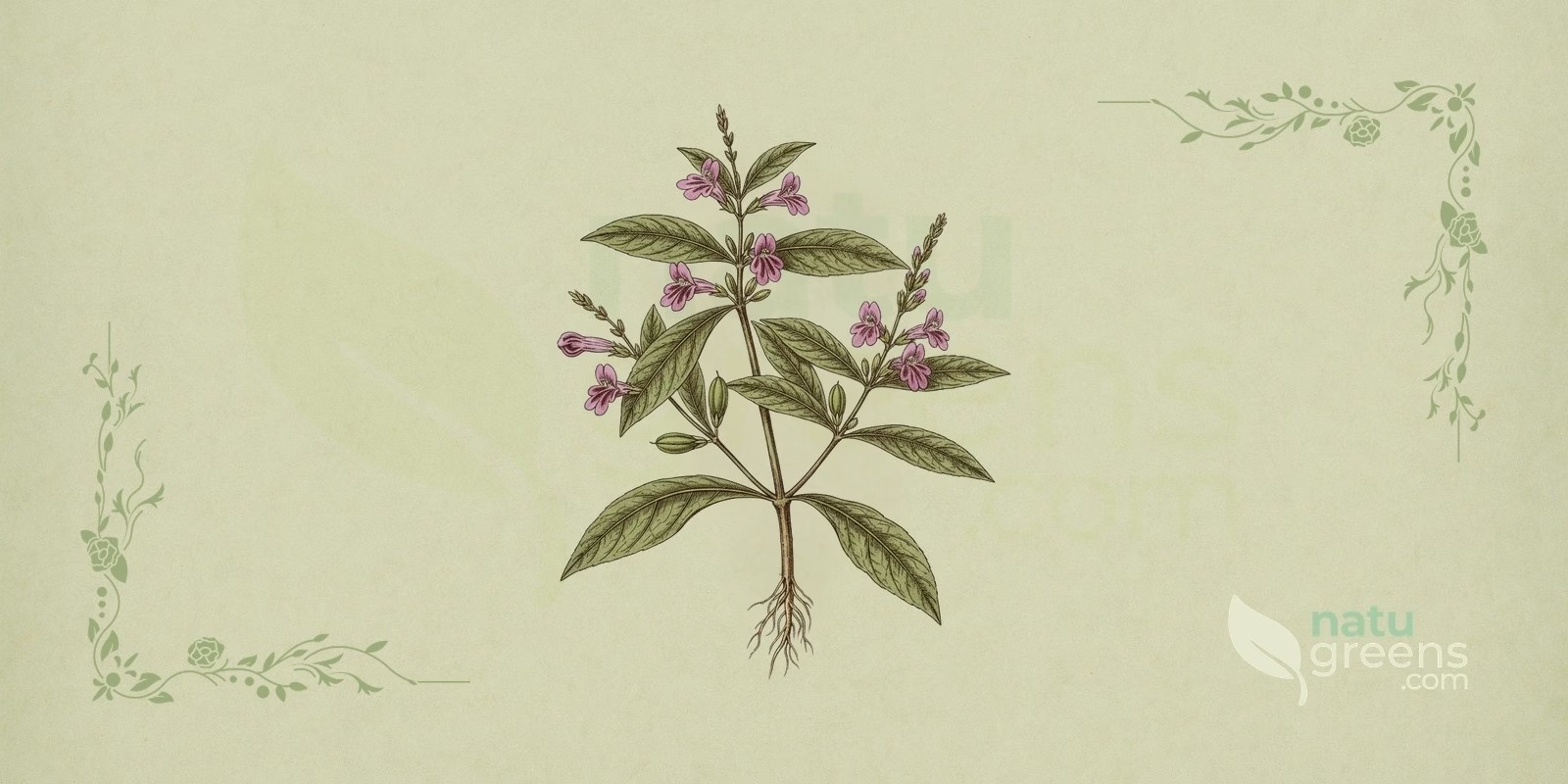
Carpenter grass (Justicia pectoralis), known in Brazil as chambá, is a perennial herb of the Acanthaceae family native to tropical America, from Mexico and the Caribbean down to northern South America, and it has been grown for generations in backyard gardens across northeastern Brazil, where it also goes by the nickname anador. Its leaves give off a sweet scent of vanilla and hay as they dry, and they go into teas and homemade syrups used for coughs and phlegm; the plant is also listed in RENISUS, Brazil's national list of medicinal plants of interest to the public health system, and in the Herbal Medicines Formulary of the Brazilian Pharmacopoeia. Even so, nearly everything known about its effects comes from animal research and a handful of small clinical trials, so every promise attached to it deserves a careful reading.
Common and International Names of Carpenter Grass
- English: carpenter grass, fresh cut
- French: herbe à charpentier
- Portuguese: anador, chambá, trevo-cumaru, trevo-do-pará
- Spanish: curía, hierba de carpintero, té criollo, tilo
Anador Is a Nickname for the Plant, Not the Medicine
In many households in northeastern Brazil, carpenter grass is called anador, a name that happens to match a trademarked over-the-counter painkiller made with dipyrone (metamizole). The two have nothing to do with each other: the herbal tea contains no dipyrone, does not replace the drug and should never be chosen in its place because of the shared name, just as the tablet is not equivalent to the traditional use of the herb. The mix-up also carries a safety angle, because the Brazilian Herbal Medicines Formulary itself advises against carpenter grass for people taking anticoagulants and painkillers.
Not to Be Confused with Justicia adhatoda or Tonka Bean
Vasaka (Justicia adhatoda), an Asian shrub long established in Ayurveda, belongs to the same genus, but its chemistry is dominated by alkaloids such as vasicine and its pattern of use is quite different, so information about one species does not carry over to the other. The Portuguese nickname trevo-cumaru, for its part, comes only from the coumarin scent that carpenter grass shares with the seeds of the tonka bean tree (Dipteryx odorata, cumaru in Brazil) and of imburana-de-cheiro (Amburana cearensis), trees of the legume family that bear no botanical kinship to it.
Botanical Synonyms of Carpenter Grass
The name Justicia pectoralis Jacq. was published by Nikolaus Joseph von Jacquin in 1760 and remains the one most widely used in pharmacology, in RENISUS and in documents from Anvisa, Brazil's health regulatory agency. Recent phylogenetic revisions of the genus have led taxonomic databases such as Plants of the World Online, run by the Royal Botanic Gardens, Kew, to treat the species as Dianthera pectoralis, a combination readers may come across in newer botanical records. Recorded synonyms include Ecbolium pectorale, Rhytiglossa pectoralis, Rhytiglossa scabra and Stethoma pectoralis. The form grown in northeastern Brazil is usually identified as Justicia pectoralis var. stenophylla, which has narrower leaves, and it is the one behind most of the studies carried out in the state of Ceará.
Botanical Family: Acanthaceae
The Acanthaceae family, in the order Lamiales, brings together around 4,900 species in roughly 190 genera, with enormous diversity in tropical and subtropical regions and an important center of richness in Brazil. Many of its species are ornamentals, such as the shrimp plants, and several have a history of traditional medicinal use in Asia, Africa and the Americas. The genus Justicia, one of the largest in the family, holds hundreds of species with two-lipped flowers, and carpenter grass ranks among the most thoroughly studied from a chemical and pharmacological standpoint, alongside the Asian vasaka. Carpenter grass itself forms low clumps 20 to 60 centimeters tall, with stems that sprawl and root at the nodes, opposite lance-shaped leaves and small pink or lilac flowers gathered in terminal clusters.
Parts of Carpenter Grass Used
The aerial parts of the plant are used, above all the leaves, harvested before or during flowering. The Brazilian Herbal Medicines Formulary specifies the dried, cut herb, and drying needs to be quick, in the shade and in a well-ventilated place, because leaves that turn moldy during the process can convert part of their coumarin into dicoumarol, a substance with anticoagulant action. Roots and seeds have no meaningful traditional use.
Ethnobotanical and Traditional Uses of Carpenter Grass
In northeastern Brazil, carpenter grass is one of the best-known plants of the Farmácias Vivas (Living Pharmacies), a program created in Ceará to bring plants with studied efficacy into public health clinics, and its most widespread traditional use is respiratory, in teas and homemade syrups for coughs, phlegm, bronchitis and wheezing. Elsewhere in Latin America and the Caribbean, the ethnobotanical records gathered in scientific reviews describe a wide range of uses, always as folk practice rather than proven effect:
- Belize, where it appears in accounts linked to epilepsy
- Colombia, where it is mentioned in preparations for diabetes and prostate complaints
- Costa Rica, where women drink the tea during menopause and for menstrual cramps
- Cuba, where tilo is taken as a calming drink
- Jamaica, where fresh cut is used to ease shortness of breath and applied to wounds
- Panama, where the tea is taken for stomach complaints and leg pains
- Suriname, where it goes into preparations for asthma
- Trinidad and Tobago, where it is used as an expectorant and for reproductive problems
There are also reports of ritual use among Indigenous peoples of the Amazon, who added the dried, aromatic leaves to snuffs prepared with the resin of trees in the genus Virola.
Medicinal Properties of Carpenter Grass
The properties below come from laboratory and animal experiments and from a few small clinical trials, none of which is enough to confirm efficacy in people. The Brazilian Herbal Medicines Formulary itself lists carpenter grass only as a supportive expectorant, based on its tradition of use.
- Anti-inflammatory activity (reduced swelling and lower inflammatory cytokines in animal models of airway inflammation; preclinical data)
- Antinociceptive activity (weaker pain responses in tests on mice; this does not point to a painkilling effect comparable to that of medicines)
- Antispasmodic and bronchodilator activity (relaxation of isolated guinea pig and rat trachea, attributed in part to coumarin; the clinical trials of the syrup in mild asthma were small and produced conflicting results)
- Anxiolytic activity (seen in mice given a standardized extract, with no apparent sedation and a possible role for benzodiazepine receptors; there are no human studies)
- Estrogenic and progestagenic activity (binding to hormone receptors in cell assays with a methanolic extract, which helps explain the traditional use during menopause without proving any clinical benefit)
- Expectorant and antitussive activity (suggested by animal studies with a standardized extract and by tradition; clinical trials in cough have not yet confirmed the effect consistently)
- Gastroprotective activity (protection of the stomach lining in rodent models; preliminary evidence)
Among the studies in people, a pilot trial with 37 adults with mild to moderate asthma used carpenter grass syrup combined with Cuban oregano, a trial with 21 children assessed the syrup over two weeks, and a double-blind study with 35 patients with mild asthma found no change in lung function, only gains on quality-of-life scales. These are small, short-term samples that justify further research, not use as an alternative to asthma treatment.
Detailed Phytochemical Profile of Carpenter Grass
The chemistry of carpenter grass is dominated by simple coumarins, which account for the scent of the dried leaf and serve as markers in the quality control of extracts, along with phenolic acids, flavonoids and other minor compounds.
- Betaine (isolated in a study that was looking for psychoactive alkaloids and found none)
- Coumarin (the main constituent and chemical marker, linked to smooth muscle relaxation in studies; it is also the substance that calls for caution regarding the liver and anticoagulants)
- Glycosylated flavones (C-glycosides) (O-methoxylated flavonoids described in the leaves)
- Justicidin B (a lignan isolated from the plant in a chemical study from the 1980s)
- Ortho-coumaric acid (a phenolic acid related to coumarin, detected in rat plasma after an oral dose of standardized extract)
- Phenylpropionic acids (3-phenylpropionic acids) and derivatives (identified by gas chromatography coupled with mass spectrometry, alongside the simple coumarins)
- Umbelliferone (7-hydroxycoumarin, the second chemical marker, with anti-inflammatory and antinociceptive activity in animal models)
Preparation and Administration of Carpenter Grass
The official form described in the 2nd edition of the Brazilian Herbal Medicines Formulary is an infusion of the dried aerial parts, made with 0.4 to 0.6 gram of the plant to 150 milliliters of water and steeped for five minutes, for adult use. In the Farmácias Vivas and in home tradition across northeastern Brazil, the best-known preparation is carpenter grass syrup, known locally as lambedor, usually at 5%, made with the plant and sugar or honey. Researchers in Ceará and São Paulo are developing dry extracts standardized for coumarin, but there is no carpenter grass herbal medicine with an approved indication for asthma. Whatever the form, the quality of the dried leaf matters as much as the dose, since moldy material may contain dicoumarol.
Synergy with Other Medicinal Plants
Respiratory Pairing with Cuban Oregano
Cuban oregano (Plectranthus amboinicus), also called Indian borage, is the partner most often paired with carpenter grass in northeastern Brazilian homemade syrups, and it was precisely this duo that appeared in the pilot study of the syrup in adults with asthma. The combination follows the logic of folk tradition, which brings together aromatic plants used for coughs, and should not be read as a formula of demonstrated efficacy. It is wise not to add carpenter grass to other coumarin-rich plants, such as guaco, tonka bean and imburana-de-cheiro, because the total load of this substance goes up.
Calming Pairing with Bushy Matgrass
In Cuba and parts of Central America, tilo is drunk at night as a calming tea, and in Brazil some people mix it with bushy matgrass (Lippia alba), known there as erva-cidreira brasileira and another plant with a folk reputation for relaxation. There are no studies on this combination, and the anxiolytic effect of carpenter grass has only been observed in mice, so the blend should be seen as a traditional habit and avoided by anyone already taking sedatives or sleep medication.
Recipes and Usage Protocols for Carpenter Grass
Infusion of the Aerial Parts According to the National Formulary
The Brazilian Herbal Medicines Formulary directs placing 0.4 to 0.6 gram of the dried, cut aerial parts in 150 milliliters of hot water, letting it steep for five minutes and drinking it right after preparation, two to three times a day, as a supportive expectorant for adults. For people over 70, the official guidance is to reduce the serving to 75 milliliters at a time. Continuous use should not exceed 30 days, with a 15-day break before repeating, and the preparation is contraindicated during pregnancy, while breastfeeding and for anyone under 18.
Homemade Carpenter Grass Syrup
In folk recipes from northeastern Brazil, the fresh or dried leaves are simmered with sugar or rapadura (unrefined cane sugar) until they form a thick syrup, sometimes together with Cuban oregano leaves, and the syrup is taken by the spoonful on days of chesty cough. Because homemade recipes have no standardized coumarin content, use should be brief, always with thoroughly dried leaves showing no sign of mold, and kept away from young children. These uses follow traditional records and do not replace professional advice, especially in cases of asthma, shortness of breath, persistent wheezing or a cough lasting more than two weeks.
The preparations above follow traditional records and do not replace professional guidance. Before any internal use, check the contraindications and interactions described in this article.
Therapies Associated with Carpenter Grass
Clinical Phytotherapy
In the herbal medicine practiced within Brazil's Unified Health System (SUS), carpenter grass appears as a plant of interest on RENISUS and as a monograph in the Herbal Medicines Formulary, which allows its use under professional guidance in municipal herbal medicine programs. The official indication is restricted to a supportive expectorant role in adults, for a limited time, and any use in asthma or persistent respiratory conditions must happen alongside medical follow-up, never in place of it.
Living Pharmacies and Folk Medicine of Northeastern Brazil
There is no documented homeopathic use of carpenter grass, but the plant holds a central place in the Farmácias Vivas model, conceived by Professor Francisco José de Abreu Matos at the Federal University of Ceará. In this model, community gardens grow botanically identified species, and preparations such as carpenter grass syrup are produced under quality control and dispensed at health clinics, bringing together folk knowledge and pharmaceutical standards.
Contraindications and Side Effects of Carpenter Grass
Carpenter grass contains coumarin and umbelliferone, and its coumarin calls for the same caution applied to tonka bean (Dipteryx odorata). With prolonged use or at high doses, coumarin can cause hepatotoxicity (liver damage), and the European Food Safety Authority has set a tolerable daily intake of only 0.1 milligram per kilogram of body weight for it, precisely because of the risk to the liver. For this reason use should be short, respecting the 30-day limit in the Herbal Medicines Formulary, and people with liver disease, a history of hepatitis or who take medications that burden the liver should avoid the plant. Pregnancy and breastfeeding are contraindications, owing to the lack of safety data in humans; a study in pregnant rats found no toxicity, but animal results do not make use by pregnant women acceptable. The Formulary also contraindicates carpenter grass for anyone under 18 and for people with hypersensitivity to the plant. Leaves that are improperly dried and contaminated by fungi can convert coumarin into dicoumarol and cause bleeding, and people with clotting disorders should not use the plant. If nausea, abdominal pain, yellowing of the skin or eyes, dark urine, bruising or unusual bleeding appear, use should be stopped and a doctor consulted.
Drug Interactions
The main interaction to avoid involves anticoagulants such as warfarin and antiplatelet drugs, given the bleeding risk tied to coumarin and to the possible dicoumarol in poorly stored material; the Herbal Medicines Formulary advises against carpenter grass for people taking anticoagulants and painkillers. Coumarin is metabolized mainly by the liver enzyme CYP2A6, and there are reports that grapefruit juice increases the body's exposure to it, which calls for caution with drugs that share this pathway. Since the anxiolytic effect observed in mice appears to involve benzodiazepine receptors, combining the plant with sedatives, benzodiazepines and other calming medications warrants prudence. The estrogenic activity seen in cell assays suggests care for anyone on hormone therapy or with hormone-sensitive conditions. As a precaution, use should be stopped a few days before surgery, and the doctor needs to know that the plant is being used.
Curiosities and Historical Facts
The epithet pectoralis, chosen by Jacquin in the 18th century, means "of the chest" in Latin and already pointed to the respiratory use the plant had in the Caribbean. In the 1980s, researchers at the University of British Columbia investigated why carpenter grass was mixed into hallucinogenic Virola snuffs in the Amazon and concluded that the plant contains no psychoactive alkaloids and does not alter the effect of the main compound in those snuffs, suggesting that its role was mostly aromatic. The scent that intrigued the scientists is the same one that earned the herb the Portuguese nickname trevo-cumaru, since coumarin was first isolated from tonka beans, known in Brazil as cumaru, in the early 19th century.
Frequently Asked Questions About Carpenter Grass
Are Carpenter Grass and Anador the Same Thing?
No. Anador is only a folk nickname for carpenter grass in northeastern Brazil, and the name coincides by chance with that of a brand-name painkiller made with dipyrone. The plant contains no dipyrone, does not replace the medicine and should not be used together with painkillers without professional guidance, as the Brazilian Herbal Medicines Formulary itself warns.
Does Carpenter Grass Tea Help with Asthma?
Animal studies have shown bronchodilator and anti-inflammatory effects, and a few small clinical trials have tested the syrup in mild asthma, with conflicting results. The official indication in Brazil is only as a supportive expectorant for adults, and asthma always requires medical follow-up and the use of prescribed medications, which should never be swapped for the plant.
Can Pregnant Women Take Carpenter Grass?
It is not recommended. The Brazilian Herbal Medicines Formulary contraindicates carpenter grass during pregnancy and breastfeeding because of the lack of safety data in humans, and the presence of coumarin reinforces that caution, even though a study in pregnant rats found no toxic effects.
How Long Can I Use Carpenter Grass?
According to the Herbal Medicines Formulary, continuous use should not exceed 30 days, with a 15-day break before starting again. This limit exists because of coumarin, which can strain the liver with prolonged use or at high doses, and people with liver disease or who take anticoagulants should not use the plant.
What Is the Difference Between Carpenter Grass and Vasaka?
Both belong to the genus Justicia, but they are distinct species. Vasaka (Justicia adhatoda) is an Asian shrub rich in alkaloids such as vasicine, while carpenter grass is an American herb whose chemistry revolves around coumarin and umbelliferone, with safety precautions of its own.
Notice: this content is for informational purposes and does not replace professional medical advice. Consult a physician or herbal practitioner before using medicinal plants, especially during pregnancy, breastfeeding, or alongside medication.
How to cite this article
NATUGREENS. Carpenter Grass (Justicia pectoralis): Uses, Syrup and Safety. Natugreens, 26 Nov. 2026. Disponível em: https://natugreens.com/justicia-pectoralis-carpenter-grass/. Accessed: Nov. 26, 2026.
Natugreens. (2026). Carpenter Grass (Justicia pectoralis): Uses, Syrup and Safety. Natugreens. https://natugreens.com/justicia-pectoralis-carpenter-grass/
References and Scientific Studies
View All 16 Cited References
Peer-Reviewed Scientific Studies (15)
- DOI2024 Braz, D. M., Tozin, L. R. S., Gevú, K. V. et al. (2024). Folk medicine, biological activity, and chemical profiles of Brazilian Acanthaceae (Lamiales): a review. Journal of Ethnopharmacology, 327, 117980. ↗
- PMC2015 Cameron, C., Jacob, A. S., Thomas, E. A., Levy, A. S. (2015). Preliminary investigations of the anti-asthmatic properties of the aqueous extract of Justicia pectoralis (fresh cut). West Indian Medical Journal, 64(4), 320-324. ↗
- DOI2021 Carvalho, M., Caixeta, G. A. B., Lima, A. R. S. et al. (2021). Assessing the safety of using the dry extract of Justicia pectoralis Jacq. (Acanthaceae) during pregnancy of Wistar rats. Journal of Ethnopharmacology, 268, 113618. ↗
- DOI2012 Corrêa, G. M., Alcântara, A. F. C. (2012). Chemical constituents and biological activities of species of Justicia: a review. Revista Brasileira de Farmacognosia, 22(1), 220-238. ↗
- DOI1988 de Vries, J. X., Tauscher, B., Wurzel, G. (1988). Constituents of Justicia pectoralis Jacq. 2. Gas chromatography/mass spectrometry of simple coumarins, 3-phenylpropionic acids and their hydroxy and methoxy derivatives. Biomedical and Environmental Mass Spectrometry, 15(8), 413-417. ↗
- DOI2008 European Food Safety Authority (2008). Coumarin in flavourings and other food ingredients with flavouring properties. EFSA Journal, 793, 1-15. ↗
- DOI1988 Joseph, H., Gleye, J., Moulis, C. et al. (1988). Justicidin B, a cytotoxic principle from Justicia pectoralis. Journal of Natural Products, 51(3), 599-600. ↗
- DOI2000 Leal, L. K. A. M., Ferreira, A. A., Bezerra, G. A., Matos, F. J. A., Viana, G. S. B. (2000). Antinociceptive, anti-inflammatory and bronchodilator activities of Brazilian medicinal plants containing coumarin: a comparative study. Journal of Ethnopharmacology, 70(2), 151-159. ↗
- DOI2017 Leal, L. K. A. M., Silva, A. H., Viana, G. S. B. (2017). Justicia pectoralis, a coumarin medicinal plant have potential for the development of antiasthmatic drugs? Revista Brasileira de Farmacognosia, 27(6), 794-802. ↗
- DOI2010 Locklear, T. D., Huang, Y., Frasor, J. et al. (2010). Estrogenic and progestagenic effects of extracts of Justicia pectoralis Jacq., an herbal medicine from Costa Rica used for the treatment of menopause and PMS. Maturitas, 66(3), 315-322. ↗
- PMC1984 MacRae, W. D., Towers, G. H. N. (1984). Justicia pectoralis: a study of the basis for its use as a hallucinogenic snuff ingredient. Journal of Ethnopharmacology, 12(1), 93-111. ↗
- DOI2017 Moura, C. T. M., Batista-Lima, F. J., Brito, T. S. et al. (2017). Inhibitory effects of a standardized extract of Justicia pectoralis in an experimental rat model of airway hyper-responsiveness. Journal of Pharmacy and Pharmacology, 69(6), 722-732. ↗
- DOI2024 Rosa Júnior, I. A. et al. (2024). Evaluation of gastroprotective activity of the methanolic extract of Justicia pectoralis Jacq. (Acanthaceae). Nutrients, 16(10), 1430. ↗
- DOI2026 Tolouei, S. E. L., Macedo Júnior, S. J., Potrich, F. B. et al. (2026). Preclinical safety and anti-inflammatory activity of a standardized Justicia pectoralis Jacq. extract in experimental models of respiratory inflammation. Journal of Ethnopharmacology, 363, 121411. ↗
- DOI2011 Venâncio, E. T., Rocha, N. F., Rios, E. R. et al. (2011). Anxiolytic-like effects of standardized extract of Justicia pectoralis (SEJP) in mice: involvement of GABA/benzodiazepine in receptor. Phytotherapy Research, 25(3), 444-450. ↗
Institutional Sources (1)
- GOV2021 Agência Nacional de Vigilância Sanitária (2021). Formulário de Fitoterápicos da Farmacopeia Brasileira, 2ª edição. Monografia Justicia pectoralis Jacq. Brasília: Anvisa. ↗
You May Also Like
 Vasaka (Justicia adhatoda): Traditional Uses and SafetyJusticia adhatoda
- Cumaru (Amburana cearensis): Uses, Coumarin and SafetyAmburana cearensis
- AndrographisAndrographis paniculata
- Brazilian Joyweed (Alternanthera brasiliana): Uses and SafetyAlternanthera brasiliana
- Fragrant Granadilla (Passiflora alata): Uses, Studies and PrecautionsPassiflora alata





Take your time and tell us everything you think, details included. Every response is read by someone on our editorial team and goes into the article's revision. An honest critique helps us more than a polite compliment.
Take your time and tell us everything you think, details included. Every response is read by someone on our editorial team and goes into the article's revision. An honest critique helps us more than a polite compliment.