



Quick summary
Costus spiralis (Jacq.) Roscoe / Cana-do-Brejo, a perennial herb in the family Costaceae, is native to tropical South America, with records from every Brazilian state as well as Colombia, Venezuela, the Guianas, Peru and Bolivia, always in damp places such as riverbanks, marshes, palm swamps known as veredas and…
Main caution: Cana-do-brejo is a folk diuretic, and its traditional use for kidney stones should be understood only as complementary, never as a promise to dissolve kidney stones and never as a substitute for medical care. Episodes…
Costus spiralis (Jacq.) Roscoe / Cana-do-Brejo, a perennial herb in the family Costaceae, is native to tropical South America, with records from every Brazilian state as well as Colombia, Venezuela, the Guianas, Peru and Bolivia, always in damp places such as riverbanks, marshes, palm swamps known as veredas and forest edges. In Brazil, a tea made from its leaves and stems is one of the best-known folk diuretics, sought mainly for kidney and urinary complaints, and this long-standing use has prompted laboratory animal studies looking at stone formation, kidney protection and inflammation. The name cana-do-brejo, however, is also given to other species in the genus, above all Costus spicatus, so this article credits each study to the species it actually tested. Even so, none of the effects described here has been confirmed in clinical trials in people, and the plant should be seen as part of folk tradition, not as a substitute for medical care.
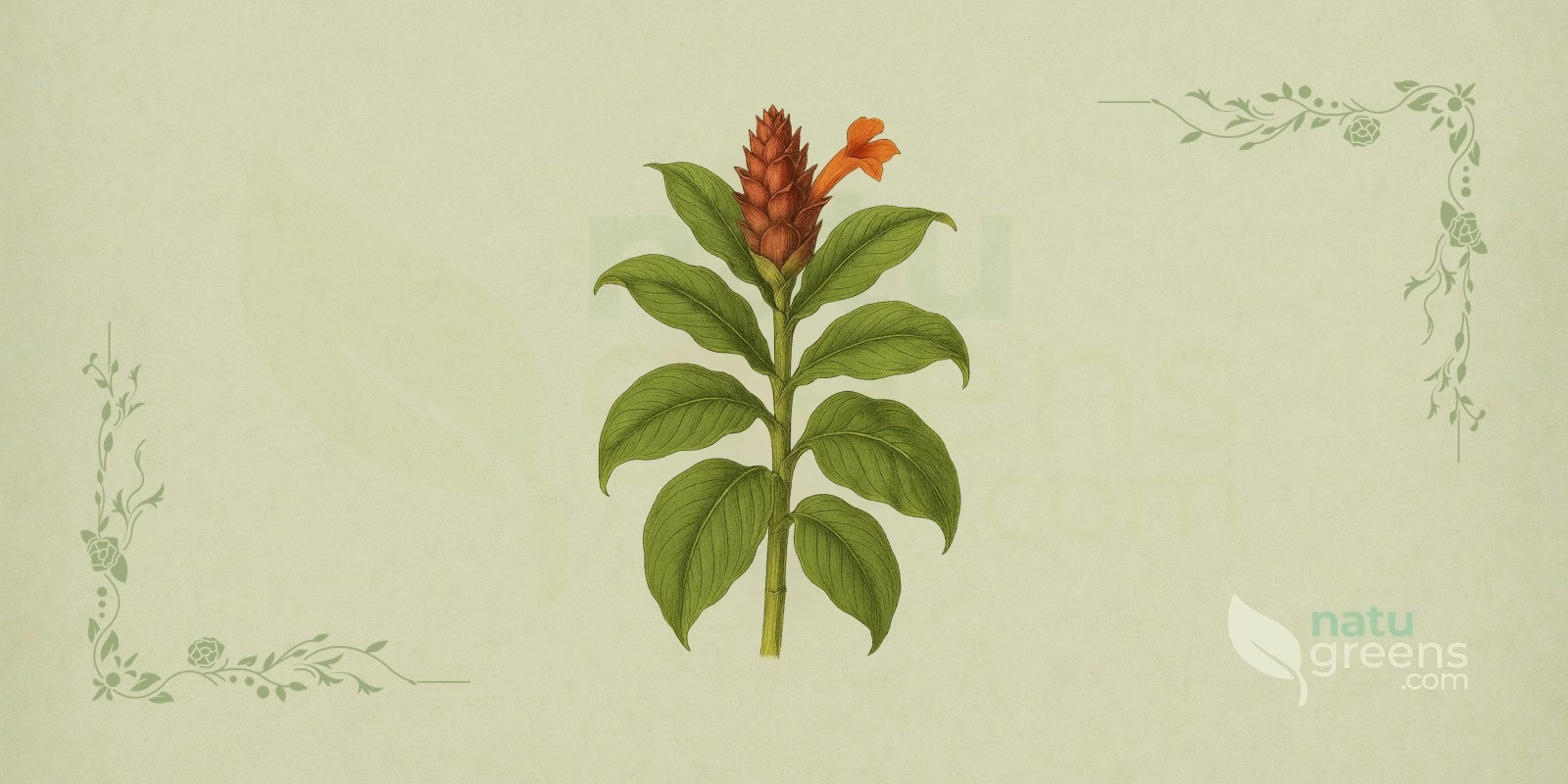
Common and International Names of Cana-do-Brejo
- English: spiral flag, spiral ginger (generic names applied to several Costus species).
- Portuguese: cana-de-macaco, cana-do-brejo, cana-do-mato, canarana-do-brejo, jacuacanga, jacuanga, pacová, periná, ubacaia, ubacayá.
- Spanish: caña agria, caña de la virgen, caña de mico, cañagria.
Not to Be Confused with Costus spicatus
At street markets, in popular herbals and even in part of the Brazilian scientific literature, the name cana-do-brejo is attached to both Costus spiralis and Costus spicatus, and the two plants are often treated as if they were one. They are distinct species: Costus spiralis is native to Brazil and much of South America, while Costus spicatus comes from the Antilles and Mexico and, according to botanical databases, is not native to Brazil, where it is found mostly in cultivation, in backyards and gardens. Because findings from one cannot simply be transferred to the other, this article cites only research that identified its material as Costus spiralis. The name cana-de-macaco is also used for Costus scaber, so when buying dried leaves or extracts it is worth checking the scientific name on the label to know which plant you are taking home.
Botanical Synonyms of Cana-do-Brejo
The accepted name is Costus spiralis (Jacq.) Roscoe, a combination made by the English botanist William Roscoe from Alpinia spiralis Jacq., the original name published by the naturalist Nikolaus Joseph von Jacquin. Taxonomic databases also list the synonyms Amomum spirale (Jacq.) Steud. and Gissanthe spiralis (Jacq.) Salisb., along with old varieties described by Grisebach, such as Costus spiralis var. pisonis and var. roscoei, which are no longer recognized. Two varieties remain accepted: the typical one, Costus spiralis var. spiralis, with smooth leaves, and Costus spiralis var. villosus Maas, which stands out for the soft hairs on its leaves and stems.
Botanical Family: Costaceae
Cana-do-brejo belongs to the family Costaceae, a tropical group of about seven genera and just over a hundred species, most of them in the genus Costus. For a long time these plants were classified as a subfamily of the Zingiberaceae, the ginger family, which is why older works still describe them that way. The separation rests on clear differences, such as the absence of the aromatic oils typical of ginger and the arrangement of the leaves in a single spiral around the stem, the trait behind the English name spiral ginger. The species forms clumps of cane-like stems, usually one to two meters tall, with elliptic leaves and a cone-shaped terminal inflorescence covered in red bracts, from which red or pinkish tubular flowers emerge, visited mainly by hummingbirds.
Parts Used of Cana-do-Brejo
The leaves are the part most often used for tea and also the most studied, forming the basis of most extracts tested in the laboratory. The stems, frequently chopped together with the leaves, appear often in ethnobotanical records of use for the kidneys, and some communities use the whole plant. The rhizomes, less common in folk medicine, have attracted chemical interest because they concentrate steroidal saponins. A study comparing leaves and stems found a much higher phenolic content and stronger antioxidant activity in the leaves, as well as differences in how the extracts behaved in cell safety tests, which shows that leaf and stem should not be considered interchangeable.
Ethnobotanical and Traditional Uses of Cana-do-Brejo
Brazilian researchers report that Indigenous peoples were already using the plant in the seventeenth century, when it was called pacocatinga, and that the use of Costus species remains widespread in the country, to the point that the genus appears on the National List of Medicinal Plants of Interest to the SUS, Brazil's public health system (RENISUS). Ethnobotanical surveys and the introductions of pharmacological studies describe the following folk uses, always as tradition and not as proven efficacy:
- Folk use as a diuretic, the most frequently cited across the country
- Folk use for arthritis and for inflammation in general
- Folk use for coughs
- Folk use for diabetes complications
- Folk use for high blood pressure and palpitations
- Folk use for urinary infections, pyelonephritis and inflammation of the urethra
- Folk use for urinary stones, always as a complementary measure and never as a way to dissolve kidney stones
Medicinal Properties of Cana-do-Brejo
The properties listed below come from experiments with laboratory animals, isolated tissues and in vitro tests, combined with traditional use; to date, no clinical trials of Costus spiralis in people have been published, so none of these effects can be considered proven in humans.
- Anti-inflammatory action (leaf fractions reduced the migration of inflammatory cells in mice with peritonitis, but only the chloroform fraction lessened swelling in a model of chronic arthritis)
- Antinociceptive action (reduced responses to inflammatory pain in mice, with no effect on the central nervous system in the tests performed)
- Antioxidant action (free radical scavenging in laboratory tests, stronger in the leaves than in the stems)
- Antiurolithiatic action in rats (in rats with foreign bodies implanted in the bladder, the aqueous extract reduced stone growth; according to the authors, this effect was not due to increased urine volume, and the model does not reproduce a kidney stone in a person)
- Cardiac muscle depressant effect (the aqueous leaf fraction lowered the force of contraction of guinea pig atria by reducing calcium entry into the cells, a finding that relates to the folk use for high blood pressure but that also calls for caution)
- Diuretic use in tradition (this is the most widespread folk indication, although the available studies on the species have not yet directly measured an increase in urine volume)
- Hypoglycemic action in rats (powdered leaves, a methanolic extract and the flavonoid guaijaverin lowered blood glucose in diabetic rats after acute dosing, and two leaf flavones inhibited a sugar-digesting enzyme in bench tests)
- Nephroprotective action in rats (a hydroethanolic leaf extract almost fully reversed creatinine changes in rats with kidney injury caused by the chemotherapy drug cisplatin, a result still limited to animals)
Detailed Phytochemical Profile of Cana-do-Brejo
The chemistry of cana-do-brejo has been studied mainly by research groups in Rio de Janeiro, São Paulo, Minas Gerais and Goiás, and the leaves hold most of the compounds identified so far. The main constituents described include:
- Condensed tannins and other phenolic compounds (present in leaves and stems, with higher levels in the leaves)
- Flavone C-glycosides (apigenin derivatives such as vicenin II, schaftoside and isoschaftoside, proposed as chemical markers of the leaves)
- Flavonol glycosides (flavonol neohesperidosides, including one compound described for the first time in the species, and guaijaverin, a quercetin glycoside)
- Minerals (considerable amounts of macro and trace elements in the dried leaves)
- Steroidal saponins (furostanol-type saponins isolated from the rhizomes and evaluated for anti-inflammatory activity)
- Steroids and pentacyclic triterpenoids (detected in all the leaf fractions assessed in a study on inflammation)
Preparation and Administration of Cana-do-Brejo
At home, fresh or dried leaves, sometimes with pieces of stem, are prepared as an infusion, with boiling water poured over the plant and the container kept covered for a few minutes, or as a decoction, with the chopped stems simmered briefly before straining. The tea is usually drunk warm throughout the day, and some people make it the night before and keep it in the fridge, a practice folk tradition accepts but that is no replacement for a fresh brew. In shops, the plant is sold as loose dried leaf, in tea bags and as extracts, not always with the correct scientific name on the label. There is no standardized dose for the tea, and the animal studies used concentrated extracts, so laboratory results give no indication of how much tea a person should drink.
Synergy with Other Medicinal Plants
Folk Combinations for the Urinary Tract
In Brazilian folk medicine, cana-do-brejo is often mixed with stonebreaker (Phyllanthus niruri) and corn silk, the dried stigmas of maize (Zea mays), in teas prepared for urinary complaints and for people with a history of stones. These plants are also used as diuretics in tradition, and the combination may add up their effect on urine output, which calls for extra attention to hydration and special care in anyone already taking diuretic medicines. No studies have evaluated these blends together, and none of them should delay a medical assessment in the case of severe pain, fever or blood in the urine.
Folk Combinations for Pain and Inflammation
For joint pain and swelling, Brazilian herbalists known as raizeiros pair cana-do-brejo with chapéu-de-couro (Echinodorus grandiflorus), another plant used in folk medicine as a diuretic and anti-inflammatory, and with erva-baleeira (Varronia curassavica), a species that gave rise to a topical anti-inflammatory herbal medicine registered in Brazil. The reasoning behind these combinations comes from tradition, and the safety of using them together, especially over long periods, has never been assessed in research.
Recipes and Usage Protocols for Cana-do-Brejo
Leaf Infusion Tea
The most common recipe uses about one tablespoon of chopped leaves to one cup of boiling water, with the container covered for about ten minutes before straining. According to folk records, the tea is taken two to three times a day, for only a few days in a row, for mild urinary complaints. These uses follow traditional records and do not replace professional guidance, especially in the presence of back or lower abdominal pain, fever, intense burning or blood in the urine, signs that call for medical care.
Stem and Leaf Decoction
When the stem goes into the preparation, it is usually cut into thin rounds and simmered over low heat for five to ten minutes, with the leaves added at the end and the container covered until it cools to lukewarm. This form appears in accounts of use for the kidneys, but a cell safety study found that the aqueous stem extract behaved less favorably than the leaf extract, and the authors themselves advised against empirical use without guidance, a reason to keep this preparation occasional and short-term.
Use by People with a History of Stones
Some people who have had kidney stones turn to the tea as support for the care their doctor recommends, which usually includes drinking plenty of water and adjusting the diet. There is no evidence whatsoever that cana-do-brejo dissolves kidney stones in people, and the rat study behind this reputation looked at stones formed on foreign bodies in the bladder, a situation unlike human urolithiasis. When used at all, the tea should only be a complementary measure, combined with follow-up by a health professional.
The preparations above follow traditional records and do not replace professional guidance. Before any internal use, check the contraindications and interactions described in this article.
Therapies Associated with Cana-do-Brejo
Clinical Phytotherapy
In phytotherapy, cana-do-brejo is remembered mainly as a supportive plant for the urinary tract, and the presence of the genus Costus on RENISUS reflects the public health system's interest in expanding research on it, not an approval for use in specific diseases. Practitioners who work with the plant tend to prefer material of known origin with confirmed botanical identification, prescribed for short periods and with attention to blood pressure, blood glucose and any medicines the person already takes.
Folk and Indigenous Medicine
There is no record of a widely used homeopathic preparation made from Costus spiralis. The plant's place is in Brazilian folk medicine, among raizeiros, traditional healers known as benzedeiras and families who grow cana-do-brejo near the house or gather it in flooded areas, and in the medicine of Indigenous peoples, who have known it for at least four centuries. This accumulated knowledge shapes many of the questions researchers are trying to answer in the laboratory today.
Contraindications and Side Effects of Cana-do-Brejo
Cana-do-brejo is a folk diuretic, and its traditional use for kidney stones should be understood only as complementary, never as a promise to dissolve kidney stones and never as a substitute for medical care. Episodes of renal colic, fever, chills, blood in the urine, reduced urine output or pain that does not ease call for immediate medical evaluation, because a stone that blocks the flow of urine can lead to serious infection and loss of kidney function, and delaying that care in the hope that a tea will work is dangerous. People with chronic kidney disease, heart failure or low blood pressure should avoid the plant without professional guidance, since the folk diuretic effect and the reduced force of heart contraction seen in animal tissue may weigh on these conditions. In a plant-based cell safety model, aqueous extracts of leaves and stems showed cytotoxicity, and the stem extract even intensified the damage a toxic substance caused to genetic material, which led the authors to advise against empirical use; on the other hand, a hydroethanolic leaf extract caused no deaths in rats given a single high oral dose, which points to low acute toxicity, with no data on prolonged use. Use should be avoided during pregnancy and breastfeeding, because there are no human safety data for these stages, and the same applies to children. Use should be brief, lasting only a few days, and any sign such as dizziness, weakness, palpitations or cramps means stopping the tea and seeking medical care.
Drug Interactions
Anyone taking diuretics such as furosemide, hydrochlorothiazide or spironolactone should be especially cautious, because adding the plant to the medicine may increase the loss of fluids and minerals, with a risk of dehydration, a drop in blood pressure and changes in potassium and sodium. The same care applies to lithium, whose blood level can rise dangerously when the body's water and sodium balance shifts. Since the aqueous leaf fraction reduced calcium entry into heart cells in an animal study, it is prudent to avoid combining the plant with antihypertensives, calcium channel blockers, beta blockers and other heart medicines without medical supervision. In people with diabetes who use insulin or oral hypoglycemic drugs, the effects on glucose seen in rats suggest a risk of additive effects and of an excessive drop in blood sugar, so blood glucose needs close monitoring. Always telling your doctor about any plant you are using is the safest way to avoid these interactions.
Curiosities and Historical Facts
The epithet spiralis refers to the arrangement of the leaves, which climb the stem in a spiral, as if the plant were a winding staircase, a feature that catches the eye of anyone who looks closely. The record of the Indigenous name pacocatinga in the seventeenth century coincides with the period when naturalists working for the Dutch described the flora of northeastern Brazil, and one of the species' old varieties, var. pisonis, is named after the physician Willem Piso, author of one of the first works on the natural medicine of Brazil. Pollination is another curiosity: the red, tubular flowers of cana-do-brejo are adapted to hummingbirds, and studies on the evolution of the genus show that this relationship arose independently several times among neotropical Costus. The 1999 study that tested the plant against stones in rats still placed it in the ginger family, a reminder of a time when the Costaceae were not recognized as a family of their own.
Frequently Asked Questions About Cana-do-Brejo
Does Cana-do-Brejo Dissolve Kidney Stones?
There is no evidence at all that cana-do-brejo dissolves kidney stones in people. The most cited study was carried out in rats, with stones formed on foreign bodies implanted in the bladder, and it showed only reduced growth of those stones. The folk use for urolithiasis should be seen as complementary, and anyone with kidney stones needs medical follow-up, especially in the case of severe pain, fever or blood in the urine.
What Is the Difference Between Costus spiralis and Costus spicatus?
They are two different species of the same genus that share the common name cana-do-brejo. Costus spiralis is native to Brazil and tropical South America, while Costus spicatus comes from the Antilles and Mexico and is grown in Brazil as a garden plant. Studies on one species do not automatically apply to the other, so it is wise to check the scientific name before buying the plant or interpreting a piece of research.
Can I Drink Cana-do-Brejo Tea with a Diuretic or Blood Pressure Medicine?
This combination calls for caution and should be discussed with your doctor first. The plant is used in folk medicine as a diuretic and, in animal tissue, it reduced the force of heart contraction, so adding it to diuretics, antihypertensives or heart medicines may intensify effects such as dehydration, a drop in blood pressure and changes in mineral salts.
Can Pregnant Women and Children Drink Cana-do-Brejo Tea?
Use should be avoided during pregnancy, while breastfeeding and in children, because there are no human safety data for these groups. Laboratory tests with aqueous extracts of the plant also showed effects on cells that still need to be better understood, which reinforces the advice not to take the risk.
How Long Can the Tea Be Taken?
Folk tradition usually uses the tea for only a few days in a row, and this is also the most prudent approach, since there are no studies on prolonged use in people. If urinary symptoms persist or get worse, the right step is to seek medical care rather than keep drinking the tea.
Notice: this content is for informational purposes and does not replace professional medical advice. Consult a physician or herbal practitioner before using medicinal plants, especially during pregnancy, breastfeeding, or alongside medication.
How to cite this article
NATUGREENS. Cana-do-Brejo (Costus spiralis): Kidney Uses, Studies and Safety. Natugreens, 26 Nov. 2026. Disponível em: https://natugreens.com/cana-do-brejo-costus-spiralis/. Accessed: Nov. 26, 2026.
Natugreens. (2026). Cana-do-Brejo (Costus spiralis): Kidney Uses, Studies and Safety. Natugreens. https://natugreens.com/cana-do-brejo-costus-spiralis/
References and Scientific Studies
View All 12 Cited References
Peer-Reviewed Scientific Studies (11)
- DOI2022 Amorim, J. M. et al. (2022). Costus spiralis extract restores kidney function in cisplatin-induced nephrotoxicity model: ethnopharmacological use, chemical and toxicological investigation. Journal of Ethnopharmacology, 299, 115510. ↗
- PMC2000 Antunes, A. S., da Silva, B. P. & Parente, J. P. (2000). Flavonol glycosides from leaves of Costus spiralis. Fitoterapia, 71, 507-510. ↗
- PMC1999 Araújo Viel, T. et al. (1999). Evaluation of the antiurolithiatic activity of the extract of Costus spiralis Roscoe in rats. Journal of Ethnopharmacology, 66, 193-198. ↗
- PMC2011 Britto, R. M. et al. (2011). Aqueous fraction from Costus spiralis (Jacq.) Roscoe leaf reduces contractility by impairing the calcium inward current in the mammalian myocardium. Journal of Ethnopharmacology, 138, 382-389. ↗
- PMC2004 da Silva, B. P. & Parente, J. P. (2004). New steroidal saponins from rhizomes of Costus spiralis. Zeitschrift für Naturforschung C, 59, 81-85. ↗
- PMC2021 de Farias Silva, D. et al. (2021). Costus spiralis (Jacq.) Roscoe leaves fractions have potential to reduce effects of inflammatory diseases. Journal of Ethnopharmacology, 268, 113607. ↗
- PMC2018 de Oliveira, A. P. et al. (2018). Costus spiralis (Jacq.) Roscoe: a novel source of flavones with α-glycosidase inhibitory activity. Chemistry & Biodiversity, 15, e1700421. ↗
- PMC2019 Duarte, R. C. et al. (2019). Effect of Costus spiralis (Jacq.) Roscoe leaves, methanolic extract and guaijaverin on blood glucose and lipid levels in a type II diabetic rat model. Chemistry & Biodiversity, 16, e1800365. ↗
- PMC2025 Moraes Carlesso, R. et al. (2025). Nephroprotective plant species used in Brazilian traditional medicine for renal diseases: ethnomedical, pharmacological, and chemical insights. Plants, 14, 648. ↗
- PMC2018 Sousa, W. C. et al. (2018). In vivo assessment of cyto/genotoxic, antigenotoxic and antifungal potential of Costus spiralis (Jacq.) Roscoe leaves and stems. Anais da Academia Brasileira de Ciências, 90, 1565-1577. ↗
- PMC2022 Valderrama, E. et al. (2022). The genetic mechanisms underlying the convergent evolution of pollination syndromes in the neotropical radiation of Costus L. Frontiers in Plant Science, 13, 874322. ↗
Supplementary Readings (1)
- 2026 GBIF Secretariat. (2026). Costus spiralis (Jacq.) Roscoe. GBIF Backbone Taxonomy, accessed November 2026. ↗
You May Also Like
 Black Sage (Varronia curassavica): Uses and PrecautionsVarronia curassavica
- Carqueja (Baccharis crispa): Uses, Composition and RisksBaccharis crispa
- Carpenter Grass (Justicia pectoralis): Uses, Syrup and SafetyJusticia pectoralis
- Lacre (Vismia guianensis): Latex, Fungal Skin Infections and SafetyVismia guianensis
- Juazeiro (Sarcomphalus joazeiro): Uses, Saponins and SafetySarcomphalus joazeiro
Take your time and tell us everything you think, details included. Every response is read by someone on our editorial team and goes into the article's revision. An honest critique helps us more than a polite compliment.
Take your time and tell us everything you think, details included. Every response is read by someone on our editorial team and goes into the article's revision. An honest critique helps us more than a polite compliment.