



Quick summary
Citrus hystrix DC. / Makrut Lime, a small citrus tree in the Rutaceae family, also known as combava in French, Italian and Spanish, is native to tropical Southeast Asia, southern China and insular Malaysia, and is now grown across much of tropical Asia and on the islands of the Indian Ocean. Its double-looking leaves…
Main caution: Leaves and peel used as a seasoning, in normal culinary amounts, do not usually cause problems. The precautions center on the essential oil and on concentrated peel preparations. The peel contains furanocoumarins such…
Citrus hystrix DC. / Makrut Lime, a small citrus tree in the Rutaceae family, also known as combava in French, Italian and Spanish, is native to tropical Southeast Asia, southern China and insular Malaysia, and is now grown across much of tropical Asia and on the islands of the Indian Ocean. Its double-looking leaves and the wrinkled rind of its fruit flavor broths and curry pastes in Thailand, Indonesia and Malaysia, where the plant also turns up in home remedies for indigestion, fever and hair care. The essential oil, rich in citronellal in the leaves and in limonene and terpineols in the peel, is being studied in the laboratory for its activity against bacteria and insects. Even so, nearly everything said about the medicinal effects of makrut lime rests on traditional use and on cell and animal research, and the peel contains furanocoumarins that can cause dark patches and burns on skin exposed to the sun, a precaution covered in detail further down.
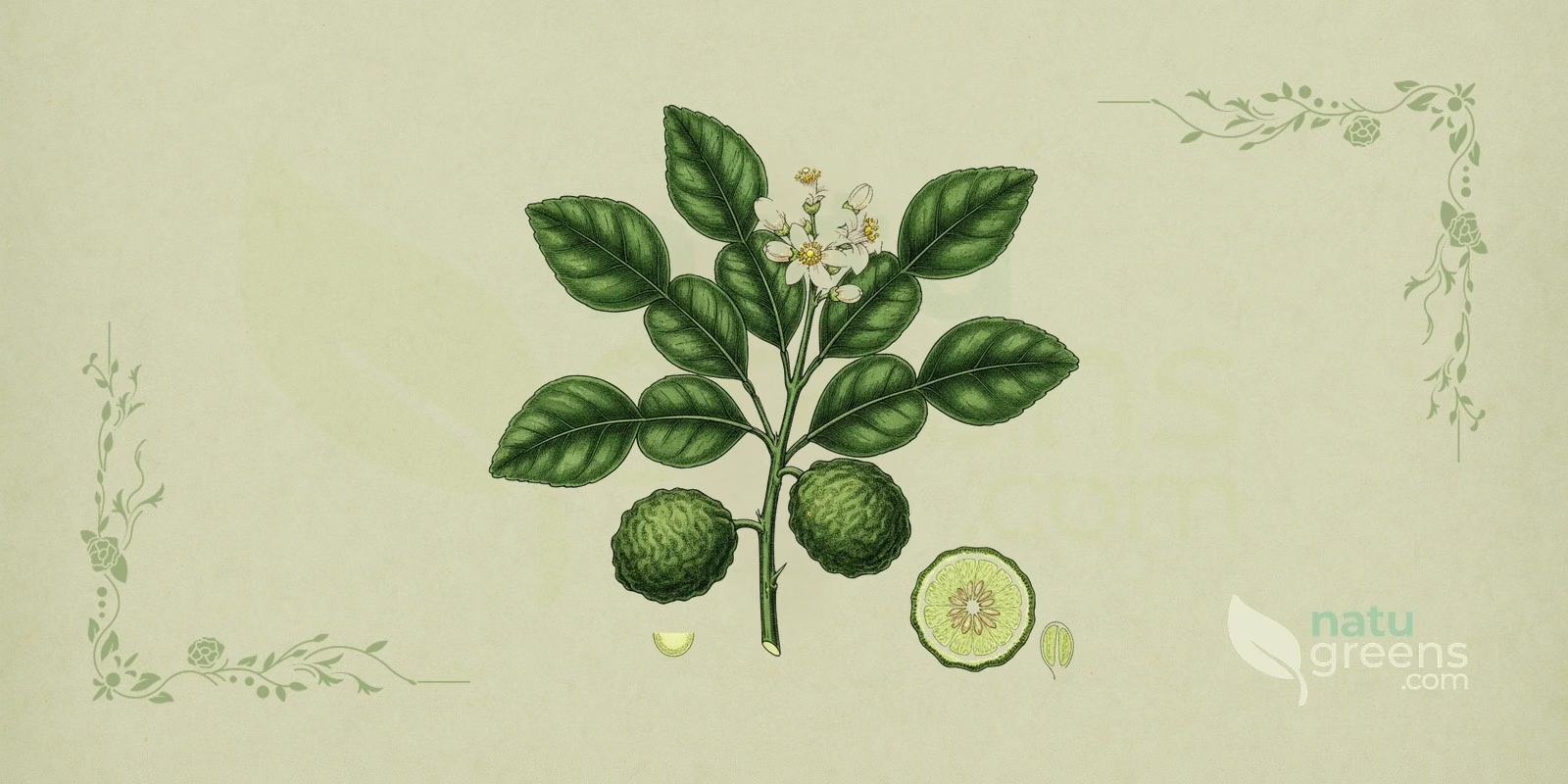
Common and International Names of Makrut Lime
- Chinese: 箭叶橙 (jiàn yè chéng).
- Dutch: djeroek poeroet.
- English: makrut lime, Mauritius papeda.
- French: combava.
- German: Makrut-Limette, Mauritius-Papeda.
- Indonesian: jeruk purut.
- Italian: combava.
- Japanese: コブミカン (kobumikan).
- Malay: limau purut.
- Portuguese: combava, limão-makrut.
- Spanish: combava.
- Thai: มะกรูด (makrut).
Not to Be Confused with Persian Lime or Sweet Lime
Despite the word "lime" in its name, makrut lime is neither the Persian or Tahiti lime (Citrus × latifolia) nor the sour lime used in drinks, and it is certainly not the sweet lime (lima-da-pérsia in Brazil). The fruit has a thick, dark green, knobbly rind, almost no juice and very sour, bitter flesh, so it is rarely squeezed like an ordinary lime; what cooks actually use are the leaves and the grated peel. The leaf is another way to tell the species apart, because its broad, winged petiole makes each leaf look like two leaves joined end to end. In English, the old name once used for this fruit is considered offensive, above all in South Africa, and has been replaced by makrut lime, a form derived from the Thai name and the one used throughout this article.
Botanical Synonyms of Makrut Lime
The accepted name is Citrus hystrix DC., published by Augustin Pyramus de Candolle in 1813. The species belongs to the informal group known as papedas, primitive citrus with fruits that hold little juice, and it has collected many names over the centuries. Taxonomic databases such as GRIN, run by the United States Department of Agriculture, list Citrus celebica Koord., Citrus combara Raf., Citrus macroptera var. kerrii Swingle, Citrus micrantha Wester, Citrus papeda Miq., Citrus papuana F. M. Bailey, Citrus torosa Blanco and Papeda rumphii Hassk., among others, as heterotypic synonyms. The inclusion of Citrus micrantha is not universally accepted, and recent chemical and genetic studies tend to treat it as a separate papeda, a sign that citrus classification is still being revised.
Botanical Family: Rutaceae
Rutaceae brings together around 160 genera of trees and shrubs, most of them aromatic, whose leaves and rinds carry tiny oil glands that show up when held against the light. Besides the genus Citrus, which includes oranges, lemons, mandarins and pomelos, the family is home to rue and jaborandi. A chemical trait shared by several members of the family is the production of coumarins and furanocoumarins, substances that in some cases make the skin sensitive to sunlight. In a survey covering dozens of citrus species, makrut lime ranked among those that accumulate the largest amounts of these compounds in the peel, which has practical consequences for anyone using the plant on the skin.
Parts of Makrut Lime Used
The leaves are the most widely used part, whether fresh, frozen or dried, both in cooking and in infusions and scented baths. The fruit peel, grated fresh or dried, goes into curry pastes and home preparations, and an essential oil used in perfumery and aromatherapy is obtained from it by cold pressing or distillation. The leaves also yield an essential oil of their own, with a quite different composition. The juice, scant and very acidic, has limited use, appearing in some household recipes for cleaning and for washing the hair.
Ethnobotanical and Traditional Uses of Makrut Lime
Reviews of the species bring together records of folk use from several Southeast Asian countries. These uses reflect oral tradition and have not been confirmed by clinical trials:
- Bathing in water scented with the leaves or fruit, used to mask body odor and soften the skin.
- Hair washing, with the cut fruit or its juice used as a homemade shampoo.
- Headache and feverish colds, through leaf teas and steam inhalations.
- High blood pressure and intestinal worms, mentioned in folk records with no matching clinical study.
- Indigestion, stomach ache and abdominal cramps, with the fruit regarded as a digestive stimulant and "blood purifier".
- Insect bites and keeping leeches away, the latter reported in Sri Lanka.
Some records mention giving the fruit to babies with diarrhea, a practice that should not be repeated at home, since diarrhea in infants calls for medical assessment and fluid replacement guided by a health professional.
Medicinal Properties of Makrut Lime
The properties below come from laboratory and animal studies and from traditional use; evidence in humans is still scarce and preliminary, and results vary with the plant part and the type of extract.
- Antibacterial activity (leaf and peel oils inhibited, in vitro, bacteria isolated from respiratory infections, and experimental oral sprays made with these oils reduced biofilm formation by cavity-causing bacteria in the laboratory)
- Anti-inflammatory activity (fruit coumarins such as bergamottin, along with leaf extracts, lowered nitric oxide production in cultured immune cells)
- Antioxidant activity (leaf and peel extracts neutralized free radicals in chemical assays)
- Cholinesterase inhibition (the fresh juice and an isolated furanocoumarin inhibited these enzymes in vitro, an early finding with no defined practical application)
- Hepatoprotective activity (a leaf extract reduced liver damage caused by paracetamol overdose in mice and rats)
- Insect repellent activity (the oil protected against mosquito bites for about three hours in controlled tests, a shorter period than other oils assessed in the same study)
- Metabolic effects (a 2022 review gathered animal and cell studies showing signs of lower blood glucose, blood lipids and blood pressure, with no confirmation in people)
Detailed Phytochemical Profile of Makrut Lime
A 2023 review counted 78 compounds characterized in the species so far, chiefly volatile terpenes, coumarins, flavonoids and phenolic acids. The composition of the oils varies considerably with geographic origin, harvest season and extraction method.
- Bergamottin and 6',7'-dihydroxybergamottin (peel furanocoumarins; dihydroxybergamottin was the main one in Thai samples, at 0.38% to 0.88% by weight)
- Citronellal (main component of the leaf oil, usually between 60% and 80%, and responsible for its signature aroma)
- Citronellol (second most abundant terpene in the leaf oil, at roughly 10% to 14%)
- Hesperidin and other flavonoids (flavanones, flavones and flavonols found in the peel)
- Limonene (one of the main constituents of the peel oil, along with beta-pinene)
- Oxypeucedanin hydrate (second most abundant furanocoumarin in the peel in the Thai analyses)
- Phenolic acids (vanillic, p-coumaric, sinapic and cinnamic acids, identified in the leaves)
- Sabinene (predominant in some peel oil samples collected in Malaysia)
- Terpinen-4-ol and alpha-terpineol (terpene alcohols in the peel oil, singled out as the most active against bacteria in laboratory tests)
Preparation and Administration of Makrut Lime
In everyday life, makrut lime is first and foremost a seasoning. Whole or torn leaves go into broths such as tom yum, into curries and rice, and are removed before serving, while leaves sliced into very fine threads can be eaten raw in salads and fish cakes. The grated peel is a classic ingredient of Thai green curry paste and of dishes from the Indian Ocean islands. In household tradition, the leaves are also used in mild infusions and in scented bathwater. The essential oil, sold in bottles for aromatherapy and perfumery, is always diluted in a vegetable oil before it touches the skin and must never be swallowed undiluted; topical products made with the peel call for extra care with sun exposure, as explained in the contraindications section.
Synergy with Other Medicinal Plants
Aromatic Broths of Thai Cooking
In tom yum and other Thai broths, makrut lime leaf shares the pot with lemongrass (Cymbopogon citratus), galangal (Alpinia galanga) and ginger (Zingiber officinale), an aromatic trio that folk tradition links to easier digestion and relief from cold symptoms. This pairing is culinary and cultural, and no clinical study has assessed the combined effect of these plants.
Repellent Oils for External Use
In Thai research on natural repellents, makrut lime oil was tested alongside citronella (Cymbopogon winterianus) and turmeric (Curcuma longa) oils, which gave longer protection, especially when combined with vanillin. Homemade blends of these plants are not yet standardized and do not replace registered repellents in areas at risk of dengue, Zika or malaria.
Makrut Lime Recipes and Usage Protocols
Leaves in Broth and Curry
For a pot of about one liter of broth, two to four fresh leaves, lightly torn to release the oil, are usually enough; they simmer with the other seasonings for a few minutes and are taken out before serving. Frozen leaves keep their aroma well, while dried ones lose some of it and call for a slightly larger amount.
Mild Leaf Infusion
In Southeast Asian tradition, a tea is made with two or three fresh leaves in a cup of boiling water, covered and left to steep for five to ten minutes, and drunk after meals as a digestive for a few days. This use has not been evaluated in clinical trials, and pregnant women, breastfeeding women and children should avoid it because safety data are lacking.
Diluted Essential Oil for External Use
In aromatherapy, the leaf oil is usually diluted in a vegetable oil at roughly one drop per teaspoon of carrier oil, always after a patch test on a small area of the forearm. Because it contains furanocoumarins, the peel oil should only be applied to areas that will stay covered and out of the sun for the following hours, preferably for at least 12 hours, and neither oil should be swallowed undiluted or applied to the eyes or mucous membranes. These uses follow traditional records and do not replace professional guidance from a qualified physician, pharmacist or herbalist.
The preparations above follow traditional records and do not replace professional guidance. Before any internal use, check the contraindications and interactions described in this article.
Therapies Associated with Makrut Lime
Clinical Herbal Medicine
Makrut lime has no official monograph from agencies such as the European Medicines Agency or in the Brazilian Pharmacopoeia, and there are no clinical trials establishing doses, indications or duration of use. What exists are laboratory studies on the antibacterial activity of the oils, including oral spray formulations still at the experimental stage, and animal studies on metabolic and liver effects. For this reason, in clinical practice it appears at most as an aromatic plant of interest, with no formal indication for any disease.
Traditional Medicine of Southeast Asia
There is no documented homeopathic preparation of makrut lime. Its place is in the traditional medicine of Thailand, Indonesia and Malaysia, where leaves, peel and fruit go into digestive teas, aromatic baths, steam inhalations for colds and scalp care. In these systems, the plant is usually combined with other aromatic herbs, in a culinary and household setting where food and remedy blend together.
Contraindications and Side Effects of Makrut Lime
Leaves and peel used as a seasoning, in normal culinary amounts, do not usually cause problems. The precautions center on the essential oil and on concentrated peel preparations. The peel contains furanocoumarins such as bergamottin, 6',7'-dihydroxybergamottin and oxypeucedanin hydrate, and makrut lime is among the citrus fruits with the highest content of these compounds; when the peel oil or a preparation made from the peel is applied to the skin and the area is then exposed to the sun, skin photosensitization can develop, a reaction known as phytophotodermatitis, with redness, burning, blisters and dark patches that may last for weeks or months. Anyone using topical products containing the peel should keep the area covered and out of the sun for the following hours, preferably for at least 12 hours, and leaf oils or distillates should not be assumed to be free of furanocoumarins without a certificate of analysis from the manufacturer. The essential oil, rich in citronellal and other terpenes, must not be swallowed undiluted, as it can irritate the mouth, esophagus and stomach and expose the body to concentrated doses with no safety studies behind them; applied undiluted to the skin, it can also cause irritation and allergic reactions in sensitive people. Peel extracts interfered with embryo implantation and caused abortion in female rats, which, although it cannot be carried over directly to humans, reinforces the advice that pregnant women avoid medicinal use and the essential oil, and the same caution applies to breastfeeding women and young children.
Drug Interactions
No interaction studies have been carried out specifically with makrut lime. Bergamottin and 6',7'-dihydroxybergamottin, however, are the same furanocoumarins that make grapefruit interfere with the metabolism of many medicines through the CYP3A4 enzyme, so concentrated peel preparations could, in theory, alter the effect of statins, calcium channel blockers, immunosuppressants and other drugs metabolized by this pathway. People taking medicines that already increase sun sensitivity, such as some antibiotics, diuretics, retinoids or psoralen treatments, add to the risk when they apply peel oil to the skin. Since animal studies suggest effects on blood glucose and blood pressure, people being treated for diabetes or hypertension should talk to their doctor before using extracts or concentrated teas on a regular basis.
Curiosities and Historical Facts
The epithet hystrix comes from Greek and means porcupine, a reference to the long, stiff thorns on the branches. The form makrut comes from the Thai มะกรูด and came to be preferred in English precisely to replace the old name, which carries an offensive connotation. In Singapore, the plant is recorded as a food plant for the caterpillars of the atlas moth (Attacus atlas), one of the largest moths in the world. On Indian Ocean islands such as Réunion and Madagascar, the name combava is common in Creole cooking, and it is also the form used in French, Italian and Spanish.
Frequently Asked Questions about Makrut Lime
Are Makrut Lime and Persian Lime the Same Thing?
No. Makrut lime is Citrus hystrix, a papeda with a wrinkled, nearly juiceless fruit prized for its leaves and peel, while the Persian lime is a hybrid with a smooth, juicy fruit. In the kitchen they do not substitute well for each other, and ordinary lime zest gives only a rough idea of the aroma of makrut lime leaves.
Can Makrut Lime Oil Stain the Skin in the Sun?
Yes, especially the oil and other preparations made from the peel, which concentrates furanocoumarins. Applied to the skin before sun exposure, it can cause burns, blisters and long-lasting dark patches, so topical use calls for dilution and for keeping the area protected from the sun for the following hours.
Does Makrut Lime Help Lower Blood Sugar?
Animal and cell studies suggest effects on blood glucose and blood lipids, but no clinical trial has confirmed this effect in people. People with diabetes should not change or reduce their medication on their own and should talk to their doctor before using extracts of the plant.
Can Dried Makrut Lime Leaves Be Used for Tea?
Yes, although they have less aroma than fresh or frozen leaves. A mild leaf tea is a traditional digestive use with no clinical proof, and it should be avoided by pregnant women, breastfeeding women and young children.
Why Is the Old English Name No Longer Used?
Because the word that used to accompany the fruit's name in English is considered a racial slur, especially in South Africa. Botanical databases and many authors now recommend makrut lime, and in Portuguese the safest and most traditional form is combava.
Notice: this content is for informational purposes and does not replace professional medical advice. Consult a physician or herbal practitioner before using medicinal plants, especially during pregnancy, breastfeeding, or alongside medication.
How to cite this article
NATUGREENS. Makrut Lime (Citrus hystrix): Uses, Essential Oil and Safety. Natugreens, 26 Nov. 2026. Disponível em: https://natugreens.com/citrus-hystrix-makrut-lime/. Accessed: Nov. 26, 2026.
Natugreens. (2026). Makrut Lime (Citrus hystrix): Uses, Essential Oil and Safety. Natugreens. https://natugreens.com/citrus-hystrix-makrut-lime/
References and Scientific Studies
View All 12 Cited References
Peer-Reviewed Scientific Studies (8)
- DOI2017 Agouillal, F., Taher, Z. M., Moghrani, H., Nasrallah, N., El Enshasy, H. (2017). A Review of Genetic Taxonomy, Biomolecules Chemistry and Bioactivities of Citrus hystrix DC. Biosciences Biotechnology Research Asia, 14(1). ↗
- DOI2015 Dugrand-Judek, A., Olry, A., Hehn, A., Costantino, G., Ollitrault, P., Froelicher, Y., Bourgaud, F. (2015). The Distribution of Coumarins and Furanocoumarins in Citrus Species Closely Matches Citrus Phylogeny and Reflects the Organization of Biosynthetic Pathways. PLoS ONE, 10(11), e0142757. ↗
- DOI2016 Mitrakul, K., Srisatjaluk, R., Srisukh, V., Vongsawan, K. (2016). Citrus hystrix (makrut oil) oral sprays inhibit Streptococcus mutans biofilm formation. ScienceAsia, 42(1), 12-21. ↗
- DOI1999 Murakami, A., Gao, G., Kim, O. K., Omura, M., Yano, M., Ito, C., Furukawa, H., Jiwajinda, S., Koshimizu, K., Ohigashi, H. (1999). Identification of Coumarins from the Fruit of Citrus hystrix DC as Inhibitors of Nitric Oxide Generation in Mouse Macrophage RAW 264.7 Cells. Journal of Agricultural and Food Chemistry, 47(1), 333-339. ↗
- DOI2008 Paramapojn, S., Gritsanapan, W., Ganzera, M., Stuppner, H. (2008). Determination of furanocoumarins in Citrus hystrix by HPLC photodiode array. Planta Medica, 74(9), PC16. ↗
- DOI2022 Siti, H. N., Mohamed, S., Kamisah, Y. (2022). Potential Therapeutic Effects of Citrus hystrix DC and Its Bioactive Compounds on Metabolic Disorders. Pharmaceuticals, 15(2), 167. ↗
- DOI2012 Srisukh, V., Tribuddharat, C., Nukoolkarn, V., et al. (2012). Antibacterial activity of essential oils from Citrus hystrix (makrut lime) against respiratory tract pathogens. ScienceAsia, 38, 212-217. ↗
- DOI2023 Zhao, Z., Wang, Y., Nian, M., Lv, H., Chen, J., Qiao, H., Yang, X., Li, X., Chen, X., Zheng, X., Wu, S. (2023). Citrus hystrix: A review of phytochemistry, pharmacology and industrial applications research progress. Arabian Journal of Chemistry, 16(11), 105236. ↗
Institutional Sources (1)
- GOV USDA, Agricultural Research Service (n.d.). Citrus hystrix DC. Germplasm Resources Information Network (GRIN-Global). ↗
Supplementary Readings (3)
- National Parks Board Singapore (n.d.). Citrus hystrix. Flora & Fauna Web. ↗
- Plants of the World Online (n.d.). Citrus hystrix DC. Royal Botanic Gardens, Kew. ↗
- 2001 Tawatsin, A., Wratten, S. D., Scott, R. R., Thavara, U., Techadamrongsin, Y. (2001). Repellency of volatile oils from plants against three mosquito vectors. Journal of Vector Ecology, 26(1), 76-82. ↗
You May Also Like
Take your time and tell us everything you think, details included. Every response is read by someone on our editorial team and goes into the article's revision. An honest critique helps us more than a polite compliment.
Take your time and tell us everything you think, details included. Every response is read by someone on our editorial team and goes into the article's revision. An honest critique helps us more than a polite compliment.