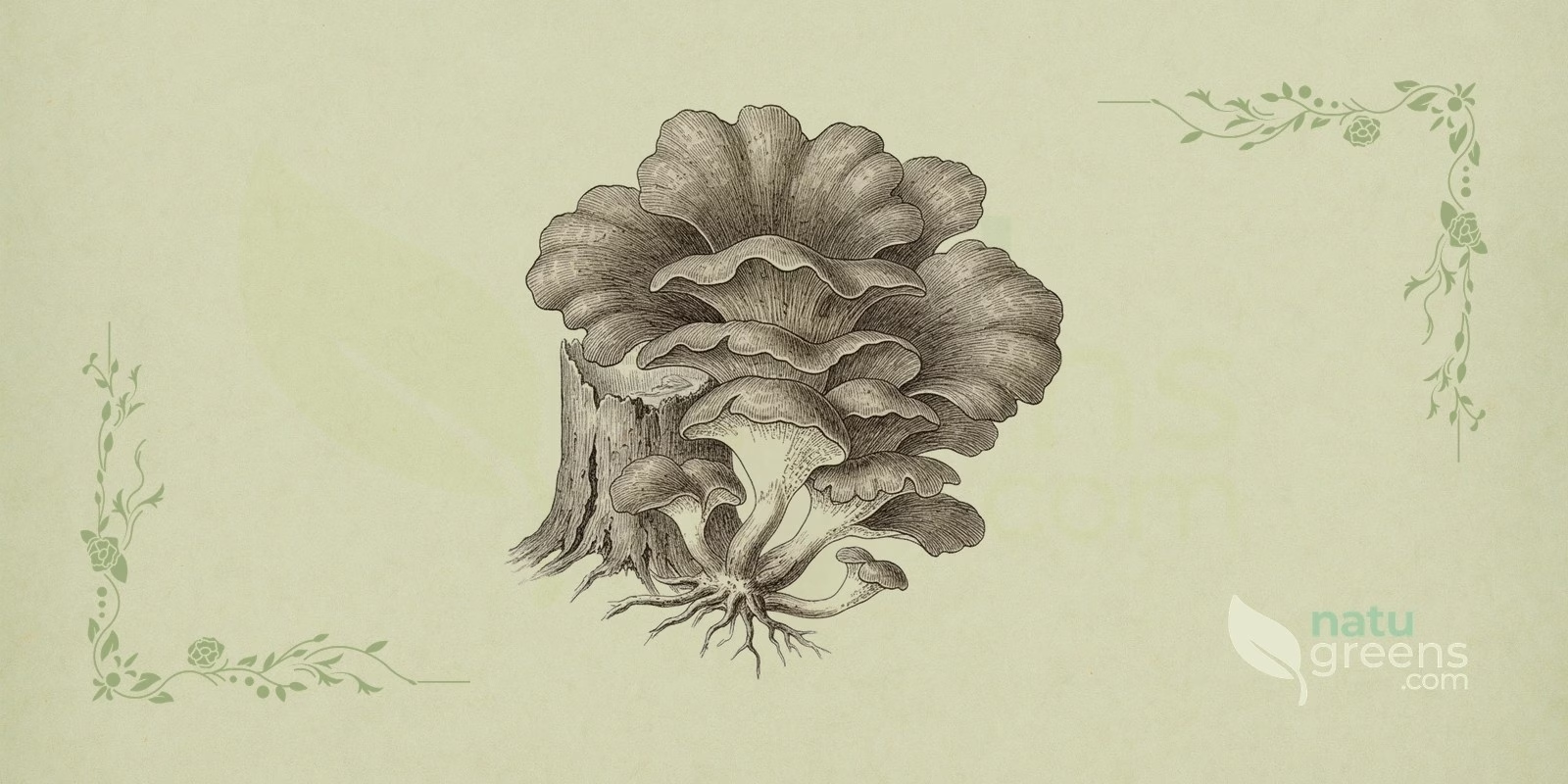
Grifola frondosa (Dicks.) Gray / Maitake, also known as hen-of-the-woods or sheep’s head, is a polypore fungus of the Kingdom Fungi, not a plant. The species is native to Japan, China, Europe and North America. This edible and medicinal mushroom grows at the base of trees, especially oaks and maples, and has been prized for centuries in traditional Asian medicine. It is easy to recognize by its distinctive structure, made up of clusters of overlapping fruiting bodies that resemble a cabbage or a bunch of fans, in colors ranging from gray to grayish brown. Its use goes back to ancient times, and in several cultures it has become a symbol of longevity and vitality.
The importance of maitake goes beyond its culinary value, since the mushroom has been widely studied for its medicinal properties. Its polysaccharides, especially beta-glucans and the D-fraction, are the subject of intense scientific research. So far, this research describes immunomodulatory, antioxidant and anti-inflammatory actions, mostly in laboratory work, animal models and early clinical trials. Taken together, these findings have built maitake’s reputation as a natural resource of interest for well-being, although results in humans are still limited and the mushroom does not replace any medical treatment.
Popular and International Names of Maitake
- English: dancing mushroom, hen-of-the-woods, maitake, sheep’s head.
- French: maitake, polypore en touffe, poule des bois.
- German: Klapperschwamm, Laubporling, Spitzschuppiger Porling.
- Italian: fungo della danza, grifola frondosa, maitake.
- Portuguese: cogumelo-da-floresta, galinha-do-bosque, maitake.
- Spanish: hongo maitake, poliporo frondoso, seta maitake.
Botanical Synonyms of Grifola frondosa
The scientific name Grifola frondosa is the one accepted today, but over the history of mycology the species has been given other names. They reflect the evolution of taxonomic knowledge and the differing interpretations of scholars. Because maitake is a fungus, the correct references for its nomenclature are the mycological databases Index Fungorum and MycoBank, not the flora databases used for plants. The synonym most often cited in the literature is Boletus frondosus Dicks., described by the Scottish naturalist James Dickson in 1785, followed by Polyporus frondosus (Dicks.) Fr., a combination proposed by the Swedish mycologist Elias Magnus Fries.
- Boletus frondosus Dicks.
- Polyporus frondosus (Dicks.) Fr.
Knowing these synonyms is essential for researching and identifying the species accurately across different historical and scientific contexts. Although current nomenclature gives priority to Grifola frondosa, a combination published by Samuel Frederick Gray in 1821, recognizing the earlier names makes it possible to connect with older studies and gives a complete picture of the mushroom’s classification and history.
Botanical Family: Meripilaceae
Maitake belongs to the family Meripilaceae, placed in the order Polyporales, within the class Agaricomycetes and the phylum Basidiomycota, in the Kingdom Fungi. This family brings together polypore fungi, which generally have pores on the underside of the cap instead of gills. Its members usually grow on wood, either as parasites or as saprobes, and play an important role in breaking down organic matter in forest ecosystems.
Meripilaceae is a diverse family, with species that display a wide variety of fruiting-body shapes and sizes. Grifola frondosa, with its branched, rosette-like structure, is a characteristic example of the group. Some recent phylogenetic revisions propose placing the genus Grifola in a family of its own, Grifolaceae, but its classification in Meripilaceae remains widely used. The study of this family adds to our understanding of mycology and fungal ecology, revealing how complex the relationships between these organisms and their natural habitats can be.
Parts of Maitake Used
- Fruiting body (mushroom)
- Mushroom powder
- Mycelium
- Standardized extracts
Ethnobotanical and Traditional Uses
Maitake has a rich history of traditional, or ethnomycological, use, especially in East Asia. There, traditional Chinese and Japanese medicine have revered it for centuries as a tonic associated with health and longevity. According to these traditional records, it was used to support the body’s defenses, vitality and general well-being. The Japanese nickname “dancing mushroom” comes from the joy people felt when they found it in the wild, given how rare and valuable it was.
Tradition also turned to it for digestive complaints, fatigue and metabolic imbalances, in the belief that the mushroom helped harmonize body and mind and increase resistance to disease. It was further valued for a supposed adaptogenic action, that is, the ability to help the body cope with physical and mental stress. This idea belongs to the traditional record and still lacks confirmation in clinical studies. Passed down through generations, this knowledge established maitake as one of the most important medicinal mushrooms in Asian culture.
Therapeutic Properties of Maitake
- Anti-inflammatory (reduction of inflammatory processes observed in laboratory and animal studies)
- Antioxidant (neutralization of free radicals and protection against oxidative damage described in experimental assays)
- Antiproliferative (activity observed in laboratory studies, with no clinical evidence)
- Antiviral (activity against some viruses, such as influenza and hepatitis B, described only in experimental studies)
- Cardioprotective (effects on cholesterol and blood pressure investigated in preliminary studies, mostly in animals)
- Hypocholesterolemic (reduction of total and LDL cholesterol observed in animal studies)
- Hypoglycemic (reduction of blood glucose observed in animal studies and still under investigation in humans; calls for caution in people taking diabetes medication)
- Immunomodulatory (modulation of immune cells observed in the laboratory and in early clinical trials, with results that are still limited)
- Neuroprotective (protection of nerve cells described only in laboratory studies)
Detailed Phytochemical Profile of Maitake
The chemical profile of Grifola frondosa is complex and diverse, and it accounts for much of the scientific interest in the mushroom. Its main bioactive constituents are polysaccharides, especially beta-glucans such as the D-fraction. In experimental studies, these molecules stand out for their immunomodulatory activity, linked to the activation of immune cells, and for an antiproliferative activity observed in the laboratory. The D-fraction has been studied extensively for its ability to induce apoptosis, or programmed cell death, in several cultured tumor cell lines. This result, however, does not yet amount to a proven clinical effect in people.
Besides polysaccharides, maitake contains other relevant compounds, such as proteins and glycoproteins, which take part in its biological activities, including antioxidant and immunomodulatory effects described in experimental assays. It also contains pyrrole alkaloids, ergosterols and unsaturated fatty acids, to which anti-inflammatory and antioxidant properties are attributed. Nutritionally, the mushroom provides B-complex vitamins and vitamin C, minerals such as copper and potassium, dietary fiber and essential amino acids, all of them important for maintaining overall health.
More recent studies also report the presence of polyphenols, such as naringin, hesperidin, chlorogenic acid and kaempferol, in Grifola frondosa extracts. These phenolic compounds are known for their antioxidant and anti-inflammatory activity and help protect cells against oxidative stress in experimental models. The interplay among these various constituents helps explain the broad range of actions investigated in maitake, which remains the subject of ongoing research in mycotherapy and nutrition.
Preparation and Administration Forms of Maitake
- Capsules
- Cooked (in culinary dishes)
- Liquid extracts
- Powder (added to foods or drinks)
- Tea (infusion or decoction)
- Tinctures
Synergy with Other Medicinal Plants
Because it is a mushroom and not a plant, maitake is often paired both with other medicinal fungi and with medicinal plants. The combinations described below belong to the traditional record and to the practice of mycotherapy, and the benefit of these pairings has yet to be confirmed by clinical studies.
Immune Support
In the mycotherapy tradition, maitake is often combined with other medicinal mushrooms, such as Lentinula edodes (shiitake) and Ganoderma lucidum (reishi), in formulas traditionally used to support the body’s defenses. The rationale behind these blends is that the beta-glucans and other polysaccharides of each fungus would act in a complementary way on immune cells, a hypothesis supported mainly by laboratory studies. People with an autoimmune disease, transplant recipients and anyone taking immunosuppressants should not turn to these combinations without medical guidance.
Glycemic Control
In the traditional record, maitake appears alongside plants such as Momordica charantia (bitter melon) and Gymnema sylvestre, which are also studied for their effects on blood sugar. In animal studies, maitake polysaccharides lowered glucose levels, while these plants are being investigated for possibly reducing glucose absorption and increasing insulin sensitivity. For precisely this reason, the combination adds up hypoglycemic effects and raises the risk of an excessive drop in blood sugar in people taking diabetes medication. It should only be considered with medical guidance and blood glucose monitoring, and never as a replacement for prescribed medication.
Cardiovascular Health
For the cardiovascular system, tradition pairs maitake with plants such as Crataegus monogyna (hawthorn) and Allium sativum (garlic). Experimental studies are looking into possible effects of maitake on cholesterol and blood pressure, whereas hawthorn and garlic have a well-established traditional use in support of circulation. There are, however, important precautions: garlic can increase the risk of bleeding in people taking anticoagulants, and hawthorn can interact with heart and blood pressure medications. For this reason, this combination calls for medical supervision, especially for anyone already under care for a heart condition.
Recipes and Usage Protocols of Maitake
Maitake Broth with Vegetables
Ingredients: 100 g fresh maitake or 20 g dried maitake, 1 liter of water, 1 medium onion, 2 garlic cloves, 1 carrot, olive oil, salt and pepper to taste.
Preparation: If using dried maitake, rehydrate it in warm water for 30 minutes. Sauté the chopped onion and garlic in a little olive oil, add the sliced maitake and the carrot cut into rounds, cover with the water and simmer over low heat for 30 to 40 minutes, seasoning with salt and pepper at the end. In Asian cuisine, maitake broths are traditionally enjoyed as a comforting food and can be part of a varied diet, without this implying any promise of an effect on immunity.
Dried Maitake Infusion
Ingredients: 5 g dried, sliced maitake, 500 ml of water.
Preparation: Bring the water to a boil, add the maitake, lower the heat and let it simmer gently for 15 to 20 minutes, as in a decoction, then strain and drink warm. In the traditional record, this preparation is taken once or twice a day as a general tonic, and hot water extraction is the classic way of obtaining the mushroom’s soluble polysaccharides. Anyone who takes diabetes medication or anticoagulants, is pregnant or breastfeeding, or is thinking of giving the drink to children should consult a health professional before drinking it regularly.
Sautéed Maitake with Vegetables
Ingredients: 200 g fresh maitake, 1 bell pepper, 1 zucchini, 2 tablespoons soy sauce, 1 teaspoon sesame oil, olive oil for sautéing.
Preparation: Wash and slice the maitake and cut the bell pepper and zucchini into strips. Heat the olive oil in a large frying pan and sauté the maitake until golden, then add the vegetables and cook until tender but still crisp. Finish with the soy sauce and sesame oil and serve as a side dish or main course, a tasty and nutritious way to include maitake in your diet.
The preparations above follow traditional records and do not replace professional guidance. Before any internal use, check the contraindications and interactions described in this article.
Associated Therapies
Integrative Medicine
In integrative medicine, standardized maitake extracts rich in beta-glucans are being investigated as a possible immunomodulatory adjunct, including in people undergoing cancer treatment. In laboratory studies, these extracts stimulate the activity of immune cells such as macrophages and NK (natural killer) cells. A phase I/II clinical trial in women with breast cancer, on the other hand, observed both stimulatory and inhibitory changes in immunological parameters in the blood. This mixed result underlines that use in this setting is still experimental and must be supervised by the oncology team, which assesses dose, form of administration and possible interactions, and it should never replace conventional treatment.
Mycotherapy
Mycotherapy, the use of mushrooms for medicinal purposes, regards Grifola frondosa as one of its pillars. In this approach, maitake is valued for an adaptogenic action attributed to it by tradition, that is, helping the body regain balance and cope with stress. It is also used in settings that range from supporting the body’s defenses to keeping track of metabolic parameters such as blood glucose and cholesterol. The practice may involve eating the mushroom fresh, in powder form or as concentrated extracts. These uses, however, rest mainly on tradition and preliminary studies and do not replace medical follow-up for people with diabetes, high cholesterol or another chronic condition.
Contraindications and Side Effects of Maitake
General Contraindications
Maitake is a mushroom, an organism of the Kingdom Fungi and not a plant, and is generally considered safe for most people when eaten in food amounts. Even so, its immunomodulatory and hypoglycemic properties warrant some contraindications. People with autoimmune diseases, such as lupus or rheumatoid arthritis, should use it with caution, since stimulating the immune system may worsen the condition. Transplant patients taking immunosuppressants should avoid it, as the mushroom may interfere with the effectiveness of their medication. Pregnant and breastfeeding women should consult a health professional before use, because conclusive studies on its safety in these groups are lacking. The same applies to children, for whom the dose and safety of concentrated extracts have not been established.
Because of its possible hypoglycemic effect, caution is advised for people taking diabetes medication, given the risk of additive hypoglycemia, which requires blood glucose monitoring. There is an isolated report of a possible interaction with warfarin (an anticoagulant), so anyone taking anticoagulants should consult a doctor before using maitake. The mushroom does not replace prescribed medical treatment for diabetes or other conditions. Wild specimens, for their part, should only be eaten after reliable identification by an expert, to avoid confusion with other species.
Potential Side Effects
Although rare, some side effects may occur with maitake consumption, the most common being mild gastrointestinal discomfort, such as nausea, diarrhea or bloating, especially at high doses. Allergic reactions are uncommon but can occur in people sensitive to mushrooms and may show up as skin rashes, itching or difficulty breathing, a situation that requires stopping use and seeking medical care. Given its hypoglycemic potential, diabetic patients taking medication to lower blood sugar should monitor their blood glucose closely to avoid hypoglycemia. Anyone who decides to use the mushroom in concentrated form should start with low doses and watch how the body responds.
Drug Interactions
Maitake may interact with some medications, starting with those used for diabetes. Its hypoglycemic effect may enhance the action of oral antidiabetic drugs and insulin and cause an excessive drop in blood sugar. As for warfarin, a published case report described an increase in INR, an index that measures clotting time, in a patient who had started taking maitake extract. The finding suggests an increased risk of bleeding, although the mechanism has not been clarified. The mushroom’s immunomodulatory activity could also, in theory, interfere with immunosuppressive drugs. For this reason, anyone on long-term medication or with a pre-existing condition should consult a doctor or pharmacist before adding maitake to their routine.
Historical Notes and Interesting Facts
The Dancing Mushroom
The Japanese name maitake means “dancing mushroom” in a nod to the tradition that people danced for joy when they came across this rare and valuable mushroom in the wild. It was prized both for the medicinal qualities attributed to it and for its flavor. The name reflects the cultural importance of maitake and the high regard it has always enjoyed in Asian societies, where it was considered a treasure of the forest.
Longevity and Vitality
In traditional Eastern medicine, maitake is associated with longevity and vitality and was often used as a tonic, in the belief that it fortified the body against aging and disease. Its ability to grow in large clusters at the base of old trees, such as oaks, made it a symbol of the strength and resilience of nature.
Discovery and Early Use
Although Grifola frondosa was formally described by European naturalists in the 18th century, its use in Asia is much older. Historical records and traditional practices indicate that the mushroom was part of the diet and of folk pharmacopoeia, valued both for its culinary qualities and for the medicinal virtues attributed to it. This long history of use reflects the cultural trust placed in maitake, but it is not the same as scientific proof of efficacy or safety.
Frequently Asked Questions about Maitake
Does Maitake Tea Help with Weight Loss?
Maitake tea is not a weight loss solution, and there are no human studies proving a slimming effect. Animal research is exploring the mushroom’s influence on fat and glucose metabolism, and its fiber may contribute to satiety, as with any food rich in this nutrient. Weight control still depends on a balanced diet and regular physical activity, preferably with professional guidance.
What Is the Best Way to Take Maitake?
Maitake can be consumed in a number of ways, depending on the preferences and goals of the person using it. Fresh or dried, it goes into culinary dishes such as stir-fries, soups and broths, while standardized extracts, capsules and tea are the options most often used for medicinal purposes. Tea, prepared by infusion or decoction, is the traditional way of extracting water-soluble compounds such as beta-glucans. The choice among these options depends on the desired concentration, convenience and the advice of a health professional.
Does Maitake Tea Have Side Effects?
Maitake tea is generally well tolerated, but some people may experience mild gastrointestinal discomfort, such as nausea or diarrhea, especially at high doses, and allergic reactions, although rare, are possible. Diabetic patients should monitor their blood glucose because of the mushroom’s hypoglycemic potential. Before starting regular consumption, it is advisable to consult a health professional, especially in the case of a pre-existing condition or the use of other medications.
Can Maitake Be Given to Children?
As a food, maitake can be part of a child’s diet in moderate amounts and well cooked. The use of concentrated extracts in children, however, calls for caution, because the dose and safety of these forms are not as well established as they are in adults. For any medicinal purpose, consulting a pediatrician is essential to assess whether it is appropriate and to avoid adverse reactions.
Is Maitake a Plant or a Mushroom?
Maitake is a mushroom, that is, a fungus of the Kingdom Fungi belonging to the family Meripilaceae, and not a plant. For this reason, the correct sources for the species’ nomenclature are the mycological databases Index Fungorum and MycoBank, not the flora databases used for plants. Even so, maitake is often studied alongside medicinal plants in folk tradition.
Can People Taking Diabetes Medication or Anticoagulants Use Maitake?
Because of its possible hypoglycemic effect, people taking diabetes medication should be cautious, as there is a risk of additive hypoglycemia and blood glucose needs to be monitored. There is also an isolated report of a possible interaction with warfarin, so anyone taking anticoagulants should consult a doctor before consuming maitake. In none of these cases does the mushroom replace prescribed medical treatment for diabetes or other conditions.
Notice: this content is for informational purposes and does not replace professional medical advice. Consult a physician or herbal practitioner before using medicinal plants, especially during pregnancy, breastfeeding, or alongside medication.
References and Scientific Studies
- PMC2009 Deng G, et al. A phase I/II trial of a polysaccharide extract from Grifola frondosa (Maitake mushroom) in breast cancer patients: immunological effects. J Cancer Res Clin Oncol. 2009.
- PMC2010 Hanselin MR, et al. INR elevation with maitake extract in combination with warfarin. Ann Pharmacother. 2010.
- PMC2011 Huang SJ, et al. Preparation of culinary-medicinal maitake mushroom, Grifola frondosa (Dicks.: Fr.) S.F. Gray (Aphyllophoromycetideae)-fermented wheat and its antioxidant properties. Int J Med Mushrooms. 2011.
- PMC2021 Wu JY, et al. Bioactive Ingredients and Medicinal Values of Grifola frondosa (Maitake). Foods. 2021.
- PMC2025 Xiao C, et al. Network Pharmacology-Based Elucidation of the Hypoglycemic Mechanism of Grifola frondosa GF5000 Polysaccharides via GCK modulation in Diabetic Rats. Nutrients. 2025.
- PMC2025 Zhang R, et al. Grifola frondosa Polysaccharide F2 Ameliorates Disordered Glucose and Lipid Metabolism in Prediabetic Mice by Modulating Bile Acids. Foods. 2025.
- PMC2010 Hanselin MR, Vande Griend JP, et al. INR elevation with maitake extract in combination with warfarin. Ann Pharmacother. 2010.