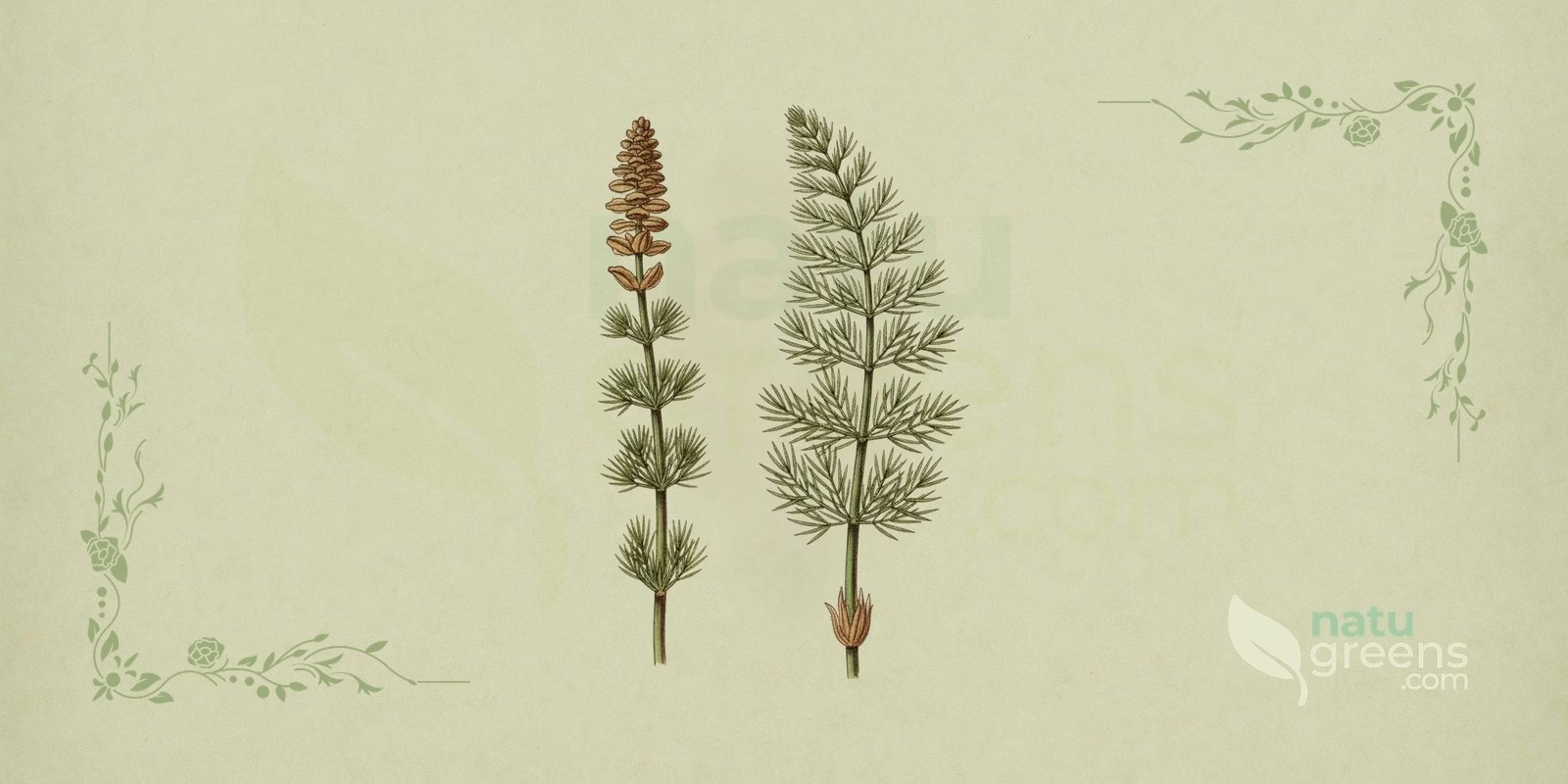
Equisetum arvense L. / Horsetail, popularly known as horsetail, field horsetail, or horse tail, is a perennial herbaceous plant belonging to the subclass Equisetidae, native to the arctic and temperate regions of the Northern Hemisphere. This species is distinguished by having distinct sterile stems (non-reproductive) and fertile stems (spore-bearing), which emerge from an underground rhizomatous system. The fertile stems appear in early spring and are not photosynthetic, while the sterile stems, green and branched, develop after the fertile ones wither, persisting through the summer. Horsetail has been valued for centuries in traditional medicine for its diuretic and remineralizing properties, being a widely studied and used phytotherapeutic resource.
Popular and International Names of Horsetail
- English: Bottle-brush, Common Horsetail, Devil’s-guts, Field Horsetail, Foxtail-rush, Horse Pipes, Horsetail Fern, Marestail, Meadow-pine, Pine-grass, Scouring Rush, Snake-grass.
- Spanish: Cola de caballo, equiseto menor, hierba estañera, rabo de asno, rabo de caballo, rabo de zorra.
- Portuguese: cana-de-jacaré, cauda-de-cavalo, cavalinha, cavalinha-dos-campos, cavalinho, cola-de-cavalo, equisseto, erva-canudo, lixa-vegetal, milho-de-cobra, rabo-de-cavalo, rabo-de-raposa.
- French: herbe à récurer, Prêle des champs, queue de cheval.
- Italian: coda cavallina, Equiseto dei campi, rasperella.
- German: Acker-Schachtelhalm, Katzenschwanz, Schaftheu, Zinnkraut.
Botanical Synonyms of Equisetum arvense
The taxonomy of Equisetum arvense L. has undergone some variation over time, with several botanical synonyms recorded in the scientific literature. Although Equisetum arvense L. is the most widely accepted name, other designations have been used to describe variations or forms of the species. Understanding these synonyms is essential for research and accurate identification of the plant in different botanical and pharmacological contexts.
- Equisetum arvense var. boreale (Bong.) Rupr.
- Equisetum arvense var. campestre (C.F.W.Meissn.) H.P.Fuchs
- Equisetum arvense var. irriguum (Milde) H.P.Fuchs
- Equisetum calderi B.Boivin
- Equisetum hiemale var. arvense (L.) Klinge
- Equisetum maximum Lam. (misapplied)
- Equisetum praealtum Raf. (misapplied)
- Equisetum telmateia Ehrh. (misapplied)
Botanical Family: Equisetaceae
The family Equisetaceae represents the only living genus of the subclass Equisetidae, which includes the plants known as horsetails. This family is notable for its ancient evolutionary lineage, dating back to the Carboniferous period, when similar species dominated terrestrial flora. Equisetaceae are characterized by hollow, segmented stems, reduced leaves, and the absence of flowers, reproducing instead by spores. The presence of silica in the cell wall gives the plant rigidity and a rough texture, a characteristic that historically led to its use for polishing.
Parts of Horsetail Used
- Sterile Aerial Parts (Stems and Branches)
- Rhizomes
Ethnobotanical and Traditional Uses
- Anxiety and Nervousness
- Diabetes and Obesity Treatment (Iran)
- Digestive Disorders and Gastritis
- Fluid Retention Relief
- Hemorrhages (Nasal and Menstrual)
- Inflammation (Rheumatism, Gout)
- Insomnia and Sleep Disorders
- Kidney Problems and Kidney Stones
- Lung Health (Traditional Finnish Medicine)
- Relief of Intestinal Colic and Flatulence
- Skin Health (Chilblains, Skin Conditions)
- Urinary Infections (Cystitis, Urethritis)
- Wound and Ulcer Healing
Therapeutic Properties of Horsetail
- Anti-inflammatory (studied effect on reducing inflammation in the body)
- Antimicrobial (helps fight bacteria and other microorganisms); traditional use, without established clinical efficacy
- Antioxidant (studied activity against free radicals, protecting cells)
- Astringent (helps with wound healing and reducing bleeding)
- Cardioprotective (studied protective effect on cardiovascular health)
- Diuretic (studied effect on urine output, aiding in the elimination of fluids and toxins)
- Hypocholesterolemic (may help lower cholesterol); traditional use, without established clinical efficacy
- Hypoglycemic (may help control blood sugar); traditional use, without established clinical efficacy
- Immunomodulatory (studied effect on the immune system)
- Remineralizing (contributes to bone and connective tissue health due to silicon content)
- Wound-Healing (studied effect on tissue regeneration)
Detailed Phytochemical Profile of Horsetail
- Alkaloids (small amounts, including nicotine under polluted conditions)
- Dietary Fiber (contributes to digestive health)
- Flavonoids (quercetin, apigenin, kaempferol, and their glycosides, responsible for antioxidant and anti-inflammatory activities)
- Minerals (potassium, calcium, manganese, magnesium, phosphorus)
- Phenolic Acids (caffeic acid and its esters, with antioxidant properties)
- Phytosterols (compounds with potential to lower cholesterol)
- Saponins (equisetonin, which contributes to the diuretic effect)
- Silicon (high content of 2-3%, essential for collagen formation and bone health)
- Tannins (astringent properties)
- Vitamins (A, E, C)
Preparation and Administration Forms of Horsetail
- Baths (adding the infusion to bathwater for skin issues or relaxation)
- Compresses/Poultices (topical use for wounds, inflammation, and skin conditions)
- Creams/Ointments (for external application)
- Decoction (to extract more active compounds, especially from tougher parts)
- Fluid/Dry Extract (standardized concentrations for medicinal use)
- Infusion (Tea) (the most common form of consumption, prepared with the dried aerial parts of the plant)
- Tincture (alcoholic extract of the plant)
Synergy with Other Medicinal Plants
Combinations for Fluid Retention
Horsetail can be combined with plants such as hibiscus (Hibiscus sabdariffa) to enhance its diuretic effect. This synergy is traditionally used to help eliminate fluids and toxins from the body, contributing to a reduction in swelling and offering support to healthy kidney function, though it is prudent for people with kidney insufficiency to seek professional guidance before combining the two plants. The combination of their active compounds may optimize the diuretic action, promoting a healthy fluid balance.
Synergy for Bone Health
To support bone health, horsetail can be paired with plants rich in calcium or vitamin D, nutrients essential for maintaining bone density. This combination aims to optimize the absorption and use of the silicon present in horsetail, which, according to preliminary studies, plays a relevant role in the formation and repair of bone and connective tissue.
Associations for Inflammation
In cases of inflammation, horsetail can be used together with other plants known for their anti-inflammatory properties, such as turmeric (Curcuma longa) or ginger (Zingiber officinale). This synergistic approach seeks to amplify the anti-inflammatory effects observed in preliminary studies, offering a traditional record of relief for conditions such as rheumatism and gout by acting on different inflammatory pathways in the body.
Recipes and Usage Protocols of Horsetail
Diuretic Horsetail Tea
To prepare a traditional diuretic tea, boil 250 ml of water. Add 1 tablespoon of dried horsetail (about 2-3 grams) to the boiling water. Turn off the heat, cover, and let it steep for 5 to 10 minutes. Strain and drink 2 to 3 times a day. This protocol is traditionally used as support for eliminating retained fluids and promoting a feeling of lightness in the body.
Tea for Urinary Infection
Combine 1 tablespoon of dried horsetail with 1 teaspoon of uva-ursi leaves (Arctostaphylos uva-ursi) or cranberry (Vaccinium macrocarpon) in 250 ml of boiling water. Let it steep for 10 minutes, strain, and drink throughout the day. This blend is traditionally used as support for urinary tract discomfort, drawing on the antiseptic and diuretic properties attributed to both plants; urinary infections should always be diagnosed and monitored by a healthcare professional.
Compress for Wounds and Inflammation
Prepare a concentrated infusion using 2 tablespoons of dried horsetail per 200 ml of boiling water. Let it cool completely. Soak a clean cloth or gauze in the infusion and apply it to the affected area (wounds, ulcers, inflammation) for 15 to 20 minutes. Repeat the process several times a day to promote healing and reduce local inflammation.
The preparations above follow traditional records and do not replace professional guidance. Before any internal use, consult the contraindications and interactions described in this article.
The preparations above follow traditional records and do not replace professional guidance. Before any internal use, check the contraindications and interactions described in this article.
Associated Therapies
Biodynamic Agriculture
In biodynamic agriculture, horsetail is used in the preparation of BD 508. This preparation is used to mitigate the effects of excess moisture on plants, such as fungal growth. Horsetail’s high silica content helps strengthen plants and reduce the impact of excessive humidity, promoting a more balanced growing environment that is more resistant to disease.
Phytotherapy
Horsetail is one of the most commonly prescribed plants in contemporary phytotherapy. Its standardized extracts are widely used in addressing conditions such as fluid retention, urinary disorders, and inflammation. The use of horsetail is supported by preliminary studies investigating its diuretic, remineralizing, and anti-inflammatory properties, consolidating its role as a traditional phytotherapeutic resource.
Homeopathy
Although not as prominent as in other approaches, horsetail can be used in homeopathic preparations. It is indicated for specific conditions, such as kidney problems, urinary tract disorders, and bone fragility, always under the supervision and guidance of a qualified healthcare professional. Homeopathy seeks to stimulate the body’s self-healing capacity using minimal doses of the substance.
Contraindications and Side Effects of Horsetail
Pregnancy and Breastfeeding
The use of horsetail is not recommended during pregnancy and breastfeeding due to the absence of conclusive studies proving its safety for mother and baby. It is essential to avoid consumption or seek medical guidance before any use during this period.
Heart or Kidney Insufficiency
Due to its potent diuretic effect, horsetail can overburden the kidneys and disrupt electrolyte balance in individuals with pre-existing heart or kidney insufficiency. Patients with these conditions should avoid using the plant unless under strict medical supervision.
Low Blood Pressure (Hypotension)
Horsetail has properties that may lower blood pressure. It is therefore contraindicated for people who already suffer from hypotension, as its consumption may worsen the condition and cause symptoms such as dizziness and weakness.
Thiamine Deficiency (Vitamin B1)
Horsetail contains thiaminase, an enzyme that can break down thiamine (vitamin B1). Prolonged use or use in large amounts can lead to a deficiency of this vitamin, which is essential for energy metabolism and the nervous system. Caution and B1 supplementation, if necessary, are recommended.
Drug Interactions
Horsetail can interact with several medications. It potentiates the effect of diuretics, blood pressure medications, and lithium, increasing its levels in the blood. In addition, due to the presence of coumarins, it may interfere with anticoagulants, increasing the risk of bleeding. It is crucial to inform your doctor or pharmacist about horsetail use.
Toxicity
In large amounts or with prolonged use, horsetail can be toxic to livestock, especially horses, due to thiaminase and other compounds. Although rare in humans at traditional doses, toxicity is a concern in veterinary contexts and cases of excessive use.
Allergies
Although uncommon, allergic reactions to horsetail can occur in sensitive individuals. Symptoms may include skin rashes, itching, or breathing difficulties. In case of any adverse reaction, use should be discontinued immediately and a healthcare professional consulted.
Historical Notes and Interesting Facts
Living Fossil
Equisetum arvense is often referred to as a “living fossil,” with an evolutionary lineage dating back to the Carboniferous period, approximately 350 to 375 million years ago. During that era, some species of Equisetum were towering trees, dominating the landscape. This evolutionary persistence gives horsetail a unique status in the plant kingdom, standing as testimony to its resilience and adaptation over millennia.
Etymology and Nomenclature
The name of the genus Equisetum comes from Latin, combining equus, meaning “horse,” and seta, referring to “bristle” or “tail.” This name alludes to the appearance of the plant’s sterile stems, which resemble a horse’s tail. The specific epithet arvense, also from Latin, means “of the plowed field” or “growing in cultivated fields,” indicating the plant’s common habitat in disturbed or agricultural soils. This etymology reflects both the morphology and the ecology of the species.
Historical and Craft Uses
Historically, horsetail was widely used by various civilizations. Romans, Greeks, and Native Americans employed the plant to treat a variety of ailments, including wounds, ulcers, and kidney problems. Beyond its medicinal applications, horsetail was valued for its abrasive properties. It was commonly used to polish pewter and wood, which earned it the popular name “pewterwort” in some regions, and also to strengthen nails, demonstrating its versatility in craft and personal care practices.
Frequently Asked Questions about Horsetail
Can Horsetail Tea Be Used for Weight Loss?
Horsetail tea is often associated with weight loss due to its diuretic effect, which helps eliminate excess fluid and reduce bloating. However, horsetail tea does not directly promote fat burning, acting only on the body’s fluid balance. It can be a useful addition to a weight loss plan that includes a balanced diet and physical exercise, but it should not be considered a standalone solution for weight loss. Consult a healthcare professional for an appropriate plan.
What Is the Best Way to Prepare Horsetail Tea?
The most common and traditional way to prepare horsetail tea is by infusion. Use 1 tablespoon of dried horsetail for every 250 ml of boiling water. Turn off the heat, add the horsetail, cover the container, and let it steep for 5 to 10 minutes. Strain before drinking. To extract more active compounds, especially from tougher parts of the plant, decoction can be used instead, boiling the plant for a few minutes.
Are There Risks to Prolonged Consumption of Horsetail Tea?
Yes, prolonged consumption of large amounts of horsetail tea can present risks. The plant contains thiaminase, an enzyme that can break down thiamine (vitamin B1), leading to its deficiency. In addition, due to its diuretic effect, excessive use can cause electrolyte imbalance. It is crucial to respect recommended doses and take breaks in consumption, or consult a healthcare professional for guidance on safe use and treatment duration.
What Is the Difference between Horsetail’s Sterile and Fertile Stems?
Horsetail’s fertile stems appear in early spring, do not carry out photosynthesis, and function to produce and release spores for the plant’s reproduction. The sterile stems, green and branched, appear after the fertile ones wither and persist through the summer, and it is precisely this aerial part that is most used in preparing teas and extracts.
Can Horsetail Be Used by People with Kidney Problems?
People with pre-existing heart or kidney insufficiency should avoid horsetail without medical guidance, since its pronounced diuretic effect can overburden the kidneys and disrupt the body’s electrolyte balance. For this reason, use in these cases should only occur under strict supervision of a healthcare professional.
What Are the Main Contraindications of Horsetail?
The main contraindications of horsetail include pregnancy, breastfeeding, hypotension, and prolonged use without breaks, which can lead to vitamin B1 deficiency due to the thiaminase present in the plant. Horsetail can also interact with diuretics, blood pressure medications, lithium, and anticoagulants, so anyone taking these medications should consult a doctor before consuming it.
Notice: this content is for informational purposes and does not replace professional medical advice. Consult a physician or herbal practitioner before using medicinal plants, especially during pregnancy, breastfeeding, or alongside medication.
References and Scientific Studies
Peer-Reviewed Scientific Studies (1)
- PEER2022 Şahinler, S. (2022). Equisetum arvense L.. In: Novel Drug Targets with Traditional Herbal Medicines. SpringerLink.
Supplementary Readings (3)
- 2013 Labun, P., et al. (2013). Calculating the Silicon in Horsetail (Equisetum arvense L.) during the Vegetation Season. Food and Nutrition Sciences, 4(5), 510-514.
- AHPA.org. (n.d.). Herbs in History: Horsetail. Retrieved from American Herbal Products Association.
- Native Maine Gardens. (n.d.). Equisetum arvense – Field horsetail. Retrieved from Native Maine Gardens.