Glycyrrhiza uralensis Fisch. ex DC. / Chinese Licorice, also known as gancao, is a perennial herbaceous plant of the Fabaceae family, described by Friedrich Ernst Ludwig von Fischer and Augustin Pyramus de Candolle. Native to Asia, including Europe, Asia, and the Middle East, this species is widely cultivated in the arid and semi-arid regions of China, such as Shanxi, Gansu, and Xinjiang. Chinese licorice is one of the 50 fundamental herbs in Traditional Chinese Medicine (TCM), valued for its strong roots rich in bioactive compounds, which are harvested in spring and autumn and sun-dried for medicinal use.
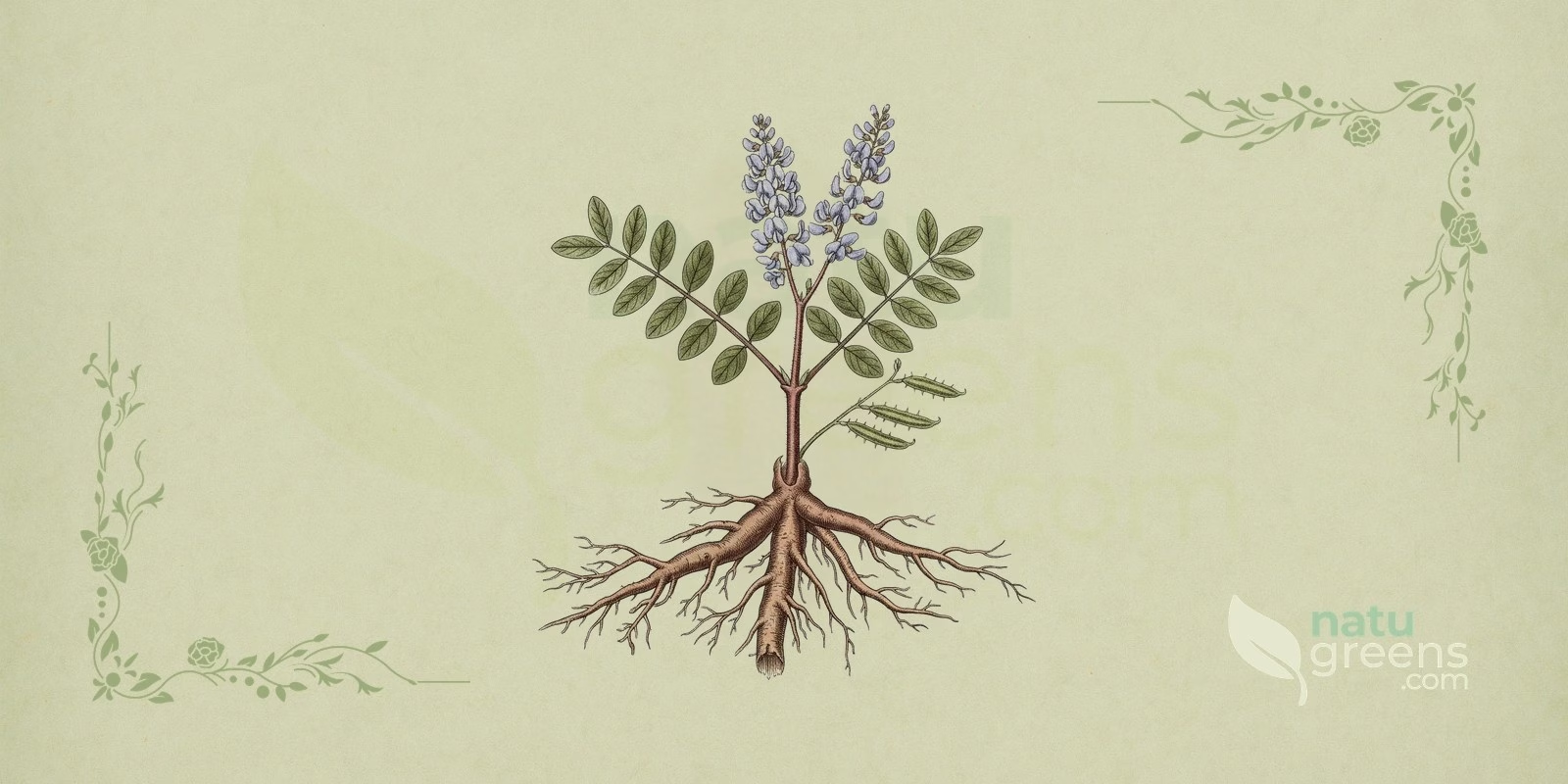
The plant is recognized for its therapeutic properties, which include anti-inflammatory, antioxidant, and antiviral actions, attributed mainly to glycyrrhizin and glycyrrhetinic acid. These compounds give Chinese licorice its characteristic sweet flavor and a wide range of applications in phytotherapy. Modern scientific research has validated many of its traditional uses, consolidating its importance as a versatile medicinal plant, with applications traditionally recognized for various health conditions.
Popular and International Names of Chinese Licorice
- English: chinese liquorice, gancao, ural licorice.
- Spanish: gancao, regaliz chino, regaliz de China.
- Portuguese: alcaçuz chinês, alcaçuz-da-china, gancao.
- French: réglisse chinoise, réglisse de Chine.
- Italian: liquirizia cinese, liquirizia dell’ural.
- German: chinesische Süßholzwurzel, chinesischer Süßholz.
Botanical Synonyms of Glycyrrhiza uralensis
Glycyrrhiza glandulifera Ledeb. is a less common botanical synonym that can still be found in some references. The name Glycyrrhiza uralensis Fisch. ex DC. is the most widely accepted and used in scientific and botanical literature for this specific licorice species.
Botanical Family: Fabaceae
The Fabaceae family, also known as Leguminosae, is one of the largest and most diverse families of flowering plants, encompassing about 765 genera and more than 19,500 species. It is characterized by pod-bearing fruits and by the ability of many of its species to fix atmospheric nitrogen through symbiosis with bacteria in their roots. This family includes plants of great economic, dietary, and medicinal importance, such as beans, soybeans, peanuts, and several species used in phytotherapy.
Chinese licorice shares morphological characteristics typical of the family, such as compound leaves and flowers with a papilionaceous structure. The Fabaceae family is known for producing a wide range of bioactive compounds, including flavonoids, saponins, and alkaloids, which give medicinal properties to many of its species. The chemical diversity of this family has been the subject of intense pharmacological research, contributing to the development of phytopharmaceuticals and dietary supplements.
Parts of Chinese Licorice Used
- Rhizomes
- Roots
Ethnobotanical and Traditional Uses
- Anxiety and nervousness
- Digestive disorders and gastritis
- Gastric and peptic ulcers
- Harmonization of herbal formulas
- Hepatitis and liver problems
- Hypertension (in some traditional contexts)
- Insomnia and sleep disorders
- Relief of intestinal colic and flatulence
- Respiratory problems (cough, phlegm)
- Skin inflammation and wounds
Therapeutic Properties of Chinese Licorice
- Anti-inflammatory (studied effect in reducing inflammation through cytokine suppression)
- Anti-ulcer (traditional use in relieving peptic ulcers)
- Antibacterial (acts against bacteria and microorganisms); traditional use, without established clinical efficacy
- Antioxidant (studied activity against free radicals and protects against oxidative stress)
- Antiviral (demonstrates activity against various viruses); traditional use, without established clinical efficacy
- Cardioprotective (may have antiarrhythmic potential)
- Digestive (traditional use to relieve muscle spasms and indigestion)
- Hepatoprotective (studied protective effect on the liver against damage)
- Immunomodulatory (studied effect on the immune system)
- Oral Health (may help protect against cavities)
- Respiratory (helps relieve conditions such as asthma and pharyngitis)
Detailed Phytochemical Profile of Chinese Licorice
- Amino Acids
- Chalcones
- Coumarins (umbelliferone, herniarin)
- Flavonoids (liquiritin, isoliquiritin, liquiritigenin, isoliquiritigenin, formononetin)
- Glycyrrhetinic Acid (GA)
- Glycyrrhizin (triterpenoid glycoside)
- Organic Acids
- Polysaccharides (arabinogalactans)
- Steroids
- Triterpenoid Saponins
- Volatile Oils
Preparation and Administration Forms of Chinese Licorice
- Compresses
- Creams
- Essential Oil
- Extracts
- Poultices
- Teas (infusions and decoctions)
- Tinctures
Synergy with Other Medicinal Plants
Digestive Health
Combining Chinese licorice with ginger (Zingiber officinale) and peppermint (Mentha × piperita) may potentiate the digestive and anti-inflammatory effects of each herb. This synergy is traditionally used to relieve nausea, indigestion, and cramps. Chinese licorice acts to harmonize the properties of the other herbs, while ginger and peppermint contribute their carminative and antispasmodic actions, supporting overall gastrointestinal well-being.
Respiratory Support
For respiratory conditions, Chinese licorice can be combined with thyme (Thymus vulgaris) and echinacea (Echinacea purpurea). This combination is traditionally used to support the immune system and relieve symptoms such as cough and congestion. Chinese licorice, with its expectorant and anti-inflammatory properties, complements the antiseptic action of thyme and the immunomodulatory effects of echinacea, offering comprehensive support for respiratory health.
Stress and Anxiety Relief
The synergy between Chinese licorice, valerian (Valeriana officinalis), and passionflower (Passiflora incarnata) is traditionally used to relieve stress and anxiety. While valerian and passionflower are known for their sedative and anxiolytic properties, Chinese licorice may act as a mild adaptogen, helping the body cope with stress and harmonizing the effects of the other herbs, promoting a state of calm and relaxation. Because Chinese licorice may potentiate the effects of sedative plants, this combination should be used with caution and, preferably, under professional guidance.
Recipes and Usage Protocols of Chinese Licorice
Decoction for Digestive Problems
Ingredients:
- Small amount of dried Chinese licorice root (Glycyrrhiza uralensis)
- Water
Preparation:
- Place the licorice root and water in a pot.
- Bring to a boil and let simmer for a few minutes.
- Strain and drink warm.
Dosage: Due to the potential side effects associated with prolonged use or high amounts of glycyrrhizin, the amount and frequency of use should be determined by a qualified healthcare professional; consult a healthcare provider and avoid consuming it for more than a few weeks in a row.
Infusion for Respiratory Support
Ingredients:
- Powdered Chinese licorice root
- Boiling water
Preparation:
- Place the licorice powder in a cup.
- Pour the boiling water over the powder.
- Cover and let steep for a few minutes.
- Strain (if needed) and drink warm.
Dosage: The amount and frequency of use should be guided by a healthcare professional; consult a healthcare provider and avoid continuous use for more than a few weeks without supervision.
The preparations above follow traditional records and do not replace professional guidance. Before any internal use, check the contraindications and interactions described in this article.
Associated Therapies
Western Phytotherapy
In Western phytotherapy, Chinese licorice is valued for its adaptogenic and anti-inflammatory properties. It is frequently used in formulations for adrenal support, digestive health, and as a harmonizing agent in herbal blends. Its ability to modulate the immune response and protect the liver makes it a valuable component in various herbal protocols.
Traditional Chinese Medicine (TCM)
In TCM, Chinese licorice (gancao) is one of the most important and versatile herbs. It is classified as a Qi-tonifying herb that harmonizes other herbs, and it is widely used to strengthen the spleen and stomach, moisten the lungs, clear heat, and remove toxins. It is an essential ingredient in many classic TCM formulas, demonstrating its deep integration into this centuries-old practice.
Contraindications and Side Effects of Chinese Licorice
Although Chinese licorice is widely used, it is crucial to be aware of its contraindications and potential side effects, especially due to the presence of glycyrrhizin.
Common Side Effects
- Fluid retention
- Hormonal problems (may affect cortisol levels, cause sexual problems in men, and irregular menstrual periods in women)
- Hypokalemia (low blood potassium levels)
- Increased blood pressure
- Weakness, headache, blurred vision, nosebleeds, anxiety, and shortness of breath (in cases of excessive use)
Drug Interactions
- Anticoagulants: May potentiate the effect of medications such as warfarin, increasing the risk of bleeding.
- Antihypertensives: May antagonize the effects of high blood pressure medications.
- Corticosteroids: May potentiate the effects of corticosteroids.
- Cyclosporine: There are reports that it may interfere with cyclosporine, an immunosuppressant.
- Digoxin: The hypokalemia associated with Chinese licorice use may potentiate digoxin toxicity; concomitant use should be avoided.
- Diuretics: May interfere with the action of diuretics.
- Oral Contraceptives: May interact with estrogen-based contraceptives.
- Sedatives: May increase the effects of sedatives, including benzodiazepines and alcohol.
Specific Contraindications
- Duration of Use: Chinese licorice should not be used for more than a few weeks in a row without professional guidance, due to the cumulative risk of pseudoaldosteronism (sodium retention, potassium loss, hypertension, and edema) associated with prolonged use or high doses.
- Hypertension, Heart and Kidney Disease: The use of Chinese licorice is contraindicated for people with hypertension, heart disease, or kidney disease, due to the risk of sodium retention, potassium loss, and worsening blood pressure.
- Pregnancy and Breastfeeding: Safety has not been fully established; use should be avoided or done under medical guidance.
- Surgery: It should be discontinued at least two weeks before any surgery due to the potential for interaction with anesthetics and the risk of bleeding.
Historical Notes and Interesting Facts
Ancient Roots in Medicine
Chinese licorice has a history of medicinal use spanning thousands of years, making it one of the oldest and most documented herbs in Traditional Chinese Medicine. Historical records indicate its use since the Han dynasty (206 BCE, 220 CE), when it was considered a vital remedy for harmonizing the body and mind. Its importance is such that it is often referred to as the National Guide or Ambassador of herbs, due to its ability to harmonize the effects of other medicinal plants in complex formulations.
A Symbol of Sweetness and Healing
Beyond its medicinal applications, Chinese licorice is valued for its sweet flavor, which is 30 to 50 times more intense than that of sucrose, due to the presence of glycyrrhizin. This characteristic has not only made it a natural sweetener in various cultures, but also a popular ingredient in sweets and beverages. Its sweetness, combined with the medicinal properties traditionally attributed to the plant, gives it a special place in both cuisine and traditional medicine.
Adaptation and Resilience
The ability of Glycyrrhiza uralensis to thrive in harsh climatic conditions and arid soils reflects its resilience. This botanical trait is sometimes metaphorically linked to its capacity to strengthen the body and mind, helping them adapt to and withstand challenges. The plant stands as a testament to the strength of nature and its capacity to offer valuable resources for human health.
Frequently Asked Questions about Chinese Licorice
Does Chinese Licorice Tea Help You Sleep?
Chinese licorice is known for its calming and adaptogenic properties, which may help reduce stress and anxiety, indirectly contributing to more restful sleep. Although it is not a direct sedative like some other herbs, its ability to harmonize the nervous system can promote a state of relaxation conducive to sleep. It is a popular natural option for those seeking a gentle aid to improve sleep quality.
What Are the Digestive Benefits of Chinese Licorice Tea?
Chinese licorice tea is an excellent ally for digestive health. It helps relieve muscle spasms in the gastrointestinal tract, which can reduce cramps, bloating, and flatulence. Its anti-inflammatory and anti-ulcer properties can also soothe irritation of the stomach and intestinal lining, making it useful in cases of gastritis, acid reflux, and peptic ulcers. In addition, it contributes to a healthy gut microbiome.
Is Chinese Licorice Tea Safe for Children?
The use of Chinese licorice in children should be done with caution and under the guidance of a healthcare professional. Although it is used in some pediatric formulations in TCM, the presence of glycyrrhizin can cause adverse effects at high doses or with prolonged use, such as increased blood pressure and electrolyte imbalance. It is essential to consult a qualified pediatrician or herbal practitioner before giving any herbal remedy to children.
What Are the Contraindications of Chinese Licorice?
The use of Chinese licorice is contraindicated for people with hypertension, heart disease, or kidney disease, and should be avoided or done only under medical guidance during pregnancy and breastfeeding. Because it contains glycyrrhizin, prolonged use or high doses can cause sodium retention, potassium loss, and increased blood pressure, so it should not be used for more than a few weeks in a row without professional supervision.
Can Chinese Licorice Interact with Medications?
Yes, Chinese licorice can interact with several medications, including anticoagulants such as warfarin, antihypertensives, corticosteroids, diuretics, sedatives, and digoxin, whose toxicity risk increases when potassium levels drop due to licorice use. For this reason, anyone taking any of these medications continuously should consult a healthcare professional before using the plant.
What Parts of Chinese Licorice Are Used?
The roots and rhizomes are the parts traditionally used from Chinese licorice, harvested in spring and autumn and sun-dried before being used in teas, decoctions, extracts, tinctures, and other preparations.
Notice: this content is for informational purposes and does not replace professional medical advice. Consult a physician or herbal practitioner before using medicinal plants, especially during pregnancy, breastfeeding, or alongside medication.
References and Scientific Studies
View All 9 Cited References
Peer-Reviewed Scientific Studies (1)
- PMC2012 Omar, H. R., Komarova, I., El-Ghonemi, M., Fathy, A., Rashad, R., Abdelmalak, H. D., … & Camporesi, E. M. (2012). Licorice abuse: time to send a warning message. Therapeutic Advances in Endocrinology and Metabolism, 3(4), 125-138.
Institutional Sources (1)
- GOV PubChem. (n.d.). Glycyrrhizin. Recuperado de PubChem
Supplementary Readings (7)
- ScienceDirect. (n.d.). Glycyrrhiza Uralensis – an overview. Recuperado de ScienceDirect Topics
- Healthline. (n.d.). Licorice Root: Benefits, Uses, Precautions, and Dosage. Recuperado de Healthline
- 2005 Wu, Jing-Nuan (2005). An Illustrated Chinese Materia Medica. Oxford, UK: Oxford University Press. p. 344.
- 2016 “Gan Cao.” Chinese Medical Herbology and Pharmacology. Archived (PDF) from the original on 2016-03-31. Recuperado de Chinese Medical Herbology and Pharmacology
- 2016 National Center for Complementary and Integrative Health. (2016). Licorice Root. Recuperado de National Center for Complementary and Integrative Health
- 2015 Chang, S. J., Chan, Y. C., & Yu, W. J. (2015). Glycyrrhiza uralensis 甘草 (Gancao, Licorice). Dietary Chinese Herbs, 135-145.
- 2020 Zeece, Michael (2020). Flavors. Introduction to the Chemistry of Food, 213-250.