Theobroma cacao L. / Cocoa, popularly known as cacao, the cacao tree, or the chocolate tree, is a small evergreen tree in the Malvaceae family, first described by Carl Linnaeus in 1753. Native to the tropical regions of Central and South America, this species has been cultivated for millennia for its seeds, the cacao beans, which are the raw material for chocolate and many food products. Historically, cacao has been valued not only for its flavor but also for its traditional properties and its role in ritual.
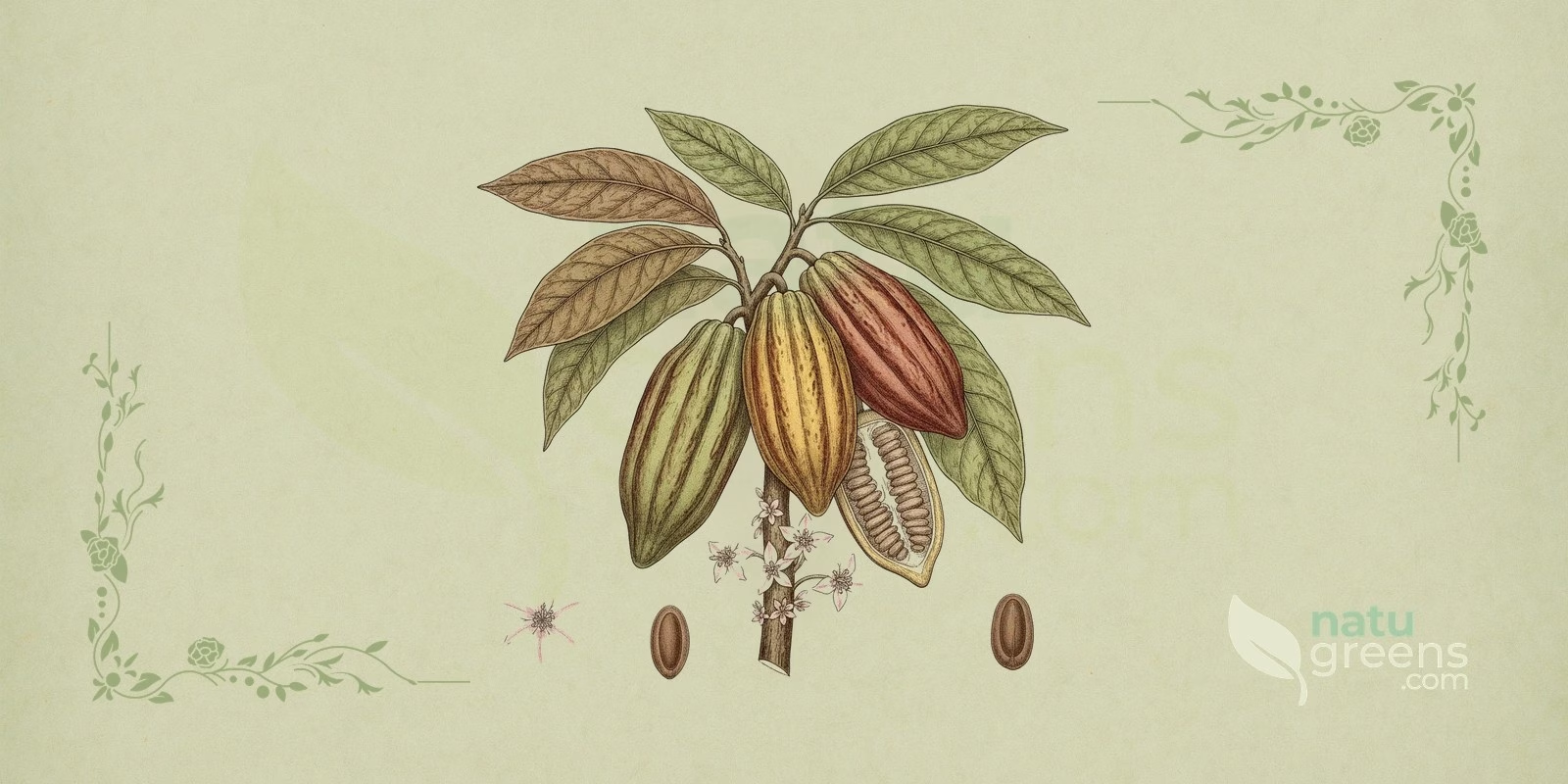
In Mesoamerican tradition, cacao was considered a food of the gods, used in ceremonies and as currency, with applications that ranged from relieving fatigue and fever to supporting digestive issues. The plant is recognized for its rich phytochemical composition, especially in flavonoids and alkaloids such as theobromine, and modern scientific research has been investigating many of cacao’s traditional uses, cementing its place as one of the most studied and valued plants in the world.
Popular and International Names of Cocoa
- English: cacao, chocolate tree, cocoa tree.
- Spanish: árbol del cacao, cacao, cacaotero.
- Portuguese: cacau, cacaueiro, chocolateiro (BR); cacau (PT).
- French: cacao, cacaoyer.
- Italian: albero del cacao, cacao.
- German: Kakao, Kakaobaum.
Botanical Synonyms of Theobroma cacao
Theobroma leiocarpum Bernouilli, Theobroma sphaerocarpum A.Chev., Theobroma pentagonum Bernoulli, Theobroma kalagua De Wild.
Botanical Family: Malvaceae
The Malvaceae family is a diverse group of flowering plants comprising roughly 243 genera and more than 4,225 species, spread across trees, shrubs, and herbs of tropical and temperate regions. It is characterized by the presence of mucilage, alternate leaves, and five-petaled flowers, and Malvaceae is economically important, including plants such as cotton, okra, and hibiscus, in addition to cacao.
Cacao shares morphological traits typical of the family, such as its cauliflorous flowers, which grow directly from the trunk and older branches. The Malvaceae family is known for producing bioactive compounds, such as flavonoids, tannins, and alkaloids, which give many of its species properties of medicinal interest, and the chemical diversity of this family has been the subject of intense pharmacological research, contributing to the development of phytopharmaceuticals and dietary supplements.
Parts of Cocoa Used
- Cacao butter
- Cacao nibs
- Cacao powder
- Fruit peel
- Seeds (beans)
Ethnobotanical and Traditional Uses
- Aphrodisiac
- Cardiovascular health
- Central nervous system stimulant
- Cough and respiratory problems
- Digestive problems
- Fatigue relief
- Fever reduction
- Mood enhancement
Therapeutic Properties of Cocoa
- Analgesic (traditional use for pain relief)
- Anti-inflammatory (effect studied for reducing inflammation)
- Antiallergic (effect studied for reducing allergic reactions)
- Antioxidant (activity studied against free radicals)
- Antiproliferative (activity observed in laboratory studies, without clinical proof)
- Cardioprotective (protective effect studied on the heart)
- Diuretic (effect studied on urine production)
- Hypocholesterolemic (effect studied on cholesterol reduction)
- Neuroprotective (protective effect studied on the nervous system)
- Stimulant (effect studied on physical and mental activity)
- Vasodilator (dilates blood vessels)
Detailed Phytochemical Profile of Cocoa
- Anandamide
- Caffeine
- Epicatechin
- Fatty acids (oleic, stearic, palmitic)
- Flavonoids (procyanidins, catechins)
- Minerals (magnesium, iron, potassium, zinc)
- N-acylethanolamines
- Phenolic acids
- Polyphenols
- Serotonin
- Theobromine
- Tryptophan
- Tyramine
- Vitamins (A, B1, B2, B3, B5, C, E)
Preparation and Administration Forms of Cocoa
- Beverage (hot or cold)
- Butter
- Extract
- Infusion
- Powder
- Tincture
Synergy with Other Medicinal Plants
Mood and Energy
The combination of cacao with ginseng (Panax ginseng) and maca (Lepidium meyenii) is traditionally associated with energizing and mood-supporting effects. Cacao, rich in theobromine and tryptophan, works synergistically with the ginsenosides in ginseng and the macamides in maca, and this pairing may promote greater vitality, support fatigue reduction, and sustain cognitive function, without the peaks and crashes associated with caffeine alone.
Cardiovascular Health
The combination of cacao with garlic (Allium sativum) and hibiscus (Hibiscus sabdariffa) is traditionally used in support of cardiovascular health, since cacao’s flavonoids, garlic’s allicin, and hibiscus’s anthocyanins act synergistically. This combination is studied for its potential to support blood pressure, lipid profile, and protection against oxidative stress, contributing to the maintenance of a healthy cardiovascular system. People being treated for hypertension or taking anticoagulants should consult a healthcare professional before combining these plants, given the potential for drug interaction.
Cognitive Function and Neuroprotection
In applications aimed at brain function, cacao is combined with ginkgo (Ginkgo biloba) and bacopa (Bacopa monnieri). The flavonoids in cacao, the ginkgolides in ginkgo, and the bacosides in bacopa act synergistically, and this combination is studied for its potential to support memory, concentration, and neuroprotection, protecting brain cells against oxidative and inflammatory damage.
Recipes and Usage Protocols of Cocoa
Cacao Energy Drink
Ingredients: 2 tablespoons of pure cacao powder, 250 ml of plant-based milk (almond, coconut), 1 teaspoon of honey or maple syrup (optional), a pinch of cinnamon.
Preparation: Heat the plant-based milk until warm. Add the cacao powder and stir well until fully dissolved. If desired, add honey or maple syrup and the cinnamon. This drink is traditionally used in the morning for a natural energy boost and to support emotional well-being, serving as an alternative rich in antioxidants and essential minerals.
Cacao Face Mask
Ingredients: 1 tablespoon of pure cacao powder, 1 tablespoon of plain yogurt, 1 teaspoon of honey.
Preparation: Mix all the ingredients until you get a smooth paste. Apply to clean, dry skin, avoiding the eye area. Leave on for 15-20 minutes and rinse with warm water. This mask, rich in antioxidants, is traditionally used to nourish the skin, neutralize free radicals, and support a healthier-looking complexion.
Cacao Antioxidant Smoothie
Ingredients: 1 frozen banana, 1 tablespoon of pure cacao powder, 200 ml of plant-based milk, 1 tablespoon of chia seeds, 1 teaspoon of vanilla extract.
Preparation: Place all the ingredients in a blender and blend until you get a creamy, smooth mixture. Serve immediately. This smoothie is an excellent source of antioxidants, fiber, and energy, ideal for a nutritious breakfast or a revitalizing snack, with the chia seeds adding omega-3 and fiber.
Cacao Tincture for Stress
Ingredients: 50g of organic cacao nibs, 250ml of grain alcohol at 70%.
Preparation: Place the cacao nibs in a dark glass jar and cover with the alcohol. Seal tightly and let macerate for 2 to 4 weeks in a cool, dark place, shaking daily. Strain and store the tincture in a dark bottle. Take 10-20 drops diluted in water, 2-3 times a day, as traditional support for stress and emotional well-being; theobromine and other compounds are studied for their possible mood-modulating action.
These preparations follow traditional records and do not replace professional guidance. Before any internal use, review the contraindications and interactions described in this article.
The preparations above follow traditional records and do not replace professional guidance. Before any internal use, check the contraindications and interactions described in this article.
Associated Therapies
Functional Nutrition
Cacao is a relevant component of functional nutrition due to its high concentration of antioxidants, minerals, and bioactive compounds. Incorporating pure cacao into the diet, whether as powder, nibs, or dark chocolate with a high cacao content, may contribute to cardiovascular, brain, and metabolic health, and functional nutrition with cacao aims to support overall health through specific nutrients, with regular consumption associated with a reduced risk of chronic disease in observational studies.
Clinical Herbal Medicine
In modern clinical herbal medicine, cacao is used in standardized formulations for various conditions. Cacao extracts are studied for their effects on blood pressure, endothelial function, and cognition, and clinical herbal medicine employs cacao as an adjuvant in the traditional management of mild hypertension, cognitive dysfunction, and as antioxidant support. Prescribing is individualized, taking into account interaction with other medications and the patient’s overall condition, always under professional supervision.
Indigenous Traditional Medicine
In many Indigenous cultures of Latin America, cacao is a central element in rituals and spiritual practices. Used in cacao ceremonies, it is considered a sacred plant that opens the heart and promotes spiritual connection, and in traditional medicine cacao is used symbolically in the face of physical and emotional ailments, such as fatigue, sadness, and anxiety, serving as a traditional vehicle for physical and emotional balance, without replacing medical care.
Contraindications and Side Effects of Cocoa
General Contraindications
Cacao, especially in high doses, may be contraindicated for individuals sensitive to caffeine and theobromine, potentially causing nervousness, insomnia, and palpitations. People with gastroesophageal reflux or irritable bowel syndrome may experience a worsening of symptoms due to its acidity and fat content, and patients with frequent migraines should consume it in moderation, since cacao can be a trigger for some people. Medical consultation is advised before therapeutic use.
Pregnant and breastfeeding women should consume cacao in moderation, due to its caffeine and theobromine content; although moderate consumption is generally considered safe, high doses may have unwanted stimulant effects. Individuals with kidney or liver problems should exercise caution, since the metabolism of these alkaloids can be impaired, and people with a known allergy to cacao components should avoid consuming it to prevent allergic reactions.
Common Side Effects
Side effects of cacao are generally mild and related to excessive consumption, and may include headache, nausea, stomach discomfort, nervousness, and insomnia. In some people, cacao can trigger heartburn or reflux due to its ability to relax the lower esophageal sphincter. Allergic reactions, though rare, may appear as skin rashes, itching, or swelling. Moderation is essential to avoid these effects.
Drug Interactions
Cacao can interact with several medications. Because of its caffeine and theobromine content, it may enhance the effects of stimulants and reduce the effectiveness of sedatives, and it may also interact with blood pressure medications, increasing the risk of hypotension in some cases. Individuals taking anticoagulants should be cautious, since cacao may have a mild antiplatelet effect. It is important to inform your doctor about regular cacao consumption before starting any medication.
Historical Notes and Interesting Facts
Food of the Gods
The scientific name Theobroma cacao means “food of the gods” in Greek, reflecting its cultural and spiritual importance to the ancient civilizations of Mesoamerica. The Maya and the Aztecs regarded cacao as a divine gift, using it in religious rituals, as an offering to the gods, and in wedding ceremonies, an association with the divine that underscores the deep respect and reverence these cultures held for this remarkable plant.
Cacao as Currency
Before the arrival of Europeans, cacao beans were so valuable that they served as a medium of exchange in many Mesoamerican societies. Their value was comparable to gold, and they were used to buy goods, pay taxes, and even as dowries, which demonstrates the economic and social importance of cacao, which went far beyond its use as a food or beverage, since its scarcity and the labor involved in its cultivation contributed to its high value.
The European Discovery
Christopher Columbus was among the first Europeans to encounter cacao, in 1502, during his fourth voyage to the Americas. However, it was Hernán Cortés who, in 1519, observed Emperor Montezuma drinking a thick, bitter cacao beverage and brought the beans back to Spain. Initially, the drink was not well received, but with the addition of sugar and spices it became popular among European nobility, marking the beginning of its spread around the world.
Frequently Asked Questions about Cocoa
What Is Cocoa and Where Does It Come From?
Cocoa is the seed of the Theobroma cacao tree, native to the tropical regions of Central and South America. It is the raw material for chocolate and has been cultivated and valued by ancient civilizations for thousands of years, with origins tracing back to tropical forests, where it grows naturally in hot, humid climates.
What Are the Main Health Benefits of Cocoa?
Cocoa is rich in antioxidants, such as flavonoids, associated with cardiovascular and brain health, and it may have anti-inflammatory effects studied in the laboratory. It also contains essential minerals such as magnesium and iron, along with compounds such as theobromine and tryptophan, traditionally associated with mood support. Regular consumption is studied for its potential to reduce the risk of chronic disease.
Are Cocoa and Chocolate the Same Thing?
No, cocoa and chocolate are not the same thing. Cocoa refers to the raw seed of the Theobroma cacao plant, while chocolate is a processed product made from cacao beans that are fermented, roasted, ground, and mixed with other ingredients such as sugar and milk. Dark chocolate with a high cacao content is the closest to the pure form.
How Can I Consume Cocoa to Get Its Benefits?
To get the potential benefits of cocoa, it is recommended to consume pure cacao powder, cacao nibs, or dark chocolate with at least 70% cacao. It can be added to smoothies, yogurts, cereal, or used to prepare hot beverages. Avoid products with high added sugar and fat content in order to preserve the benefits of pure cacao.
Are There Contraindications or Side Effects of Consuming Cocoa?
Yes, excessive consumption of cocoa can cause side effects such as nervousness, insomnia, headache, and stomach discomfort, due to the presence of caffeine and theobromine. People sensitive to stimulants, pregnant and breastfeeding women, and individuals with certain medical conditions should consume it in moderation and consult a healthcare professional. Allergies are rare but possible.
Notice: this content is for informational purposes and does not replace professional medical advice. Consult a physician or herbal practitioner before using medicinal plants, especially during pregnancy, breastfeeding, or alongside medication.
References and Scientific Studies
Peer-Reviewed Scientific Studies (4)
- PMC2000 Dillinger TL, et al. Food of the Gods: Cure for Humanity? A Cultural History of the Medicinal and Ritual Use of Chocolate. The Journal of Nutrition. 2000.
- PMC2011 Katz DL, et al. Cocoa and Chocolate in Human Health and Disease. Antioxidants & Redox Signaling. 2011.
- PMC2011 Djoussé L, et al. Chocolate consumption is inversely associated with prevalent coronary heart disease: the National Heart, Lung, and Blood Institute Family Heart Study. Clinical Nutrition. 2011.
- PEER2013 Watson RR, et al. (Eds.). Cocoa and Health. Academic Press. 2013.
Institutional Sources (2)
- GOV2017 Magrone T, et al. Cocoa and Dark Chocolate Polyphenols: From Biology to Clinical Applications. Frontiers in Immunology. 2017.
- GOV2016 Baharum Z, et al. Theobroma cacao: Review of the Extraction, Isolation, and Bioassay of Its Potential Anti-cancer Compounds. Tropical Life Sciences Research. 2016.