Musa acuminata Colla / Dwarf Banana, commonly known as the dwarf banana or dessert banana, is a species of perennial herbaceous banana plant in the family Musaceae. Native to South Asia, including the Indian subcontinent and Southeast Asia, this plant has been cultivated by humans for roughly 10,000 years, representing one of the earliest examples of plant domestication. Musa acuminata is the parent species of most modern edible dessert bananas, including the popular Cavendish banana.
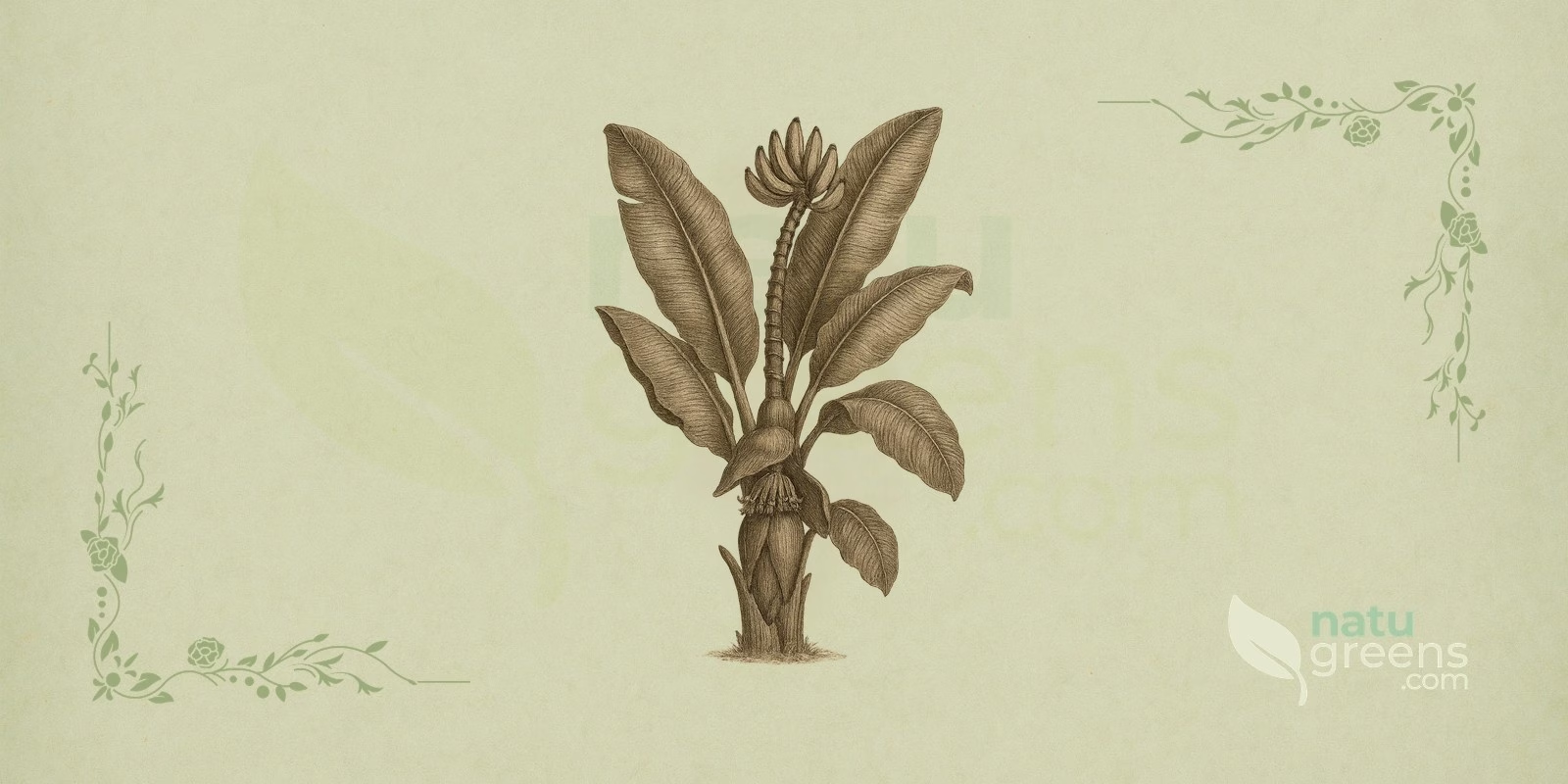
Historically, every part of the plant, including the fruit, peel, leaves, flowers, pseudostem, and roots, has been used in traditional medicine across a range of cultures, especially in Asia and Africa. The phytochemical richness of Musa acuminata gives it antioxidant, anti-inflammatory, and antidiabetic properties, among others. Modern scientific research has validated many of its ethnobotanical uses, reinforcing its importance as both a medicinal and food plant worldwide.
Popular and International Names of Dwarf Banana
- English: banana, blood banana (for Musa acuminata subsp. zebrina), Cavendish banana, dessert banana, dwarf banana, lady finger.
- Spanish: banano, banano enano, bocadillo (Colombia), cambur, cambur titiaro (Colombia, Venezuela), guineo, guineo blanco (Puerto Rico), plátano, plátano malayo, plátano rojo (for Musa acuminata subsp. zebrina).
- Portuguese: banana-anã, banana-chorona, banana-d’água, banana-da-china, banana-da-terra, banana-de-mesa (Portugal), banana-figo, banana-maçã, banana-nanica, banana-ouro, banana-prata, banana-vermelha (for Musa acuminata subsp. zebrina), bananeira-cavendish, flor de bananeira (for the flower); bananito.
- French: banane, banane coup de vent, banane-figue, bananier nain.
- Italian: banana, banano nano.
- German: banane, kleine banane, zwergbanane.
Botanical Synonyms of Musa acuminata
Musa acuminata Colla has several botanical synonyms that reflect its complex taxonomy and the history of its classification. Among the most notable are Musa cavendishii Lamb., Musa chinensis Sweet, Musa corniculata Kurz, Musa nana Lour., Musa × sapientum var. suaveolens (Blanco) Malag., Musa rumphiana Kurz, Musa simiarum Kurz, and Musa sinensis Sagot ex Baker. These names were used over time to describe varieties or hybrids that were later recognized as part of the Musa acuminata complex.
Botanical Family: Musaceae
Musa acuminata belongs to the family Musaceae, which comprises large herbaceous plants native to tropical and subtropical regions. This family is characterized by robust pseudostems, large leaves, and complex inflorescences that give rise to the fruit known as bananas. Musaceae plants hold major economic and dietary importance worldwide, with Musa acuminata being the most relevant species for dessert banana production.
The Musaceae family is known for producing a wide range of bioactive compounds, including vitamins, minerals, fiber, and phytochemicals with medicinal properties. The genetic diversity within this family has been the subject of intense study aimed at improving crops and disease resistance. The presence of species such as Musa acuminata within this family underscores its relevance both to human nutrition and to herbal medicine.
Parts of Dwarf Banana Used
- Flowers (banana heart)
- Fruit (ripe and unripe)
- Leaves
- Peel
- Pseudostem (trunk)
- Rhizome
- Roots
- Sap
Ethnobotanical and Traditional Uses
- Consumption of the fruit as a source of energy, vitamins, and minerals.
- Leaf infusions to treat dysentery and other gastrointestinal conditions.
- Relief of digestive issues, such as diarrhea and constipation.
- Topical application for wound healing and skin infections.
- Use of the flower for menstrual issues, diabetes, and ulcers.
- Use of the pseudostem for kidney and liver problems.
- Use of the sap as an astringent and to stop bleeding.
- Use of root extract for managing inflammation in some Asian traditions.
Therapeutic Properties of Dwarf Banana
- Anti-Inflammatory (supports the control of inflammatory processes)
- Antidiabetic (studied effect on blood sugar levels)
- Antimicrobial (activity against bacteria and fungi); traditional use, without established clinical efficacy
- Antioxidant (studied activity against free radicals that protects the body’s cells)
- Antiulcerogenic (studied protective effect against gastric ulcers)
- Cardioprotective (studied protective effect on the heart)
- Hepatoprotective (studied protective effect on the liver)
- Hypolipidemic (studied effect in reducing blood lipid levels)
- Immunomodulatory (studied effect on the immune system)
- Neuroprotective (studied protective effect on the nervous system)
Detailed Phytochemical Profile of Dwarf Banana
- Alkaloids
- Anthocyanins
- Carotenoids
- Fatty acids
- Flavonoids
- Minerals (potassium, magnesium, manganese)
- Phenols
- Saponins
- Steroids
- Tannins
- Terpenoids
- Tryptophan
- Vitamins (C and B6)
Preparation and Administration Forms of Dwarf Banana
- Decoction (fruit, flower)
- Extracts (from various parts of the plant)
- Infusion (leaves, flowers)
- Juices (fruit, pseudostem)
- Poultice (with leaves or peel)
- Pulp (fruit)
Synergy with Other Medicinal Plants
Digestive Health
Musa acuminata can be combined with ginger (Zingiber officinale) and peppermint (Mentha × piperita) to enhance its effects in easing digestive complaints, since ginger, with its anti-inflammatory and carminative properties, works synergistically with banana to soothe the gastrointestinal tract. Peppermint, in turn, contributes antispasmodic effects that help reduce cramping and flatulence, so this combination may be beneficial for digestion.
Glycemic Control
To support blood sugar balance, dwarf banana can be paired with plants such as cinnamon (Cinnamomum verum) and gymnema (Gymnema sylvestre), with cinnamon known for promoting insulin sensitivity while gymnema helps reduce glucose absorption and supports the regeneration of pancreatic beta cells. The synergy between these plants may offer complementary traditional support for people with type 2 diabetes, always under medical supervision.
Cardiovascular Support
Combining Musa acuminata with garlic (Allium sativum) and hibiscus (Hibiscus sabdariffa) may offer traditional cardiovascular benefits, since garlic is recognized for its hypotensive and hypocholesterolemic properties while hibiscus helps regulate blood pressure. Banana, rich in potassium, complements these effects, supporting heart health and healthy blood pressure levels.
Recipes and Usage Protocols of Dwarf Banana
Leaf Infusion for Dysentery
To prepare a banana leaf infusion, use 10 grams of dried Musa acuminata leaves for every liter of water. Boil the water and add the leaves, letting them steep for about 10 to 15 minutes. Strain and drink three times a day. This infusion is traditionally used to relieve symptoms of dysentery and other gastrointestinal disturbances, owing to the plant’s astringent and antimicrobial properties.
Peel Poultice for Wounds
Dwarf banana peel can be used to prepare a poultice. Wash the peel of a ripe banana thoroughly and mash it into a paste. Apply directly to minor wounds, insect bites, or skin irritations. Cover with a clean cloth and leave it on for 30 minutes to an hour. The peel’s anti-inflammatory and wound-healing properties may serve as traditional support for the skin.
Pseudostem Juice for Kidney Problems
Juice extracted from the pseudostem of Musa acuminata is traditionally used as an aid for kidney problems. Cut a portion of the pseudostem and press it to extract the juice. It is advisable to consult a healthcare professional before deciding on the amount and frequency of consumption, since this use is based on ethnobotanical practices that attribute diuretic and depurative properties to the plant, without established clinical proof.
The preparations above follow traditional records and do not replace professional guidance. Before any internal use, review the contraindications and interactions described in this article.
The preparations above follow traditional records and do not replace professional guidance. Before any internal use, check the contraindications and interactions described in this article.
Associated Therapies
Ayurveda
In Ayurvedic medicine, banana (Musa acuminata) is valued for its nutritive and medicinal properties and is considered a food that balances the Pitta dosha, being cooling and nourishing. It is used to support bodily strength, digestion, and as a general tonic, and different parts of the plant are used in traditional formulations aimed at conditions such as diarrhea, dysentery, and ulcers, drawing on its astringent and wound-healing qualities.
Herbal Medicine
Musa acuminata is an important component of modern herbal medicine, with standardized extracts used in supplements for various conditions. Its antioxidant, anti-inflammatory, and antidiabetic properties are explored in formulations aimed at cardiovascular health, glycemic control, and digestive support, and ongoing research continues to investigate its potential, making it a plant of growing interest in natural medicine.
Traditional Chinese Medicine (TCM)
In Traditional Chinese Medicine, banana is regarded as a cooling food with a sweet flavor that acts on the lung and large intestine meridians, traditionally used to moisten dryness, relieve constipation, and clear heat. The leaves and flowers are also used for inflammatory conditions and bleeding, and TCM recognizes banana as a food that promotes internal harmony and the body’s detoxification.
Contraindications and Side Effects of Dwarf Banana
Musa acuminata is generally considered safe for most people when eaten in food amounts. However, like any food or medicinal plant, it can present contraindications and side effects in certain situations.
Allergies
Individuals with a banana allergy may experience allergic reactions ranging from mild to severe. Symptoms can include itching of the mouth and throat, hives, swelling, and, in rare cases, anaphylaxis. It is essential that people with a history of fruit or latex allergy avoid consuming or contacting the plant.
Drug Interactions
Although banana is a common food, its high potassium content can interact with certain medications. Patients taking potassium-sparing diuretics or blood pressure medications, such as ACE inhibitors, should exercise caution, since excessive banana consumption can lead to elevated blood potassium levels (hyperkalemia). It is advisable to consult a healthcare professional to avoid adverse interactions.
Gastrointestinal Effects
Eating excessive amounts of bananas, especially green ones, can cause gastrointestinal discomfort such as bloating, gas, and constipation due to their high resistant starch and fiber content. In some people, it may also worsen irritable bowel syndrome, so moderation is essential to avoid these effects.
Historical Notes and Interesting Facts
The Origin of the Modern Banana
Musa acuminata is the ancestral species from which most of the dessert bananas we eat today are derived, including the popular Cavendish banana, and the domestication of this species began roughly 10,000 years ago in Southeast Asia, making it one of the first plants ever cultivated by humans. Natural selection and hybridization with other Musa species, such as Musa balbisiana, produced the vast diversity of cultivars known today.
The Blood Banana
A notable subspecies, Musa acuminata subsp. zebrina, is popularly known as the blood banana, a name owed to the dark red blotches that mark its leaves, giving it significant ornamental value. It is frequently grown in tropical gardens for its exotic beauty and was also among the first bananas to spread to the Pacific and Africa.
The Banana Genome
In 2012, the genome of Musa acuminata was sequenced, an important milestone that gave researchers a deeper understanding of banana genetics, paving the way for the development of varieties with greater disease resistance and improved agronomic traits. Genomic sequencing is essential to global food security given the importance of banana as a food crop.
Frequently Asked Questions about Dwarf Banana
Is Dwarf Banana Good for Digestion?
Yes, dwarf banana is excellent for digestion, as it is rich in soluble and insoluble fiber that helps regulate intestinal transit, preventing both constipation and diarrhea. The prebiotics present in banana also promote the growth of beneficial gut bacteria, supporting a healthy intestinal flora and a balanced digestive system.
What Are the Benefits of Dwarf Banana for the Heart?
Dwarf banana is beneficial for cardiovascular health, mainly because of its high potassium content, an essential electrolyte that helps regulate blood pressure by counteracting the effects of sodium. Regular potassium intake is associated with a lower risk of heart disease and stroke, making banana an important ally for a healthy heart.
Can Dwarf Banana Help Manage Diabetes?
Although dwarf banana contains natural sugars, its glycemic index can vary depending on ripeness, since less ripe bananas have a lower glycemic index due to their resistant starch content. Preliminary studies indicate that Musa acuminata has antidiabetic properties that help manage blood sugar levels, but people with diabetes should consume it in moderation and monitor their individual glycemic response.
Is It Safe to Eat Dwarf Banana During Pregnancy?
Yes, dwarf banana is generally safe and recommended during pregnancy, being an excellent source of essential vitamins and minerals such as folate, vitamin B6, and potassium, which are important for fetal development and maternal health. Vitamin B6, in particular, may help relieve morning sickness, but in case of doubts or specific medical conditions, it is always advisable to consult a doctor.
How Does Dwarf Banana Contribute to Skin Health?
Dwarf banana contributes to skin health in several ways: its antioxidant properties fight the free radicals responsible for premature aging, while the banana peel and leaves have anti-inflammatory and wound-healing effects and are traditionally used in poultices for wounds, insect bites, and skin irritations, supporting the skin’s regeneration and protection.
Notice: this content is for informational purposes and does not replace professional medical advice. Consult a physician or herbal practitioner before using medicinal plants, especially during pregnancy, breastfeeding, or alongside medication.
References and Scientific Studies
Peer-Reviewed Scientific Studies (3)
- PEER2017 Mathew, N. S., & Negi, P. S. (2017). Traditional uses, phytochemistry and pharmacology of wild banana (Musa acuminata Colla): A review. Journal of Ethnopharmacology, 196, 124-140. ScienceDirect
- PMC2022 Mohammed, M. A., et al. Pharmacological and metabolomic profiles of Musa acuminata wastes as a new potential source of anti-ulcerative colitis agents. Scientific Reports. 2022.
- PMC2021 Mostafa, H. S., et al. Banana plant as a source of valuable antimicrobial compounds and its current applications in the food sector. Journal of Food Science. 2021.
Supplementary Readings (2)
- 2014 Abdullah, F. C., Rahimi, L., Zakaria, Z. A., & Ibrahim, A. L. (2014). Hepatoprotective, Antiulcerogenic, Cytotoxic and Antioxidant Activities of Musa acuminata Peel and Pulp. In: Novel Plant Bioresources (pp. 467-482). Wiley-Blackwell.
- 2021 Yadav, A., et al. (2021). Banana (Musa acuminata): Most popular and common Indian plant with multiple pharmacological potentials. World Journal of Biology Pharmacy and Health Sciences, 7(1), 36-44.