Larix decidua Mill. / European Larch, commonly known as European larch or common larch, is a deciduous coniferous tree of the Pinaceae family described by Philip Miller in 1768. Native to the mountains of Central Europe, such as the Alps and the Carpathians, the species stands out for its ability to thrive at high altitudes and for its longevity, which can reach around a thousand years. Valued in forestry for its fast growth and durable timber, European larch also has a long history of use in traditional European medicine, above all for its bark and its resin.
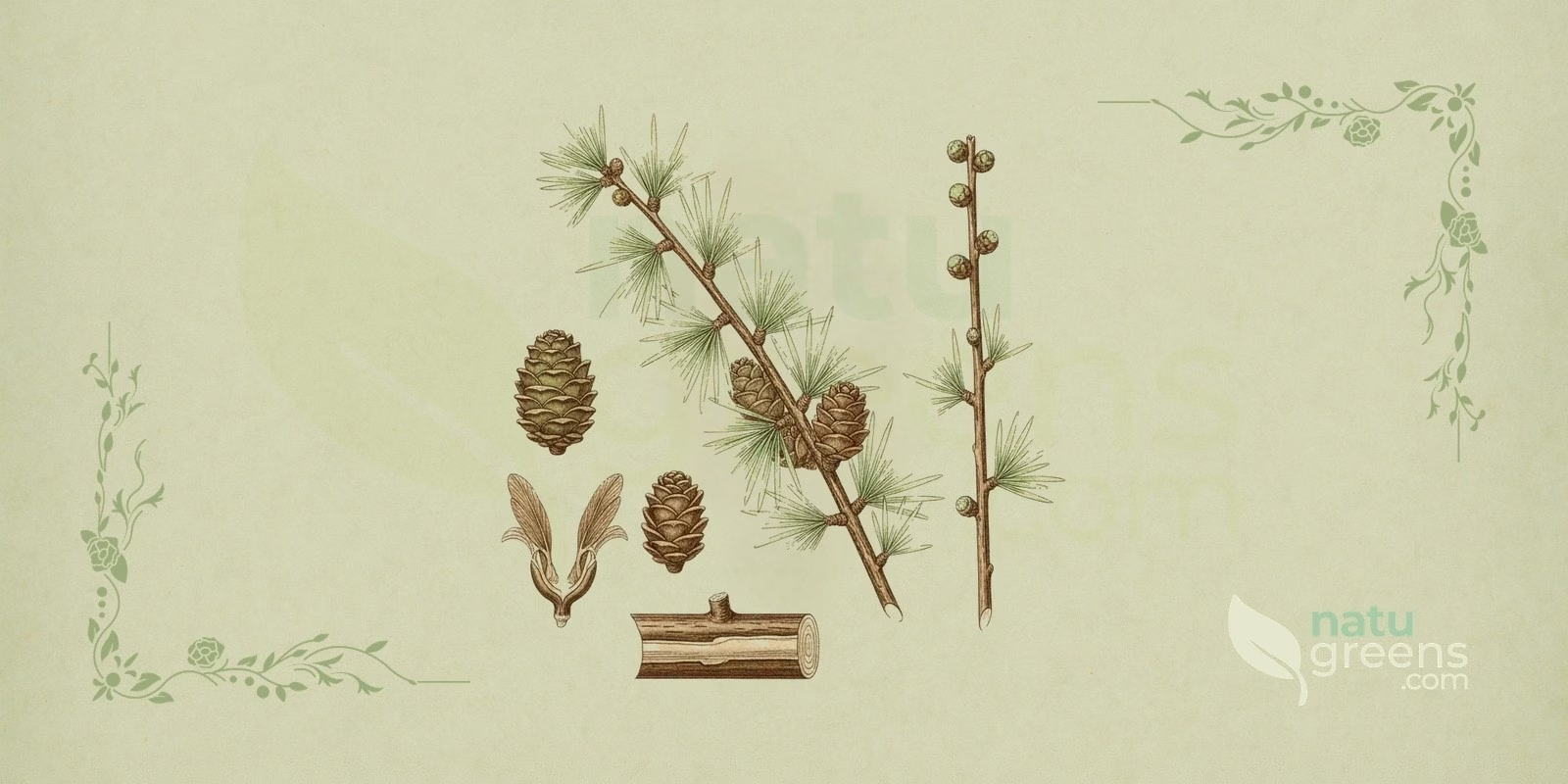
In the European herbal tradition, the most prized part is the resin, known as Venice turpentine, and the recorded uses range from respiratory complaints to skin problems and rheumatic pain. The tree contains compounds such as terpenes, flavonoids and arabinogalactans, to which tradition and some preliminary studies attribute anti-inflammatory, antiseptic and immunostimulant actions. Modern research is investigating the potential of these substances in the laboratory, but most of the traditional uses have not yet been confirmed in controlled clinical studies.
Popular and International Names of European Larch
- English: common larch, European larch, larch.
- Spanish: alerce europeo, lárice.
- Portuguese: alerce, lariço, lariço-europeu, larix.
- French: mélèze d’Europe.
- Italian: larice comune.
- German: Europäische Lärche.
Botanical Synonyms of Larix decidua
Larix europaea DC. and Pinus larix L. are the most common botanical synonyms of Larix decidua. These older names reflect earlier taxonomic classifications, dating from a time when the species was even placed in the pine genus, but Larix decidua Mill. is the scientific name accepted today and the one most widely used in scientific and botanical publications.
Botanical Family: Pinaceae
The Pinaceae family is one of the most important among the conifers and brings together resinous trees and shrubs of great economic and ecological significance, including well-known genera such as the pines (Pinus), the firs (Abies) and the cedars (Cedrus). Plants in this group are characterized by resin canals in their wood and leaves and by the cones that hold their seeds, traits that European larch shares with its relatives, although it differs from most of them by shedding its needles in autumn.
Parts of European Larch Used
- Bark
- Needles (leaves)
- Resin (Venice turpentine)
- Wood
The bark and the resin, which contain tannins and resinous compounds, are the parts most often cited in the traditional use of European larch, and most of the recorded preparations are intended for external application.
Ethnobotanical and Traditional Uses
- Cystitis and bleeding (historical record in European herbal medicine; conditions that require medical evaluation)
- Purulent wounds, as external washes (traditional use)
- Respiratory complaints, such as chronic bronchitis (traditional use)
- Rheumatic pain (traditional use)
- Skin conditions, such as chronic eczema and psoriasis, applied externally (traditional use)
These uses belong to the traditional record and are no substitute for medical diagnosis or follow-up, especially in the case of bleeding, urinary infections and infected wounds, situations in which delaying care can lead to complications.
Therapeutic Properties of European Larch
- Anthelmintic (recorded in tradition for use against intestinal worms)
- Antiseptic (antimicrobial activity attributed by tradition and observed in laboratory studies)
- Astringent (tightens the tissues)
- Balsamic (eases discomfort in the airways, according to traditional use)
- Diuretic (increases urine output, an effect described in the tradition)
- Expectorant (helps expel bronchial secretions, according to traditional use)
- Hemostatic (used in the tradition to stem minor bleeding)
- Immunostimulant (action attributed to arabinogalactans, investigated in preliminary studies)
- Rubefacient (reddens the skin by increasing local circulation)
- Stimulant (increases functional activity)
- Vulnerary (used by tradition in the healing of wounds)
Among recent studies, a polyphenol-rich bark extract showed antimicrobial activity in the laboratory against pathogens of the respiratory tract, and another study compared resinous exudates from larch, spruce and black pine for their effect on the migration of keratinocytes in vitro, the cells involved in skin healing. These are preliminary findings that help explain the historical interest in the plant, but they do not allow any conclusions about its efficacy in people.
Detailed Phytochemical Profile of European Larch
- Arabinogalactans
- Astringin
- Dihydrokaempferol (aromadendrin)
- Diterpenes (abietane, labdane, pimarane)
- Kaempferol
- Larixinic acid (maltol)
- Lignans (secoisolariciresinol)
- Monoterpenes (alpha-pinene, alpha-terpineol, beta-myrcene, beta-pinene, D-limonene)
- Sesquiterpenes
- Tannic acid
- Taxifolin
- Turpentine (oleoresin)
Recent analytical studies have identified a whole series of phytoconstituents in the bark by liquid chromatography coupled with mass spectrometry, and the composition of the essential oil of the oleoresin has also been characterized by gas chromatography, work that further documents the presence of terpenes and phenolic compounds in the species. Larixinic acid, incidentally, is the historical name for maltol, a substance first isolated precisely from the bark of the larch.
Preparation and Administration Forms of European Larch
- Cold extract (maceration)
- Decoction (bark, mainly for external use)
- Inhalation (turpentine vapors)
- Liniment (resin, external use)
- Powder (external use)
External forms are the most frequent in the tradition, and internal use of any of these preparations calls for caution and the guidance of a health professional, as detailed in the section on contraindications.
Synergy with Other Medicinal Plants
The sources consulted do not describe any traditional combinations of European larch with other medicinal plants, and in traditional European medicine the species almost always appears on its own, either as resin or as a decoction of the bark. For this reason, no pairing with other herbs is suggested here, and any combination should be assessed by a health professional.
Recipes and Usage Protocols of European Larch
Despite the long history of medicinal use of European larch, detailed recipes and protocols are poorly documented in accessible sources, and the traditional preparations are concentrated on simple extracts and direct applications, almost always external ones.
Bark Decoction for External Use
Preparation: Boil a handful of European larch bark in one liter of water for 10 to 15 minutes, strain and leave to cool. The liquid is traditionally used to wash small wounds and areas of skin affected by eczema and psoriasis, because of the astringent and antiseptic character attributed to the bark. This decoction is intended for external use only, and deep or purulent wounds, as well as wounds that are slow to heal, require medical evaluation.
Traditional Inhalation with Larch Turpentine
Preparation: Add a few drops of the essential oil obtained from larch turpentine to a bowl of boiling water, cover your head with a towel and inhale the vapors for 5 to 10 minutes, keeping a safe distance from the hot water. This inhalation is traditionally used to relieve the congestion and coughing associated with bronchitis, but it is not suitable for young children, pregnant or breastfeeding women, or people with asthma, an allergy to conifer resins or kidney problems; consult a health professional before use.
The preparations above follow traditional records and do not replace professional guidance. Before any internal use, check the contraindications and interactions described in this article.
Associated Therapies
Anthroposophic Medicine
In anthroposophic medicine, larch resin appears in traditional preparations aimed at rheumatic complaints, boils, abscesses and inflammation of the respiratory tract, which reflects the historical uses of the plant in Europe. A scoping review published in 2022 brought together the available information on the use of this resin on ulcerated wounds, and any clinical use depends on professional prescription and supervision.
Bach Flower Remedies
In the flower remedy system created by Edward Bach, the larch remedy (Larch) is indicated for people who suffer from a lack of confidence, expect to fail and feel discouraged, with the stated aim of rebuilding their self-confidence and determination. Bach flower remedies have no proven efficacy in controlled clinical studies and are no substitute for psychological or medical care.
Contraindications and Side Effects of European Larch
General Contraindications
Internal use of European larch preparations, especially turpentine, is contraindicated for people with kidney problems, as it may worsen their condition. Anyone with an allergy to conifer resins or to plants of the Pinaceae family should avoid contact with the larch and the use of products derived from it. Internal use of the resin and the bark calls for caution, because of an astringent effect that can irritate the digestive tract, and should only take place under the guidance of a health professional.
Pregnancy, Breastfeeding and Children
European larch should not be used by pregnant or breastfeeding women without medical guidance. Young children should not be given concentrated preparations of the plant, such as turpentine, the essential oil obtained from it or bark extracts, nor should they be exposed to inhalations made with these products.
Common Side Effects
Contact with the resin or with wood dust can cause allergic reactions in sensitive people, such as contact dermatitis, hives and skin rashes, and inhaling this dust can cause irritation and acute inflammation of the airways. If any reaction occurs, the advice is to stop using it and seek medical attention.
Historical Notes and Interesting Facts
In European folklore, the larch was believed to have the power to protect against evil spirits and enchantments, and its strong, durable wood was historically used to build houses, bridges and boats. Venice turpentine, extracted from the larch, was an important commercial product in medieval and Renaissance Europe, prized both for the medicinal properties attributed to it and for its use as a varnish. Another curiosity lies in the life cycle of the tree itself, one of the few conifers that shed their needles in autumn, after displaying them in golden shades.
Frequently Asked Questions about European Larch
Is European Larch an Evergreen Tree?
No, European larch is a deciduous conifer and sheds its needles in autumn, a trait that is unusual among conifers. For this reason, unlike the pines, firs and cedars of the same family, it does not keep its foliage all year round.
What Are the Traditional Uses of European Larch?
European tradition turns to the larch for respiratory complaints such as bronchitis, for skin problems such as eczema and psoriasis and for rheumatic pain, and its most prized part is the resin, known as Venice turpentine. These uses belong to the traditional record and have not yet been confirmed in controlled clinical studies.
Is It Safe to Take European Larch Preparations?
Internal use should be approached with caution and only under professional guidance, because it is contraindicated for people with kidney problems and because the astringent effect of the resin and the bark can irritate the digestive tract. External use is more common and considered safer, although it can also cause allergic reactions in sensitive people.
Can Pregnant or Breastfeeding Women and Children Use European Larch?
European larch should not be used by pregnant or breastfeeding women without medical guidance. Young children should not be given concentrated preparations of the plant, such as turpentine or bark extracts, nor should they do inhalations with the essential oil obtained from the resin.
Can People with a Conifer Allergy Use European Larch?
Anyone with an allergy to conifer resins or to plants of the Pinaceae family should avoid European larch and the products derived from it. In sensitive people, contact with the resin or with wood dust can cause contact dermatitis, hives and skin rashes.
What Is Venice Turpentine?
Venice turpentine is the resin extracted from European larch and the part of the tree most highly valued in the European herbal tradition. It was an important commercial product in medieval and Renaissance Europe, used both in medicinal preparations and as a varnish.
Notice: this content is for informational purposes and does not replace professional medical advice. Consult a physician or herbal practitioner before using medicinal plants, especially during pregnancy, breastfeeding, or alongside medication.
References and Scientific Studies
- PMC2017 Baldan V, et al. Larix decidua Bark as a Source of Phytoconstituents: An LC-MS Study. Molecules. 2017.
- PMC2022 Batista JVC, et al. A Scoping Review on the Therapeutic Potential of Resin From the Species Larix decidua Mill. [Pinaceae] to Treat Ulcerating Wounds. Front Pharmacol. 2022.
- PMC2023 Batista JVC, et al. Characterization of Larix decidua Mill. (Pinaceae) oleoresin’s essential oils composition using GC-MS. Front Plant Sci. 2023.
- PMC2021 Faggian M, et al. Polyphenol-Rich Larix decidua Bark Extract with Antimicrobial Activity against Respiratory-Tract Pathogens: A Novel Bioactive Ingredient with Potential Pharmaceutical and Nutraceutical Applications. Antibiotics (Basel). 2021.
- PMC2022 Goels T, et al. Exudates of Picea abies, Pinus nigra, and Larix decidua: Chromatographic Comparison and Pro-Migratory Effects on Keratinocytes In Vitro. Plants (Basel). 2022.