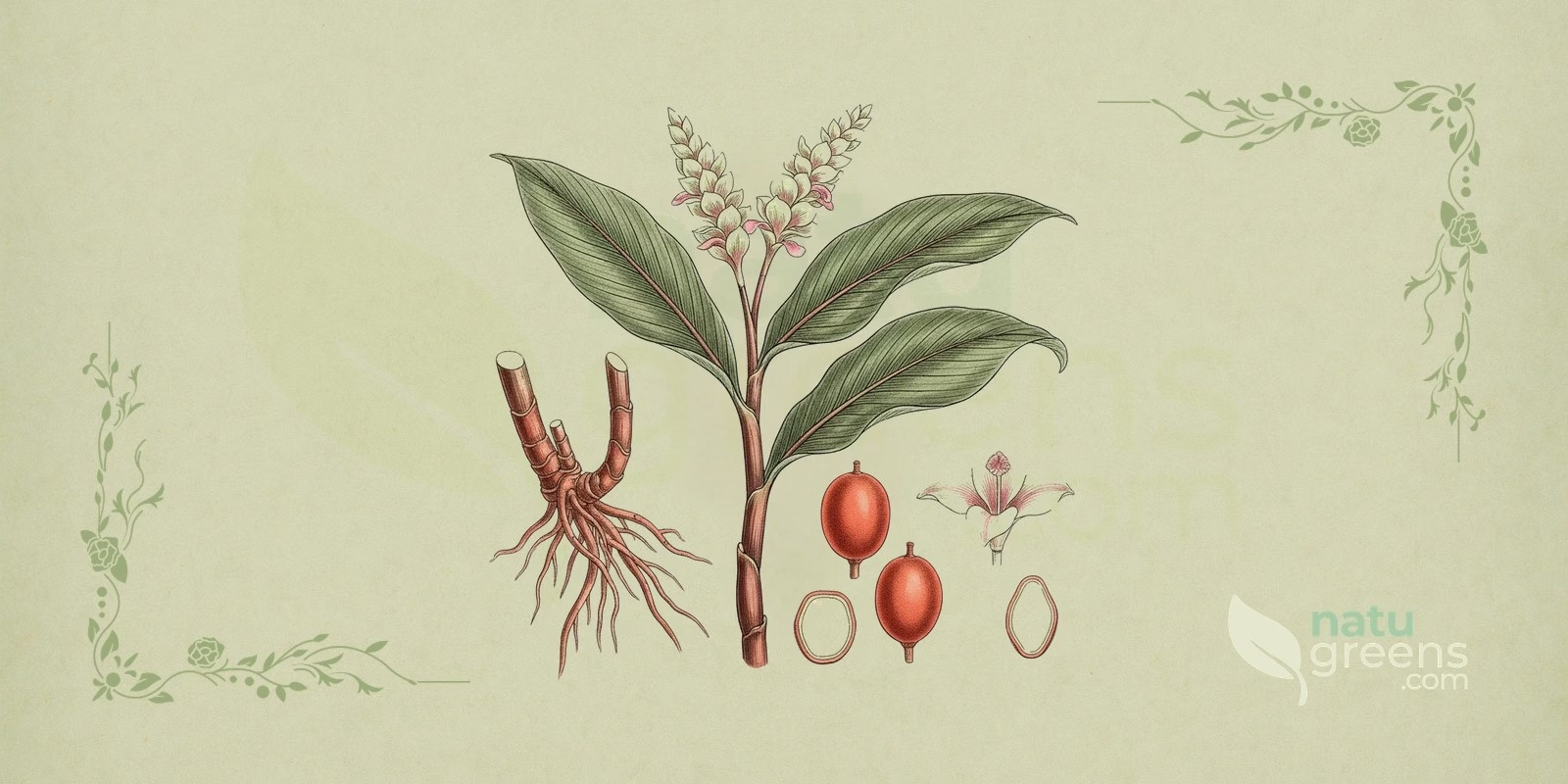
Galangal, also known as Thai ginger, is a medicinal plant valued for its traditional use across many cultures. Native to Southeast Asia, it has an aromatic rhizome used both in cooking and in folk medicine, especially in teas and infusions. The rhizome, the most widely used part of the plant, stands out for its pungent flavor and distinctive aroma, which make it a prized ingredient in the kitchen and a long-standing resource in traditional wellness practices.
Popular and International Names of Galangal
- English: blue ginger, galangal, greater galangal, lengkuas, Siamese ginger, Thai ginger, wild galangal.
- French: galanga, galanga de l’Inde, gingembre siamois, grand galanga.
- German: Galgant, großer Galgant, Siam-Ingwer.
- Italian: galanga, galanga maggiore, galangal, zenzero siamese.
- Portuguese: galanga, galanga-maior, gengibre-da-China, gengibre-de-Laos, gengibre-selvagem, gengibre-siamês, gengibre-tailandês.
- Spanish: galanga, galanga mayor, galangal, galangal de Java, jengibre azul, jengibre siamés, jengibre tailandés, laos.
Botanical Synonyms of Alpinia galanga
Botanical synonyms are other scientific names under which Alpinia galanga has been described or classified over time. Although Alpinia galanga (L.) Willd. is now the accepted name, knowing them helps locate the species in taxonomic studies, herbarium records and older works. The abbreviation (L.) indicates that Linnaeus originally described the plant in another genus, and it was Willdenow who later transferred it to Alpinia, a genus that brings together several other aromatic members of the ginger family.
- Amomum galanga (L.) Lour.
- Languas galanga (L.) Stuntz
- Maranta galanga L. (basionym, the original name given by Linnaeus)
Botanical Family: Zingiberaceae
Alpinia galanga belongs to the botanical family Zingiberaceae, known for bringing together many aromatic and medicinal species, such as ginger (Zingiber officinale) and turmeric (Curcuma longa). This kinship explains the morphological and chemical similarities among these plants. Members of the Zingiberaceae are characterized by underground rhizomes, often used in cooking and traditional medicine because they hold much of the plant’s bioactive compounds.
Parts of Galangal Used
- Fruit (used in traditional Chinese medicine)
- Leaves (aromatic, used in infusions)
- Rhizome (the most common part in medicinal and culinary use)
Ethnobotanical and Traditional Uses
Galangal has a long history of use in several medicinal traditions across Asia. In Unani medicine, where it is called Khulanjan, it is valued as a heart and stomach tonic. In part of the Ayurvedic tradition, it appears as rasna and is listed among the remedies that pacify the Vata dosha (Vata Shamana), traditionally used for inflammatory conditions. Siddha medicine, in turn, combines galangal, known there as perarathai, with licorice root in preparations traditionally used for colds and sore throat. The fruit of the plant also has a range of documented applications in traditional Chinese medicine.
Therapeutic Properties of Galangal
The properties below bring together records from traditional medicine and findings from preliminary studies, mostly carried out in the laboratory or with few participants, and for that reason they do not amount to proven clinical indications.
- Analgesic (traditional use for pain relief, investigated in preliminary studies)
- Anti-inflammatory (traditionally recorded for inflammatory conditions, with activity investigated in preliminary studies)
- Antifungal (activity observed in the laboratory and explored in anti-dandruff hair products)
- Antioxidant (activity against free radical damage observed in laboratory studies)
- Antiproliferative (activity observed in laboratory studies, without clinical evidence)
- Aphrodisiac (traditional record in Unani medicine; male sexual function was assessed in a small clinical trial, with preliminary results)
- Carminative (traditionally recorded for reducing intestinal gas)
- Cognitive support (effect on alertness assessed in a small clinical trial with a standardized extract, with preliminary results)
- Diuretic (traditionally recorded for increasing urine output)
- Expectorant (traditionally recorded in Unani and Siddha medicine to help clear mucus)
- Immunomodulatory (effect on the immune response investigated in preliminary studies)
- Muscle relaxant (traditionally recorded for muscle tension and spasms)
- Stimulant (traditionally recorded as a general tonic for the body)
Detailed Phytochemical Profile of Galangal
The rhizome of Alpinia galanga contains a variety of phytochemical compounds associated with its traditional properties. Notable among them are galangin, a flavonol with antioxidant action observed in the laboratory, and galangol, linked to the essential oil that gives the plant its characteristic aroma. Other relevant components are cineole, pinene and eugenol, to which laboratory studies attribute anti-inflammatory and antimicrobial activity. Also worth mentioning is 1′-acetoxychavicol acetate, the major constituent of the rhizome, whose pharmacological effects have been studied mainly in experimental models. The chemical profile is rounded out by gallic acid, alkaloids, flavonoids such as kaempferol, quinones, saponins and tannins, a combination that explains the growing research interest in the species.
- 1′-Acetoxychavicol acetate (major phenylpropanoid of the rhizome, studied in experimental models)
- Alkaloids (nitrogen-containing compounds identified in the rhizome)
- Cineole (essential oil monoterpene with a camphor-like aroma)
- Eugenol (aromatic phenylpropanoid of the essential oil)
- Flavonoids (group of plant pigments with antioxidant activity)
- Galangin (flavonol with antioxidant action observed in the laboratory)
- Galangol (component associated with the aroma of the essential oil)
- Gallic acid (phenolic acid with antioxidant activity)
- Kaempferol (flavonol also found in many fruits and vegetables)
- Pinene (essential oil monoterpene with a resinous aroma)
- Quinones (oxidized compounds of phenolic origin)
- Saponins (glycosides that form foam in aqueous solution)
- Tannins (polyphenols with an astringent taste)
Preparation and Administration Forms of Galangal
Galangal can be used in several ways, from the simplest home preparations to the standardized extracts used in research, and the chosen form directly influences the concentration of compounds that reach the body.
- Decoction (sliced or chopped rhizome, boiled in water)
- Essential oil (obtained by distillation, for aromatic use or for topical use, always diluted)
- Extracts (concentrated solutions, such as ethanolic extract, that call for professional guidance)
- Fresh (rhizome in pieces or slices for culinary use)
- Infusion (tea made with the rhizome or with the aromatic leaves)
- Powder (dried and ground rhizome, added to foods or drinks)
- Syrup (sweetened liquid preparation, traditionally used for coughs)
Synergy with Other Medicinal Plants
Galangal appears combined with other plants both in traditional records and in laboratory research, but these pairings describe uses and experimental findings, not promises of results. In a study published in 2011 in a food science journal, extracts of rosemary (Rosmarinus officinalis) and lemon ironbark eucalyptus (Eucalyptus staigerana) showed synergistic antimicrobial activity when tested together with galangal extract. In folk tradition, galangal is also mixed with honey and other herbs in preparations used for mild asthma attacks, a traditional use that does not replace medical follow-up of the disease. Finally, turmeric (Curcuma longa) and lemongrass essential oil (Cymbopogon citratus) are mentioned alongside galangal as possible natural preservatives in certain food preparations.
Recipes and Usage Protocols of Galangal
Galangal Tea for Digestive Discomfort
This infusion is traditionally used to support digestion and ease stomach discomfort. To prepare it, place 3 to 4 small pieces of galangal rhizome, fresh or dried, in 500 ml of just-boiled water, cover and let it steep for 5 to 10 minutes before straining and drinking it warm.
Because the recipe uses amounts close to those found in cooking, it stays within the plant’s usual food use, whereas concentrated extracts and capsules require guidance from a health professional.
Galangal in Thai Cooking
In the kitchen, galangal is an essential ingredient in Thai dishes such as curries and soups, including the famous tom kha kai. It can be used fresh, cut into thin slices or chunks, or grated over fish and poultry to add a spicy, aromatic flavor. The rhizome also works well in chicken, fish, seafood and vegetable stews, always in the amounts typical of a seasoning.
The preparations above follow traditional records and do not replace professional guidance. Before any internal use, check the contraindications and interactions described in this article.
Associated Therapies
Ayurveda
In Ayurvedic medicine, galangal appears under the name rasna and is classified as a Vata Shamana remedy, that is, one that pacifies the Vata dosha. It is traditionally used for various inflammatory conditions and for rheumatism, with the aim of balancing the doshas and supporting the overall well-being of the body.
Homeopathy
In homeopathy, galangal is used as a digestive stimulant, and this tradition values it as support for the digestive system and for the relief of symptoms linked to gastrointestinal disorders, within a view of the body’s overall balance.
Siddha Medicine
Siddha medicine, a traditional system from southern India, uses galangal (perarathai) combined with licorice root in a mixture popularly used to relieve the symptoms of colds and sore throats, a pairing that shows the plant’s versatility across different traditional approaches.
Unani Medicine
In Unani medicine, where it is known as Khulanjan, galangal is regarded as a heart tonic (muqawwi qalb), exhilarant (mufarreh), expectorant (munaffise balgam), stomach tonic (muqawwi meda) and aphrodisiac (muqawwi bah). It is traditionally used for asthma, cough and sore throat, reflecting the broad range of uses this tradition attributes to it.
Contraindications and Side Effects of Galangal
Greater galangal (Alpinia galanga) is a traditional Asian spice and medicinal plant with a well-established food safety profile at culinary doses, and usual dietary and culinary doses pose no relevant risk. Even so, there are contraindications and possible side effects that deserve attention when the plant is used in medicinal doses or as concentrated extracts.
People allergic to plants of the Zingiberaceae family, such as ginger or turmeric, should avoid consuming it. Do not use concentrated extracts during pregnancy and breastfeeding without medical guidance. Because popular sources attribute an abortifacient effect to the plant at high medicinal doses, pregnant and breastfeeding women should avoid medicinal use and keep to the usual culinary amounts. Children and people with high blood pressure or stomach acidity should use galangal with caution and under medical guidance.
Drug Interactions
Caution is advised for people who take anticoagulants or antiplatelet drugs, given the possible additive effect on blood clotting, and in these cases any medicinal use should be agreed with a doctor, especially before surgery. People taking antidepressants should also talk to their doctor before turning to concentrated extracts, as data on this combination are still scarce and come from small studies.
Common Side Effects
Concentrated doses (extracts and capsules) may cause gastrointestinal discomfort, and mild gastrointestinal adverse events have also been reported. In some cases, consuming galangal may cause headache, palpitations, dizziness and a sudden drop in energy, while very high doses, especially in animal studies, have produced serious effects, such as a significant drop in blood pressure. It is therefore advisable to stick to food-use amounts, avoid excess and consult a health professional in case of doubt or adverse reactions.
Historical Notes and Interesting Facts
Galangal has been a culinary and medicinal ingredient in Southeast Asia for centuries, and both its mention in ancient texts and its presence in many traditional cuisines attest to the plant’s cultural and historical importance. The name galangal probably derives from the Persian qulanjan or the Arabic khalanjan, which in turn may be an adaptation of the Chinese gao liang jiang. The same root echoes in Khulanjan, the name the plant bears in Unani medicine. In Thailand, the rhizome is fundamental to iconic dishes such as tom kha kai, and its popularity extends across Asia, where it is appreciated for its unique flavor and for the place it holds in traditional health care practices.
Frequently Asked Questions about Galangal
What Is Galangal?
Galangal is a plant of the ginger family, scientifically known as Alpinia galanga, whose rhizome is widely used in Southeast Asian cooking and traditional medicine for its striking aroma and pungent flavor. In Thai cuisine, it is an indispensable ingredient in soups and curries such as tom kha kai.
What Is Galangal Tea Used For?
Traditionally, galangal tea is used for digestive discomfort, coughs and colds, and the plant is being studied for anti-inflammatory and antioxidant activities observed mainly in the laboratory. Effects on alertness and male sexual function have been assessed in small clinical trials, with results that are still preliminary, and none of these uses replaces medical care.
How Do You Make Galangal Tea?
Place 3 to 4 small pieces of galangal rhizome, fresh or dried, in 500 ml of just-boiled water, let it steep for 5 to 10 minutes, then strain and drink it warm. The plant’s aromatic leaves can also be used in infusions, always in amounts close to those used in cooking.
Does Galangal Have Any Contraindications?
Yes, people allergic to plants of the Zingiberaceae family should avoid galangal, and children, as well as people with high blood pressure or stomach acidity, should use it with caution and under medical guidance. Concentrated doses, such as extracts and capsules, may cause gastrointestinal discomfort, and at high doses there are also reports of headache and palpitations.
Can Pregnant Women and People on Anticoagulants Consume Galangal?
The amounts used in cooking pose no relevant risk, but concentrated extracts should not be used during pregnancy and breastfeeding without medical guidance, and pregnant women should limit themselves to culinary use. People taking anticoagulants or antiplatelet drugs should be cautious, given the possible additive effect on blood clotting, and agree on any medicinal use with their doctor.
Are Galangal and Ginger the Same Plant?
No, although they belong to the same botanical family (Zingiberaceae) and look similar, galangal and ginger have distinct flavors and aromas. Galangal has a spicier, more citrusy and resinous flavor, while ginger is fresher and more pungent, and both are used in cooking and traditional medicine with somewhat different flavor and phytochemical profiles.
Notice: this content is for informational purposes and does not replace professional medical advice. Consult a physician or herbal practitioner before using medicinal plants, especially during pregnancy, breastfeeding, or alongside medication.
References and Scientific Studies
- PMC2023 Akbarzadeh F, et al. Assessing the effect of Alpinia galanga extract on the treatment of SSRI-induced erectile dysfunction: A randomized triple-blind clinical trial. Front Psychiatry. 2023.
- PMC2021 Khumpirapang N, et al. Development of Microemulsion Containing Alpinia galanga Oil and Its Major Compounds: Enhancement of Antimicrobial Activities. Pharmaceutics. 2021.
- PMC2020 Kojima-Yuasa A, et al. Pharmacological Effects of 1′-Acetoxychavicol Acetate, a Major Constituent in the Rhizomes of Alpinia galanga and Alpinia conchigera. J Med Food. 2020.
- PMC2022 Ramanunny AK, et al. Journey of Alpinia galanga from kitchen spice to nutraceutical to folk medicine to nanomedicine. J Ethnopharmacol. 2022.
- PMC2017 Srivastava S, et al. Effect of Alpinia galanga on Mental Alertness and Sustained Attention With or Without Caffeine: A Randomized Placebo-Controlled Study. J Am Coll Nutr. 2017.
- PMC2011 Weerakkody NS, et al. Synergistic antimicrobial activity of galangal (Alpinia galanga), rosemary (Rosmarinus officinalis) and lemon iron bark (Eucalyptus staigerana) extracts. J Sci Food Agric. 2011.