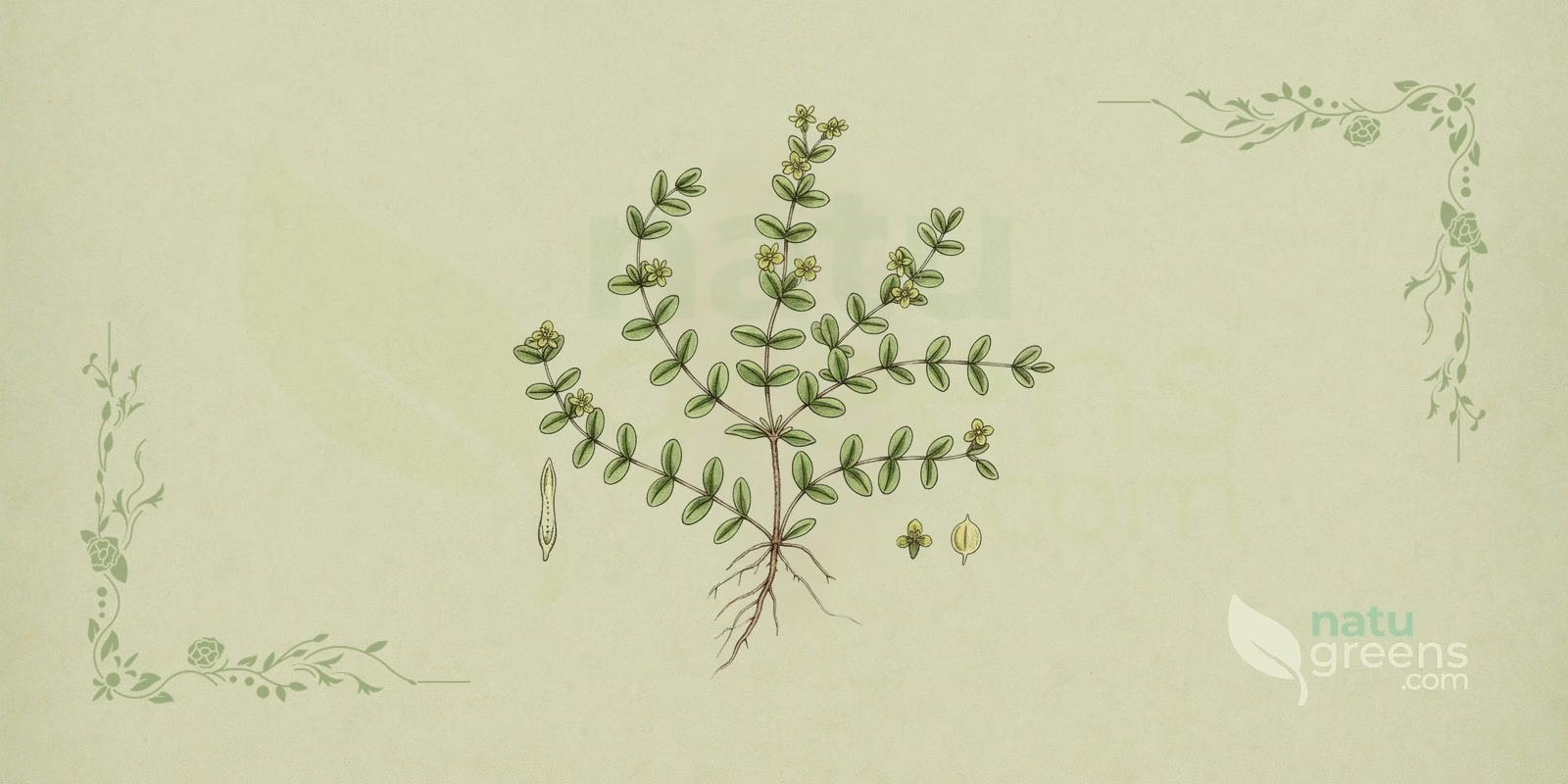
Herniaria glabra L. / Rupturewort, also known as smooth rupturewort or herniary, is a perennial herbaceous plant of the Caryophyllaceae family, described by Carl Linnaeus and native to Europe and Western Asia, where it grows close to the ground and adapts well to poor soils. For centuries European folk medicine has turned to rupturewort mainly for urinary tract complaints, and its aerial parts are harvested to prepare infusions, extracts and other herbal products.
In the European herbal tradition, rupturewort earned a reputation as a mild diuretic and antispasmodic, with recorded uses ranging from support for urinary discomfort and kidney stones to the relief of inflammation. The plant’s chemical makeup, rich in triterpene saponins and flavonoids, explains the interest of modern research, and laboratory and animal studies have been investigating some of these traditional uses, although clinical trials in humans confirming efficacy and safety with prolonged use are still lacking.
Popular and International Names of Rupturewort
- English: flax weed, green carpet, herniary, rupturewort, smooth rupturewort.
- French: herniaire.
- German: Bruchkraut, Glattes Bruchkraut.
- Italian: erba turca, erniaria.
- Portuguese: erva-das-hérnias, herniária.
- Spanish: herniaria.
In several European languages the plant’s name points to hernia, as with the English rupturewort and the German Bruchkraut, both linked to the old belief that the herb could help close ruptures of the abdominal wall, a use that modern science has never confirmed.
Botanical Synonyms of Herniaria glabra
- Herniaria suavis Klok.
The botanical synonym most often recorded in the scientific literature for Herniaria glabra L. is Herniaria suavis Klok. Because some sources list synonyms that actually belong to other species of the genus, it is worth checking names against up-to-date taxonomic databases such as World Flora Online, which accepts Herniaria glabra L. as the correct name of the species, in line with most botanical authorities.
Botanical Family: Caryophyllaceae
The Caryophyllaceae, known as the pink or carnation family, comprise about 87 genera and more than 2,000 species of flowering plants, generally characterized by stems with swollen nodes, opposite leaves and five-petaled flowers. Its members include ornamental plants of great importance, such as the carnations and pinks of the genus Dianthus, as well as a few species of medicinal interest.
Herniaria glabra shares several morphological traits typical of the family, such as its small flowers and a creeping growth habit that forms dense mats on the ground. The Caryophyllaceae are also known for producing bioactive compounds, including saponins and flavonoids, and this chemical diversity has made several genera of the family the subject of pharmacological research.
Parts of Rupturewort Used
- Aerial parts
- Whole plant (homeopathic preparations and research extracts)
In herbal medicine, the material most often used is the dried aerial parts, taken as infusions, tinctures and extracts, while the whole plant appears in homeopathic preparations and in laboratory studies devoted to isolating saponins.
Ethnobotanical and Traditional Uses
The uses below reflect records from European folk medicine and from traditional medicine in Morocco, where aqueous preparations of the plant are consumed empirically, and should not be read as proven indications.
- Antipyretic
- Antiseptic
- Antispasmodic (especially for the bladder)
- Arthritis
- Cystitis (traditional support, not a substitute for medical treatment)
- Edema (fluid retention)
- Gout
- Hemostatic
- Lung problems
- Mild diuretic
- Relief of muscle and joint pain
- Support for urinary stones (traditional record, not a substitute for medical evaluation)
- Urinary tract disorders (urinary stones, bladder catarrh)
- Wound healing (external use)
Therapeutic Properties of Rupturewort
- Antibacterial (effect on uropathogenic bacteria observed in the laboratory, without clinical proof)
- Anti-inflammatory (activity observed in vitro with purified extracts)
- Antimicrobial (activity observed in laboratory studies, without clinical proof)
- Antioxidant (free radical scavenging activity observed in vitro)
- Antipyretic (traditional record, not confirmed by studies)
- Antispasmodic (traditional record of relief from urinary spasms)
- Antiurolithiatic (effect observed in rats with a plant mixture, not proven in humans)
- Diuretic (increased urine volume observed in rats, plus traditional record)
- Hemostatic (traditional record, not confirmed by studies)
- Hypotensive (effect of the saponins observed in hypertensive rats, not confirmed in humans)
Detailed Phytochemical Profile of Rupturewort
- Alkaloids (paronychine)
- Coumarins (herniarin)
- Dicarboxylic acids
- Flavonoids
- Maltol glycoside derivatives
- Phenolic acids
- Triterpene saponins (herniariasaponins, medicagenic acid aglycones)
Triterpene saponins are the most studied group in the species, and a reinvestigation published in 2020 isolated twelve previously undescribed glycosides, derived mainly from medicagenic acid, alongside herniariasaponins that were already known. In the same work, the saponins tested showed low or no inhibition of enzymes such as cholinesterase and xanthine oxidase, which helps separate the well-characterized chemistry of the plant from activities that still lack demonstration.
Preparation and Administration Forms of Rupturewort
- Compresses
- Cream
- Dry extract
- Fluid extract
- Homeopathic preparations
- Infusion
- Poultice
- Tincture
Poultices, compresses and creams correspond to the external use described by tradition, whereas infusions, tinctures and fluid or dry extracts are forms of internal use, whose dose and duration should be set with a health professional, since the species lacks robust long-term safety studies.
Synergy with Other Medicinal Plants
Traditional Combinations for Joint and Muscle Pain
In traditional herbal practice, rupturewort appears alongside devil’s claw (Harpagophytum procumbens) or turmeric (Curcuma longa) in formulations traditionally used for joint and muscle discomfort, with the idea of bringing together compounds with different profiles. No studies have assessed this specific combination, and each plant in the blend has its own contraindications, which need to be checked with a health professional before combined use.
Traditional Combinations for the Urinary Tract
For the urinary tract, tradition pairs rupturewort with other plants used as diuretics, such as horsetail (Equisetum arvense) and bearberry (Arctostaphylos uva-ursi), in preparations traditionally used as support for urinary discomfort. A commercial mixture combining rupturewort and horsetail, among other plants, was evaluated in rats with experimentally induced stones, a preliminary result that does not amount to proof in humans. Bearberry in particular is traditionally limited to short periods and is not recommended during pregnancy.
Recipes and Usage Protocols of Rupturewort
Rupturewort Compress for External Use
This compress is traditionally used to ease discomfort in sore or swollen areas. Make a concentrated infusion with 2 tablespoons of the dried aerial parts in 200 ml of boiling water, let it steep for 15 minutes, strain and allow it to cool until lukewarm. Then soak a clean gauze pad in the liquid and apply it to the area for 15 to 20 minutes, 2 to 3 times a day, stopping use if redness, itching or skin irritation appears.
Rupturewort Infusion in Traditional Use as a Mild Diuretic
This infusion is traditionally used as a mild diuretic and as support for urinary discomfort. Place the dried aerial parts, in the amount advised by a health professional, in a cup of boiling water, cover and let steep for 5 to 10 minutes before straining and drinking it warm. How often and for how long to use it should also be decided with that professional, because the species has no robust long-term safety studies and high doses of extract caused liver and kidney changes in rats. Consult a health professional before starting and keep up a good water intake throughout the day for as long as use continues.
The preparations above follow traditional records and do not replace professional guidance. Before any internal use, check the contraindications and interactions described in this article.
Associated Therapies
Western Herbal Medicine
In Western herbal medicine, rupturewort is valued for the diuretic and antispasmodic actions described by tradition, and it appears in infusions, tinctures and standardized extracts aimed at the urinary tract. In this context it is usually employed as an adjunct for mild urinary discomfort, under professional guidance, and never as a substitute for the medical diagnosis and treatment of kidney stones or urinary infections.
Homeopathy
In homeopathy, Herniaria glabra is prepared from the whole plant and used in diluted potencies, with traditional indications linked to urinary complaints accompanied by irritation, pain on urination and a feeling of heaviness in the bladder. These indications come from homeopathic repertories and have no clinical proof of efficacy, so persistent urinary symptoms still call for medical evaluation.
Traditional Moroccan Medicine
In Morocco, aqueous preparations of rupturewort are part of traditional medicine, and this empirical consumption led researchers in the region to study in rodents the effects of the plant’s saponins on blood pressure and kidney function, as well as the toxicity of the extract with repeated use. These studies help gauge the plant’s safety margin, but they were carried out in animals and do not replace studies in people.
Contraindications and Side Effects of Rupturewort
The available safety data on rupturewort come mainly from animal studies and traditional use, so the plant calls for caution, especially when taken internally. Avoid prolonged internal use without professional guidance, due to the lack of robust long-term safety studies.
Warning Signs That Require Medical Evaluation
Severe lower back pain, blood in the urine, fever or persistent urinary symptoms require medical evaluation, not just herbal medicine. These signs may indicate a stone blocking the urinary tract, an infection that has reached the kidneys or other conditions that need proper diagnosis and treatment.
Allergies
People with a known sensitivity to plants of the Caryophyllaceae family should be cautious with rupturewort, as allergic reactions may occur which, although rare, include contact dermatitis and other manifestations. Before applying compresses or creams, it is worth testing a small area of skin and stopping use at any sign of a reaction.
Pregnancy, Breastfeeding and Children
Do not use rupturewort during pregnancy and breastfeeding without medical guidance, since conclusive studies on the plant’s safety for mother and baby during these periods are lacking. In children, dosage and safety have not been established either, and use should only take place under the guidance of a qualified health professional.
Drug Interactions
Use caution if you take prescription diuretics, because of the possible additive effect, which can increase the loss of fluids and electrolytes. Through the same diuretic action, the plant may alter lithium excretion and raise its levels in the body, with a risk of toxicity. Since studies in rats also recorded drops in blood glucose and blood pressure, anyone taking glucose-lowering or antihypertensive drugs should talk to their doctor before consuming rupturewort.
Toxicity and Kidney or Liver Disease
In a toxicity study in rats, daily administration of an aqueous extract for 90 days caused liver and kidney changes only at the highest dose tested, with increased liver enzymes and creatinine, and the authors considered the safety margin wide relative to the doses used in traditional Moroccan medicine. Even so, people with kidney or liver disease should avoid the plant without medical guidance, and any adverse symptom during use calls for stopping immediately and seeking medical care.
Historical Notes and Interesting Facts
Herniaria glabra, known as rupturewort, has a long history in European folk medicine, and its name comes from the traditional belief that the plant could heal hernias, an idea with no support in modern scientific evidence. Thanks to its creeping growth and its ability to thrive in poor soils, the plant is also grown as ground cover in gardens, which explains its other English name, green carpet.
Historically, rupturewort was prized for its supposed diuretic and anti-inflammatory properties and featured as a common remedy for kidney and bladder problems, appearing in old herbal texts that attest to its place in the traditional pharmacopoeia. The genus itself lent its name to herniarin, a coumarin identified in the plant, and the history of the species shows how some folk uses came to be investigated by science while others remain in the realm of folklore.
Frequently Asked Questions about Rupturewort
Is Rupturewort Tea Safe for Daily Use?
Rupturewort has no robust long-term safety studies, so prolonged internal use should be avoided without professional guidance. Because of its diuretic effect, anyone using the plant needs to watch their hydration and electrolyte levels, and people with pre-existing conditions or taking medication should consult a health professional before starting.
What Is Rupturewort Traditionally Used For?
Tradition uses rupturewort mainly as a mild diuretic and as support for urinary discomfort, along with folk uses for joint pain and inflammation. Studies in rats observed increased urine volume and an antiurolithiatic effect with a plant mixture, but these preliminary results have not yet been confirmed in clinical trials in people.
Can Rupturewort Be Used by Children?
The use of rupturewort in children has not been adequately studied, and dosage and safety in pediatric populations have not been established. For this reason, the plant is not recommended for children without the supervision of a qualified health professional, who can suggest options with proven safety for this age group.
Does Rupturewort Interact with Medications?
Yes, rupturewort may interact with some medications. People taking prescription diuretics should be cautious because of the possible additive effect, and the plant’s diuretic action may also raise lithium levels in the body. Studies in rats also recorded drops in blood glucose and blood pressure, so people taking glucose-lowering or antihypertensive drugs should tell their doctor or pharmacist before using the plant.
Does Rupturewort Dissolve Kidney Stones?
There is no clinical proof that rupturewort dissolves kidney stones, and the known antiurolithiatic effect was observed in rats given a plant mixture that included the species. Traditional use as support for urinary discomfort does not replace medical follow-up, which is essential to assess the size and location of the stone.
Which Urinary Symptoms Require Medical Evaluation?
Severe lower back pain, blood in the urine, fever or persistent urinary symptoms require medical evaluation, not just herbal medicine. These signs may indicate a blockage of the urinary tract or a kidney infection, situations in which delaying diagnosis in an attempt to solve the problem with medicinal plants can lead to complications.
Notice: this content is for informational purposes and does not replace professional medical advice. Consult a physician or herbal practitioner before using medicinal plants, especially during pregnancy, breastfeeding, or alongside medication.
References and Scientific Studies
View All 10 Cited References
- PMC2015 Crescenti A, et al. Antiurolithiasic effect of a plant mixture of Herniaria glabra, Agropyron repens, Equisetum arvense and Sambucus nigra (Herbensurina) in the prevention of experimentally induced nephrolithiasis in rats. Arch Esp Urol. 2015.
- PMC2021 Hakim EM, et al. Evaluation of the diuretic effect of crude ethanol and saponin-rich extracts of Herniaria glabra L. in rats. J Ethnopharmacol. 2021.
- PMC2018 Kozachok S, et al. γ-Pyrone compounds: flavonoids and maltol glucoside derivatives from Herniaria glabra L. collected in the Ternopil region of the Ukraine. Phytochemistry. 2018.
- PMC2020 Kozachok S, et al. Reinvestigation of Herniaria glabra L. saponins and their biological activity. Phytochemistry. 2020.
- PMC2022 Kozachok S, et al. Comparison of Phenolic Metabolites in Purified Extracts of Three Wild-Growing Herniaria L. Species and Their Antioxidant and Anti-Inflammatory Activities In Vitro. Molecules. 2022.
- PMC1999 Rhiouani H, et al. Effects of saponins from Herniaria glabra on blood pressure and renal function in spontaneously hypertensive rats. Therapie. 1999.
- PMC2001 Rhiouani H, et al. Antihypertensive effect of Herniaria glabra saponins in the spontaneously hypertensive rat. Ann Pharm Fr. 2001.
- PMC2008 Rhiouani H, et al. Acute and sub-chronic toxicity of an aqueous extract of the leaves of Herniaria glabra in rodents. J Ethnopharmacol. 2008.
- PMC1993 Schröder H, et al. A triterpene saponin from Herniaria glabra. Phytochemistry. 1993.
- PMC2012 Wojnicz D, et al. Medicinal plants extracts affect virulence factors expression and biofilm formation by the uropathogenic Escherichia coli. Urol Res. 2012.