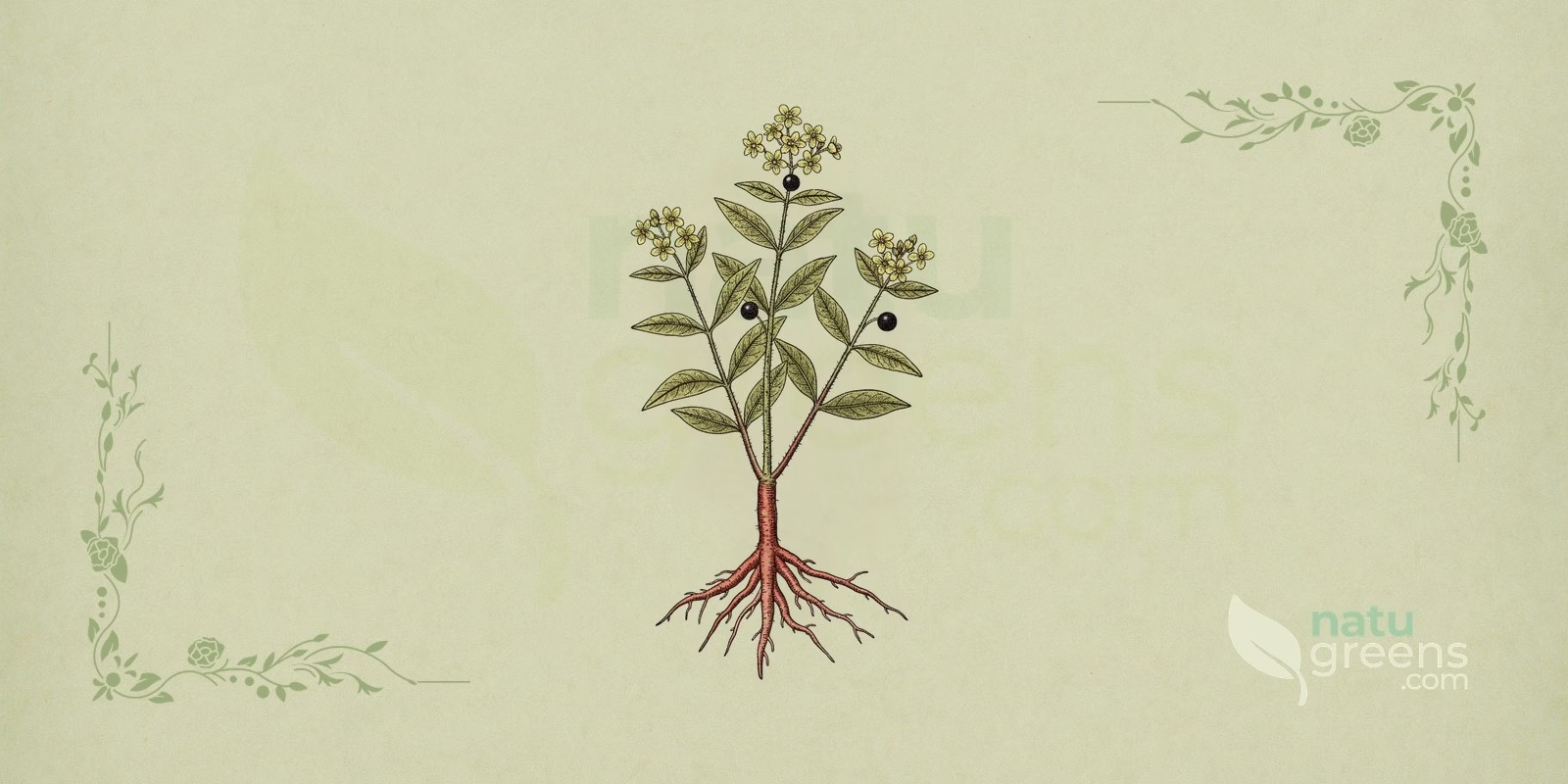
Rubia tinctorum L. / Madder, also known as common madder or dyer’s madder, is a herbaceous perennial in the Rubiaceae family. Native to Europe and Western Asia, it has been prized for millennia for its roots, which yield intense red dyes. Its use goes back to ancient civilizations, where it played a central role in dyeing textiles, leather and other materials. Although traditional medicinal use is documented, modern science raises serious concerns about the safety of the root when taken internally.
Madder stands out for its rich content of anthraquinones such as alizarin and purpurin, the compounds behind its dyeing power that have also been studied for their possible biological effects. Because studies on some root preparations have produced evidence of genotoxicity and carcinogenicity, any medicinal approach calls for extra caution. This guide therefore brings together the plant’s history, botany, phytochemistry and traditional uses alongside the safety warnings that now accompany its name.
Popular and International Names of Madder
The plant circulated for centuries in the European and Asian dye trade, which helps explain the variety of names it received in each language.
- English: common madder, dyer’s madder, madder, rose madder.
- French: garance, garance des teinturiers.
- German: Färberkrapp, Krapp.
- Italian: garanza, robbia.
- Portuguese: granza, ruiva-dos-tintureiros, solda-grande.
- Spanish: garanza, granza, rubia de tintes.
Botanical Synonyms of Rubia tinctorum
The accepted botanical name for this species is Rubia tinctorum L., described by Linnaeus, although some older sources may still refer to the plant by historical or less common synonyms. The genus name comes from the Latin ruber, meaning red. The epithet tinctorum, in turn, means “of the dyers”, a direct reference to the craft that made the root famous throughout the Old World.
Correct botanical nomenclature is essential to identify the plant precisely and to avoid confusion with other species of the genus Rubia or of the Rubiaceae family. One example is Rubia cordifolia, an Asian species that is also used as a source of red dye and often appears under the same generic name of madder.
Botanical Family: Rubiaceae
Rubia tinctorum belongs to the vast Rubiaceae family, which comprises about 13,000 species in roughly 611 genera. The family stands out for its diversity and economic importance, since it includes plants such as coffee (Coffea arabica) and cinchona (Cinchona officinalis), the source of quinine. Species in this family usually have opposite or whorled leaves and flowers with a tubular corolla.
Found worldwide, the Rubiaceae family is concentrated mainly in tropical and subtropical regions. Many of its plants are valued for their alkaloids, glycosides and other bioactive compounds. Madder, with roots rich in anthraquinones, illustrates the chemical versatility of this family, whose substances range from dyes to molecules investigated by pharmacology. In the case of this species, however, research has revealed more risks than safe applications.
Parts of Madder Used
All of the plant’s historical importance lies in its underground system, whose sturdy, branching roots accumulate the red pigments used both in dyeing and in traditional preparations.
- Roots
Ethnobotanical and Traditional Uses
Madder is traditionally known as a dye plant, a source of natural red dye, and is secondarily used in traditional preparations for kidney and urinary support. The records below describe what tradition attributed to the root and are not equivalent to proven indications, since several of these uses run up against safety concerns.
- Amenorrhea (traditional record, not scientifically proven)
- Bone marker in bone growth studies with animals (historical laboratory use)
- Diuretic (traditional record, not scientifically proven)
- Emmenagogue (traditional record, not scientifically proven)
- Jaundice (traditional record, not scientifically proven)
- Kidney stones (traditional record of kidney support, with safety concerns)
- Menstrual complaints (traditional record, with safety concerns)
- Paralysis (traditional record, not scientifically proven)
- Textile dye for cotton, leather, silk and wool
- Urinary complaints (traditional record of urinary support, with safety concerns)
- Wound healing (traditional record, with safety concerns)
Therapeutic Properties of Madder
Despite its traditional uses, modern research raises serious concerns about the safety of Rubia tinctorum for medicinal purposes. The properties attributed to the plant rest largely on historical and ethnobotanical records or on laboratory and animal tests, not on robust clinical evidence demonstrating efficacy and safety in human consumption.
- Antibacterial (potential observed in in vitro studies)
- Antifeedant (against insects such as the carpet beetle, in laboratory tests)
- Antifungal (potential observed in in vitro studies)
- Anti-inflammatory (extracts, in vitro studies)
- Antioxidant (extracts, in vitro studies)
- Antiviral (in vitro studies)
- Diuretic (traditional record, not scientifically proven)
- Hypoglycemic (extracts, animal studies)
- Neuroprotective (in vitro studies)
A rat study evaluated a polyphenol-rich ethanolic extract of the root in an experimental model of urinary stone formation, a line of research related to the traditional record of kidney support. Animal results, however, do not justify human use. Weighing most heavily against it are the findings of kidney and liver carcinogenicity in rodents treated long term with the root or with the dye extracted from it.
Detailed Phytochemical Profile of Madder
The roots of Rubia tinctorum are rich in phytochemical compounds, and anthraquinones are the most prominent and best studied, as they account both for the intense red color and for much of the biological activity described. Some of these molecules occur in the root bound to sugars, as glycosides that, according to experimental studies, can give rise to genotoxic metabolites. Among them is lucidin, identified as early as the 1980s as a mutagenic substance in the root.
- Alizarin (1,2-dihydroxyanthraquinone)
- Lucidin
- Purpurin (1,2,4-trihydroxyanthraquinone)
- Purpuroxanthin (1,3-dihydroxyanthraquinone)
- Quinizarin (1,4-dihydroxyanthraquinone)
- Ruberythric acid (alizarin primeveroside)
Preparation and Administration Forms of Madder
Historically, Rubia tinctorum was prepared mainly for dye extraction, while traditional medicinal methods included infusions and decoctions of the roots. Because of genotoxicity concerns, internal use of the plant is not recommended, and in some countries the root is no longer permitted in herbal medicines or as a food additive.
- Decoction (historical use in dye extraction and traditional medicinal record)
- Infusion (traditional medicinal record)
- Root powder (dye extraction)
Synergy with Other Medicinal Plants
Given the safety and genotoxicity concerns associated with Rubia tinctorum, there are no current recommendations for combining it with other medicinal plants for internal use. Pairing the root with other herbs would only add uncertainty to an already unfavorable risk profile. The main focus of research on this plant, and of its practical application, remains its use as a natural dye, a field in which it is still relevant for artisanal dyeing and for sustainability studies in the textile industry.
Recipes and Usage Protocols of Madder
Considering the evidence of genotoxicity and carcinogenicity from animal studies, this guide does not present recipes or internal-use protocols for Rubia tinctorum. Use of the root should be limited to non-medicinal applications such as dyeing, in which the pigments are extracted and used externally.
Traditional Dyeing Use of the Root
Traditionally used to dye cotton, leather, silk and wool, the dried, ground root is left in hot water to release its pigments, while the fibers are usually mordanted beforehand, often with alum, which helps fix the color. The final shade ranges from pink to deep red depending on the fiber, the mordant and the temperature of the dye bath. Wearing gloves during handling is advisable, because both the powder and the bath stain the skin.
Traditional Medicinal Use and Qualitative Guidance
Sources that still record the traditional use of the root for kidney and urinary support advise moderate, short-term use and warn against continuous or prolonged use, without giving any dose that could be considered safe. In light of the regulatory restrictions and the animal findings, anyone considering a preparation for internal use should consult a healthcare professional first. Urinary symptoms call for a medical diagnosis, never self-medication.
The preparations above follow traditional records and do not replace professional guidance. Before any internal use, check the contraindications and interactions described in this article.
Associated Therapies
Rubia tinctorum is neither widely recognized nor used in modern associated therapies because of the safety concerns surrounding the root. Historically, the plant was linked mainly to dyeing practices and, to a lesser extent, to traditional European herbal medicine, in which root preparations served as support for urinary and kidney complaints. These uses are now considered risky, to the point that root-based medicines are no longer permitted in Germany.
Contraindications and Side Effects of Madder
General Contraindications
The root contains anthraquinones (including lucidin), compounds that have raised concern in studies about potential genotoxicity with prolonged use or at high doses. For this reason, where there is traditional use, it is recommended that it be moderate and short term, avoiding continuous or prolonged use. Because of this genotoxic and carcinogenic potential, Rubia tinctorum is considered strongly contraindicated for internal use by a large share of scientific sources. In Germany, herbal medicines prepared from the root are no longer permitted, and Japan’s Ministry of Health, Labour and Welfare banned the use of the plant’s dye as a food additive after rat studies confirmed its carcinogenicity.
Do not use during pregnancy or breastfeeding, as the plant may stimulate menstruation and there is concern about the risk of miscarriage and birth defects. It may also harm the breastfed baby and turn breast milk red. There are no safety data for children either, who should be kept away from any preparation for internal use. People with bleeding disorders or who take anticoagulants should avoid the plant, since it may potentiate the effect of these medications. Anyone with a known allergy to plants of the Rubiaceae family should also avoid contact.
Urinary symptoms such as pain, blood in the urine or suspected kidney stones require medical diagnosis and follow-up, and madder is not a substitute for medical treatment. Because the root turns urine red, this coloration can also make urinary bleeding harder to notice, another reason to seek a professional evaluation. Caution is advised for people with diagnosed kidney disease, especially since animal studies pointed precisely to the kidneys and liver as the affected organs.
Common Side Effects
When ingested, Rubia tinctorum may cause nausea and vomiting, and it is well known for turning urine, saliva, sweat, tears and breast milk red. Topical application may occasionally cause contact dermatitis in sensitive people. Prolonged use or high doses, for their part, have been associated with kidney and liver damage and an increased cancer risk in animal studies, attributed to lucidin and other anthraquinone derivatives present in the root.
Drug Interactions
There is no detailed information on specific drug interactions, but given its genotoxic and carcinogenic potential and possible influence on metabolism, it is prudent to assume that Rubia tinctorum may interact with a wide range of medications, including anticoagulants, sedatives and hypoglycemic drugs used to manage diabetes. Concomitant use should be avoided, and anyone on ongoing treatment needs to talk to their doctor before considering any preparation made with the root.
Historical Notes and Interesting Facts
The history of Rubia tinctorum is tied above all to its use as a dye, since its roots have supplied one of the most vibrant and lasting reds known since antiquity. Excavations at Mohenjo-daro, in the Indus Valley in present-day Pakistan, uncovered cotton fabric from the 3rd millennium BC colored with dye from the roots of the genus Rubia, a sign of the age-old importance of this type of pigment.
In Europe, the plant was cultivated extensively for centuries and became a vital crop for the textile industry, as the red coats of British soldiers, the “Redcoats”, largely dyed with the root, still remind us. The French army kept its famous red trousers dyed with the plant until 1915, a color adopted in the 19th century partly to encourage domestic cultivation of the root. The discovery of synthetic alizarin, also in the 19th century, marked the decline of madder cultivation for dye.
Another curiosity comes from physiology. Animals fed the root develop red-stained bones, a phenomenon that from the 18th century onward was put to use in studies of bone growth.
Frequently Asked Questions about Madder
Is Madder Safe to Consume?
No, Rubia tinctorum is not considered safe for human consumption, as scientific studies have pointed to genotoxic and carcinogenic effects of extracts and components of the root. In Germany, herbal medicines made from the root are no longer permitted, and in Japan the plant’s dye was banned as a food additive.
What Are the Main Uses of Madder?
Historically, the main use of Rubia tinctorum was as a natural dye, extracted from the roots to color textiles, leather and other materials. Although the plant also has ethnobotanical medicinal records, mainly for kidney and urinary support, these uses lack scientific evidence of safety and efficacy.
Which Chemical Compounds Are Found in Madder?
The plant is rich in anthraquinones such as alizarin, purpurin, lucidin and ruberythric acid, a glycoside of alizarin. These compounds account for the root’s color and its biological activities, including the genotoxic and carcinogenic effects observed in experimental studies.
Can Madder Be Used During Pregnancy or Breastfeeding?
No, the plant is strongly contraindicated during pregnancy and breastfeeding, because it may stimulate menstruation and there is concern about the risk of miscarriage and birth defects. During breastfeeding, it may also harm the baby and turn breast milk red.
Can Madder Be Used for Kidney Stones?
Tradition records root preparations for kidney and urinary support, but this use has no clinical evidence behind it and runs up against the plant’s genotoxicity concerns. Urinary symptoms such as pain, blood in the urine or suspected kidney stones require medical diagnosis and follow-up, as the plant is not a substitute for medical treatment. People with diagnosed kidney disease should exercise caution.
Are There Safer Alternatives to the Traditional Uses of Madder?
There are medicinal plants with better-established safety profiles that tradition associates with purposes similar to those attributed to Rubia tinctorum, without the same known risks. The right choice depends on each person’s situation. That is why the best course is to consult a qualified healthcare professional before starting any herbal preparation.
Notice: this content is for informational purposes and does not replace professional medical advice. Consult a physician or herbal practitioner before using medicinal plants, especially during pregnancy, breastfeeding, or alongside medication.
References and Scientific Studies
View All 11 Cited References
Peer-Reviewed Scientific Studies (6)
- PMC1992 Blömeke B, et al. Formation of genotoxic metabolites from anthraquinone glycosides, present in Rubia tinctorum L.. Mutat Res. 1992.
- PMC2009 Inoue K, et al. Induction of kidney and liver cancers by the natural food additive madder color in a two-year rat carcinogenicity study. Food Chem Toxicol. 2009.
- PMC2021 Marhoume FZ, et al. Antioxidant and Polyphenol-Rich Ethanolic Extract of Rubia tinctorum L. Prevents Urolithiasis in an Ethylene Glycol Experimental Model in Rats. Molecules. 2021.
- PEER2023 Ozdemir MB, Karadag R. Madder (Rubia tinctorum L.) as an Economic Factor Under Sustainability Goals in the Textile Dyeing. Journal of Natural Fibers. 2023;20(1).
- PMC1998 Westendorf J, et al. Carcinogenicity and DNA adduct formation observed in ACI rats after long-term treatment with madder root, Rubia tinctorum L.. Carcinogenesis. 1998.
- PMC1983 Yasui Y, et al. Identification of a mutagenic substance, in Rubia tinctorum L. (madder) root, as lucidin. Mutat Res. 1983.
Supplementary Readings (5)
- 1982 Bhardwaj HC, Jain KK. Indian dyes and dyeing industry during 18th-19th century. Indian Journal of History of Science. 1982;17(11):70-81.
- 2002 Cannon J, Cannon M. Dye Plants and Dyeing. 2nd ed. A&C Black; 2002. p. 76, 80. ISBN 978-0-7136-6374-7.
- 2012 Desrosiers S, Rast-Eicher A. Luxurious Merovingian Textiles Excavated from Burials in the Saint Denis Basilica, France in the 6th-7th Century. Textiles and Politics: Textile Society of America 13th Biennial Symposium Proceedings. 2012:3.
- 1982 Goodwin J. A Dyer’s Manual. Pelham Books; 1982. p. 65. ISBN 978-0-7207-1327-5.
- 1983 Tozer J, Levitt S. Fabric of Society: A Century of People and their Clothes 1770-1870. Laura Ashley Press; 1983. p. 29-30. ISBN 978-0-9508913-0-9.