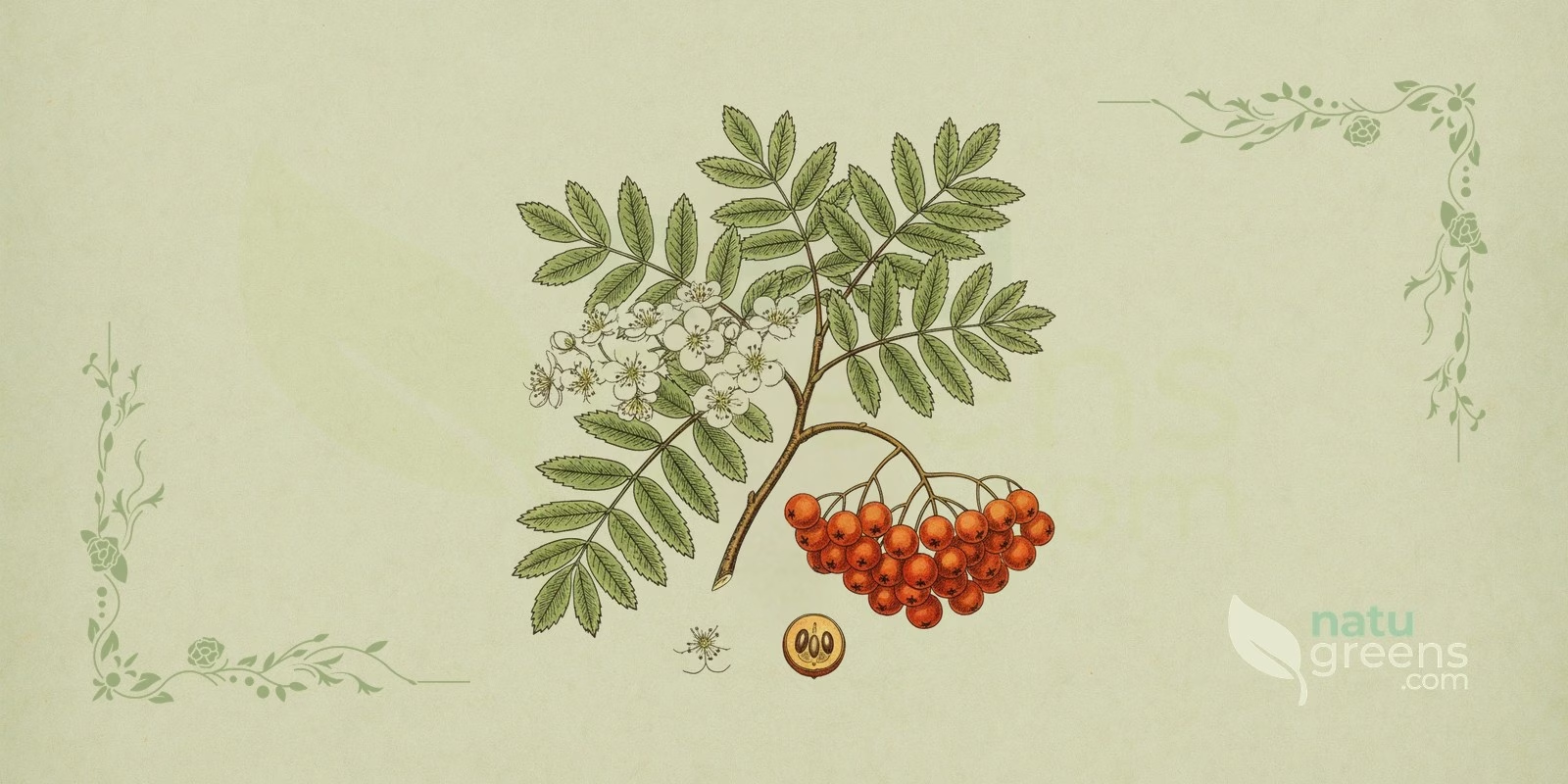
Sorbus aucuparia L. / Rowan, commonly known as rowan or European mountain-ash, is a deciduous tree or shrub in the Rosaceae family. The species is native to Europe, parts of Asia and North Africa. The plant is valued for the medicinal and nutritional properties attributed to its brightly colored fruits, which European folk medicine and cooking have used for centuries as a source of vitamins, polyphenols and other bioactive compounds. Its tolerance of cold climates and its ability to thrive in a wide range of soils explain both its broad distribution and the ethnobotanical and pharmacological interest it attracts. The fruits, however, should only be eaten after they have been cooked or dried.
Popular and International Names of Rowan
Many of the species’ names in other languages refer to the birds that feed on its fruits or to the bird catchers of old, such as the German Vogelbeere (bird berry), the French sorbier des oiseleurs and the Italian sorbo degli uccellatori, the last two both referring to fowlers.
- English: European mountain-ash, mountain-ash, rowan.
- French: sorbier des oiseaux, sorbier des oiseleurs.
- German: Eberesche, Vogelbeere.
- Italian: sorbo degli uccellatori, sorbo selvatico.
- Portuguese: sorveira-brava (Portugal); sorveira-dos-passarinhos, sorveira-silvestre (Brazil).
- Spanish: mostajo, serbal de cazadores.
Botanical Synonyms of Sorbus aucuparia
The taxonomy of Sorbus aucuparia has shifted somewhat over time, and although Sorbus aucuparia L. is the most widely accepted scientific name, other binomials have been used in different contexts and historical periods. The taxonomic complexity of the genus Sorbus, with its subgenera and sections, adds to the variety of names associated with the species, among which are the following synonyms:
- Mespilus aucuparia (L.) Scop.
- Pyrus aucuparia (L.) Gaertn.
Botanical Family: Rosaceae
Sorbus aucuparia belongs to the Rosaceae family, one of the largest and most important families of flowering plants, with about 4,828 species in 91 genera. The family is known for its great diversity, spanning trees, shrubs and herbs, and it includes many plants of economic, culinary and ornamental importance, such as apples, pears, raspberries, roses and strawberries. Its flowers are usually pentamerous, with five sepals, five petals and numerous stamens, while the fruits vary widely and include pomes, drupes and achenes. With its small pome-type fruits, rowan is a classic example of the morphology and phytochemical traits typical of this family.
Parts of Rowan Used
Tradition makes use of several parts of the tree, but the fruits only go into preparations after being cooked or dried, and the seeds are always strained out and discarded.
- Bark
- Berries (fruits, always cooked or dried)
- Flowers
- Leaves
Ethnobotanical and Traditional Uses
The uses listed below come from European folk medicine and ethnobotanical records and have not been confirmed in clinical studies. Conditions such as high blood pressure, kidney disease, liver problems and tuberculosis require medical diagnosis and follow-up, never self-medication.
- Antiemetic (traditional use for nausea and vomiting)
- Antirheumatic
- Antiscorbutic (traditional record linked to its vitamin C content)
- Aperitive (appetite stimulant)
- Astringent
- Bronchitis
- Cough
- Depurative (traditional record)
- Diarrhea
- Diuretic
- Gout
- Hemorrhoids
- High blood pressure
- Kidney diseases
- Liver and gallbladder problems
- Respiratory infections
- Tuberculosis
Therapeutic Properties of Rowan
The activities below have been described mainly in laboratory studies with fruit extracts and have not yet been confirmed in clinical trials in humans. For that reason, they should not be read as treatment recommendations.
- Antibacterial (inhibition of bacteria observed in in vitro studies)
- Antidiabetic (inhibition of sugar-digesting enzymes observed in vitro, without clinical evidence)
- Antidiarrheal (traditional record linked to its astringent tannins)
- Anti-inflammatory (effect investigated in experimental studies)
- Antioxidant (free radical scavenging demonstrated in the laboratory)
- Antiproliferative (activity observed in laboratory studies, without clinical evidence)
- Antiviral (activity reported in experimental studies, without clinical confirmation)
- Diuretic (traditional record of increased urine output)
- Neuroprotective (effect investigated in experimental studies, without confirmation in humans)
- Vasodilator (relaxation of isolated blood vessels observed in the laboratory)
Detailed Phytochemical Profile of Rowan
Sorbus aucuparia is remarkably rich in phytochemicals, which account for much of the scientific interest in the species, and the fruits in particular hold substantial amounts of nutrients and secondary metabolites. Their composition varies with location, provenance, cultivar, climate and ripeness. The biphenyl phytoalexins listed below have been described mostly in cell cultures and in the wood of plants exposed to stress. The main groups of constituents identified in the species so far are the following:
- Biphenyl phytoalexins: aucuparin, 2′-hydroxyaucuparin, isoaucuparin, 2′-methoxyaucuparin, 4′-methoxyaucuparin, noraucuparin.
- Carotenoids: β-carotene (main), carotenes in all-trans and cis forms, cryptoxanthin, lutein, lycopene, zeaxanthin.
- Flavanols: catechin, epicatechin, procyanidin B1, procyanidin B2, procyanidin C1.
- Flavonoids: flavonols (isorhamnetin, kaempferol, kaempferol-3-O-glucoside, quercetin, quercetin-3-galactoside or hyperoside, quercetin-3-glucoside or isoquercitrin, quercetin-3-rutinoside or rutin, quercetin-3-O-β-sophoroside) and proanthocyanidins.
- Hydrolyzable tannins.
- Minerals: Al, Ca, Cl, Cu, Fe, K, Mg, Mn, Na, P, S, Si, Zn.
- Organic acids: acetic acid, citric acid, fumaric acid, gallic acid, malic acid (predominant), oxalic acid, parasorbic acid (in raw fruits), p-coumaric acid, protocatechuic acid, shikimic acid, sorbic acid, syringic acid, tartaric acid.
- Sorbitol.
- Sugars: fructose, glucose (main), sucrose.
- Terpenoids: α-amyrin, β-amyrin, betulin, cycloartenol, oleanolic acid, squalene, ursolic acid.
- Total polyphenols.
- Vitamins: vitamin C, vitamin E (α-tocopherol, γ-tocopherol, δ-tocopherol).
Preparation and Administration Forms of Rowan
Rowan appears in preparations for both internal and external use, from flower and leaf infusions to jellies made with the fruits, and each form draws on a different part of the plant.
- Compresses
- Decoction (of the bark)
- Dry extract
- Fluid extract
- Infusion (of flowers and leaves)
- Jellies and syrups (from cooked fruits)
- Juices (from cooked fruits)
- Poultice
- Tincture (from dried fruits)
Every form that uses the fruits follows the same rule: the berries must be cooked, dried or made into jelly before they are eaten, never consumed raw in any quantity, and the seeds must be strained out and discarded. Because no standardized doses have been established in clinical studies for rowan, the amount and frequency of decoctions, tinctures and extracts have to be set case by case. The most prudent course is to consult a healthcare professional before any ongoing medicinal use.
Synergy with Other Medicinal Plants
The combinations below follow records from herbal tradition and have no proven efficacy in clinical studies. People who take medication on a regular basis should seek professional advice before combining plants, since each one carries its own contraindications.
Digestive Comfort
Because of its astringent tannins, rowan appears in traditional blends with chamomile (Matricaria chamomilla) or peppermint (Mentha × piperita), both traditionally used for mild gastrointestinal discomfort such as short-lived diarrhea and irritation of the mucosa. In this traditional record, the tannins of rowan would add to the calming compounds attributed to chamomile, although this interaction has never been evaluated in studies with people.
Antioxidant-Rich Combinations
Thanks to the vitamin C and polyphenol content of its fruits, rowan is often paired, in homemade syrups and jellies, with other sources of antioxidants such as dog rose (Rosa canina) and elder (Sambucus nigra). Like rowan berries, elderberries should also be eaten only when cooked. Tradition turns to these blends during the cold months and as a complement to a varied diet, without replacing vaccines, medical care or healthy habits.
Rheumatic Complaints in Traditional Use
In folk records related to rheumatism and gout, rowan appears alongside plants with an anti-inflammatory and diuretic tradition, such as field horsetail (Equisetum arvense) and devil’s claw (Harpagophytum procumbens). Tradition credits rowan with a diuretic action and the companion plants with a role in easing joint discomfort. Devil’s claw, however, has its own contraindications, including for people who take anticoagulants or have a gastric ulcer, and the combination should only be used with professional guidance.
Recipes and Usage Protocols of Rowan
Bark Decoction in Traditional Diuretic Use
Ingredients: a small amount of dried Sorbus aucuparia bark and water.
Preparation: Place the bark and water in a saucepan, bring to the heat and let it boil for 10 to 15 minutes, then strain and allow to cool. The bark decoction is traditionally used as a diuretic and for mild kidney complaints, but since there are no safety data for prolonged use, the amount and frequency should be set by a healthcare professional, and kidney disease always calls for medical follow-up.
Rowan Jelly with Lemon
Ingredients: 500 g of ripe Sorbus aucuparia berries, 500 g of sugar and the juice of 1 lemon.
Preparation: Cook the berries in a little water until soft and press everything through a fine sieve to separate and discard the seeds and skins. Add the sugar and lemon juice to the purée and cook over low heat, stirring constantly, until it reaches setting point, then store in sterilized jars. Jelly is the most common traditional way of using the fruits, always cooked, and it can be eaten as a dietary complement, since the berries are a source of vitamin C and antioxidants.
Leaf and Flower Infusion for Traditional Digestive Use
Ingredients: a small amount of dried Sorbus aucuparia leaves and/or flowers and one cup of boiling water.
Preparation: Place the leaves and/or flowers in a cup, pour the boiling water over them, cover and let steep for 5 to 7 minutes before straining. This infusion is traditionally used for mild digestive complaints and as a general tonic, on an occasional basis, and frequent or prolonged use requires consulting a healthcare professional.
Dried Fruit Tincture for Traditional Use
Ingredients: dried Sorbus aucuparia berries and 70% grain alcohol, enough to cover them.
Preparation: Lightly crush the dried berries, place them in a dark glass jar and cover with the alcohol, sealing tightly and leaving to macerate for 2 to 4 weeks in a cool, dark place, shaking daily. Then strain carefully, discard all the seeds and store the tincture in a dark, tightly closed bottle. The tincture is traditionally used as a source of antioxidant compounds, but because it contains alcohol and has no dose established in studies, the amount and frequency should be guided by a healthcare professional, and it is not suitable for pregnant or breastfeeding women or for children.
The preparations above follow traditional records and do not replace professional guidance. Before any internal use, check the contraindications and interactions described in this article.
Associated Therapies
Clinical Phytotherapy
In phytotherapy, interest in Sorbus aucuparia extracts rests on the antioxidant, anti-inflammatory and antidiabetic activities observed in laboratory studies. The plant is often mentioned as a possible adjunct for gastrointestinal complaints and in the care of glucose metabolism. There are still no validated clinical protocols or standardized extracts in established use, so any use must be tailored by a qualified professional and must never replace the treatment of diabetes or other diseases.
Homeopathy
Although far less common than other plants in this field, Sorbus aucuparia appears in records of homeopathic preparations, usually associated with digestive or rheumatic complaints that match its traditional uses. In homeopathy, the plant goes through successive dilutions and the remedy is chosen based on the person’s overall set of symptoms, according to the principle of similars, with no scientific evidence of efficacy for this application.
Nutrition and Supplementation
Thanks to a nutritional profile rich in vitamins, especially C and E, minerals and polyphenols, rowan berries are valued in nutrition and supplementation. They can be eaten in jellies, juices and syrups or in dried form, always after cooking or drying to convert the parasorbic acid, and they are also used in dietary supplements intended to add antioxidants to the diet.
Contraindications and Side Effects of Rowan
General Contraindications
Raw fruits contain parasorbic acid, a gastrointestinal irritant (nausea, vomiting, diarrhea); cooking or drying converts it into harmless sorbic acid, so every recipe must use cooked, dried or jellied fruit, never raw fruit in any quantity. The seeds contain small amounts of cyanogenic glycosides, so the seeds must be strained out and discarded in all preparations. There are no safety data for pregnancy, breastfeeding or young children at medicinal doses, and use should be avoided in these groups. People with a sensitive stomach or a history of digestive problems should also take extra care, even with fruits that have already been cooked.
Distinguishing Similar Species
Do not confuse rowan with Sorbus domestica (service tree), a species of the same genus that bears larger fruits shaped like a small pear or apple, nor with mulberry (Morus), which belongs to another botanical family, the Moraceae. Each has its own composition, uses and precautions for consumption, and the guidance in this article applies only to Sorbus aucuparia.
Common Side Effects
Side effects are rare when the plant is prepared correctly, but eating raw berries can cause nausea, vomiting, diarrhea and abdominal pain because of their parasorbic acid. Allergic reactions are possible, though uncommon, in people sensitive to plants of the Rosaceae family, and if any adverse reaction occurs, use should be stopped and a doctor consulted.
Drug Interactions
Since laboratory studies describe antidiabetic activity for fruit extracts, medicinal use of rowan could, in theory, add to the effect of blood sugar-lowering drugs and other diabetes medications, with a risk of an excessive drop in glucose. Also as a precaution, people taking anticoagulants or antiplatelet drugs should avoid medicinal use without guidance. In vitro studies have assessed the effects of fruit extracts on fibrinogen and thrombin, and data on interactions in humans are still lacking. The vasorelaxant activity observed in the laboratory warrants similar caution for people taking antihypertensive drugs. Anyone on long-term medication should consult a healthcare professional before adding rowan to their routine.
Historical Notes and Interesting Facts
Sorbus aucuparia has a rich cultural and folkloric history. In Celtic tradition it was known as the “wizard’s tree”, credited with powers of protection against spirits and even with the ability to help find treasure. In Ireland, the tree played an important role in protective folk magic, and that reputation carried through centuries of northern European folklore.
The epithet aucuparia comes from the Latin avis (bird) and capere (to catch), a reference to the old practice of bird catchers using the fruits as bait, an origin also reflected in names such as sorbier des oiseleurs and serbal de cazadores. The fruits stay on the tree through the winter and feed many bird species, which explains bird-related names such as the Brazilian Portuguese sorveira-dos-passarinhos, used in some regions.
The wood, flexible and tough, was traditionally used in joinery and for making tools. Sorbic acid and sorbitol, now widely used by the food industry, owe their names to the genus Sorbus, since both were first isolated from rowan fruits in the 19th century. Sweet varieties were also developed through breeding programs, especially in Russia, to reduce the bitter, astringent taste of the wild berries and make them more pleasant to eat. Even in that case, the advice to eat the fruits cooked or dried still applies.
Frequently Asked Questions about Rowan
Can Rowan Berries Be Eaten Raw?
No, because the raw fruits of Sorbus aucuparia contain parasorbic acid, a gastrointestinal irritant that can cause nausea, vomiting and diarrhea. Cooking or drying converts this substance into harmless sorbic acid, so the berries should be eaten cooked, dried or as jelly, never raw in any quantity.
What Benefits Are Attributed to Rowan?
Laboratory studies describe antioxidant, anti-inflammatory, antimicrobial and antidiabetic activity in fruit extracts, and the fruits are also a source of vitamin C and polyphenols. In folk tradition, the plant is used for digestive problems, for rheumatism and as a diuretic, but none of these uses has been confirmed in clinical studies in humans.
Does Rowan Have Any Contraindications?
Yes, the main one is eating raw berries, and medicinal use should be avoided during pregnancy, breastfeeding and in young children, groups for whom there are no safety data. People allergic to plants of the Rosaceae family and those taking diabetes medications, anticoagulants or antihypertensives should consult a healthcare professional before using any rowan-based product.
Do Rowan Seeds Need to Be Discarded?
Yes, because the seeds contain small amounts of cyanogenic glycosides, compounds that can release cyanide in the body. For that reason, all preparations, from jellies to tinctures, must be strained to separate and discard the seeds before consumption.
How Is Rowan Used in Cooking?
In cooking, the berries are usually turned into compotes, jellies, juices, wines and syrups, always after cooking to neutralize the parasorbic acid and with the seeds discarded. Their sweet-sour, slightly astringent flavor goes well with both sweet and savory dishes and adds a distinctive touch to recipes.
Are Rowan and Service Tree the Same Plant?
No, rowan is Sorbus aucuparia, while the service tree is Sorbus domestica, a species of the same genus with larger fruits shaped like a small pear or apple. Neither should be confused with mulberry (Morus), which belongs to another botanical family and has its own uses and precautions.
Notice: this content is for informational purposes and does not replace professional medical advice. Consult a physician or herbal practitioner before using medicinal plants, especially during pregnancy, breastfeeding, or alongside medication.
References and Scientific Studies
- PMC2024 Aurori M, et al. The Antioxidant, Antibacterial and Cell-Protective Properties of Bioactive Compounds Extracted from Rowanberry (Sorbus aucuparia L.) Fruits In Vitro. Plants (Basel). 2024.
- PMC2020 Bobinaitė R, et al. Chemical composition, antioxidant, antimicrobial and antiproliferative activities of the extracts isolated from the pomace of rowanberry (Sorbus aucuparia L.). Food Res Int. 2020.
- PMC2019 Bujor A, et al. Metabolite profiling, arginase inhibition and vasorelaxant activity of Cornus mas, Sorbus aucuparia and Viburnum opulus fruit extracts. Food Chem Toxicol. 2019.
- PMC2023 Rutkowska M, et al. Chemometrics-Driven Variability Evaluation of Phenolic Composition, Antioxidant Capacity, and α-Glucosidase Inhibition of Sorbus aucuparia L. Fruits from Poland: Identification of Variability Markers for Plant Material Valorization. Antioxidants (Basel). 2023.