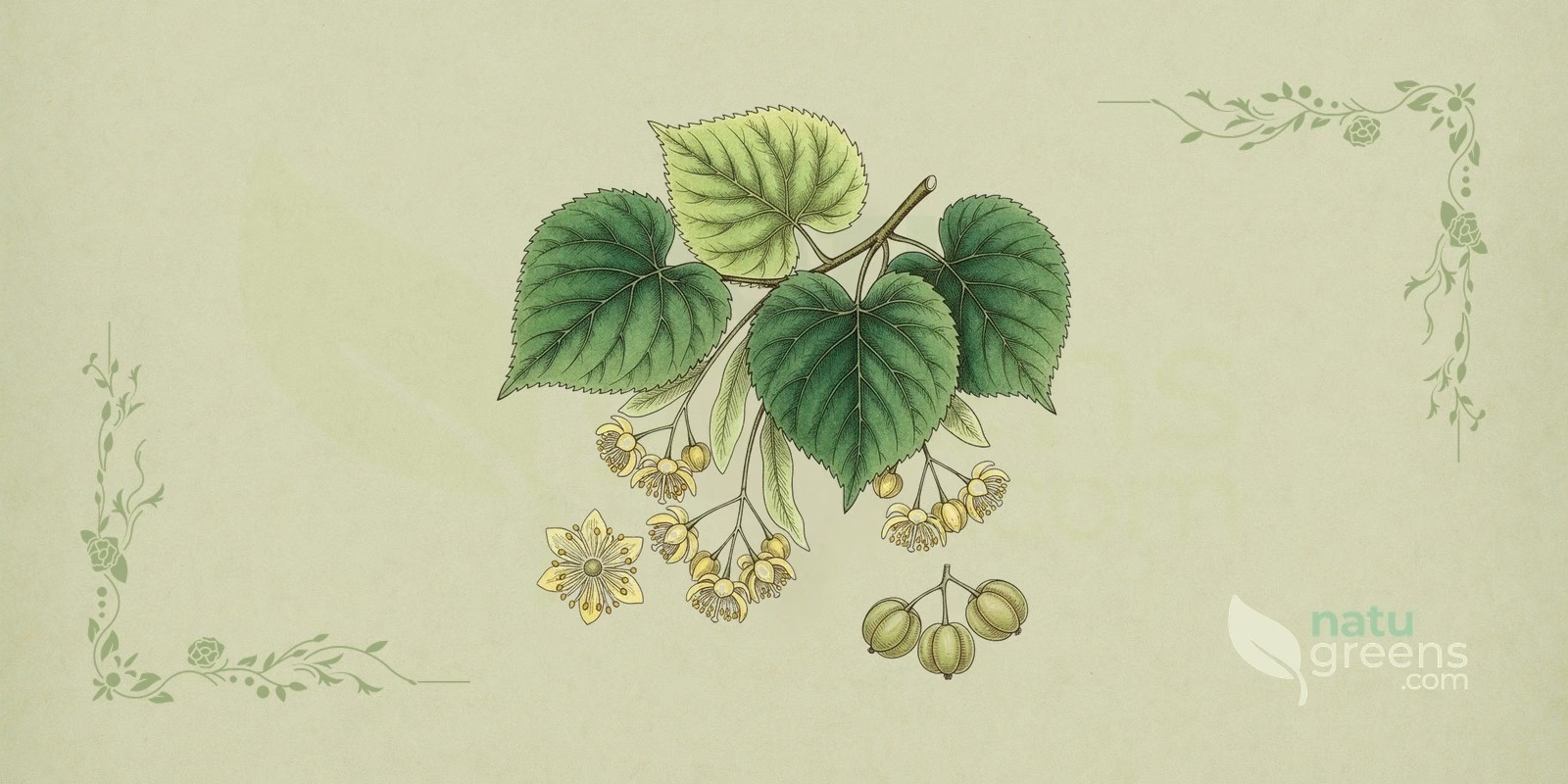
Tilia cordata Mill. / Littleleaf Linden, commonly called small-leaved lime in Britain and littleleaf linden in North America, is a deciduous tree of the Malvaceae family, native to much of Europe and described by Philip Miller. Prized for its fragrant flowers, linden has been used for centuries in European traditional medicine to promote relaxation and ease a range of minor discomforts. Its flowers, leaves, and bark go into infusions and extracts thanks to a phytochemical makeup rich in flavonoids and mucilages. Modern research has examined some of these traditional uses in laboratory and animal studies. The European Medicines Agency (EMA), for its part, recognizes the traditional use of linden flower to relieve symptoms of the common cold and mild mental stress, although this does not amount to clinical proof of efficacy.
Popular and International Names of Littleleaf Linden
- English: littleleaf linden, small-leaved lime.
- French: tilleul à petites feuilles, tilleul des bois.
- German: Steinlinde, Winterlinde.
- Italian: tiglio riccio, tiglio selvatico.
- Portuguese: tília, tília-cordata (Brazil), tília-de-folha-pequena (Portugal), tília-europeia (Brazil).
- Spanish: tilo, tilo de hoja pequeña.
Botanical Synonyms of Tilia cordata
Tilia cordata Mill. is the accepted scientific name for this species, but over the course of botanical history other names have been used to describe littleleaf linden, among them Tilia parvifolia Ehrh. ex Hoffm. and Tilia ulmifolia Scop. Current nomenclature follows the rules of the International Code of Nomenclature for algae, fungi, and plants, successor to the former International Code of Botanical Nomenclature, which brings clarity and consistency to the identification of species.
Botanical Family: Malvaceae
Tilia cordata belongs to the Malvaceae, a vast and diverse family of flowering plants comprising about 245 genera and more than 4,200 species. Among them are cotton, cacao, and hibiscus, plants of great economic, ornamental, and medicinal importance. The genus Tilia used to be placed in the former family Tiliaceae, but phylogenetic studies based on molecular evidence led to its inclusion in the Malvaceae, the circumscription adopted today by the major classification systems. Malvaceae are characterized by five-petaled flowers, numerous stamens that are often fused at the base, and fruits of varied types. Linden shares with other members of the family traits such as its floral structure and the presence of mucilages.
Within the genus, littleleaf linden should not be confused with Tilia americana, a species native to North America with a profile of its own. It is also distinct from Tilia platyphyllos, a larger-leaved European species that shares with it the European Medicines Agency monograph on linden flower (Tiliae flos).
Parts of Littleleaf Linden Used
- Bark
- Flowers
- Inflorescences
- Leaves
Ethnobotanical and Traditional Uses
The uses listed below reflect the plant’s traditional European record and do not replace diagnosis or professional care for any of these conditions.
- Anxiety and nervousness
- Catarrh and cough
- Fever
- Headaches and migraines
- Indigestion and flatulence
- Insomnia and sleep disorders
- Liver and biliary complaints
- Mild high blood pressure, as recorded in tradition
- Relief of flu and flu-like illness
- Rheumatic pain
- Skin inflammation
- Spasms and colic
Therapeutic Properties of Littleleaf Linden
- Analgesic (traditionally recorded for relief of mild pain)
- Anti-inflammatory (activity observed in laboratory studies)
- Antioxidant (neutralizes free radicals in laboratory assays)
- Antispasmodic (traditionally recorded for relief of spasms and colic)
- Anxiolytic (calming effect explored in preliminary studies, mainly in animals)
- Diaphoretic (promotes sweating, a traditional use in feverish states)
- Diuretic (traditionally recorded as increasing urine output)
- Emmenagogue (traditionally recorded as stimulating menstrual flow)
- Expectorant (traditionally recorded as helping to clear mucus)
- Hypotensive (traditionally recorded as lowering blood pressure, without clinical proof)
- Sedative (mild relaxing effect described by tradition, which may cause drowsiness)
Detailed Phytochemical Profile of Littleleaf Linden
- Essential oils
- Flavonoids (apigenin, kaempferol, quercetin, tiliroside)
- Glycosides
- Mucilages
- Phenolic acids (caffeic, chlorogenic, p-coumaric)
- Piperidine alkaloids (recently described in the flowers)
- Proanthocyanidins
- Saponins
- Tannins
- Terpenoids
Flavonoids, tiliroside in particular, and the proanthocyanidins of the flowers account for most of the research on the species, which includes laboratory assays with human neutrophils. The mucilages, in turn, are usually linked to the smooth texture of the infusion and to its traditional use for coughs and catarrh.
Preparation and Administration Forms of Littleleaf Linden
- Compresses
- Decoction
- Dry extract
- Fluid extract
- Infusion
- Poultice
- Tincture
An infusion of the dried flowers is the most traditional form of internal use, while poultices and compresses are reserved for external application to the skin. Extracts, tinctures, and capsules call for attention to the concentration stated by the manufacturer and, ideally, guidance from a health professional, especially for people who already take other medicines or plan to keep using it over long periods.
Synergy with Other Medicinal Plants
For Anxiety and Insomnia
Herbal tradition combines linden with valerian (Valeriana officinalis) and passionflower (Passiflora incarnata) in blends traditionally used for sleep disturbances and nervousness. In these blends, linden contributes flavonoids investigated for their action on the central nervous system, while the other two plants add compounds with a calming effect. Because all three can cause drowsiness and the combination tends to intensify that effect, it calls for extra caution in people who drive, operate machinery, or already take sedatives.
For Colds and Flu
Pairing linden with elder (Sambucus nigra) and echinacea (Echinacea purpurea) is a traditional practice for colds and flu. Here linden is included for the diaphoretic and expectorant effect that tradition ascribes to it, linked to relief of fever and cough. Elder and echinacea, for their part, are traditionally associated with immune support, and laboratory studies are investigating their antiviral activity, though this offers no assurance of a faster recovery.
For Digestive Complaints
Linden also appears in blends with peppermint (Mentha × piperita) and lemon balm (Melissa officinalis), traditionally used for indigestion, flatulence, and colic. In these blends, the antispasmodic action attributed to linden adds to the carminative effect of the other two plants in support of gastrointestinal comfort.
Recipes and Usage Protocols of Littleleaf Linden
Calming Infusion for Sleep
Ingredients: 1 teaspoon of dried linden flowers, 200 ml of boiling water, and honey (optional).
Preparation: Place the linden flowers in a cup, pour in the freshly boiled water, cover, and let steep for 5 to 7 minutes before straining and sweetening with honey, if desired. Traditionally, the cup is taken about 30 minutes before bedtime, as part of an evening relaxation ritual associated with relief of mild anxiety and nervousness.
Infusion for Cold Relief
Ingredients: 1 tablespoon of dried linden flowers and leaves, 250 ml of boiling water, the juice of half a lemon, and honey (optional).
Preparation: Add the linden flowers and leaves to the boiling water, cover, and let steep for 10 minutes. Then strain and add the lemon juice and honey to taste. Tradition recommends drinking the infusion hot, 2 to 3 times a day, for cold symptoms such as cough, sore throat, and fever. In this use, the diaphoretic effect attributed to linden encourages sweating, an age-old practice in feverish states. A high fever, or one that persists for several days, however, always calls for medical evaluation.
The preparations above follow traditional records and do not replace professional guidance. Before any internal use, check the contraindications and interactions described in this article.
Associated Therapies
Aromatherapy
Linden essential oil, less common than that of other plants, is valued in aromatherapy for its relaxing qualities. It is usually used in diffusers or in massage, always diluted in a vegetable carrier oil, to create a calm atmosphere and ease feelings of stress and anxiety. Its soft, floral fragrance is associated with emotional well-being and features in evening relaxation rituals as a complement to, and never a substitute for, professional care for sleep disorders.
Clinical Phytotherapy
In clinical phytotherapy, linden appears in formulations such as standardized extracts and capsules, used as support in cases of mild anxiety, difficulty sleeping, and inflammation and, as recorded in tradition, in mild hypertension. The action of these formulations is attributed mainly to flavonoids and mucilages. Any recommendation is always individualized by the practitioner, who assesses the patient’s condition and possible interactions with other medicines before suggesting any use.
Homeopathy
In homeopathy, linden (Tilia europaea or Tilia cordata) is used, according to the principles of this practice, in conditions such as insomnia, nervousness, headaches, and digestive complaints. The remedy is prepared from the flowers and leaves of the plant through dilution and potentization. Homeopathic tradition tends to recommend it for people with hypersensitivity and irritability, but the efficacy of homeopathic preparations lacks consistent scientific evidence.
Contraindications and Side Effects of Littleleaf Linden
General Contraindications
Linden has a high safety profile in food use and is generally considered safe in the amounts usually consumed as tea. Even so, its use is contraindicated in people with known hypersensitivity to any component of the plant or to other species of the Malvaceae family. People with heart disease or who take blood pressure medication should talk to their doctor before use, because of the hypotensive effect that tradition attributes to the plant. The popular belief that prolonged use of linden is toxic to the heart, however, has no support in the available scientific literature and should not be taken as fact.
During pregnancy and breastfeeding, use in medicinal doses is not recommended without professional guidance, because conclusive studies on safety in these groups are lacking and tradition attributes emmenagogue action to the plant. In children, the tea should only be offered in moderation and under pediatric guidance. In infants, even greater caution is needed, since an Argentine study detected spores of Clostridium botulinum, the bacterium that causes infant botulism, in samples of linden flower. For the same reason, the honey in the recipes should not be given to children under 1 year of age.
Possible Side Effects
Side effects of linden are rare and usually mild, but mild drowsiness may occur, which calls for caution when driving or operating machinery shortly after consumption. Allergic reactions are rare and, when they occur in sensitive people, show up as skin rashes or itching. Excessive consumption, on the other hand, can cause mild gastrointestinal upset, such as nausea or diarrhea. If any unwanted effect appears, use should be stopped and a health professional consulted.
Drug Interactions
Because of its possible hypotensive effect, linden may add to the action of blood pressure medications and lead to an excessive drop in blood pressure. The mild drowsiness the plant can cause also calls for caution with sedatives, anxiolytics, and other medicines that make people drowsy, whose effect may be intensified. People taking diuretics should be especially careful, since tradition also attributes diuretic properties to linden, with a risk of electrolyte imbalance. The general recommendation is to consult a doctor or pharmacist before starting use, especially if you are taking other medications.
Species Identification
The safety information in the European monograph on linden flower (Tiliae flos) refers to Tilia cordata and Tilia platyphyllos. These data should not be automatically extended to other species of the genus, such as Tilia americana, which has its own studies and profile. When buying, it is advisable to check the plant’s scientific name on the label, since products sold simply as “linden” may contain different species.
Historical Notes and Interesting Facts
Sacred Tree and Cultural Symbol
Linden has deep cultural and historical significance in many European civilizations and was considered sacred by Germanic and Slavic peoples. In Germanic tradition, the tree was associated with the goddess Freya, a symbol of love, fertility, and protection. Many villages planted lindens in the middle of their squares, where assemblies, trials, and celebrations were held. Its welcoming shade and the beauty of its flowers made the tree a meeting place and a symbol of community and justice.
Linden in Mythology and Folklore
In Greco-Roman mythology, linden appears in the myth of Philemon and Baucis, told by Ovid in the Metamorphoses. In the story, the elderly couple, rewarded for their hospitality, were turned into two trees, an oak and a linden, so they could stay together forever. In European folklore, linden was believed to ward off evil and protect against lightning, and its branches were hung over the doors of houses to bring good luck and safety. Its light, easily worked wood was also widely used for carving and sculpture, including religious figures.
Linden in Literature and Music
Linden has inspired poets, writers, and musicians over the centuries, and a notable example is the poem Der Lindenbaum (The Linden Tree) by Wilhelm Müller, immortalized by Franz Schubert in the song cycle Winterreise. The tree is often associated with themes of nostalgia, love, and tranquility, and its presence in botanical gardens and historic parks shows the aesthetic and symbolic importance that keeps this cultural heritage alive.
Frequently Asked Questions about Littleleaf Linden
Does Linden Tea Make You Sleepy?
Linden tea is known in tradition for its calming properties and may promote relaxation and mild drowsiness, which is why it is often used for mild insomnia and nervousness. It is usually taken before bedtime, and anyone already taking sedatives or anxiolytics should talk to their doctor first, because the effects may add up.
What Is the Recommended Dose of Linden Tea?
The most common traditional guidance is 1 teaspoon of dried flowers to 200 ml of boiling water, steeped for 5 to 7 minutes. Intake usually ranges from 1 to 4 cups a day, as needed. The right amount varies from person to person, so it is advisable to consult a health professional and not exceed usual use, which reduces the risk of unwanted effects.
Does Linden Tea Have Contraindications?
Yes, linden tea is contraindicated for people allergic to the plant or to other species of the Malvaceae family. Pregnant and breastfeeding women, people with heart disease, and those taking blood pressure medication should consult a doctor before use, and the plant may intensify the effect of sedatives and diuretics.
Can Linden Tea Be Given to Children?
Linden tea is a folk remedy used to soothe colic and encourage sleep in children, but it should only be offered in moderation and under pediatric guidance, with the amount adjusted to age and weight. In infants, greater caution is needed, because a study found spores of the botulism bacterium in samples of linden flower, and honey should never be added to tea for children under 1 year of age.
Is Long-Term Use of Linden Bad for the Heart?
The idea that long-term consumption of linden tea is toxic to the heart is a popular belief with no support in the available scientific literature, and the plant has a high safety profile in food use. Even so, people with heart disease or who take blood pressure medication should talk to their doctor, because tradition attributes a mild hypotensive effect to linden.
What Uses Does Tradition Attribute to Linden Tea?
European tradition uses linden tea to promote relaxation, ease mild anxiety and insomnia, accompany colds and flu with fever and cough, and aid digestion. The European Medicines Agency, for its part, recognizes the traditional use of the flower for symptoms of the common cold and mild mental stress. Laboratory studies are also investigating the anti-inflammatory and antioxidant action of its compounds, but these findings do not amount to clinical proof.
Notice: this content is for informational purposes and does not replace professional medical advice. Consult a physician or herbal practitioner before using medicinal plants, especially during pregnancy, breastfeeding, or alongside medication.
References and Scientific Studies
- PMC2021 Symma N, et al. Novel Piperidine and 3,4-dihydro-2H-pyrrole Alkaloids from Tilia platyphyllos and Tilia cordata Flowers. Planta Med. 2021.
- PMC2018 Czerwińska ME, et al. The influence of procyanidins isolated from small-leaved lime flowers (Tilia cordata Mill.) on human neutrophils. Fitoterapia. 2018.
- PMC2024 EFSA Panel on Plant Health (PLH), et al. Commodity risk assessment of Tilia cordata and Tilia platyphyllos plants from the UK. EFSA journal. European Food Safety Authority. 2024.