Quick summary
Agave americana L. / Agave is a succulent plant of the Asparagaceae family, native to the arid regions of Mexico and the southern United States, known for its hardiness and its remarkable range of uses. Over the centuries, Agave americana has been an important source of food, fiber, drink and medicine for many…
Main caution: The fresh sap of Agave americana contains calcium oxalate raphides and saponins and causes irritant contact dermatitis, with clinical reports of blisters and purpura in people who handle the plant, as well as irritation…
Agave americana L. / Agave is a succulent plant of the Asparagaceae family, native to the arid regions of Mexico and the southern United States, known for its hardiness and its remarkable range of uses. Over the centuries, Agave americana has been an important source of food, fiber, drink and medicine for many Indigenous cultures, holding a prominent place in the ethnobotanical traditions and local economy of much of Mesoamerica.
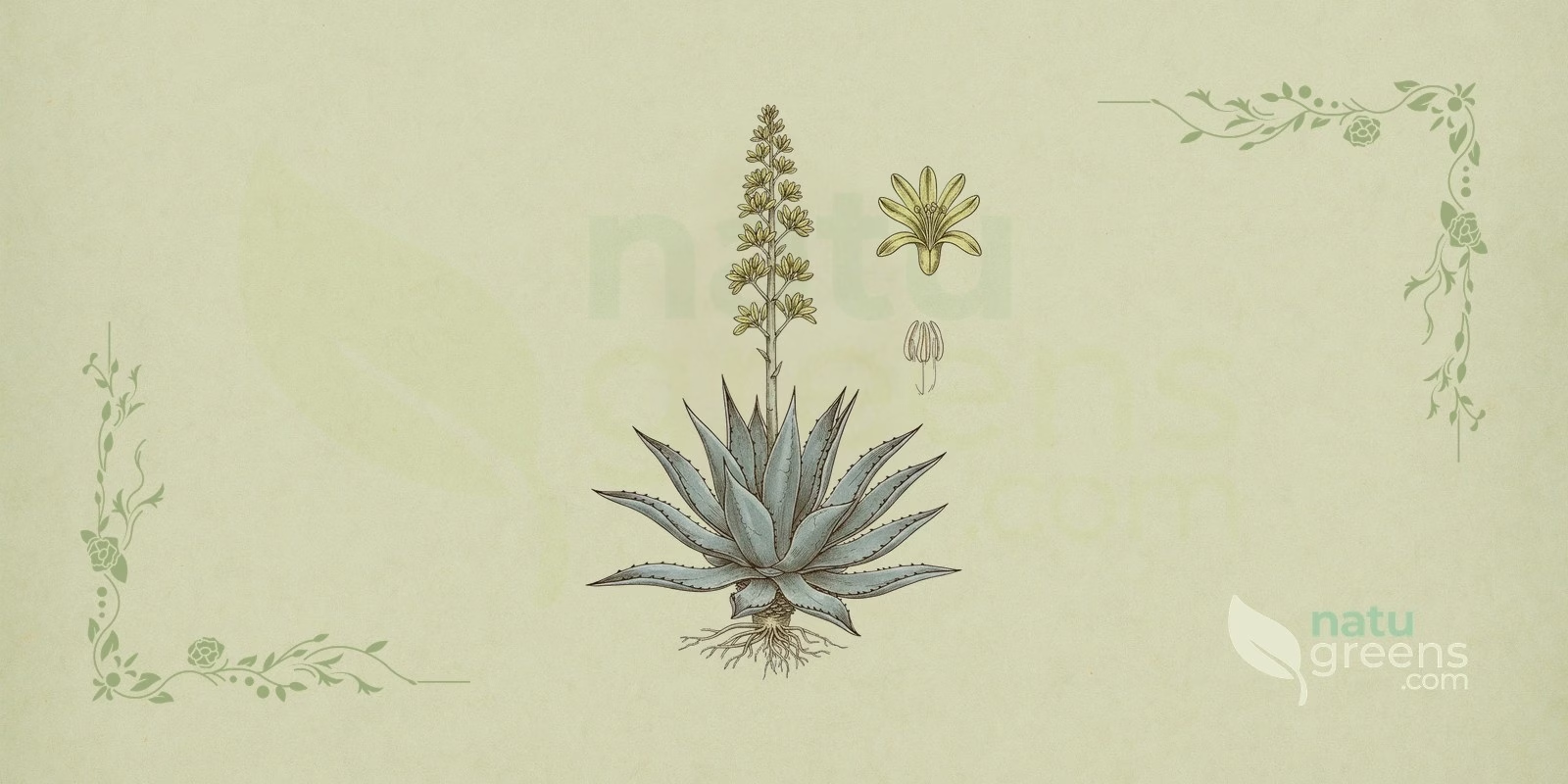
The nickname “Century Plant” comes from its unusual life cycle, in which a long period of vegetative growth comes before the formation of a single towering flower stalk, after which the plant dies. Before that flowering, the cooked heart, the fibers and the sap find uses that range from fermented and distilled drinks, such as pulque and mezcal, to folk remedies for a variety of complaints. Its phytochemical compounds, including saponins and flavonoids, are being investigated for anti-inflammatory and antibacterial activity in laboratory and animal studies, still without confirmation in clinical trials in people. The fresh sap, on the other hand, irritates the skin and mucous membranes, and the raw plant should not be eaten, a precaution that runs through this entire article.
Popular and International Names of Agave
- English: American Agave, American Aloe, American Century Plant, Century Plant, Centuryplant, Flowering Aloe, Maguey, Spiked Aloe.
- French: Agave Américain, Agave d’Amérique, Faux Aloès.
- German: Agave, Amerikanische Agave, Hundertjährige Agave.
- Italian: Agave.
- Portuguese: Agave, Agave-Americana, Aloé-dos-Cem-Anos, Cacto-da-Praia, Pita, Piteira, Piteira-Brava, Piteira-de-Boi.
- Spanish: Agave, Lechuguilla, Maguey, Mescal, Pita Común.
In Brazil, the name “piteira” usually refers to Furcraea foetida, a similar-looking plant from another genus, so the common name alone is not enough to identify Agave americana, whose leaves bear strong spines along the margins and at the tip.
Botanical Synonyms of Agave americana
The accepted name today is Agave americana L., and the species has gathered a number of synonyms over its taxonomic history, notably Agave altissima Zumagl., Agave communis Gaterau, Agave complicata Trel. ex Ochot., Agave cordillerensis, Agave felina, Agave gracilispina, Agave rasconensis Trel., Agave zonata Trel. and Aloe americana (L.) Crantz. These names reflect the reclassifications the plant went through in different periods and regions of botanical study, and older works still place the genus in the family Agavaceae, now merged into Asparagaceae.
Agave should also not be confused with close relatives that have their own uses and data: Agave sisalana is sisal, grown mainly for its fiber; Agave tequilana is the sole raw material of tequila; and Furcraea foetida is the “piteira” common in Brazil, from another genus. Much of the information circulating about agavins, inulin and agave syrup comes from Agave tequilana and Agave salmiana, and it cannot be transferred automatically to Agave americana.
Botanical Family: Asparagaceae
Agave americana belongs to the Asparagaceae family, subfamily Agavoideae, a vast and diverse group of flowering plants ranging from perennial herbs to shrubs and tree-like forms, many of them valued for ornamental, food or medicinal purposes. This classification places agave close to genera such as Dracaena, Yucca and Hosta, with which it shares morphological and phytochemical traits, including a marked presence of steroidal saponins.
Parts of Agave Used
- Flowers, eaten only after boiling and cooking
- Heart (Piña), eaten only after prolonged cooking
- Juice (Aguamiel)
- Leaves
- Plant Pulp
- Roots
- Sap
Raw leaves and sap are not suitable for internal use, because they concentrate hemolytic saponins and calcium oxalate crystals, and the fresh sap calls for gloves when handled because of the risk of dermatitis.
Ethnobotanical and Traditional Uses
- Cosmetic Ingredients
- Food (heart and flowers, always after prolonged cooking)
- Mezcal (alcoholic drink distilled from the cooked and fermented heart)
- Paper (leaf fibers)
- Pulque (alcoholic drink obtained by fermenting aguamiel, with no medicinal purpose)
- Rope (leaf fibers)
- Soap (saponin-rich pulp that lathers in water)
- Syrup (aguamiel concentrated by boiling, for culinary use)
- Traditional Medicine (folk record for inflammation, indigestion, dysentery, jaundice, skin problems, constipation and acidity, with no clinical trial to confirm it)
Therapeutic Properties of Agave
- Antibacterial (activity of leaf extracts against Staphylococcus aureus and Pseudomonas observed in the laboratory)
- Anti-inflammatory (effect observed in animal models with leaf extract, attributed to flavonoids, genins and saponins)
- Antiproliferative (activity observed in laboratory studies, without clinical evidence)
- Antirheumatic (folk record without clinical trials, under study)
- Diuretic (folk record without clinical trials, under study)
- Hepatoprotective (effect observed in rats with methanolic leaf extract, no human data)
- Hypoglycemic (effect observed in an animal study, no human data)
- Laxative (folk record without clinical trials, under study)
Detailed Phytochemical Profile of Agave
Agave americana contains a range of bioactive compounds that help explain scientific interest in the plant, starting with a high proportion of carbohydrates, which serve as an energy reserve and as structural components of its tissues. Saponins, glycosides that foam in water and that are being studied for their anti-inflammatory activity, are the most characteristic class in the species, along with the steroidal genins from which they derive, and with flavonoids, isoflavones and coumarins, to which antioxidant effects have been attributed in laboratory tests.
Analyses of leaf extracts also report significant levels of total phenolics and flavonoids, substances linked to the plant’s own defenses and studied for their possible effects on human health. The fresh sap also contains raphides, needle-shaped calcium oxalate crystals that, together with the saponins, account for the irritation of the skin and mucous membranes. The agavin-type fructans and the inulin so often mentioned in material about agave were characterized mainly in Agave tequilana and Agave salmiana, and their data should not be extended to Agave americana without caution.
Preparation and Administration Forms of Agave
- Extracts (methanolic and aqueous, used in laboratory and animal research)
- Fermentation and Distillation (production of pulque and mezcal, alcoholic drinks with no medicinal purpose)
- Leaf Infusions (folk record for internal use, with no safety data; do not use raw leaf or sap)
- Poultices and Compresses (traditional record of topical use, now discouraged with fresh sap because of the risk of dermatitis)
- Prolonged Cooking of the Heart (traditional food preparation, in an oven or earth pit, for many hours)
- Syrup (aguamiel boiled for hours until it thickens, used as a sweetener in cooking)
Synergy with Other Medicinal Plants
Research suggests that combining plant extracts may support wound healing in experimental models, but there are no studies or ethnobotanical records describing a specific synergy between Agave americana and other plants in traditional formulations. A pairing with Aloe vera, whose gel is traditionally used for skin irritation, is sometimes mentioned, yet this combination has no documented traditional basis and does not justify applying fresh agave sap to the skin, which is irritating and should not be used as a wound-healing agent.
Recipes and Usage Protocols of Agave
Roasted Agave (Heart of the Plant)
A traditional Mexican food preparation, presented here as a cultural curiosity and without any health purpose. Complete, prolonged cooking is mandatory, because the raw heart contains saponins and calcium oxalate and must not be eaten.
Ingredients: Heart of Agave americana (piña).
Preparation: Harvest the agave, cut off the leaves and wrap the heart in aluminum foil, wearing gloves throughout the handling. Roast at 175 °C (350 °F) for about 10 hours, until it is completely soft and golden. Once cooled, extract the juice and pulp, which traditionally serve as a base for fermented drinks or are eaten as food.
Cooked Flowers
A traditional culinary use of the flowers, recorded as a food preparation and not as a remedy, always with full boiling and cooking before eating.
Ingredients: Agave americana flowers, garlic, onion, potatoes.
Preparation: Boil the flowers, remove the petals and cook them with garlic, potatoes and onion over low heat until all the ingredients are well cooked, bringing out the distinctive flavor of the flowers.
Mezcal Production
A traditional Mexican artisanal process for an alcoholic drink, described here for its cultural interest, with no medicinal purpose at all. Mezcal can be made from several agave species, whereas tequila, by definition, comes only from Agave tequilana.
Ingredients: Agave heart (piña).
Preparation: Roast the heart of the plant in underground ovens with hot stones, the step that gives mezcal its characteristic smoky flavor. After cooking, the piña is crushed, fermented and distilled.
Agave Syrup
A traditional culinary preparation, used as a sweetener, that depends on long boiling of the aguamiel and should not be confused with drinking raw sap. Much of the nutritional data published about agave syrup refers to Agave tequilana and Agave salmiana.
Ingredients: Agave americana juice (aguamiel).
Preparation: Boil the agave juice uncovered for 4 to 5 hours, stirring from time to time, until it reaches a light amber color and a syrupy consistency, after which it can be used in cooking.
The preparations above follow traditional records and do not replace professional guidance. Before any internal use, check the contraindications and interactions described in this article.
Associated Therapies
Homeopathy
In homeopathy, traditional repertories list Agave americana for digestive complaints such as indigestion, bloating and flatulence, as well as gonorrhea, scurvy, stomach pain and painful erections, indications that belong to the homeopathic record and lack clinical evidence. The Food and Drug Administration (FDA), the US regulatory agency, has not evaluated the safety or efficacy of homeopathic products, and any use should be guided by a qualified professional.
Traditional Mexican Medicine
In Mexico and the southwestern United States, maguey is part of folk medicine practices recorded in ethnobotanical surveys, which mention the use of the plant for digestive complaints, inflammation and skin problems. These accounts document the tradition but do not replace clinical studies, and topical use of the fresh sap is now discouraged because of the risk of dermatitis.
Contraindications and Side Effects of Agave
Contact Dermatitis and Mucous Membrane Irritation
The fresh sap of Agave americana contains calcium oxalate raphides and saponins and causes irritant contact dermatitis, with clinical reports of blisters and purpura in people who handle the plant, as well as irritation of the mucous membranes. For this reason, agave must be handled with gloves, and the fresh sap must never be applied to the skin as a “wound healer”.
Toxicity of Internal Use
Internal use of raw leaf or sap is toxic, because of the hemolytic saponins and calcium oxalate. The plant only becomes food after prolonged cooking of the heart, a traditional Mexican preparation that appears here as a cultural curiosity and without any health claim. Fermented aguamiel, known as pulque, is an alcoholic drink and not a medicinal preparation. The traditional uses as a diuretic, laxative and antirheumatic are folk records without clinical trials, still under study, and any internal use requires guidance from a health professional.
Pregnancy and Breastfeeding
Pregnant and breastfeeding women should avoid agave, both because of its saponins and because of its recorded use as an emmenagogue, that is, to stimulate menstrual flow. Use in children also lacks safety data and should be avoided.
Drug Interactions
Since a hypoglycemic effect was seen in an animal study, people taking antidiabetic drugs or insulin should be cautious, as the combined effects could lower blood glucose too much. The diuretic action attributed to the plant by tradition also calls for caution in people taking diuretics or lithium, whose blood concentration may change with fluid loss. During any ongoing treatment, the advice is to consult a doctor or pharmacist before combining the plant with medications.
Historical Notes and Interesting Facts
The Century Plant
Agave americana earned the nickname “Century Plant” because of its unusual life cycle, in which it spends 10 to 30 years in vegetative growth before producing a single, striking flower stalk. After this flowering the plant dies, but it leaves offshoots at its base that grow into new plants.
Maguey: A Cultural Symbol
In Mexico, Agave americana is known as “maguey” and has deep cultural and economic importance, serving as the base for traditional drinks such as mezcal and pulque and for many culinary and craft uses, to the point of being seen as a true symbol of Mexican identity.
Use by the Mescalero Apache
The Mescalero Apache, an Indigenous people of the southwestern United States and northern Mexico, relied heavily on Agave americana for their subsistence, using the plant as food, as a source of fiber for ropes and textiles, and even turning the sharp leaf tips into tools and weapons. This relationship with maguey shows how versatile and important the plant is in arid environments.
Use as Soap
The pulp of Agave americana, especially from certain varieties, can work as a natural soap, and in some regions the plant is called “Mexican soap” because its saponins lather when rubbed with water, which led to its use in personal hygiene and laundry, always with care to protect the hands from the irritating sap.
Frequently Asked Questions about Agave
Can Agave Tea Be Consumed Daily?
There are no safety data to support daily consumption of agave tea, and internal use of raw leaf or sap is toxic because of the hemolytic saponins and calcium oxalate. The plant is traditionally eaten as food only after prolonged cooking of the heart. Any internal use for health purposes should first be discussed with a health professional.
What Was Agave Traditionally Used For?
Folk tradition uses agave for digestive complaints such as indigestion, flatulence and constipation, as well as inflammation and skin problems, and credits it with diuretic, laxative and antirheumatic action. Laboratory and animal studies are investigating the anti-inflammatory and antibacterial activity of leaf extracts, linked to saponins and flavonoids, but none of these uses has been confirmed in a clinical trial.
Are There Known Side Effects of Agave?
Yes. The fresh sap causes irritant contact dermatitis, with reports of blisters and purpura in people who handle the plant, and it irritates the mucous membranes, so handling should be done with gloves. Eating raw parts is toxic, and pregnant or breastfeeding women and people taking antidiabetic drugs, diuretics or lithium need extra care.
How Does Agave Become Food in Mexico?
The traditional Mexican preparation consists of roasting the heart of the plant, the piña, for many hours, in an oven or in underground ovens with hot stones, until it becomes soft and golden. Only after this complete cooking does the heart become edible, and the same principle of thorough boiling and cooking applies to the flowers used in cooking.
Does Agave Syrup Help with Weight Loss?
There is no robust scientific evidence that agave syrup or agave tea, on its own, leads to weight loss. The syrup is promoted as a sweetener with a lower glycemic index than refined sugar, but these data come mainly from Agave tequilana and Agave salmiana, and excessive consumption of any sweetener can contribute to weight gain. A balanced diet and a healthy lifestyle remain what actually matters for that outcome.
What Is the Difference Between Agave, Sisal, Tequila and Piteira?
Agave americana should not be confused with Agave sisalana, the sisal grown for its fiber, or with Agave tequilana, the only species used for tequila. In Brazil, the name “piteira” usually refers to Furcraea foetida, a plant from another genus without the strong marginal spines of agave. The data on agavins, inulin and agave syrup come mainly from Agave tequilana and Agave salmiana and should not be transferred to Agave americana.
Notice: this content is for informational purposes and does not replace professional medical advice. Consult a physician or herbal practitioner before using medicinal plants, especially during pregnancy, breastfeeding, or alongside medication.
How to cite this article
NATUGREENS. Agave (Agave americana): Properties and Benefits. Natugreens, 4 Nov. 2026. Disponível em: https://natugreens.com/agave-americana-century-plant/. Accessed: Nov. 4, 2026.
Natugreens. (2026). Agave (Agave americana): Properties and Benefits. Natugreens. https://natugreens.com/agave-americana-century-plant/
References and Scientific Studies
- PMC2010 Anajwala CC, et al. In vitro cytotoxicity study of agave americana, strychnos nuxvomica and areca catechu extracts using mcf-7 cell line. J Adv Pharm Technol Res. 2010.
- PMC2023 Ayenew KD, et al. Hepatoprotective effect of methanol extract of Agave americana leaves on paracetamol induced hepatotoxicity in Wistar albino rats. BMC Complement Med Ther. 2023.
- PMC2011 Linares T, et al. Phytodermatitis caused by Agave americana. Allergol Immunopathol (Madr). 2011.
- PMC2018 Misra AK, et al. Anti-inflammatory Effect of an Extract of Agave americana on Experimental Animals. Pharmacognosy Res. 2018.
- PMC2020 Shegute T, et al. Antibacterial Activity and Phytochemical Components of Leaf Extracts of Agave americana. J Exp Pharmacol. 2020.