Quick summary
The hop plant, known simply as hops (Humulus lupulus L.), is a perennial climber of the Cannabaceae family, native to Europe, Western Asia and North America, valued for centuries both for its traditional medicinal use and for the central role it plays in beer production. The female flowers, gathered in cones, are the…
Main caution: Hops have a traditional use registration recognized by the EMA (traditional use monograph on Lupuli flos) for the relief of mild symptoms of mental stress and as a sleep aid, in adults, and the most consistent clinical…
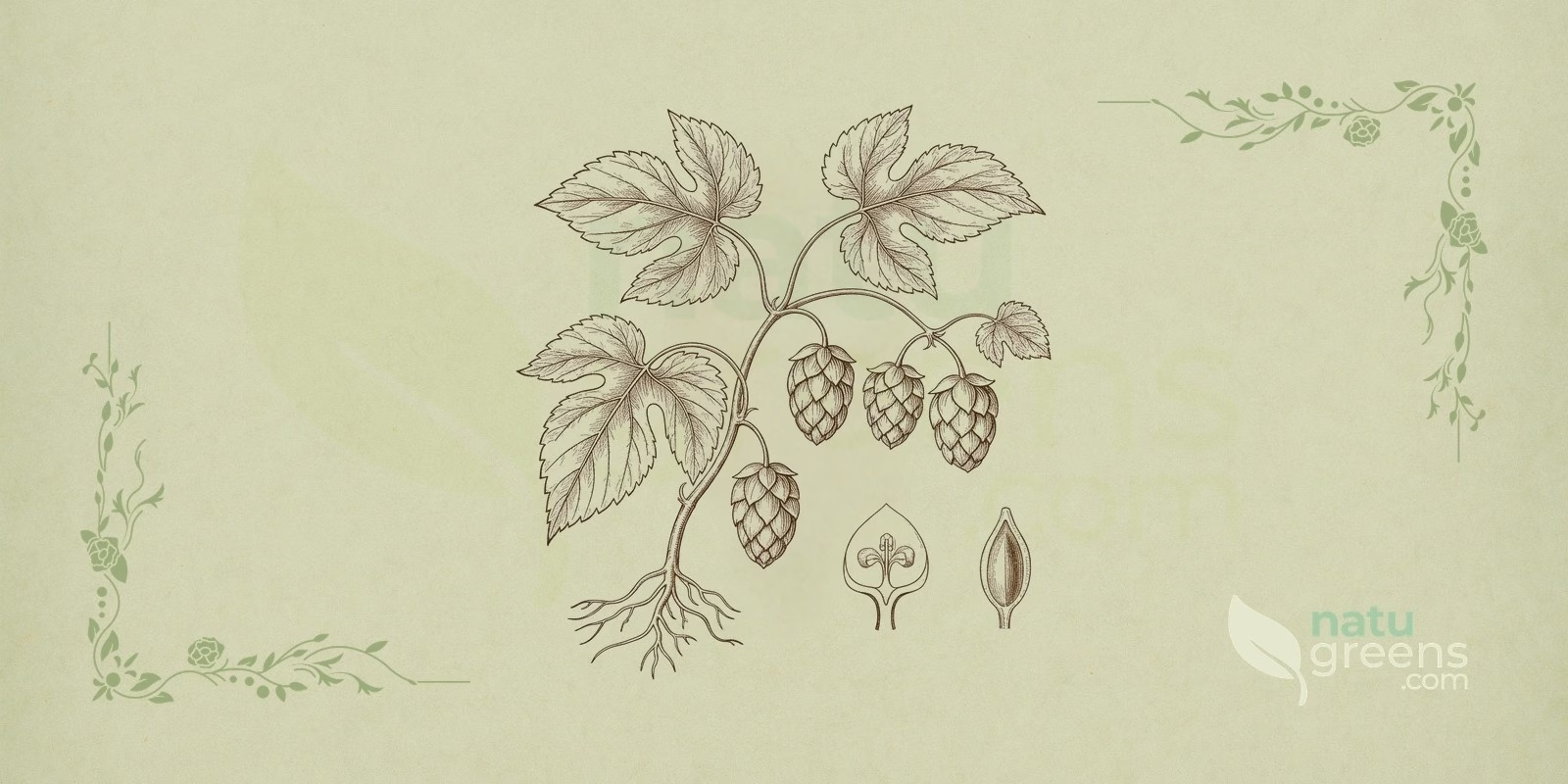
The hop plant, known simply as hops (Humulus lupulus L.), is a perennial climber of the Cannabaceae family, native to Europe, Western Asia and North America, valued for centuries both for its traditional medicinal use and for the central role it plays in beer production. The female flowers, gathered in cones, are the most widely used part of the plant, because they concentrate the compounds responsible for its characteristic bitterness and aroma, as well as the substances that attract the interest of pharmacological research.
In traditional European medicine, hops were used mainly for sleep complaints, restlessness and nervousness, and also as a digestive bitter. The European Medicines Agency (EMA) recognizes the traditional use registration of the cones for the relief of mild symptoms of mental stress and as a sleep aid in adults, while modern scientific research focuses on their chemistry, rich in bitter acids, prenylated flavonoids and essential oils. Bringing together a long tradition, a distinctive phytochemistry and specific safety concerns, Humulus lupulus remains the subject of ongoing study.
Popular and International Names of Hops
- English: beer hops, common hops, European hops, hops.
- Danish: humle.
- Dutch: hop.
- French: houblon.
- German: Echter Hopfen, Hopfen.
- Italian: luppolo.
- Japanese: ホップ, セイヨウカラハナソウ.
- Norwegian: humle.
- Polish: chmiel.
- Portuguese: lúpulo.
- Spanish: lúpulo.
- Swedish: humle.
Botanical Synonyms of Humulus lupulus
Humulus lupulus L., published by Linnaeus in Species Plantarum (1753), is the accepted botanical name. The recognized synonyms for the species are as follows:
- Humulus volubilis Salisb.
- Humulus vulgaris Gilib.
- Lupulus amarus Gilib.
- Lupulus communis Gaertn.
- Lupulus humulus Mill.
- Lupulus scandens Lam.
- Waldensia lupulina Lavy
Beyond these synonyms, the species includes geographic varieties that should not be confused with equivalent names: the Japanese variety Humulus lupulus var. cordifolius (Miq.) Maxim. ex Franch. & Sav., originally described as Humulus cordifolius Miq., and the American varieties var. lupuloides E.Small (to which the name Humulus americanus Nutt. corresponds), var. neomexicanus A.Nelson & Cockerell and var. pubescens E.Small.
Botanical Family: Cannabaceae
The Cannabaceae family, as currently circumscribed in the APG IV system, brings together flowering plants of varied habits, including herbs, climbers, shrubs and trees, and includes genera such as Cannabis, Celtis, Trema and Humulus. Many of its species have palmate or lobed leaves, and hops share wind pollination with their close relatives, while standing out as a vigorous climber capable of producing relevant bioactive compounds.
The family is known for producing secondary metabolites such as terpenes and flavonoids, which lend aroma and pharmacological interest to several of its species, and this chemical diversity has been the subject of intensive scientific research in recent decades.
Parts of Hops Used
- Essential oil
- Female cones (strobiles or female inflorescences)
- Lupulin (yellowish resinous powder found in the cones)
- Young leaves (in some culinary preparations)
Ethnobotanical and Traditional Uses
- Agitation and nervousness, as a mild calming remedy in traditional records
- Appetite and digestive stimulation, as a traditional bitter tonic
- Diarrhea and coughs of nervous origin, in European folk records
- Difficulty sleeping, a traditional use recognized by the EMA in adults
- Headaches, toothaches and stomachaches, in folk records
- Menopausal symptoms and menstrual cramps, in folk records and still under study, with small trials and inconsistent results
- Nervous tension and mild mental stress, in traditional records
- Skin irritations and inflammation, as a traditional topical application
Therapeutic Properties of Hops
- Analgesic (traditional record of relief of mild pain)
- Antibacterial (activity of the bitter acids observed in laboratory studies)
- Anti-inflammatory (activity observed in experimental studies)
- Antioxidant (activity of the flavonoids observed in laboratory studies)
- Antiproliferative (activity observed in laboratory studies, without clinical evidence)
- Antispasmodic (traditional record of relief of spasms)
- Bitter tonic (stimulates appetite and digestion, according to tradition)
- Cardioprotective (under study, without clinical evidence)
- Diuretic (traditional record of increased urine production)
- Febrifuge (traditional record in feverish conditions)
- Hypnotic (traditional use as a sleep aid, recognized by the EMA in adults)
- Hypoglycemic (under study, without clinical evidence)
- Muscle relaxant (traditional record)
- Sedative (mild calming effect of traditional record)
Detailed Phytochemical Profile of Hops
- Bitter acids (adhumulone, cohumulone, colupulone, humulone, lupulone)
- Essential oils (caryophyllene, farnesene, geraniol, humulene, linalool, myrcene)
- Flavonoids (8-prenylnaringenin, catechin, epicatechin, isoxanthohumol, morin, quercetin, rutin, xanthohumol)
- Phytoestrogens (prenylflavanones, especially 8-prenylnaringenin)
- Resins
- Tannins
Preparation and Administration Forms of Hops
- Capsules (dry extract)
- Essential oil (for aromatherapy and diluted topical use)
- Maceration
- Pillow filled with dried cones (aroma inhalation)
- Poultice (for topical use)
- Tea (infusion)
- Tincture
Synergy with Other Medicinal Plants
For Nervous Tension and Difficulty Sleeping
In the European herbal tradition, hops are frequently combined with valerian (Valeriana officinalis) and passionflower (Passiflora incarnata) in preparations intended for nervousness and difficulty sleeping. Among these combinations, the hops and valerian pairing is the one backed by a controlled clinical trial (Koetter and colleagues, 2007), and the most consistent clinical evidence available comes from this combination, not from hops alone. Because the sedative effects of these plants add up, the combination should be used under professional guidance, especially by people already taking medicines that cause drowsiness.
For Digestive Discomfort
The combination of hops with peppermint (Mentha × piperita) and lemon balm (Melissa officinalis) is traditionally used for dyspepsia, flatulence and intestinal cramps, because the bitter compounds of hops are associated with stimulating digestion, while the essential oils of peppermint and lemon balm have a traditional record as carminatives and antispasmodics.
For Unwinding at the End of the Day
Chamomile (Matricaria chamomilla) appears in traditional blends with hops intended for mild nervous tension and relaxation before bedtime, in infusions where the gentle flavor of the chamomile flowers also helps balance the intense bitterness of the cones. This is a traditional record, with no clinical trials specifically evaluating this combination.
Recipes and Usage Protocols of Hops
Hop Tea for Bedtime
Ingredients: 1 teaspoon of dried hop cones and 200 ml of boiling water.
Preparation: Place the cones in a cup, add the boiling water, cover and let steep for 5 to 10 minutes. After straining, drink it warm, preferably about 30 minutes before going to bed, following the traditional use as a sleep aid, or during the day at times of nervous tension. Tradition advises against sweetening it, to keep the bitter character of the drink. Because of the sedative effect, do not drive or operate machinery after drinking the tea.
Hop Tincture
Ingredients: 20 g of dried hop cones and 100 ml of 70% grain alcohol.
Preparation: Place the cones in a dark glass jar, cover them with the alcohol, seal tightly and leave to macerate for 2 weeks in a cool, dark place, shaking the jar daily. Then strain and store in a dropper bottle. The tincture is traditionally used for relaxation and nervous tension, but there is no proven dose in drops for this use, so the amount should be set with a healthcare professional. Because it contains alcohol, the tincture should not be combined with sedatives or used during pregnancy or breastfeeding, by children, or by anyone who needs to avoid alcohol.
Hop Cone Pillow
Ingredients: dried hop cones and a small cotton bag or pillowcase.
Preparation: Fill the small pillow with the dried cones and place it near your head at bedtime. According to tradition, the aroma released by the volatile oils of the cones helps calm the mind and fall asleep, and this is one of the oldest ways of using the plant. Anyone who has ever had an allergy to hops should not use the pillow, and it must be kept out of reach of dogs and other pets.
The preparations above follow traditional records and do not replace professional guidance. Before any internal use, check the contraindications and interactions described in this article.
Associated Therapies
Aromatherapy
Hop essential oil is used in aromatherapy for the relaxing qualities that tradition attributes to it, either inhaled through diffusers or applied topically, always diluted in a vegetable oil, with the aim of encouraging calm and more restful sleep. Aromatic components such as myrcene and humulene are being investigated for their action on the central nervous system, and the oil also appears in massages aimed at relieving muscle tension and supporting general well-being. Because it is concentrated, the essential oil should not be ingested or applied undiluted to the skin.
Clinical Herbal Medicine
In clinical herbal medicine, hops are included in formulations such as standardized extracts and capsules, usually standardized for bitter acids and flavonoids, and are used as a mild sedative and anxiolytic for mild sleep complaints and nervous tension, with a traditional use registration recognized by the EMA for adults. Use for menopausal symptoms remains under study, with small trials and inconsistent results, and the plant's estrogenic activity calls for individual assessment. Dosage and form of administration should be determined by a healthcare professional, who takes into account each person's needs and possible drug interactions.
Homeopathy
In homeopathy, Humulus lupulus appears in the materia medica as a remedy associated with insomnia, nervousness and restlessness, especially when accompanied by sexual excitement, as well as difficulty falling asleep, disturbing dreams and irritability. The homeopathic preparation is obtained from the fresh plant, following the principles of dilution and dynamization, and the choice of potency and frequency depends on an assessment of the full picture by a qualified practitioner. These indications belong to the homeopathic tradition and are not supported by clinical trials.
Contraindications and Side Effects of Hops
Hops have a traditional use registration recognized by the EMA (traditional use monograph on Lupuli flos) for the relief of mild symptoms of mental stress and as a sleep aid, in adults, and the most consistent clinical evidence comes from the combination with valerian, not from hops alone. Despite this history, the plant has relevant sedative effects and estrogenic activity, which call for the precautions described below.
Contraindications
- Allergy to the plant: anyone who has reacted to hops, with dermatitis, hives or respiratory symptoms, should not use any preparation, not even the hop cone pillow.
- Children under 12: not recommended, due to lack of safety data, in line with the EMA position.
- Depression: there is a traditional record of caution in depressive conditions because of the sedative effect, so it is advisable to talk to the professional overseeing the treatment before use, although this is not an absolute contraindication.
- Estrogen-sensitive conditions: 8-prenylnaringenin is one of the most potent phytoestrogens known, so hops should be avoided in breast, uterine or ovarian cancer, endometriosis and fibroids, and also by people using tamoxifen, hormone therapy or hormonal contraceptives.
- Pregnancy and breastfeeding: use should be avoided, because of the plant's hormonal activity and the absence of safety data.
- Surgery: use should be stopped at least 2 weeks before any surgery, because of the possible additive effect with anesthesia.
Side Effects
- Allergic reactions: contact dermatitis and hives are described in people who handle fresh cones, a condition known as hop pickers' disease, and the pollen can cause respiratory allergy.
- Drowsiness and dizziness: these are the most common effects, especially at high doses, and result from the sedative action; after use, do not drive or operate machinery.
Drug Interactions
- Alcohol and central nervous system depressants: do not combine with alcohol, benzodiazepines, barbiturates, opioids or sedating antihistamines without professional guidance, because the effects add up.
- Antidiabetic drugs: the hypoglycemic effect is only under study, and people taking diabetes medication should monitor their blood glucose and not change their medication on their own.
- Hormones and hormonal modulators: tamoxifen, hormone therapy and hormonal contraceptives may be affected by the plant's estrogenic activity.
- Narrow therapeutic index drugs: xanthohumol and the humulones modulate CYP enzymes in in vitro data, with uncertain clinical relevance, which calls for caution.
- Other sedative herbal medicines: valerian, passionflower and kava should not be combined with hops without professional guidance, because the sedative effects add up.
Beer is not a medicinal form of hops: drinking it does not deliver the effects described in this article and also adds alcohol. There is also an important household precaution, as hops are toxic to dogs and can cause malignant hyperthermia, which is potentially fatal, including through contact with residues from home brewing, so cones, pillows and spent brewing material must be kept away from animals. Before starting any use, especially during pregnancy or breastfeeding, with a pre-existing condition or when taking medication, consult a healthcare professional.
Historical Notes and Interesting Facts
Origin and Early Use
Native to Europe, Western Asia and North America, hops have a history of use dating back to ancient peoples, and archaeological evidence suggests that Germanic and Slavic peoples were already growing and using the plant long before it became popular in brewing, at a time when it was valued mainly for its medicinal use and as a food preservative.
Hops in Beer
The best-known association of hops is with beer, and although they were used sporadically in fermented drinks for centuries, their widespread use in brewing began in the Middle Ages, around the 11th century, in Germany. Benedictine monks were among the pioneers of this practice and noticed that the plant, besides adding a pleasant bitterness and aroma, worked as a natural preservative, inhibiting unwanted bacteria and extending the shelf life of the drink. This innovation transformed beer production and is one of the reasons hops became such an important agricultural crop.
Hops and Sleep
One of the most curious traditions linked to the plant is the hop pillow, made with dried cones and placed next to the head at bedtime. The volatile oils released by the cones, especially methylbutenol, are believed to have a mild sedative effect, and this custom reflects empirical knowledge of the relaxing nature of hops that emerged long before any laboratory research.
Hops and Phytoestrogens
Hops are among the richest sources of phytoestrogens in nature, above all 8-prenylnaringenin (8-PN), regarded as one of the most potent phytoestrogens known since its identification in hops and beer in 1999. This characteristic sparked research interest in menopausal symptoms, a topic still under study with small trials and inconsistent results, and it is the same property that calls for caution in use, as described in the contraindications. An old traditional record also attributes to hops a reduction in sexual desire, an idea found in popular texts and materia medica, but not established as a side effect.
Hops, Japanese Hop and Cannabis
Japanese hop (Humulus japonicus Siebold & Zucc.) is a different species, annual and invasive, with no useful lupulin and with allergenic pollen, and it is unsuitable for tea or beer, so it should be distinguished from Humulus lupulus. Although it belongs to the same family as Cannabis sativa, hops contain no THC or cannabinoids and have no psychoactive effect.
Frequently Asked Questions about Hops
Does Hop Tea Really Help You Sleep?
Hops have a traditional use registration recognized by the EMA as a sleep aid and for the relief of mild symptoms of mental stress in adults. The most consistent clinical evidence, however, comes from the combination with valerian, tested in a controlled trial, and not from hops alone. Because of the sedative effect, you should not drive or operate machinery after drinking the tea.
What Are the Main Benefits of Hop Tea?
Tradition uses hop tea as a sleep aid, for mild nervous tension and as a digestive bitter that stimulates appetite. Anti-inflammatory and antioxidant activities have been observed in laboratory studies, without clinical evidence. Folk uses for menopausal symptoms, headaches and menstrual cramps belong to the traditional record, and menopause remains under study with inconsistent results.
Are There Any Contraindications for Drinking Hop Tea?
Yes. Hops should be avoided during pregnancy and breastfeeding, are not recommended for children under 12 and should be avoided in estrogen-sensitive conditions such as breast, uterine or ovarian cancer, endometriosis and fibroids, as well as by people using tamoxifen, hormone therapy or hormonal contraceptives. They should also not be combined with alcohol, sedatives or other sedative herbal medicines without guidance, must be stopped at least 2 weeks before surgery and call for caution in depressive conditions.
How Should I Prepare Hop Tea?
Use 1 teaspoon of dried cones for every 200 ml of boiling water and let it steep for 5 to 10 minutes with the cup covered. After straining, drink it warm, following traditional practice, about 30 minutes before bed. Anyone taking medication or living with a health condition should consult a healthcare professional first.
Can Hops Cause Side Effects?
The most common effects are drowsiness and dizziness, especially at high doses. People who handle fresh cones may develop contact dermatitis or hives, and the pollen can trigger respiratory allergy. Combined with alcohol or other central nervous system depressants, the sedative effects add up, so this combination should be avoided.
Where Can I Find Hops for Making Tea?
Dried hop cones for tea are usually sold in health food stores, herbal shops and compounding pharmacies. Choose reliable suppliers that state the origin and quality of the plant. Beer is no substitute for the tea, because it does not deliver the effects described and also adds alcohol.
Notice: this content is for informational purposes and does not replace professional medical advice. Consult a physician or herbal practitioner before using medicinal plants, especially during pregnancy, breastfeeding, or alongside medication.
How to cite this article
NATUGREENS. Hops (Humulus lupulus): Properties and Benefits. Natugreens, 4 Nov. 2026. Disponível em: https://natugreens.com/hops-humulus-lupulus/. Accessed: Nov. 5, 2026.
Natugreens. (2026). Hops (Humulus lupulus): Properties and Benefits. Natugreens. https://natugreens.com/hops-humulus-lupulus/
References and Scientific Studies
- PMC2008 Zanoli P, Zavatti M. Pharmacognostic and pharmacological profile of Humulus lupulus L.. J Ethnopharmacol. 2008.
- PMC1999 Milligan SR, et al. Identification of a potent phytoestrogen in hops (Humulus lupulus L.) and beer. J Clin Endocrinol Metab. 1999.
- PMC2004 Stevens JF, Page JE. Xanthohumol and related prenylflavonoids from hops and beer: to your good health!. Phytochemistry. 2004.
- PMC2007 Koetter U, et al. A randomized, double blind, placebo-controlled, prospective clinical study to demonstrate clinical efficacy of a fixed valerian hops extract combination (Ze 91019) in patients suffering from non-organic sleep disorder. Phytother Res. 2007.
- PMC2026 Kogut L, et al. Biological Activity of Hops (Humulus lupulus L.): Molecular Mechanisms and Significance for Human Health, A Review. Nutrients. 2026.