



Quick summary
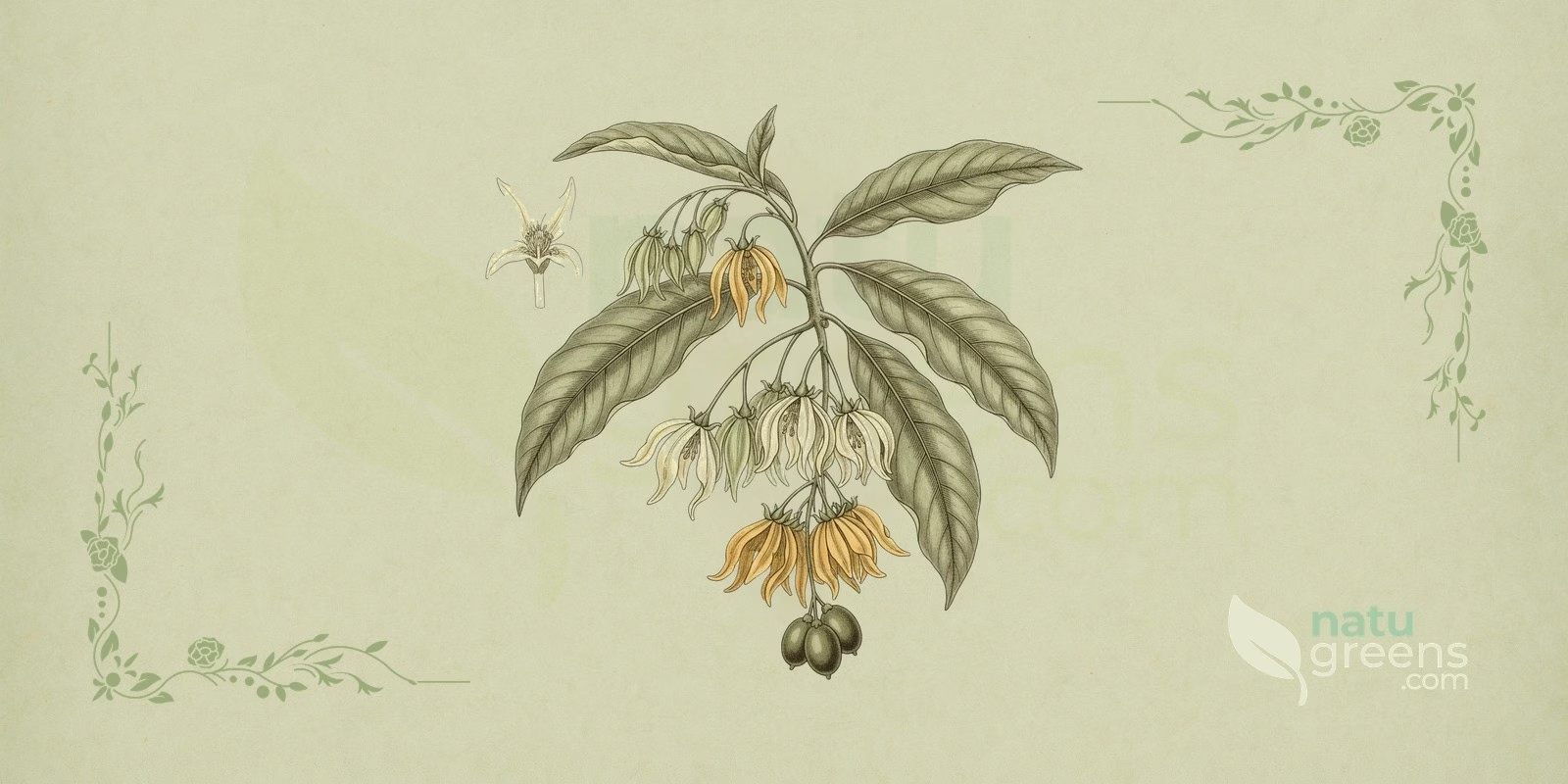
Cananga odorata (Lam.) Hook.f. and Thomson, known as ylang-ylang, is a fast-growing tropical tree of the Annonaceae family, native to Southeast Asia and the Pacific islands. Its drooping branches bear flowers with long, twisted petals that open green and turn golden yellow as they mature, giving off a sweet, heady…
Main caution: Ylang-ylang oil and absolute are well-known skin sensitizers. They contain isoeugenol, geraniol and benzoates, and ylang-ylang itself is used as a test allergen in the fragrance series that dermatologists apply in patch…
Cananga odorata (Lam.) Hook.f. and Thomson, known as ylang-ylang, is a fast-growing tropical tree of the Annonaceae family, native to Southeast Asia and the Pacific islands. Its drooping branches bear flowers with long, twisted petals that open green and turn golden yellow as they mature, giving off a sweet, heady scent. These flowers are distilled into one of the most important essential oils in perfumery. In aromatherapy the oil is associated with relaxation, but its effects on blood pressure and anxiety are still under study, and it calls for care when used on the skin.
Popular and International Names of Ylang-Ylang
- English: cananga tree, perfume tree, ylang-ylang.
- French: ylang-ylang.
- German: Ylang-Ylang-Baum.
- Italian: ylang-ylang.
- Portuguese: cananga, ilangue-ilangue, ylang-ylang.
- Spanish: ilang-ilang.
- Tagalog: ilang-ilang.
Ylang-Ylang and Cananga in the Trade
The market recognizes two oils from the same species. Ylang-ylang oil comes from the genuina form, grown mainly in Madagascar, the Comoros and Mayotte, and it is the finer of the two. Cananga oil comes from the macrophylla form, produced mostly in Java, and has a different chemical profile and scent, woodier and less floral. The two should not be treated as interchangeable.
Not to Be Confused with Climbing Ylang-Ylang
Climbing ylang-ylang (Artabotrys hexapetalus) is a vine from the same family with fragrant flowers, but it is a different species and does not yield ylang-ylang oil.
Botanical Synonyms of Cananga odorata
The species was described by Lamarck as Uvaria odorata and later moved to the genus Cananga by Hooker the younger and Thomson. Recorded synonyms include:
- Canangium odoratum (Lam.) Baill. ex King
- Unona odorata (Lam.) Dunal
- Uvaria odorata Lam.
Botanical Family: Annonaceae
Ylang-ylang belongs to the Annonaceae, a tropical family of trees, shrubs and climbers that includes well-known fruits such as soursop, sugar apple and cherimoya. Flowers in this family usually have three sepals, six fleshy petals and numerous stamens and carpels, and many species are strongly scented. In ylang-ylang, the fruits are small dark green berries that turn black when ripe and are eaten by birds.
Parts of Ylang-Ylang Used
The flowers are by far the most valuable part. They are picked early in the morning, when their scent is strongest, and sent for steam distillation. The distillation is stopped in stages, and each stage yields a fraction of the oil:
- Extra: the first fraction, richest in esters and finest in scent, preferred by perfumers.
- First, second and third: the following fractions, increasingly rich in sesquiterpenes and heavier in aroma.
- Complete: the oil obtained from a single continuous distillation, without fractionation.
The fractions differ in chemical profile and in how perfumers use them, not in their therapeutic effects. An absolute is also produced from the flowers by solvent extraction. The leaves and bark have had local traditional uses.
Ethnobotanical and Traditional Uses of Ylang-Ylang
In Indonesia and the Philippines the flowers adorn ceremonies, garlands and altars, and in Indonesia they are traditionally scattered over the bed of newlyweds. Tradition credits the flowers with aphrodisiac and calming powers, a use that remains in the cultural sphere. In folk remedies of Southeast Asia and the Pacific, preparations of the bark and leaves appear for fever, aches and skin problems. In the Moluccas, the flowers were blended into coconut oil to scent and dress the hair.
These records describe traditional use and do not amount to proven indications.
Medicinal Properties of Ylang-Ylang
The activities below were observed in the laboratory or in small aromatherapy studies. None of them has been proven to treat any disease:
- Antibacterial (oil active against bacteria in the laboratory, under study)
- Antifungal (activity in in vitro assays, under study)
- Antioxidant (free radical scavenging in laboratory assays)
- Effect on blood pressure and heart rate (reductions in small studies of inhalation or skin application, under study)
- Insect repellent (activity observed in tests, under study)
- Relaxing (reduced arousal and anxiety in small studies, under study)
No one should use ylang-ylang to lower blood pressure or replace blood pressure medication with aromatherapy. High blood pressure requires medical follow-up. The aphrodisiac use is purely traditional.
Detailed Phytochemical Profile of Ylang-Ylang
The oil is a complex blend of aromatic esters, alcohols and sesquiterpenes, whose proportions shift with the fraction and the botanical form:
- Benzyl acetate (floral ester, most abundant in the early fractions)
- Benzyl benzoate (aromatic ester, a regulated fragrance allergen)
- Beta-caryophyllene and germacrene D (sesquiterpenes that dominate the later fractions)
- Geraniol and isoeugenol (components linked to skin sensitization)
- Geranyl acetate (floral ester)
- Linalool (terpene alcohol with a floral note)
- Methyl benzoate (part of the characteristic sweet note)
- p-Cresyl methyl ether (responsible for the intense, exotic edge of the scent)
Preparation and Administration Forms of Ylang-Ylang
Ylang-ylang is used almost exclusively as an essential oil or absolute, in perfumes, cosmetics and aromatherapy. A few safety rules always apply:
- Do not swallow the essential oil or the absolute.
- On the skin, use it only diluted in a vegetable oil, at a low concentration, after a patch test.
- Avoid it on skin with dermatitis, eczema or irritation.
- When diffusing, use only a few drops for a short time. In excess, the scent causes headache and nausea.
- Do not diffuse it in a closed room with cats or birds.
Synergy with Other Plants
In perfumery and aromatherapy, ylang-ylang is used in small proportions, because its scent easily overwhelms a blend. It pairs well with:
- Bergamot (Citrus bergamia), preferably bergapten-free, since the regular oil is phototoxic
- Citronella (Cymbopogon nardus)
- Geranium (Pelargonium graveolens)
- Lavender (Lavandula angustifolia)
- Lemon eucalyptus (Corymbia citriodora)
- Tea tree (Melaleuca alternifolia)
Combining sensitizing oils raises the risk of allergy. Any blend meant for the skin should be well diluted and patch tested.
Recipes and Usage Protocols of Ylang-Ylang
Room Diffusion
One or two drops in a diffuser, together with a citrus oil or lavender, are enough to scent a room. Diffuse for short periods in a ventilated space, and stop if a headache or nausea appears.
Scented Body Oil
Ylang-ylang can scent a vegetable oil such as jojoba or sweet almond when added in a very small amount. Test it first on the forearm and wait 48 hours. Do not use it on irritated skin or if you have a history of dermatitis.
Choosing the Oil
Check the label for the scientific name Cananga odorata, the fraction (extra, first, second, third or complete) and whether the product is ylang-ylang or cananga. Cheap oils may be adulterated.
The preparations above follow traditional records and do not replace professional guidance. Before any internal use, check the contraindications and interactions described in this article.
Associated Therapies of Ylang-Ylang
Aromatherapy
In aromatherapy, ylang-ylang is one of the oils most closely associated with relaxation. Small studies with a few dozen volunteers observed lower blood pressure, a slower heart rate and reduced alertness after the oil was inhaled or applied to the skin. These are preliminary results that do not justify using the oil as a treatment.
Perfumery
Ylang-ylang is a classic ingredient in floral and oriental perfumes, including some celebrated fragrances of the twentieth century. Because it is a sensitizer, its use in cosmetics follows limits and labeling requirements set by the industry.
Contraindications and Side Effects of Ylang-Ylang
Ylang-ylang oil and absolute are well-known skin sensitizers. They contain isoeugenol, geraniol and benzoates, and ylang-ylang itself is used as a test allergen in the fragrance series that dermatologists apply in patch testing.
- Skin: use only diluted and after a patch test. Avoid it on skin with dermatitis.
- Excessive inhalation: may cause headache and nausea.
- Ingestion: do not swallow.
- Low blood pressure: use caution in people with hypotension.
- Pregnancy, breastfeeding and children under 2: avoid the essential oil.
- Pets: do not diffuse in a closed room with cats or birds.
Historical Notes and Interesting Facts about Ylang-Ylang
The name comes from Tagalog, a language of the Philippines, and is often translated as flower of flowers, although some linguists link it to the word ilang, which refers to a wild place. In the nineteenth century, macassar oil, a popular hair dressing in Europe, contained ylang-ylang, and the cloth covers placed on chair backs to protect them from the grease became known in English as antimacassars.
The island of Nosy Be, in Madagascar, and the Comoros archipelago became known as the perfume islands because of their ylang-ylang plantations. To make harvesting easier, growers prune the trees and bend the branches downward, which gives the orchards a very distinctive twisted look.
Frequently Asked Questions about Ylang-Ylang
What Is Ylang-Ylang?
It is a tropical tree, Cananga odorata, whose fragrant flowers yield an essential oil used in perfumery and aromatherapy.
Does Ylang-Ylang Lower Blood Pressure?
Small studies observed a temporary drop in blood pressure after the oil was inhaled or applied, but this does not justify using it to treat hypertension. Never replace your blood pressure medication with aromatherapy.
Can Ylang-Ylang Cause Allergies?
Yes. The oil is a known sensitizer and is included in fragrance allergy patch tests. Always use it diluted, after a patch test, and avoid it on skin with dermatitis.
Can I Swallow Ylang-Ylang Oil?
No. The essential oil and the absolute should not be ingested.
Is Ylang-Ylang an Aphrodisiac?
Its reputation as an aphrodisiac belongs to tradition, especially in Indonesia, and has no scientific backing.
What Is the Difference between Ylang-Ylang Oil and Cananga Oil?
Both come from the same species, but from different forms. Ylang-ylang comes from the genuina form and is more floral. Cananga comes from the macrophylla form and has a woodier aroma and a different composition.
Can Pregnant Women and Children Use Ylang-Ylang?
The essential oil should be avoided during pregnancy and breastfeeding and in children under 2 years of age.
Notice: this content is for informational purposes and does not replace professional medical advice. Consult a physician or herbal practitioner before using medicinal plants, especially during pregnancy, breastfeeding, or alongside medication.
How to cite this article
NATUGREENS. Ylang-Ylang (Cananga odorata): Oil, Uses and Precautions. Natugreens, 20 Nov. 2026. Disponível em: https://natugreens.com/ylang-ylang-cananga-odorata-oil/. Accessed: Nov. 20, 2026.
Natugreens. (2026). Ylang-Ylang (Cananga odorata): Oil, Uses and Precautions. Natugreens. https://natugreens.com/ylang-ylang-cananga-odorata-oil/
References and Scientific Studies
- DOI2015 Tan, L. T. H. et al. (2015). Traditional uses, phytochemistry, and bioactivities of Cananga odorata (ylang-ylang). Evidence-Based Complementary and Alternative Medicine, 2015, 896314. Review of the traditional uses, the chemistry of the oil and the biological activities described. ↗
- DOI2004 Hongratanaworakit, T. and Buchbauer, G. (2004). Evaluation of the harmonizing effect of ylang-ylang oil on humans after inhalation. Planta Medica, 70(7), 632-636. Small study that observed lower blood pressure and pulse rate after inhalation. ↗
- DOI2006 Hongratanaworakit, T. and Buchbauer, G. (2006). Relaxing effect of ylang ylang oil on humans after transdermal absorption. Phytotherapy Research, 20(9), 758-763. Small study with the oil applied to the skin and short-lived relaxing effects. ↗
You May Also Like
Take your time and tell us everything you think, details included. Every response is read by someone on our editorial team and goes into the article's revision. An honest critique helps us more than a polite compliment.
Take your time and tell us everything you think, details included. Every response is read by someone on our editorial team and goes into the article's revision. An honest critique helps us more than a polite compliment.