



Quick summary
Anemarrhena asphodeloides Bunge, known in English as anemarrhena and, in traditional Chinese medicine, by the name zhi mu, is a perennial herbaceous plant of the Asparagaceae family, native to China and Mongolia, where it grows on arid slopes, steppes and high-altitude grasslands. Its rhizomes, harvested mainly in…
Main caution: Anemarrhena should be avoided by those with spleen and stomach Qi deficiency, according to Chinese medicine theory, a pattern that shows up as persistent diarrhea, loose stools and lack of appetite, since the plant's…
Anemarrhena asphodeloides Bunge, known in English as anemarrhena and, in traditional Chinese medicine, by the name zhi mu, is a perennial herbaceous plant of the Asparagaceae family, native to China and Mongolia, where it grows on arid slopes, steppes and high-altitude grasslands. Its rhizomes, harvested mainly in autumn, have supported a medicinal use recorded for more than two thousand years in traditional Chinese medicine formulas aimed at clearing internal heat and nourishing the body's fluids. Scientific research on the species is still mostly preclinical, with few human trials, and much of the available knowledge comes from its use within compound formulas rather than from the isolated plant.
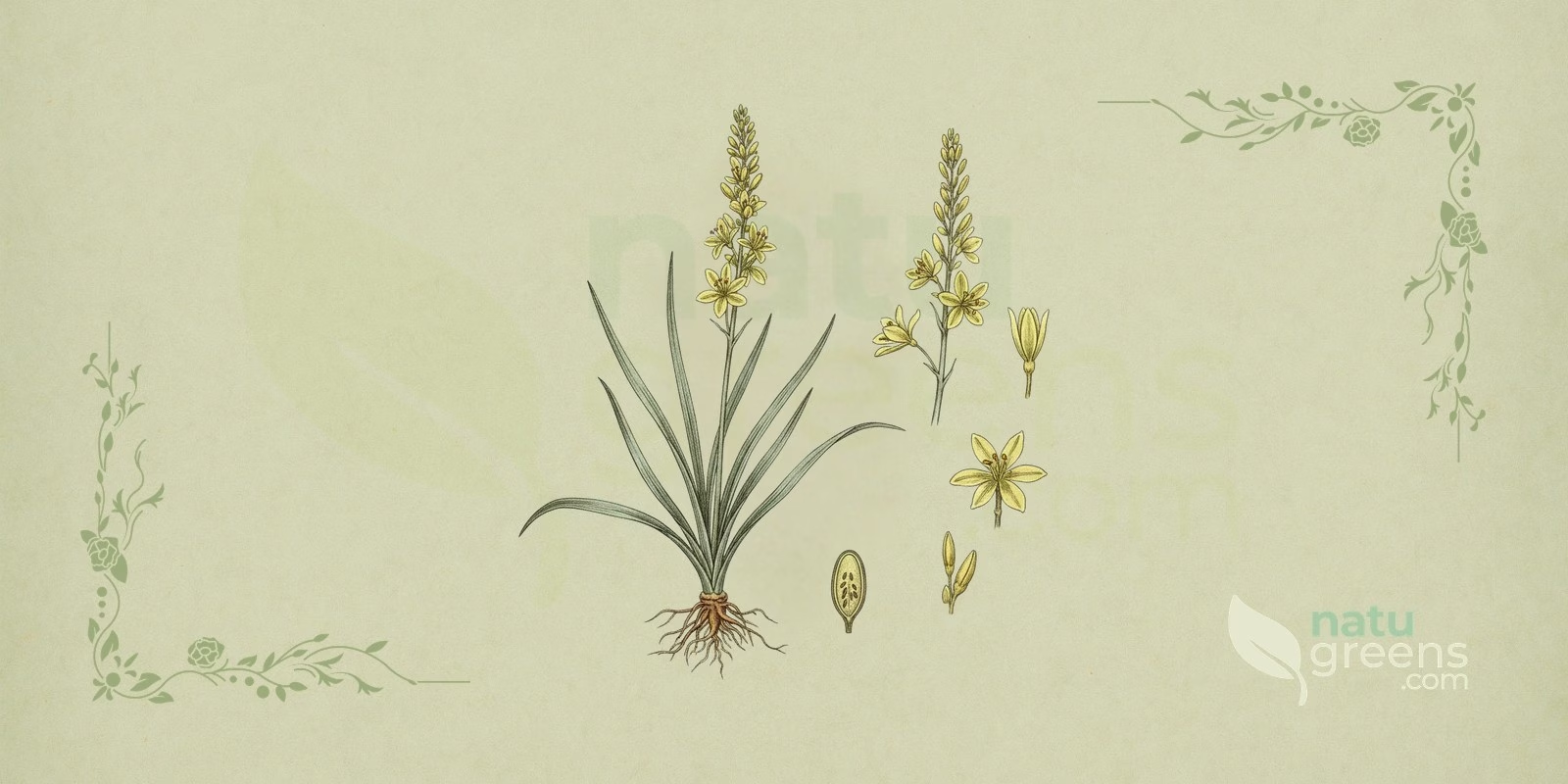
Popular and International Names of Anemarrhena
- Chinese: zhi mu (知母), also called yanghuzi in vernacular use.
- English: anemarrhena, common anemarrhena rhizome, zhi mu.
- French: zhi mu, anemarrhena.
- German: Zhi Mu, Anemarrhena-Wurzelstock.
- Italian: zhi mu, rizoma di anemarrhena.
- Japanese: chimo.
- Korean: jimo.
- Portuguese: anemarrena, zhi mu.
- Spanish: zhi mu.
Botanical Synonyms of Anemarrhena
Terauchia anemarrhenifolia Nakai is considered a botanical synonym of Anemarrhena asphodeloides. The genus Anemarrhena is monotypic, meaning it includes only this one species. The plant was once classified in the old Liliaceae family, but its current position within Asparagaceae is the one accepted by contemporary botanical classification systems.
Botanical Family: Asparagaceae
The Asparagaceae family brings together flowering plants of the order Asparagales, with members ranging from rhizomatous herbs to shrubs and climbers, as in the case of edible asparagus (Asparagus officinalis). Thickened rhizomes and bulbs are common among its members, which are distributed across temperate and tropical regions in various parts of the world. Anemarrhena's inclusion in this family reflects its evolutionary closeness to other monocots with a habit similar to that of the lilies, the group to which the species was once assigned.
Parts Used of Anemarrhena
The rhizomes, preferably harvested in autumn, are the part of the plant used in traditional Chinese medicine. After harvesting, they are usually peeled and dried in the sun or in the shade before being processed into decoctions, powders or extracts.
Ethnobotanical and Traditional Uses of Anemarrhena
In traditional Chinese medicine, anemarrhena is classified among the herbs that clear heat and drain fire, and its traditional use includes:
- Easing of irritability during pregnancy, according to folk records.
- External use, as a rinse, for mouth ulcers.
- Relief of intense thirst and high fever in febrile illnesses.
- Traditional support for dry cough associated with lung heat.
- Use in cases of hematuria, or blood in the urine, within compound formulas.
- Use in formulas for the so-called wasting thirst disease, an old name given to diabetes in Chinese medicine.
All these uses belong to tradition and are not equivalent to indications proven in controlled clinical trials with humans.
Medicinal Properties of Anemarrhena
The actions below were observed mostly in laboratory studies and animal models with extracts or isolated compounds from the rhizome, or belong to traditional use; none of them is established in robust clinical trials with humans using the isolated plant:
- Antidiabetic (hypoglycemic effect associated with saponins and mangiferin, in animal models)
- Anti-inflammatory (observed in preclinical trials with rhizome extracts)
- Antimicrobial (activity reported against some microorganisms, in laboratory settings)
- Antioxidant (ability to neutralize free radicals in in vitro tests)
- Expectorant (traditional use to help clear secretions)
- Febrifuge (traditional use to reduce fever episodes)
- Immunomodulatory (effects on immune response, in preclinical study)
- Neuroprotective (timosaponins studied in models of neuronal damage)
- Sedative (traditional use associated with agitation and internal heat patterns)
Detailed Phytochemical Profile of Anemarrhena
Anemarrhena's rhizome concentrates a varied chemistry, and the groups most studied by preclinical research include:
- Alkaloids (minor components of the chemical profile)
- Anthraquinones (phenolic compounds also present in other Asian plants)
- Flavonoids (associated with the antioxidant activity observed in laboratory settings)
- Glycosides, including mangiferin (compound associated with the hypoglycemic effect in animal models)
- Norlignans (chemical class characteristic of the genus)
- Organic acids (present in smaller proportion in the rhizome)
- Polysaccharides, such as anemarans A, B, C and D (studied for their preclinical immunomodulatory effects)
- Steroidal saponins, the timosaponins (considered the chemical markers of the species)
- Steroids (precursors of part of the plant's saponins)
Forms of Preparation and Administration of Anemarrhena
Dried anemarrhena rhizome is traditionally prepared as a decoction, often together with other herbs in a formula. It is also found as a dried powdered extract, in pills within combined formulas and, on a smaller scale, in medicinal wine. Commercial products containing the rhizome should carry the plant's scientific name and the manufacturer's instructions on the label, and isolated use, outside a balanced formula, is not the traditional practice of Chinese medicine for this herb.
Synergy with Other Medicinal Plants
Fever and Excessive Heat
In traditional Chinese medicine, anemarrhena appears together with mineral gypsum, shi gao, in the classic formula bai hu tang, the white tiger decoction, traditionally intended for patterns of intense heat, with high fever, marked thirst and a strong pulse. The combination seeks to reinforce, according to this theory, the action of clearing internal heat, and it remains among the most cited prescriptions for this pattern of acute febrile illness today.
Dry Cough from Lung Heat
For dry cough associated with heat that consumes the lung's fluids, anemarrhena is usually paired with fritillary, chuan bei mu. The pair is traditionally used to moisten the lungs and help loosen thick phlegm, supporting the return of fluid balance to the respiratory tract, according to Chinese medicine theory.
Recipes and Usage Protocols for Anemarrhena
Traditional Decoction for Heat and Thirst
Ingredients: 9 to 15 g of dried anemarrhena rhizome, 750 ml of water.
Preparation: place the rhizome in the water, in a ceramic or glass container, and bring to a boil. Reduce the heat and let it simmer gently for 20 to 30 minutes. Strain the liquid and drink it warm, divided into two or three portions throughout the day. This preparation is traditionally used to ease the sensation of thirst, fever and irritability linked to internal heat, according to Chinese medicine theory, and results from clinical trials with humans are still scarce.
Use in Combined Formulas
Anemarrhena rarely appears alone in prescriptions: traditional Chinese practice recommends it almost always within compound formulas, alongside other plants that balance its cold nature. For this reason, self-medication with the isolated rhizome, outside a balanced formula and without guidance from a qualified professional in Chinese herbal medicine, is not advised.
These preparations follow traditional records and do not replace professional guidance. Before any internal use, check the contraindications and interactions described in this article.
Associated Therapies for Anemarrhena
Clinical Herbal Medicine
In herbal medicine, standardized extracts of anemarrhena rhizome have drawn interest for their potential hypoglycemic and anti-inflammatory action observed in preclinical studies, but robust clinical trials in humans that would support an isolated use of the plant outside the context of Chinese medicine formulas are still lacking.
Traditional Chinese Medicine
Anemarrhena holds a central place among the heat-clearing herbs in the pharmacology of traditional Chinese medicine, present in formulas for Yin deficiency, lung heat, diabetes and menopause symptoms such as hot flashes and night sweats. Its action, according to this tradition, is combined with that of other plants to help balance Yin and Yang in the body, and it is not used as a stand-alone therapy within this system.
Contraindications and Side Effects of Anemarrhena
Anemarrhena should be avoided by those with spleen and stomach Qi deficiency, according to Chinese medicine theory, a pattern that shows up as persistent diarrhea, loose stools and lack of appetite, since the plant's cold nature tends to worsen this picture. Use of the rhizome can also cause diarrhea even outside this context, especially at high doses. Studies in animal models show a hypoglycemic effect related to saponins, among them the timosaponins, and to compounds such as mangiferin, so that people using antidiabetic medications need caution, given the possibility that the combination could lower blood sugar too much. There is no safety data on the use of anemarrhena during pregnancy and breastfeeding, and the guidance is to avoid its use in these periods, or to seek the assessment of a qualified health professional beforehand. Isolated clinical evidence on the plant is practically nonexistent: its traditional use occurs within compound formulas of Chinese medicine, almost never as an isolated plant, which limits extrapolating laboratory findings to the consumption of the single root in capsules, powders or teas.
In rats, timosaponin A3, one of the rhizome saponins, caused liver toxicity when given on its own at high doses. This finding has not yet been assessed in humans, but it warrants caution with concentrated extracts, especially in people with liver disease.
Drug Interactions
Because of the hypoglycemic action observed in animal models, anemarrhena can add its effect to oral antidiabetic medications and to insulin, increasing the risk of hypoglycemia. Anyone taking these medications should talk to their doctor before trying any preparation based on the plant, and blood sugar monitoring deserves extra attention during this period. Excessive doses of the rhizome can also worsen digestive discomfort and diarrhea.
Curiosities and Historical Facts
The first record of anemarrhena's medicinal use appears in the Shen Nong Ben Cao Jing, the divine farmer's classic of materia medica, considered the oldest pharmacopoeia treatise in China, compiled around the end of the Western Han dynasty, about one hundred years before Christ. In this text, the plant is already described as useful against wasting thirst, an old term for what is now associated with diabetes, and for eliminating stomach heat. The Chinese name, zhi mu, written 知母, is usually translated as knowing the mother, an allusion to the plant's ability to nourish Yin, understood in Chinese medicine as the body's most receptive and moist energy. More than two thousand years after this first record, the root remains present in formulas used in China and neighboring countries.
Frequently Asked Questions about Anemarrhena
What Is Anemarrhena?
It is the name used for Anemarrhena asphodeloides, a plant of the Asparagaceae family known in traditional Chinese medicine as zhi mu. Its rhizome has been used for centuries in formulas aimed at clearing internal heat and nourishing the body's fluids.
Does Anemarrhena Cure Diabetes or Other Diseases?
No. The hypoglycemic effect has only been observed in animal models, not in robust clinical trials with humans. Anyone with diabetes or another chronic condition should keep up medical follow-up and not replace prescribed treatment with the plant.
Can Someone on Diabetes Medication Use Anemarrhena?
Only with medical supervision. The plant's potential hypoglycemic effect can add to antidiabetic medications and insulin, which calls for blood sugar monitoring and a prior conversation with the professional responsible for the treatment.
Can Pregnant or Breastfeeding Women Use Anemarrhena?
It is not recommended. Safety data on using the rhizome during pregnancy and breastfeeding are lacking, so its use should be avoided in these periods, unless specifically advised by a qualified health professional.
What Is the Difference between Anemarrhena and Zhi Mu?
None: they are names for the same plant, Anemarrhena asphodeloides. Zhi mu is what the species is called in Chinese and in traditional Chinese medicine literature, while anemarrhena is the popular name adopted in this article.
Is There Human Research on Anemarrhena?
Isolated clinical evidence on the plant is practically nonexistent. What exists are preclinical studies, in the laboratory and in animals, along with traditional use within compound formulas of Chinese medicine, never the isolated plant in controlled trials with people.
Notice: this content is for informational purposes and does not replace professional medical advice. Consult a physician or herbal practitioner before using medicinal plants, especially during pregnancy, breastfeeding, or alongside medication.
How to cite this article
NATUGREENS. Anemarrhena (Zhi Mu): Uses, Properties and Safety. Natugreens, 21 Nov. 2026. Disponível em: https://natugreens.com/anemarrhena-asphodeloides/. Accessed: Nov. 21, 2026.
Natugreens. (2026). Anemarrhena (Zhi Mu): Uses, Properties and Safety. Natugreens. https://natugreens.com/anemarrhena-asphodeloides/
References and Scientific Studies
View All 8 Cited References
Peer-Reviewed Scientific Studies (6)
- PEER2014 Wang, Y., et al., & Liu, Y. (2014). The genus Anemarrhena: a review on ethnopharmacology, phytochemistry and pharmacology. Journal of Ethnopharmacology, 153(1), 1-19. Retrieved from ScienceDirect
- PMC2001 Miura, T., Ichiki, H., Iwamoto, N., et al. (2001). Antidiabetic activity of the rhizoma of Anemarrhena asphodeloides and active components, mangiferin and its glucoside. Biological and Pharmaceutical Bulletin, 24(9), 1009-1011. Retrieved from PubMed
- PMC2014 Wu, Z. T., Qi, X. M., Sheng, J. J., et al. (2014). Timosaponin A3 induces hepatotoxicity in rats through inducing oxidative stress and down-regulating bile acid transporters. Acta Pharmacologica Sinica, 35(9), 1188-1198. Retrieved from PMC
- PMC2015 Yuan, Y. L., Guo, C. R., Cui, L. L., et al. (2015). Timosaponin B-II ameliorates diabetic nephropathy via TXNIP, mTOR, and NF-κB signaling pathways in alloxan-induced mice. Drug Design, Development and Therapy, 9, 6247-6258. Retrieved from PMC
- PMC2020 Lin, Y., Zhao, W. R., Shi, W. T., et al. (2020). Pharmacological activity, pharmacokinetics, and toxicity of timosaponin AIII, a natural product isolated from Anemarrhena asphodeloides Bunge: a review. Frontiers in Pharmacology, 11, 764. Retrieved from PMC
- PMC2022 Chu, Y. C., Yang, C. S., Cheng, M. J., Fu, S. L., & Chen, J. J. (2022). Comparison of various solvent extracts and major bioactive components from unsalt-fried and salt-fried rhizomes of Anemarrhena asphodeloides for antioxidant, anti-α-glucosidase, and anti-acetylcholinesterase activities. Antioxidants, 11(2), 385. Retrieved from PMC
Supplementary Readings (2)
- 2000 Chen, S., & Nicholas, A. (2000). Anemarrhena asphodeloides Bunge. In: Flora of China. Science Press, Beijing, and Missouri Botanical Garden Press, St. Louis.
- 2010 Committee for the Pharmacopoeia of PR China. (2010). Pharmacopoeia of the People's Republic of China. Beijing: China Medical Science Press.
You May Also Like



Take your time and tell us everything you think, details included. Every response is read by someone on our editorial team and goes into the article's revision. An honest critique helps us more than a polite compliment.
Take your time and tell us everything you think, details included. Every response is read by someone on our editorial team and goes into the article's revision. An honest critique helps us more than a polite compliment.