



Quick summary
Coleus amboinicus Lour., synonym Plectranthus amboinicus (Lour.) Spreng., is a perennial, succulent plant of the Lamiaceae family, widely known in English as Cuban oregano or Indian borage. Native to East Africa, the Arabian Peninsula and India, the species has spread throughout the tropics and is now grown in home…
Main caution: Cuban oregano is rich in carvacrol and thymol, phenolic compounds that, when applied to the skin as a raw leaf or leaf paste, can cause contact dermatitis in people with sensitive skin; for this reason, it is best to…
Coleus amboinicus Lour., synonym Plectranthus amboinicus (Lour.) Spreng., is a perennial, succulent plant of the Lamiaceae family, widely known in English as Cuban oregano or Indian borage. Native to East Africa, the Arabian Peninsula and India, the species has spread throughout the tropics and is now grown in home gardens and small plots around the world, valued for its strong aroma, somewhere between oregano and mint, and for its traditional culinary and medicinal use. Oral tradition credits the plant with action on coughing, irritated throats and the respiratory tract, but most of the available research has been carried out in the laboratory or in animals, and the effects in humans still lack robust clinical confirmation.
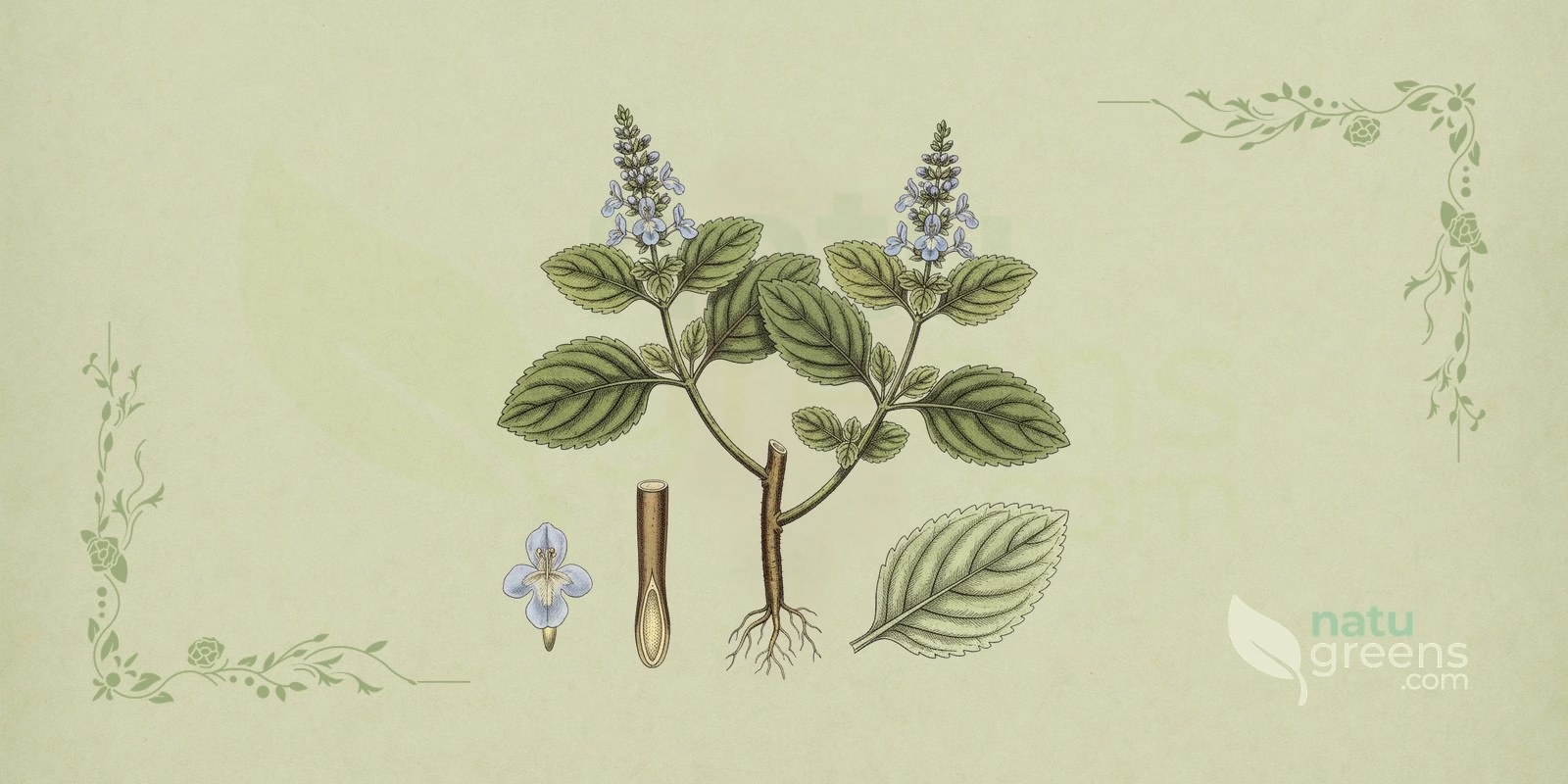
Common and International Names of Cuban Oregano
- English: Indian borage, Cuban oregano, French thyme, Mexican mint, Spanish thyme.
- French: thym des Antilles, gros thym, origan cubain.
- German: Jamaika-Thymian, Kubanischer Oregano.
- Italian: origano cubano, timo spagnolo.
- Portuguese: hortelã-da-folha-grossa, malvarisco, malvariço, hortelã-da-bahia, malva-de-cheiro, malva-do-reino, orégano-cubano, málvex (Brazil); hortelã-graúda (Portugal).
- Spanish: orégano brujo, orégano francés, menta mexicana, tomillo español.
Not to Be Confused with Boldo (Coleus barbatus)
Cuban oregano is easily confused with other species in the same botanical genus. Boldo, Coleus barbatus, synonym Plectranthus barbatus, already has its own article on this site and is traditionally used for digestive and liver issues, a use quite different from the respiratory and culinary one associated with Cuban oregano. There is also Coleus forskohlii, a species whose root is the source of the compound forskolin and which follows a research line distinct from the other two. Before buying seedlings or products, it is worth confirming the full scientific name, because the common name "mint" is used for dozens of different plants in Brazil and elsewhere.
Botanical Synonyms of Cuban Oregano
Plectranthus amboinicus (Lour.) Spreng. is the synonym most often found in contemporary pharmacological and phytochemical literature, proposed by the German botanist Curt Sprengel based on material originally described by João de Loureiro. The name Coleus amboinicus Lour. is still accepted by part of the botanical authorities, which is why it coexists with Plectranthus amboinicus in databases and scientific articles, sometimes within the same text. Other names used in older literature, such as Coleus aromaticus Benth. and Majana amboinica (Lour.) Kuntze, are taxonomic synonyms of the same plant, not different species.
Botanical Family: Lamiaceae
The Lamiaceae family, formerly called Labiatae, brings together around 230 genera and more than seven thousand species distributed across almost the entire planet. Square stems, opposite leaves and two-lipped flowers, often aromatic, mark the group. Plants of great culinary and medicinal use, such as peppermint, thyme, oregano, sage and basil, belong to the same family.
Cuban oregano shares these characteristics and stands out for its fleshy leaf, covered in fine hairs that give the plant a velvety texture. Like much of the family, it produces an essential oil rich in monoterpenes and sesquiterpenes in the leaf glands, and it is precisely this chemistry that draws most of the pharmacological research on the genus.
Parts Used of Cuban Oregano
The leaves, fresh or dried, are the part used in almost all traditional preparations and phytochemical studies. The essential oil extracted from the leaves also has its own use, mainly in laboratory research, but requires extra care, because it is much more concentrated than the fresh leaf.
Ethnobotanical and Traditional Uses of Cuban Oregano
In Brazil, the most widespread traditional use is leaf tea or syrup for cough, hoarseness, sore throat and bronchitis, always as support and never as a substitute for medical treatment. Folk medicine also turns to the plant for asthma, phlegm, headache, fever, flu, muscle pain, intestinal cramps and indigestion, and mashed leaves are applied to the skin in cases of mild inflammation or insect bites. In ethnobotanical records from other regions, such as Southeast Asia and parts of Africa, the plant also appears associated with fevers and digestive problems, following the same traditional logic, without being equivalent to a scientifically validated diagnosis or treatment. The essential oil has also been studied for its larvicidal effect against the Anopheles mosquito, a vector of malaria, a line of research on vector control that is different from using the plant to treat the disease in people.
Medicinal Properties of Cuban Oregano
The properties below come from laboratory trials, animal studies or traditional use observed in different cultures. None of them has been confirmed in robust clinical trials conducted with humans, and for that reason they do not replace medical diagnosis or treatment:
- Analgesic (traditional use for mild pain)
- Antibacterial (observed in laboratory trials with the essential oil)
- Antifungal (observed in in vitro trials)
- Anti-inflammatory (effect described in experimental models)
- Antioxidant (activity against free radicals in laboratory trials)
- Antipyretic (traditional use to reduce fever)
- Antiseptic for mouth and throat (traditional use in gargles and syrups)
- Antitussive (traditional use for dry and productive cough)
- Antiviral (observed in preliminary laboratory studies)
- Bronchodilator (effect reported in experimental models)
- Expectorant (traditional use to clear respiratory secretions)
Detailed Phytochemical Profile of Cuban Oregano
The essential oil and leaf extract contain a wide range of compounds, today studied mainly for their antimicrobial and antioxidant action:
- Apigenin (flavonoid with antioxidant activity)
- Carvacrol (phenolic monoterpene, one of the main compounds responsible for the antimicrobial action)
- Caryophyllene (sesquiterpene present in the essential oil)
- Chrysoeriol (flavonoid described in the species)
- Cirsimaritin (flavonoid described in the species)
- Essential oils (rich in mono and sesquiterpenes)
- Eugenol (aromatic compound also found in clove)
- Flavonoids (broad group of compounds with antioxidant activity)
- Luteolin (flavonoid with antioxidant activity)
- Monoterpenes (volatile components of the essential oil)
- Quercetin (flavonoid widely studied in medicinal plants)
- Salvigenin (methoxylated flavonoid described in the species)
- Sesquiterpenes (components of the essential oil)
- Tannins (astringent compounds present in the leaf)
- Thymol (phenolic monoterpene, along with carvacrol, the main chemical marker of the species)
- Triterpenic acids (compounds of interest in pharmacological studies)
- Xanthophylls (pigments present in the leaf)
Forms of Preparation and Administration of Cuban Oregano
Fresh or dried leaves are prepared as an infusion, decoction, homemade syrup, juice and tincture. The ethanolic leaf extract also appears in more elaborate formulations, generally in a research context or in standardized industrial products. The essential oil is the most concentrated form and, for that reason, the one requiring the most care: it should never be ingested undiluted, and its internal or topical use is only safe when heavily diluted and guided by a qualified professional.
Synergy with Other Medicinal Plants
Respiratory Problems
In folk tradition, Cuban oregano appears alongside eucalyptus (Eucalyptus globulus) and guaco (Mikania glomerata) in teas and syrups for cough and respiratory discomfort. The reasoning behind the combination is that the carvacrol and thymol in Cuban oregano would add to the effect of eucalyptol from eucalyptus and coumarin from guaco, but this specific synergy has not yet been confirmed in clinical studies, and the combination remains a custom passed down between generations.
Pain and Inflammation
For muscle and joint pain, it is common to combine Cuban oregano with arnica (Arnica montana) and cat's claw (Uncaria tomentosa) for external use. The traditional idea is that the compounds in each plant complement one another, although trials comparing the combination with each species used alone are still lacking.
Recipes and Usage Protocols for Cuban Oregano
Infusion for Cough and Irritated Throat
Wash three to five fresh leaves well and place them in a cup. Cover with boiling water, cover the cup and let it steep for ten minutes. Strain, sweeten with honey if you prefer, and drink up to three times a day. This is an old custom to relieve throat discomfort and coughing, with no effect on the cause of the infection, when one is present.
Homemade Leaf Syrup
Chop thirty washed fresh leaves and layer them with a cup of sugar in a glass, stainless steel or enamel pot, starting with the sugar. Cook in a double boiler for forty minutes, with the pot covered and without adding water, then strain. The syrup is a traditional home remedy for cough and irritated throat, meant as support and not as a treatment for respiratory infections, which still require medical evaluation, especially when there is a high fever or symptoms last more than a few days.
Topical Use on Skin with No Known Sensitivity
Mash a few fresh leaves until they form a paste and apply it to small areas of irritated skin or insect bites, covering with gauze for twenty to thirty minutes. Since the raw leaf is rich in carvacrol and thymol, do a patch test on a small area of skin first and avoid repeating the application in anyone who has already had an allergic reaction to plants of the Lamiaceae family.
These preparations follow traditional records and do not replace professional guidance, especially in the case of persistent respiratory symptoms or any sign of infection requiring antibiotics.
The preparations above follow traditional records and do not replace professional guidance. Before any internal use, check the contraindications and interactions described in this article.
Therapies Associated with Cuban Oregano
Clinical Phytotherapy
In phytotherapy, Cuban oregano appears as a support for mild respiratory complaints, usually as a leaf tea, syrup or tincture, and some commercial products contain extracts of the plant, although no dosage standard has been validated in clinical studies. The indication and dose should be determined by a qualified professional, who will also assess possible interactions with other medications in use.
Traditional Asian Medicine
In India and parts of Southeast Asia, the plant has been part of local traditional medicine for centuries, under different regional names, for cough, colds and digestive complaints. Its use follows the particular logic of these traditional systems, distinct from Western phytotherapy, and has not been systematically incorporated into Brazilian clinical practice.
Contraindications and Side Effects of Cuban Oregano
Cuban oregano is rich in carvacrol and thymol, phenolic compounds that, when applied to the skin as a raw leaf or leaf paste, can cause contact dermatitis in people with sensitive skin; for this reason, it is best to test a small area before any larger application. The essential oil should never be ingested undiluted: it is extremely concentrated, can irritate the mucous membranes and cause toxicity, and any internal use should only occur diluted and under the guidance of a qualified professional. There is not enough safety data on the use of the plant, in any therapeutic form, during pregnancy and breastfeeding, so pregnant and breastfeeding women should avoid medicinal use and talk to a doctor before any preparation. Cuban oregano does not replace antibiotics in cases of respiratory infection: its traditional use is for support and comfort, never for treating the underlying cause of the infection, and signs such as high fever, shortness of breath or progressive worsening require prompt medical evaluation. People with known hypersensitivity to plants of the Lamiaceae family, such as peppermint, thyme and basil, should take extra caution, and there are reports of a burning sensation in the tongue and esophagus after ingesting the juice of fresh leaves.
Drug Interactions
Although conclusive clinical studies in humans are still lacking, people taking anticoagulants, sedatives or diabetes medication should, as a precaution, talk to a doctor before adding Cuban oregano to their daily routine, to avoid a possible potentiation of effects.
Curiosities and Historical Facts
The epithet amboinicus refers to Ambon Island, in the Indonesian Moluccas archipelago, where the plant was documented by the German naturalist Georg Eberhard Rumphius. His work on the flora of the region, finished back in the seventeenth century, was only published in the eighteenth century, after the author's death. From there, the species traveled along trade and colonization routes and became naturalized in practically every tropical region, which explains the huge number of common names in such different languages.
In Brazil, the plant has even been used as a substitute for oregano in meat, fish and soup dishes, hence names such as Cuban oregano, and its fleshy, aromatic leaves are also grown in pots and hanging gardens as an ornamental plant, appreciated for the heart-shaped form of the leaves and the aroma released just by touching them.
Frequently Asked Questions about Cuban Oregano
Can Cuban Oregano Be Used in Children?
Leaf tea is traditionally used in some families for mild respiratory discomfort in older children, but the dose, concentration and frequency should be guided by a pediatrician. The essential oil is contraindicated for young children in any form, and should never be applied undiluted to the skin or ingested.
What Is the Best Way to Use Cuban Oregano?
For respiratory discomfort, leaf infusion and syrup are the most traditional forms. For topical use, a paste of fresh leaves is the most common, always with a prior patch test on sensitive skin. The essential oil, being highly concentrated, should be restricted to professional use and used well diluted.
Does Cuban Oregano Have Side Effects?
It can cause a burning sensation in the mouth and esophagus when the juice of the leaves is ingested undiluted, and the raw leaf can irritate sensitive skin, with a risk of contact dermatitis. Broader allergic reactions are rare, but possible in people who already react to other plants of the Lamiaceae family.
Can Cuban Oregano Essential Oil Be Ingested Undiluted?
No. The essential oil is highly concentrated, and ingesting it undiluted can cause irritation of the mucous membranes and toxicity. Any internal use needs to be diluted and guided by a qualified professional.
Does Cuban Oregano Replace Antibiotics for Respiratory Infections?
No. Use of the plant is traditional and serves, at most, as support for patient comfort. Respiratory infections with fever, progressive worsening or shortness of breath require medical evaluation, and antibiotic treatment, when indicated, should follow a professional prescription.
Can Cuban Oregano Be Grown at Home?
Yes. It is a fast-growing plant, easily propagated from cuttings, that adapts well to pots with good drainage and partial shade. In regions with cold winters, it is worth growing it in a pot and protecting it from intense cold, since it is sensitive to frost.
Notice: this content is for informational purposes and does not replace professional medical advice. Consult a physician or herbal practitioner before using medicinal plants, especially during pregnancy, breastfeeding, or alongside medication.
How to cite this article
NATUGREENS. Cuban Oregano (Coleus amboinicus): Uses and Safety Guide. Natugreens, 21 Nov. 2026. Disponível em: https://natugreens.com/coleus-amboinicus-cuban-oregano/. Accessed: Nov. 21, 2026.
Natugreens. (2026). Cuban Oregano (Coleus amboinicus): Uses and Safety Guide. Natugreens. https://natugreens.com/coleus-amboinicus-cuban-oregano/
References and Scientific Studies
Peer-Reviewed Scientific Studies (1)
- PEER2010 Senthilkumar, A. and Venkatesalu, V. (2010). Chemical composition and larvicidal activity of the essential oil of Plectranthus amboinicus (Lour.) Spreng against Anopheles stephensi, a malarial vector mosquito. Parasitology Research, 107(5), 1275 to 1278. ↗
Institutional Sources (1)
- GOV2017 Lopes, P. Q., Carneiro, F. B., de Sousa, A. L., Santos, S. G., Oliveira, E. E. and Soares, L. A. (2017). Technological evaluation of emulsions containing the volatile oil from leaves of Plectranthus amboinicus Lour. Pharmacognosy Magazine, 13(49), 159 to 167. ↗
Supplementary Readings (5)
- 2016 Arumugam, G., Swamy, M. K. and Sinniah, U. R. (2016). Plectranthus amboinicus (Lour.) Spreng: Botanical, phytochemical, pharmacological and nutritional significance. Molecules, 21(4), 369. ↗
- Gurgel, A. P. A. D. A importância de Plectranthus amboinicus (Lour.) Spreng como alternativa terapêutica. UFPE Institutional Repository. ↗
- 2020 Kumar, P., Sangam, S. and Kumar, N. (2020). Plectranthus amboinicus: A review on its pharmacological and pharmacognostical studies. American Journal of Physiology, Biochemistry and Pharmacology, 10(2), 55 to 62. ↗
- 2018 Campinas City Hall (2018). Medicinal plants, Campinas/SP public health system booklet, Botica da Família (Family Pharmacy Program). ↗
- Wikipedia. Coleus amboinicus. ↗
You May Also Like




Take your time and tell us everything you think, details included. Every response is read by someone on our editorial team and goes into the article's revision. An honest critique helps us more than a polite compliment.
Take your time and tell us everything you think, details included. Every response is read by someone on our editorial team and goes into the article's revision. An honest critique helps us more than a polite compliment.