Cordyceps sinensis (Berk.) Sacc. / Cordyceps
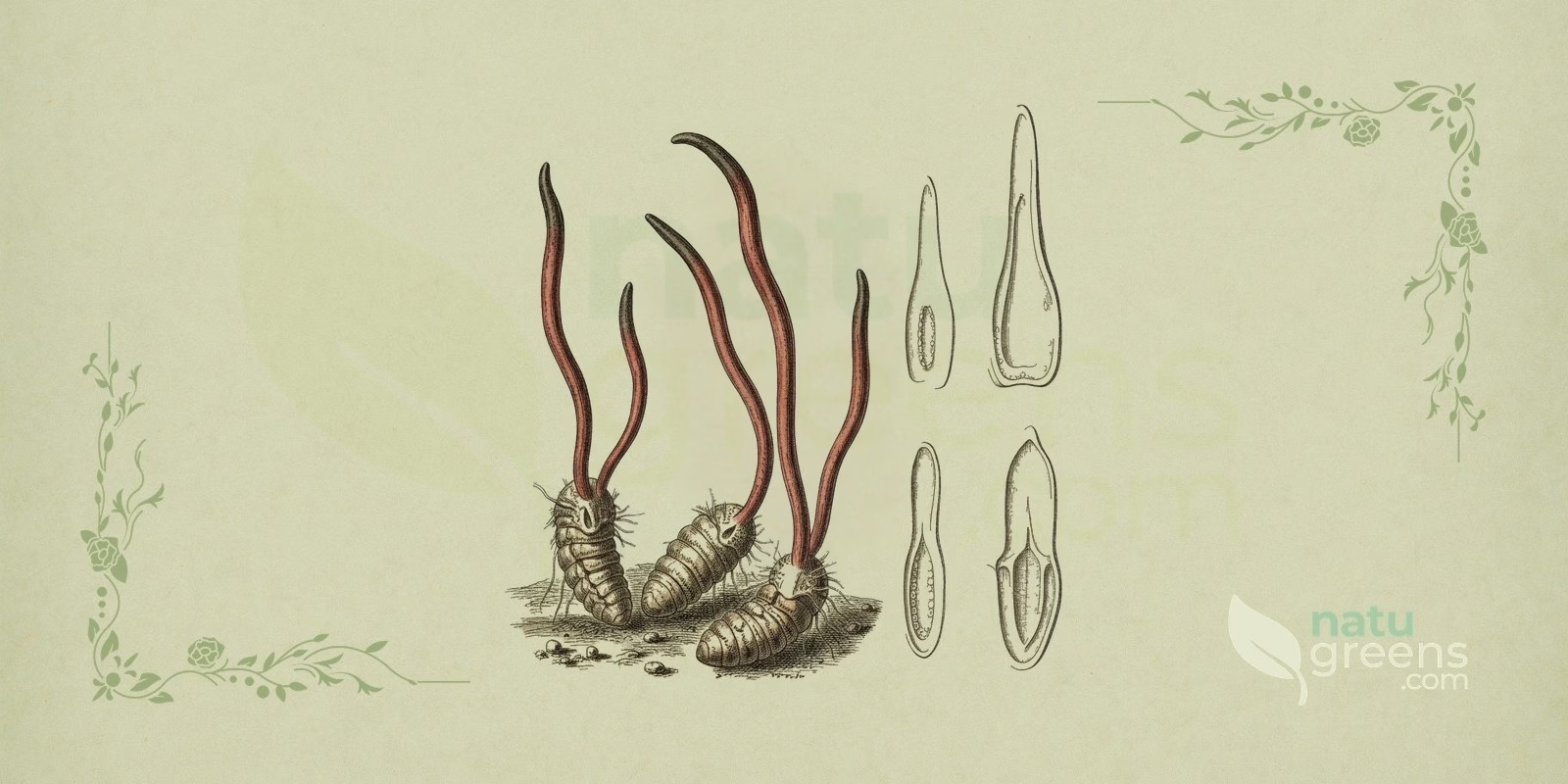
Cordyceps sinensis, whose currently accepted taxonomic name is Ophiocordyceps sinensis, is popularly known as caterpillar fungus or yarsagumba and belongs to the family Ophiocordycipitaceae, an entomopathogenic fungus found mainly in meadows above 3,500 meters on the Tibetan Plateau and in the Himalayan regions. This fungus parasitizes ghost moth larvae and produces a fruiting body that has been valued for centuries in traditional Chinese medicine for its therapeutic properties.
Popular and International Names of Cordyceps
- English: caterpillar fungus, cordyceps, yarsagumba.
- Spanish: cordyceps, hongo oruga, yarsagumba.
- Portuguese: cordyceps, fungo-lagarta, yarsagumba.
- French: champignon chenille, cordyceps, yarsagumba.
- Italian: cordyceps, fungo bruco, yarsagumba.
- German: cordyceps, raupenpilz, yarsagumba.
Botanical Synonyms of Cordyceps sinensis
Cordyceps sinensis (Berk.) Sacc. is the best known and most widely used botanical synonym in the literature. The species was originally described by Miles Berkeley in 1843 as Sphaeria sinensis, and in 1878 Pier Andrea Saccardo transferred it to the genus Cordyceps. In 2007, molecular analyses led to its reclassification under the genus Ophiocordyceps, but the name Cordyceps sinensis is still frequently used in trade and in popular literature.
Botanical Family: Ophiocordycipitaceae
The family Ophiocordycipitaceae belongs to the order Hypocreales and the phylum Ascomycota, known for bringing together entomopathogenic fungi, meaning fungi that parasitize insects. Ophiocordyceps sinensis is a notable example, growing on ghost moth larvae in high-altitude regions. The family is characterized by its ability to alter host behavior and by the production of fruiting bodies that emerge from the parasitized insect, and many of its members are studied for their bioactive compounds.
Parts of Cordyceps Used
- Cultivated mycelium
- Fruiting body (fungus and parasitized larva)
Ethnobotanical and Traditional Uses
- Enhancing sexual function (aphrodisiac)
- Immune system support
- Increasing energy and vitality
- Recovery from illness and exhaustion
- Support for kidney and lung function
Therapeutic Properties of Cordyceps
- Adaptogenic (helps the body adapt to stress)
- Antioxidant (activity studied against free radicals)
- Antiproliferative (activity observed in laboratory studies, without clinical confirmation)
- Antiviral (activity studied against viruses)
- Anti-inflammatory (effect studied in reducing inflammation)
- Hepatoprotective (protective effect studied on the liver)
- Hypoglycemic (effect studied in lowering blood sugar)
- Immunomodulatory (effect studied on the immune system)
- Neuroprotective (protective effect studied on the nervous system)
Detailed Phytochemical Profile of Cordyceps
- Adenosine
- Amino Acids
- Cordycepin
- Mannitol (Cordycepic Acid)
- Minerals (K, Na, Ca, Mg, Fe, Cu, Mn, Zn, Se)
- Polysaccharides (Beta-Glucans)
- Sterols (Ergosterol)
- Vitamins (B1, B2, B12, E, K)
Preparation and Administration Forms of Cordyceps
- Capsules
- Powdered Extract
- Tea (Infusion/Decoction)
- Tincture
Synergy with Other Medicinal Plants
Increasing Energy and Performance
Cordyceps can be combined with ginseng (Panax ginseng) and rhodiola (Rhodiola rosea) to strengthen adaptogenic and energizing effects, a synergy traditionally recommended for athletes and individuals seeking to improve physical and mental endurance. Ginseng and rhodiola, together with cordyceps, act on the regulation of the hypothalamic-pituitary-adrenal axis, contributing to the body’s response to stress and fatigue.
Immune Support
For robust immune support, cordyceps can be paired with mushrooms such as reishi (Ganoderma lucidum) and shiitake (Lentinula edodes), whose polysaccharides work together to modulate the immune response, promoting the activity of NK cells and macrophages. This combination is traditionally considered helpful in preventing infections and supporting recovery from states of immunosuppression, but people with autoimmune diseases should avoid it, for the same reasons that restrict the isolated use of cordyceps.
Respiratory Health
Combining cordyceps with herbs such as ginger (Zingiber officinale) and licorice (Glycyrrhiza glabra) may offer additional support for respiratory health, since cordyceps is traditionally used to strengthen the lungs, while these herbs complement its action with anti-inflammatory and expectorant properties, helping to manage conditions such as asthma and bronchitis.
Recipes and Usage Protocols of Cordyceps
Standardized Extract Capsules
Ingredients: Powdered standardized extract of Ophiocordyceps sinensis.
Preparation: Follow the manufacturer’s dosage instructions, usually 500 to 1,000 mg, 1 to 3 times a day, with meals. Capsules are a convenient form of administration, ensuring a consistent dose of active compounds, and are suited for continuous use as a daily supplement supporting energy and immunity.
Cordyceps Tea (Decoction)
Ingredients: 3 to 5 grams of dried Ophiocordyceps sinensis fruiting body, 500 ml of water.
Preparation: Add the cordyceps to the water and bring to a boil, then reduce the heat and simmer for 15 to 20 minutes. Strain and drink the tea, which can be taken 1 to 2 times a day. This decoction is a traditional way of extracting the beneficial compounds and is traditionally considered helpful for respiratory and kidney support.
Energizing Cordyceps Smoothie
Ingredients: 1 teaspoon of powdered cordyceps extract, 1 banana, 1 cup of spinach, 200 ml of plant-based milk, 1 tablespoon of chia seeds.
Preparation: Combine all the ingredients in a blender and blend until smooth, drinking it in the morning for a natural energy boost. This smoothie is an excellent way to incorporate cordyceps into the daily diet, providing additional nutrients and adaptogenic support.
Cordyceps Tincture
Ingredients: 50 grams of dried Ophiocordyceps sinensis fruiting body, 250 ml of 40-60% alcohol (vodka or grain spirit).
Preparation: Chop the cordyceps and place it in a glass jar, covering it completely with the alcohol. Seal tightly and let it macerate for 4 to 6 weeks in a cool, dark place, shaking daily. Strain and store the tincture in a dark bottle. Take 20 to 30 drops, 2 to 3 times a day, diluted in water; the tincture is a concentrated, fast-absorbing form of the active compounds.
The preparations above follow traditional records and do not replace professional guidance. Before any internal use, review the contraindications and interactions described in this article.
The preparations above follow traditional records and do not replace professional guidance. Before any internal use, check the contraindications and interactions described in this article.
Associated Therapies
Traditional Chinese Medicine (TCM)
In Traditional Chinese Medicine, cordyceps is valued as a tonic for the kidneys and lungs, used to strengthen Qi (vital energy) and Yang. It is often prescribed for chronic fatigue, debility after illness, sexual dysfunction, and respiratory issues such as asthma and bronchitis, and is also recommended to improve endurance. TCM regards cordyceps as a perfect balance of Yin and Yang, since it is made up of an animal (the larva) and a plant-like organism (the fungus).
Modern Herbal Medicine
Modern herbal medicine uses standardized cordyceps extracts for various applications, drawing on scientific research that investigates its traditional uses as an adaptogen, immunomodulator, and antioxidant, as well as its support for physical performance. The extracts are often titrated to ensure a consistent concentration of active compounds such as polysaccharides and cordycepin, and are used in supplements for general health, energy, and immune support.
Contraindications and Side Effects of Cordyceps
General Contraindications
Cordyceps is generally considered safe, but there are some contraindications. Individuals with autoimmune diseases, such as lupus, multiple sclerosis, or rheumatoid arthritis, should avoid its use, since cordyceps can stimulate the immune system and worsen the condition. People with bleeding disorders or taking anticoagulants should use it with caution, as it may have a mild anticoagulant effect, and pregnant or breastfeeding women should consult a healthcare professional before use, due to the lack of conclusive studies on its safety in these groups.
Common Side Effects
Side effects of cordyceps are rare and generally mild, and may include gastrointestinal discomfort, such as diarrhea, nausea, or dry mouth. In some cases allergic reactions may occur, although these are uncommon. It is important to start with a low dose and observe the body’s response; if persistent adverse effects occur, use should be discontinued and a physician consulted.
Drug Interactions
Cordyceps can interact with certain medications: it may increase the effect of immunosuppressant drugs, making them less effective, and it may also potentiate the effect of anticoagulants, increasing the risk of bleeding. Individuals with diabetes who take blood sugar-lowering medications should carefully monitor their glucose levels, since cordyceps may have a hypoglycemic effect. Always consult a healthcare professional before combining cordyceps with other medications.
Historical Notes and Interesting Facts
The Caterpillar Fungus: A Wonder of Nature
Cordyceps sinensis is famous for its unique and fascinating life cycle, as it parasitizes ghost moth larvae that live underground on the Tibetan Plateau. The fungal spores infect the larva, which eventually dies and becomes mummified, and in summer a fruiting body emerges from the dead larva’s head, resembling a small plant. This phenomenon gave rise to its Chinese name, dōng chóng xià cǎo, meaning “winter worm, summer grass.”
The Gold of the Himalayas
Due to its rarity and medicinal properties, Cordyceps sinensis is one of the most expensive natural products in the world, often referred to as the “gold of the Himalayas.” Its harvest is a vital source of income for many communities in the mountainous regions of Tibet, Nepal, and Bhutan, and growing global demand, combined with the difficulty of harvesting at high altitudes, contributes to its high market value.
Use by Athletes
Cordyceps gained popularity among elite athletes, especially after the 1993 Chinese National Games, when Chinese athletes attributed their performance to a diet that included cordyceps. It is believed to contribute to endurance, athletic performance, and recovery due to its capacity to increase ATP production and improve the body’s use of oxygen; although more research is needed, many athletes continue to use it as a natural supplement.
Frequently Asked Questions about Cordyceps
What Is Cordyceps?
Cordyceps is a genus of parasitic fungi that grow on insects. The best known is Ophiocordyceps sinensis, which parasitizes ghost moth larvae in the Himalayas and is valued in traditional Chinese medicine for its properties, used to increase energy, endurance, and overall health.
What Are the Benefits of Cordyceps?
The benefits of cordyceps include increased energy and endurance, immune system support, anti-inflammatory and antioxidant properties, improved respiratory and kidney function, and antiproliferative activity observed in laboratory studies, without clinical confirmation in humans. It is also used as an adaptogen to help the body cope with stress.
How Is Cordyceps Consumed?
Cordyceps can be consumed in various forms, including standardized extract capsules, teas (decoctions), tinctures, and added to smoothies or food; the form of consumption and dosage depend on the intended purpose and the product’s concentration.
Does Cordyceps Have Side Effects?
Side effects of cordyceps are generally mild and rare, and may include gastrointestinal discomfort. It is contraindicated for people with autoimmune diseases or those taking anticoagulants, and pregnant or breastfeeding women should consult a physician before use.
Where Is Cordyceps Found?
Wild Ophiocordyceps sinensis is found at high altitudes on the Tibetan Plateau and in the Himalayan regions, including Tibet, Nepal, Bhutan, and parts of India and China. Due to its rarity, cordyceps mycelium is often laboratory-cultivated for commercial use.
Notice: this content is for informational purposes and does not replace professional medical advice. Consult a physician or herbal practitioner before using medicinal plants, especially during pregnancy, breastfeeding, or alongside medication.
References and Scientific Studies
Peer-Reviewed Scientific Studies (3)
- PMC2013 Shashidhar, M. G., et al. Bioactive principles from Cordyceps sinensis: A potent food medicinal fungus. Journal of Herbal Medicine. 2013.
- PEER2021 Wang, Y., et al. Morphological and Molecular Phylogenetic Data of the Chinese Medicinal Fungus Cordyceps liangshanensis Reveal Its New Systematic Position in the Family Ophiocordycipitaceae. Mycobiology. 2021.
- DOI2007 Sung, G. H., et al. Phylogenetic classification of Cordyceps and the clavicipitaceous fungi. Studies in Mycology. 2007. ↗
Institutional Sources (2)
- GOV2011 Lin, B., & Li, S. Cordyceps as an Herbal Drug. Herbal Medicine: Biomolecular and Clinical Aspects. 2nd edition. 2011.
- GOV2008 Winkler, D. Yartsa Gunbu (Cordyceps sinensis) and the fungal commodification of the rural economy in Tibet AR. Journal of the International Association of Tibetan Studies. 2008.