



Quick summary
Maranta arundinacea L. / Arrowroot, known in English as arrowroot and in Brazil and Portugal as araruta, is a perennial herbaceous plant of the Marantaceae family, described by Carl Linnaeus in 1753 and native to the tropical Americas, especially the West Indies and northern South America. Its fleshy, whitish rhizome…
Main caution: Warning: diarrhea in babies and children requires oral rehydration solution and medical assessment, and it should not be treated with arrowroot porridge. Signs such as blood in the stool, fever, vomiting, listlessness…
Maranta arundinacea L. / Arrowroot, known in English as arrowroot and in Brazil and Portugal as araruta, is a perennial herbaceous plant of the Marantaceae family, described by Carl Linnaeus in 1753 and native to the tropical Americas, especially the West Indies and northern South America. Its fleshy, whitish rhizome yields a fine starch that made the plant known around the world and that Indigenous peoples have used for thousands of years.
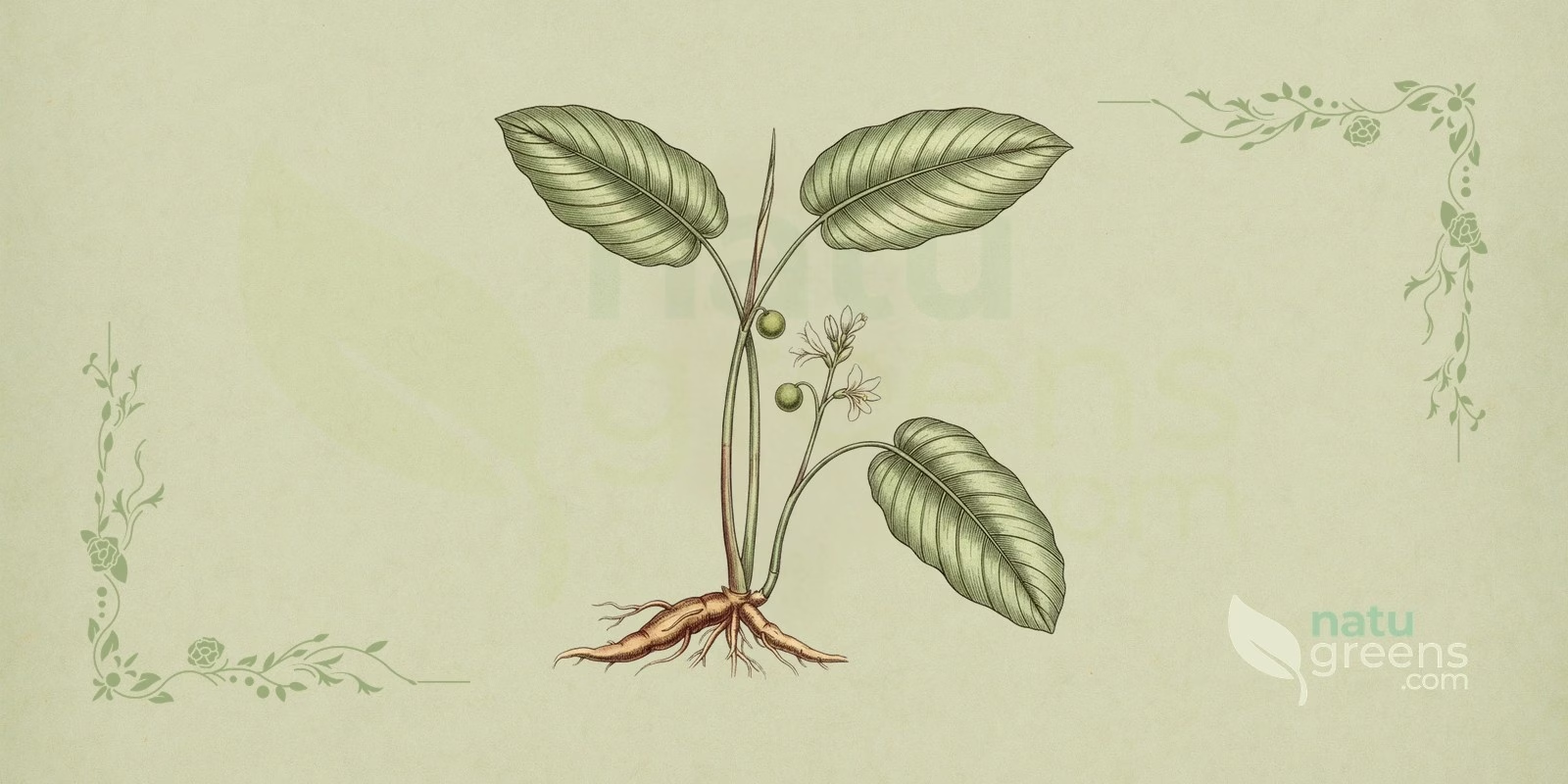
Arrowroot is, above all, a food: a well-tolerated, gluten-free starch used in cookies, porridges and as a thickener. The traditional use of arrowroot porridge for diarrhea rests on a single small pilot study, so it remains under study. There is also a little-known practical problem: the name "arrowroot" is applied to several different starches, and in Brazil cassava starch is commonly sold as if it were arrowroot.
Popular and International Names of Arrowroot
- English: arrowroot, West Indian arrowroot.
- French: arrow-root, marante.
- German: Pfeilwurz.
- Italian: maranta.
- Portuguese: araruta, araruta-comum, maranta.
- Spanish: arrurruz, maranta.
In Spanish, arrowroot may also be called sagú, but that name also refers to the starch extracted from palms, true sago, so it should be used with care.
Many Arrowroots, Only One Maranta
In the trade, "arrowroot" and the Portuguese araruta work as generic names for starch, and other plants go by the same name:
- Florida arrowroot: species of Zamia, plants that are toxic unless they are processed correctly.
- Indian arrowroot: Curcuma angustifolia, a relative of turmeric.
- Polynesian arrowroot: Tacca leontopetaloides, whose tubers are bitter when raw.
- Queensland arrowroot: Canna indica, the same species as Indian shot.
Only Maranta arundinacea is the true arrowroot covered in this article.
Botanical Synonyms of Arrowroot
The accepted name is Maranta arundinacea L. Forms cultivated in different tropical regions were once given names of their own, which are now treated as synonyms.
- Maranta indica Tussac
- Maranta ramosissima Wall.
Botanical Family: Marantaceae
The Marantaceae family brings together tropical herbaceous plants, with about 30 genera and more than 500 species in the Americas, Africa and Asia. Many are ornamental, such as calatheas and the prayer plants grown for their decorative foliage, known for folding their leaves at night thanks to a joint at the base of the leaf stalk, the pulvinus.
Arrowroot is the most economically important species in the family because of the starch in its rhizome, which was once exported on a large scale from the West Indies to Europe.
Parts of Arrowroot Used
- Rhizomes (starch extraction)
- Leaves (occasional traditional use)
Ethnobotanical and Traditional Uses of Arrowroot
- Diarrhea (traditional use of the porridge; under study)
- Light food for convalescents (traditional use)
- Skin powder (traditional external use)
- Thickener for porridges, creams and sauces
The best-established use of arrowroot is in the kitchen. Its traditional use for diarrhea goes back a long way, but it is supported only by one small pilot study in adults with irritable bowel syndrome, without a control group. The idea that the root neutralized arrow poisons survives only as a curiosity about the origin of the English name.
Therapeutic Properties of Arrowroot
- Diarrhea (under study; one small pilot study in irritable bowel syndrome)
- Immunity (under study; cell and mouse data with tuber extracts)
- Prebiotic (under study; laboratory and animal data)
- Well-tolerated food (easily digested, gluten-free starch)
Arrowroot flour is practically pure starch and is digested quickly. There is therefore no basis for presenting it as a low glycemic index food, and people with diabetes should count it like any other carbohydrate.
Detailed Phytochemical Profile of Arrowroot
- B-complex vitamins (in the rhizome)
- Fiber (in the rhizome, very little in the flour)
- Minerals (calcium, magnesium, potassium, mainly in the rhizome)
- Protein (in small amounts)
- Saponins
- Starch (the main component of the rhizome and nearly all of the flour)
Arrowroot flour consists almost entirely of starch, with fine granules that form clear, glossy gels prized in pastry making. The vitamins, minerals and fiber attributed to the plant are found in the whole rhizome and are largely lost when the flour is extracted, so the flour itself is above all a source of energy.
Preparation and Administration Forms of Arrowroot
- Cookies and cakes
- Creams, puddings and sauces
- Porridges
- Soups
To use it as a thickener, dissolve the starch in a cold liquid before adding it to the hot preparation. When buying, choose brands that state Maranta arundinacea on the label.
Synergy with Other Medicinal Plants
Arrowroot in Light Meals
In the kitchen, arrowroot replaces heavier starches in meals for people with a sensitive stomach and goes well with vegetables, eggs and lean meats in simple dishes. On its own it does not make a complete meal, since it is almost pure starch.
Peppermint and Lemon Balm
In home tradition, an arrowroot porridge or cookie may be served alongside peppermint (Mentha × piperita) or lemon balm (Melissa officinalis) tea, both associated with digestive comfort. This is a traditional pairing that no study has evaluated, and it does not replace a medical assessment when symptoms persist.
Recipes and Usage Protocols of Arrowroot
Arrowroot Cookies
Ingredients: 200 g of arrowroot starch, 100 g of unsalted butter at room temperature, 80 g of sugar, 1 egg and the zest of 1 lemon.
Preparation: beat the butter with the sugar until pale and creamy, add the egg and the zest, then work in the starch a little at a time until a soft dough forms. Roll out, cut and bake at 180 °C for 15 to 20 minutes, until lightly golden. For people with celiac disease, use starch certified gluten-free.
Arrowroot Porridge for Adults and Older Children
Ingredients: 2 tablespoons of arrowroot starch, 250 ml of milk or plant-based drink, sugar or honey and cinnamon to taste.
Preparation: dissolve the starch in a little cold milk, heat the rest and, once it boils, add the mixture, stirring constantly until it thickens. Sweeten and dust with cinnamon. Do not give honey to children under 1 year of age. The porridge is a light snack, but it does not replace breast milk or infant formula for babies.
Vanilla Cream with Arrowroot
Ingredients: 500 ml of milk, 3 tablespoons of arrowroot starch, 3 tablespoons of sugar and a few drops of vanilla extract.
Preparation: dissolve the starch in part of the cold milk, heat the rest with the sugar, add the mixture and stir over low heat until it thickens. Remove from the heat, add the vanilla and serve warm or chilled.
The preparations above follow traditional records and do not replace professional guidance. Before any internal use, check the contraindications and interactions described in this article.
Associated Therapies of Arrowroot
Gluten-Free Diet
Arrowroot starch is naturally gluten-free and can replace wheat flour in recipes for people with celiac disease or gluten sensitivity. Because cross-contamination during processing and adulteration with other starches are possible, people with celiac disease should choose products certified gluten-free.
Scientific Research
Tuber extracts are being studied in cells and animals, and the effect of the porridge on diarrhea in irritable bowel syndrome was evaluated in a single pilot study with 11 patients. These are preliminary results that do not allow arrowroot to be recommended as a treatment.
Contraindications and Side Effects of Arrowroot
Diarrhea in Babies and Children
Warning: diarrhea in babies and children requires oral rehydration solution and medical assessment, and it should not be treated with arrowroot porridge. Signs such as blood in the stool, fever, vomiting, listlessness, dry mouth or little urine call for immediate medical care.
No Substitute for Breast Milk or Formula
Arrowroot porridge must never replace breast milk or infant formula. Arrowroot flour is almost pure starch, without the protein, fat and micronutrients a baby needs.
Diabetes
Arrowroot is a quickly digested starch. People with diabetes should count it as a carbohydrate in their meal plan, as they would with other starches, and there is no basis for saying it has a low glycemic index.
Celiac Disease and Fraud
Arrowroot does not contain gluten, but the product on sale may have been contaminated or mixed with other starches. In Brazil, cassava starch is commonly sold as arrowroot. People with celiac disease should prefer certified products.
Good Tolerance
As a food, arrowroot is well tolerated, including during pregnancy and breastfeeding. Allergic reactions are rare.
Historical Notes and Interesting Facts about Arrowroot
Origin of the Name
According to a common explanation, the Portuguese name "araruta" may come from the Arawak aru-aru, roughly "meal of meals". The English name arrowroot is usually explained by the old use of the root by Caribbean peoples on wounds from poisoned arrows, a story that holds as an etymological curiosity, not as a recommendation for use.
The Arrowroot of Saint Vincent
In the 19th and 20th centuries, Saint Vincent and the Grenadines was one of the world's largest exporters of arrowroot starch, and the plant carried real weight in the island's economy.
A Grandmother's Ingredient
In Brazil, arrowroot cookies and porridges were very common until the mid-20th century, when the starch lost ground to cornstarch and cassava starch, which was often sold under the name of arrowroot.
Frequently Asked Questions about Arrowroot
What Is Arrowroot?
It is a tropical plant whose rhizome yields a fine, gluten-free starch used in cookies, porridges and as a thickener for sauces and creams.
Does Arrowroot Contain Gluten?
Not naturally. However, cross-contamination or mixing with other starches can occur, so people with celiac disease should choose products certified gluten-free.
Does Arrowroot Porridge Help with Diarrhea?
It is a traditional use, evaluated in only one small pilot study in adults with irritable bowel syndrome. In babies and children, diarrhea requires oral rehydration solution and medical assessment.
Can I Give Arrowroot Porridge to My Baby?
Never in place of breast milk or infant formula. Arrowroot flour is almost pure starch and does not provide the protein and micronutrients a baby needs. Introducing solid foods should follow the pediatrician's guidance.
Can People with Diabetes Eat Arrowroot?
Yes, as long as they count it as a carbohydrate in their meal plan. It is a quickly digested starch, and there is no basis for presenting it as low glycemic index.
How Can I Tell If Arrowroot Is Genuine?
Check that the label states Maranta arundinacea. In Brazil, cassava starch is commonly sold as arrowroot, and other plants, such as Canna indica, also yield starches called arrowroot.
Notice: this content is for informational purposes and does not replace professional medical advice. Consult a physician or herbal practitioner before using medicinal plants, especially during pregnancy, breastfeeding, or alongside medication.
How to cite this article
NATUGREENS. Arrowroot (Maranta arundinacea): Uses and Recipes. Natugreens, 20 Nov. 2026. Disponível em: https://natugreens.com/maranta-arundinacea-arrowroot/. Accessed: Nov. 20, 2026.
Natugreens. (2026). Arrowroot (Maranta arundinacea): Uses and Recipes. Natugreens. https://natugreens.com/maranta-arundinacea-arrowroot/
References and Scientific Studies
- DOI2000 Cooke C, Carr I, Abrams K, Mayberry J. (2000). Arrowroot as a treatment for diarrhoea in irritable bowel syndrome patients: a pilot study. Arquivos de Gastroenterologia, 37(1). Open-label pilot study with 11 patients, no control group. ↗
- DOI2012 Kumalasari ID, et al. (2012). Evaluation of immunostimulatory effect of the arrowroot (Maranta arundinacea L) in vitro and in vivo. Cytotechnology, 64(2), 131-137. Effects of tuber extracts on cells and mice. ↗
- DOI2023 Malki MKS, et al. (2023). Characterization of arrowroot (Maranta arundinacea) starch as a potential starch source for the food industry. Heliyon. Physicochemical properties of the starch. ↗
- DOI2022 Fidianingsih I, et al. (2022). Arrowroot (Maranta arundinacea L.) as a new potential functional food: a scoping review. International Food Research Journal, 29(6). Scoping review, dominated by preclinical studies. ↗
You May Also Like
Take your time and tell us everything you think, details included. Every response is read by someone on our editorial team and goes into the article's revision. An honest critique helps us more than a polite compliment.
Take your time and tell us everything you think, details included. Every response is read by someone on our editorial team and goes into the article's revision. An honest critique helps us more than a polite compliment.