Centella asiatica (L.) Urban / Aziatische waternavel, in de volksmond ook bekend als gotu kola, indische waternavel of tijgergras, is een overblijvende kruidachtige plant uit de familie Apiaceae. Beschreven door Carl Linnaeus en later opnieuw geclassificeerd door Ignatz Urban, is deze soort inheems in de vochtige regio’s van Zuidoost-Azië, waaronder India, Sri Lanka, China, Indonesië en Maleisië, en komt ze ook voor in delen van Zuid-Afrika en Madagaskar. Centella asiatica wordt al eeuwenlang gewaardeerd in de traditionele Ayurvedische en Chinese geneeskunde vanwege haar brede therapeutische eigenschappen, met name als hersentonicum en bij wondgenezing.
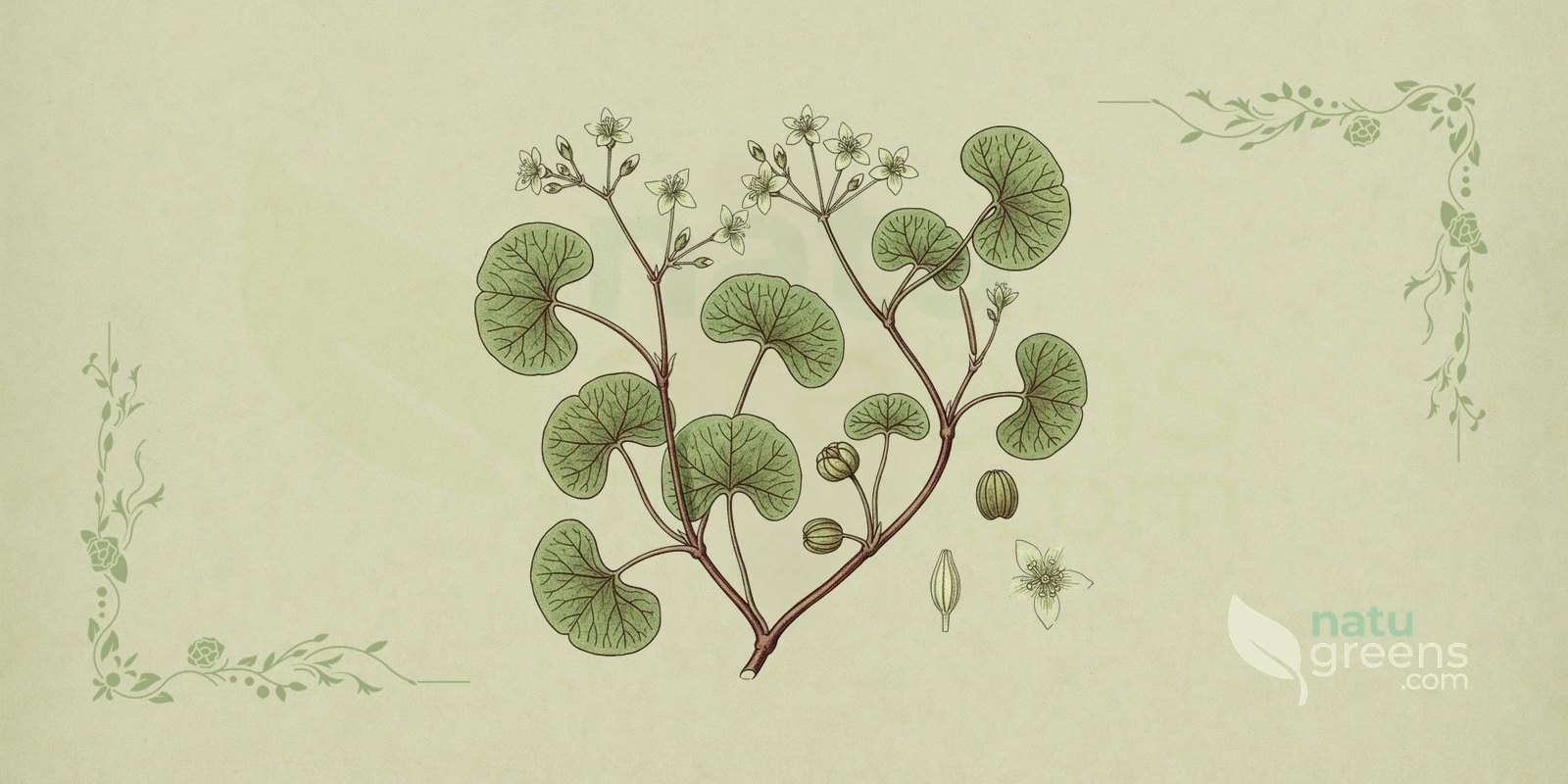
De plant groeit kruipend, met wortelende uitlopers, en heeft geelgroene, dunne, afwisselend geplaatste bladeren met lange bladstelen, die niervormig, rond of langwerpig-elliptisch zijn met zeven nerven. Kleine witte, roze of paarse bloempjes sieren de plant. Het belang van Centella asiatica wordt erkend door monografieën van de Europese Farmacopee, de Commissie E van het Duitse ministerie van Volksgezondheid en de Wereldgezondheidsorganisatie (WHO), die de effecten op wondgenezing en geheugenverbetering benadrukken. Modern wetenschappelijk onderzoek blijft het uitgebreide potentieel van deze medicinale plant valideren en verkennen.
Volksnamen en internationale namen
- Nederlands: aziatische waternavel, gotu kola, indische waternavel, tijgergras.
- Portugees: brahmi (BR), centelha asiática, gotu kola, hidrocotile, pata-de-cavalo.
- Engels: asiatic pennywort, gotu kola, indian pennywort, indian water navelwort, tiger herb, wild violet.
- Spaans: brahmi, centella asiática, gotu kola, hierba de tigre.
- Frans: centella asiatica, gotu kola, herbe du tigre.
- Italiaans: centella asiatica, erba della tigre, gotu kola.
- Duits: Gotu Kola, Indischer Wassernabel, Tigergras.
Botanische synoniemen
De botanische synoniemen van Centella asiatica (L.) Urban omvatten Centella coriacea Nannfd., Hydrocotyle asiatica L., Hydrocotyle lunata Lam. en Trisanthus cochinchinensis Lour. Deze benamingen weerspiegelen de taxonomische complexiteit en de classificatiegeschiedenis van deze plant door de tijd heen. Hoewel Centella asiatica tegenwoordig de aanvaarde naam is, benadrukt de aanwezigheid van meerdere synoniemen in diverse wetenschappelijke en traditionele literatuur haar brede verspreiding en wereldwijde erkenning.
Botanische familie: Apiaceae
Centella asiatica behoort tot de familie Apiaceae, voorheen bekend als Umbelliferae. Deze familie is omvangrijk en kosmopolitisch en omvat ongeveer 3.700 soorten verdeeld over circa 434 geslachten. Ze wordt gekenmerkt door doorgaans kruidachtige planten met holle stengels en afwisselend geplaatste bladeren, vaak samengesteld en met goed ontwikkelde bladscheden. De bloemen zijn doorgaans klein en gegroepeerd in schermvormige bloeiwijzen, vandaar de vroegere naam van de familie. Veel soorten binnen de Apiaceae staan bekend om hun aromatische en medicinale eigenschappen, waaronder culinaire planten zoals peterselie, koriander en wortel, evenals planten van farmacologisch belang zoals scheerling en venkel. De aanwezigheid van bioactieve stoffen, zoals cumarinen, flavonoïden en etherische oliën, komt vaak voor binnen deze familie en draagt bij aan de uiteenlopende toepassingen ervan.
Gebruikte delen voor thee en bereidingen
- Bladeren
- Bovengrondse delen
- Gestandaardiseerde extracten
Etnobotanisch en traditioneel gebruik
- Indigestie en diarree
- Koorts
- Oogproblemen
- Reumatische pijn
- Traditioneel gebruik bij lepra (historische vermelding)
- Traditionele ondersteuning bij cognitieve achteruitgang, met voorlopig onderzoek naar Alzheimer
- Urogenitale aandoeningen
- Verbetering van cognitie en geheugen
- Verlichting van angst en stress
- Wondgenezing en huidaandoeningen
Therapeutische eigenschappen
- Antibacterieel (werking onderzocht tegen bacteriën); traditioneel gebruik, zonder aangetoonde klinische werkzaamheid
- Anticonvulsief (effect onderzocht bij het verminderen van toevallen); traditioneel gebruik, zonder aangetoonde klinische werkzaamheid
- Antidiabetisch (effect onderzocht op de bloedsuikerspiegel); traditioneel gebruik, zonder aangetoonde klinische werkzaamheid
- Antifungaal (werking onderzocht tegen schimmels)
- Antioxidant (werking onderzocht tegen vrije radicalen)
- Antiproliferatief (werking waargenomen in laboratoriumonderzoek, zonder klinisch bewijs)
- Antipsoriatisch (effect onderzocht in psoriasismodellen)
- Anti-ulcus (beschermend effect onderzocht tegen maagzweren)
- Antiviraal (werking onderzocht tegen virussen); traditioneel gebruik, zonder aangetoonde klinische werkzaamheid
- Hartbeschermend (beschermend effect onderzocht op het hart); traditioneel gebruik, zonder aangetoonde klinische werkzaamheid
- Immuunstimulerend (effect onderzocht op het immuunsysteem); traditioneel gebruik, zonder aangetoonde klinische werkzaamheid
- Insectenwerend (werkt insectenwerend)
- Kalmerend (effect onderzocht op ontspanning)
- Leverbeschermend (beschermend effect onderzocht op de lever); traditioneel gebruik, zonder aangetoonde klinische werkzaamheid
- Neurobeschermend (beschermend effect onderzocht op het zenuwstelsel)
- Ontstekingsremmend (effect onderzocht bij het verminderen van ontstekingen)
Fytochemisch profiel
- 3,4-di-O-cafeoylchinazuur
- 3,5-di-O-cafeoylchinazuur
- 4,5-di-O-cafeoylchinazuur
- Asiaticine
- Asiaticoside
- Asiatinezuur
- Bayogenine
- Betulinezuur
- Brahmezuur
- Cadinol
- Castasteron
- Castillicetine
- Castilliferol
- Centellasapogenol A
- Centellasaponinen A-D
- Centellicine
- Centelline
- Centellose
- Chlorogeenzuur
- Ettacrinezuur
- Flavonoïden (apigenine, kaempferol, luteoline, myricetine, patuletine, quercetine, rutine)
- Isochlorogeenzuur
- Isotankunezuur
- Madasiatinezuur
- Madecassinezuur (6-hydroxyasiatinezuur)
- Madecassoside
- Mono- en sesquiterpenen (etherische olie, waaronder α-copaeen)
- o-Cumarzuur
- p-Cumarzuur
- p-Hydroxybenzoëzuur
- Polyacetylenen (acetoxycentelinol)
- Pomolzuur
- Rozemarijnzuur
- Sterolen (11-oxoheneicosanylcyclohexaan, dotriacont-8-eenzuur, sitosterol-3-O-β-glycoside, stigmasterol-3-O-β-glycoside)
- Thankunezuur
- trans-Kaneelzuur
- Triterpenen (23-O-acetylasiaticoside B, 23-O-acetylmadecassoside, 3-O-[α-L-arabinofuranosyl] 2α,3β,6β,23-α-tetrahydroxyurs-12-een-28-zuur, 3β,6β,23-trihydroxyoleaan-12-een-28-zuur, 3β,6β,23-trihydroxyurs-12-een-28-zuur)
- Ursolzuur
Bereidingswijzen (thee, tincturen, extracten)
- Capsules
- Crème
- Droog extract
- Etherische olie
- Infusie (thee)
- Tabletten
- Tinctuur
- Vloeibaar extract
Synergie met andere planten
Wondgenezing en huidgezondheid
Voor uitwendig gebruik vertoont Centella asiatica synergie met aloë vera (Aloe vera) en goudsbloem (Calendula officinalis). Terwijl de triterpenen van Centella de collageenproductie en weefselregeneratie zouden kunnen ondersteunen, biedt aloë vera vochtinbrengende en ontstekingsremmende eigenschappen, en draagt goudsbloem bij met wondhelende en antiseptische effecten. Deze combinatie wordt traditioneel gebruikt bij de verzorging van wonden, brandwonden en huidontstekingen, naast algemene ondersteuning van de huidgezondheid.
Cognitieve functie en geheugen
Centella asiatica kan worden gecombineerd met Bacopa monnieri (Brahmi) en Ginkgo biloba om effecten op geheugen en cognitieve functie te ondersteunen. De synergie tussen de triterpenen van Centella en de bacosiden van Bacopa, samen met de flavonoïden en terpenoïden van Ginkgo, wordt onderzocht vanwege het potentieel om neurobescherming en de hersencirculatie te optimaliseren. Deze combinatie wordt vaak gebruikt in supplementen gericht op hersengezondheid, hoewel het wetenschappelijk bewijs voor de combinatie van de drie planten nog beperkt is.
Vermindering van angst en stress
De combinatie van Centella asiatica met valeriaan (Valeriana officinalis) en passiebloem (Passiflora incarnata) wordt traditioneel gebruikt bij het verlichten van angst en stress. De angstremmende effecten van Centella, toegeschreven aan de triterpenen, vullen de kalmerende stoffen van valeriaan en de alkaloïden van passiebloem aan, wat resulteert in een sterker kalmerend effect. Deze synergie wordt gebruikt om ontspanning te bevorderen en de slaapkwaliteit te ondersteunen; omdat de combinatie planten met een kalmerend effect samenbrengt, moeten mensen die sedativa of benzodiazepinen gebruiken extra voorzichtig zijn en professioneel advies inwinnen voordat zij deze combineren.
Recepten en gebruiksprotocollen
Zelfgemaakte wondhelende crème
Ingrediënten: 10 ml vloeibaar extract van Centella asiatica, 50 g neutrale crèmebasis (parfumvrij).
Bereiding: Meng het vloeibare extract door de neutrale crèmebasis tot een homogeen mengsel. Bewaar in een schone, donkere pot. Breng een kleine hoeveelheid aan op de schone, aangetaste huid, tweemaal per dag, ter ondersteuning van de wondgenezing, het verminderen van ontstekingen en de elasticiteit van de huid. Geschikt voor littekens, striae en kleine verwondingen. Stop het gebruik en zoek medisch advies bij irritatie of een allergische reactie.
Infusie voor cognitieve ondersteuning
Ingrediënten: 1 theelepel gedroogde bladeren van Centella asiatica, 200 ml kokend water.
Bereiding: Voeg de gedroogde bladeren toe aan het kokende water. Dek af en laat 10 tot 15 minuten trekken. Zeef en drink. Aanbevolen wordt 1 tot 2 koppen per dag als traditionele ondersteuning van de hersenfunctie en het omgaan met stress. Deze infusie is een milde manier om de bestudeerde neurobeschermende stoffen van de plant te benutten.
Tinctuur voor angst en nervositeit
Ingrediënten: 50 g gedroogde bladeren van Centella asiatica, 250 ml graanalcohol van 70%.
Bereiding: Doe de bladeren in een donkere glazen fles en bedek ze met de alcohol. Sluit goed af en laat 2 tot 4 weken op een koele, donkere plaats trekken, dagelijks schudden. Zeef en bewaar de tinctuur in een druppelflesje. Neem 20 tot 30 druppels verdund in water, 2 tot 3 keer per dag, als traditionele ondersteuning bij angst en nervositeit. De tinctuur biedt een geconcentreerde vorm van de actieve bestanddelen van de plant; mensen die sedativa, benzodiazepinen of anticoagulantia gebruiken, moeten een zorgverlener raadplegen voordat zij deze gebruiken, gezien de mogelijkheid van interactie.
Deze bereidingen volgen traditionele overleveringen en vervangen geen professioneel advies. Raadpleeg vóór elk inwendig gebruik de contra-indicaties en interacties die in dit artikel worden beschreven.
De bovenstaande bereidingen berusten op traditionele overlevering en vervangen geen professioneel advies. Raadpleeg vóór elk inwendig gebruik de contra-indicaties en interacties die in dit artikel worden beschreven.
Geassocieerde therapieën
Aromatherapie
Hoewel etherische olie van Centella asiatica niet gebruikelijk is, worden extracten van de plant verwerkt in aromatherapieproducten voor massages en uitwendige behandelingen. Men gaat ervan uit dat de bioactieve stoffen, met name de triterpenen, bijdragen aan celregeneratie en het verminderen van ontstekingen, wat een gevoel van welzijn en ontspanning zou kunnen geven bij toepassing op de huid. Het combineren met kalmerende etherische oliën wordt soms toegepast om het effect te vergroten.
Fytotherapie
In de klinische fytotherapie wordt Centella asiatica veelvuldig gebruikt in gestandaardiseerde formuleringen, zoals droge en vloeibare extracten, capsules en tabletten. Ze wordt toegepast in formuleringen gericht op uiteenlopende doeleinden, waaronder ondersteuning bij chronische veneuze insufficiëntie, wondgenezing, ondersteuning van de cognitieve functie en vermindering van angst, altijd onder professionele begeleiding. De dosering wordt zorgvuldig afgestemd op de concentratie van actieve bestanddelen, zoals asiaticosiden, om het gewenste effect na te streven en bijwerkingen te beperken. De moderne fytotherapie waardeert Centella vanwege de degelijke wetenschappelijke basis.
Homeopathie
In de homeopathie wordt Hydrocotyle asiatica (een synoniem van Centella asiatica) toegepast bij huidaandoeningen zoals psoriasis, eczeem en zweren, evenals bij circulatieproblemen en ontstekingen. De homeopathische bereiding volgt de principes van verdunning en dynamisering, gericht op het stimuleren van het zelfherstellend vermogen van het lichaam. Het middel wordt vaak aanbevolen voor mensen met een droge, verdikte huid met neiging tot schilfering, en voor wie een zwaar gevoel in de benen ervaart door een slechte doorbloeding.
Contra-indicaties en bijwerkingen
Algemene contra-indicaties
Centella asiatica is gecontra-indiceerd bij personen met een bekende overgevoeligheid voor een bestanddeel van de plant of voor andere planten uit de familie Apiaceae. Zwangere en zogende vrouwen dienen het gebruik van hoge therapeutische doses te vermijden, aangezien er meldingen zijn dat de plant baarmoedercontracties zou kunnen stimuleren en in dierstudies in verband is gebracht met onvruchtbaarheid. Hoewel incidentele consumptie in kleine hoeveelheden, zoals in voeding, over het algemeen als veilig wordt beschouwd, is voorzichtigheid geboden en wordt medisch advies aanbevolen vóór regelmatig gebruik of gebruik in geconcentreerde doses tijdens zwangerschap en borstvoeding. Kinderen jonger dan 6 maanden mogen het niet zonder medisch toezicht gebruiken, vooral niet in combinatie met honing, vanwege het theoretische risico op besmetting met Clostridium botulinum.
Veelvoorkomende bijwerkingen
Bijwerkingen van Centella asiatica zijn over het algemeen zeldzaam en mild. Ze kunnen bestaan uit allergische huidreacties, zoals contactdermatitis, netelroos of irritatie, met name bij uitwendige toepassing van onverdunde extracten bij gevoelige personen. Bij inname kunnen sommige mensen misselijkheid of maagdarmklachten ervaren. Het is belangrijk de individuele reactie op de plant te observeren en het gebruik te staken als aanhoudende of ernstige bijwerkingen optreden.
Interacties met medicijnen
Centella asiatica kan interageren met bepaalde medicijnen. Door de aanwezigheid van cumarinen kan de plant het effect van anticoagulantia zoals warfarine versterken, wat het risico op bloedingen verhoogt. Personen die diabetesmedicatie gebruiken, dienen hun bloedsuikerspiegel te controleren, aangezien Centella een licht bloedsuikerverlagend effect zou kunnen hebben. Daarnaast kan de combinatie met sedativa of benzodiazepinen de slaperigheid vergroten door de effecten op het centrale zenuwstelsel. Het wordt aanbevolen altijd een zorgverlener te raadplegen voordat met het gebruik van Centella asiatica wordt begonnen, vooral bij gebruik van andere medicijnen.
Wetenswaardigheden
De legende van de tijger
Centella asiatica wordt in sommige Aziatische culturen vaak Tiger Herb (tijgerkruid) genoemd. Deze volksnaam zou zijn ontstaan uit de waarneming dat wilde tijgers na gevechten of verwondingen hun wonden tegen de bladeren van de plant wreven om de genezing te bevorderen. Deze legende weerspiegelt de oude volkswijsheid over de helende eigenschappen van Centella asiatica, met name het vermogen tot weefselherstel en het ontstekingsremmende effect, dat tegenwoordig door de moderne wetenschap wordt onderzocht.
Levensduur en wijsheid
In de traditionele Chinese en Ayurvedische geneeskunde wordt Centella asiatica vereerd als een kruid van levensduur en wijsheid. Het wordt vaak in verband gebracht met vitaliteit, mentale helderheid en een lang leven. Men gelooft dat regelmatige consumptie van de plant het geheugen, de concentratie en de algemene cognitieve functie zou kunnen ondersteunen, en zou bijdragen aan een gezonde en actieve veroudering. Deze eeuwenoude reputatie plaatst haar als een traditioneel adaptogeen, dat het lichaam zou kunnen helpen om met stress om te gaan en het evenwicht te bewaren.
Culinair en cosmetisch gebruik
Naast de medicinale toepassingen wordt Centella asiatica ook gewaardeerd in de keuken van sommige Aziatische regio’s, waar de verse bladeren worden gebruikt in salades, sappen en traditionele gerechten. De licht bittere en verfrissende smaak geeft een bijzonder accent aan maaltijden. In de cosmetica heeft de plant een prominente plaats gekregen als gewaardeerd ingrediënt in huidverzorgingsproducten, dankzij de antioxidatieve, ontstekingsremmende en collageenstimulerende eigenschappen, en wordt zij toegepast bij de verzorging van rimpels, cellulitis en striae en ter bevordering van een steviger en gezondere huid.
Veelgestelde vragen
Kan Centella asiatica door kinderen worden gebruikt?
Het gebruik van Centella asiatica bij kinderen moet met voorzichtigheid en onder medisch toezicht gebeuren, vooral bij kinderen jonger dan 6 maanden. Hoewel de plant traditioneel wordt gebruikt bij sommige kinderaandoeningen, zoals koliek, is het essentieel om de juiste dosering te waarborgen en de afwezigheid van allergieën te controleren. De combinatie met honing in bereidingen voor zuigelingen dient te worden vermeden vanwege het theoretische risico op zuigelingenbotulisme.
Wat is de beste manier om Centella asiatica te gebruiken?
De beste manier om Centella asiatica te gebruiken hangt af van het doel van het gebruik. Voor inwendig gebruik zijn infusies (thee), vloeibare extracten of droge extracten in capsules gebruikelijk. Voor uitwendig gebruik worden crèmes en zalven aanbevolen. De ideale keuze dient te worden bepaald door een zorgverlener, rekening houdend met de te behandelen aandoening en de concentratie van de actieve bestanddelen.
Kan Centella asiatica interageren met medicijnen?
Ja, Centella asiatica kan interageren met sommige medicijnen, zoals anticoagulantia (vanwege de cumarinen) en sedativa (waarvan het de effecten kan versterken). Het kan ook de bloedsuikerspiegel bij diabetici beïnvloeden. Het is van groot belang uw arts of apotheker te informeren over alle medicijnen en supplementen die u gebruikt voordat u met het gebruik van de plant begint.
Zijn er ernstige bijwerkingen verbonden aan Centella asiatica?
Bijwerkingen van Centella asiatica zijn over het algemeen mild en zeldzaam, waaronder allergische huidreacties of maagdarmklachten. Ernstigere effecten, zoals onvruchtbaarheid of miskraam, zijn waargenomen in studies met zeer hoge doses bij dieren of in specifieke gevallen, maar komen zelden voor bij het aanbevolen gebruik. Volg altijd de aangegeven doseringen en zoek professioneel advies.
Let op: deze inhoud is informatief en vervangt geen professioneel medisch advies. Raadpleeg een arts of fytotherapeut voordat u geneeskrachtige planten gebruikt, vooral tijdens zwangerschap, borstvoeding of bij medicijngebruik.
Referenties en wetenschappelijke studies
Bekijk Alle 92 Geciteerde Referenties
Peer-Reviewed Wetenschappelijke Studies (1)
- PMC2012 Orhan, I. E. (2012). Centella asiatica (L.) Urban: From Traditional Medicine to Modern Medicine with Neuroprotective Potential. Evidence-Based Complementary and Alternative Medicine, 2012, 946259. Recuperado de PMC NCBI
Aanvullende Literatuur (91)
- 2007 Jamil, S. S., Nizami, Q., & Salam, M. (2007). Centella asiatica (Linn.) Urban: a review. Natural Product Radiance, 6(2), 158-170.
- 2001 Meulenbeld, G. J., & Wujastyk, D. (2001). Studies on Indian Medical History. Motilal Banarsidas.
- 1986 Chopra, R. N., Nayar, S. L., & Chopra, I. C. (1986). Glossary of Indian Medicinal Plants (Including the Supplement). Council of Scientific and Industrial Research.
- 2003 Howes, M. J. R., & Houghton, P. (2003). Plants used in Chinese and Indian traditional medicine for improvement of memory and cognitive function. Pharmacology Biochemistry and Behavior, 75(3), 513-527.
- 1988 Tenni, R., Zanaboni, G., De Agostini, M. P., Rossi, A., Bendotti, C., & Cetta, G. (1988). Effect of the triterpenoid fraction of Centella asiatica on macromolecules of the connective matrix in human skin fibroblast cultures. Italian Journal of Biochemistry, 37(2), 69-77.
- 1996 Suguna, L., Sivakumar, P., & Chandrakasan, G. (1996). Effects of Centella asiatica extract on dermal wound healing in rats. Indian Journal of Experimental Biology, 34(12), 1208-1211.
- 2008 Shetty, B. S., Udupa, S. L., & Udupa, A. L. (2008). Biochemical analysis of granulation tissue in steroid and Centella asiatica (Linn) treated rats. Pharmacologyonline, 2, 624-632.
- 2004 Somchit, M. N., Sulaiman, M. R., Zuraini, A., et al. (2004). Antinociceptive and antiinflammatory effects of Centella asiatica. Indian Journal of Pharmacology, 36(6), 377-380.
- 2009 George, M., Joseph, L., & Ramaswamy. (2009). Anti-allergic, anti-pruritic, and anti-inflammatory activities of Centella asiatica extracts. African Journal of Traditional, Complementary and Alternative Medicines, 6(4), 554-559.
- 2001 Sampson, J. H., Raman, A., Karlsen, G., Navsaria, H., & Leigh, I. (2001). In vitro keratinocyte antiproliferant effect of Centella asiatica extract and triterpenoid saponins. Phytomedicine, 8(3), 230-235.
- 2000 Cheng, C. L., & Koo, M. W. L. (2000). Effects of Centella asiatica on ethanol induced gastric mucosal lesions in rats. Life Sciences, 67(21), 2647-2653.
- 2004 Cheng, C. L., Guo, J. S., Luk, J., & Koo, M. W. L. (2004). The healing effects of Centella extract and asiaticoside on acetic acid induced gastric ulcers in rats. Life Sciences, 74(18), 2237-2249.
- 2008 Pingale, S. S. (2008). Evaluation of effect of Centella asiatica on CCL4 induced rat liver damage. Pharmacologyonline, 3, 537-543.
- 2002 Sudha, S., Kumaresan, S., Amit, A., David, J., & Venkataraman, B. V. (2002). Anti-convulsant activity of different extracts of Centella asiatica and Bacopa monnieri in animals. Journal of Natural Remedies, 2(1), 33-41.
- 2006 Wijeweera, P., Arnason, J. T., Koszycki, D., & Merali, Z. (2006). Evaluation of anxiolytic properties of Gotukola, (Centella asiatica) extracts and asiaticoside in rat behavioral models. Phytomedicine, 13(9-10), 668-676.
- 2003 Wang, X. S., Dong, Q., Zuo, J. P., & Fang, J. N. (2003). Structure and potential immunological activity of a pectin from Centella asiatica (L.) Urban. Carbohydrate Research, 338(22), 2393-2402.
- 2004 Gnanapragasam, A., Kumar Ebenezar, K., Sathish, V., Govindaraju, P., & Devaki, T. (2004). Protective effect of Centella asiatica on antioxidant tissue defense system against adriamycin induced cardiomyopathy in rats. Life Sciences, 76(5), 585-597.
- 2009 Raghavendra, M., Maiti, R., Kumar, S., Trigunayat, A., Mitra, S., & Acharya, S. (2009). Role of Centella asiatica on cerebral post-ischemic reperfusion and long-term hypoperfusion in rats. International Journal of Green Pharmacy, 3(2), 88-96.
- 2007 Venu Gopal Rao, M. L., & Mastan, S. A. (2007). Antidiabetic effects of methanolic extract of Centella asiatica (Linn.) on induced hyperglycemic rats. Biosciences Biotechnology Research Asia, 4(2), 721-724.
- 2002 Lee, Y. S., Jin, D. Q., Kwon, E. J., et al. (2002). Asiatic acid, a triterpene, induces apoptosis through intracellular Ca2+ release and enhanced expression of p53 in HepG2 human hepatoma cells. Cancer Letters, 186(1), 83-91.
- 2004 Bunpo, P., Kataoka, K., Arimochi, H., et al. (2004). Inhibitory effects of Centella asiatica on azoxymethane-induced aberrant crypt focus formation and carcinogenesis in the intestines of F344 rats. Food and Chemical Toxicology, 42(12), 1987-1997.
- 2000 Yoosook, C., Bunyapraphatsara, N., Boonyakiat, Y., & Kantasuk, C. (2000). Anti-herpes simplex virus activities of crude water extracts of Thai medicinal plants. Phytomedicine, 6(6), 411-419.
- 2005 Zaidan, M. R., Noor Rain, A., Badrul, A. R., Adlin, A., Norazah, A., & Zakiah, I. (2005). In vitro screening of five local medicinal plants for antibacterial activity using disc diffusion method. Tropical Biomedicine, 22(2), 165-170.
- 2009 Senthilkumar, N., Varma, P., & Gurusubramanian, G. (2009). Larvicidal and adulticidal activities of some medicinal plants against the Malarial Vector, Anopheles stephensi (Liston). Parasitology Research, 104(2), 237-244.
- 2009 Naz, E., & Ahmad, M. (2009). Evaluation of five indigenous medicinal plants of Sindh, Pakistan for their antifungal potential. Pakistan Journal of Scientific and Industrial Research, 52(6), 328-333.
- 2002 Hamid, A. A., Shah, Z., Muse, R., & Mohamed, S. (2002). Characterisation of antioxidative activities of various extracts of Centella asiatica (L) Urban. Food Chemistry, 77(4), 465-469.
- 2003 Jayashree, G., Kurup Muraleedhara, G., Sudarslal, S., & Jacob, V. B. (2003). Anti-oxidant activity of Centella asiatica on lymphoma-bearing mice. Fitoterapia, 74(5), 431-434.
- 2005 Bajpai, M., Pande, A., Tewari, S. K., & Prakash, D. (2005). Phenolic contents and antioxidant activity of some food and medicinal plants. International Journal of Food Sciences and Nutrition, 56(4), 287-291.
- 1978 Chaudhuri, S., Ghosh, S., & Chakraborty, T. (1978). Use of a common Indian herb “Mandukaparni” in the treatment of leprosy. (Preliminary report). Journal of the Indian Medical Association, 70(8), 177-180.
- 1987 Pointel, J. P., Boccalon, H., & Cloarec, M. (1987). Titrated extract of Centella asiatica (TECA) in the treatment of venous insufficiency of the lower limbs. Angiology, 38(1), 46-50.
- 2001 Cesarone, M. R., Belcaro, G., Rulo, A., et al. (2001). Microcirculatory effects of total triterpenic fraction of Centella asiatica in chronic venous hypertension: measurement by laser Doppler, TcPo2-co2, and leg volumetry. Angiology, 52(10), S45, S48.
- 2002 Williamson, E. (2002). Centella asiatica (L.) Urb. In E. Williamson (Ed.), Major Herbs of Ayurveda (pp. 102-110). Elsevier Science.
- 2007 Pan, J., Kai, G., Yuan, C., Zhou, B., Jin, R., & Yuan, Y. (2007). Separation and determination of madecassic acid in extracts of Centella asiatica using high performance liquid chromatography with β-cyclodextrin as mobile phase additive. Chinese Journal of Chromatography, 25(3), 316-318.
- 1989 Sahu, N. P., Roy, S. K., & Mahato, S. B. (1989). Spectroscopic determination of structures of triterpenoid trisaccharides from Centella asiatica. Phytochemistry, 28(10), 2852-2854.
- 2001 Kuroda, M., Mimaki, Y., Harada, H., Sakagami, H., & Sashida, Y. (2001). Five new triterpene glycosides from Centella asiatica. Natural Medicines, 55(3), 134-138.
- 2007 Siddiqui, B. S., Aslam, H., Ali, S. T., Khan, S., & Begum, S. (2007). Chemical constituents of Centella asiatica. Journal of Asian Natural Products Research, 9(4), 407-414.
- 2000 Shukla, Y. N., Srivastava, R., Tripathi, A. K., & Prajapati, V. (2000). Characterization of an ursane triterpenoid from Centella asiatica with growth inhibitory activity against Spilarctia obliqua. Pharmaceutical Biology, 38(4), 262-267.
- 2001 Matsuda, H., Morikawa, T., Ueda, H., & Yoshikawa, M. (2001). Medicinal foodstuffs. XXVI. Inhibitors of aldose reductase and new triterpene and its oligoglycoside, centellasapogenol A and centellasaponin A, from Centella asiatica (Gotu Kola). Heterocycles, 55(8), 1499-1504.
- 2001 Matsuda, H., Morikawa, T., Ueda, H., & Yoshikawa, M. (2001). Medicinal foodstuffs. XXVII. Saponin constituents of gotu kola (2): structures of new ursane- and oleanane-type triterpene oligoglycosides, centellasaponins B, C, and D, from Centella asiatica cultivated in Sri Lanka. Chemical and Pharmaceutical Bulletin, 49(10), 1368-1371.
- 2005 Yoshida, M., Fuchigami, M., Nagao, T., et al. (2005). Antiproliferative constituents from umbelliferae plants VII. Active triterpenes and rosmarinic acid from Centella asiatica. Biological and Pharmaceutical Bulletin, 28(1), 173-175.
- 2010 Rumalla, C. S., Ali, Z., Weerasooriya, A. D., Smillie, T. J., & Khan, I. A. (2010). Two new triterpene glycosides from Centella asiatica. Planta Medica, 76(10), 1018-1021.
- 2008 Subban, R., Veerakumar, A., Manimaran, R., Hashim, K. M., & Balachandran, I. (2008). Two new flavonoids from Centella asiatica (Linn.). Journal of Natural Medicines, 62(3), 369-373.
- 2004 Wang, X. S., Duan, J. Y., & Fang, J. N. (2004). Structural features of a polysaccharide from Centella asiatica. Chinese Chemical Letters, 15(2), 187-190.
- 2007 Govindan, G., Sambandan, T. G., Govindan, M., et al. (2007). A bioactive polyacetylene compound isolated from Centella asiatica. Planta Medica, 73(6), 597-599.
- 1996 Srivastava, R., & Shukla, Y. N. (1996). Some chemical constituents from Centella asiatica. Indian Drugs, 33(5), 233-234.
- 2010 Sondhi, N., Bhardwaj, R., Kaur, S., Chandel, M., Kumar, N., & Singh, B. (2010). Inhibition of H2O2-induced DNA damage in single cell gel electrophoresis assay (comet assay) by castasterone isolated from leaves of Centella asiatica. Health, 2(6), 595-602.
- 2005 Suntornsuk, L., & Anurukvorakun, O. (2005). Precision improvement for the analysis of flavonoids in selected Thai plants by capillary zone electrophoresis. Electrophoresis, 26(3), 648-660.
- Erdogan Orhan, I., Atasu, E., Senol, F. S., et al. (n.d.). High-throughput bioactivity screening of the Southeast Asian vegetable Centella asiatica (L.) Urban (gotu kola) and its phytochemical analysis. Food Chemistry. (Under review).
- 1982 Asakawa, Y., Matsuda, R., & Takemoto, T. (1982). Mono- and sesquiterpenoids from Hydrocotyle and Centella species. Phytochemistry, 21(10), 2590-2592.
- 2005 Oyedeji, O. A., & Afolayan, A. J. (2005). Chemical composition and antibacterial activity of the essential oil of Centella asiatica growing in South Africa. Pharmaceutical Biology, 43(3), 249-252.
- 2010 Wongfhun, P., Gordon, M. H., & Apichartsrangkoon, A. (2010). Flavour characterisation of fresh and processed pennywort (Centella asiatica L.) juices. Food Chemistry, 119(1), 69-74.
- 2003 Howes, M. J. R., & Houghton, P. J. (2003). Plants used in Chinese and Indian traditional medicine for improvement of memory and cognitive function. Pharmacology Biochemistry and Behavior, 75(3), 513-527.
- 2006 Orhan, G., Orhan, I., & Şener, B. (2006). Recent developments in natural and synthetic drug research for Alzheimer’s Disease. Letters in Drug Design and Discovery, 3(4), 268-274.
- 2007 Mukherjee, P. K., Kumar, V., & Houghton, P. J. (2007). Screening of Indian medicinal plants for acetylcholinesterase inhibitory activity. Phytotherapy Research, 21(12), 1142-1145.
- 2007 Khan, M. T. H. (2007). Molecular design of tyrosinase inhibitors: a critical review of promising novel inhibitors from synthetic origins. Pure and Applied Chemistry, 79(12), 2277-2295.
- 2007 Awad, R., Levac, D., Cybulska, P., Merali, Z., Trudeau, V. L., & Arnason, J. T. (2007). Effects of traditionally used anxiolytic botanicals on enzymes of the γ-aminobutyric acid (GABA) system. Canadian Journal of Physiology and Pharmacology, 85(9), 933-942.
- 2008 Xu, Y., Cao, Z., Khan, I., & Luo, Y. (2008). Gotu Kola (Centella Asiatica) extract enhances phosphorylation of cyclic AMP response element binding protein in neuroblastoma cells expressing amyloid beta peptide. Journal of Alzheimer’s Disease, 13(3), 341-349.
- 2010 Ramesh, B. N., Indi, S. S., & Rao, K. S. J. (2010). Studies to understand the effect of Centella asiatica on Aβ(42) aggregation in vitro. Current Trends in Biotechnology and Pharmacy, 4(2), 716-724.
- 2008 Barbosa, N. R., Pittella, F., & Gattaz, W. F. (2008). Centella asiatica water extract inhibits iPLA2 and cPLA2 activities in rat cerebellum. Phytomedicine, 15(10), 896-900.
- 2005 Soumyanath, A., Zhong, Y. P., Gold, S. A., et al. (2005). Centella asiatica accelerates nerve regeneration upon oral administration and contains multiple active fractions increasing neurite elongation in-vitro. Journal of Pharmacy and Pharmacology, 57(9), 1221-1229.
- 2000 Lee, M. K., Kim, S. R., Sung, S. H., et al. (2000). Asiatic acid derivatives protect cultured cortical neurons from glutamate-induced excitotoxicity. Research Communications in Molecular Pathology and Pharmacology, 108(1-2), 75-86.
- 2002 Veerendra Kumar, M. H., & Gupta, Y. K. (2002). Effect of different extracts of Centella asiatica on cognition and markers of oxidative stress in rats. Journal of Ethnopharmacology, 79(2), 253-260.
- 2003 Veerendra Kumar, M. H., & Gupta, Y. K. (2003). Effect of Centella asiatica on cognition and oxidative stress in an intracerebroventricular streptozotocin model of Alzheimer’s disease in rats. Clinical and Experimental Pharmacology and Physiology, 30(5-6), 336-342.
- 2003 Gupta, Y. K., Kumar, M. H. V., & Srivastava, A. K. (2003). Effect of Centella asiatica on pentylenetetrazole-induced kindling, cognition and oxidative stress in rats. Pharmacology Biochemistry and Behavior, 74(3), 579-585.
- 2005 Rao, S. B., Chetana, M., & Uma Devi, P. (2005). Centella asiatica treatment during postnatal period enhances learning and memory in mice. Physiology and Behavior, 86(4), 449-457.
- 2008 Gadahad, M. R., Rao, M., & Rao, G. (2008). Enhancement of hippocampal CA3 neuronal dendritic arborization by Centella asiatica (Linn) fresh leaf extract treatment in adult rats. Journal of the Chinese Medical Association, 71(1), 6-13.
- 2009 Rao, K. G. M., Muddanna Rao, S., & Gurumadhva Rao, S. (2009). Enhancement of amygdaloid neuronal dendritic arborization by fresh leaf juice of Centella asiatica (Linn) during growth spurt period in rats. Evidence-based Complementary and Alternative Medicine, 6(2), 203-210.
- 2009 Dhanasekaran, M., Holcomb, L. A., Hitt, A. R., et al. (2009). Centella asiatica extract selectively decreases amyloid β levels in hippocampus of alzheimer’s disease animal model. Phytotherapy Research, 23(1), 14-19.
- 2008 Shinomol, G. K., & Muralidhara, K. (2008). Effect of Centella asiatica leaf powder on oxidative markers in brain regions of prepubertal mice in vivo and its in vitro efficacy to ameliorate 3-NPA-induced oxidative stress in mitochondria. Phytomedicine, 15(11), 971-984.
- 2010 Haleagrahara, N., & Ponnusamy, K. (2010). Neuroprotective effect of Centella asiatica extract (CAE) on experimentally induced parkinsonism in aged Sprague-Dawley rats. Journal of Toxicological Sciences, 35(1), 41-47.
- 2004 Ganachari, M. S., Veeresh Babu, S. V., & Katare, S. S. (2004). Neuropharmacology of an extract derived from Centella asiatica. Pharmaceutical Biology, 42(3), 246-252.
- 2005 Vattanajun, A., Watanabe, H., Tantisira, M. H., & Tantisira, B. (2005). Isobolographically additive anticonvulsant activity between Centella asiatica’s ethyl acetate fraction and some antiepileptic drugs. Journal of the Medical Association of Thailand, 88(supplement 3), S131-140.
- 1997 De Lucia, R., Sertie, J. A. A., Camargo, E. A., & Panizza, S. (1997). Pharmacological and toxicological studies on Centella asiatica extract. Fitoterapia, 68(5), 413-416.
- 2010 Visweswari, G., Siva Prasad, K., Lokanatha, V., & Rajendra, W. (2010). The antiepileptic effect of Centella asiatica on the activities of Na+ /K+ , Mg2+ and Ca2+ -ATPases in rat brain during pentylenetetrazol-induced epilepsy. Indian Journal of Pharmacology, 42(2), 82-86.
- 2005 Bajpai, M., Pande, A., Tewari, S. K., & Prakash, D. (2005). Phenolic contents and antioxidant activity of some food and medicinal plants. International Journal of Food Sciences and Nutrition, 56(4), 287-291.
- 2007 Hussin, M., Abdul-Hamid, A., Mohamad, S., Saari, N., Ismail, M., & Bejo, M. H. (2007). Protective effect of Centella asiatica extract and powder on oxidative stress in rats. Food Chemistry, 100(2), 535-541.
- 2007 Flora, S. J. S., & Gupta, R. (2007). Beneficial effects of Centella asiatica aqueous extract against arsenic-induced oxidative stress and essential metal status in rats. Phytotherapy Research, 21(10), 980-988.
- 2009 Krishnamurthy, R. G., Senut, M. C., Zemke, D., et al. (2009). Asiatic acid, a pentacyclic triterpene from Centella asiatica, is neuroprotective in a mouse model of focal cerebral ischemia. Journal of Neuroscience Research, 87(11), 2541-2550.
- 2009 Kumar, A., Dogra, S., & Prakash, A. (2009). Neuroprotective effects of Centella asiatica against Intracerebroventricular colchicine-induced cognitive impairment and oxidative stress. International Journal of Alzheimer’s Disease, 2009, 8 pages. Article ID 972178.
- 2012 Xu, C. L., Wang, Q. Z., Sun, L. M., et al. (2012). Asiaticoside: attenuation of neurotoxicity induced by MPTP in a rat model of Parkinsonism via maintaining redox balance and up-regulating the ratio of Bcl-2/Bax. Pharmacology Biochemistry and Behavior, 100, 413-418.
- 2005 Chen, Y., Han, T., Rui, Y., Yin, M., Qin, L., & Zheng, H. (2005). Effects of total triterpenes of Centella asiatica on the corticosterone levels in serum and contents of monoamine in depression rat brain. Zhong yao Cai, 28(6), 492-496.
- 1977 Appa Rao, M. V. R., Srinivasan, K., & Koteswara Rao, T. (1977). The effect of Centella asiatica on the general mental ability of mentally retarded children. Indian Journal of Psychiatry, 19(4), 54-59.
- 2008 Wattanathorn, J., Mator, L., Muchimapura, S., et al. (2008). Positive modulation of cognition and mood in the healthy elderly volunteer following the administration of Centella asiatica. Journal of Ethnopharmacology, 116(2), 325-332.
- 2009 Dev, R. D. O., Mohamed, S., Hambali, Z., & Samah, B. A. (2009). Comparison on cognitive effects of Centella asiatica in healthy middle age female and male volunteers. European Journal of Scientific Research, 31(4), 553-565.
- 2008 Tiwari, S., Singh, S., Patwardhan, K., Gehlot, S., & Gambhir, I. S. (2008). Effect of Centella asiatica on mild cognitive impairment (MCI) and other common age-related clinical problems. Digest Journal of Nanomaterials and Biostructures, 3, 215-220.
- 1995 Bilbao, I., Aguirre, A., Zabala, R., Gonzalez, R., Raton, J., & Perez, J. L. D. (1995). Allergic contact dermatitis from butoxyethyl nicotinic acid and Centella asiatica extract. Contact Dermatitis, 33(6), 435-436.
- 1996 Gonzalo-Garijo, M. A., Revenga-Arranz, F., & Bobadilla-Gonzalez, P. (1996). Allergic contact dermatitis due to Centella asiatica: a new case. Allergy and Immunopathology, 24, 132-134.
- 2010 Gomes, J., Pereira, T., Vilarinho, C., Duarte, M. D. L., & Brito, C. (2010). Contact dermatitis due to Centella asiatica. Contact Dermatitis, 62(1), 54-55.
- 1968 Singh, B., & Rastogi, R. P. (1968). Chemical examination of Centella asiatica linn-III. Constitution of brahmic acid. Phytochemistry, 7(8), 1385-1393.
- 1996 Newall, C. A., Anderson, L. A., & Phillipson, J. D. (1996). Herbal Medicines. Pharmaceutical Press.
- 1968 Dutta, T., & Basu, U. P. (1968). Crude extract of Centella asiatica and products derived from its glycosides as oral antifertility agents. Indian Journal of Experimental Biology, 6(3), 181-182.