Rhodiola rosea L. / Roseroot, popularly known as golden root or arctic root, is a succulent perennial plant of the Crassulaceae family that grows naturally in wild arctic regions of Europe, Asia, and North America, where it has been valued for centuries in traditional medicine. Its roots and rhizomes are the most widely used parts, thanks to the concentration of bioactive compounds that underlie the adaptogenic and therapeutic properties for which the plant is recognized.
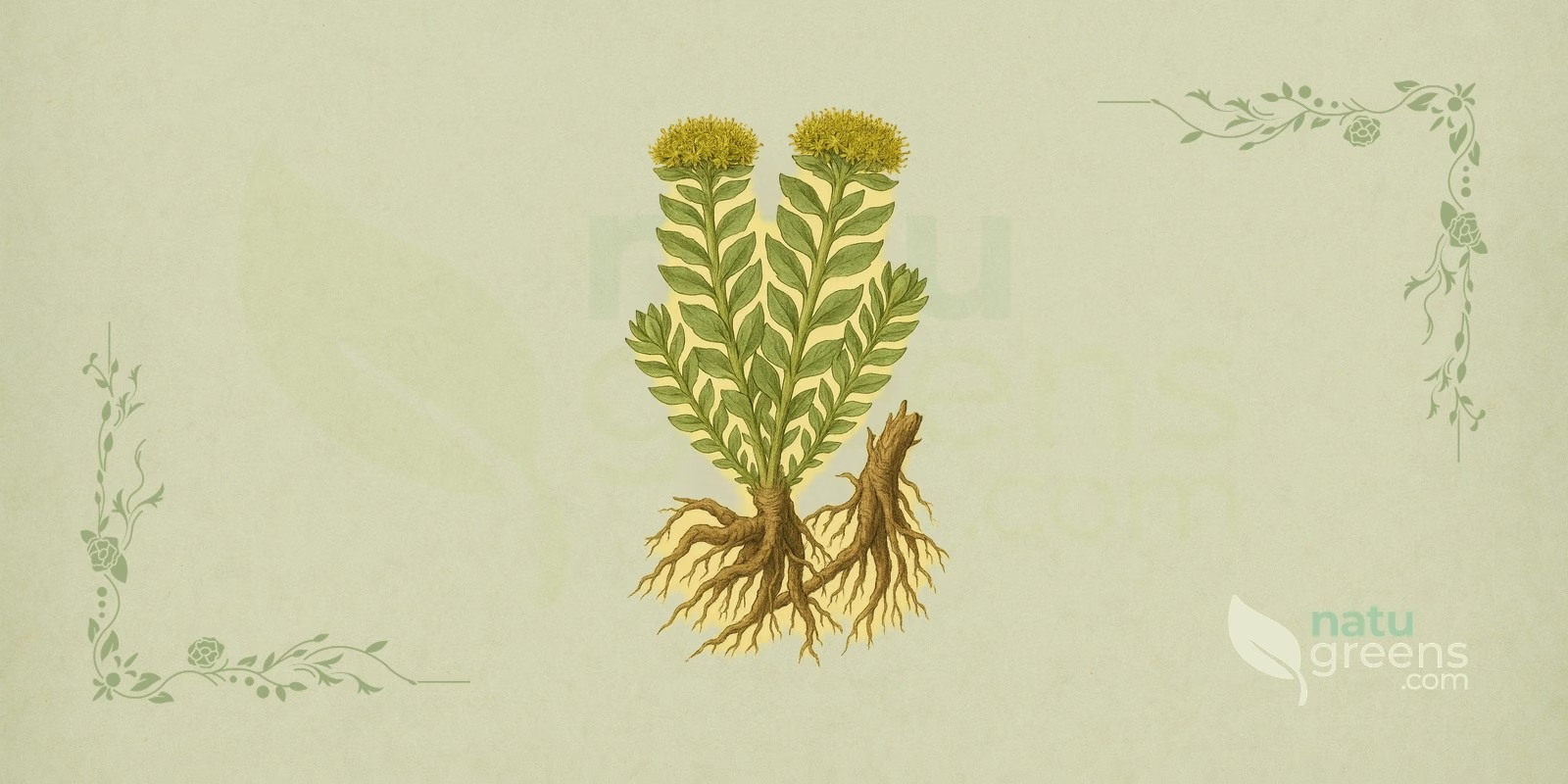
Rhodiola rosea has been extensively studied by modern science, which has already validated many of its traditional uses through research. As an adaptogen, the plant helps the body cope with stress and shows benefits in improving fatigue and cognitive function, effects attributed to its rich phytochemical composition. For this reason, roseroot ranks among the most promising medicinal plants of the present day.
Popular and International Names of Roseroot
- English: Aaron’s Rod, Arctic Root, Golden Root, King’s Crown, Lignum Rhodium, Orpin Rose, Rose Root, Roseroot.
- Spanish: Raíz Ártica, Raíz de Oro, Rodiola, Roseroot.
- Portuguese: Raiz Ártica, Raiz de Ouro, Raiz-dourada, Rodiola, Roseroot.
- French: Racine d’Or, Rhodiole, Rhodiole Rose.
- Italian: Radice d’Oro, Rodiola, Roseroot.
- German: Goldene Wurzel, Rhodiola, Rosenwurz.
Botanical Synonyms of Rhodiola rosea
The botanical synonyms of Rhodiola rosea L. include Sedum rhodiola DC. and Sedum rosea (L.) Scop., names used in different historical periods while the plant’s taxonomy was under continuous study. Today, the designation Rhodiola rosea L. is the most widely accepted, a crucial piece of nomenclature for the correct identification of the species, since it ensures consistency both in scientific research and in practical applications.
Botanical Family: Crassulaceae
The Crassulaceae family is a diverse group of succulent plants, known for their ability to store water in their leaves and stems, a trait that allows them to thrive in arid or rocky environments. Comprising about 1,400 species distributed across 34 genera, the family includes cultivated ornamental species as well as others of medicinal and ethnobotanical importance.
Rhodiola rosea shares traits typical of the Crassulaceae family, with a notable adaptation to cold climates. The family is also recognized for containing secondary compounds that give medicinal properties to several species, a potential that phytochemical research continues to explore, which makes Crassulaceae a fascinating and relevant botanical group.
Parts of Roseroot Used
- Rhizome
- Root
Ethnobotanical and Traditional Uses
- Anxiety relief
- Combating physical and mental fatigue
- Improved physical endurance
- Improved work performance
- Traditional use for relief of altitude sickness
- Traditional use to help relieve mild depression
Therapeutic Properties of Roseroot
- Adaptogenic (effect studied on resistance to stress)
- Antidepressant (effect studied on mood, associated with reduced depressive symptoms in research)
- Antidiabetic (effect studied on glucose metabolism in experimental models)
- Antifatigue (effect studied in reducing physical and mental fatigue)
- Anti-inflammatory (effect studied in reducing inflammation)
- Antioxidant (activity studied against free radicals)
- Antiproliferative (activity observed in laboratory studies, without clinical confirmation)
- Antiviral (activity studied against viruses)
- Cardioprotective (protective effect studied on the heart)
- Hepatoprotective (protective effect studied on the liver)
- Neuroprotective (protective effect studied on the nervous system)
Detailed Phytochemical Profile of Roseroot
- Carotenoids
- Cinnamyl alcohol
- Coumarins
- Essential oils (n-decanol, geraniol, rosiridol, rosiridin, 1,4-menthadien-7-ol)
- Flavonoids
- Glycosides
- Phenolic acids
- Polysaccharides
- Proanthocyanidins
- Rosavins (rosavin, rosarin, rosin)
- Salidroside (tyrosol)
- Steroids
- Vitamin E
Preparation and Administration Forms of Roseroot
- Capsules
- Dry extract
- Fluid extract
- Infusion (tea)
- Tablets
- Tincture
Synergy with Other Medicinal Plants
For Stress and Anxiety
Roseroot can be combined with other adaptogenic plants, such as ginseng (Panax ginseng) and ashwagandha (Withania somnifera), in a synergy that aims to enhance stress-reduction effects. Such a combination may support the body’s resilience and promote greater emotional balance, but it is important to consult a healthcare professional before combining plants.
For Fatigue and Cognitive Performance
Pairing roseroot with ginkgo biloba (Ginkgo biloba), known for improving cerebral circulation, can be beneficial by optimizing cognitive function, increasing energy, and reducing mental fatigue. Working in a complementary way, the two plants contribute together to mental clarity and focus.
Recipes and Usage Protocols of Roseroot
Roseroot Infusion
Ingredients: 1 teaspoon of dried Rhodiola rosea root (about 2-3g), 200 ml of boiling water.
Preparation: Place the dried root in a cup. Add the boiling water and cover. Let it steep for 10-15 minutes. Strain and drink. Consume 1 to 2 cups per day. It is traditionally used for support against fatigue and stress. Do not exceed the recommended dose.
Roseroot Tincture for Adaptogenic Support
Ingredients: Standardized Rhodiola rosea tincture (2-3% rosavins, 0.8-1% salidroside).
Preparation: Follow the manufacturer’s dosage instructions. Typically, 20-30 drops diluted in water, 2 to 3 times a day. This form is convenient for daily use. It is used for general adaptogenic support. It helps maintain balance during periods of stress. Consult a healthcare professional for specific dosages.
The preparations above follow traditional records and do not replace professional guidance. Before any internal use, consult the contraindications and interactions described in this article.
The preparations above follow traditional records and do not replace professional guidance. Before any internal use, check the contraindications and interactions described in this article.
Associated Therapies
Clinical Herbal Medicine
In clinical herbal medicine, roseroot is often prescribed as a supportive measure in managing chronic fatigue, anxiety, and mild depression, typically through standardized extracts intended to provide more consistent effects. Dosage is adjusted individually for each patient, since the plant is valued for its adaptogenic action and represents an important tool in stress management, with consultation of a herbal practitioner recommended.
Integrative Medicine
Roseroot is used in integrative medicine approaches, where it complements conventional treatments for stress and contributes to improved overall well-being, supporting both mental and physical health. Frequently combined with other holistic therapies, its use seeks to favor prevention and balance within the body, reflecting the value that integrative medicine places on synergy among different treatments.
Contraindications and Side Effects of Roseroot
General Contraindications
Roseroot is contraindicated for individuals with a known allergy to plants of the Crassulaceae family and for people with bipolar disorder, since it may induce manic episodes in some cases. It is also not recommended in states of excessive excitation, which include insomnia, tachycardia, and high blood pressure, situations in which caution is essential. Always consult a physician before use.
Pregnancy and Breastfeeding
There is not enough data on the safety of roseroot during pregnancy and breastfeeding, which is why its use is not recommended during these periods. The lack of adequate studies justifies this precaution, since it is essential to prioritize the safety of both mother and baby. Seek medical advice before any supplementation, as the health of both is the main concern.
Drug Interactions
Roseroot may interact with antidepressants and anxiolytics, enhancing their sedative or stimulant effects, and also with diabetes medications, by altering blood glucose levels. Blood-pressure-lowering medications may likewise be affected, which calls for caution and medical supervision. Always inform your doctor about all supplements you use.
Common Side Effects
The side effects of roseroot are generally mild and may include insomnia, irritability, anxiety, dry mouth, and dizziness, symptoms more common with high doses or in sensitive individuals. If you experience adverse effects, reduce the dose, discontinue use, and consult a healthcare professional, since your safety is always the priority.
Historical Notes and Interesting Facts
History and Origin
Rhodiola rosea has a rich, ancient history, being native to cold, mountainous regions where it was used by Vikings to increase physical endurance and was also valued in traditional Russian and Chinese medicine. Regarded as a tonic for longevity, its benefits were passed down through generations, which drove its popularity around the world.
Characteristic Scent
The rhizome of roseroot has a distinct scent that, when cut, releases an aroma similar to roses, a characteristic that gave rise to its popular names of golden root or arctic root. This aroma, an interesting and unique botanical trait, serves as one of the ways to identify the plant and indicates the presence of volatile compounds in its composition.
Frequently Asked Questions about Roseroot
Is Roseroot Safe for Daily Use?
Yes, roseroot is generally considered safe for daily use, as long as the recommended dosages are followed and prolonged use is supervised by a healthcare professional. Some people may experience mild side effects, such as insomnia or irritability. If you have any concerns, consult your doctor, since individual safety is always the priority.
How Long Does It Take for Roseroot to Take Effect?
The effects of roseroot can vary considerably between individuals: some people report improvements within a few days, while others need a few weeks of consistent use to feel the benefits. This response depends on factors such as dosage and overall health condition. For this reason, patience and observation are essential, and it is worth consulting a professional for personalized guidance.
Can Roseroot Be Used for Weight Loss?
There is no robust scientific evidence supporting the use of roseroot for weight loss: although some animal studies suggest potential in this regard, results in humans remain inconclusive. Roseroot is better known for its adaptogenic effects, which help the body cope with stress and fatigue. To lose weight safely, a balanced diet and regular exercise are essential, and it is advisable to consult a healthcare professional for a plan suited to your needs.
What Are the Contraindications of Roseroot?
Roseroot is contraindicated for those with an allergy to plants of the Crassulaceae family and for people with bipolar disorder, since it may induce manic episodes. It is also not recommended during pregnancy and breastfeeding, nor in states of excessive excitation, such as insomnia, tachycardia, or high blood pressure. For this reason, it is always advisable to consult a physician before starting use.
How to Prepare Roseroot Tea?
Roseroot tea is made with about one teaspoon of dried root to 200 ml of boiling water, left to steep for 10 to 15 minutes before straining. It is recommended to consume one to two cups per day, without exceeding the indicated dose. This method of preparation is traditionally associated with combating fatigue and stress.
Can Roseroot Be Combined with Other Adaptogenic Plants?
Yes, roseroot is often combined with plants such as ginseng (Panax ginseng) and ashwagandha (Withania somnifera) to enhance stress-reduction effects, or with ginkgo biloba (Ginkgo biloba) to support cognitive function and reduce mental fatigue. Even so, it is important to consult a healthcare professional before combining medicinal plants.
Notice: this content is for informational purposes and does not replace professional medical advice. Consult a physician or herbal practitioner before using medicinal plants, especially during pregnancy, breastfeeding, or alongside medication.
References and Scientific Studies
- PEER2010 Panossian, A., & Wikman, G. (2010). Rosenroot (Rhodiola rosea): Traditional use, chemical composition, pharmacology and clinical efficacy. Phytomedicine, 17(7), 481-493. Recuperado de ScienceDirect
- DOI2005 Khanum, F., Bawa, A. S., & Singh, B. (2005). Rhodiola rosea: A Versatile Adaptogen. Critical Reviews in Food Science and Nutrition, 45(7-8), 641-649. ↗
- DOI2023 Tinsley, G. M., et al. (2023). Rhodiola rosea as an adaptogen to enhance exercise performance: A review of the literature. British Journal of Nutrition, 130(1), 1-13. ↗
- DOI2015 Chiang, H. M., et al. (2015). Rhodiola plants: Chemistry and biological activity. Journal of Food and Drug Analysis, 23(3), 359-369. ↗
- DOI2023 Masi, F., et al. (2023). Phytochemical profile and anti-inflammatory activity of a commercially available Rhodiola rosea root extract. Phytochemistry Letters, 59, 1-8. ↗