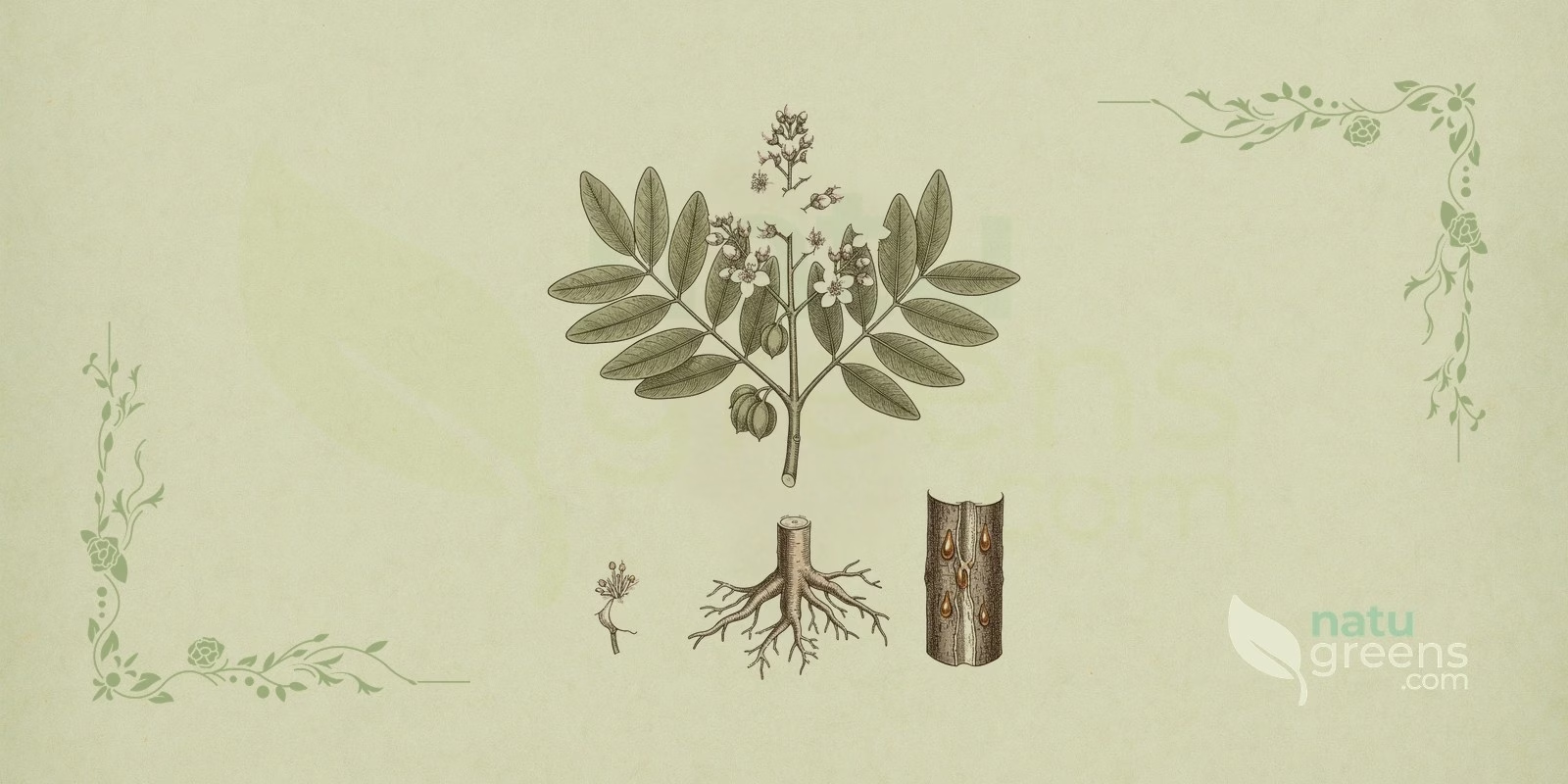
Boswellia serrata Roxb. ex Colebr. / Indian Frankincense, also known as Salai Guggal, is a tree native to India belonging to the Burseraceae family, valued for millennia in Ayurvedic medicine for its gum resin, the plant’s main source of bioactive compounds. The frankincense extracted from this resin is traditionally used in religious rituals and as incense, and modern science has been validating many of the therapeutic properties attributed to it by tradition.
Popular and International Names of Indian Frankincense
- English (US): indian frankincense, indian olibanum, salai guggul, sallaki.
- Spanish: incienso de la india, boswellia.
- Portuguese: boswellia, olíbano indiano, salai guggal.
- French: encens indien, boswellia.
- Italian: incenso indiano, boswellia.
- German: indischer weihrauch, salai guggal.
Botanical Synonyms of Boswellia serrata
The accepted scientific name is Boswellia serrata Roxb. ex Colebr., although some sources still use the synonym Boswellia glabra Choisy. Maintaining correct nomenclature is essential for accurate identification of the species, since it avoids confusion with other plants of the genus Boswellia, whose resins have distinct phytochemical profiles.
Botanical Family: Burseraceae
The Burseraceae family, known as the frankincense family, is made up of trees and shrubs that produce aromatic resins, comprising about 17 genera and 540 species distributed across tropical and subtropical regions. These plants have resin canals in their bark that exude gums and resins when wounded, substances rich in terpenes and volatile compounds; among the most notable members of the family are myrrh and frankincense itself.
Parts of Indian Frankincense Used
- Gum resin (oleo-gum-resin)
Ethnobotanical and Traditional Uses
- Asthma and respiratory problems
- Cough and colds
- Detoxification
- Digestive disorders
- General anti-inflammatory use
- Gout
- Mental clarity
- Menstrual comfort
- Osteoarthritis
- Relief from intestinal colic
- Relief from muscle pain
- Relief from rheumatic pain
- Ulcerative colitis and Crohn’s disease
- Wound healing
Therapeutic Properties of Indian Frankincense
- Analgesic (traditional use for pain relief)
- Anti-Arthritic (studied activity against arthritis)
- Anti-Asthmatic (traditional use to relieve asthma)
- Antibacterial (studied activity against bacteria)
- Anti-Complement (effect studied on immune response)
- Antidiabetic (effect studied on blood sugar)
- Antidiarrheal (studied activity against diarrhea)
- Antifungal (studied activity against fungi)
- Anti-Hyperlipidemic (effect studied on reducing blood lipids)
- Anti-Inflammatory (effect studied on reducing inflammation)
- Antimicrobial (studied activity against microorganisms)
- Anti-Rheumatic (studied activity against rheumatism)
- Immunomodulatory (effect studied on the immune system)
- Neuroprotective (protective effect studied on the nervous system)
Detailed Phytochemical Profile of Indian Frankincense
- 11-Keto-beta-boswellic acid (AKBA)
- Alpha-boswellic acid
- Beta-boswellic acid
- Boswellic acids (general)
- Diterpenes
- Essential oils
- Monoterpenes
- Polysaccharides (pentose and hexose)
- Sesquiterpenes
Preparation and Administration Forms of Indian Frankincense
- Capsules
- Dry extract
- Essential oil (for topical use or aromatherapy)
- Fluid extract
- Resin (for incense or traditional use)
- Tablets
Synergy with Other Medicinal Plants
Joint Health
Boswellia serrata combines well with turmeric (Curcuma longa), and together the two plants help reduce inflammation and joint pain by acting as potent natural anti-inflammatories through different mechanisms. While curcumin inhibits specific inflammatory pathways, boswellic acids modulate the 5-lipoxygenase enzyme, which reinforces the support offered to joint health when the two plants are combined.
Digestive Health
For digestive support, boswellia can be paired with chamomile (Matricaria chamomilla) or peppermint (Mentha piperita), plants known for their antispasmodic and soothing properties, which complement boswellia’s anti-inflammatory action. This synergy is valued for benefiting the gastrointestinal tract and helping relieve symptoms associated with inflammatory bowel conditions.
Recipes and Usage Protocols of Indian Frankincense
Standardized Extract Capsules
Ingredients: Standardized Boswellia serrata extract (containing boswellic acids, including AKBA, at the concentration indicated on the product label).
Preparation: Purchase standardized extract capsules from a trusted source and follow the dosage and duration of use recommended by the manufacturer or a healthcare professional, since the appropriate amount varies according to the product’s concentration and each person’s condition. Take the capsules with food for better absorption and consult a healthcare professional before starting use, especially for prolonged treatments. This method is convenient and, when properly guided, ensures a consistent dosage.
Topical Use with Essential Oil
Ingredients: 2-3 drops of frankincense essential oil (Boswellia serrata), 10 ml of carrier vegetable oil (such as sweet almond or jojoba oil).
Preparation: Mix the frankincense essential oil with the carrier vegetable oil. Use a small dark glass bottle. Apply the mixture to clean skin. Gently massage the areas affected by pain or inflammation. This method is useful for localized relief. It can be repeated 2-3 times a day. Perform a patch test before widespread use.
The preparations above follow traditional records and do not replace professional guidance. Before any internal use, check the contraindications and interactions described in this article.
Associated Therapies
Aromatherapy
Frankincense essential oil, extracted from the resin of Boswellia serrata, is valued in aromatherapy for its calming, grounding properties: inhaling the aroma is used to promote relaxation, reduce stress, and improve focus, whether through diffusers and personal inhalers or applied diluted to pulse points. This practice is believed to create an environment conducive to meditation, deepening breathing and bringing a sense of inner peace.
Clinical Phytotherapy
In clinical phytotherapy, Boswellia serrata is used in standardized extracts that ensure an ideal concentration of boswellic acids, indicated for inflammatory conditions such as osteoarthritis, rheumatoid arthritis, and inflammatory bowel disease. Dosage is individualized, based on the patient’s condition and response to treatment, and modern phytotherapy incorporates boswellia as a natural alternative or adjunct, always under the supervision of a healthcare professional.
Contraindications and Side Effects of Indian Frankincense
General Contraindications
Boswellia serrata is considered safe for most adults when used at recommended doses, but is contraindicated for those with known hypersensitivity to the plant. Pregnant and breastfeeding women should avoid high doses due to the lack of safety data and its potential emmenagogue effect, although use in small amounts is generally considered safe; even so, it is recommended to consult a doctor before any therapeutic use during pregnancy or breastfeeding.
Common Side Effects
Side effects of Boswellia serrata are rare and mild, and may include gastrointestinal discomfort such as stomach pain, nausea, diarrhea, and heartburn, as well as headaches or mild skin reactions in some cases. Topical application of undiluted essential oil can irritate the skin, so it is recommended to start with low doses and observe individual response before expanding use.
Drug Interactions
Boswellia serrata can interact with medications because it modulates cytochrome P450 enzymes in the liver, which can alter the metabolism of other drugs. Patients taking anticoagulants, such as warfarin, should exercise caution, as boswellia may increase the risk of bleeding, and the same care applies to those taking immunosuppressants, since it may alter the effectiveness of these medications. Diabetics should monitor their glucose, as boswellia may have a hypoglycemic effect, so it is always advisable to consult a healthcare professional before combining it with any medication.
Historical Notes and Interesting Facts
Ancient Origins and Cultural Significance
Frankincense, the resin of Boswellia serrata, has a rich history spanning thousands of years. It is one of the oldest and most revered aromatic resins, mentioned in ancient texts such as the Rigveda, one of the oldest sacred texts of Hinduism. In antiquity, it was a valuable trade item, used in religious ceremonies, purification rituals, and as incense across various cultures, including the Egyptian, Babylonian, Greek, and Roman civilizations. Its use also extended to cosmetics and perfumes, evidencing its multifaceted importance throughout history.
Applications in Traditional Medicine
Beyond its religious and cultural use, Indian frankincense has been a pillar of Ayurvedic medicine for centuries. Ayurvedic texts describe its anti-inflammatory, analgesic, and immunomodulatory properties, and it has been used to treat a wide range of conditions, from arthritis and digestive problems to respiratory ailments. Popular tradition also credits boswellia with the ability to promote mental clarity and overall well-being, cementing its status as a medicinal plant of great therapeutic and cultural value.
Frequently Asked Questions about Indian Frankincense
Is Indian Frankincense Tea Effective for Joint Pain?
Although Boswellia serrata is widely recognized for its anti-inflammatory and analgesic properties, especially for joint pain, consuming it as a tea may not provide a sufficient concentration of boswellic acids for a significant therapeutic effect. Standardized extracts in capsules or tablets are generally more recommended for conditions such as osteoarthritis and rheumatoid arthritis, where precise dosing of active compounds is crucial. Tea may offer a milder benefit for general well-being.
Are There Side Effects to Drinking Indian Frankincense Tea?
Consuming Indian frankincense tea is generally safe, but, like any medicinal plant, it can cause side effects in some people. The most common include mild gastrointestinal discomfort, such as stomach pain, nausea, or diarrhea. Allergic reactions are rare but possible, especially in individuals sensitive to plants in the Burseraceae family. Pregnant and breastfeeding women should avoid consumption without medical guidance. It is always advisable to start with small amounts and observe the body’s response.
How Does Indian Frankincense Compare to Other Natural Anti-Inflammatories?
Indian frankincense stands out among natural anti-inflammatories due to its specific mechanism of action, which involves inhibiting the 5-lipoxygenase (5-LO) enzyme, an inflammatory pathway different from the one targeted by many nonsteroidal anti-inflammatory drugs (NSAIDs). This makes it an interesting option, especially for people who cannot tolerate NSAIDs or who seek complementary approaches. Its effectiveness is often compared to that of turmeric, and combining both may offer a broader spectrum of anti-inflammatory action.
What Is the Difference Between Indian Frankincense Essential Oil and Standardized Extract?
Frankincense essential oil is obtained from the resin of Boswellia serrata and is used mainly in aromatherapy, applied through diffusers, personal inhalers, or diluted in vegetable oil for topical use, with calming and grounding properties. The standardized extract, available in capsules or tablets, concentrates boswellic acids, including AKBA, and is the form most indicated for internal therapeutic use in inflammatory conditions such as osteoarthritis and rheumatoid arthritis. The choice between the two forms depends on the goal: sensory well-being in the case of the essential oil, or support for specific inflammatory processes in the case of the standardized extract.
Can Indian Frankincense Be Safely Used During Pregnancy and Breastfeeding?
Boswellia serrata is considered safe for most adults at recommended doses, but pregnant and breastfeeding women should avoid high doses due to the lack of safety data specific to this period and the plant’s potential emmenagogue effect. Use in small amounts, such as a spice or incense, is generally considered safe, but any therapeutic use during pregnancy or breastfeeding should be evaluated beforehand by a doctor.
How Is Indian Frankincense Used in Traditional Ayurvedic Medicine?
In Ayurvedic medicine, Indian frankincense has been used for centuries for its anti-inflammatory, analgesic, and immunomodulatory properties, traditionally indicated for arthritis, digestive problems, and respiratory conditions. Beyond its therapeutic use, the resin is also valued in religious and purification rituals, with records of its use dating back to ancient texts such as the Rigveda. This age-old tradition has helped establish boswellia as one of the most respected plants in Indian phytotherapy.
Notice: this content is for informational purposes and does not replace professional medical advice. Consult a physician or herbal practitioner before using medicinal plants, especially during pregnancy, breastfeeding, or alongside medication.
References and Scientific Studies
- PMC2011 Siddiqui, M. Z. (2011). Boswellia Serrata, A Potential Antiinflammatory Agent: An Overview. Indian Journal of Pharmaceutical Sciences, 73(3), 255-261. Disponível em PMC
- DOI2007 Sharma, A., Mann, A., Gajbhiye, V., & Kharya, M. (2007). Phytochemical Profile of Boswellia serrata: An Overview. Pharmacognosy Reviews, 1(1), 137-141. ↗
- PMC2011 Abdel-Tawab M, et al. Boswellia serrata: an overall assessment of in vitro, preclinical, pharmacokinetic and clinical data. Clinical pharmacokinetics. 2011.