Tabebuia impetiginosa (Mart. ex DC.) Standl. / Pau D’Arco, commonly known as pau d’arco or taheebo, is a tree native to the Amazon rainforest and other tropical regions of Central and Latin America. This species, belonging to the Bignoniaceae family, is valued both for its ornamental beauty, with vibrant purple and pink flowers that appear in spring, and for its extensive medicinal properties. Historically, pau d’arco has been used in traditional medicine by various Indigenous cultures and local communities to treat a wide range of ailments, from fevers and infections to inflammatory conditions and pain.
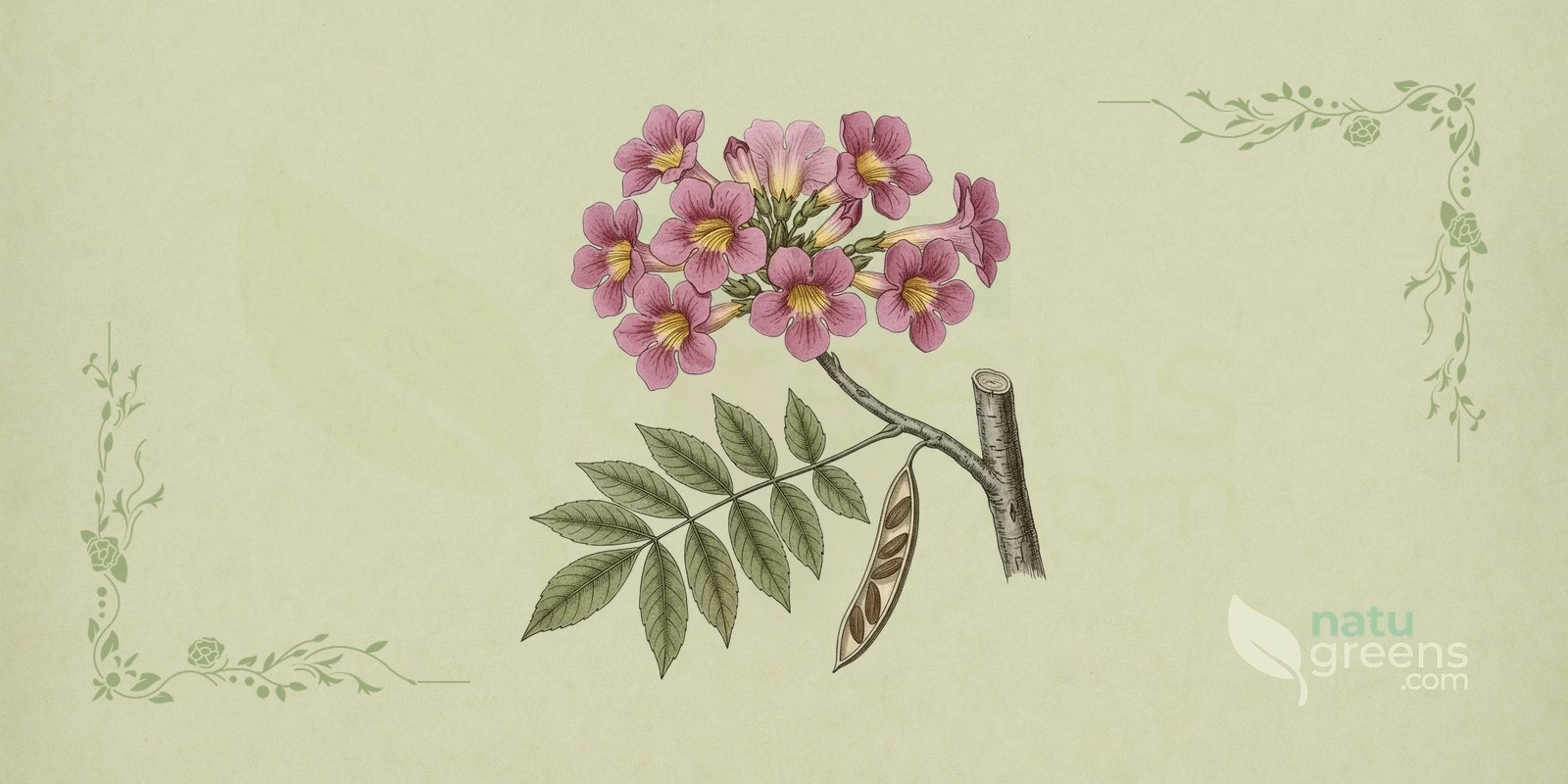
The use of Tabebuia impetiginosa dates back to the Inca civilization, which already recognized its therapeutic benefits. The inner bark of the tree is the most widely used part, prepared as decoctions and poultices for various applications. Modern scientific research continues to validate many traditional uses, identifying a rich phytochemical composition that includes naphthoquinones such as lapachol and beta-lapachone, flavonoids, and other bioactive compounds. These components give the plant anti-inflammatory, antioxidant, antimicrobial, and antiproliferative effects observed in laboratory studies, making it a continuing subject of research in the search for new pharmaceuticals.
Popular and International Names of Pau D’Arco
- English: ipe, pau d’arco, pink trumpet tree, purple tabebuia, purple trumpet tree, taheebo.
- Spanish: lapacho, lapacho negro, quebracho.
- Portuguese: ipê, ipê-roxo, lapacho, pau d’arco.
- French: poui.
- Italian: albero della tromba rosa, lapacho.
- German: feenkraut, lapachobaum, trompetenbaum.
Botanical Synonyms of Tabebuia impetiginosa
The currently accepted name for this species is Handroanthus impetiginosus (Mart. ex DC.) Mattos, according to The Plant List website. However, Tabebuia impetiginosa (Mart. ex DC.) Standl. remains widely used in both scientific and popular literature. Several botanical synonyms exist, reflecting the taxonomic complexity of the Bignoniaceae family and reclassifications over time. Other synonyms include Tabebuia ipe var. integra (Sprague) Sandwith, Tecoma avellanedae var. alba Lillo, Tecoma ipe var. integra Sprague, Tecoma ipe var. integrifolia Hassl., and Tecoma ipe f. leucotricha Hassl. The species name, impetiginosa, derives from the Latin impetigo, a skin infection, reflecting the traditional belief that the plant could treat this condition.
Botanical Family: Bignoniaceae
Tabebuia impetiginosa belongs to the Bignoniaceae family, a large family of flowering plants that includes trees, shrubs, and vines, predominantly distributed across tropical and subtropical regions. This family is known for its showy, often trumpet-shaped flowers, which attract pollinators such as hummingbirds and insects. Bignoniaceae species are frequently used in landscaping for their ornamental beauty and also hold economic and medicinal importance. The family is characterized by bioactive compounds such as naphthoquinones and flavonoids, which contribute to the therapeutic properties of many of its plants.
Parts of Pau D’Arco Used
- Inner bark
- Leaves
- Wood
Ethnobotanical and Traditional Uses
- Arthritis
- Back pain
- Bacterial infections
- Cancer and tumor prevention
- Colitis
- Depression
- Fungal infections
- Inflammatory skin conditions (poultice, concentrated tea)
- Obesity
- Pain relief (analgesic)
- Prostatitis
- Sexually transmitted diseases
- Toothaches
- Viral infections
Therapeutic Properties of Pau D’Arco
- Analgesic (traditional use for pain relief)
- Anti-allergic (effect studied in reducing allergic reactions)
- Anti-autoimmune (effect studied on the autoimmune response)
- Anti-edematogenic (effect studied in reducing swelling)
- Anti-inflammatory (effect studied in reducing inflammation)
- Anti-psoriatic (traditional support in psoriasis management)
- Antibiotic (activity studied against bacteria)
- Antidepressant (effect studied on mood)
- Antifungal (activity studied against fungi)
- Antinociceptive (effect studied in reducing pain perception)
- Antioxidant (activity studied against free radicals)
- Antiproliferative (activity observed in laboratory studies, without clinical confirmation)
- Antiviral (activity studied against viruses)
- Astringent (contracts tissues)
- Diuretic (effect studied on urine production)
- Immunomodulatory (effect studied on the immune system)
Detailed Phytochemical Profile of Pau D’Arco
- Alpha-tocopherol
- Anthraquinones (anthraquinone-2-carboxylic acid)
- Benzoic acid
- Beta-lapachone
- Coumarins
- Cyclopentene dialdehydes
- Fatty acids (oleic acid, palmitic acid, linoleic acid)
- Flavonoids
- Free sugars (glucose, fructose, sucrose)
- Furanonaphthoquinones
- Gamma-tocopherol
- Glycosides (iridoids, lignans, isocoumarins, phenylethanoids, phenolics)
- Iridoids
- Lapachol
- Naphthoquinones
- Organic acids (oxalic acid)
- Quinones
Preparation and Administration Forms of Pau D’Arco
- Concentrated tea (for inflammatory skin conditions)
- Inner bark decoction (boil for at least 15 minutes to extract active compounds)
- Poultice (for inflammatory skin conditions)
- Tincture
Synergy with Other Medicinal Plants
Anti-Inflammatory Potential
Although no specific studies detail synergies between Tabebuia impetiginosa and other plants, its anti-inflammatory action may be enhanced with extracts rich in anti-inflammatory compounds. Combining it with plants such as turmeric (Curcuma longa), rich in curcumin, or ginger (Zingiber officinale), with its gingerols, could offer a synergistic effect on inflammatory processes. These combinations aim for a broader range of mechanisms of action and a more robust therapeutic response.
Immune Support
For immune support, Tabebuia impetiginosa, with its immunomodulatory properties, may be combined with Echinacea purpurea or astragalus (Astragalus membranaceus). Both plants are traditionally recognized as immune system support, and their synergy could optimize the body’s response to infections and other immune conditions. Future research may explore these combinations to validate their benefits.
Recipes and Usage Protocols of Pau D’Arco
Inner Bark Decoction for Internal Use
Ingredients: dried pau d’arco inner bark in a moderate amount, water sufficient for the decoction.
Preparation: Add the bark to the water and bring to a boil. Reduce the heat and simmer gently for 15 to 20 minutes. Strain and drink warm. This decoction is traditionally used as support for infections, inflammation, and the immune system, but the amount and frequency of use should always be determined by a healthcare professional, given the potency of the plant and the risk of interaction with anticoagulants.
Poultice for Skin Inflammation
Ingredients: ground pau d’arco inner bark, warm water.
Preparation: Mix the ground bark with warm water until a thick paste forms. Apply directly to the affected area of skin, covering with a clean cloth. Leave in place for 30 to 60 minutes, one to two times a day. This poultice is traditionally used for skin inflammation, wounds, and insect bites, drawing on the plant’s anti-inflammatory and antimicrobial properties observed in preliminary studies.
The preparations above follow traditional records and do not replace professional guidance. Before any internal use, review the contraindications and interactions described in this article.
The preparations above follow traditional records and do not replace professional guidance. Before any internal use, check the contraindications and interactions described in this article.
Associated Therapies
Phytotherapy
In phytotherapy, pau d’arco is valued for its bioactive compounds, especially naphthoquinones, which are studied for their antiproliferative, anti-inflammatory, and antimicrobial properties. It is often used in standardized extracts, capsules, or tinctures for a variety of conditions, including fungal infections (such as candidiasis), inflammation, and immune system support. Dosage and administration should be determined by a qualified herbal practitioner, taking into account the patient’s specific condition and possible drug interactions.
Traditional Indigenous Medicine
Pau d’arco has a long history of use in the traditional Indigenous medicine of South America, where it is known as a powerful remedy for various ailments. Tribes such as the Callawaya use the inner bark for skin inflammation and other conditions. Its applications range from fevers and malaria to use as an analgesic and antiophidic remedy. The ancestral wisdom surrounding pau d’arco highlights its cultural and therapeutic importance, passed down through generations.
Contraindications and Side Effects of Pau D’Arco
General Contraindications
Tabebuia impetiginosa should be avoided by individuals with blood clotting disorders or those taking anticoagulant medications, such as warfarin, due to its potential to slow clotting and increase the risk of bleeding. It is contraindicated for pregnant and breastfeeding women, as there are not enough studies confirming its safety in these groups. Use in children should only occur under strict medical supervision. Individuals with liver or kidney conditions should use it with extreme caution, or avoid it altogether, due to the potential for toxicity at high doses.
Common Side Effects
At high doses, pau d’arco can cause gastrointestinal side effects such as nausea, vomiting, and diarrhea. Other effects include dizziness and, in more severe cases, internal bleeding. Animal studies have suggested that plant extracts at high concentrations may cause DNA damage in liver cells. It is essential to respect the recommended dosages and seek medical advice if any adverse effect occurs.
Drug Interactions
Pau d’arco may interact with anticoagulant medications, increasing the risk of bleeding. It may also interfere with the metabolism of other drugs due to its action on the cytochrome P450 system. Patients taking diabetes medications should monitor their glucose levels, as the plant may have a mild hypoglycemic effect. It is essential to inform your doctor or pharmacist about pau d’arco use before starting any medication regimen.
Historical Notes and Interesting Facts
Origin of the Name
The species name, impetiginosa, derives from the Latin impetigo, a common skin infection. This name reflects the popular belief and traditional use of the plant for skin conditions, including impetigo. The link between the botanical name and its ethnobotanical applications highlights the long history of interaction between humans and this powerful medicinal tree.
Ornamental Beauty
Tabebuia impetiginosa is widely known for its spectacular blooms. During spring, the tree loses its leaves and becomes covered in a profusion of flowers in shades of purple, deep pink, or pink, resembling trumpets. This feature earned it the common names pink trumpet tree or purple trumpet tree in English, and ipê-roxo in Portuguese. Its exuberant blooming transforms the landscape, making it a popular choice for landscaping in tropical and subtropical regions.
Traditional Use in Brazil
In Brazil, pau d’arco has traditionally been used for a variety of medicinal purposes, including snakebites (antiophidic action), pain, and inflammation. Brazilian healers prescribed the plant for prevention and as a traditional remedy against cancer and tumors, with a high percentage of use for these conditions. This rich history of ethnomedicinal use in Brazil underscores the cultural and therapeutic importance of Tabebuia impetiginosa in the region.
Frequently Asked Questions about Pau D’Arco
What Is Pau D’Arco?
Pau d’arco, scientifically known as Tabebuia impetiginosa, is a tree native to Central and South America, known for its purple flowers and medicinal properties. The inner bark is the part most widely used for traditional purposes, rich in bioactive compounds such as lapachol.
What Is Pau D’Arco Tea Used For?
Pau d’arco tea is traditionally used as support against infections, to reduce inflammation, ease pain, and support the immune system. It is also used for conditions such as fever, malaria, fungal and bacterial infections, and skin problems.
What Are the Benefits of Pau D’Arco?
The benefits of pau d’arco include anti-inflammatory, antioxidant, antimicrobial (antibacterial, antifungal, antiviral), analgesic, and immunomodulatory actions. Preliminary studies are investigating antiproliferative potential, with effects observed in the laboratory on inflammatory and infectious processes, still without clinical confirmation.
Are There Contraindications for Using Pau D’Arco?
Yes, pau d’arco is contraindicated for pregnant and breastfeeding women, and for individuals with blood clotting disorders or those taking anticoagulants. High doses can cause nausea, vomiting, diarrhea, and internal bleeding. Always consult a healthcare professional before use.
How Do You Prepare Pau D’Arco Tea?
To prepare the tea, use a moderate amount of dried inner bark in water. Boil the mixture for 15 to 20 minutes, strain, and drink warm, always following the guidance of a healthcare professional, since boiling extracts the active compounds more thoroughly.
Notice: this content is for informational purposes and does not replace professional medical advice. Consult a physician or herbal practitioner before using medicinal plants, especially during pregnancy, breastfeeding, or alongside medication.
References and Scientific Studies
Peer-Reviewed Scientific Studies (1)
- PEER2021 Ryan, R.Y.M.; et al. The medicinal plant Tabebuia impetiginosa potently reduces pro-inflammatory cytokine responses in primary human lymphocytes. Sci Rep 2021, 11, 5500. Link para o artigo
Supplementary Readings (4)
- 2020 Zhang, J.; Hunto, S.T.; Yang, Y.; Lee, J.; Cho, J.Y. Tabebuia impetiginosa: A Comprehensive Review on Traditional Uses, Phytochemistry, and Immunopharmacological Properties. Molecules 2020, 25, 4294. Link para o artigo
- 2005 Park, B.S.; Kim, J.R.; Lee, S.E.; Kim, K.S.; Kim, Y.K.; Kim, S.J.; Lee, H.S. Selective Growth-Inhibiting Effects of Compounds Identified in Tabebuia impetiginosa Inner Bark on Human Intestinal Bacteria. J. Agric. Food Chem. 2005, 53, 1152-1157. Link para o artigo
- 2006 Warashina, T.; Nagatani, Y.; Noro, T. Constituents from the bark of Tabebuia impetiginosa. Chem. Pharm. Bull. 2006, 54, 14-20. Link para o artigo
- 2012 Lemos, O.A.; et al. Genotoxic effects of Tabebuia impetiginosa (Mart. Ex DC.) Standl.(Lamiales, Bignoniaceae) extract in Wistar rats. Genet. Mol. Biol. 2012, 35, 1000-1005. Link para o artigo