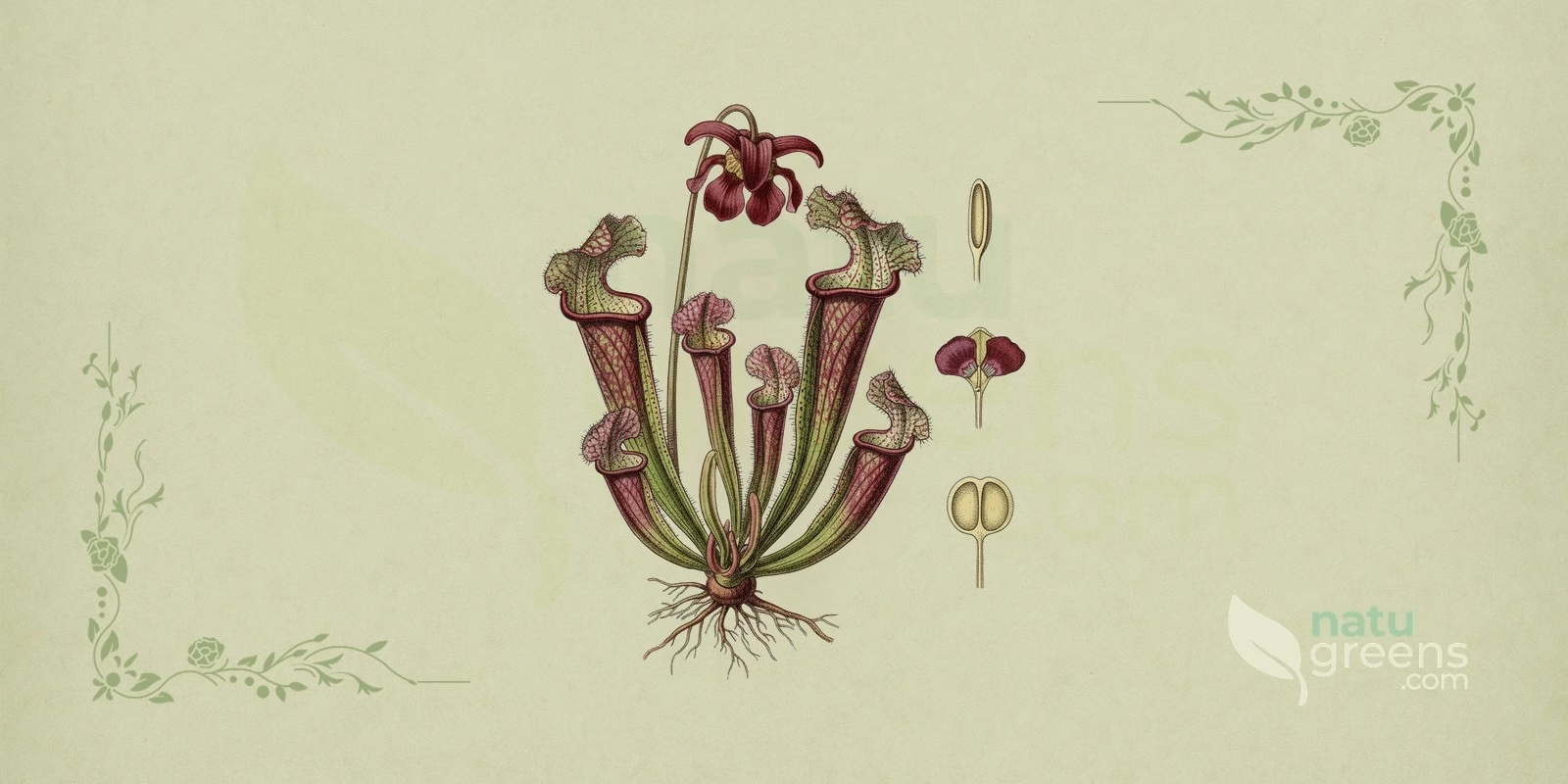
The purple pitcher plant (Sarracenia purpurea), also known as the northern pitcher plant, is a perennial carnivorous plant in the Sarraceniaceae family, native to eastern North America, whose leaves have become pitchers that collect water and work as traps for insects. Several Indigenous peoples of North America recorded traditional use of the plant for fevers and digestive complaints, and in the nineteenth century a preparation made from it was even advertised as a successful treatment for smallpox. Today the species is of interest mainly to laboratory research, because clinical data are scarce and its medicinal use remains almost entirely traditional.
Popular and International Names of Purple Pitcher Plant
- English: huntsman’s cup, northern pitcher plant, purple pitcher plant, side-saddle flower, turtle socks.
- Spanish: planta jarra púrpura, planta trompeta, sarracenia, sarracenia púrpura.
- Portuguese: planta-jarro-roxa, sarracênia, sarracênia-roxa.
- French: pipe pourpre, plante à urne pourpre veinée, sarracénie, sarracénie pourpre.
- Italian: sarracenia porporina.
- German: Krugpflanze, Rote Schlauchpflanze.
Botanical Synonyms of Sarracenia purpurea
The accepted scientific name for the species is Sarracenia purpurea L., described by Linnaeus and widely adopted in the botanical and scientific literature to identify the purple pitcher plant. The taxonomy of the plant is considered relatively stable, although botanists recognize a division into subspecies that reflects geographic and morphological variation, and knowing these infraspecific names makes it easier to track down older studies and to identify the species accurately. In practice, the names that appear most often alongside the binomial are those of the two subspecies listed below.
- Sarracenia purpurea subsp. purpurea (the northern form, with the wider distribution).
- Sarracenia purpurea subsp. venosa (Raf.) Wherry (the southern form, typical of the Atlantic coastal plain).
Botanical Family: Sarraceniaceae
The purple pitcher plant belongs to the Sarraceniaceae, a small family of carnivorous plants from the Americas whose leaves have turned into tubular structures capable of capturing prey. Species in this family live in specific habitats such as marshes and peat bogs, acidic and nutrient-poor environments in which carnivory supplies part of the nitrogen and other elements the plant needs in order to survive. Flowers in the group tend to be showy and contribute to pollination by insects, completing a life cycle that is well adapted to ground where few other plants manage to thrive.
Parts of Purple Pitcher Plant Used
In traditional records, preparations of the purple pitcher plant relied mainly on the pitcher-shaped leaves and on the root, which were used either dried or fresh in infusions, tinctures, extracts and poultices.
- Leaves (modified into a pitcher shape).
- Root.
Ethnobotanical and Traditional Uses
The uses listed below reflect records from North American Indigenous tradition and from nineteenth-century folk medicine, not proven indications, so none of them replaces a medical assessment, especially in the case of serious infectious diseases such as measles and smallpox.
- Anxiety and nervousness.
- Digestive disorders and gastritis.
- Fevers.
- Fluid retention.
- Intestinal cramps and flatulence.
- Lower back pain.
- Measles (historical record; today prevention relies on vaccination and treatment requires medical supervision).
- Smallpox (nineteenth-century historical record; the disease was declared eradicated in 1980).
- Urinary tract disorders.
Therapeutic Properties of Purple Pitcher Plant
The properties attributed to the purple pitcher plant come largely from tradition and from laboratory studies with extracts of the plant, with no clinical trials in humans to confirm any effect, which is why each item below states the level of evidence currently available.
- Antibacterial (activity against mycobacteria observed in a laboratory study, not clinically proven).
- Anti-inflammatory (traditional attribution, still little investigated in studies).
- Antiviral (an extract inhibited Orthopoxvirus replication in cell culture, not clinically proven).
- Digestive (traditionally recorded for digestive discomfort and constipation).
- Diuretic (traditionally recorded for cases of fluid retention).
- Immunostimulant (traditional attribution, not confirmed in clinical studies).
Detailed Phytochemical Profile of Purple Pitcher Plant
The purple pitcher plant has a diverse phytochemical profile, which helps explain the ongoing scientific interest in the species. In a study of leaves collected in Mistissini, Quebec, researchers isolated four goodyerosides, a group of glycosides, along with three phenolic compounds and nine substances that were already known. Another study identified triterpenes in the plant such as betulinaldehyde, betulinic acid and ursolic acid, which showed activity against mycobacteria in laboratory tests at high concentrations, alongside beta-sitosterol, which showed no activity in that assay. Phenolic compounds are generally known for their antioxidant and anti-inflammatory activities, but the presence of these substances only points to a potential that still needs to be studied, and research continues to map the full set of bioactive compounds in the plant.
- Beta-sitosterol.
- Betulinaldehyde.
- Betulinic acid.
- Goodyerosides.
- Phenolic compounds.
- Ursolic acid.
Preparation and Administration Forms of Purple Pitcher Plant
Extracts
Extracts are concentrated preparations obtained with specific solvents, such as water, alcohol or mixtures of the two, and they contain a larger amount of the active constituents of Sarracenia purpurea than homemade preparations do. They can be liquid or dry, depending on the manufacturing process, and they appear in pharmaceutical formulations and supplements, but the choice of solvent depends on which phytochemicals are meant to be extracted, and to date there is no standardization or established dose for the human use of these products.
Infusion
An infusion of the leaves or the root is the preparation most often cited in traditional records, which associate it with fevers and digestive complaints, and it serves to draw out the water-soluble compounds. Tradition calls for hot but not boiling water to preserve the heat-sensitive components, and the steeping time varies with the desired strength and the part of the plant being used. Because safety data are lacking, the amount and frequency should be set by a healthcare professional.
Tincture
A tincture is an alcoholic preparation made by macerating parts of the plant in alcohol for an extended period, followed by filtering, and it can extract compounds that water does not easily dissolve. Since it is more concentrated than an infusion, it is usually taken in small doses, and its alcohol content makes this form unsuitable for pregnant women, breastfeeding women, children and anyone who needs to avoid alcohol, in addition to requiring professional guidance in every case.
Synergy with Other Medicinal Plants
Combinations Linked to Immunity
In folk herbalism, Sarracenia purpurea sometimes appears alongside plants traditionally used to support the body’s defenses, such as echinacea (Echinacea purpurea) and elder (Sambucus nigra). No study has evaluated these combinations, which belong to the traditional record and do not replace vaccines or medical treatment, and they should only be used with professional guidance, taking into account the doses involved and possible interactions with medications.
Combinations Linked to Digestive Health
For digestive discomfort, tradition pairs the purple pitcher plant with chamomile (Matricaria chamomilla), known from traditional use as a calming and anti-inflammatory herb, and with ginger (Zingiber officinale), popularly used for digestion and nausea. These combinations appear in traditional records related to constipation and gastrointestinal inflammation, with no studies on their combined effect, and they should be discussed with a healthcare professional before any use, especially by people who already take medication.
Recipes and Usage Protocols of Purple Pitcher Plant
Traditional Infusion for Feverish Conditions
In folk medicine, an infusion of the dried leaves of Sarracenia purpurea was traditionally used in feverish conditions, prepared with hot but not boiling water, left to steep for about 10 minutes and strained before drinking. Because the species has no safety data and no established dose for internal use, the amount of leaves and how often the infusion is taken should not be decided on your own: consult a healthcare professional before preparing it.
A fever that persists, rises or appears in children, pregnant women or breastfeeding women calls for a medical assessment, and the infusion does not replace that care and should not be used by these groups.
Traditional Poultice for Skin Irritations
For external use, tradition prepares a poultice from fresh or dried ground leaves of Sarracenia purpurea, mixed with a little water until they form a paste, which is applied to the irritated area of skin, covered with a clean cloth and left in place for 20 to 30 minutes. This preparation is traditionally used for skin inflammation and swelling, with no studies confirming the effect, and before applying it, it is advisable to test the paste on a small area to check for possible allergic reactions.
Anyone allergic to carnivorous plants or their derivatives should not use the poultice, and open wounds, skin infections or inflammation that does not subside require a medical assessment.
The preparations above follow traditional records and do not replace professional guidance. Before any internal use, check the contraindications and interactions described in this article.
Associated Therapies
Herbal Medicine
In herbal medicine, Sarracenia purpurea appears in infusions, tinctures and extracts tied to the traditional uses described above, within an approach that values the use of the whole plant and the combination of its phytochemicals. This practice draws on traditional knowledge and on scientific studies that, in the case of the purple pitcher plant, are still preliminary, so the form of preparation, the dose and the duration of use should be guided by a qualified professional.
Homeopathy
Homeopathy uses Sarracenia purpurea in diluted and potentized preparations, according to the principle of similars, and the choice of homeopathic remedy and dose is individualized, under the supervision of a homeopathic physician. The efficacy of these preparations is not supported by good-quality clinical studies, and they do not replace conventional medical treatment, especially in infectious diseases.
Contraindications and Side Effects of Purple Pitcher Plant
Clinical data on the purple pitcher plant (Sarracenia purpurea) are scarce and its medicinal use is almost entirely traditional, so it cannot be considered safe under any circumstances, even when it is prepared correctly.
Who Should Avoid the Purple Pitcher Plant
- Allergic individuals: anyone allergic to carnivorous plants or their derivatives should avoid it.
- Children, pregnant women and breastfeeding women: there are no safety data for pregnant women, breastfeeding women and children, so they should avoid it.
- People taking medications: do not use it in combination with medications without professional guidance.
- People undergoing medical treatment: the purple pitcher plant does not replace medical treatment.
Reported Side Effects
Some people may experience gastrointestinal discomfort, such as nausea or diarrhea, especially at high doses, and allergic reactions, although rare, may also occur in the form of skin rashes or itching. If any adverse reaction appears, use should be stopped, and consulting a healthcare professional before starting any treatment remains the safest recommendation.
Drug Interactions
There is not enough information on interactions between Sarracenia purpurea and other drugs, but the antiviral activity observed in the laboratory and the traditional attribution of an immunostimulant effect warrant caution with immunosuppressants and antivirals, whose efficacy the plant could, in theory, alter. People on long-term medication should not combine the purple pitcher plant with their medications without guidance and need to consult their doctor or pharmacist before adding it to their routine.
Historical Notes and Interesting Facts
Pitchers Open to the Rain
Among the species of the genus Sarracenia, the purple pitcher plant stands out because its operculum, the lid-like structure at the top of the leaf, stays upright and does not shield the opening of the pitcher from the rain. As a result its pitchers often fill with water, and prey that falls into this liquid drowns and is digested, an adaptation that shows the diversity of trapping strategies in the plant kingdom and allows the plant to survive in nutrient-poor soils.
Smallpox and Nineteenth-Century Medicine
In the nineteenth century, when smallpox was spreading through the United States and Canada, a preparation made from the purple pitcher plant was even advertised as a successful treatment for the disease. In 2012, a laboratory study showed that the extract inhibits the replication of viruses in the genus Orthopoxvirus, including the one that causes smallpox, in cell culture, a result that sparks scientific interest but does not prove efficacy in people, and smallpox, in any case, was declared eradicated in 1980.
Floral Emblem of Newfoundland and Labrador
The purple pitcher plant has been the official floral emblem of the Canadian province of Newfoundland and Labrador since 1954, a choice that reflects the plant’s strong presence in the flora and landscape of the region. Long before that, Queen Victoria chose the plant to appear on the one-cent coin of what was then the colony of Newfoundland, where it was featured until 1938, and this recognition helps explain the cultural and natural value of the species in Canada.
Frequently Asked Questions about Purple Pitcher Plant
Can the Purple Pitcher Plant Be Consumed Safely?
The purple pitcher plant has a history of traditional use but few clinical data, and its safety and dosage for human consumption still depend on further research. For this reason it should be consumed with caution and always under the guidance of a qualified healthcare professional, avoiding self-medication and taking into account the origin and purity of the plant.
Can Pregnant Women, Breastfeeding Women and Children Use the Purple Pitcher Plant?
There are no safety data for pregnant women, breastfeeding women and children, so they should avoid the purple pitcher plant in any form of preparation, including infusions, tinctures, extracts and poultices. If symptoms arise in these groups, the appropriate course is an assessment by a healthcare professional.
Can the Purple Pitcher Plant Be Combined with Medications?
The plant should not be used in combination with medications without guidance, because the interactions of Sarracenia purpurea with other drugs are still poorly understood. Caution is even more important with immunosuppressants and antivirals, whose efficacy could, in theory, be altered, and anyone who takes a medication on a regular basis should talk to their doctor or pharmacist first.
What Do Studies Say about the Purple Pitcher Plant and Smallpox?
In the nineteenth century, a purple pitcher plant preparation was promoted as a successful treatment for smallpox, and a 2012 study showed in the laboratory that the extract inhibits Orthopoxvirus replication in cell culture. This finding is not the same as clinical proof, and the plant does not replace medical treatment for any infectious disease.
How Does the Purple Pitcher Plant Capture Insects?
The purple pitcher plant captures insects with its leaves modified into pitchers, whose rims produce nectar and substances that attract prey. Once an insect enters, the smooth inner walls and the downward-pointing hairs make escape difficult, and it eventually falls into the liquid collected at the bottom, where it drowns and is digested by enzymes and bacteria. This mechanism allows the plant to obtain the nutrients that are lacking in the soil where it grows.
Why Did the Purple Pitcher Plant Become a Symbol of Newfoundland and Labrador?
The plant has a strong presence in the flora and landscape of the region and was adopted as the official floral emblem of the Canadian province in 1954. Before that, Queen Victoria had already chosen it to appear on the one-cent coin of what was then the colony of Newfoundland, where it was featured until 1938.
Notice: this content is for informational purposes and does not replace professional medical advice. Consult a physician or herbal practitioner before using medicinal plants, especially during pregnancy, breastfeeding, or alongside medication.
References and Scientific Studies
Peer-Reviewed Scientific Studies (6)
- PMC2012 Arndt W, et al. In vitro characterization of a nineteenth-century therapy for smallpox. PLoS One. 2012.
- PMC2002 Ellison AM, Parker JN. Seed dispersal and seedling establishment of Sarracenia purpurea (Sarraceniaceae). Am J Bot. 2002.
- DOI2019 Moldowan PD, et al. Nature’s pitfall trap: salamanders as rich prey for carnivorous plants in a nutrient-poor northern bog ecosystem. Ecology. 2019.
- PMC2016 Morrison SA, et al. Antimycobacterial triterpenes from the Canadian medicinal plant Sarracenia purpurea. J Ethnopharmacol. 2016.
- PMC2013 Muhammad A, et al. Phytochemical constituents of Sarracenia purpurea L. (pitcher plant). Phytochemistry. 2013.
- PMC1998 Newell S, Nastase A. Efficiency of insect capture by Sarracenia purpurea (Sarraceniaceae), the northern pitcher plant. Am J Bot. 1998.
Institutional Sources (1)
- GOV USDA NRCS. Sarracenia purpurea L. (purple pitcher plant). PLANTS Database.