Oryza sativa L. / Rice is a cereal grass of the Poaceae family, native to Asia and cultivated for millennia, and today it is the staple food of more than half of the world’s population. The rice traditionally grown in West Africa belongs to another species, Oryza glaberrima. Beyond its nutritional value, the grain and its by-products, such as the bran, the husk and the oil, appear in the traditional medicine of many cultures, where they are used in the care of various digestive and skin complaints.
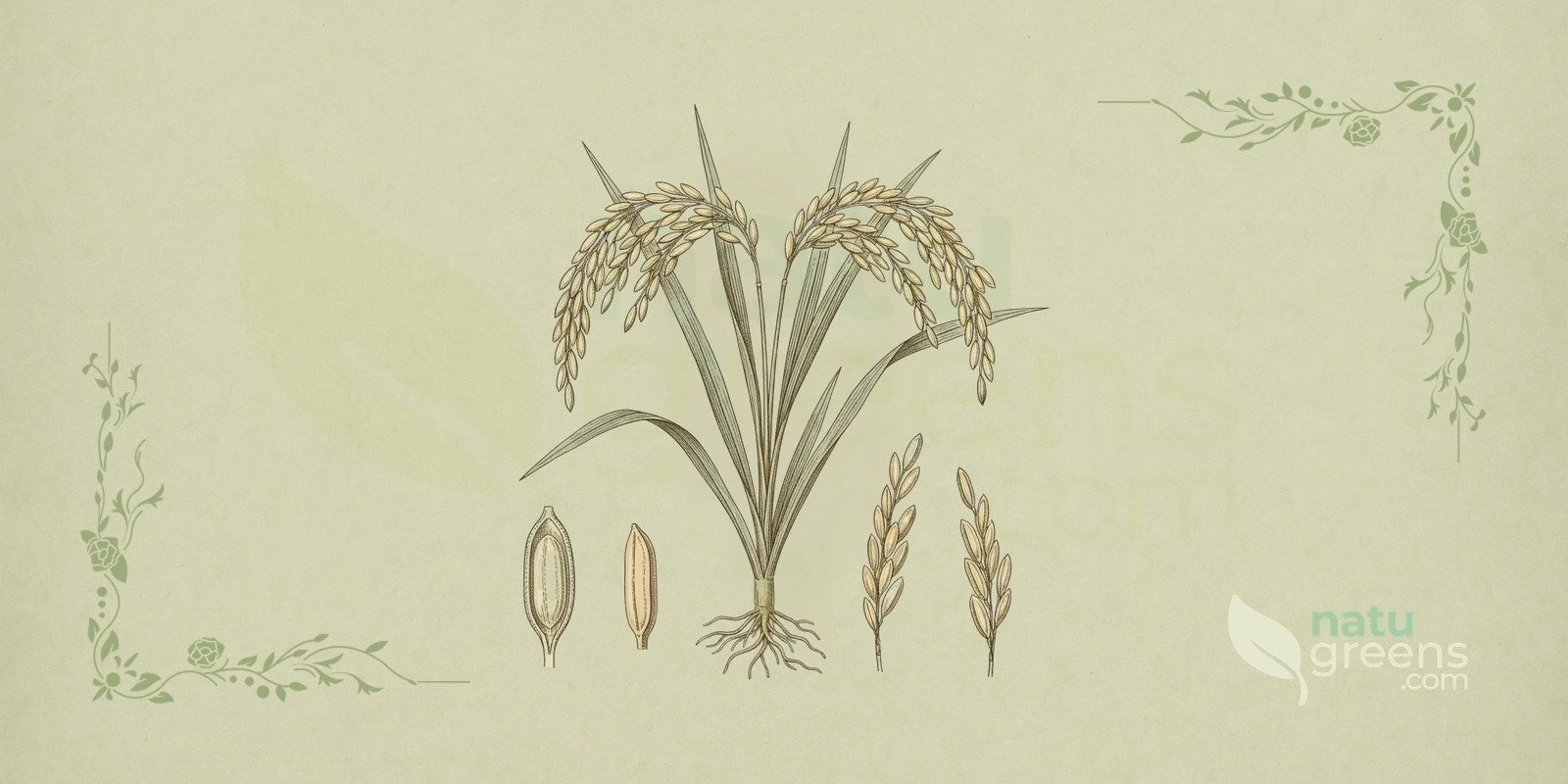
The importance of rice goes well beyond the plate, since traditional records range from the relief of gastrointestinal disorders to topical use for skin problems. Modern research has been investigating some of these uses and describing the plant’s phytochemical richness, with particular attention to arabinoxylans, gamma-oryzanol and other antioxidants found in the bran. These compounds are the subject of promising studies, although most of the results still come from laboratory assays and small clinical studies.
Popular and International Names of Rice
- English: Asian cultivated rice, common rice, rice.
- French: riz.
- German: Reis.
- Italian: riso.
- Portuguese: arroz, arroz-asiático, arroz-comum.
- Spanish: arroz.
Botanical Synonyms of Oryza sativa
Although Oryza sativa L. is the widely accepted botanical name, the species has accumulated several heterotypic and homotypic synonyms, which reflect the taxonomic complexity of the genus and the variations described throughout the history of botany. Knowing these names is useful for research and for the accurate identification of the plant in older scientific works, in herbaria and in traditional records from different countries.
- Oryza aristata Blanco
- Oryza communissima Lour.
- Oryza denudata (Desv.) Steud.
- Oryza elongata (Desv.) Steud.
- Oryza formosana Masam. & S.Suzuki
- Oryza glutinosa Lour.
- Oryza marginata (Desv.) Steud.
- Oryza montana Lour.
- Oryza mutica Steud.
- Oryza nepalensis G.Don ex Steud.
- Oryza palustris Salisb.
- Oryza parviflora P.Beauv.
- Oryza perennis Moench
- Oryza plena (Prain) N.P.Chowdhury
- Oryza praecox Lour.
- Oryza pubescens (Desv.) Steud.
- Oryza pumila Steud.
- Oryza repens Buch.-Ham. ex Steud.
- Oryza rubribarbis (Desv.) Steud.
Botanical Family: Poaceae
The Poaceae family, also called Gramineae, is one of the largest and most important families of flowering plants and includes essential cereals such as wheat, maize and barley. Its species are characterized by generally hollow stems (culms), long narrow leaves and inflorescences arranged in spikes or panicles. Rice shares these botanical features, which make it an adaptable and productive crop in very different regions of the world.
The relevance of the Poaceae family lies in its contribution to human and animal nutrition and in the significant ecological role it plays, and many of its species are also sources of fiber and of bioactive compounds of interest for health and well-being. Rice, whose genome is organized into 12 chromosomes (2n = 24), has become a model organism for genetic studies in monocots.
Parts of Rice Used
- Grains (whole, cooked and sprouted)
- Husks
- Leaves
- Rice bran
- Rice bran oil
Ethnobotanical and Traditional Uses
The uses below come from ethnobotanical records and folk medicine in different countries, such as the survey of traditional rice landraces used by local communities in the Philippines, and are not equivalent to proven clinical indications.
- Beriberi, with historical use of the bran as a source of thiamine (vitamin B1)
- Diarrhea and nausea
- Digestive disorders
- Eye lotion made with boiled leaves (traditional record, without clinical support)
- Heartburn and indigestion relief
- Muscle toning (traditional record)
- Skin problems such as boils, wounds and swellings (traditional record)
- Spleen and Stomach toning, according to traditional Chinese medicine
Therapeutic Properties of Rice
The following properties have been described in studies with the grain, the bran, the oil and plant extracts, which are largely experimental, and they do not replace guidance from a healthcare professional.
- Anti-inflammatory (activity observed in experimental studies with bran extracts)
- Antioxidant (bran compounds neutralize free radicals in laboratory assays)
- Antiproliferative (activity observed in laboratory studies, without clinical confirmation)
- Diuretic (traditional record of increased urine production)
- Hypocholesterolemic (modest reduction in cholesterol observed in studies with rice bran oil)
- Hypoglycemic (effect investigated in preliminary studies with bran and extracts; white rice, by contrast, has a high glycemic index)
- Immunostimulant (bran arabinoxylans investigated in preliminary studies on the immune system)
- Neuroprotective (effect observed in cell and animal studies)
Detailed Phytochemical Profile of Rice
- Anthocyanins
- Arabinoxylans
- Ferulic acid
- Feruloylated oligosaccharides
- Flavonoids
- Gamma-oryzanol
- Phenolic acids
- Saturated fatty acids
- Sterols
- Tricin
- Triterpenes
- Vitamin E
Preparation and Administration Forms of Rice
- Cooked rice
- Infusion (leaves)
- Poultice (ground rice)
- Powder (dried, ground rice)
- Rice bran extracts
- Rice bran oil
- Rice water (cooking liquid)
Synergy with Other Medicinal Plants
Digestive Health
In folk tradition, rice water and lightly cooked rice are often combined with carminative herbs such as fennel (Foeniculum vulgare) and peppermint (Mentha × piperita). This pairing is traditionally used to calm the gastrointestinal tract, ease gas and cramps, and accompany the return to a normal diet after an episode of diarrhea or stomach upset.
Skin Health
In topical applications, rice powder and bran extracts appear in homemade preparations alongside plants traditionally regarded as soothing and wound-healing, such as calendula (Calendula officinalis) and aloe vera (Aloe vera). This combination has a traditional record in the care of mild skin irritations, taking advantage of the gentle texture of rice and the soothing properties attributed to both plants. Open wounds, boils and persistent swelling, however, call for professional assessment.
Immune Support
In the natural supplement tradition, rice bran is paired with fruits rich in vitamin C, such as acerola (Malpighia emarginata) and camu camu (Myrciaria dubia). The arabinoxylans in the bran have been investigated in preliminary studies for their possible immunomodulatory action. Combining them with the antioxidants of these fruits is a traditional way of supporting the body’s defenses, with no clinical evidence of protection against infections or diseases.
Recipes and Usage Protocols of Rice
Rice Water for Episodes of Diarrhea
Rice water is a homemade preparation traditionally used during mild episodes of diarrhea, as a way of providing fluids and a little easily digestible starch throughout the day.
Ingredients:
- 1/2 cup white rice
- 4 cups water
- A pinch of salt (optional)
Preparation:
- Rinse the rice well under running water.
- Place the rice and the water in a saucepan.
- Bring to a boil.
- Lower the heat, cover and simmer for about 20 to 30 minutes, until the rice is very soft and the water thickens.
- Strain the liquid, setting the rice water aside.
- Drink the rice water warm, in small portions, throughout the day. If you like, add a pinch of salt to replace electrolytes.
Rice water does not replace oral rehydration solution. For babies, young children, older adults and pregnant women, or when diarrhea comes with fever, blood in the stool, persistent vomiting or signs of dehydration, seek medical care without delay.
Rice Face Mask for Oily Skin
Rice flour is traditionally used in homemade masks for oily skin, thanks to its fine texture, which allows a very gentle exfoliation.
Ingredients:
- 2 tablespoons rice flour (finely ground rice)
- Water or rose hydrosol, enough to form a paste
Preparation:
- In a small bowl, mix the rice flour with the water or rose hydrosol until you get a smooth paste.
- Wash your face and apply the mask evenly, avoiding the eye area.
- Leave it on for 15 to 20 minutes.
- Rinse with warm water, using gentle circular movements for a light exfoliation.
- Use once or twice a week. Traditionally, the preparation is used to reduce skin shine and leave the skin softer. Before the first use, test the paste on a small area of skin.
The preparations above follow traditional records and do not replace professional guidance. Before any internal use, check the contraindications and interactions described in this article.
Associated Therapies
Chinese Diet Therapy
In Chinese diet therapy, rice is considered a food of neutral nature that, according to this tradition, tonifies the Qi (vital energy) of the Spleen and Stomach, harmonizes the center and supports digestion. It is often recommended during recovery from illness, in cases of diarrhea and to nourish the blood. Varieties are also distinguished in this system: brown rice is valued for moving Qi and dispelling stagnation, while white rice, milder and easier to digest, is preferred for convalescents and children.
Western Herbal Medicine
Western herbal medicine focuses mainly on rice bran and its extracts, studied for their anti-inflammatory, antioxidant and immunomodulatory activities. These derivatives are used to support cardiovascular health and blood sugar balance, and they are also being investigated in preliminary oncology studies, with no established clinical indication. Rice bran oil, valued for its gamma-oryzanol content, showed a modest reduction in cholesterol in small clinical trials and contributes antioxidant compounds to the diet.
Ayurvedic Medicine
In Ayurvedic medicine, rice is a sacred food and one of the pillars of the diet, considered nourishing, easy to digest and balancing for all three doshas (Vata, Pitta and Kapha), especially when prepared simply. Varieties such as basmati are preferred for their sattvic (pure) qualities. According to this tradition, the grain serves to build up the body and calm the mind, and also as the base for medicinal preparations such as kitchari, a nourishing dish traditionally considered cleansing.
Contraindications and Side Effects of Rice
Eating rice as a food is safe and well tolerated by the vast majority of people, but a few precautions deserve attention. Rice allergy is rare and may show up as skin rashes, swelling or, in the most severe cases, difficulty breathing, a situation that requires immediate medical care.
Rice, especially brown rice, can accumulate inorganic arsenic from soil and irrigation water at levels that public health recommendations suggest moderating, mainly in young children and during pregnancy. Varying the type of grain eaten and rinsing rice well before cooking reduces exposure. Cooking the grain in plenty of water and discarding the excess at the end is another measure described for lowering the arsenic content of the dish.
White rice has a high glycemic index, and its consumption should be guided by a healthcare professional in people with diabetes or insulin resistance. There are no other relevant restrictions with usual dietary consumption.
Greater caution applies to concentrated rice bran supplements, rice bran extracts and gamma-oryzanol capsules, whose safety has not been established during pregnancy, breastfeeding or in children. In these groups, they should only be used under professional guidance. Homemade preparations with boiled leaves should not be applied to the eyes, due to the risk of contamination and irritation, and any eye problem calls for assessment by an ophthalmologist.
Drug Interactions
Although rice is a staple food, rice bran and its concentrated extracts may interact with some medications. Because of their hypoglycemic potential, they may add to the effect of the glucose-lowering drugs used in diabetes and require a dose adjustment, and their cholesterol-lowering action may overlap with that of statins and other cholesterol-lowering agents. For this reason, consult a healthcare professional before using rice bran supplements, especially if you take long-term medication.
Historical Notes and Interesting Facts
An Ancient Cereal
Rice (Oryza sativa) is among the oldest cereals cultivated by humanity, with evidence of domestication dating back 6,000 to 9,000 years in the Yangtze River valley, in China. There are also records from 4,500 to 8,500 years ago in the Ganges region of India. Its spread around the world followed trade routes and migrations, and the grain became a cultural and dietary symbol for many civilizations. Traditional Chinese accounts place the first mentions of rice for its medicinal properties around 2800 BC.
Variety and Diversity
There are thousands of varieties of Oryza sativa, grouped into two main subspecies: japonica (or sinica), with short, sticky grains, and indica, with long grains that stay loose after cooking. There are also varieties with colored grains, such as black rice, which turns purplish when cooked, and red rice, each with its own nutritional and phytochemical profile. This diversity reflects the plant’s adaptation to distinct environments and to different culinary and medicinal uses.
Rice in Culture and Religion
In many Asian cultures, rice is more than a food, as it holds a central place in religious rituals, festivals and ceremonies, where it symbolizes fertility, prosperity and life. In Japan, for example, people venerate Inari Ōkami, a deity associated with rice, and sake, a fermented drink made from the grain, plays an important role in Shinto ceremonies. The presence of rice at weddings and celebrations reinforces its deep cultural and spiritual significance.
Frequently Asked Questions about Rice
Does Rice Water Help with Diarrhea?
Rice water is a traditional home remedy for mild episodes of diarrhea. In folk tradition, the starch in the liquid is credited with giving the stool more consistency, and the preparation replaces some of the lost fluids and, with a pinch of salt, some electrolytes. It does not replace oral rehydration solution, and babies, young children and older adults with diarrhea should be assessed by a healthcare professional, especially if there are signs of dehydration.
What Are the Benefits of Rice Bran?
Rice bran is rich in fiber, in antioxidants such as vitamin E and gamma-oryzanol, in B vitamins and in minerals. Studies are investigating its role in digestive health, cholesterol reduction, immune system support and protection against oxidative damage, while laboratory research is evaluating possible anti-inflammatory and antiproliferative effects, still without clinical confirmation.
Can Rice Cause Allergic Reactions?
Although rare, rice allergy does exist. Symptoms range from mild reactions, such as skin rashes and swelling, to severe cases with difficulty breathing, and people who are allergic to other grains or grasses may be more predisposed. If you suspect an allergy, seek medical advice for proper diagnosis and management.
Does Rice Contain Arsenic?
Yes. Rice, especially brown rice, can accumulate inorganic arsenic from soil and irrigation water at levels that public health recommendations suggest moderating, mainly in young children and during pregnancy. Varying the type of grain eaten and rinsing rice well before cooking reduces exposure, as does cooking the grain in plenty of water and discarding the excess. Within a varied diet, usual rice consumption has no other relevant restrictions.
Can People with Diabetes Eat Rice?
White rice has a high glycemic index, and its consumption should be guided by a healthcare professional in people with diabetes or insulin resistance. A meta-analysis of observational studies associated high white rice consumption with a greater risk of type 2 diabetes, especially in Asian populations. The amount, the type of grain and the composition of meals should be decided on an individual basis, with nutritional follow-up.
How Is Rice Used in Traditional Chinese Medicine?
In traditional Chinese medicine, rice is valued for tonifying the Qi of the Spleen and Stomach, harmonizing the center and supporting digestion. The tradition uses it to build energy, relieve diarrhea, nourish the blood and calm the mind. It also regards certain varieties, such as black rice, as more nourishing and suited to fortifying the kidneys and liver, according to the system’s own concepts.
Notice: this content is for informational purposes and does not replace professional medical advice. Consult a physician or herbal practitioner before using medicinal plants, especially during pregnancy, breastfeeding, or alongside medication.
References and Scientific Studies
- PMC2005 Berger A, et al. Similar cholesterol-lowering properties of rice bran oil, with varied gamma-oryzanol, in mildly hypercholesterolemic men. European Journal of Nutrition. 2005.
- PMC2016 Cabanting RM, et al. An ethnobotanical study of traditional rice landraces (Oryza sativa L.) used for medical treatment in selected local communities of the Philippines. Journal of Ethnopharmacology. 2016.
- PMC2024 Cañizares L, et al. Functional Foods from Black Rice (Oryza sativa L.): An Overview of the Influence of Drying, Storage, and Processing on Bioactive Molecules and Health-Promoting Effects. Foods. 2024.
- PMC2012 Hu EA, et al. White rice consumption and risk of type 2 diabetes: meta-analysis and systematic review. BMJ. 2012.
- PMC2019 Kumarathilaka P, et al. Arsenic in cooked rice foods: Assessing health risks and mitigation options. Environment International. 2019.
- PMC2023 Ooi SL, et al. Modified Rice Bran Arabinoxylan by Lentinus edodes Mycelial Enzyme as an Immunoceutical for Health and Aging: A Comprehensive Literature Review. Molecules. 2023.
- PMC2019 Kumarathilaka P, et al. Arsenic in cooked rice foods: Assessing health risks and mitigation options. Environ Int. 2019.