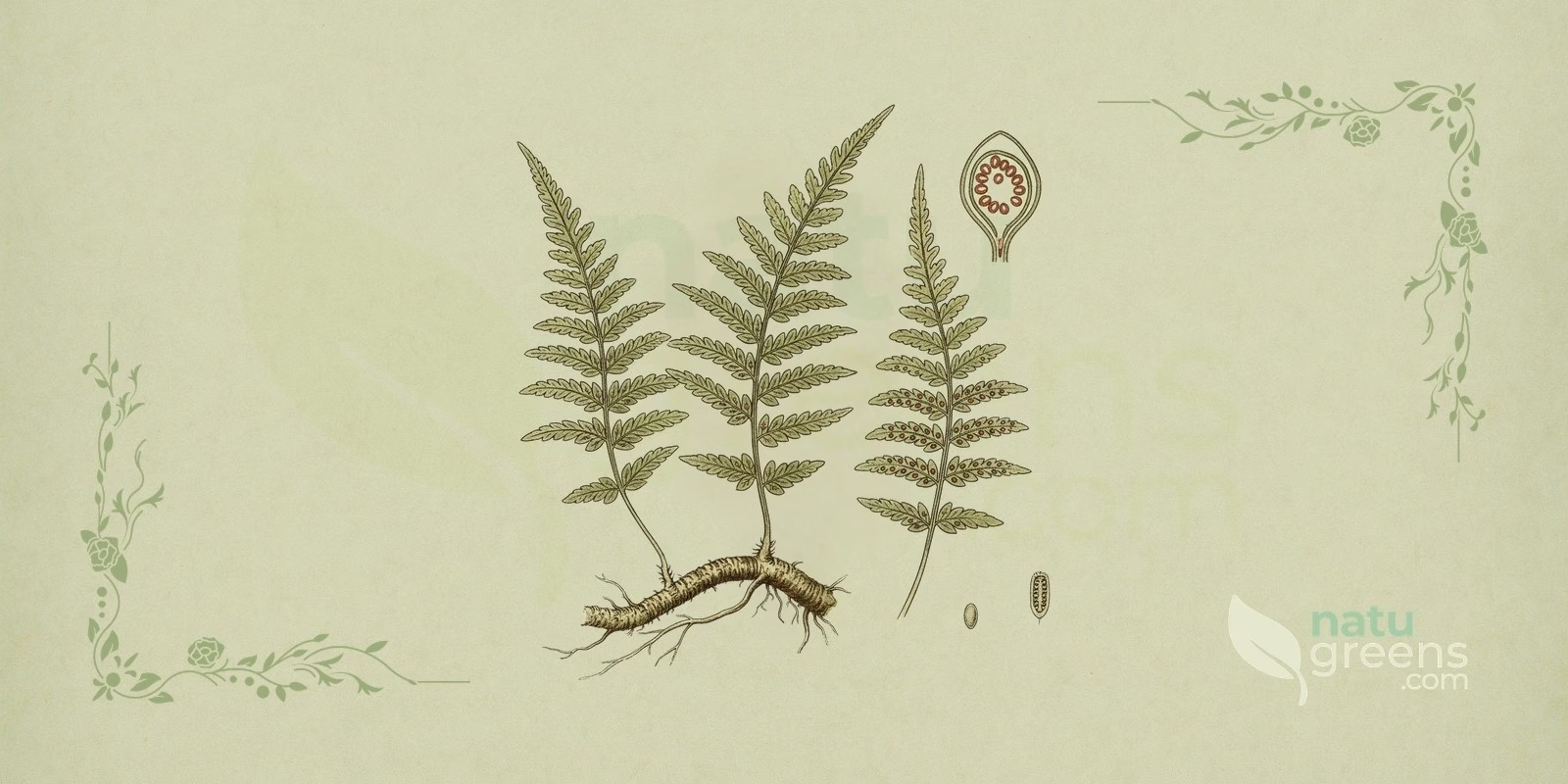
Polypodium vulgare L. / Polypody, commonly known as common polypody, wall fern or adder’s fern, is a perennial fern of the Polypodiaceae family, native to Europe, North Africa and parts of Asia, that has adapted to settings as different as rocks, old walls and tree trunks. European traditional medicine records its use as a purgative and vermifuge, and the rhizome stands out for its sweetish taste, a trait that helped make this hardy and versatile species known in different regions.
Popular and International Names of Polypody
- English: adder’s fern, brake root, common polypody, eastern polypody, ever fern, golden locks, golden maidenhair, lady’s milk, oak fern, rock polypody, sweet fern, wall fern.
- French: polypode commun, réglisse des bois.
- German: Engelsüß, Gewöhnlicher Tüpfelfarn.
- Italian: felce dolce, polipodio comune.
- Portuguese: polipódio, samambaia-doce (Brazil); daurada, felipodio, fentelha, feto-das-pedras, feto-doce, feto-dos-muros, filipode, polipódio, polipódio-do-carvalho, polipódio-do-norte (Portugal).
- Spanish (including regional names): cerbuna borde, falguera, felecha, feleguera, filipodio, foguera borda, helecho dulce, herba felera, herba verolera, polipodio común, regaliz de bosque.
Some of these English names, such as oak fern and rock polypody, also refer to other ferns, so reliable identification of the plant always depends on the binomial Polypodium vulgare rather than on the common name alone.
Botanical Synonyms of Polypodium vulgare
Over time, Polypodium vulgare L. has accumulated several synonyms, reflecting the complexity of its taxonomic classification, the wide distribution of the species and the morphological variation observed among populations. The following names appear in the botanical literature associated with it:
- Ctenopteris vulgaris (L.) Newman
- Polypodium boreale Salisb.
- Polypodium commune DC.
- Polypodium iranicum Mazooji
- Polypodium laciniatum Lam.
- Polypodium officinale All.
In older treatments, the name Polypodium vulgare was applied in a broad sense, covering plants now recognized as distinct species, among them Polypodium cambricum L., from southern and western Europe, and Polypodium virginianum L., from North America, which explains part of the confusion found in historical texts. These synonyms are useful for tracing the older literature and understanding the taxonomic history of the plant, and the Royal Botanic Gardens, Kew, adopts Polypodium vulgare L. as the accepted name.
Botanical Family: Polypodiaceae
Polypodium vulgare belongs to the Polypodiaceae, one of the largest and most diverse fern families, characterized by sporangia grouped in round sori that lack an indusium. Its species are widely distributed across the globe and occupy very varied habitats, from tropical forests to temperate regions.
The Polypodiaceae are known for their ability to grow as epiphytes, lithophytes or terrestrial plants, and many species in the family have creeping rhizomes that favor propagation and attachment to a range of substrates. The family includes genera of ornamental and medicinal importance, and Polypodium vulgare stands out among them for its long history of use in European folk medicine and for its ecological value as a colonizer of rocks, walls and tree trunks.
Parts of Polypody Used
- Fronds (leaves)
- Rhizome
The rhizome accounts for most records of internal use, while the fronds appear mainly in external applications described by folk medicine.
Ethnobotanical and Traditional Uses
- Asthma
- Bronchitis relief
- Constipation
- Cough relief
- Hepatitis
- Jaundice
- Liver and spleen complaints
- Mild inflammation (respiratory and digestive tracts)
- Parasitic diseases (ethnoveterinary use)
- Purgative
- Vermifuge
- Wound healing (fronds, external use)
These uses reflect records from folk medicine and ethnoveterinary practice, without confirmation in clinical studies, and conditions such as asthma, hepatitis and jaundice require medical diagnosis and follow-up, never the replacement of conventional treatment with home preparations.
Therapeutic Properties of Polypody
The properties below bring together attributions from tradition and findings from laboratory or animal studies, without confirmation in human clinical trials.
- Analgesic (traditional record of pain relief)
- Anti-inflammatory (effect observed in animal studies, without clinical confirmation)
- Antioxidant (activity observed in laboratory studies)
- Antispasmodic (traditional record of relief from spasms)
- Choleretic (traditional use to stimulate bile secretion)
- Cytoprotective (effect observed in cell lines, with no human data)
- Digestive (traditional record of support for digestion)
- Diuretic (traditional record of increased urine output)
- Expectorant (traditional use to help clear mucus)
- Laxative (mild laxative effect described by tradition)
- Vermifuge (traditional record of use against intestinal worms)
- Wound-healing (traditional use of the fronds on minor wounds)
Detailed Phytochemical Profile of Polypody
- Caffeic acid
- Caffeoylquinic acid derivatives
- Catechin
- Chlorogenic acid
- Ecdysterone (phytoecdysteroid)
- Epicatechin
- Flavonoids (quercetin, kaempferol and their glycosides)
- Osladin (saponin)
- Shikimic acid
- Tannins
Analyses of the rhizome have identified phenolic derivatives such as caffeoylquinic acids and flavan-3-ols of the catechin and epicatechin type, along with phytoecdysteroids such as ecdysterone and the saponin osladin, which is responsible for the sweetish taste. The presence of these compounds does not, on its own, allow the conclusion that the plant has effects on the human body, since most of the available data come from laboratory studies.
Preparation and Administration Forms of Polypody
Polypody can be prepared in several ways, and an infusion of the dried rhizome is the form most often cited in traditional records, followed by tinctures and extracts, which concentrate the bioactive compounds of the fern. The choice of preparation depends on the intended purpose and should be discussed with a health professional, because there are no standardized doses validated by clinical studies for this species.
Tradition also describes the topical application of fresh fronds to minor wounds, with attention to any sign of skin irritation. Because the evidence comes mostly from traditional use, self-medication should be avoided, and any internal use, including as a tea, requires guidance from a health professional who can assess the appropriate amount and duration of use.
Synergy with Other Medicinal Plants
Respiratory Health
In herbal tradition, polypody, remembered for its expectorant use, appears combined with thyme (Thymus vulgaris) and eucalyptus (Eucalyptus globulus) in preparations intended for coughs and bronchitis. Thyme is traditionally employed for its antiseptic and expectorant actions, while eucalyptus is used to help clear the airways. This combination appears in traditional records for congestion and bronchial inflammation, with no studies demonstrating a combined effect of the three plants.
Digestive Support
For occasional constipation, tradition pairs polypody with cascara sagrada (Rhamnus purshiana) or senna (Senna alexandrina), plants with a stronger laxative action that add their effect to that of polypody. Precisely for this reason, the combination calls for caution and professional guidance, since adding laxatives together raises the risk of cramps, diarrhea and fluid loss. Polypody is also combined with peppermint (Mentha × piperita), traditionally regarded as carminative and antispasmodic, in preparations used to ease digestive spasms and complement the digestive use of the fern.
Anti-Inflammatory Action
The anti-inflammatory action attributed to polypody appears in traditional records alongside turmeric (Curcuma longa) and ginger (Zingiber officinale), two plants investigated for their anti-inflammatory activity. Turmeric in particular is rich in curcuminoids, widely studied compounds, and this combination is mentioned in preparations for internal and external use in chronic inflammatory conditions, always with attention to amounts and without replacing medical follow-up.
Recipes and Usage Protocols of Polypody
Traditional Infusion for Cough and Bronchitis
Ingredients: dried polypody rhizome, in an amount agreed with a health professional, and boiling water.
Preparation: Place the rhizome in a cup, add the boiling water, cover and let it steep for 10 to 15 minutes before straining and drinking it warm. How often to take it should be agreed with a professional, without exceeding the guidance received, because high doses can cause nausea and diarrhea. This infusion is traditionally used to thin mucus and ease expectoration, and it is among the home remedies of European tradition for respiratory complaints. Consult a health professional before use.
Traditional Laxative Decoction
Ingredients: dried polypody rhizome, in a small amount advised by a health professional, and water.
Preparation: Add the rhizome to the water, bring it to the boil and let it simmer for 5 to 10 minutes; then remove from the heat, cover, let it cool, strain and drink before bedtime. This decoction is traditionally used as a mild laxative for occasional constipation and should not be used for long periods without medical supervision. Consult a health professional before use.
Frond Poultice for Minor Wounds
Ingredients: fresh polypody fronds and a little hot water.
Preparation: Crush the fresh fronds into a paste, warm it slightly with a little water and apply it to the minor wound or inflamed area, covering it with a clean cloth and leaving it on for 30 minutes to 1 hour, up to 2 times a day. Tradition attributes wound-healing and anti-inflammatory action to the fronds, but this preparation is limited to clean, superficial scrapes, since deep, infected or slow-healing wounds require medical evaluation. Stop use if irritation, redness or itching appears.
The preparations above follow traditional records and do not replace professional guidance. Before any internal use, check the contraindications and interactions described in this article.
Associated Therapies
Clinical Phytotherapy
In European herbal tradition, polypody is known for the expectorant, diuretic and laxative properties attributed to it and appears in respiratory conditions such as bronchitis and persistent cough. Because of the choleretic action described in tradition, it is also used to support liver and bile function. The evidence behind these uses is mostly traditional, and clinical trials remain scarce and recent, such as a randomized study published in 2026 that evaluated the root decoction in the symptom management of hospitalized patients with severe acute respiratory infection. For this reason, the dose and form of administration need to be set by a qualified health professional, and the plant should not be presented as a proven treatment for any condition, even as modern phytotherapy seeks to standardize extracts.
Homeopathy
In homeopathy, Polypodium vulgare is an uncommon remedy, indicated by homeopathic tradition for symptoms such as a dry, irritating cough and for digestive complaints accompanied by a feeling of heaviness. Its preparation involves successive dilutions of the mother tincture and, according to the principles of this practice, seeks to stimulate the body’s own responses, with the remedy chosen individually by a homeopathic physician. No clinical studies confirm the efficacy of these preparations, which do not replace conventional diagnosis and treatment.
Contraindications and Side Effects of Polypody
Essential Safety Warnings
Polypody has a mild laxative effect, and high doses can cause nausea and diarrhea. Its use should be avoided during pregnancy and breastfeeding due to a lack of data. The evidence comes mostly from traditional use, with little clinical data in humans, so the plant should not be presented as a proven treatment. Do not confuse polypody with Polypodium leucotomos (calaguala, used as an oral photoprotective agent), which is a different species with a different use.
General Contraindications
Polypody is contraindicated for people with known hypersensitivity to ferns or to any component of the plant and, because of its purgative properties, should be avoided by those with inflammatory bowel diseases such as ulcerative colitis or Crohn’s disease. Pregnant and breastfeeding women should refrain from using it, as there are insufficient data on its safety during these stages, and young children should not consume the plant without strict medical supervision. Use as a laxative over long periods should not take place without medical follow-up either.
Common Side Effects
The few available reports describe side effects that are generally mild and may include gastrointestinal discomfort, nausea and diarrhea, especially at high doses. Allergic skin reactions are possible in sensitive people, and topical application of fresh fronds may cause irritation on very delicate skin. If any adverse reaction occurs, use should be stopped, and seeking medical advice is recommended.
Drug Interactions
There are no drug interaction studies on polypody, but some herbal texts mention the possible presence of coumarins in the plant, which calls for caution in people taking anticoagulants such as warfarin, given the theoretical risk of increased bleeding. People taking sedatives or benzodiazepines should also use polypody with caution, since there are mentions of a possible intensification of central nervous system depressant effects, still without scientific confirmation. There are also references to a mild, unproven blood-sugar-lowering effect, so people with diabetes who take glucose-lowering medication should monitor their blood glucose and talk to their doctor before using the plant. In all these cases, consulting a doctor or pharmacist is essential to avoid unwanted interactions.
Historical Notes and Interesting Facts
The Sweet Taste of the Rhizome
One of the most remarkable facts about polypody is the sweet taste of its rhizome, attributed to a saponin called osladin, described as about 500 times sweeter than ordinary sugar. This sweetness helps explain popular names such as sweet fern, Engelsüß, felce dolce, feto-doce, helecho dulce, réglisse des bois and regaliz de bosque, which liken the rhizome to licorice. The same trait continues to draw the interest of researchers and plant enthusiasts as an example of the natural chemistry of plants. Today the rhizome is rarely used as food, and osladin is still studied mainly from a chemical point of view.
Adaptation and Resilience
Polypodium vulgare is a highly adaptable and resilient plant, able to grow on rocks, on old walls and, as an epiphyte, on tree trunks. Its evergreen fronds stay green through the winter and make use of the light that passes through the canopy of leafless deciduous forests, an advantage that has favored the wide distribution of the species and shows how robustly this fern thrives in challenging conditions.
A Species Described by Linnaeus
Polypody is among the species described by Carl Linnaeus in Species Plantarum, a work published in 1753 and regarded as the starting point of modern botanical nomenclature, and the L. that follows the binomial identifies precisely that authorship. The genus name comes from Greek and means many feet, in reference to the appearance of the creeping, branched rhizome that anchors the plant to its substrate.
A Model for the Study of Stomata
Polypody played an important role in understanding how stomata respond to air humidity. In 1971, the group led by Otto Ludwig Lange at the University of Würzburg used the plant in pioneering studies showing how the opening and closing of stomata respond directly to ambient humidity. Later research with isolated epidermal strips of the same species deepened this knowledge of plant physiology, and the fern is still remembered as a relevant model in botanical research.
Frequently Asked Questions about Polypody
Is Polypody Tea Safe for Everyone?
Polypody tea is not safe for everyone and should be avoided during pregnancy and breastfeeding due to a lack of data, as well as by people with inflammatory bowel diseases or fern allergies, while young children should only use it under medical supervision. Since high doses can cause nausea and diarrhea, always consult a health professional before use and avoid self-medication.
What Are the Traditional Uses of Polypody Tea?
Tradition uses polypody tea for its expectorant, diuretic and mild laxative action in cases of cough, bronchitis and occasional constipation, along with records of use to support liver and bile function. Anti-inflammatory and antioxidant properties have been observed in laboratory and animal studies, but evidence in humans is scarce, and the tea should not be seen as a proven treatment for any condition.
How Should I Prepare Polypody Tea?
In traditional records, the tea is made by infusing the dried rhizome in boiling water and letting it steep for 10 to 15 minutes before straining and drinking it warm. Since there are no standardized doses validated by clinical studies and excess can cause nausea and diarrhea, the amount of rhizome and the number of cups per day should be set with a health professional.
Does Polypody Interact with Other Medications?
Interaction studies are lacking, but caution is advised for people taking anticoagulants such as warfarin, because of mentions of the possible presence of coumarins, and for those taking sedatives, whose effects could be intensified. People with diabetes on glucose-lowering medication should monitor their blood glucose in light of unproven reports of a blood-sugar-lowering effect, and it is essential to tell your doctor about the use of any medicinal plant.
Which Part of Polypody Is Most Used?
The rhizome is the most used and also the most studied part, as it concentrates compounds such as osladin, ecdysterone and various flavonoids, and it is to the rhizome that tradition attributes expectorant, laxative and vermifuge actions. The fronds appear mainly in external applications, to which folk medicine attributes a wound-healing action.
Can Polypody Be Confused with Calaguala?
Yes, and this confusion should be avoided, because calaguala (Polypodium leucotomos, used as an oral photoprotective agent) is a different species with a different use. Studies and products for oral photoprotection refer to calaguala, not to Polypodium vulgare, whose use is mostly traditional and aimed at other purposes.
Notice: this content is for informational purposes and does not replace professional medical advice. Consult a physician or herbal practitioner before using medicinal plants, especially during pregnancy, breastfeeding, or alongside medication.
References and Scientific Studies
- PMC2021 Farràs A, et al. Polypodium vulgare L. (Polypodiaceae) as a Source of Bioactive Compounds: Polyphenolic Profile, Cytotoxicity and Cytoprotective Properties in Different Cell Lines. Front Pharmacol. 2021.
- PMC2021 Gleńsk M, et al. Isolation and structural determination of flavan-3-ol derivatives from the Polypodium vulgare L. rhizomes water extract. Nat Prod Res. 2021.
- PMC1977 Lösch R. Responses of stomata to environmental factors: experiments with isolated epidermal strips of Polypodium vulgare. I. Temperature and humidity. Oecologia. 1977.
- PMC2011 Simon A, et al. Ecdysteroids from Polypodium vulgare L. Steroids. 2011.
- PMC2026 Zafar F, et al. Anti-inflammatory approach of Polypodium vulgare roots by downregulation of pro-inflammatory cytokines in complete Freund’s adjuvant-induced arthritis rats. Inflammopharmacology. 2026.