Quick summary
Harungana madagascariensis Lam. ex Poir. is an evergreen shrub or small tree in the Hypericaceae family (formerly included in Clusiaceae), native to Madagascar, Mauritius and much of tropical and southern Africa. As this African and Malagasy species has no recorded common name in Brazilian Portuguese, the article…
Main caution: Harungana madagascariensis contains anthranoids (harunganin) with a laxative effect and is therefore contraindicated in pregnancy, during lactation, in children and in cases of intestinal obstruction. It should not be…
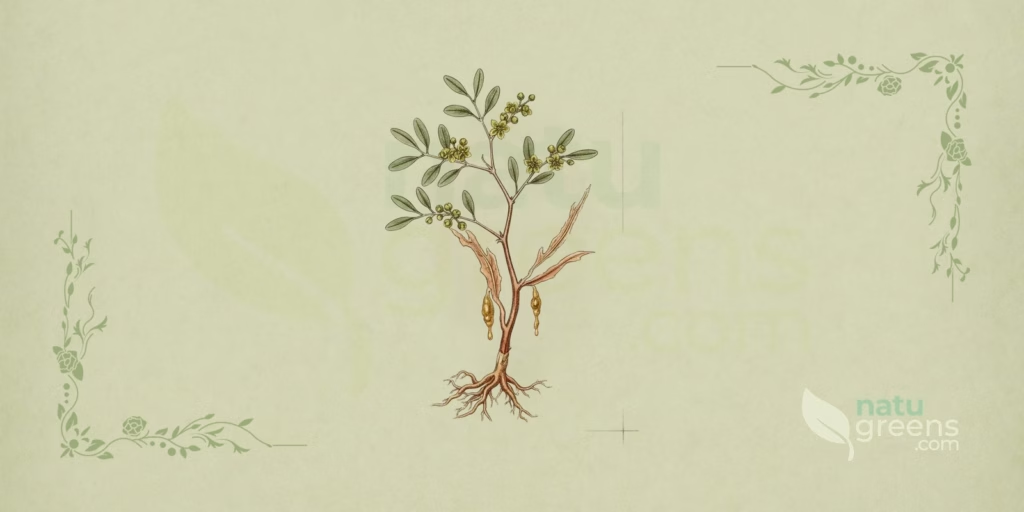
Harungana madagascariensis Lam. ex Poir. is an evergreen shrub or small tree in the Hypericaceae family (formerly included in Clusiaceae), native to Madagascar, Mauritius and much of tropical and southern Africa. As this African and Malagasy species has no recorded common name in Brazilian Portuguese, the article below refers to it by its binomial. The term haronga is kept for its well-established international use, alongside the English names dragon’s blood tree and orange-milk tree. The plant stands out for the orange sap that flows when the bark is wounded. Its leaves, bark and fruits go into a range of preparations in African traditional medicine, which values it for a broad set of uses.
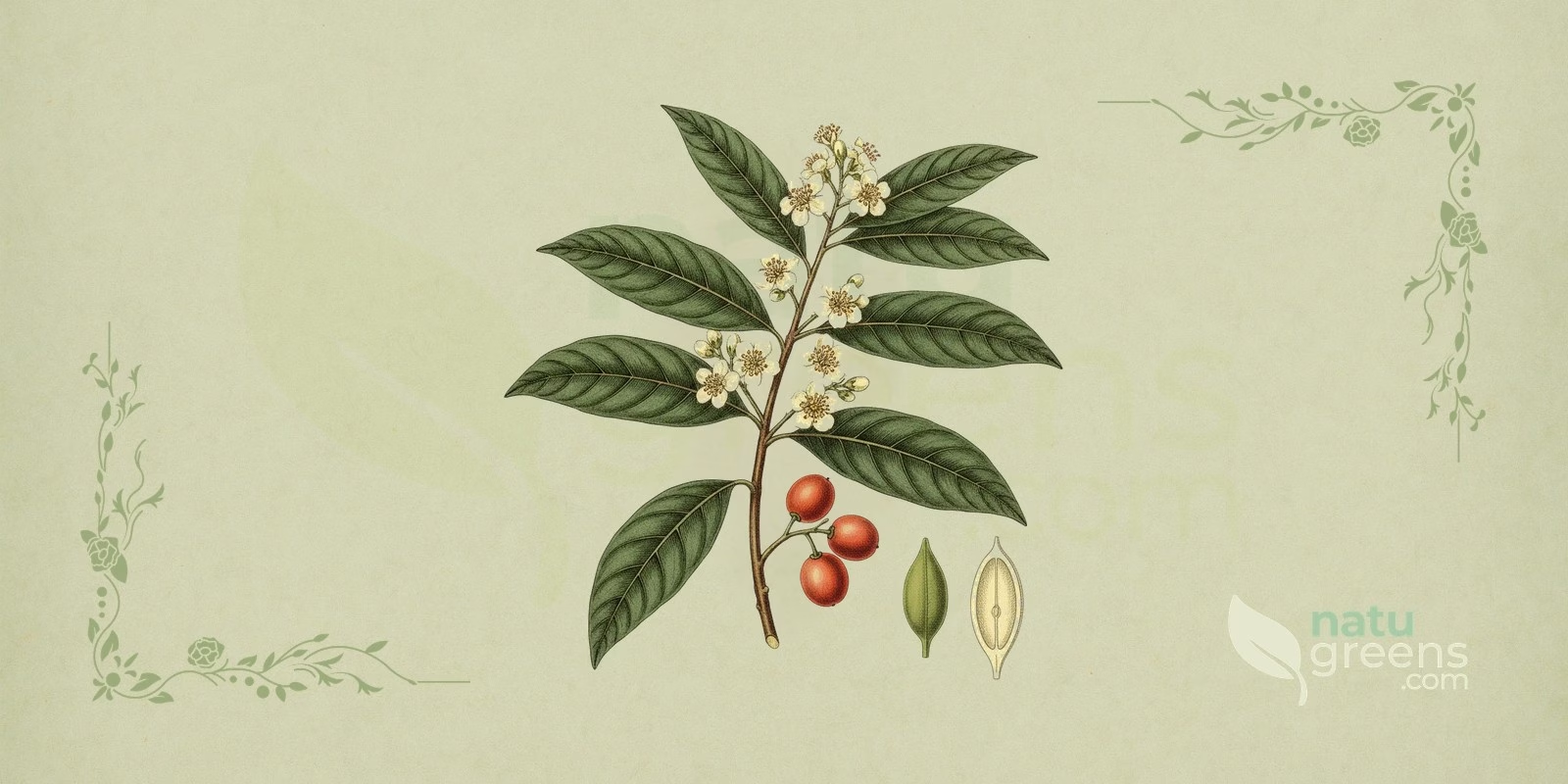
In folk tradition, Harungana madagascariensis is used for a long list of complaints that includes dysentery, gastrointestinal disorders, liver and gallbladder problems and various infections. Its best-known use involves the bark and leaf for digestive discomfort, always understood as a traditional record. Modern research has been looking into the chemical makeup of the species and has identified bioactive compounds that help explain some of these uses. Most of the data, however, come from laboratory and animal studies, with no clinical studies confirming efficacy in people. Among the most studied activities are the antimicrobial, anti-inflammatory and antioxidant ones, and they are the focus of most of the scientific publications devoted to the plant.
Popular and International Names of Harungana madagascariensis
The names below circulate mainly in publications outside Brazil and in the international trade in plant extracts. The species has no established common name in Brazil, and the Portuguese names that sometimes appear are merely literal translations from English.
- English: dragon’s blood tree, haronga, orange-milk tree, praying hands bush.
- French: arbre lait orange, arbre sang-dragon, haronga.
- German: Drachenblutbaum, Haronga, Orangenmilchbaum.
- Italian: albero latte arancio, albero sangue di drago, haronga.
- Portuguese: no common name recorded in Brazil; the binomial Harungana madagascariensis or the international term haronga is used.
- Spanish: árbol leche naranja, árbol sangre de dragón, haronga.
Botanical Synonyms of Harungana madagascariensis
Harungana madagascariensis Lam. ex Poir. is the accepted botanical name, but the species has accumulated several synonyms over its taxonomic history. This variety reflects successive reclassifications and the differing interpretations of the botanists who studied material collected in Africa and Madagascar. They include the following:
Arungana paniculata Pers., Haemocarpus paniculatus (Pers.) Spreng., Haronga madagascariensis (Lam. ex Poir.) Choisy, Haronga paniculata (Pers.) Lodd. ex Steud., Haronga paniculata f. oblongifolia Engl., Haronga paniculata var. oblongifolia (Engl.) De Wild., Harungana paniculata Pers., Harungana pubescens Poir., Harungana robynsii Spirlet, Psorospermum leonense Turcz.
Botanical Family: Hypericaceae
The Hypericaceae family, to which Harungana madagascariensis belongs, comprises about 9 genera and 560 species distributed mainly in tropical and subtropical regions. Many of these species were formerly classified within Clusiaceae (Guttiferae). Plants in the group are notable for their secretory glands and for producing compounds with relevant biological activity, such as flavonoids, xanthones and phloroglucinols, which account for much of the pharmacological interest in the family. It is also the family of St John’s wort (Hypericum perforatum), a relationship that underlies the photosensitivity warning given in the contraindications. The standing of H. madagascariensis in traditional medicine, in turn, rests on the anti-inflammatory and antimicrobial activities investigated in the laboratory.
Parts of Harungana madagascariensis Used
The bark and leaf account for the best-known traditional use of the species, while the fruits, root and sap appear in more specific local preparations, depending on the region and on the purpose described by traditional medicine practitioners.
- Bark
- Fruits
- Leaves
- Root
- Sap (latex)
Ethnobotanical and Traditional Uses
The uses listed below correspond to records from African and Malagasy traditional medicine and are not proven indications. For this reason, conditions such as malaria, hepatitis, typhoid fever, anemia, heart disease and sexually transmitted diseases require conventional medical diagnosis and treatment. The best-known use remains that of the bark and leaf for digestive discomfort, also as a traditional record.
- Anemia
- Asthma
- Cataracts
- Diarrhea
- Dysentery
- Dysmenorrhea
- Gastrointestinal disorders
- Headaches
- Heart disease
- Hepatitis
- Jaundice
- Liver and gallbladder problems
- Malaria
- Pancreatic problems
- Parasitic diseases
- Respiratory diseases
- Sexually transmitted diseases
- Skin diseases
- Toothache
- Typhoid fever
- Ulcers
Therapeutic Properties of Harungana madagascariensis
The properties below summarize activities described in laboratory and animal studies or recorded by tradition, with no confirmation in clinical trials in humans. They should therefore be read as lines of research and not as indications for use.
- Antibacterial (activity observed in extracts tested in the laboratory)
- Antifungal (activity observed in laboratory assays)
- Anti-inflammatory (effect investigated in experimental studies)
- Antioxidant (capacity to neutralize free radicals observed in vitro)
- Antiparasitic (traditional record, with activity observed in the laboratory)
- Antiprotozoal (activity against trichomonads and Plasmodium observed in laboratory studies)
- Antisickling (effect on the deformation of red blood cells described in preliminary studies)
- Antiviral (activity reported in preliminary studies)
- Hepatoprotective (effect on the liver investigated in animal studies)
- Immunomodulatory (influence on the immune system suggested by preliminary studies)
- Laxative (effect attributed to anthranoids such as harunganin)
- Wound-healing (traditional record in wound care)
Detailed Phytochemical Profile of Harungana madagascariensis
Among the chemical groups identified in the species, prenylated anthranoids such as harunganin deserve special attention because they account for the laxative effect of the plant. They also rank among the compounds most studied in antimicrobial and antioxidant assays, alongside flavonoids, tannins and xanthones.
- Alkaloids
- Anthocyanins
- Anthranoids (harunganin)
- Cardiac glycosides
- Flavonoids
- Phenols
- Phloroglucinols
- Saponins
- Tannins
- Terpenoids
- Xanthones
Preparation and Administration Forms of Harungana madagascariensis
In tradition, bark decoction and leaf infusion are the most common forms of internal use, while the poultice is reserved for application to the skin. Concentrated preparations such as extracts and tinctures should only be used under the guidance of a health professional.
- Decoction
- Extract
- Infusion
- Maceration
- Poultice
- Tincture
Synergy with Other Medicinal Plants
Liver Function Support
Harungana madagascariensis can be combined with milk thistle (Silybum marianum), whose silymarin is studied for its effect on liver cells. The pairing is traditionally used to support liver and biliary function. No studies have assessed this combination in people, and any suspicion of hepatitis or gallbladder trouble calls for a medical evaluation before plants are used.
Gastrointestinal Discomfort
For dysentery and other intestinal complaints, the traditional record pairs the species with astringent and antimicrobial plants such as guava (Psidium guajava) or pomegranate (Punica granatum). This combination is traditionally used to relieve diarrhea and cramps through the joint contribution of the tannins and other bioactive compounds found in these plants. Bloody diarrhea, high fever or signs of dehydration call for medical care, and the combination does not replace rehydration or the medical management of infections.
Inflammation and Pain
Given the anti-inflammatory properties observed in the laboratory, Harungana madagascariensis may be paired with devil’s claw (Harpagophytum procumbens) or turmeric (Curcuma longa) in preparations traditionally used to relieve joint, muscle and skin pain and inflammation. The curcumin in turmeric and the harpagosides in devil’s claw each have their own mechanisms under study. The combination of these plants with H. madagascariensis, however, has not been evaluated in clinical trials, and anyone taking anticoagulants needs professional guidance before combining them.
Recipes and Usage Protocols of Harungana madagascariensis
Traditional Bark Decoction
Ingredients: a small amount of dried Harungana madagascariensis bark and water.
Preparation: Boil the bark in water for 15 to 20 minutes and strain before drinking. This decoction is traditionally used to support liver and biliary function and for digestive discomfort. Tradition also uses it in cases of jaundice and hepatitis, conditions that always require medical investigation. Because the bark contains anthranoids with a laxative effect and a safe dose has not been established, consult a health professional before use and do not exceed 1 to 2 consecutive weeks.
Traditional Leaf Infusion
Ingredients: a small amount of dried Harungana madagascariensis leaves and boiling water.
Preparation: Pour the boiling water over the leaves, let steep for 10 minutes and strain. This infusion is traditionally used to relieve symptoms of dysentery, diarrhea and other gastrointestinal complaints, based on the antimicrobial and astringent properties attributed to the leaves. Tradition also uses this infusion to soothe the digestive tract. As a safe frequency has not been defined, consult a health professional before use and limit use to 1 to 2 consecutive weeks at most.
Traditional Root Maceration
Ingredients: a small amount of dried Harungana madagascariensis root and cold water.
Preparation: Soak the root in cold water for 8 to 12 hours, usually overnight, and strain before drinking. In the traditional record this preparation is linked to anemia, because folk belief credits the root with compounds that would help form red blood cells, an idea that scientific studies have not confirmed. Since anemia has many causes and needs a diagnosis, consult a health professional before use and do not replace the prescribed medical care.
Traditional Bark or Leaf Tincture
Ingredients: 1 part dried Harungana madagascariensis bark or leaves to 5 parts 70% alcohol.
Preparation: Combine the dried plant with the alcohol in a dark glass jar and leave it to macerate for 2 to 4 weeks, shaking daily, then strain and store in a dark bottle. A tincture is a concentrated way of extracting the active compounds and appears in the traditional record for various infections and inflammations. Because it is more concentrated than tea, the amount to take has to be set case by case, so consult a health professional and avoid use for more than 1 to 2 consecutive weeks.
The preparations above follow traditional records and do not replace professional guidance. Before any internal use, check the contraindications and interactions described in this article.
Associated Therapies
Clinical Phytotherapy
In clinical phytotherapy, Harungana madagascariensis appears as standardized extracts, capsules or tinctures aimed mainly at digestive discomfort. To a lesser extent it is also used for liver, inflammatory and infectious complaints, always on the basis of the traditional record and experimental data. Dosage is usually adjusted to the concentration of active constituents and to the condition of each patient. Modern phytotherapy seeks to integrate traditional knowledge with the available scientific evidence, which for this species is still essentially preclinical.
African Traditional Medicine
The species holds a central place in African traditional medicine, where healers and local communities use it for a wide range of ailments, from gastrointestinal problems and fevers to skin diseases and infections. This breadth of uses has made it a versatile remedy in the eyes of these cultures. Preparation methods range from decoctions and infusions to poultices and macerations, and they reflect the deep ethnobotanical knowledge of these communities. It is oral tradition, together with continued practice, that keeps this use alive from one generation to the next.
Contraindications and Side Effects of Harungana madagascariensis
General Contraindications
Harungana madagascariensis contains anthranoids (harunganin) with a laxative effect and is therefore contraindicated in pregnancy, during lactation, in children and in cases of intestinal obstruction. It should not be used for more than 1 to 2 consecutive weeks either, since prolonged use of anthranoid laxatives can cause electrolyte loss. Undiagnosed abdominal pain is another reason to avoid the plant until a medical assessment has been made. The lack of safety studies in pregnant and breastfeeding women reinforces the restriction, in order to protect the fetus and the baby. People with known hypersensitivity to plants of the Hypericaceae family or to any component of the species should refrain from using it. Anyone with pre-existing liver or kidney disease needs to consult a health professional before taking any preparation, given the possible impact on these organs.
Photosensitivity
As a member of the Hypericaceae, the same family as St John’s wort (Hypericum perforatum), Harungana madagascariensis can cause photosensitivity, meaning exaggerated skin reactions to sunlight such as redness, burning and blotches. During use, intense sun exposure must be avoided, including tanning beds, and extra care is needed for people with fair skin or who already take photosensitizing medicines. Ideally, the plant should be stopped if any skin reaction appears, and advice should be sought from a health professional.
Drug Interactions
The plant may interact with medicines, especially those metabolized by the liver, since the range of phytochemicals it contains could alter the efficacy or toxicity of drugs. People taking anticoagulants, hypoglycemic agents and other diabetes medicines, antihypertensives or immunosuppressants should seek medical advice before using the species. The same applies to anyone taking diuretics or heart medicines, because the potassium loss associated with anthranoid laxatives can worsen the adverse effects of these drugs.
Historical Notes and Interesting Facts
In English, Harungana madagascariensis is called dragon’s blood tree because of the orange to reddish sap that oozes when the bark is cut. This feature makes the species easy to identify in the field and led to the traditional use of the sap as a dye and in rituals. The English name should not be confused with the dragon’s blood known in Brazil as sangue-de-dragão, which is the latex of Croton lechleri and other Croton species, nor with the resin of trees of the genus Dracaena, plants with no close relationship to H. madagascariensis.
The genus name itself derives from harongana, the Malagasy name of the plant. The species is also known as a pioneer able to colonize disturbed areas, which gives it ecological interest in forest restoration projects. Its fruits, although not edible for humans, feed birds and other animals that disperse the seeds and help maintain local biodiversity. This resilience and adaptability make the species relevant to both ecology and medicinal research.
Frequently Asked Questions about Harungana madagascariensis
Can Harungana madagascariensis Be Used during Pregnancy?
No, the species is contraindicated in pregnancy, during lactation and in children, because it contains anthranoids with a laxative effect and there are no studies proving its safety for the fetus or the baby. If you have any doubt during these periods, consult a health professional before using any medicinal plant.
Which Parts of Harungana madagascariensis Are Used?
The most commonly used parts are the bark and leaves, which account for the best-known traditional use, followed by the root, while the fruits and sap appear in more specific local preparations. Each part holds different concentrations of bioactive compounds and is usually prepared as a decoction, infusion or tincture, according to the traditional record of each region.
Does Harungana madagascariensis Have Side Effects?
Yes, because the anthranoids in the plant have a laxative effect and can cause intestinal discomfort, especially with prolonged use, which is why use should not exceed 1 to 2 consecutive weeks. Allergic reactions may also occur in people sensitive to plants of the Hypericaceae family, along with photosensitivity and interactions with medicines such as anticoagulants, which makes guidance from a health professional essential.
Why Does Harungana madagascariensis Call for Caution in the Sun?
Because it belongs to the Hypericaceae, the same family as St John’s wort, the plant can cause photosensitivity and make the skin more reactive to sunlight. During use, avoid intense sun exposure and stop the plant if redness, burning or blotches appear, then seek guidance from a health professional.
Does Harungana madagascariensis Have a Common Name?
In English it is known as haronga, dragon’s blood tree or orange-milk tree, but there is no common name recorded for this African and Malagasy species in Brazilian Portuguese, so the safest choice is the scientific binomial. Haronga, the well-established international term, is the most common name outside Brazil, but it should not be confused with the Brazilian dragon’s blood (sangue-de-dragão), obtained from Croton species.
How Is Harungana madagascariensis Used for Liver Problems?
In the traditional record, the bark decoction is used in cases of jaundice and hepatitis, and experimental studies are investigating a possible hepatoprotective action linked to flavonoids, xanthones and other compounds in the plant. These data have not yet been confirmed in people, and liver diseases require diagnosis and medical follow-up, so the plant does not replace conventional treatment.
Notice: this content is for informational purposes and does not replace professional medical advice. Consult a physician or herbal practitioner before using medicinal plants, especially during pregnancy, breastfeeding, or alongside medication.
How to cite this article
NATUGREENS. Harungana madagascariensis: Properties and Benefits. Natugreens, 3 Nov. 2026. Disponível em: https://natugreens.com/haronga-harungana-madagascariensis/. Accessed: Nov. 4, 2026.
Natugreens. (2026). Harungana madagascariensis: Properties and Benefits. Natugreens. https://natugreens.com/haronga-harungana-madagascariensis/
References and Scientific Studies
- PMC2008 Iwalewa EO, et al. Anti-protozoan activities of Harungana madagascariensis stem bark extract on trichomonads and malaria. J Ethnopharmacol. 2008.
- PMC2016 Kengni F, et al. Antityphoid properties and toxicity evaluation of Harungana madagascariensis Lam (Hypericaceae) aqueous leaf extract. J Ethnopharmacol. 2016.
- PMC2005 Kouam SF, et al. Prenylated anthronoid antioxidants from the stem bark of Harungana madagascariensis. Phytochemistry. 2005.
- PMC2025 Mouozong R, et al. Phytochemical Composition, Antibacterial Activity, Modes of Action, and Antibiotic Resistance-Modifying Effects of Harungana madagascariensis (Hypericaceae) Against Multidrug-Resistant Pseudomonas aeruginosa. Scientifica (Cairo). 2025.
- PMC2016 Tankeo SB, et al. Antibacterial activities of the methanol extracts, fractions and compounds from Harungana madagascariensis Lam. ex Poir. (Hypericaceae). J Ethnopharmacol. 2016.
- Pregnancy
- Breastfeeding
- Children
- Drug interactions
- Liver disease
- Kidney disease
- Diabetes
- Allergy
- Prolonged use or dose
- Bleeding / coagulation disorders
Not an exhaustive list. Read the full contraindications section before considering use.
Read full section