



Quick summary
Mangifera indica L. / Mango Tree, the tree that bears the mango, is a tropical fruit tree of the Anacardiaceae family, prized worldwide for its fruit and with a long history in traditional medicine. Native to South and Southeast Asia, especially the Indian subcontinent, the mango tree has been cultivated for more than…
Main caution: Warning: mango does not contain urushiol. It contains alkylresorcinols, such as heptadecadienylresorcinol, urushiol-related compounds that cause cross-reactions in people already sensitized to plants of the genus…
Mangifera indica L. / Mango Tree, the tree that bears the mango, is a tropical fruit tree of the Anacardiaceae family, prized worldwide for its fruit and with a long history in traditional medicine. Native to South and Southeast Asia, especially the Indian subcontinent, the mango tree has been cultivated for more than 4,000 years and holds an important place in Ayurveda; in Brazil it is an introduced and widely grown species that adapted so well to the climate that many people assume it is native, although it is not.
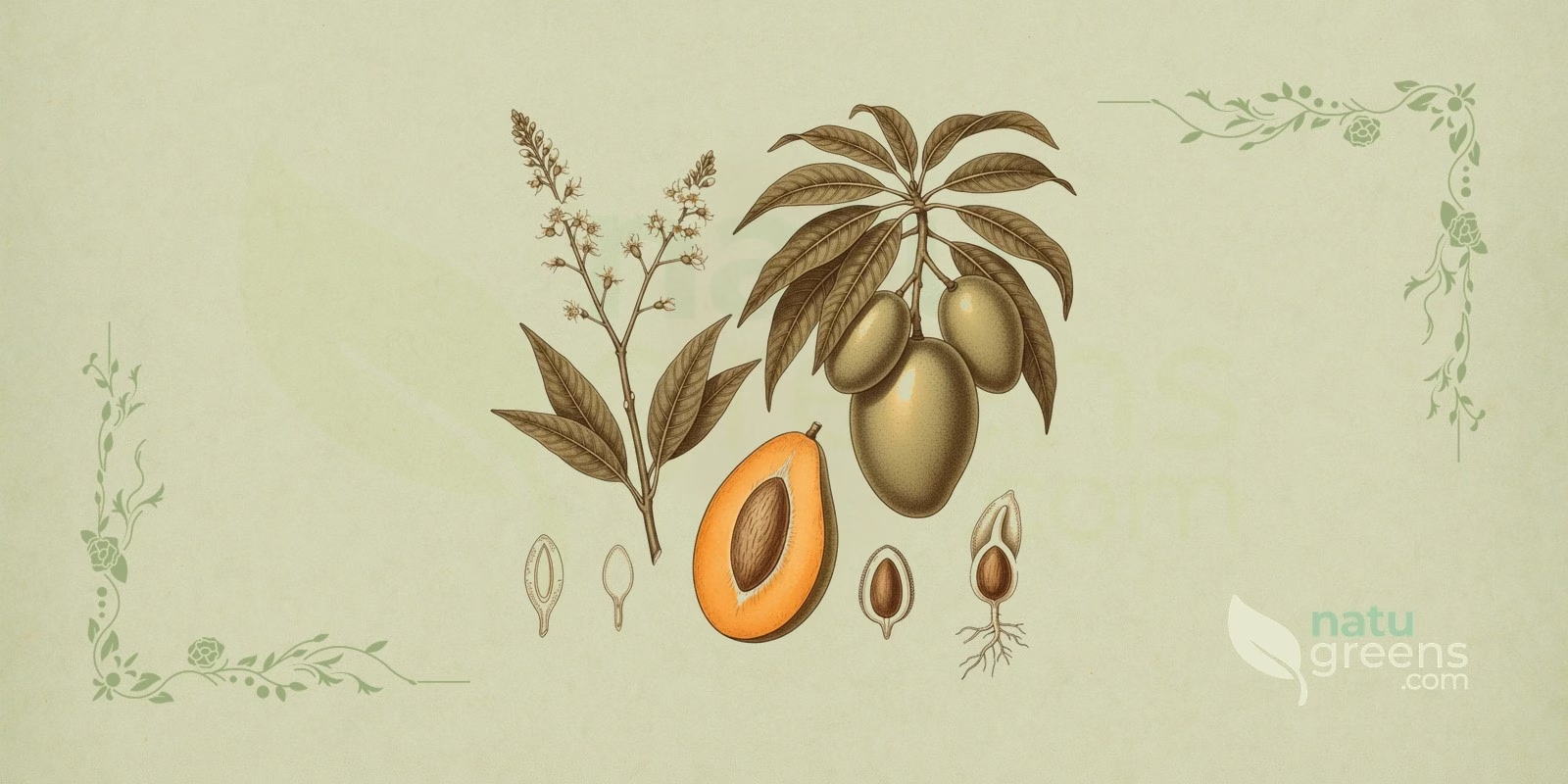
Beyond the fruit, which is first and foremost a food rich in fiber, vitamin C and carotenoids, tradition uses the leaves, stem bark, flowers and seeds of the mango tree in teas and other preparations for digestive complaints, inflammation and skin problems. Mangiferin, a compound found mainly in the leaves and bark, is widely studied, but its antidiabetic, anti-inflammatory and antioxidant properties come mostly from preclinical research, with only a few small, short-term trials in people, so they remain under investigation.
Popular and International Names of the Mango Tree
- English: indian mango, mango, mango tree (tree).
- French: manguier (tree), mangue (fruit).
- German: Mangobaum (tree), Mango (fruit).
- Italian: mango (tree and fruit).
- Portuguese: mangueira (tree), manga (fruit).
- Spanish: mango (tree and fruit), manga, mangó.
Botanical Synonyms of the Mango Tree
Although Mangifera indica L. is the universally accepted scientific name, a number of historical and regional names have been used over the centuries, many of them coined for cultivated varieties whose fruits differ in shape, color and flavor. These synonyms help identify the species in older texts and regional floras.
- Mangifera amba Forssk.
- Mangifera anisodora Blanco
- Mangifera austroyunnanensis Hu
- Mangifera balba Crevost & Lemarié
- Mangifera cambodiana (Pierre) Anon.
- Mangifera domestica Gaertn.
- Mangifera equina Crevost & Lemarié
- Mangifera gladiata Bojer
- Mangifera kukulu Blume
- Mangifera laxiflora Desr.
- Mangifera linnaei Korth. ex Hassk.
- Mangifera maritima Lechaume
- Mangifera mekongensis (Pierre) Anon.
- Mangifera montana B.Heyne ex Wight & Arn.
- Mangifera oryza Crevost & Lemarié
- Mangifera rostrata Blanco
- Mangifera rubra Bojer
- Mangifera sativa Roem. & Schult.
- Mangifera siamensis Warb. ex Craib
- Mangifera viridis Bojer
Botanical Family: Anacardiaceae
The mango tree belongs to the Anacardiaceae, a diverse group of tropical and subtropical trees and shrubs that includes economically important species such as the cashew and the pistachio. The family is characterized by resin canals and, in several genera, by phenolic compounds that can cause contact allergy, such as the urushiol of poison ivy and the similar compounds found in cashew nut shell liquid and in Brazil's aroeira-brava.
In the mango tree, the allergenic compounds are not urushiol but alkylresorcinols, urushiol-related compounds present in the sap, the fruit skin and the leaves, which explains the dermatitis some people experience when peeling the fruit. The family is also rich in phenolic compounds of pharmacological interest, and the structure of its flowers and fruits, such as the fleshy drupe of the mango, is among its distinctive features.
Parts of the Mango Tree Used
- Flowers
- Fruits (pulp, as food)
- Leaves
- Roots
- Seeds (kernel of the stone)
- Stem bark
Ethnobotanical and Traditional Uses of the Mango Tree
- Asthma and bronchitis (traditional record; require medical supervision)
- Bleeding (traditional record; requires medical care)
- Colds and coughs (folk use)
- Diabetes (recorded traditional use of the leaves; does not replace medication)
- Diarrhea and dysentery (traditional use of the bark and seeds)
- Digestive disorders, such as poor appetite and stomach complaints (traditional use)
- General tonic (traditional record)
- High blood pressure (traditional record; does not replace medical care)
- Insomnia (folk use)
- Intestinal worms (traditional record)
- Leucorrhea (traditional record)
- Rheumatism (folk use)
- Toothache (folk use)
Therapeutic Properties of the Mango Tree
- Analgesic (preliminary animal studies)
- Antiallergic (preliminary laboratory studies)
- Antibacterial (activity observed in laboratory studies)
- Antidiabetic (under study, with mostly preclinical data and a few small human trials)
- Antidiarrheal (traditional use of the bark; animal studies)
- Antifungal (activity observed in laboratory studies)
- Anti-inflammatory (under study, with mostly preclinical data)
- Antioxidant (ability to neutralize free radicals in laboratory assays)
- Antiparasitic (preliminary in vitro and animal studies)
- Antiproliferative (activity observed in laboratory studies, without clinical proof)
- Gastroprotective (preliminary animal studies)
- Hepatoprotective (preliminary animal studies)
- Hypolipidemic (under study, with animal data)
- Hypotensive (preliminary animal studies)
- Immunomodulatory (preliminary laboratory studies)
A word of caution when reading about this topic: many studies use isolated mangiferin obtained from other plants, such as Anemarrhena, Salacia or Cyclopia, and those results do not validate the effect of mango leaf tea.
Detailed Phytochemical Profile of the Mango Tree
- Alanine
- Alkylresorcinols (such as heptadecadienylresorcinol, urushiol-related compounds)
- Carotenoids (beta-carotene, xanthophylls)
- Catechin
- Cycloartanes
- Fiber (pulp)
- Flavonoids
- Friedelin
- Gallic acid
- Glycine
- Glycosides
- Indicosides A and B
- Lignans
- Mangiferin (xanthone)
- Mangiferonol
- Phenolic acids
- Polyphenols
- Saponins
- Terpenoids
- Triterpenoids
- Vitamins (A, C)
Preparation and Administration Forms of the Mango Tree
- Decoction (stem bark, seeds)
- Extracts
- Fresh fruit, in juices, salads and desserts
- Powder (seeds)
- Tea (leaf infusion)
- Tincture
Synergy with Other Medicinal Plants
Traditional Pairings in the Context of Blood Sugar
In folk preparations, mango leaves are combined with chickweed (Stellaria media) or cinnamon (Cinnamomum verum), plants that are also being investigated in blood sugar research. This is a recorded traditional use and not a medical regimen: the combination does not control diabetes or replace medication, and because of a possible additive effect with glucose-lowering drugs, not yet confirmed clinically, anyone managing diabetes should tell their doctor before combining them.
Traditional Digestive Combinations
For digestive discomfort, tradition pairs mango tree preparations with peppermint (Mentha × piperita) and ginger (Zingiber officinale), plants known in folk herbalism for their use in gas and nausea, respectively. The combination is traditionally used for nausea, indigestion and mild cramps, with no studies demonstrating a combined effect.
Polyphenol-Rich Combinations
In recipes and drinks, the mangiferin and carotenoids of mango are often paired with green tea (Camellia sinensis) and turmeric (Curcuma longa), which are likewise rich in polyphenols studied for antioxidant activity in the laboratory. These combinations make culinary sense, but there is no proof that they protect against chronic disease.
Recipes and Usage Protocols of the Mango Tree
Traditional Mango Leaf Tea
A decoction of young mango leaves is a recorded traditional use in India and other tropical regions, associated with blood sugar.
Ingredients: a few young, fresh mango leaves and water.
Preparation: wash the leaves well, bring the water to a boil, add the leaves and let them boil for 5 to 10 minutes, then strain and let the tea cool until warm. There is not enough data to establish a safe dose, so the amount and frequency should be guided by a health professional. The tea does not replace diabetes medication, and anyone taking glucose-lowering drugs should tell their doctor before using it; pregnant and breastfeeding women and children should not use concentrated leaf extracts.
Traditional Stem Bark Decoction
The stem bark of the mango tree is traditionally used as an astringent during episodes of diarrhea, and its extracts are still under study.
Ingredients: a small amount of dried mango stem bark and water.
Preparation: wash the bark, place it in the water and boil for 15 to 20 minutes, then strain and let it cool until warm. The amount should be set by a health professional. With any diarrhea, the priority is staying hydrated, and cases with blood, fever, lasting more than two days or showing signs of dehydration require medical care.
Traditional Flower Infusion
An infusion of dried mango flowers appears in traditional Indian medicine in connection with indigestion and poor appetite.
Ingredients: a small amount of dried mango flowers and 250 ml of boiling water.
Preparation: place the flowers in a cup, add the boiling water, cover and let steep for 10 minutes, then strain and drink warm. Anyone who has had an allergic reaction to mango should avoid preparations made with the flowers and leaves.
Traditional Mango Kernel Powder
The dried kernel of the mango stone is used in Indian tradition as an astringent and for respiratory complaints.
Preparation: after eating the fruit, wash and thoroughly dry the stone, crack it open to remove the inner kernel, dry the kernel in the sun and grind it into a fine powder. There is no safety data that would allow a dose to be recommended, and its use should be discussed with a health professional; asthma requires medical supervision and should never be managed with plants alone.
The preparations above follow traditional records and do not replace professional guidance. Before any internal use, check the contraindications and interactions described in this article.
Therapies Associated with the Mango Tree
Aromatherapy
Mango essential oil is uncommon, but the sweet, fruity scent of the fruit appears in fragrances and diffusers, associated with feelings of well-being and memories of tropical weather. This is an aromatic and sensory use, with no proven therapeutic effect.
Clinical Herbal Medicine
In contemporary herbal medicine, standardized extracts of Mangifera indica leaves and bark, especially those rich in mangiferin, are being studied for antioxidant and anti-inflammatory activity and for effects on blood sugar. Most of the evidence is still preclinical, with only a few small, short-term human trials, so these extracts should not be used as substitutes for treatments for diabetes, high cholesterol or cardiovascular disease.
Nutrition and Dietetics
As a food, mango provides fiber, vitamin C, carotenoids such as beta-carotene and other micronutrients, and it can be part of a balanced diet, eaten fresh or in juices, salads and desserts. For people with diabetes, the amount and timing of consumption should be decided individually with a health professional, with no general rule allowing or forbidding it.
Contraindications and Side Effects of the Mango Tree
Contact Dermatitis and Cross-Reactivity
Warning: mango does not contain urushiol. It contains alkylresorcinols, such as heptadecadienylresorcinol, urushiol-related compounds that cause cross-reactions in people already sensitized to plants of the genus Toxicodendron, such as poison ivy. These compounds are found in the sap or latex of the fruit stalk and branches, in the fruit skin and in the leaves, while the peeled flesh is usually well tolerated. The typical picture is contact dermatitis around the mouth or on the hands, with a delayed onset, hours to days after contact.
Fresh sap also irritates anyone's skin through direct action, regardless of allergy, in what is known as mango sap burn. In Brazil, the most relevant parallel is not poison ivy, a North American plant, but other local Anacardiaceae, such as aroeira-brava (genus Lithraea) and cashew nut shell liquid; anyone who reacts to them should take care when peeling mangoes.
Immediate Allergic Reactions
There are rare case reports of immediate allergic reactions and even anaphylaxis to the fruit, including cross-reactivity described in latex-fruit syndrome. Swelling of the lips or throat, or shortness of breath after eating mango, requires emergency care.
Identity and Common Confusions
- African mango: the weight-loss supplement sold as African mango is Irvingia gabonensis, of the Irvingiaceae family, a different plant in a different family, and no study on it can be attributed to the mango tree.
- Mangaba and mangosteen: mangaba (Hancornia speciosa) and mangosteen (Garcinia mangostana) have similar names but are entirely different species.
- Mangiferin from other plants: studies with mangiferin isolated from Anemarrhena, Salacia or Cyclopia do not validate effects of mango leaf tea.
Interactions and Special Groups
- Glucose-lowering drugs: there is a theoretical additive effect, not confirmed clinically, between leaf extracts and diabetes medication, so tell your doctor before combining them.
- Pregnancy, breastfeeding and children: the fruit as food is safe, with no special caveat, but concentrated leaf or bark extracts lack sufficient safety data and are not recommended.
- Diabetes and eating the fruit: guidance should be individual, with a health professional, taking into account the portion and the rest of the diet.
- Too much fruit: large amounts can cause digestive discomfort, such as diarrhea or bloating, in sensitive people.
Historical Notes and Interesting Facts about the Mango Tree
King of Fruits
Mango is among the oldest cultivated fruits in the world, with a history of more than 4,000 years on the Indian subcontinent, where it is called the king of fruits and appears in religious rituals and festivals. It is the national fruit of India, Pakistan and the Philippines, and the mango tree is the national tree of Bangladesh, long associated with love, prosperity and fertility in many Asian cultures.
Hundreds of Varieties
The diversity of mango varieties is enormous, with hundreds of cultivars that differ in flavor, texture, color, fibrousness and aroma, adapted to different climates and regional preferences. In Brazil, where the species is introduced and cultivated, the mango tree has become such a common sight in backyards, squares and streets that it is part of the landscape of many cities.
Mango and Milk
In Brazil, a popular belief persists that eating mango and drinking milk together is harmful. It is a myth with no scientific basis and poorly documented origins, and the combination is commonly found in smoothies and desserts.
Frequently Asked Questions about the Mango Tree
Can You Eat Mango Skin?
It is best avoided by anyone prone to reactions. Like the sap and the leaves, the skin contains alkylresorcinols, urushiol-related compounds that can cause delayed dermatitis around the mouth in sensitized people. The peeled flesh is usually well tolerated, and anyone who has reacted to mango should not eat the skin.
Can People with Diabetes Eat Mango?
There is no single rule allowing or forbidding it. Mango contains natural sugars, and the amount and timing of consumption should be decided individually with a health professional.
Does Mango Leaf Tea Control Blood Sugar?
The use of the leaves in the context of blood sugar is traditional, and studies on mangiferin are mostly preclinical, with only a few small human trials. The tea does not control diabetes or replace medication, and anyone taking glucose-lowering drugs should tell their doctor before drinking it.
Why Can Mango Cause Allergy on the Mouth or Hands?
Mango does not contain urushiol, but it does have alkylresorcinols, urushiol-related compounds present in the sap, the fruit skin and the leaves, which can cause delayed dermatitis in sensitized people. Fresh sap also irritates anyone's skin, while the peeled flesh is usually well tolerated.
Is African Mango the Same Plant as the Mango Tree?
No. The supplement sold as African mango is Irvingia gabonensis, from another botanical family, and its studies do not apply to the mango tree. Mangaba and mangosteen are also entirely different species.
What Does Mango Offer as a Food?
The flesh provides fiber, vitamin C and carotenoids, and it can be part of a balanced diet. These are nutritional composition data and do not imply any effect in preventing or treating disease.
Notice: this content is for informational purposes and does not replace professional medical advice. Consult a physician or herbal practitioner before using medicinal plants, especially during pregnancy, breastfeeding, or alongside medication.
How to cite this article
NATUGREENS. Mango Tree (Mangifera indica): Properties and Benefits. Natugreens, 19 Nov. 2026. Disponível em: https://natugreens.com/mangifera-indica-mango-tree/. Accessed: Nov. 20, 2026.
Natugreens. (2026). Mango Tree (Mangifera indica): Properties and Benefits. Natugreens. https://natugreens.com/mangifera-indica-mango-tree/
References and Scientific Studies
- PMC2021 Kumar M, et al. Mango (Mangifera indica L.) Leaves: Nutritional Composition, Phytochemical Profile, and Health-Promoting Bioactivities. Antioxidants (Basel). 2021.
- PMC2023 Minniti G, et al. Mangifera indica L., By-Products, and Mangiferin on Cardio-Metabolic and Other Health Conditions: A Systematic Review. Life (Basel). 2023.
- PMC2025 Mendonça D, et al. A Review on Phytochemistry, Ethnopharmacology, and Antiparasitic Potential of Mangifera indica L.. Pharmaceuticals (Basel). 2025.
- PMC2015 Jahurul MH, et al. Mango (Mangifera indica L.) by-products and their valuable components: a review. Food Chem. 2015.
- PMC2021 Kim H, et al. Mango (Mangifera indica L.) Polyphenols: Anti-Inflammatory Intestinal Microbial Health Benefits, and Associated Mechanisms of Actions. Molecules. 2021.
You May Also Like
Take your time and tell us everything you think, details included. Every response is read by someone on our editorial team and goes into the article's revision. An honest critique helps us more than a polite compliment.
Take your time and tell us everything you think, details included. Every response is read by someone on our editorial team and goes into the article's revision. An honest critique helps us more than a polite compliment.