



Quick summary
Blumea balsamifera (L.) DC., commonly known as sambong in the Philippines and also called ngai camphor in other parts of Asia, is an aromatic, semi-woody shrub in the Asteraceae family. Native to the tropical and subtropical regions of Asia, with a strong presence across the Indian subcontinent and Southeast Asia, the…
Main caution: The Philippine Department of Health officially recognizes sambong as a traditional diuretic for urinary lithiasis, but this recognition does not make the plant a substitute for the treatment of kidney stones or urinary…
Blumea balsamifera (L.) DC., commonly known as sambong in the Philippines and also called ngai camphor in other parts of Asia, is an aromatic, semi-woody shrub in the Asteraceae family. Native to the tropical and subtropical regions of Asia, with a strong presence across the Indian subcontinent and Southeast Asia, the species typically grows one to four meters tall and is recognized by its elongated, toothed leaves and yellow flowers gathered into heads arranged in branched panicles.
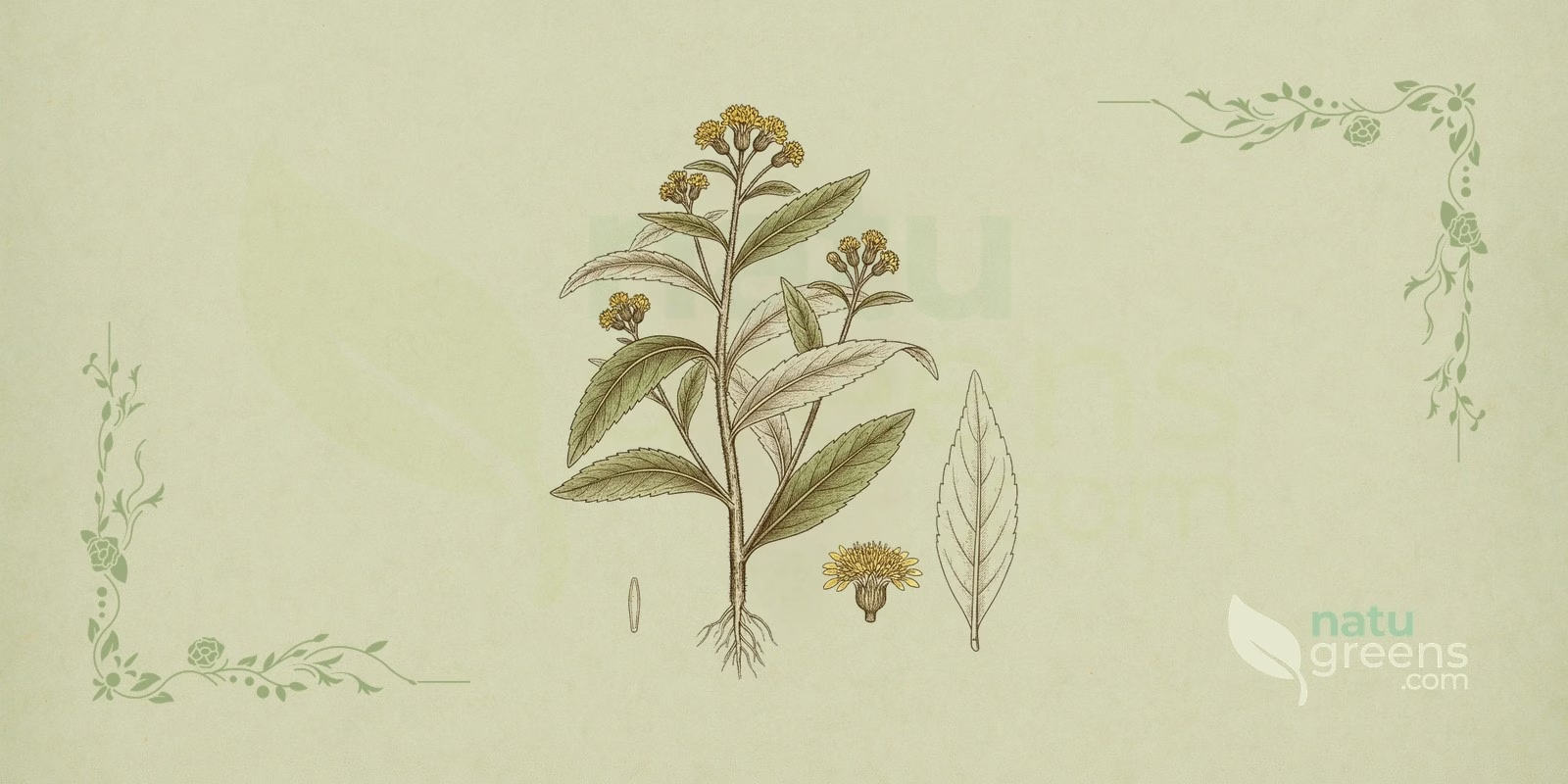
In Philippine folk medicine, sambong is traditionally used as a diuretic, and the Philippine Department of Health officially recognizes this traditional use for urinary lithiasis, meaning as support for passing kidney stones through the urinary tract. The plant is rich in essential oils such as camphor and borneol, compounds that continue to be studied in the laboratory for their anti-inflammatory and antispasmodic effects. The effects on kidney function and on other conditions, however, are still under investigation, with few clinical trials conducted in humans.
Popular and International Names for Sambong
- English: ngai camphor, sambong, sembung, buffalo-ear, dog bush, shan camphor.
- French: camphrier de Ngai, sambong.
- German: Büffelohr.
- Indonesian: sembung.
- Portuguese: cânfora-de-ngai, sambong.
- Spanish: sambong.
Not to Be Confused with Blumea lacera
Sambong is the species Blumea balsamifera. It should not be confused with Blumea lacera, another plant in the same genus Blumea that is also used in Asian traditional medicine systems but has its own chemical composition and history of use. Research findings obtained with one of these species should not be attributed to the other, and any information found about the genus Blumea in a general sense should be checked to confirm which species was actually studied.
Botanical Synonyms of Sambong
The accepted and currently used name for the species is Blumea balsamifera (L.) DC., which includes the typical variety var. balsamifera. Over its taxonomic history, marked by successive reclassifications since the nineteenth century, the plant has accumulated several botanical synonyms. Among the most frequently cited in the literature are Baccharis balsamifera (L.) Stokes, Conyza balsamifera L., Blumea appendiculata DC., Blumea balsamifera subsp. microcephala Kitam., Blumea excisa DC., and Blumea grandis DC. These names appear often in older botanical works and in taxonomic databases, but all of them refer to the same plant known today as Blumea balsamifera.
Botanical Family: Asteraceae
Blumea balsamifera belongs to the Asteraceae, one of the largest families of flowering plants, with around 1,900 genera and more than 32,000 species distributed across nearly every continent. The group is recognized by its head-type inflorescence, a structure in which many small flowers cluster together in a way that looks, at first glance, like a single large flower. Among the family's best-known species are lettuce, sunflower, and chamomile, which already hints at the range of culinary and medicinal uses found within this one botanical group.
As is common among the Asteraceae, sambong produces essential oils, flavonoids, and sesquiterpene lactones, chemical classes linked to much of the family's studied properties. This same chemical richness, however, also explains why people allergic to other plants in the group, such as chrysanthemums and ragweed, may react to sambong.
Parts of Sambong Used
The leaves, fresh or dried, are the part of sambong most used in traditional practice, both in infusions and in essential oil extraction. The oil, obtained by distilling the leaves, is reserved for topical use and is always diluted; as detailed in the contraindications section, it should never be ingested undiluted. The root also appears in some traditional use records, mostly in decoctions, though much less often than the leaves.
Ethnobotanical and Traditional Uses of Sambong
In the Philippines, sambong is one of the best-known herbal remedies, with a well-established traditional use as a diuretic and as support in cases of urinary lithiasis, a purpose officially recognized by the country's Department of Health. Folk use for urinary tract infections is also common, but it falls outside that recognition and does not replace a medical assessment. Folk medicine also turns to the plant for colds, fever, cough, and nasal congestion, usually as a tea or steam inhalation, and it appears as well in poultices for abscesses and in baths traditionally used against edema.
In Traditional Chinese Medicine, the leaves and root of sambong are used in preparations for stomach pain, lumbago, eczema, and dermatitis, as well as infected wounds, always within the logic specific to that therapeutic system. Other reported traditional uses include relieving toothache with the plant's sap, rubs for muscle pain and spasms, and teas used in postpartum recovery and menstrual irregularities. All of these uses are traditional, passed down from generation to generation, and do not replace medical diagnosis or treatment.
Medicinal Properties of Sambong
The properties listed below come from preclinical studies, generally with leaf extracts tested in the laboratory or in animal models, and from traditional use documented in the ethnobotanical literature. None of them is confirmed by robust clinical trials conducted in humans:
- Antibacterial (activity observed against bacteria in laboratory assays)
- Antidiabetic (traditional use and preclinical studies on blood sugar control)
- Antifungal (activity observed against fungi in laboratory tests)
- Anti-inflammatory (reduction of inflammatory markers in experimental models)
- Antioxidant (activity against free radicals in laboratory assays)
- Antispasmodic (traditional relief of spasms and cramps)
- Antiviral (activity observed against some viruses in laboratory studies)
- Carminative (traditional use to reduce intestinal gas)
- Diaphoretic (traditional use to stimulate sweating)
- Diuretic (traditional use with official recognition in the Philippines for urinary lithiasis)
- Emmenagogue (traditional use linked to stimulating menstrual flow, which is why it is contraindicated in pregnancy)
- Expectorant (traditional use as respiratory support for colds)
- Galactagogue (traditional use linked to stimulating breast milk production)
- Hepatoprotective (observed in animal models, still under study)
- Neuroprotective (observed in preclinical trials, still under study)
- Sedative (mild effect reported in traditional use)
- Stomachic (traditional use to support digestion)
- Tonic (traditional use as a general body revitalizer)
- Vermifuge (traditional use against intestinal worms)
Detailed Phytochemical Profile of Sambong
The essential oil extracted from sambong leaves is dominated by camphor and borneol, compounds responsible for the plant's characteristic aroma and for much of its laboratory-studied activity. Alongside them are cineole and limonene, as well as sesquiterpenes such as epiblumeaene K. The non-volatile fraction brings together a range of flavonoids, many of them also present as glycosides, along with alkaloids, saponins, steroids, pyrocatechol-type tannins, and fatty acids:
- Alkaloids (present in variable amounts depending on the material analyzed)
- Apigenin (flavonoid studied for its antioxidant activity)
- Blumeatin (flavonoid described specifically in this species)
- Borneol (one of the main components of the essential oil)
- Camphor (major compound of the essential oil, responsible for the characteristic aroma)
- Cineole (contributes to the plant's aroma and studied activity)
- Diosmetin (flavonoid identified in the phytochemical profile)
- Epiblumeaene K (sesquiterpene described in the literature on this species)
- Eriodictyol (flavonoid identified in the phytochemical profile)
- Hesperetin (flavonoid studied for its antioxidant activity)
- Limonene (terpene that contributes to the plant's aroma)
- Luteolin (flavonoid studied for its antioxidant activity)
- Myristic acid (fatty acid identified in the composition of the leaves)
- Palmitic acid (fatty acid identified in the composition of the leaves)
- Quercetin (flavonoid widely studied in medicinal plants)
- Sakuranetin (flavonoid identified in the phytochemical profile)
- Saponins (compounds of interest in pharmacological studies)
- Steroids (present in smaller amounts in the composition)
- Tannins (pyrocatechol type, present in the leaves)
Forms of Preparation and Administration of Sambong
Sambong tea, prepared by infusing the dried leaves, is the most common form of traditional consumption. The plant is also used in decoctions, often together with the root, and in steam inhalation to clear the respiratory tract. Ethanolic, methanolic, and ethyl acetate extracts tend to be restricted to laboratory research, while poultices and ointments made with the leaves or with diluted essential oil are reserved for external use, aimed at muscle pain, wounds, and skin complaints.
The pure essential oil, because it contains high concentrations of camphor and borneol, should never be ingested under any circumstances; its traditional use is limited to diluted topical application and environmental diffusion, as detailed further on in the contraindications section. Commercial sambong products, when available, should list the concentration of the extracts and the manufacturer's instructions on the label.
Synergy with Other Medicinal Plants
Relief of Respiratory Symptoms
In traditional preparations, sambong is often combined with eucalyptus (Eucalyptus globulus) and ginger (Zingiber officinale) to reinforce the sensation of clearer airways in colds, bronchitis, and sinusitis. The combination brings together the borneol and camphor of sambong with the aromatic compounds of eucalyptus and ginger, but there are no clinical trials that evaluate this specific combination; the support behind it is purely traditional.
Support for the Urinary Tract
For traditional support of kidney and urinary function, sambong appears combined with horsetail (Equisetum arvense) and dandelion (Taraxacum officinale), both also used traditionally as diuretics. The idea behind the combination is to add together the diuretic effect of the three plants, but, as with other herbal combinations, there is no clinical study that evaluates this specific mixture, and the use remains essentially traditional.
Recipes and Usage Protocols for Sambong
Diuretic and Expectorant Infusion
Ingredients: one teaspoon of dried sambong leaves, 200 ml of boiling water, and honey to taste. Preparation: place the leaves in a cup, cover with the boiled water, cover the cup, and let steep for five to seven minutes before straining. Traditional use suggests two to three cups a day, along with plenty of water intake, as support for diuresis and relief of mild cold and cough symptoms.
Steam Inhalation for Nasal Congestion
Ingredients: three tablespoons of fresh or dried sambong leaves and one liter of boiling water. Preparation: place the leaves in a large bowl, add the boiling water, lean the face over the bowl at a safe distance, and cover the head with a towel to trap the steam for ten to fifteen minutes while breathing deeply. This is a traditional remedy for nasal congestion, which should be done with the eyes closed and without bringing the face too close to the hot water, to avoid burns. It is not suitable for young children, who are more sensitive to camphor vapors.
These preparations follow traditional records and do not replace professional guidance; before any internal use of sambong, it is worth checking the contraindications and interactions described in this article.
Therapies Associated with Sambong
Clinical Herbal Medicine
In herbal medicine, sambong is used mainly in the form of standardized extracts, capsules, and tablets, with the dosage of camphor and borneol set by the manufacturer. The most studied use continues to be traditional support for cases of urinary lithiasis and urinary tract infection, always as an adjunct and under professional guidance, never as a substitute for the treatment prescribed by a doctor.
Traditional Chinese Medicine
In Traditional Chinese Medicine, sambong leaves and root are used in formulas for stomach pain, lumbago, eczema, dermatitis, and infected wounds, following the logic specific to that system, which does not correspond directly to the Western herbal medicine concepts described in this article. In the literature consulted, there is no documented homeopathic use for the species.
Contraindications and Side Effects of Sambong
The Philippine Department of Health officially recognizes sambong as a traditional diuretic for urinary lithiasis, but this recognition does not make the plant a substitute for the treatment of kidney stones or urinary tract infection: both require medical diagnosis and follow-up, with imaging studies and, when necessary, antibiotics or other specific procedures. The essential oil of sambong contains high concentrations of borneol and camphor, so it should never be ingested undiluted under any circumstances; ingesting the concentrated oil can cause nausea, dizziness, and, in more serious cases, neurotoxic effects, especially in young children.
Because of its diuretic action, sambong calls for caution in people already taking diuretic medications, due to the additive effect and the risk of electrolyte imbalance. People with a known allergy to plants in the Asteraceae family, such as chrysanthemums, daisies, and ragweed, are at risk of cross-reactivity with sambong, with the possibility of contact dermatitis, hives, or respiratory reactions. The plant should be avoided during pregnancy, since its traditional use is associated with an emmenagogue effect linked to stimulating uterine contractions.
Drug Interactions
Beyond the possible additive effect with diuretics, sambong may interact with anticoagulants, due to its potential influence on blood clotting, and it calls for caution in people using medications for diabetes or high blood pressure, since the plant may interfere with blood sugar and blood pressure levels. Before using sambong on a regular basis, especially in combination with any of these medications, it is best to talk to the doctor or pharmacist responsible for the treatment.
Curiosities and Historical Facts
The name sambong comes from Tagalog, one of the main languages of the Philippines, and is the form most used both in folk medicine and in the country's official health documents. The strong camphor smell the plant releases when crushed is one of the simplest ways to identify it in the field, and the borneol extracted from its leaves has industrial applications ranging from perfumery to pharmaceutical production.
Frequently Asked Questions about Sambong Tea
What Is Sambong Tea?
It is an infusion prepared with the dried leaves of Blumea balsamifera, traditionally used in Philippine folk medicine and in other parts of Southeast Asia for the diuretic, expectorant, and anti-inflammatory properties attributed to the plant.
What Is Sambong Tea Used For?
Traditionally it is used as a diuretic and as support for urinary lithiasis, a purpose officially recognized by the Philippine Department of Health. Folk use also extends to urinary tract infections, which require a diagnosis and often antibiotics prescribed by a doctor. It is also used popularly for cold symptoms, cough, and nasal congestion, always as a complement, never as a substitute for medical treatment.
Does Sambong Tea Have Contraindications?
Yes. It should be avoided during pregnancy, because of its possible emmenagogue effect, and by anyone with an allergy to plants in the Asteraceae family. People using diuretics, anticoagulants, or medications for diabetes and high blood pressure should also be cautious and talk to their doctor before using the tea regularly.
Can I Take Sambong Essential Oil?
Not orally. The essential oil contains high concentrations of camphor and borneol and should never be ingested undiluted under any circumstances; traditional use is limited to diluted topical application.
Is Sambong the Same as Blumea lacera?
No. They are two different species in the same genus Blumea, each with its own profile of traditional use and research. Information about one species should not be attributed to the other.
Notice: this content is for informational purposes and does not replace professional medical advice. Consult a physician or herbal practitioner before using medicinal plants, especially during pregnancy, breastfeeding, or alongside medication.
How to cite this article
NATUGREENS. Sambong (Blumea balsamifera): Uses and Precautions. Natugreens, 21 Nov. 2026. Disponível em: https://natugreens.com/sambong-blumea-balsamifera/. Accessed: Nov. 21, 2026.
Natugreens. (2026). Sambong (Blumea balsamifera): Uses and Precautions. Natugreens. https://natugreens.com/sambong-blumea-balsamifera/
References and Scientific Studies
View All 11 Cited References
Peer-Reviewed Scientific Studies (1)
- PMC2014 Pang, Y. et al. (2014). Blumea balsamifera: a phytochemical and pharmacological review. ↗
Supplementary Readings (10)
- Useful Tropical Plants. Blumea balsamifera. Useful Tropical Plants database.
- GBIF. Blumea balsamifera (L.) DC. GBIF, Global Biodiversity Information Facility database.
- Wikipedia. Blumea balsamifera.
- StuartXchange. Sambong, Blumea balsamifera (Linn.) DC. StuartXchange database of Philippine medicinal plants.
- PROSEA, Plant Resources of South-East Asia. Blumea balsamifera.
- 2023 Inta, A. et al. (2023). An exploration of medicinal plants among Tibeto-Burman ethnic groups in Northern Thailand.
- 2025 Maulydia, N. B. et al. (2025). Metabolomic profiling and anti-inflammatory activity of Blumea balsamifera (L.) DC. leaf extract. ScienceDirect.
- 2024 Guan, L. et al. (2024). Transcriptome analysis revealed the role of moderate drought stress in enhancing endo-borneol accumulation in Blumea balsamifera. Frontiers in Plant Science.
- 2021 Widhiantara, I. G. et al. (2021). Phytochemical composition and health properties of Blumea balsamifera.
- 2012 Saifudin, A. et al. (2012). Chemical constituents of Blumea balsamifera of Indonesia. SAGE Journals.
You May Also Like
Take your time and tell us everything you think, details included. Every response is read by someone on our editorial team and goes into the article's revision. An honest critique helps us more than a polite compliment.
Take your time and tell us everything you think, details included. Every response is read by someone on our editorial team and goes into the article's revision. An honest critique helps us more than a polite compliment.