



Quick summary
Senna alata (L.) Roxb., a shrub in the Fabaceae family also known as candle bush, candelabra bush or ringworm shrub, is native to neotropical regions stretching from Mexico to Paraguay and is now cultivated across tropical areas of Africa, Asia and the Americas. Its upright yellow flower spikes, shaped like small…
Main caution: Candle bush contains anthraquinones, the same chemical class responsible for senna's laxative effect, and this shapes most of its safety limits. Topical antifungal use, aimed mainly at pityriasis versicolor (tinea…
Senna alata (L.) Roxb., a shrub in the Fabaceae family also known as candle bush, candelabra bush or ringworm shrub, is native to neotropical regions stretching from Mexico to Paraguay and is now cultivated across tropical areas of Africa, Asia and the Americas. Its upright yellow flower spikes, shaped like small candles, gave rise to many of the popular names it carries around the world, while its large leaves support the plant's most widespread use on the skin. Most of what is known about its effects comes from laboratory studies, records of traditional use and a handful of small clinical trials, so the findings gathered here should be read as preliminary evidence rather than definitive proof.
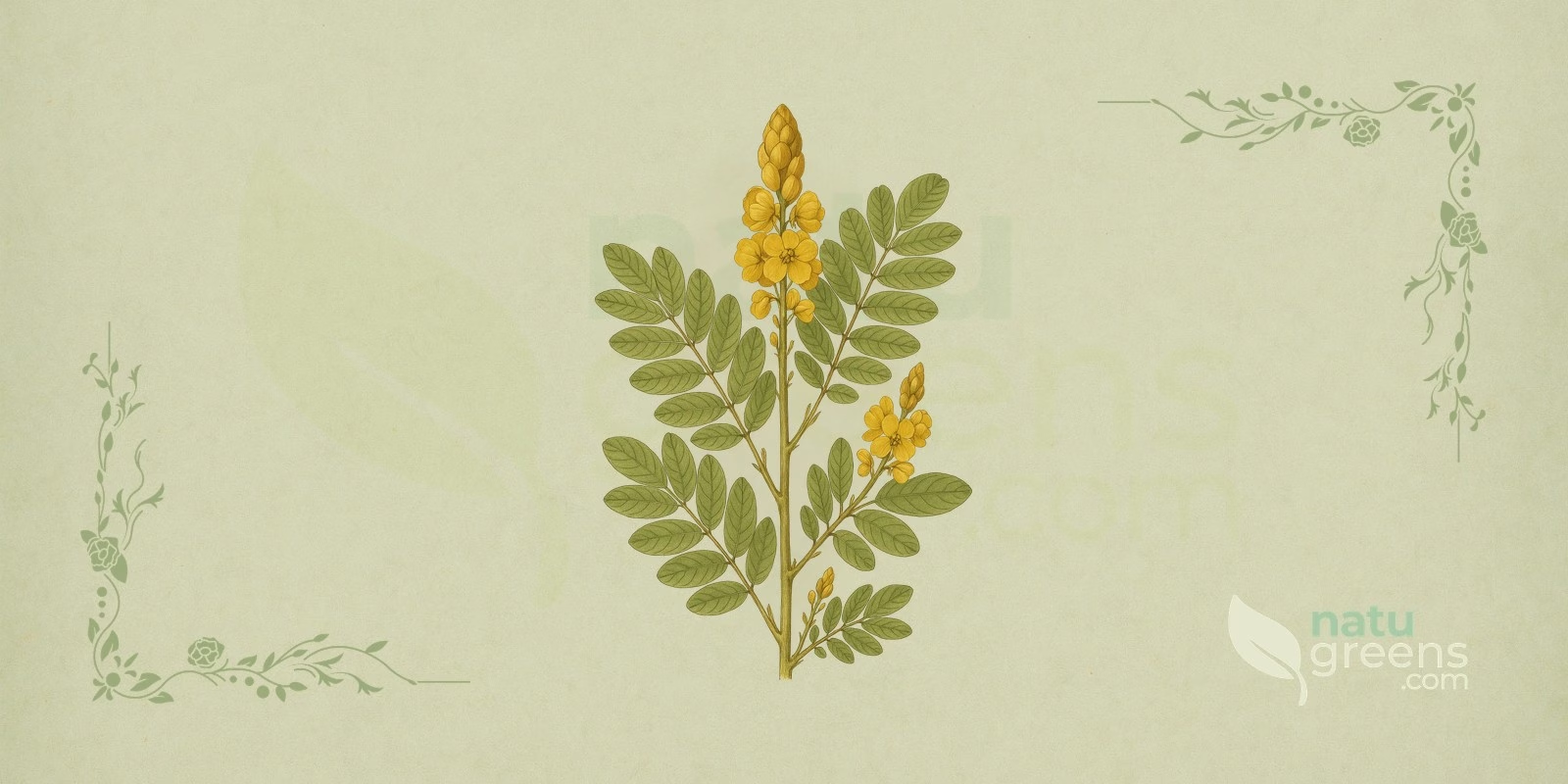
Popular and International Names of Candle Bush
- English: candle bush, emperor's candlesticks, candelabra bush, ringworm shrub, Christmas candles.
- Portuguese: fedegoso-gigante, cássia-alata, candelabro, fedegoso, mangerioba-grande, paricá, cássia-do-senegal, acapulco.
- Spanish: guacamaya francesa, flor del secreto, mocoté, retama.
- French: casse ailée, fleur de bougie.
- German: Kerzenstrauch.
- Italian: senna alata, cassia alata.
Not to Be Confused with Senna (Senna alexandrina)
Candle bush is often confused with senna, Senna alexandrina, a species covered in another article on this site and well known for its thoroughly documented laxative effect. The two plants belong to the same genus and carry similar anthraquinones in their composition, but the best-studied use of candle bush is different: topical application on the skin, mainly against superficial fungi, rather than bowel emptying. As a precaution, any internal use of candle bush follows the same restrictions already established for senna, detailed later in this article.
Botanical Synonyms of Candle Bush
The name currently accepted for the species is Senna alata (L.) Roxb., the result of the reclassification carried out by William Roxburgh from Carl Linnaeus's original description. Even so, the synonym Cassia alata L. remains widely used in scientific publications and on product labels, which explains why candle bush is also called cassia alata. Other synonyms recorded in the botanical literature include Cassia alata var. perennis Pamp., Cassia alata var. rumphiana DC., Cassia bracteata L.f., Cassia herpetica Jacq., Cassia rumphiana (DC.) Bojer and Herpetica alata (L.) Raf.
Botanical Family: Fabaceae
Fabaceae, formerly called Leguminosae, brings together around 765 genera and more than 19,500 species, making it one of the largest families of flowering plants on the planet. It includes trees, shrubs, herbs and climbers of great economic and ecological importance, many of them able to fix atmospheric nitrogen through a symbiosis with bacteria living in their roots. Within this broad family, candle bush is classified in the subfamily Caesalpinioideae, tribe Cassieae, subtribe Cassiinae, alongside other Senna and Cassia species known for producing anthraquinones, flavonoids and tannins.
Parts Used from Candle Bush
The leaves are by far the most used part of candle bush, both fresh and dried, followed by the flowers. Bark, roots and seeds appear less often in traditional preparations, generally linked to internal uses that call for extra caution because of the higher concentration of anthraquinones found in those parts.
Ethnobotanical and Traditional Uses of Candle Bush
In communities across Africa, Asia and Latin America, candle bush has accompanied generations of home skin care. The most frequently cited traditional use, and also the one that has drawn the most attention from researchers, is applying the fresh leaves or their infusion to skin blemishes caused by superficial fungi, including pityriasis versicolor, popularly known as tinea versicolor. Other traditional records, carrying far less scientific weight, include using the leaves for wounds, minor burns, insect bites and eczema, along with the occasional use of more concentrated preparations as a digestive aid and laxative, always for short periods.
Medicinal Properties of Candle Bush
The properties listed below come mostly from laboratory assays, cell culture studies or animal models, and from traditional use reports, not from large clinical trials in people. Some effects, such as topical antifungal activity, have limited direct clinical support; most remain preclinical findings that need further research before any definitive conclusion.
- Antifungal (action against dermatophytes and other skin fungi, the plant's best documented use)
- Anti-inflammatory (reduces signs of inflammation in laboratory models)
- Wound healing (supports skin tissue regeneration in preclinical studies)
- Antibacterial (activity observed against some bacteria in laboratory tests)
- Antiparasitic (traditional use against intestinal worms, little studied in humans)
- Antioxidant (ability to neutralize free radicals in chemical assays)
- Hepatoprotective (suggested by animal studies, without confirmation in people)
- Analgesic (effect observed in animal pain models)
- Laxative (same mechanism as senna, traditional and short-term use only, never continuous)
Detailed Phytochemical Profile of Candle Bush
The chemical composition of candle bush explains both its traditional uses and its safety restrictions. The leaves concentrate anthraquinones, the same class of compounds responsible for senna's laxative effect, together with flavonoids, tannins, plant steroids and volatile oils.
- Anthraquinones (including rhein, chrysophanol and aloe-emodin, responsible for the laxative effect and part of the antifungal action)
- Flavonoids (kaempferol, kaempferol 3-O-gentiobioside and luteolin, linked to antioxidant activity)
- Tannins (contribute to the astringent effect on the skin)
- Plant steroids (sitosterol, stigmasterol and campesterol)
- Fatty acids (oleic, palmitic and linoleic acid)
- Volatile oils (caryophyllene, germacrene D and limonene, among other terpenes)
- Saponins and phenolic compounds (present in smaller amounts in the leaves)
Preparation and Administration Methods for Candle Bush
For topical use, the fresh leaves are usually crushed into a paste and applied directly to the affected area, or boiled in water to make an infusion that is used cold to wash the skin. Standardized extracts of the plant also appear in commercial soaps, creams and lotions aimed at skin care. Internal use, which is far more limited and short-lived, usually takes the form of a mild decoction of the dried leaves, always in small doses and never as a daily routine.
Synergy with Other Medicinal Plants
Fungal Infections and Skin Care
In traditional practice, candle bush is often paired with plants that soothe the skin while the antifungal action of the leaves does its work. Aloe, Aloe vera, brings a calming and hydrating effect that helps ease the dryness caused by repeated application of the leaves, while calendula, Calendula officinalis, adds soothing properties for irritated skin. This combination shows up in homemade formulations for fungal infections and skin blemishes, always as traditional support, never as a substitute for professional evaluation when a lesion is extensive or persistent.
Occasional Digestive Support
When taken orally, candle bush is often combined with carminative plants to ease the cramping and gas that sometimes accompany laxative preparations. Fennel, Foeniculum vulgare, and anise, Pimpinella anisum, play this role in folk tradition, easing abdominal discomfort without robust clinical proof that they change the main laxative effect. This combination, like any oral use of the plant, must respect the time limits and contraindications described further on.
Recipes and Usage Protocols for Candle Bush
Topical Infusion for Skin Blemishes
Boil 500 ml of water and add two tablespoons of dried candle bush leaves. Let it steep for ten to fifteen minutes, strain and let it cool completely before use. Apply the liquid to the affected area with a clean cotton pad, two to three times a day, discarding any leftover after one day. Stop use and seek professional guidance if the skin becomes more irritated or if the condition persists for more than two weeks.
Fresh Paste for Localized Application
Crush fresh candle bush leaves until you get a smooth paste and mix in a small amount of vegetable oil, such as olive oil or coconut oil, to make application easier. Spread a thin layer over the blemish or skin lesion and leave it on for a few hours, preparing a fresh paste for each application to avoid contamination. These uses follow traditional records and do not replace professional guidance, especially for lesions that are extensive, infected or slow to heal.
The preparations above follow traditional records and do not replace professional guidance. Before any internal use, check the contraindications and interactions described in this article.
Therapies Associated with Candle Bush
Clinical Herbal Medicine
In herbal medicine, candle bush is used mainly in topical formulations, such as creams, ointments and soaps, that draw on its antifungal action on the skin, the application with the strongest support among the plant's properties. Internal use, when considered at all, follows a short duration and controlled dose protocol, on the same terms recommended for senna, given the presence of the same active anthraquinones.
Traditional Chinese Medicine
Candle bush is not a classic plant in the Chinese pharmacopoeia, but contemporary practitioners of Traditional Chinese Medicine sometimes relate its action on skin infections and inflammatory processes to the concepts of toxic heat and dampness, categories used in that system to describe imbalances that show up on the surface of the body. This reading is a later interpretation, made outside the plant's historical home, and it does not replace diagnosis within the Chinese system itself or conventional medical evaluation.
Contraindications and Side Effects of Candle Bush
Candle bush contains anthraquinones, the same chemical class responsible for senna's laxative effect, and this shapes most of its safety limits. Topical antifungal use, aimed mainly at pityriasis versicolor (tinea versicolor) and other superficial fungal infections, has only small clinical support so far, which calls for cautious expectations and follow-up if a lesion does not respond well. For oral use, exactly the same restrictions already established for senna (Senna alexandrina) apply: internal use should not exceed one to two weeks, and it is contraindicated during pregnancy, during breastfeeding, in children under 12 years of age, and in people with intestinal obstruction or inflammatory bowel disease. There is also a risk of hypokalemia, that is, a drop in blood potassium, especially in people who use digoxin or diuretics at the same time, a combination that can favor cardiac arrhythmias. People with a known allergy to plants in the Fabaceae family should also avoid contact with the plant.
Drug Interactions
Taken orally, candle bush can add to the potassium loss caused by diuretics and corticosteroids, increasing the risk of hypokalemia, and this drop in potassium can in turn intensify the toxicity of digoxin and other cardiac glycosides, raising the risk of arrhythmia. The laxative effect can also speed up intestinal transit and reduce the absorption of other medications taken close to the time of use.
Curiosities and Historical Facts
The English nickname ringworm bush sums up centuries of popular use of the plant against fungal skin infections across different continents. The names candelabra bush and Christmas candles, meanwhile, come from the shape of the flower spikes, upright yellow stalks that resemble small lit candles. In Malaysia the plant is called gelenggang, and in the Philippines, akapulko, where it remains one of the most popular home remedies for skin problems. Outside its original habitat, candle bush has become an invasive species in parts of Oceania, a sign of how easily it adapts and spreads in humid tropical climates.
Frequently Asked Questions about Candle Bush
Are Candle Bush and Senna the Same Plant?
No. Candle bush (Senna alata) and senna (Senna alexandrina) are different species within the same botanical genus. Both contain anthraquinones, but senna is known mainly for its well-established laxative effect, while candle bush stands out for its topical use on the skin, mainly against superficial fungi.
How Is Candle Bush Used for Fungal Skin Infections?
The most common traditional approach is washing the affected area with a cold infusion of the dried leaves, two to three times a day, or applying a paste made from crushed fresh leaves. Lesions that are extensive, persist for more than two weeks or appear infected deserve evaluation by a health professional.
Can Candle Bush Be Used as a Laxative?
Traditionally, yes, but only for short periods, never more than one to two weeks, and with the same restrictions as senna. Pregnant women, breastfeeding women, children under 12 years of age, and people with intestinal obstruction or inflammatory bowel disease should not use the plant orally.
Does Candle Bush Have Scientific Support?
Partial. Topical antifungal action has some clinical support, though it is still limited, while most of the other properties come from laboratory studies and traditional use, without broad confirmation in people. Candle bush should not replace conventional medical diagnosis or treatment.
Who Should Not Use Candle Bush?
Pregnant women, breastfeeding women, children under 12 years of age, people with intestinal obstruction or inflammatory bowel disease, and anyone using digoxin or diuretics without medical guidance should avoid internal use of the plant. People allergic to plants in the Fabaceae family should also avoid contact, even topical contact.
Notice: this content is for informational purposes and does not replace professional medical advice. Consult a physician or herbal practitioner before using medicinal plants, especially during pregnancy, breastfeeding, or alongside medication.
How to cite this article
NATUGREENS. Candle Bush (Senna alata): Benefits, Uses and Safety. Natugreens, 21 Nov. 2026. Disponível em: https://natugreens.com/senna-alata-candle-bush/. Accessed: Nov. 21, 2026.
Natugreens. (2026). Candle Bush (Senna alata): Benefits, Uses and Safety. Natugreens. https://natugreens.com/senna-alata-candle-bush/
References and Scientific Studies
Peer-Reviewed Scientific Studies (2)
- PMC2020 Oladeji, O. S., Adelowo, F. E., Oluyori, A. P., & Bankole, D. T. (2020). Ethnobotanical Description and Biological Activities of Senna alata. Evidence-Based Complementary and Alternative Medicine, 2020, 2580259.
- DOI1994 Damodaran, S., & Venkataraman, S. (1994). A study on the therapeutic efficacy of Cassia alata, Linn. leaf extract against Pityriasis versicolor. Journal of Ethnopharmacology, 42(1), 19-23.
Supplementary Readings (4)
- 2005 Pérez, Y. B., Jiménez, M. E. H., & Hernández, O. S. (2005). Caracterización y estudio fitoquímico de Cassia alata L. Revista Cubana de Plantas Medicinales, 10(2).
- 2022 Yon, J. A. L., et al. (2022). Cassia alata (Linnaeus) Roxburgh for Skin: Natural Remedies for Atopic Dermatitis in Asia and Their Pharmacological Activities. Cosmetics, 10(1), 5.
- 2020 Fatmawati, S., et al. (2020). Chemical constituents, usage and pharmacological activity of Cassia alata. Journal of Physics: Conference Series, 1529(4), 042078.
- Wikipedia. (n.d.). Senna alata. Retrieved from Wikipedia.
You May Also Like
Take your time and tell us everything you think, details included. Every response is read by someone on our editorial team and goes into the article's revision. An honest critique helps us more than a polite compliment.
Take your time and tell us everything you think, details included. Every response is read by someone on our editorial team and goes into the article's revision. An honest critique helps us more than a polite compliment.