



Quick summary
Paeonia suffruticosa Andrews, commonly known as the tree peony, is an ornamental and medicinal shrub of the Paeoniaceae family, native to the mountainous regions of central China and now cultivated in temperate gardens around the world. In China, the species has over a thousand years of cultivation behind it and has…
Main caution: The root bark of the tree peony contains paeonol, a substance with an antiplatelet effect observed in preclinical studies; for this reason, people taking anticoagulants or antiplatelet medication should exercise extra…
Paeonia suffruticosa Andrews, commonly known as the tree peony, is an ornamental and medicinal shrub of the Paeoniaceae family, native to the mountainous regions of central China and now cultivated in temperate gardens around the world. In China, the species has over a thousand years of cultivation behind it and has long carried the nickname "queen of flowers", a symbol of wealth and prestige that still appears in paintings, porcelain and classical gardens across the country. Most of the properties discussed below come from traditional use and from recent preclinical studies, and have not yet been confirmed by robust clinical trials in humans, which calls for caution before any use without professional guidance.
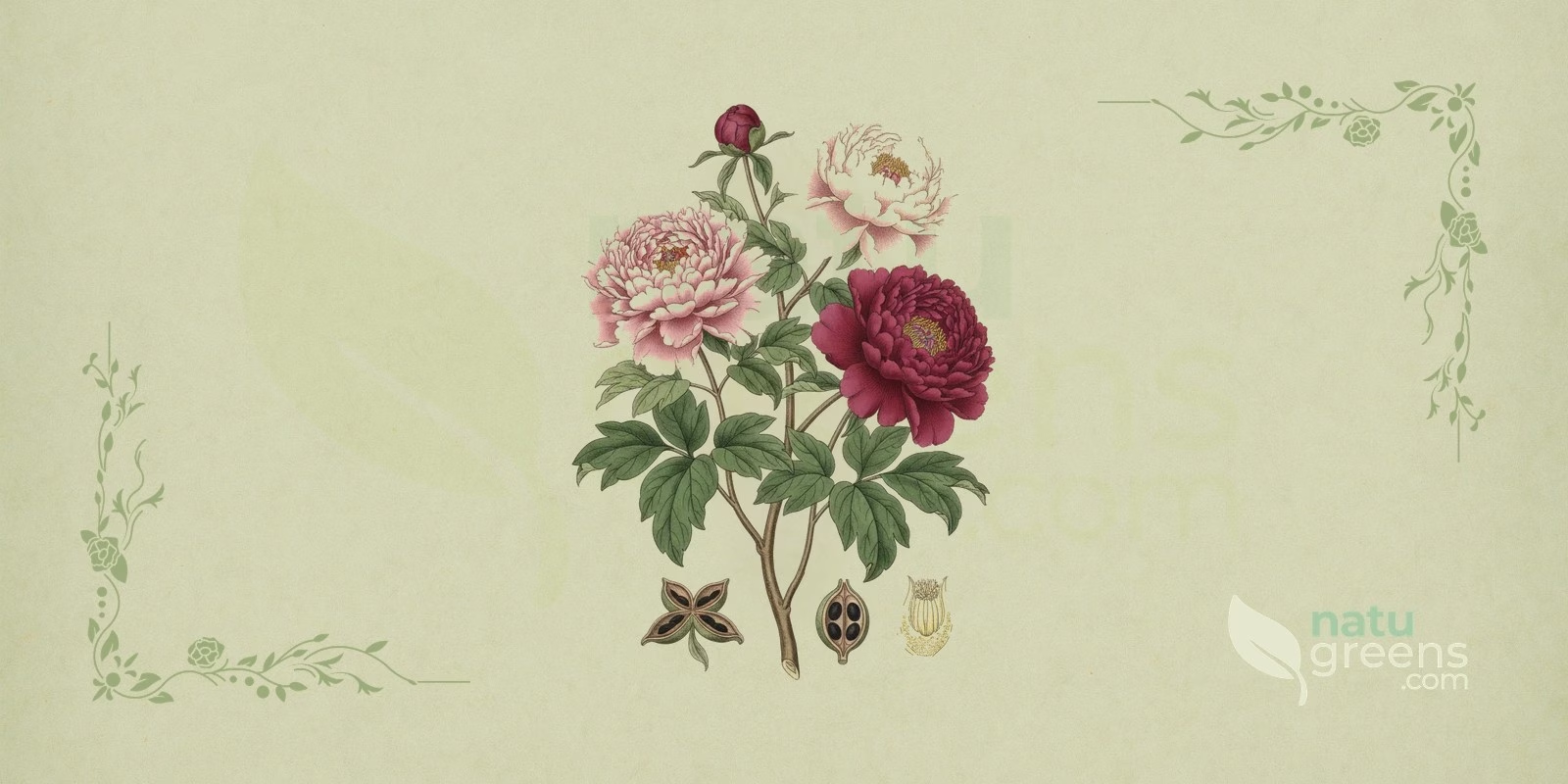
Popular and International Names of the Tree Peony
- English: tree peony, Chinese moutan peony.
- French: pivoine arbustive, pivoine en arbre.
- German: Strauch-Pfingstrose.
- Italian: peonia arborea.
- Portuguese: peônia-arbustiva, peônia-arbórea, peônia-chinesa, peônia-de-árvore.
- Spanish: peonía arbórea.
Not to Be Confused with Paeonia lactiflora
The tree peony is often confused with Paeonia lactiflora, another species of the same genus already covered in its own article on this site, but the two plants supply different materials to traditional Chinese medicine. From the tree peony, practitioners use the root bark, known as mu dan pi, while from Paeonia lactiflora they use the root itself, without the bark. A 2011 review describes anti-inflammatory and immunomodulatory effects attributed specifically to Paeonia lactiflora and its root, a finding that should not be extended to the root bark of the tree peony covered here, since this is a different species and a different part of the plant.
Botanical Synonyms of the Tree Peony
Paeonia moutan Sims appears as a synonym in older botanical literature, and the species is also written as Paeonia × suffruticosa Andrews to indicate its hybrid origin, but the name Paeonia suffruticosa Andrews is now the most widely accepted name for this shrubby species. Recent genetic studies suggest that the cultivated tree peony results from a complex of crosses among wild Chinese species, including Paeonia cathayana, Paeonia qiui, Paeonia ostii and Paeonia rockii, which helps explain the wide variation seen among today's ornamental cultivars.
Botanical Family: Paeoniaceae
The Paeoniaceae family gathers a single genus, Paeonia, with about thirty species distributed across Asia, Europe and western North America. Its large, showy flowers, most of them insect-pollinated, have made the group extremely popular in ornamental gardening, while the distinctive chemical makeup of its roots and bark has drawn steady interest from phytochemistry and pharmacology over the past few decades.
Parts Used from the Tree Peony
- Flowers
- Root
- Root bark (main part, known as mu dan pi)
Ethnobotanical and Traditional Uses of the Tree Peony
In traditional Chinese medicine, the root bark of the tree peony is typically included in formulas meant to cool the blood and support circulation, following that system's own diagnostic logic. Traditional uses reported in the literature include:
- Cardiovascular conditions
- Easing menstrual pain and other gynecological complaints
- Inflammatory and feverish conditions
- Irritability and anxiety
- Nosebleeds
- Skin conditions, such as boils and abscesses
- Treatment of ulcers
These uses reflect the accumulated experience of traditional Chinese medicine over the centuries and should not be read as a validated medical indication for the general population.
Medicinal Properties of the Tree Peony
The properties listed below come mainly from preclinical studies, carried out in the laboratory and in animals, and from long-standing use in traditional Chinese medicine; none of them has been confirmed by controlled clinical trials in humans so far.
- Analgesic (suggested in preclinical pain models)
- Antibacterial (activity observed in laboratory testing)
- Antidiabetic (effect on blood sugar assessed in preclinical studies)
- Anti-inflammatory (the most studied property of the species)
- Antioxidant (reduction of oxidative stress in experimental models)
- Antipyretic (traditional use for reducing fever)
- Cardioprotective (preliminary effects on the cardiovascular system)
- Neuroprotective (preclinical research on the nervous system)
- Sedative (traditional use for calming and supporting sleep)
Detailed Phytochemical Profile of the Tree Peony
The root bark of the tree peony concentrates a quite distinctive phytochemical combination, including glycosylated monoterpenes typical of the Paeonia genus and phenolic compounds linked to its traditional effects. Among the most studied constituents are:
- Alkaloids
- Beta-PGG (gallotannin abundant in the root bark)
- Flavonoids
- Galloyl-oxypaeoniflorin
- Galloyl-paeoniflorin
- Methyl gallate
- Monoterpenes and monoterpene glycosides
- Paeoniflorin
- Paeonol (phenolic compound associated with the species' antiplatelet effect)
- Suffruticosides A, B, C, D and E
- Triterpenes
Preparation and Administration Forms of the Tree Peony
In traditional Chinese medicine and in modern herbal preparations, the root bark of the tree peony shows up in several different forms, almost always standardized by paeonol or paeoniflorin content when intended for industrial use. The most common forms include:
- Alcoholic solutions
- Decoction
- Injection (restricted to specific clinical settings)
- Ointment
- Patch
- Tablet
Synergy with Other Medicinal Plants
Women's Health
In traditional Chinese medicine, tree peony root bark is often combined with Chinese angelica (Angelica sinensis), also known as dong quai, in formulas aimed at balancing the menstrual cycle and easing cramps. This pairing follows the traditional logic of regulating the blood, though no robust clinical trials confirm how effective the combination is in humans.
Inflammatory Conditions
To reinforce the anti-inflammatory effect traditionally attributed to the tree peony, some practitioners of Chinese herbal medicine pair the root bark with licorice (Glycyrrhiza glabra) and Chinese skullcap (Scutellaria baicalensis), especially in formulas aimed at joint and skin complaints. This combination appears in traditional literature, but it still lacks independent clinical studies confirming any added benefit over using each plant on its own.
Recipes and Usage Protocols for the Tree Peony
Root Bark Decoction
Ingredients: 6 to 12 grams of dried tree peony root bark, mu dan pi, per 500 ml of water. This is the range recorded in the Chinese Pharmacopoeia for traditional use, and it does not replace guidance from a health professional.
Preparation: place the root bark in cold water and bring it to a boil, then lower the heat and let it simmer gently for 20 to 30 minutes. Strain while still warm and drink in small portions throughout the day. In traditional Chinese medicine, this decoction is described as a way to cool the blood in inflammatory and feverish conditions, always as part of combined, supervised formulas.
Ointment for Skin Conditions
Ingredients: standardized paeonol extract, a neutral ointment base, such as beeswax and olive oil.
Preparation: paeonol extracted from the root bark can be blended into a neutral ointment base for topical application. This preparation is traditionally associated with caring for skin prone to inflammation, such as eczema and boils, always as a complement and never as a substitute for a dermatologist's assessment.
Tincture for Cardiovascular Health Support
Ingredients: 100 grams of dried tree peony root bark, 500 ml of grain alcohol at 40 to 50% ABV.
Preparation: place the root bark in a jar, cover it completely with the alcohol and let it macerate for two to four weeks, shaking the container daily. Filter the liquid and store it in an amber bottle, away from light. A few drops diluted in water are sometimes used, under professional guidance, as traditional support for circulation, never as an alternative to medical treatment already prescribed.
These uses follow traditional records and do not replace professional guidance, especially in the presence of any cardiovascular condition, bleeding disorder, or concurrent use of medication.
The preparations above follow traditional records and do not replace professional guidance. Before any internal use, check the contraindications and interactions described in this article.
Therapies Associated with the Tree Peony
Clinical Herbal Medicine
In contemporary clinical herbal medicine, standardized extracts of tree peony root bark, generally calibrated by paeonol content, appear in oral and topical formulations aimed at inflammatory and painful conditions, mostly across Asia. Formal clinical use still depends on prescription and professional follow-up, since the margin between benefit and bleeding risk can be narrow in vulnerable patients.
Traditional Chinese Medicine
Within traditional Chinese medicine itself, mu dan pi belongs to the category of herbs that cool the blood and commonly appears in classical formulas aimed at fever, bleeding and gynecological complaints, always combined with other herbs according to the patient's energetic diagnosis. There is no meaningful record of homeopathic use of this species in the literature consulted, which makes traditional Chinese medicine the therapeutic system most representative of it.
Contraindications and Side Effects of the Tree Peony
The root bark of the tree peony contains paeonol, a substance with an antiplatelet effect observed in preclinical studies; for this reason, people taking anticoagulants or antiplatelet medication should exercise extra caution, since combined use may raise the risk of bleeding. Use of the species is contraindicated during pregnancy, since Chinese tradition links the root bark to stimulating uterine contractions, and it is also contraindicated in cases of menorrhagia, meaning heavy menstrual bleeding, precisely because of its traditional use as a stimulant of pelvic blood circulation. People with bleeding disorders should avoid use for the same reasons. Because the species may have hormonal activity, anyone with hormone-sensitive conditions, including certain types of cancer, should speak with a doctor before considering any preparation made from the plant. Taken orally, the root bark can cause stomach discomfort in sensitive individuals, and topical use of paeonol, though rare, has been linked to skin irritation in more reactive skin. As a precaution, it is recommended to stop using the tree peony at least two weeks before any surgical procedure, given the risk of bleeding.
Drug Interactions
The tree peony may interact with anticoagulants, antiplatelet medication, phenytoin, hormonal contraceptives and hormone replacement therapy, and it may also interfere with the liver metabolism of other medications. Any combination of the plant with ongoing drug treatment should be discussed beforehand with a health professional, preferably someone experienced in herbal medicine or traditional Chinese medicine.
Curiosities and Historical Facts
The tree peony was scientifically described by the English botanist Henry Cranke Andrews in 1804, but its cultivation in China already spanned more than a thousand years of history by then. In 1903, during the Qing dynasty, the plant was briefly declared China's national flower; the official title did not survive the years that followed, but the symbolic status of "queen of flowers" remains alive in Chinese culture today, present in paintings, embroidery and the very landscape of historic gardens. Unlike most peonies, which are herbaceous and lose their entire aboveground growth in winter, the tree peony keeps woody stems year after year, which explains why some specimens cultivated in China are over a hundred years old.
Frequently Asked Questions about the Tree Peony
What Is the Difference between the Tree Peony and Paeonia lactiflora?
The two are distinct species of the same genus, Paeonia, but they supply different materials to traditional Chinese medicine: from the tree peony, Paeonia suffruticosa, practitioners use the root bark, known as mu dan pi, while from Paeonia lactiflora they use the root itself. Study results on one species should not be automatically carried over to the other.
Which Part of the Plant Corresponds to Mu Dan Pi?
Mu dan pi is the Chinese name given specifically to the dried root bark of the tree peony, separated from the inner woody core before drying. It is this part, not the flower or the leaf, that concentrates the paeonol and most of the compounds studied in the species.
Can the Tree Peony Be Used during Pregnancy or Heavy Menstrual Bleeding?
No. The root bark is contraindicated both during pregnancy and in cases of menorrhagia, since Chinese tradition links it to stimulating uterine contractions and pelvic blood circulation, with a risk of bleeding. Any doubt on this point should be cleared up with a doctor before considering use.
Is It Safe to Combine the Tree Peony with Anticoagulant Medication?
It is not recommended without medical supervision. Paeonol, present in the root bark, has an antiplatelet effect described in preclinical studies, and combining it with anticoagulants or antiplatelet medication may raise the risk of bleeding.
Is It Possible to Grow a Tree Peony at Home?
Yes, in temperate climates the plant adapts well to gardens with fertile, well-drained soil and partial sun exposure. Growth is slow in the first few years, but well-cared-for specimens can keep blooming for decades.
Notice: this content is for informational purposes and does not replace professional medical advice. Consult a physician or herbal practitioner before using medicinal plants, especially during pregnancy, breastfeeding, or alongside medication.
How to cite this article
NATUGREENS. Tree Peony (Mu Dan Pi): Properties, Uses and Safety. Natugreens, 21 Nov. 2026. Disponível em: https://natugreens.com/paeonia-suffruticosa-tree-peony/. Accessed: Nov. 21, 2026.
Natugreens. (2026). Tree Peony (Mu Dan Pi): Properties, Uses and Safety. Natugreens. https://natugreens.com/paeonia-suffruticosa-tree-peony/
References and Scientific Studies
Peer-Reviewed Scientific Studies (3)
- DOI2011 He, D. Y., & Dai, S. M. (2011). Anti-Inflammatory and Immunomodulatory Effects of Paeonia Lactiflora Pall., a Traditional Chinese Herbal Medicine. Frontiers in Pharmacology, 2, 10. ↗
- DOI2023 Liu, J., et al. (2023). Traditional uses, phytochemistry, pharmacology, and pharmacokinetics of the root bark of Paeonia x suffruticosa andrews: A comprehensive review. Journal of Ethnopharmacology, 308, 116279. ↗
- DOI2022 Ekiert, H., et al. (2022). Paeonia x suffruticosa (Moutan Peony), a Review of the Chemical Composition, Traditional and Professional Use in Medicine, Position in Cosmetics. Molecules, 27(23), 8379. ↗
Supplementary Readings (2)
You May Also Like
Take your time and tell us everything you think, details included. Every response is read by someone on our editorial team and goes into the article's revision. An honest critique helps us more than a polite compliment.
Take your time and tell us everything you think, details included. Every response is read by someone on our editorial team and goes into the article's revision. An honest critique helps us more than a polite compliment.