



Quick summary
Amburana cearensis (Allemão) A.C.Sm. / Cumaru, a tree in the Fabaceae family also known in Brazil as imburana-de-cheiro and cumaru-do-ceará, is native to the Caatinga and the drier parts of the Brazilian Cerrado, and its range extends into northern Argentina, Paraguay, Bolivia and southeastern Peru. This backland…
Main caution: Cumaru bark and seeds are rich in coumarin, and this compound accounts for the plant's main safety concerns. With prolonged use or high doses, coumarin can cause liver injury (hepatotoxicity) in a subset of people, a…
Amburana cearensis (Allemão) A.C.Sm. / Cumaru, a tree in the Fabaceae family also known in Brazil as imburana-de-cheiro and cumaru-do-ceará, is native to the Caatinga and the drier parts of the Brazilian Cerrado, and its range extends into northern Argentina, Paraguay, Bolivia and southeastern Peru. This backland cumaru should not be confused with the Amazonian cumaru (Dipteryx odorata), a tree of a different genus whose seeds, sold as tonka beans, are prized in perfumery and pastry making; the two plants share a common name and the sweet scent of coumarin, but they differ in origin, appearance and traditional use. In northeastern Brazil, the bark and seeds of Amburana cearensis have gone into homemade teas and lambedores (thick home-cooked syrups) for coughs, bronchitis and asthma for generations, a practice that has prompted laboratory research and one small clinical trial. Even so, most of what is attributed to the plant still rests on traditional use and preclinical studies, and its high coumarin content calls for specific precautions that are explained in detail further down.
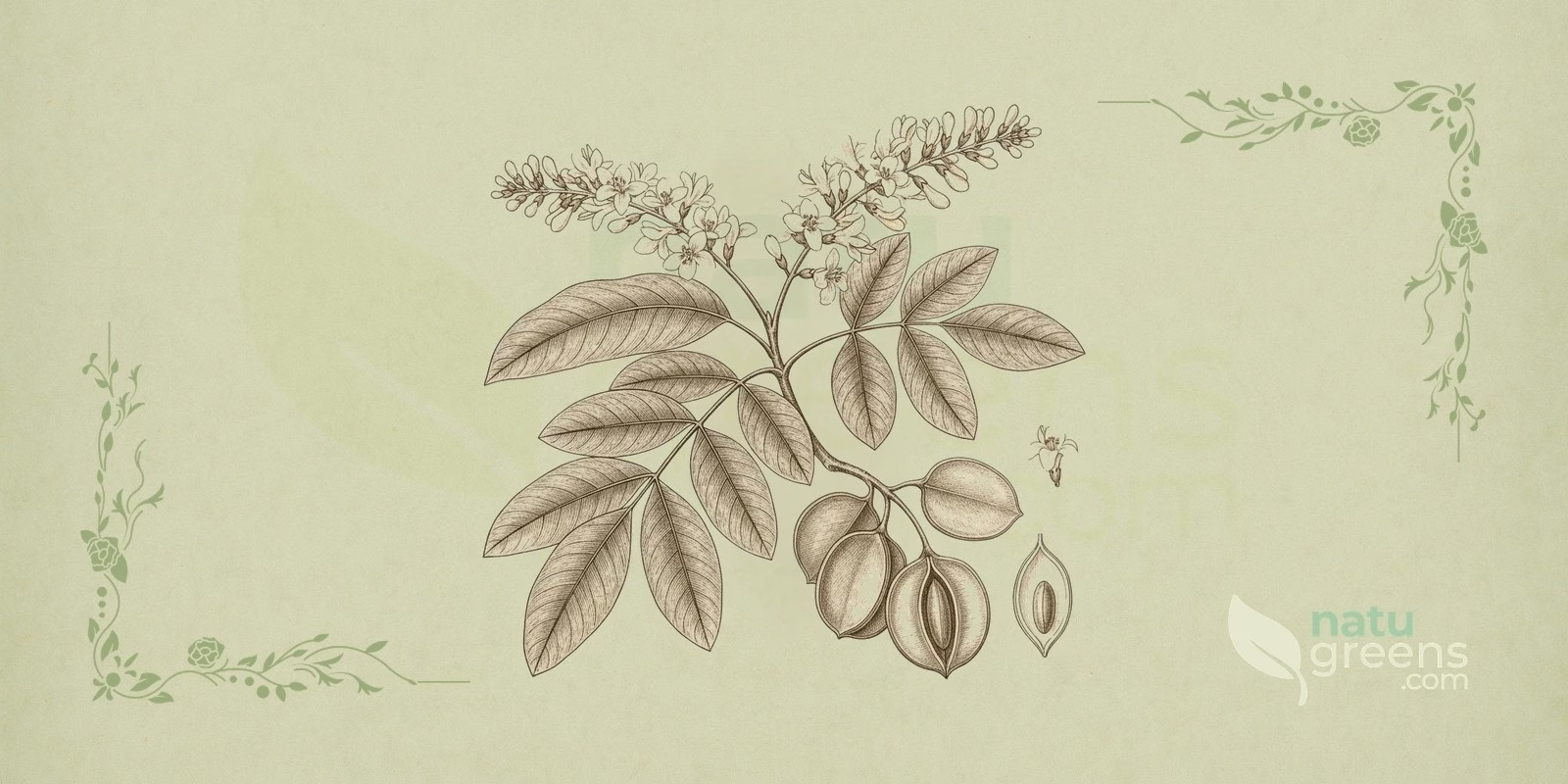
Common and International Names of Cumaru
- English: amburana, cerejeira (the name used in the timber trade).
- Portuguese: amburana, amburana-de-cheiro, cerejeira, cumaru, cumaru-do-ceará, imburana, imburana-de-cheiro, umburana.
- Spanish: ishpingo (Peru), palo trébol (Argentina and Paraguay), roble criollo (Argentina), roble del país (Argentina), tumi (Bolivia).
Not to Be Confused with Amazonian Cumaru (Dipteryx odorata)
When people outside northeastern Brazil talk about "cumaru", they often mean Dipteryx odorata, a tall Amazon rainforest tree whose dark, wrinkled seeds, sold as tonka beans or cumaru, are used to flavor perfumes, desserts and tobacco. Both species belong to the same botanical family but to different genera, and the folk medicinal use described in this article, above all the bark syrup taken for respiratory complaints, refers to Amburana cearensis, the imburana-de-cheiro of the semi-arid backlands. Cumaru should also not be mistaken for imburana-de-cambão (Commiphora leptophloeos), a Caatinga tree from another family that shares part of its common name. When buying bark or seeds, checking the scientific name on the label is the safest way to avoid a mix-up.
Botanical Synonyms of Cumaru
The accepted name of the species is Amburana cearensis (Allemão) A.C.Sm., a combination made by the botanist Albert Charles Smith from the original name Torresea cearensis Allemão, published in the nineteenth century by the naturalist Francisco Freire Allemão. The literature also records the synonym Amburana claudii Schwacke & Taub., no longer accepted, and older pharmacological papers still cite the plant as Torresea cearensis, which is worth keeping in mind when searching for studies on it. Some authors treat the Amazonian populations of the genus as a separate species, Amburana acreana, which is rarer and restricted to the western Amazon.
Botanical Family: Fabaceae
Cumaru belongs to the Fabaceae, the legume family, one of the largest families of flowering plants, with around 19,000 species of trees, shrubs, climbers and herbs, including beans, soy, brazilwood and tamarind. Within it, Amburana sits in the subfamily Papilionoideae, the same as Dipteryx, which helps explain why coumarin occurs in both genera. Imburana-de-cheiro is a medium-sized tree that can grow taller than 10 meters, with reddish bark that peels off in thin sheets, compound leaves that drop in the dry season and flattened pods that split open to release a single winged, highly fragrant seed.
Parts of Cumaru Used
The stem bark is the part most used in folk medicine and also the most studied, forming the basis of the teas, syrups and extracts tested in the laboratory. The seeds, with an intense scent of vanilla and clove, go into infusions, are added to lambedores or are tucked among clothes as a natural fragrance. Leaves and the resin that seeps from the trunk appear less often in ethnobotanical records, while the wood, which has high commercial value, supplies cabinetmakers and the coopers who build barrels for aging cachaça. Embrapa, the Brazilian agricultural research agency, points to unmanaged bark stripping from wild trees as a threat to the survival of the species in the backlands.
Ethnobotanical and Traditional Uses of Cumaru
Ethnobotanical surveys carried out in the Caatinga place cumaru among the most versatile medicinal plants of the semi-arid region, cited by rural communities for complaints affecting several body systems. Respiratory conditions stand out by far, and the records describe the following folk uses, always as tradition rather than proven effectiveness:
- Popular topical use on wounds and skin ulcers
- Popular use as an antispasmodic for colic and intestinal discomfort
- Popular use for joint and rheumatic pain
- Traditional use for coughs, bronchitis and asthma, especially in the form of lambedor
- Traditional use for diarrhea and heartburn
- Traditional use for fevers, including the bark decoction used by the Chácobo people of Bolivia in a malaria region
- Traditional use for flu, colds, rhinitis and sinusitis
- Traditional use for urinary and kidney complaints
Medicinal Properties of Cumaru
Most of the properties listed below come from experiments on cells, isolated tissues and laboratory animals, alongside traditional use; the only published clinical trial is small and brief, so none of these effects can be considered proven in humans.
- Anti-inflammatory action (reduced swelling and neutrophil migration in animal models, attributed in part to coumarin, amburoside A and isokaempferide)
- Antimicrobial action (activity of bark, leaf and seed extracts against some bacteria and fungi in laboratory tests)
- Antinociceptive action (reduced pain responses in experimental mouse models)
- Antioxidant action (free radical scavenging observed in vitro)
- Complementary use in mild asthma (a randomized trial with 42 evaluated patients, lasting only 15 days, reported better quality of life with a bark syrup but no meaningful gain in lung function; the authors themselves call for larger studies)
- Neuroprotective action (protection of cultured nerve cells against glutamate toxicity, with no studies in people)
- Relaxation of airway muscles (relaxation of isolated guinea pig trachea, an effect that ties in with the folk use for asthma and bronchitis)
Detailed Phytochemical Profile of Cumaru
The chemistry of cumaru has been studied extensively by research groups in Ceará and other Brazilian states, and the stem bark holds most of the compounds isolated to date. The main constituents described include:
- Amburosides (phenolic glycosides A to H, practically exclusive to the genus, with amburoside A among the most studied)
- Coumarin (the main constituent of the bark and seeds, responsible for the sweet aroma and for most of the precautions on use)
- Fixed oils (in the seeds, dominated by oleic acid)
- Flavonoids (afrormosin, isokaempferide, kaempferol and quercetin in the bark; catechin, rutin and myricetin in the seeds)
- Isoflavonoids and chalcones (calycosin, butein and isoliquiritigenin identified in the resin)
- Other coumarins (scopoletin, dihydrocoumarin and 3-methylcoumarin, in smaller amounts)
- Phenolic acids (vanillic, protocatechuic and p-hydroxybenzoic acids in the bark; gallic and ellagic acids in the seeds)
- Triterpenes and steroids (lupeol, amyrins and sitosterol)
Preparation and Administration of Cumaru
In home use, the dried, chopped bark is usually boiled in water for a few minutes to make a decoction, which is drunk as a tea or thickened with sugar, rapadura (unrefined cane sugar) or honey until it becomes a lambedor, the name given in northeastern Brazil to homemade syrups. The seeds are grated or crushed in small amounts for infusions and to scent other preparations. Commercially, cumaru is found in herbal syrups made from bark extract, and the product tested in the clinical trial contained a 5% hydroalcoholic extract with a standardized coumarin content. Because coumarin levels vary widely between batches of bark and seeds, homemade preparations make it impossible to know the dose actually taken, which strengthens the advice to use the plant for only a few days.
Synergy with Other Medicinal Plants
Traditional Combinations for the Airways
In northeastern Brazil, folk lambedor recipes pair cumaru with chambá (Justicia pectoralis) and with malvariço, also called Cuban oregano (Plectranthus amboinicus), plants that tradition likewise uses for coughs and bronchitis. Chambá is also rich in coumarin, so this combination adds to the total amount of the compound ingested, one more reason to keep use brief and to avoid it in anyone with liver disease or taking anticoagulants. No studies have assessed these mixtures as a whole.
Traditional Combinations in Backland Garrafadas
In garrafadas (bottled herbal infusions) and bark preparations, cumaru appears alongside other medicinal trees of the Caatinga, such as aroeira-do-sertão (Myracrodruon urundeuva) and angico (Anadenanthera colubrina), which herbalists recall for inflammation and wounds. These combinations follow the logic of folk medicine and have never been tested for the safety of the mixture, especially when prepared with alcohol, which adds its own risks to the liver.
Recipes and Usage Protocols for Cumaru
Homemade Bark Lambedor
The most traditional method boils a few pieces of dried bark in water until the volume reduces, strains the liquid and returns it to the heat with sugar or rapadura until it reaches a syrupy consistency, after which it is kept in a clean glass jar in the refrigerator. According to folk records, the lambedor is taken by the spoonful during bouts of coughing and phlegm, for a few days only. These uses follow traditional records and do not replace professional guidance, especially in cases of asthma, persistent fever or shortness of breath, which call for medical evaluation.
Decoction Tea
For the tea, the chopped bark is boiled in water for about five to ten minutes and strained, then sipped warm in small amounts over the course of the day, following backland tradition. There is no standardized dose for the homemade tea, and its coumarin content can vary considerably, so use should be short, limited to a few days, and the tea should not be given to young children, pregnant women or breastfeeding mothers.
Seeds as a Flavoring
The grated seeds are used in very small amounts to flavor sweets, liqueurs and teas, much as tonka beans are used. Because they are a concentrated source of coumarin, frequent consumption or large portions are not recommended, even when the purpose is purely culinary.
The preparations above follow traditional records and do not replace professional guidance. Before any internal use, check the contraindications and interactions described in this article.
Associated Therapies for Cumaru
Clinical Herbal Medicine
In herbal medicine, cumaru is mainly regarded as a supporting plant for the airways, and the standardized bark extract has been studied as an add-on to conventional care for mild persistent asthma, not as a substitute for inhaled medications. Practitioners who work with the plant tend to prefer products with a known coumarin content, prescribed for short periods and with attention to any other medicines being taken and to liver health.
Folk Medicine of the Semi-Arid Northeast
There is no record of any widely used homeopathic preparation made from Amburana cearensis. Its place is in the folk medicine of the northeastern Brazilian backlands and of Indigenous and riverside peoples in Bolivia and Peru, handed down by herbalists, traditional healers and families who prepare syrups and teas at home, a body of knowledge that today guides much of the scientific research on the species.
Contraindications and Side Effects of Cumaru
Cumaru bark and seeds are rich in coumarin, and this compound accounts for the plant's main safety concerns. With prolonged use or high doses, coumarin can cause liver injury (hepatotoxicity) in a subset of people, a more sensitive group whose predisposition cannot yet be identified in advance; in patients who took coumarin as a medicine, liver changes appeared between one and six months into treatment, and the European Food Safety Authority (EFSA) has set the tolerable daily intake at 0.1 mg per kilogram of body weight. For this reason, cumaru should be used only for a short duration, never beyond a few consecutive days, and should be avoided by anyone with liver disease, who drinks alcohol regularly or who takes other medicines that burden the liver. Use should be avoided during pregnancy and breastfeeding, because there are no human safety data for these stages, and the same applies to young children, who take in proportionally more coumarin per kilogram of body weight. Signs such as unusual tiredness, persistent nausea, dark urine, or yellowing of the skin or eyes call for stopping the plant immediately and seeking medical care. In the clinical trial with the syrup, mild dizziness, headache and nausea were reported at a frequency similar to placebo, and an aqueous seed extract showed mutagenic activity in a plant cell test (Allium cepa), a laboratory finding that adds to the case for caution with continuous use.
Drug Interactions
Anyone taking anticoagulants (such as warfarin, rivaroxaban, apixaban or heparin) or antiplatelet drugs (such as aspirin and clopidogrel) should avoid cumaru because of the risk of bleeding. Pure coumarin does not act as an anticoagulant in the same way as warfarin, but the extract contains other coumarins and compounds whose effect on blood clotting has not been studied, and poorly stored, moldy plant material can form derivatives with strong anticoagulant action, as happened historically with sweet clover, which gave rise to dicoumarol. It is also prudent to avoid combining cumaru with medicines metabolized by the liver or potentially toxic to it, such as regular use of acetaminophen (paracetamol), and to stop cumaru at least two weeks before surgery or dental procedures, always telling the doctor about any plant being used.
Curiosities and Historical Facts
The epithet cearensis honors the state of Ceará, where the species was described by Francisco Freire Allemão, the botanist who led the botany section of the Scientific Exploration Commission sent by the Brazilian Empire to the Northeast between 1859 and 1861. Its wood, sold as cerejeira, is one of the Brazilian timbers most often used for cachaça casks, and a study comparing ten woods over 36 months of aging found high levels of vanillin and other aromatic compounds typical of maturation in it. Demand for the wood and bark has come at a cost: the species is listed as threatened on the IUCN Red List, and a study in northwestern Argentina reported that virtually all large specimens in the region had been felled by illegal or unmanaged logging.
Frequently Asked Questions About Cumaru
Are Cumaru and Tonka Bean the Same Plant?
No. The tonka bean is the seed of Dipteryx odorata, an Amazonian tree also called cumaru, while the cumaru used in northeastern Brazilian lambedor recipes is Amburana cearensis, the imburana-de-cheiro. Both belong to the legume family and are rich in coumarin, but they are different species with distinct traditional uses.
Is There Scientific Evidence for Cumaru Syrup?
There is a single randomized clinical trial, with 42 evaluated patients and a duration of 15 days, in which a bark extract syrup was used as an add-on to standard care for mild persistent asthma and was associated with better quality of life as reported by patients, with no clinically meaningful gain in lung function. It is a preliminary result that does not justify replacing prescribed asthma medications.
Can People on Anticoagulants Take Cumaru?
It is not recommended. Given its coumarin content and the lack of studies on the interaction, anyone taking anticoagulants or antiplatelet drugs should avoid cumaru because of the risk of bleeding, and any exception must be decided by the doctor overseeing their care.
Can Pregnant or Breastfeeding Women Use Cumaru?
Use should be avoided during pregnancy and breastfeeding, because there are no human safety data for these stages and coumarin has the potential to harm the liver.
How Long Can Cumaru Be Used?
Only for a short duration of a few days, since the risk of coumarin-related liver injury rises with prolonged use and high doses. If respiratory symptoms last beyond a few days, the safest course is to stop the plant and seek medical evaluation.
Notice: this content is for informational purposes and does not replace professional medical advice. Consult a physician or herbal practitioner before using medicinal plants, especially during pregnancy, breastfeeding, or alongside medication.
How to cite this article
NATUGREENS. Cumaru (Amburana cearensis): Uses, Coumarin and Safety. Natugreens, 22 Nov. 2026. Disponível em: https://natugreens.com/cumaru-amburana-cearensis/. Accessed: Nov. 22, 2026.
Natugreens. (2026). Cumaru (Amburana cearensis): Uses, Coumarin and Safety. Natugreens. https://natugreens.com/cumaru-amburana-cearensis/
References and Scientific Studies
View All 11 Cited References
Peer-Reviewed Scientific Studies (10)
- DOI2022 Silveira, Z. S., Macêdo, N. S., Bezerra, S. R., et al. (2022). Phytochemistry and Biological Activities of Amburana cearensis (Allemão) ACSm. Molecules, 27(2), 505. ↗
- DOI2020 Castro e Silva, J. H., Ferreira, R. S., Pereira, E. P., et al. (2020). Amburana cearensis: Pharmacological and Neuroprotective Effects of Its Compounds. Molecules, 25(15), 3394. ↗
- DOI2012 Carvalho, E. M., Cunha, G. H., Fechine, F. V., et al. (2012). Efficacy and safety of cumaru syrup as complementary therapy in mild persistent asthma: a double-blind, randomized, placebo-controlled study. Brazilian Journal of Pharmaceutical Sciences, 48(4). ↗
- DOI2000 Leal, L. K. A. M., Ferreira, A. A. G., Bezerra, G. A., Matos, F. J. A., Viana, G. S. B. (2000). Antinociceptive, anti-inflammatory and bronchodilator activities of Brazilian medicinal plants containing coumarin: a comparative study. Journal of Ethnopharmacology, 70(2), 151-159. ↗
- DOI2007 Albuquerque, U. P., Medeiros, P. M., Almeida, A. L. S., et al. (2007). Medicinal plants of the caatinga (semi-arid) vegetation of NE Brazil: a quantitative approach. Journal of Ethnopharmacology, 114(3), 325-354. ↗
- DOI2007 Agra, M. F., Freitas, P. F., Barbosa-Filho, J. M. (2007). Synopsis of the plants known as medicinal and poisonous in Northeast of Brazil. Revista Brasileira de Farmacognosia, 17(1), 114-140. ↗
- DOI2022 Pitaro, M., Croce, N., Gallo, V., Arienzo, A., Salvatore, G., Antonini, G. (2022). Coumarin-Induced Hepatotoxicity: A Narrative Review. Molecules, 27(24), 9063. ↗
- DOI2022 Heghes, S. C., Vostinaru, O., Mogosan, C., Miere, D., Iuga, C. A., Filip, L. (2022). Safety Profile of Nutraceuticals Rich in Coumarins: An Update. Frontiers in Pharmacology, 13, 803338. ↗
- DOI1999 Loprinzi, C. L., Kugler, J. W., Sloan, J. A., et al. (1999). Lack of effect of coumarin in women with lymphedema after treatment for breast cancer. New England Journal of Medicine, 340(5), 346-350. ↗
- DOI2013 Bortoletto, A. M., Alcarde, A. R. (2013). Congeners in sugar cane spirits aged in casks of different woods. Food Chemistry, 139, 695-701. ↗
Supplementary Readings (1)
- 2003 Carvalho, P. E. R. (2003). Cumaru (Amburana cearensis). In: Espécies Arbóreas Brasileiras, v. 1, p. 431-439. Embrapa Informação Tecnológica / Embrapa Florestas. ↗
You May Also Like
 Copaiba Oil (Copaifera officinalis): Properties and UsesCopaifera officinalis
- Sensitive Plant (Mimosa pudica): Uses, Science and SafetyMimosa pudica
- Desmodium (Desmodium adscendens): Uses, Risks and ChemistryDesmodium adscendens
- LicoriceGlycyrrhiza glabra
- Candle Bush (Senna alata): Benefits, Uses and SafetySenna alata

Take your time and tell us everything you think, details included. Every response is read by someone on our editorial team and goes into the article's revision. An honest critique helps us more than a polite compliment.
Take your time and tell us everything you think, details included. Every response is read by someone on our editorial team and goes into the article's revision. An honest critique helps us more than a polite compliment.